14 Old Advertising Calendars With Art Worth Preserving
For most of the twentieth century, the best-funded gallery in America hung on kitchen walls and garage doors, courtesy of the local feed store, bank, or hardware dealer. Calendar companies hired real painters, printed in the millions, and gave businesses a month-by-month picture that almost nobody wanted to throw away.
The survivors now turn up in attics and dealer catalogs, and a handful are worth tracking down. Condition drives every price mentioned below, because a calendar with its pad intact and no tape or pin marks sells for far more than the same image trimmed and faded.
Norman Rockwell’s Boy Scout Calendars

Brown & Bigelow published a Rockwell calendar for the Boy Scouts every year from 1925 to 1976, and the painter missed only two years of the run. The first one reused a painting that had already appeared in Red Cross Magazine, retitled “A Good Scout,” showing a scout bandaging a spaniel puppy’s foot.
Brown & Bigelow itself had been founded in St. Paul in 1896 by Herbert Huse Bigelow and Hiram Brown, and by the late 1940s it was one of the largest calendar printers in the country, reaching an estimated 50 million homes. Early editions in clean condition are the ones collectors hunt hardest.
The 1969 Rockwell Self-Portrait

The Boy Scout series usually put a scout front and center, but the 1969 edition turned the painter into the subject. Titled “Beyond the Easel,” it marked Rockwell’s seventy-fifth year and shows a self-portrait alongside five Boy Scouts.
Calendars that celebrate their own artist are unusual in the field, which gives this one a story that most of its neighbors lack.
Maxfield Parrish and the Edison Mazda Calendars
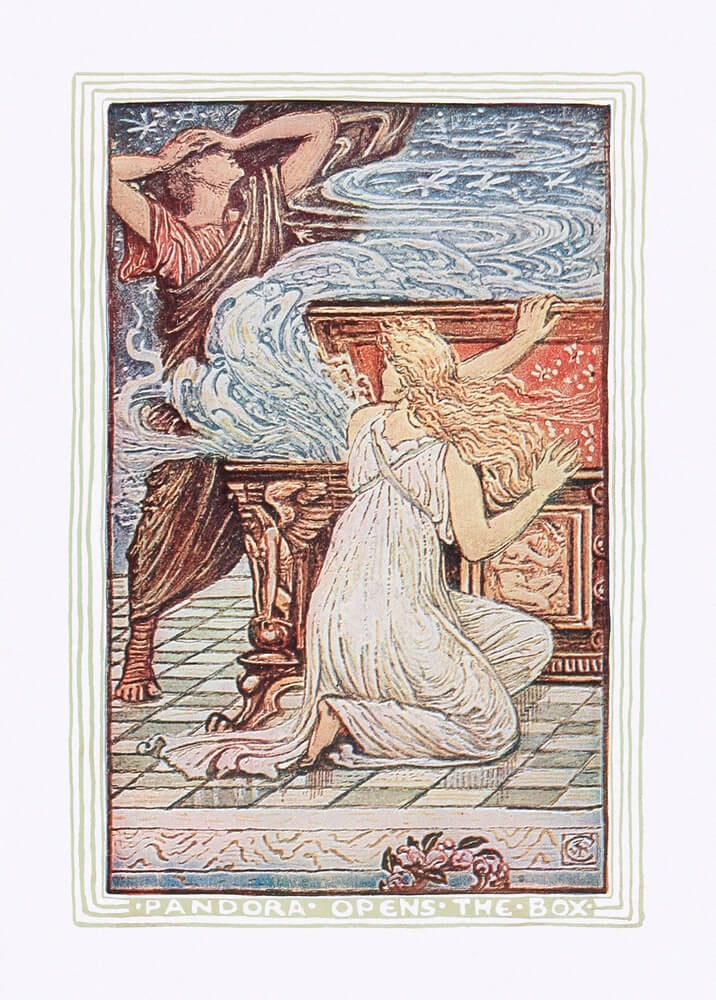
General Electric hired Maxfield Parrish to paint a calendar each year for its Edison Mazda lamp line, and Forbes Lithograph of Boston printed 17 of them between 1918 and 1934. Parrish received $2,000 per design, and the series reached more than 20 million copies, which GE estimated delivered some 7 billion messages about its products.
The Mazda name dates to 1909 and borrows from Ahura Mazda, the Zoroastrian deity of light, a fitting symbol for a company selling bulbs.
The Late Parrish Calendars That Sold Slowly
By the late 1920s the public mood was shifting, and Parrish’s dreamy titles from that stretch, including Reveries in 1927, Golden Hours in 1929, Sunrise in 1933, and Moonlight in 1934, sold less well than the earlier hits. In 1931 the artist announced that he was done with “girls on rocks” and wanted to paint landscapes instead.
That relative scarcity helps explain why a 1934 small-format Moonlight once sold through a dealer for $881.10, though any such price depends heavily on condition.
Alphonse Mucha’s Calendar for Lefèvre-Utile
Mucha’s lithograph for the biscuit maker Lefèvre-Utile was dated 1896 and carried a calendar for 1897, printed by F. Champenois. The company had been founded in Nantes in 1846, and the LU initials, which later became a household brand in France, first appeared on this calendar.
Dealer listings for original examples have been around $12,000, with price swinging sharply according to condition.
The Thos. D. Murphy Company of Red Oak, Iowa

Murphy’s story began in 1889 with a calendar from the firm Osbourne & Murphy that pictured the new Montgomery County Courthouse. The company later adopted the slogan “Birthplace of Art Calendars,” and its factory grew to cover a square block, complete with a water tower and its own power plant.
It kept printing in a small Iowa town until 2002, which makes it one of the longest-running names in the trade.
Charles M. Russell’s “Finding the Trail”
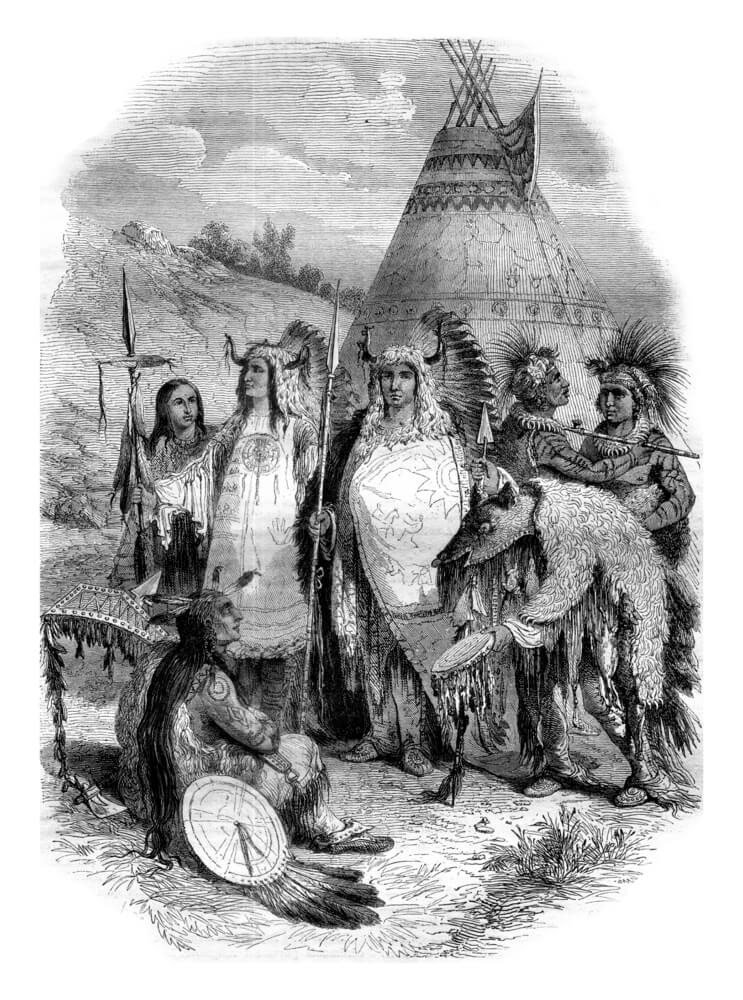
Murphy sample calendars carried Western art by Charles M. Russell, including a sample showing his painting “Finding the Trail” on a sheet measuring 10 1/4 by 16 inches. Samples like this let a salesman show a local merchant what the finished product would look like with his own name printed below.
Because they were meant for a sales kit rather than a wall, surviving samples tend to be cleaner than the calendars that actually hung in stores.
The 1960 Pony Express Centennial Series

For the hundredth anniversary of the Pony Express, Murphy issued its Postal Pioneers Series in 1960. The subject suited the format perfectly, since mail riders crossing open country made good calendar scenery and a built-in history lesson for the businesses handing them out.
Calendars tied to a precise anniversary like this one are easier to date and authenticate than most.
A Marine Corps Calendar Page From the War Years
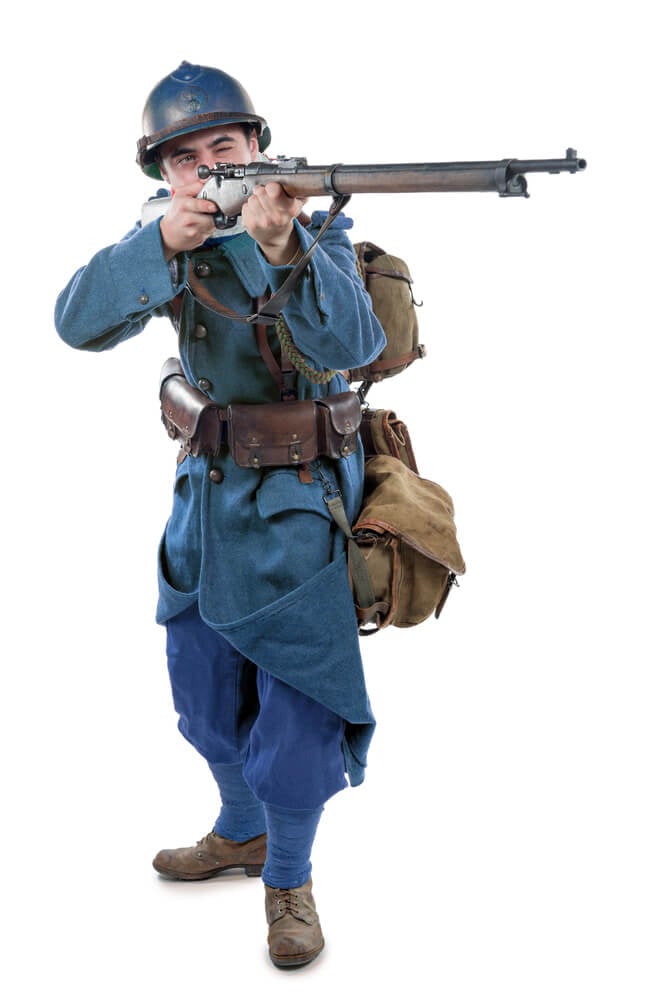
During World War II, calendar art took on a different job, and a large Murphy sample page for January 1944 shows a Marine Corps scene under the message “Work, Fight and Buy Bonds.” The image sold war bonds on the same wall space that used to advertise a hardware store or a bank.
Wartime calendars like this one capture how quickly everyday advertising was drafted into the national effort.
Beatrice Tonnesen’s Photographic Calendars

Not every calendar used paintings. A 1904 Murphy print titled “Muriel” credits the photographer under the variant spelling “Tonneson,” and a 1910 Murphy sample book included a portrait called “Olive” by the same hand.
Misspelled credits like this are a reminder that printers often treated the artist’s name as an afterthought, which complicates research for anyone building a collection.
“A Friend in Need” From the Dogs Playing Poker Series
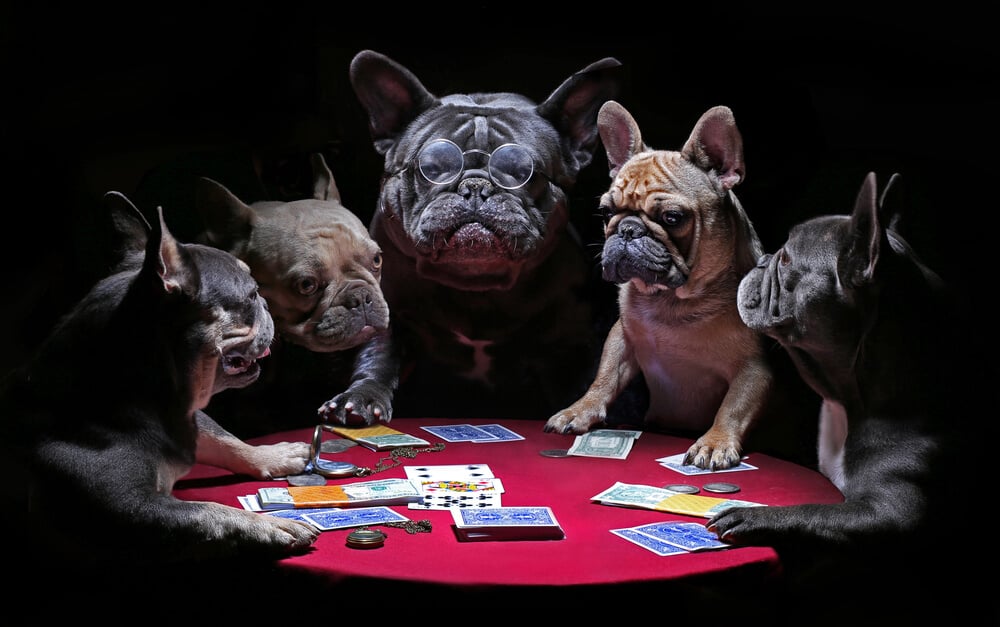
Cassius Marcellus Coolidge painted the dogs-around-a-card-table pictures for Brown & Bigelow, and “A Friend in Need” from 1903 shows one dog passing an ace under the table to another. The image later became so famous that it appears everywhere, but the original calendar-era prints are far scarcer than the reproductions.
Its calendar origins are easy to forget because the painting escaped them so completely.
Paul Detlefsen and “The Good Old Days”

Detlefsen spent 20 years as a matte painter at Warner Bros. before releasing his first calendar in 1951, “The Good Old Days,” and he earned an Academy Award nomination in 1944. By 1969, UPI estimated that 80 percent of Americans had seen his work, a reach that few gallery painters could imagine.
His nostalgic rural scenes made him one of the best-known calendar painters of the postwar decades.
The Small Pin-Up Calendars of Earl Moran and Ted Withers

A University of Washington finding aid lists 29 small calendars from 1953 to 1955 by Earl Moran and Ted Withers, produced for Brown & Bigelow. Small calendars like these were cheap to print and easy to pass out, so they circulated widely but survived poorly.
Anyone assembling a collection of mid-century glamour art should expect to find them with fold lines, stains, or missing pads.
Gil Elvgren’s “Sheer Comfort”

Elvgren’s “Sheer Comfort” from 1959 is among the best known of the postwar pin-up calendar images, painted in the polished, humorous style that made him a Brown & Bigelow favorite. Collectors look for the calendar itself rather than a later poster because the original printing shows the intended color balance.
Prices vary widely with condition, and an intact pad adds noticeably to the value.
Paper Galleries Nobody Locked

What makes these calendars remarkable is how little they were meant to last. They were free, disposable, and designed to carry someone else’s name, yet the artists who painted them, from Parrish to Rockwell to Russell, treated the work seriously enough that it still holds up decades later.
Preserving them takes only modest care. Acid-free storage, flat rather than rolled, and a shelter from sunlight will do more for a calendar’s survival than any restoration, and the free-to-the-public origin means plenty of good examples remain within reach.
More from Go2Tutors!

- 27 Silver Dollars and Half Dollars Worth Keeping
- 28 Restaurant Menu Items Nobody Orders Anymore
- 17 Places Built in Seemingly Impossible Spots
- 27 Vintage Rings Worth More Than They Look
- 25 Restricted Sites Tourists Can’t Enter
Like Go2Tutors’s content? Follow us on MSN.