15 Careers That Are on the Verge of Extinction (and What’s Replacing Them)
The workforce landscape is constantly evolving. Jobs that were once considered stable and secure are now facing obsolescence due to technological advancements, changing consumer habits, and economic shifts. Understanding these changes is crucial for anyone planning their career path or considering a professional pivot.
Here is a list of 15 careers that are rapidly declining and the emerging opportunities that are taking their place.
Travel Agents

The traditional travel agent profession has been steadily declining since the rise of online booking platforms. Websites and apps like Expedia, Booking.com, and Airbnb have made it simple for travelers to compare prices and book their own accommodations and transportation.
The replacement isn’t just algorithms, though—specialized travel consultants who focus on curated experiences and complex itineraries for luxury or adventure travel are thriving where general agents cannot.
Bank Tellers

Physical bank branches are closing at unprecedented rates as mobile banking becomes the norm. Most routine transactions that once required a teller can now be completed through smartphones or ATMs.
The banking industry is instead investing in financial technology specialists and customer experience designers who can create intuitive digital interfaces and personalized financial advice platforms that blend human touch with technological efficiency.
Print Journalists

The decline of print media has dramatically reduced opportunities for traditional newspaper journalists. Advertising revenue has shifted to digital platforms, forcing many publications to downsize or close entirely.
Digital content creators specializing in multimedia storytelling, data journalism, and audience engagement are becoming the new media professionals, often working across platforms and incorporating video, interactive elements, and social media distribution strategies.
Mail Carriers

Physical mail volume continues to decrease as digital communication expands. The U.S. Postal Service has been reducing its workforce for years as more correspondence, bills, and marketing moves online.
In their place, we’re seeing growth in last-mile delivery specialists and logistics coordinators who manage the complex networks needed for e-commerce package delivery, which requires different skills than traditional mail routes.
Photo Processors

Remember dropping off film rolls for development? Digital photography has all but eliminated traditional photo processing jobs.
The few remaining film processors typically serve niche markets like fine art photography. Digital imaging specialists and photo editors who can manipulate and enhance digital photographs have become essential in fields ranging from e-commerce to social media marketing where visual content drives engagement.
Textile Workers

Automation has dramatically reduced employment in textile manufacturing, particularly in developed countries. Robotic systems can now perform many of the repetitive tasks once done by human workers.
The industry is instead growing opportunities for technical textile developers who create smart fabrics, sustainable materials specialists, and automation systems managers who oversee the increasingly complex manufacturing processes.
Switchboard Operators
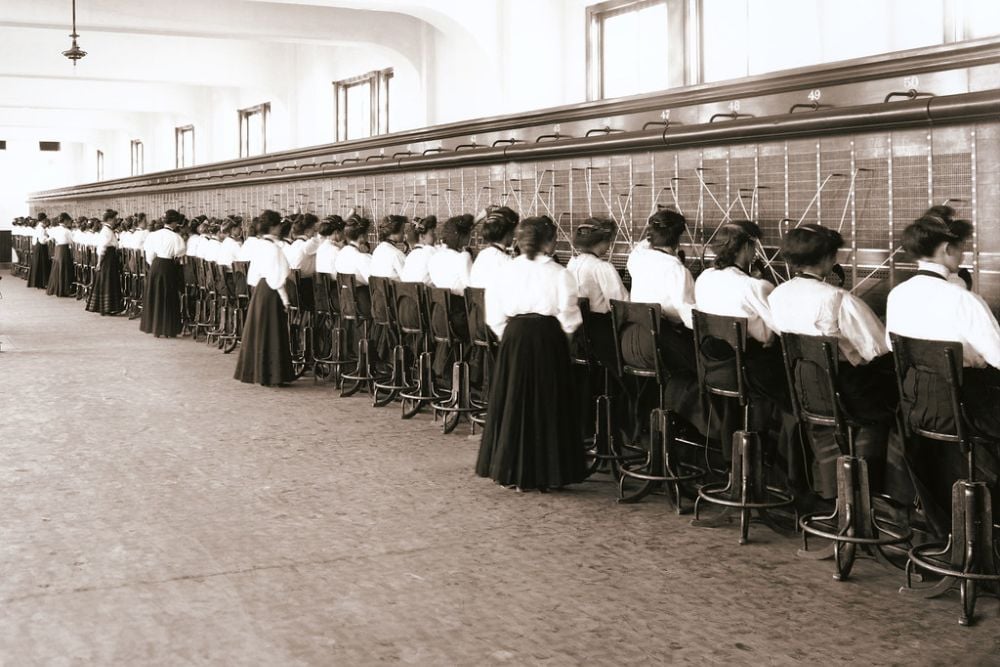
Originally the foundation of telecommunication, automated routing systems have taken over from switchboard operators. Direct dialing marked the start of the fall, then digital telephony quickened it.
Network administrators, VoIP experts, and unified communications professionals who can combine several channels like phone, video, and message into flawless business solutions are needed in today’s communication networks.
Video Store Clerks

The days of browsing physical video rental stores are largely gone, replaced by streaming services that offer instant access to vast libraries of content. Instead of video clerks, the entertainment industry now needs content curation specialists, recommendation algorithm developers, and streaming platform user experience designers who help viewers navigate the overwhelming amount of available content.
Typists and Word Processors

Dedicated typing pools were once common in offices, but word processing software and the expectation that professionals handle their own typing have eliminated most of these positions. The modern workplace instead values virtual assistants and automation specialists who can set up systems that handle routine documentation while focusing on more complex administrative tasks that require human judgment.
Assembly Line Workers

With robots undertaking ever-difficult tasks, traditional manufacturing assembly lines keep automating. These roles are far less common even if they are not totally gone.
Manufacturing today calls for process improvement engineers, industrial IoT experts, and competent robotics technicians who can maximize automated production systems while supervising the job still needing human input.
Travel Bookkeepers

Accounting for business travel expenses once required specialized bookkeepers who understood the complex rules and systems. Expense management software now automates most of this process.
Financial systems analysts and expense policy managers who can design efficient digital systems and ensure compliance with evolving regulations are taking their place in modern finance departments.
Data Entry Clerks

As optical character recognition, automated forms, and other technologies replace hand input, basic data entry employment is fast diminishing. Data quality analysts and business intelligence experts who concentrate less on entering data and more on assuring its accuracy, pattern analysis, and producing insightful analysis of the data acquired by automated means are now being sought after by companies.
Print Production Workers

Demand for individuals who specialize in print production techniques including typesetting and plate manufacturing has been substantially lowered as we have moved to digital media. Digital publishing experts, UX designers, and interactive content creators who create interesting stuff meant mostly for screens rather than paper, therefore substituting a different set of technical and creative talents, have supplanted many of these skills.
Directory Assistance Operators

“Information, please” operators who once helped callers find phone numbers have been largely replaced by internet searches and digital contacts. The telecommunications industry now needs digital directory architects and voice search optimization specialists who develop and maintain the systems that help people find information through voice assistants and automated services rather than human operators.
File Clerks

Paper-based filing systems require dedicated personnel to maintain organizational records. As businesses digitize their operations, traditional file clerks are becoming obsolete.
In their place, digital records managers and information governance specialists who understand both the technical aspects of data storage and the regulatory requirements for different types of information are becoming essential to modern organizations.
What Lies Ahead

The transformation of work isn’t simply about jobs disappearing—it’s about evolution. Nearly every vanishing role is being replaced by new opportunities that require different skills, often merging technical knowledge with uniquely human capabilities like complex problem-solving and creativity.
The workers who thrive in this shifting landscape will be those who embrace continuous learning and recognize that career resilience comes from adaptability rather than stability.
More from Go2Tutors!

- The Romanov Crown Jewels and Their Tragic Fate
- 13 Historical Mysteries That Science Still Can’t Solve
- Famous Hoaxes That Fooled the World for Years
- 15 Child Stars with Tragic Adult Lives
- 16 Famous Jewelry Pieces in History
Like Go2Tutors’s content? Follow us on MSN.