15 Greatest Historical Photos Ever Captured
Some photographs do more than capture a moment—they define entire eras, shift public opinion, and become symbols that outlive their subjects.
These images transcend their technical origins to become part of our collective memory, visual shorthand for pivotal moments in human history.
From the very first photograph ever taken to images that sparked social change, certain pictures have earned their place as the most significant ever captured.
Here’s a closer look at sixteen photographs that didn’t just document history—they became it.
View from the Window at Le Gras
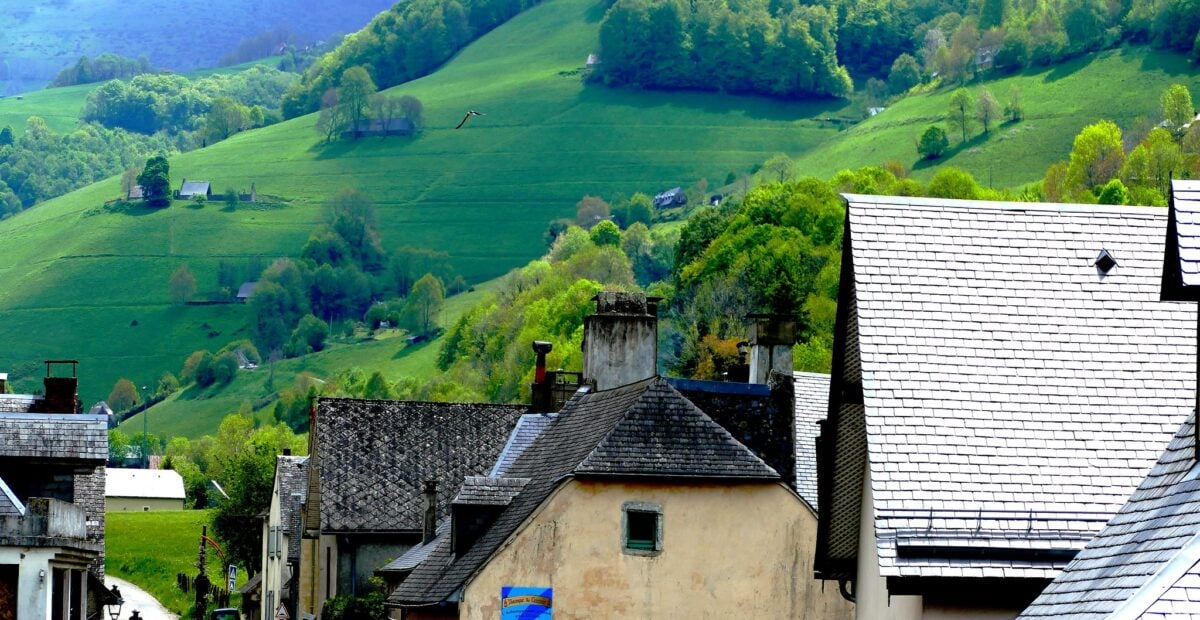
Before selfies, before Instagram, before anyone even understood what a photograph could be, Joseph Nicéphore Niépce pointed his camera obscura out a window in France and waited.
And waited.
For roughly eight hours in 1826 or 1827, sunlight etched an image onto a pewter plate coated with bitumen of Judea.
The result was grainy, almost abstract, showing rooftops and buildings from his estate in Saint-Loup-de-Varennes.
It’s not beautiful by modern standards, but it’s extraordinary for one simple reason: it was the first.
This blurry view of the French countryside represents humanity’s transition from a world of paintings and sketches to one where moments could be frozen in time.
The exposure time was so long that the sun moved across the sky during the shot, creating shadows on both sides of the courtyard.
Niépce called his process heliography, and while he died before seeing photography flourish, his eight-hour experiment opened the door to everything that followed.
Lunch Atop a Skyscraper

Eleven men sit on a steel beam 850 feet above New York City, legs dangling casually into empty space, eating lunch like they’re at a Sunday picnic instead of teetering above certain death.
Taken in 1932 during construction of Rockefeller Center’s GE Building, this photograph became an instant icon of American grit during the Great Depression.
The image shows construction workers—many of them immigrants—displaying almost cavalier indifference to danger while building the modern Manhattan skyline.
For decades, the photographer’s identity remained uncertain, with Charles Ebbets, Thomas Kelley, and William Leftwich all credited at various times.
The photograph captures something essential about Depression-era America: ordinary people doing extraordinary things, working dangerous jobs to feed their families while constructing monuments to a future they hoped would be brighter.
These men weren’t daredevils—they were workers who climbed into the sky because that’s where the jobs were.
Migrant Mother

Dorothea Lange almost drove past. In March 1936, returning home after a month photographing migrant workers in California, she spotted a sign reading ‘Pea-Pickers Camp’ near Nipomo.
She kept driving for twenty miles before making a U-turn, later saying she barely understood why.
At the camp, she found Florence Owens Thompson, a 32-year-old mother of seven, sitting in a lean-to tent with three of her children huddled close.
Lange took six photographs in about ten minutes, each time moving closer, adjusting the composition until she captured what became the defining image of the Great Depression.
Thompson’s face tells the whole story—anxiety etched deep, one hand raised to her mouth, eyes fixed on some distant point while her children bury their faces in her shoulders.
The photograph was published in San Francisco newspapers within days, prompting the government to send aid to the camp.
Neither Lange nor Thompson made money from the image, which became public domain, but it secured Lange’s reputation and gave the Depression a human face.
Thompson later said she felt exploited by the photograph, though when she fell ill with cancer in 1983, her children used her identity as the ‘Migrant Mother’ to raise over $30,000 for medical expenses.
V-J Day in Times Square

Alfred Eisenstaedt was walking through the celebrating crowds in Times Square on August 14, 1945, when he noticed a sailor in a dark uniform grabbing and kissing every woman he encountered.
Eisenstaedt followed him with his Leica camera, waiting for the right moment.
Then he saw a woman in white—a dental assistant, though often misidentified as a nurse—standing in the crowd.
The sailor approached, grabbed her, bent her backward, and kissed her. Eisenstaedt captured it in one of four quick shots, and that single frame became perhaps the most reproduced photograph of the twentieth century.
Published in Life magazine a week later, the image seemed to capture the pure joy and relief of war’s end, a spontaneous celebration frozen in time.
The contrast between the white dress and dark uniform gave the image its visual punch. For decades, the identities of the kissing couple remained unknown, with multiple people claiming to be the subjects.
Eventually, Greta Zimmer Friedman and George Mendonsa were widely identified as the pair, though Friedman later clarified the moment wasn’t romantic or consensual—she was simply grabbed by a stranger who was, by his own admission, quite drunk.
The photograph’s meaning has evolved over time, from pure celebration to something more complicated, but its iconic status remains unchanged.
Tank Man

On June 5, 1989, the day after Chinese troops violently suppressed pro-democracy protests in Tiananmen Square, Jeff Widener was recovering in his Beijing hotel room after being hit in the head by a rock during the chaos.
Despite being told to rest, he positioned himself at his hotel window with his camera.
As a column of tanks rolled down Chang’an Boulevard, a lone man in a white shirt and black pants, carrying shopping bags, stepped into their path.
The lead tank tried to go around him. He sidestepped, blocking its way again.
This standoff lasted several minutes before the man was pulled away by bystanders.
Widener captured the scene using borrowed film from an Australian tourist.
The photograph became a global symbol of individual courage against authoritarian power.
The man’s identity remains unknown, adding to the image’s universal appeal—he could be anyone, which makes him everyone who has ever stood up to injustice.
The photograph earned Widener a Pulitzer Prize nomination and proved that sometimes the most powerful statement is simply standing your ground.
Raising the Flag on Iwo Jima
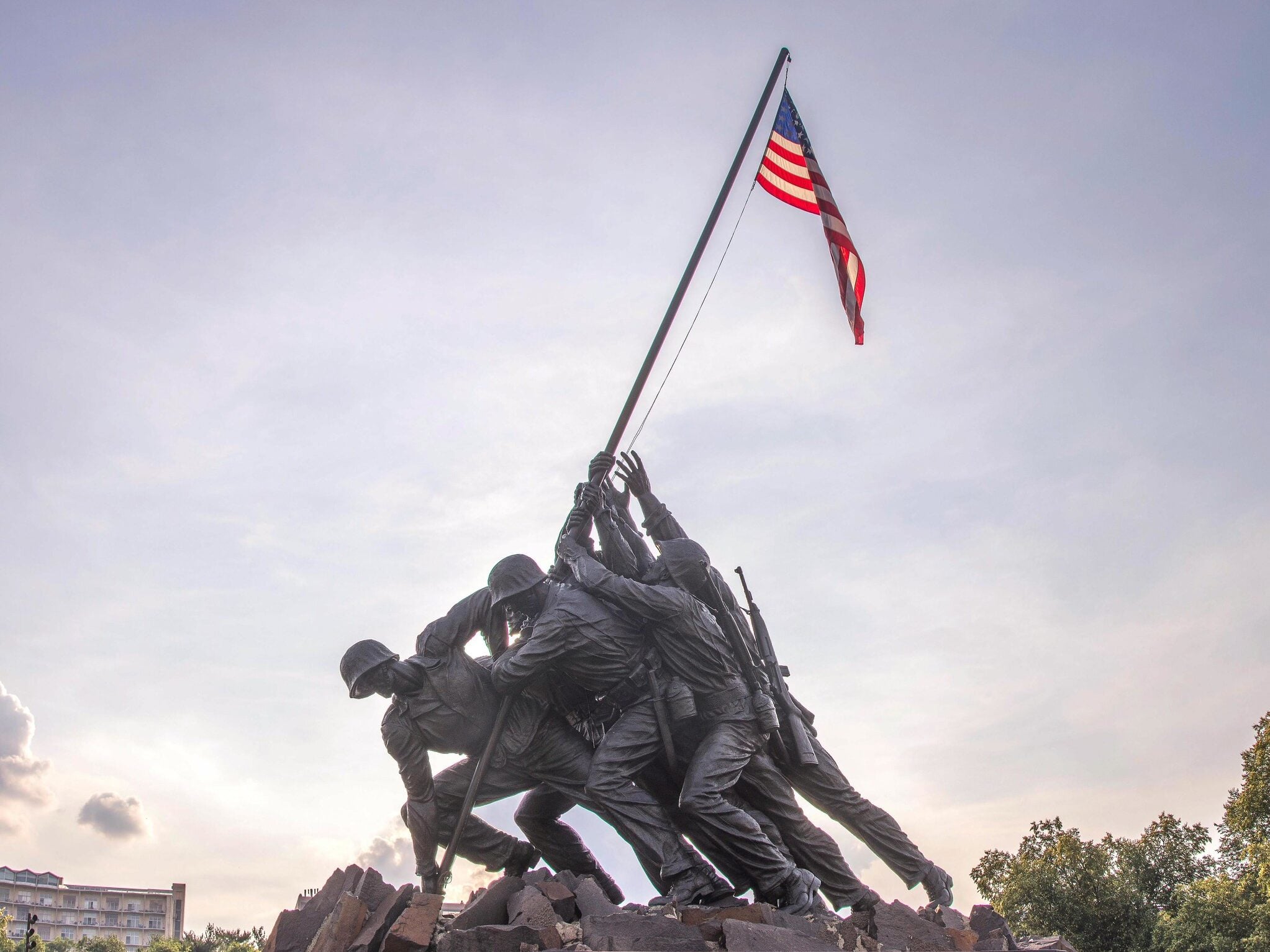
Joe Rosenthal’s photograph of six Marines raising the American flag atop Mount Suribachi on February 23, 1945, is so iconic it was turned into a statue at Arlington National Cemetery.
But the image is more complicated than it first appears.
This wasn’t the first flag raised that day—it was actually the second, a replacement flag that was larger and more visible.
Rosenthal happened to be there when the order came to swap flags and captured the moment with his Speed Graphic camera.
He didn’t even look through the viewfinder, just pointed and shot as the men heaved the pole upward.
The photograph became an instant sensation when it reached the United States, symbolizing American determination and sacrifice in the Pacific theater.
Three of the six flag-raisers died in combat before the battle for Iwo Jima ended.
The image earned Rosenthal a Pulitzer Prize and became one of the most recognizable wartime photographs ever taken, proving that even staged or repeated moments can capture genuine emotion and historical significance.
Afghan Girl
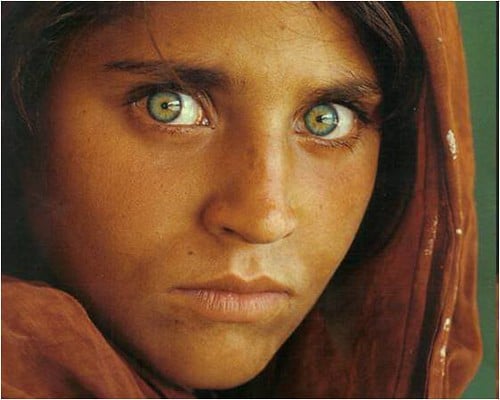
Sharbat Gula was about twelve years old when Steve McCurry photographed her at a refugee camp in Pakistan in 1984.
She had fled Afghanistan during the Soviet invasion and was living in harsh conditions at Nasir Bagh camp.
McCurry captured her portrait using Kodachrome film, and those piercing sea-green eyes staring directly into the camera created an image of such intensity that National Geographic featured it on their June 1985 cover.
The photograph became the magazine’s most recognized image, a haunting symbol of refugee suffering and resilience.
Gula had never been photographed before and wouldn’t be again until 2002, when McCurry and a National Geographic team tracked her down in Afghanistan using facial recognition technology.
By then, she was a mother living in the Tora Bora region, her face weathered by a difficult life but those distinctive eyes still recognizable.
The photograph gave a face to conflicts that often feel abstract and distant, transforming statistics about displaced people into a personal, human story.
Earthrise

On Christmas Eve 1968, Apollo 8 astronaut William Anders looked out his window as the spacecraft emerged from behind the moon and saw something no human had witnessed before: Earth rising above the lunar horizon.
He grabbed his Hasselblad camera loaded with color film and captured the shot that would fundamentally change how humans see their home planet.
The photograph shows Earth as a fragile blue-and-white marble suspended in the black void of space, three-quarters illuminated, hovering above the moon’s desolate gray surface.
The image arrived at a pivotal moment—the Vietnam War was raging, social unrest was everywhere, and environmental awareness was just beginning.
Seeing Earth from this perspective, small and isolated in space with no visible borders or divisions, gave the environmental movement a powerful symbol.
Nature photographer Galen Rowell called it ‘the most influential environmental photograph ever taken.’
The photograph helped launch Earth Day two years later and shifted human consciousness toward thinking of our planet as a unified, vulnerable ecosystem worth protecting.
The Falling Man
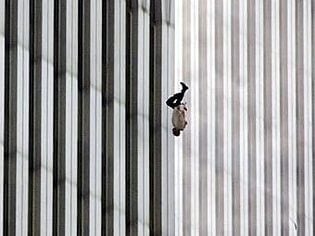
Richard Drew’s photograph from September 11, 2001, is perhaps the most controversial on this list.
It shows a man falling from the North Tower of the World Trade Center, his body perfectly vertical, bisecting the iconic towers as he plummets toward earth.
Most images from that day show planes and buildings, but this photograph captures a single person in their final moments—a choice between burning and falling that no one should have to make.
The image was published in newspapers the next day but quickly pulled after intense public backlash.
People found it too disturbing, too intimate a glimpse at someone’s death.
The man’s identity was never definitively confirmed, and the photograph largely disappeared from public view for years.
Yet it remains an important historical document precisely because it’s so difficult to look at—it forces viewers to confront the human cost of that day in the most direct possible way.
The photograph challenges our desire to sanitize tragedy and reminds us that behind every statistic are individual human stories.
The Steerage
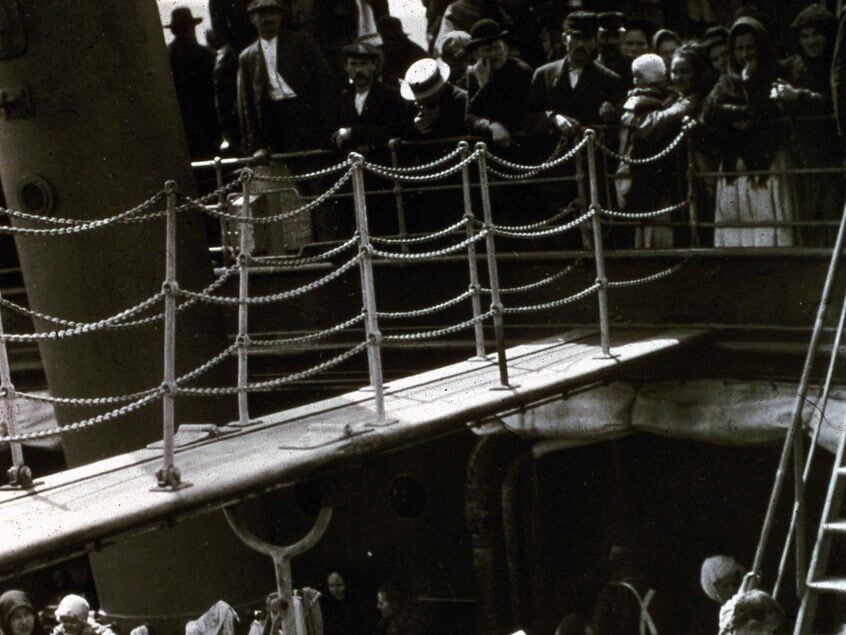
Alfred Stieglitz was traveling first class on a ship to Europe in 1907 when he wandered to an area where he could look down on the steerage passengers in third class.
The scene struck him immediately—the crowded deck, the stark geometry of gangways and railings, the contrast between classes separated by mere feet but worlds of experience.
He rushed to his cabin to get his camera, terrified the scene would disperse before he returned.
When he came back, everything remained exactly as he’d seen it.
Stieglitz took one photograph, and that single frame became a landmark in photographic history.
The image captures the experience of millions of immigrants crossing to America, the social divisions of the early twentieth century, and the artistic potential of candid photography.
Stieglitz was trying to prove that photography could be fine art, not just documentation, and this photograph helped establish that credibility.
The composition is striking—the gangway cuts diagonally across the frame, the straw hat becomes a focal point, and the density of bodies suggests both crowding and community.
Saigon Execution
— Photo by Stefanedwards1
Eddie Adams was covering the Vietnam War on February 1, 1968, when he witnessed South Vietnamese General Nguyễn Ngọc Loan execute a Viet Cong prisoner on a Saigon street.
Adams raised his camera and captured the exact moment the bullet entered the prisoner’s head.
The photograph, published worldwide, shocked viewers and intensified opposition to the war.
Here was the brutality of the conflict distilled into a single moment—not combat between soldiers, but an execution of a prisoner on a city street, casual and public.
The image won Adams a Pulitzer Prize but haunted him for the rest of his life.
He later said he destroyed the general with one photograph, expressing regret over the image’s impact on Loan’s reputation without acknowledging the full context of the war.
The photograph demonstrates photography’s power to shape public opinion and the weight of responsibility that comes with that power.
Pillars of Creation

The Hubble Space Telescope captured this image of the Eagle Nebula in 1995, showing massive columns of interstellar gas and dust roughly 6,500 light-years from Earth.
The photograph, which scientists titled ‘Pillars of Creation,’ shows the birthplace of stars—regions where gravity is pulling material together to form new solar systems.
The image became one of the most popular and recognizable astronomical photographs ever taken, appearing on everything from t-shirts to textbooks.
What makes it remarkable isn’t just its beauty—those towering columns of cosmic dust, backlit by stars, spanning light-years of space—but what it represents about human curiosity and capability.
We built a telescope, launched it into orbit, pointed it at a specific patch of sky, and brought back an image of creation itself happening in real time.
The photograph helped make abstract astronomical concepts tangible and inspired a generation of scientists and space enthusiasts.
Napalm Girl

— Photo by MaxFolle
On June 8, 1972, Associated Press photographer Nick Ut was covering the Vietnam War near the village of Trang Bang when he heard that a napalm strike was imminent.
After the attack, civilians came running down the road, and among them was nine-year-old Kim Phuc, unclothed because she had torn off her burning clothes, her arms outstretched, screaming in agony.
It captured the moment and then stopped taking pictures to help the children, driving them to a hospital.
The photograph, published worldwide, became one of the war’s most powerful anti-war images.
Seeing a child in such visible pain made the war’s toll undeniable and personal.
The image helped turn American public opinion against the conflict.
Kim Phuc survived her injuries—she had third-degree burns over much of her body—and eventually became a UNESCO Goodwill Ambassador, using her experience to advocate for child victims of war.
The photograph won Ut the Pulitzer Prize and remains a stark reminder of war’s impact on civilians.
Gandhi and the Spinning Wheel

Margaret Bourke-White photographed Mahatma Gandhi in 1946, just two years before his assassination.
The image shows him sitting cross-legged beside his spinning wheel, or charkha, which had become a symbol of India’s independence movement.
Gandhi had encouraged Indians to spin their own cloth rather than buying British textiles, making the spinning wheel a tool of nonviolent resistance.
Bourke-White, one of the first female war correspondents and a pioneering photographer, had to meet several conditions to photograph Gandhi—she couldn’t speak to him unless he spoke first, she could only use natural light, and she had to learn to use a spinning wheel herself.
The resulting photograph captures Gandhi’s simplicity and determination, showing the man who would help free India from British rule through peaceful protest.
After Gandhi’s assassination in 1948, this image became even more significant, a reminder of his philosophy and methods.
Moonwalk
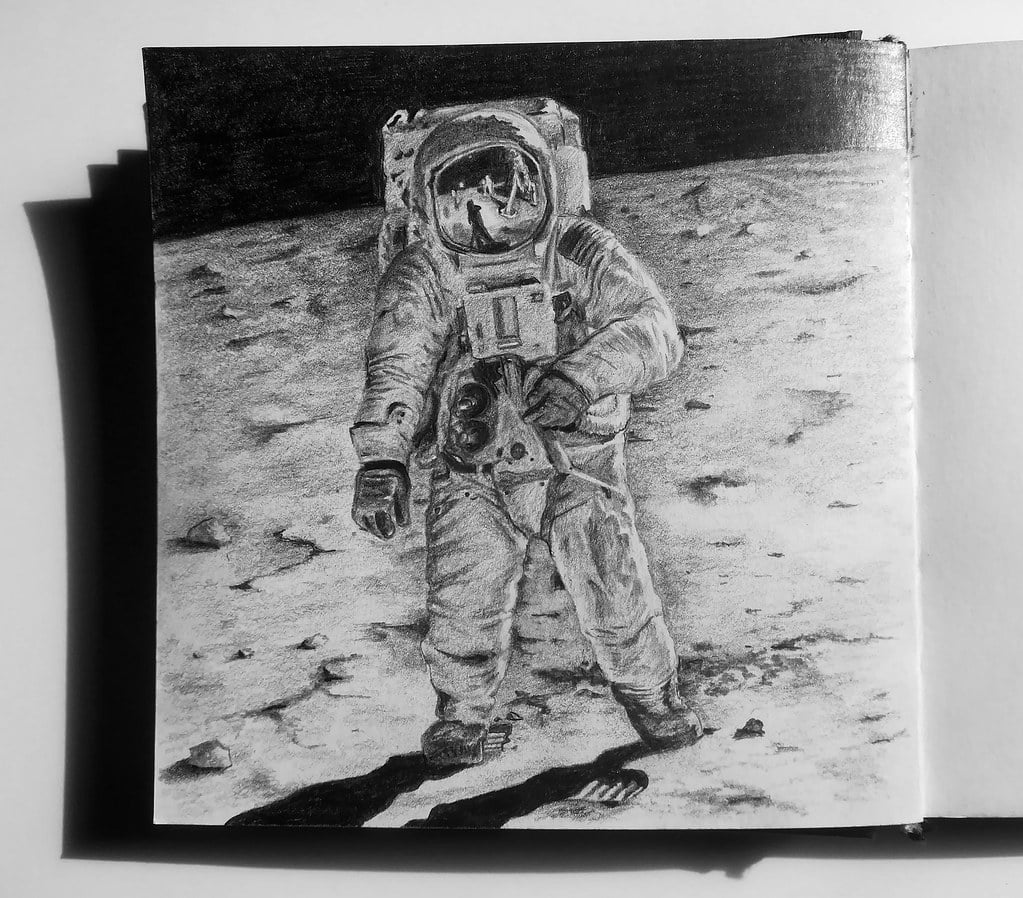
On July 20, 1969, Neil Armstrong became the first human to walk on the moon, but the most famous photograph from that day shows Buzz Aldrin.
Armstrong took the picture of Aldrin standing on the lunar surface, his gold visor reflecting the lunar module, the American flag, and Armstrong himself with the camera.
The photograph captures one of humanity’s greatest achievements—landing people on another world and bringing them home safely.
It’s an image of exploration, courage, and technological triumph accomplished during the Cold War space race.
What’s striking about the photograph is how alien and familiar it feels simultaneously—that’s a person in a spacesuit standing on powdery gray soil, but the black sky and the way the shadows fall remind you this isn’t Earth.
The photograph proved what had seemed impossible just a decade earlier and inspired generations to look up and wonder what else might be possible.
The Long Walk to Freedom

The photograph of Nelson Mandela and his then-wife Winnie walking out of Victor Verster Prison on February 11, 1990, after twenty-seven years of imprisonment, captures a pivotal moment in South African history.
Mandela raises his right fist in a salute while holding Winnie’s hand with his left, both of them striding forward into sunlight after decades of darkness.
The image symbolizes the beginning of apartheid’s end and Mandela’s transformation from prisoner to president.
What makes this photograph so powerful is the hope it represents—the idea that justice, though delayed, can eventually arrive.
Mandela had been imprisoned since 1962 for his opposition to apartheid, spending much of that time in harsh conditions on Robben Island.
His release signaled that change was coming to South Africa, though the road to democracy would take several more years.
The photograph shows a man who could have emerged from prison bitter and vengeful but instead chose reconciliation, ultimately helping guide South Africa through its transition to democracy and becoming the country’s first Black president in 1994.
Why These Images Endure

The greatest photographs share certain qualities that transcend their technical execution.
They arrive at decisive moments when history pivots, capturing turning points with clarity and emotional force.
They give abstract concepts—war, poverty, exploration, freedom—concrete visual form that bypasses language and speaks directly to human emotion.
Many of these images were accidents or near-misses, moments the photographers almost missed but instinctively captured.
Others required patience, preparation, and being in the right place when history happened.
What unites them is their ability to compress complex narratives into single frames that continue speaking to new generations.
These photographs didn’t just document their moments—they shaped how we remember them, becoming the visual vocabulary through which we understand our shared history.
More from Go2Tutors!

- The Romanov Crown Jewels and Their Tragic Fate
- 13 Historical Mysteries That Science Still Can’t Solve
- Famous Hoaxes That Fooled the World for Years
- 15 Child Stars with Tragic Adult Lives
- 16 Famous Jewelry Pieces in History
Like Go2Tutors’s content? Follow us on MSN.