Optical Illusions in Classic Art
Your eyes can’t always be trusted. Artists figured this out centuries ago, and they’ve been playing tricks on viewers ever since.
A flat canvas becomes a window. A ceiling transforms into an open sky. A portrait follows you across the room. These aren’t modern digital effects—they’re techniques that painters and sculptors mastered long before photography existed.
The Foundation of All Visual Tricks

Perspective changed everything. Before the Renaissance, paintings looked flat because artists didn’t understand how distance affects what you see.
Then someone realized that parallel lines appear to meet at a single point on the horizon. This simple observation opened up endless possibilities for creating depth where none existed.
The mathematics behind it seems straightforward now. But applying those principles to create convincing three-dimensional space on a two-dimensional surface took real skill.
Artists spent years perfecting the angles and proportions that make a painted room look like you could walk into it.
When Walls Disappear
Andrea Pozzo painted a ceiling in Rome that still stops visitors in their tracks. The architecture appears to soar upward into the heavens, with columns rising impossibly high and figures floating among the clouds.
Stand in the right spot and your brain completely accepts that you’re looking up at a real structure reaching toward infinity. Move a few feet to either side and the illusion collapses.
The columns bend at odd angles and the perspective breaks down. That sweet spot where everything aligns reveals how carefully Pozzo calculated his geometry.
He knew exactly where viewers would stand when they entered the church.
Fooling the Eye Completely

Trompe l’oeil takes things further than simple perspective. The goal is total deception.
You should believe you’re looking at real objects, not paintings of objects. A fly on a canvas that you try to brush away. A violin hanging on a wall that turns out to be completely flat.
Letters tucked into painted ribbons that look three-dimensional. The best examples make you doubt your own perception.
Samuel van Hoogstraten built entire boxes with peepholes that showed miniature rooms with perfect perspective. Look through that small opening and you see a complete Dutch interior—tiles on the floor, paintings on the walls, light streaming through windows.
The technique requires absolute precision. One miscalculation and the spell breaks.
Hidden in Plain Sight

Hans Holbein placed a skull in his painting “The Ambassadors,” but you can’t see it properly from the front. The elongated smudge across the bottom only resolves into a recognizable shape when you view the painting from a sharp angle.
This anamorphic technique shows up in many works where artists wanted to include secret messages or memento mori symbols without disrupting the main composition. These distorted images served practical purposes too.
They could hide politically sensitive content or add layers of meaning that only educated viewers would understand. The technique requires viewing the painting from an unusual position—often from the side or through a cylindrical mirror.
Faces That Watch You

The eyes in certain portraits seem to follow you around the room. This isn’t supernatural—it’s geometry.
When a subject looks directly at the viewer, the angle of their gaze doesn’t change regardless of where you stand. Your brain interprets this unchanging angle as the eyes tracking your movement.
Leonardo da Vinci understood this effect perfectly. The Mona Lisa’s famous enigmatic expression stays with you partly because her eyes maintain contact no matter where you move.
Artists use this technique deliberately to create engagement between the subject and viewer.
Impossible Spaces

M.C. Escher made a career out of spaces that couldn’t exist. Staircases loop back on themselves. Water flows upward. Hands draw themselves into existence.
His lithographs look convincing at first glance, but following the architecture reveals the impossibility. The tricks work because he understood how to connect sections that individually make sense but collectively defy physics.
Medieval artists sometimes created similar impossible spaces accidentally. Their understanding of perspective was still developing, leading to buildings with inconsistent sight lines or rooms where the walls don’t quite connect properly.
What Escher did intentionally, they stumbled into through incomplete knowledge.
Playing With Scale

Forced perspective makes objects appear much larger or smaller than they are. Theme parks use this constantly, building structures that look massive from the viewer’s position but are actually much smaller.
Renaissance artists did the same thing in their paintings and stage designs. The technique requires everything to scale proportionally from the viewer’s position.
Columns get shorter as they recede. Figures shrink with distance. Floor tiles compress. Done correctly, a small courtyard can look like a vast plaza.
The effect only works from one specific viewpoint—walk around it and the illusion evaporates.
Stripes That Move

Op Art emerged in the 1960s, but the visual principles behind it have roots in much earlier work. Bridget Riley’s black and white patterns seem to pulse and vibrate.
Victor Vasarely’s compositions appear to bulge and recede. These works exploit how your visual system processes high-contrast patterns and repeated shapes.
The effects are physiological, not psychological. Your eyes and brain genuinely see movement and depth that isn’t there.
Stare at these patterns long enough and you’ll experience afterimages when you look away. The precision required to create these effects rivals any Renaissance masterpiece.
Color Confusion

Josef Albers spent decades proving that color is relative. A gray square looks lighter against a dark background and darker against a light one.
Two identical colors placed next to different neighbors appear completely different. Artists have used these principles to make flat surfaces appear to have volume and to create atmospheric effects where none exist.
The Impressionists understood this instinctively. They placed complementary colors next to each other to make both appear more vibrant.
They used color temperature to push objects forward or back in space. Their supposedly revolutionary technique was really just a sophisticated application of how human color perception works.
Layers of Reality
Baroque ceiling paintings often showed multiple levels of reality at once. Real architecture transitions seamlessly into painted architecture, which opens up to show heavenly scenes.
Your eye can’t easily tell where the three-dimensional structure ends and the two-dimensional painting begins. This layering creates visual complexity that rewards closer examination.
First you see the overall composition. Then you notice details that make you question what’s real.
Finally you appreciate how cleverly the artist integrated different elements. The technique turns passive viewing into active investigation.
Reflections and Mirrors
Jan van Eyck put a convex mirror in the background of the Arnolfini Portrait that shows the entire room from a different angle. This mirror reveals what’s happening behind the viewer and even includes tiny figures that appear to be entering the scene.
The reflection adds an extra layer of spatial information to an already complex composition. Mirrors in paintings create interesting problems.
The reflection needs to be accurate but also readable. Too much detail and it becomes distracting. Too little and it looks fake.
Artists had to balance realism with artistic necessity.
Multiple Viewpoints
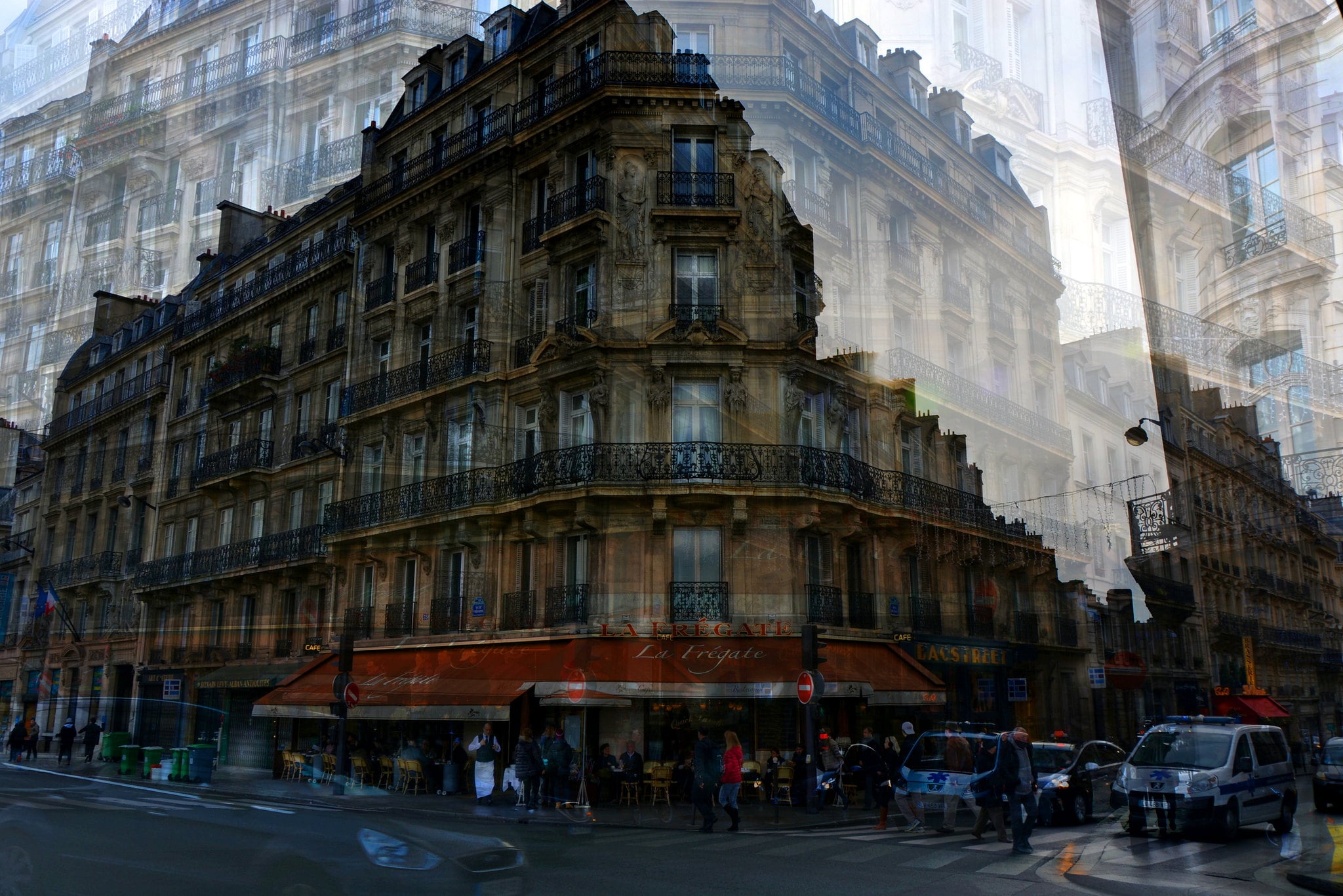
Cubists broke the rule that paintings should show a single moment from one position. Picasso and Braque showed objects from multiple angles simultaneously—a face in profile and from the front at the same time.
This wasn’t about creating optical illusions in the traditional sense, but about showing more information than normal human vision allows. The technique challenges viewers to reconstruct objects mentally from fragmented information.
Your brain works to assemble these multiple viewpoints into something coherent, even though the result doesn’t match anything you could actually see. This makes you actively participate in creating the image’s meaning.
Breaking the Frame
A brushstroke might leap past the edge – fingers almost touch your world, fabric slips sideways, someone crosses over. When images break free like this, the moment stops feeling contained, draws nearer.
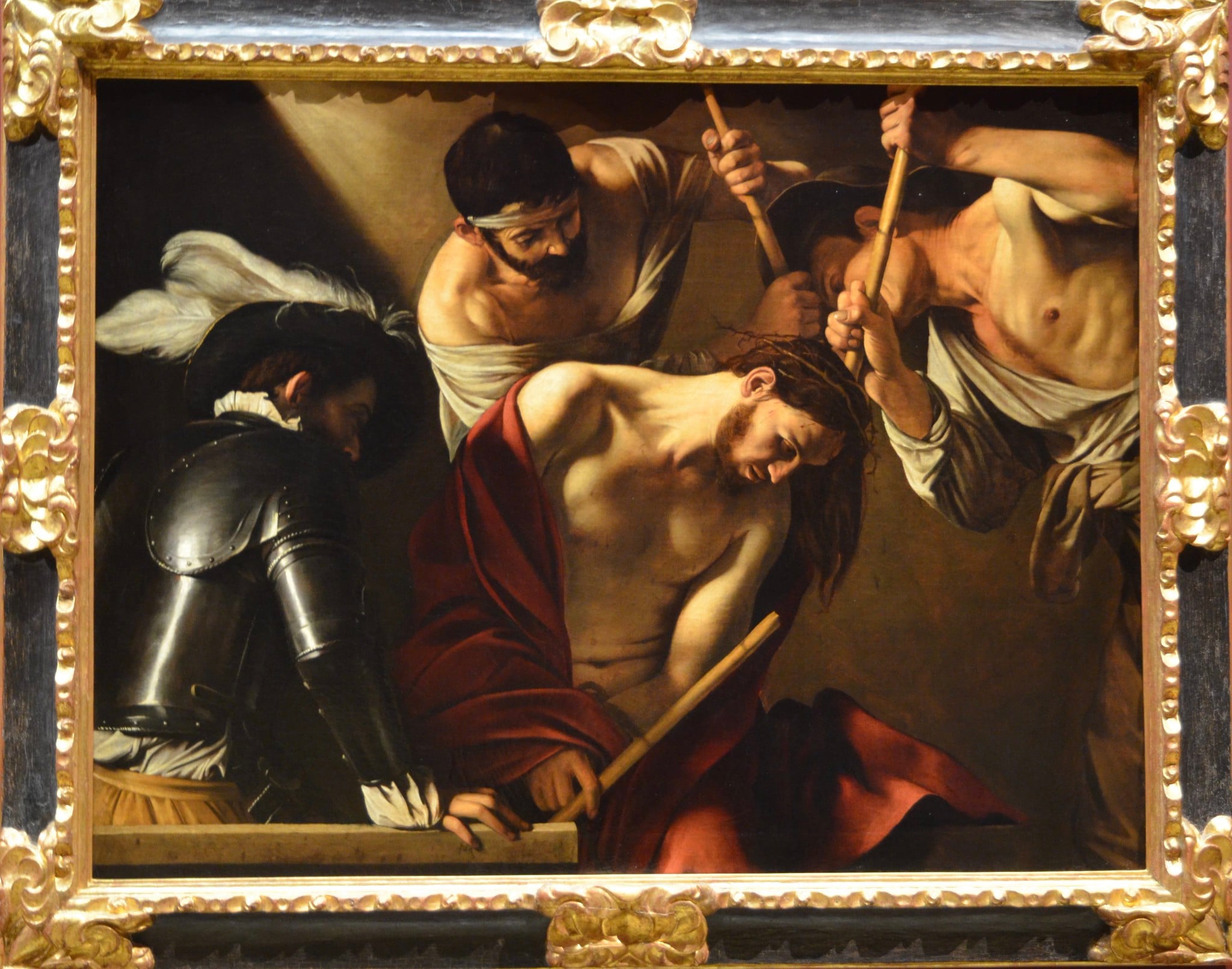
Space bends strangely around Caravaggio’s people. It spills out past the frame, nudging where you stand.
Light slashes across them, carving shapes so sharp they seem to push outward. A moment freezes, yet pulls you inside before you notice.
Where the Tricks Stay

Still around, these methods quietly persist. Through careful angles, photographers shift how things appear.
By blending painted scenes with live shots, filmmakers build imagined worlds. Digital creators follow old rules – light moves a certain way, colors interact predictably, shapes align in fixed patterns.
Tools evolve, yes. Yet what we notice, and why, remains rooted in older truths.
Nowhere else do pavement sketches trick the eye like those drawn by today’s sidewalk painters. From just one spot, depth leaps out even though it is flat.
Step inside certain galleries and you’ll find walls fooling visitors with false windows or endless rooms. Illusions pull us in because they mess with what we think we know.
Seeing becomes believing when someone knows exactly how to bend reality. That hunger for surprise hasn’t faded a bit.
More from Go2Tutors!

- The Romanov Crown Jewels and Their Tragic Fate
- 13 Historical Mysteries That Science Still Can’t Solve
- Famous Hoaxes That Fooled the World for Years
- 15 Child Stars with Tragic Adult Lives
- 16 Famous Jewelry Pieces in History
Like Go2Tutors’s content? Follow us on MSN.