15 Locations That Look Like They Were Built for Christmas
Some places capture the spirit of the holidays so perfectly that visiting them feels like walking into a snow globe. Red roofs peek through winter frost, medieval towers stand against gray skies, and canal waters reflect thousands of twinkling lights.
These towns and cities don’t just celebrate Christmas—they seem designed for it, with architecture and landscapes that belong on greeting cards and in childhood storybooks. From Alpine villages nestled between mountain peaks to European towns where half-timbered houses line cobblestone streets, certain locations feel frozen in time, waiting for December to arrive so they can truly shine.
The magic starts long before you arrive. Just seeing photos makes you want to pack your warmest coat.
Rothenburg ob der Tauber

This medieval German town celebrates Christmas year-round, not just during the winter months. The town is home to Germany’s Christmas Museum and features the famous Käthe Wohlfahrt Christmas Village, where the world’s largest selection of traditional German Christmas decorations fills approximately 1,000 square meters of retail space.
The town features turrets, spires, and red roofs overlooking Tauber Valley, with picturesque cobblestone alleys, half-timbered houses, and preserved medieval city walls straight out of a fairytale. The 1968 movie Chitty Chitty Bang Bang was filmed in Rothenburg ob der Tauber, which tells you everything about how perfect it looks on camera.
Colmar

In the picturesque streets of Colmar, France, the succession of stalls, Christmas decorations and lights sweep visitors up in the magic of the Christmas season. The town transforms with half-timbered houses, gentle canals, and cobbled streets that glow with festive lights, creating an atmosphere that feels plucked from an illustrated storybook.
The town is also known as La Petite Venise or Little Venice because of its charming canal system lined with colorful buildings. Colmar’s Christmas celebrations feature six unique markets spread throughout the historic center, with over 1,150 points of light illuminating the town.
The Alsace region’s blend of French and German influences shows in every architectural detail, making it feel distinctly European in the best possible way.
Hallstatt

This UNESCO World Heritage Site in Austria is known for its stunning natural beauty, charming village center with alpine architecture, and historic salt mine thousands of years old. The village sits between the lake of the same name and the Dachstein mountain range, creating reflections in the water that double the beauty.
Considered by some to be one of the most beautiful places on earth, Hallstatt is sometimes called ‘the pearl of Austria’ and features pastel-colored houses that cast shimmering reflections onto glassy waters. Hallstatt at Christmas is a wonderland of twinkling lights and icicles sparkling from the roofs of quaint wooden houses.
The town gets compared to Arendelle from the movie Frozen, though that connection isn’t officially confirmed.
Bruges

This Belgian city was one of Europe’s wealthiest cities by the 12th to 15th centuries because of its canal system. Bruges is an outstanding example of a medieval settlement that has maintained its historic fabric as it evolved over the centuries, with Gothic architecture and original constructions forming its identity.
The historic city center is a prominent UNESCO World Heritage Site that covers about 430 hectares. The city is nicknamed Venice of the North because canals wind through the heart of the city like arteries.
The medieval stone bridges, horse-drawn carriages, and perfectly preserved buildings transport visitors back centuries, especially when snow covers the cobblestones and Christmas lights reflect off canal waters.
Strasbourg

The capital of the Alsace region in France hosts Christmas markets that start around November 22 each year and run until December 24, spread throughout various squares in the city. Strasbourg’s Christmas market is among the oldest in Europe, with a tradition stretching back centuries.
The city’s Franco-Germanic heritage shows in its architecture, with massive Gothic cathedral spires rising above timber-framed houses. Multiple markets fill different squares, each with its own character, from traditional crafts to regional foods.
The sheer size and scale of Strasbourg’s Christmas celebration make it feel purpose-built for the holiday season, even though the city’s history predates modern Christmas traditions by many centuries.
Eguisheim

This picturesque medieval town in France’s Alsace region is where the movie Beauty and the Beast was modeled after, with narrow cobblestone streets and old charming buildings arranged in concentric circles. The village sits among vineyards, with flowers spilling from window boxes in warmer months and Christmas decorations taking over in December.
The circular layout makes wandering through town feel like moving through a spiral of increasingly charming views. Half-timbered houses painted in pastels create an almost toy-like appearance, especially when dusted with snow or lit by holiday lights.
Eguisheim represents everything people imagine when they think of storybook European villages.
Nuremberg

This German city hosts the Christkindlesmarkt and has a lebkuchen heritage once guarded by artisans, now taught in workshops influenced by historic spice-route trade. Nuremberg’s Christmas market tradition dates back centuries, with the city’s location on medieval trade routes bringing spices and goods that became essential to holiday celebrations.
The market sprawls across multiple squares in the old town, with wooden stalls selling everything from gingerbread to intricate wooden toys. The city’s medieval walls and castle create a backdrop that enhances the historical atmosphere.
Nuremberg rebuilt much of its center after World War II using original plans, maintaining the appearance of a medieval German city.
Seiffen

This village in Germany’s Ore Mountains preserves woodcraft traditions, where workshops reveal hand-carved pyramids, Schwibbogen arches, and whimsical incense-puffing Rauchermannchen. The entire economy of this small mountain town revolves around Christmas decorations and wooden toys, with families passing down carving techniques through generations.
Visiting Seiffen feels like stepping into Santa’s workshop, with sawdust in the air and the smell of fresh wood mixing with pine. The traditional items produced here—spinning Christmas pyramids powered by candle heat, arched candle holders, and figures—fill German Christmas markets across the country.
Few places take Christmas craftsmanship as seriously as this mountain village.
Riquewihr

Another gem in France’s Alsace region, Riquewihr features half-timbered houses along a canal and colorful facades that make every corner photo-worthy. The town sits surrounded by vineyards on hillsides, creating a bowl effect where the village becomes the centerpiece.
Medieval walls still encircle much of Riquewihr, preserving the layout from centuries ago. The main street runs through town in a straight line, with side alleys branching off to reveal hidden courtyards and wine cellars.
Käthe Wohlfahrt operates a year-round Christmas shop here, recognizing that the town’s atmosphere suits the holidays perfectly. Wine production and Christmas tourism drive the local economy in almost equal measure.
Kaysersberg
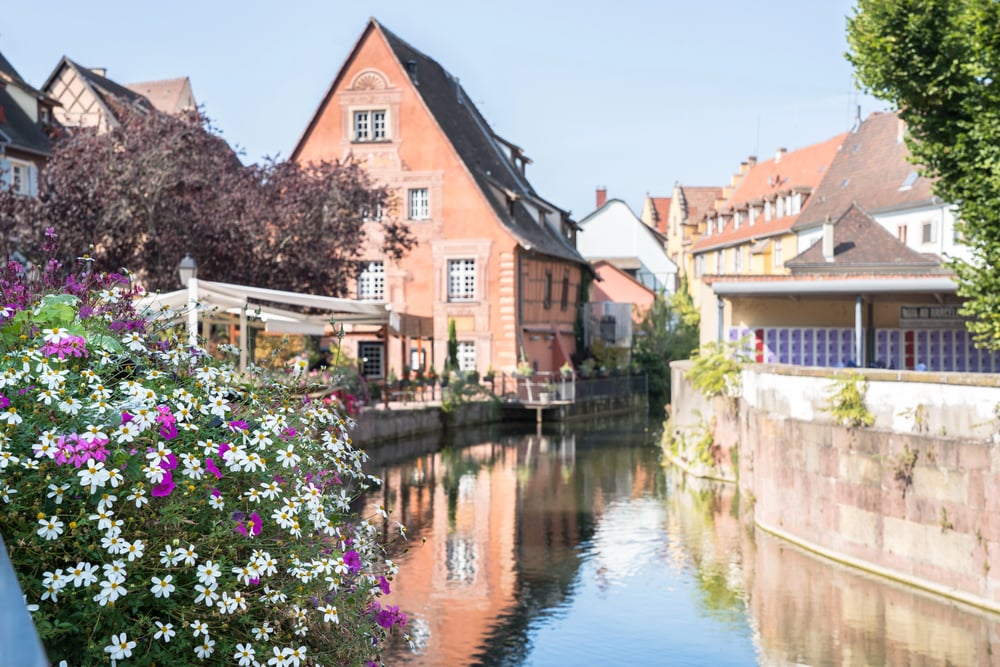
This Alsace village ranks among the top three favorite Christmas markets in the region, competing with larger towns despite its small size. The ruined castle overlooking the town creates a dramatic backdrop, especially when fog settles in the valley.
A fortified bridge spans the river running through town, with a small chapel built into the bridge itself. The concentration of Christmas decorations per square foot might exceed anywhere else in Alsace, with every window, doorway, and lamppost getting the full holiday treatment.
Local bakers produce traditional Christmas cookies by the thousands, filling the air with scents of cinnamon and anise. Walking through Kaysersberg in December feels almost overwhelming in the best possible way.
Dresden

This German city showcases a rich culinary legacy during the Christmas season, particularly famous for its Stollen, a fruit bread loaded with spices and covered in powdered sugar. The Striezelmarkt in Dresden claims to be Germany’s oldest Christmas market, with records dating back to 1434.
The city’s Baroque architecture, rebuilt after World War II destruction, provides an elegant setting for holiday celebrations. The massive Christmas tree in the main square gets decorated with thousands of lights, visible from blocks away.
Dresden takes its holiday food traditions seriously, with bakers competing for the best Stollen recipe and entire shops dedicated to Christmas treats.
Bad Goisern

This Austrian town near Hallstatt hosts the iconic Salzkammergut Krampus parade, a thrilling display of sweet angels, scary devils, and a gift-bearing Santa. The parade represents authentic Alpine Christmas traditions, predating modern commercialized celebrations by centuries.
Half-demon, half-goat creatures chase through streets carrying chains and bells, scaring children while entertaining adults. The parade balances ancient folklore with family-friendly fun, showing how Christmas traditions vary across cultures.
Bad Goisern’s location in the Salzkammergut region means Alpine peaks surround the town, providing a dramatic winter setting.
Ghent
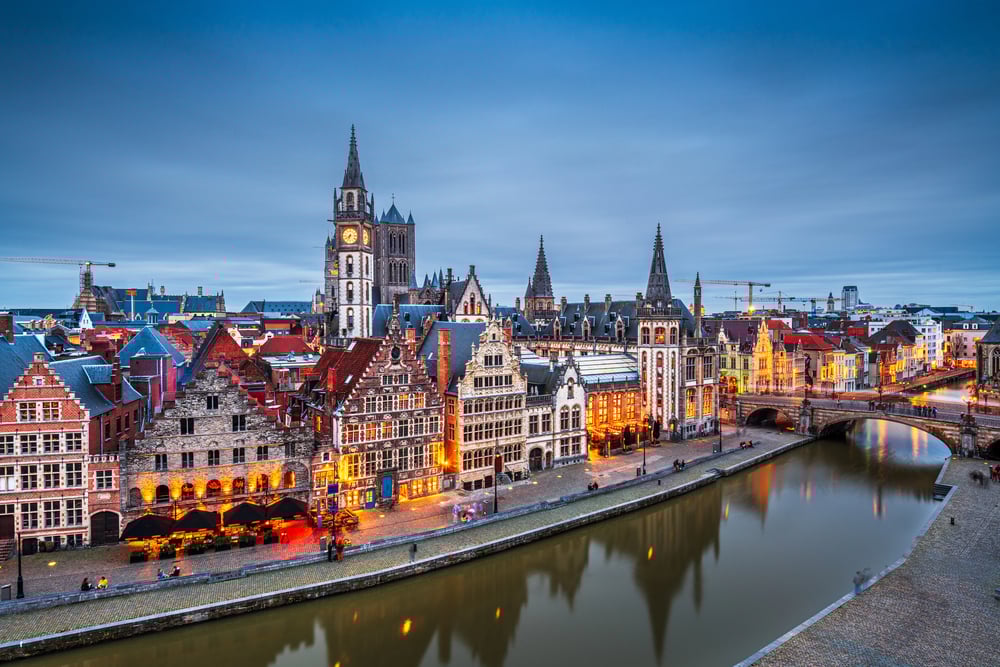
A short ride from Bruges, Ghent features its own Christmas market and festive light trail, with medieval architecture and canals beautifully decorated for the season. St. Nicholas’ Church and the Castle of the Counts host winter wonderland events in December, taking advantage of centuries-old buildings to create atmospheric celebrations.
Ghent doesn’t get the same tourist attention as Bruges, which means Christmas markets here feel less crowded while maintaining similar medieval charm. The city’s three towers—St. Bavo’s Cathedral, St. Nicholas’ Church, and the Belfry—dominate the skyline, each lit dramatically during the holidays.
Belgium’s canal cities share similar DNA, but Ghent adds its own twist with university town energy mixed into medieval foundations.
Innsbruck

This Austrian city sits in a valley surrounded by mountains, creating a natural amphitheater effect where the Alps rise directly behind city buildings. The famous Golden Roof gleams in the old town center, a landmark covered in thousands of gilded copper tiles.
Christmas markets fill the squares, with vendors selling everything from Glühwein to hand-carved wooden ornaments. The proximity to ski resorts means visitors can combine Christmas market exploration with Alpine sports, hitting the slopes during the day and warming up with mulled wine at night.
Innsbruck’s combination of urban amenities and mountain access makes it feel purpose-built for winter holidays, even though its history as a trading route crossroads predates skiing tourism by centuries.
Gosau
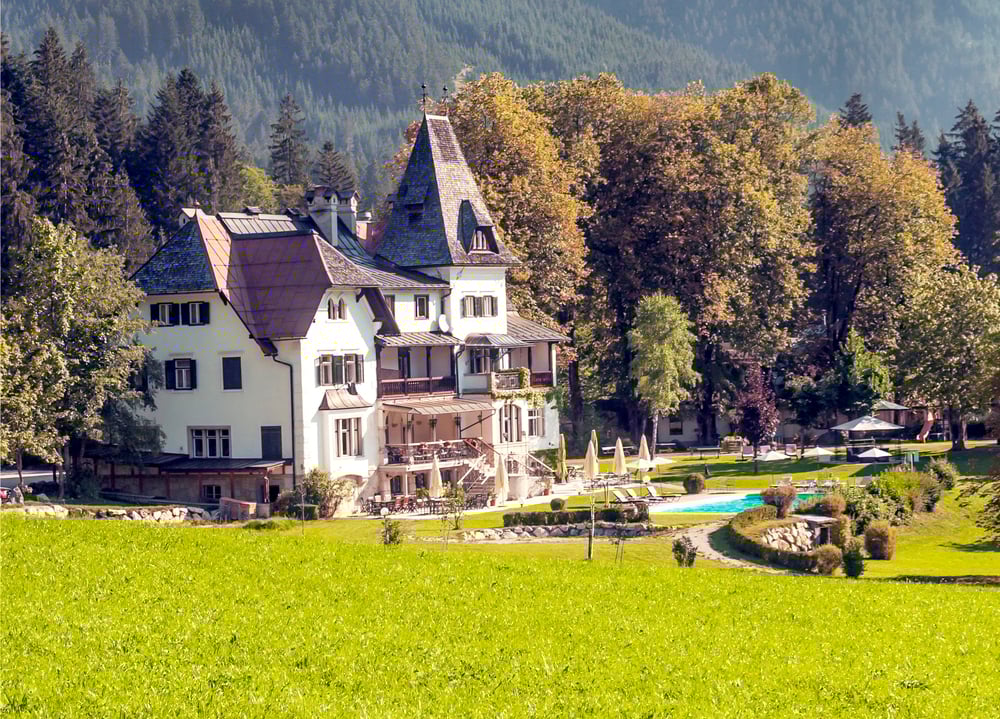
This Austrian village offers wide areas of skiing freedom and numerous slopes of the Dachstein area, with a valley setting that creates dramatic mountain views from every angle. The village maintains traditional Alpine architecture, with wooden chalets and church steeples creating postcard scenes.
Gosau sits higher in elevation than nearby Hallstatt, meaning more reliable snow coverage and colder temperatures that keep everything frozen and picture-perfect. The Christmas markets here stay small and local, catering more to residents and skiers than tour groups.
Gosau represents authentic Alpine Christmas culture without heavy tourist influence, showing how mountain communities actually celebrate rather than performing for visitors.
When December defines a destination

These places exist year-round, hosting regular life outside the holiday season. But something changes when December arrives and Christmas decorations appear.
The architecture that stood for centuries suddenly makes perfect sense, as if builders hundreds of years ago somehow knew their half-timbered houses and cobblestone streets would eventually frame Christmas markets. The canals reflect holiday lights, the snow settles on medieval rooftops, and the mulled wine warms cold hands while carol singers perform in centuries-old squares.
Tourism boards recognize this appeal, extending Christmas seasons earlier and keeping lights up longer. Yet the magic persists because these towns and cities weren’t manufactured for tourism—they simply happened to evolve in ways that align perfectly with how people imagine Christmas should look.
The fairy tale atmosphere exists whether anyone acknowledges it or not, waiting each year for winter to arrive and prove once again that some places just belong to the holidays.
More from Go2Tutors!

- The Romanov Crown Jewels and Their Tragic Fate
- 13 Historical Mysteries That Science Still Can’t Solve
- Famous Hoaxes That Fooled the World for Years
- 15 Child Stars with Tragic Adult Lives
- 16 Famous Jewelry Pieces in History
Like Go2Tutors’s content? Follow us on MSN.