15 Luxury Brands with Surprising Origins
Luxury brands today represent the pinnacle of sophistication, exclusivity, and astronomical price tags. When you see someone carrying a Hermès bag or wearing a Rolex watch, you’re witnessing the end result of carefully crafted brand mystique built over decades or even centuries. But strip away the marketing magic and designer polish, and you’ll find origin stories that are often surprisingly humble, practical, or downright unexpected.
Many of today’s most coveted luxury names started out solving basic everyday problems or serving completely different markets. Some founders had no intention of creating luxury empires—they just wanted to make better products or earn a living. Others pivoted so dramatically that their original business would be unrecognizable today.
Here’s a list of 15 luxury brands with surprising origins that prove even the most exclusive names often have surprisingly down-to-earth beginnings.
Hermès
In 1837, Thierry Hermès wasn’t dreaming of hundred-thousand-dollar handbags—he was crafting harnesses and saddles for horses in Paris. His workshop served the European nobility who needed quality leather goods for their carriages and riding horses.
The craftsmanship was so exceptional that coronations were reportedly postponed until Hermès could create custom carriage designs. When automobiles eventually replaced horse-drawn carriages, the company pivoted to luxury leather goods, maintaining the same obsessive attention to detail that once satisfied kings and queens.
Lamborghini
Ferruccio Lamborghini was perfectly content building tractors from surplus World War military equipment when he bought a Ferrari in the sixties. The Ferrari’s clutch kept giving him trouble, so he visited Enzo Ferrari himself to complain.
Ferrari dismissively told the tractor maker to stick to farming and leave sports cars to the experts. That insult was expensive—Lamborghini decided to build his own superior sports car, and by the sixties, he had created a company that would become Ferrari’s most glamorous rival.
Tiffany & Co.
Charles Lewis Tiffany was just twenty-five when he opened a stationery store in New York City with his friend. They sold office supplies, fancy paper goods, and writing instruments to Manhattan’s business crowd.
The pivot to jewelry came gradually as they began importing decorative items from Europe. Tiffany’s famous blue color wasn’t introduced until the forties, and the store didn’t become synonymous with engagement rings until much later.
Samsung

Lee Byung-Chull founded Samsung in Korea as a grocery trading company, selling noodles, dried fish, and other local goods for export to China. The name Samsung means three stars in Korean, chosen to represent something permanent and bright.
For nearly three decades, Samsung remained focused on food, textiles, and basic goods. Electronics didn’t enter the picture until the late sixties, when the company used its logistics expertise and supply chain knowledge to branch into manufacturing televisions and home appliances.
Prada
Mario Prada opened a small leather goods shop in Milan specializing in luggage, handbags, and travel accessories for Italy’s growing middle class. The company remained relatively small for decades, with Mario actually believing women shouldn’t be involved in business.
Ironically, it was his granddaughter Miuccia who transformed Prada into a global fashion powerhouse in the eighties. She introduced the revolutionary nylon backpacks that became cult objects and launched the brand into high fashion, proving Mario’s theory about women spectacularly wrong.
Rolex
Hans Wilsdorf was only twenty-four when he founded Rolex in London with a specific mission: making wristwatches that were actually accurate. At the time, wristwatches were considered unreliable and were mainly worn by women as jewelry.
Men carried pocket watches if they wanted to know the correct time. Wilsdorf moved his operation to Geneva and focused obsessively on precision, eventually creating the first wristwatch to receive chronometer certification.
Louis Vuitton
Louis Vuitton was born into poverty in rural France and walked hundreds of miles to Paris as a teenager to apprentice as a box-maker and packer. In the eighteen-fifties, this was actually a prestigious profession, as wealthy travelers needed custom-fitted trunks that could survive long journeys by ship and carriage.
Vuitton specialized in creating flat-topped trunks that could be stacked efficiently, revolutionary at a time when most luggage had rounded tops. His innovation in travel storage eventually evolved into the luxury leather goods empire we know today.
Ferrari
Enzo Ferrari never intended to build road cars at all—he was obsessed with racing and founded his company to create the ultimate race cars. Road cars were an afterthought, built primarily to fund his racing ambitions.
Ferrari famously said his customers were buying the engine and he was throwing in the rest of the car for free. This racing-first mentality, combined with limited production numbers, accidentally created the exclusivity and mystique that makes Ferrari one of the most desirable luxury brands today.
LG

Lucky Chemical Industry, founded in Korea, started by manufacturing facial cream and other cosmetics. The company’s name reflected its optimistic outlook in post-war Korea, and its early products focused on basic beauty and household needs.
The transition to electronics came gradually through the fifties and sixties as South Korea industrialized. LG eventually became the Life’s Good brand we know today, but the original Lucky Chemical name stuck around in the company’s legal documents for decades.
Bulgari

Sotirios Voulgaris was a Greek silversmith who moved to Rome and opened a small jewelry shop. He deliberately chose Rome over other cities because he was fascinated by the city’s ancient history and wanted to blend Greek craftsmanship with Roman grandeur.
The distinctive Bulgari style emerged from this cultural fusion, combining Greek techniques with bold Roman aesthetics. The brand’s iconic serpent motifs and colorful gemstone combinations reflect this original vision of marrying two ancient civilizations through luxury jewelry.
Porsche
Ferdinand Porsche established his company with just a small team working in a garage in Stuttgart. His first car, the 356, was essentially a modified Volkswagen Beetle—Porsche had previously designed the Beetle and used many of its components for his sports car.
The early Porsches were hand-built and relatively affordable compared to other sports cars of the era. The company’s racing success and engineering innovations gradually elevated it to luxury status, but it started as a small workshop trying to make sports cars accessible to enthusiasts.
Chanel

Gabrielle Coco Chanel’s path to fashion began in an orphanage where nuns taught her to sew. After working as a seamstress and briefly as a cabaret singer, she started as a milliner, making women’s hats.
Her simple, elegant hat designs were revolutionary at a time when women’s headwear was elaborate and ornate. The transition to clothing came when she began designing simple dresses to complement her hats, accidentally creating the modern concept of effortless luxury.
Gucci
Guccio Gucci worked as a bellhop at London’s Savoy Hotel, where he was fascinated by the elegant luggage carried by wealthy guests. When he returned to Florence, he opened a small leather goods shop specializing in high-quality luggage and riding equipment.
His background in hospitality taught him about luxury service and attention to detail, which became hallmarks of the Gucci brand. The famous horse-bit motif and bamboo handles came from the company’s equestrian heritage.
Bottega Veneta
Founded in Vicenza, Bottega Veneta started as a small leather workshop specializing in a distinctive intrecciato weave technique. The founders wanted to create luxury leather goods that didn’t rely on flashy logos or obvious branding.
Their philosophy was when your own initials are enough. The brand’s signature woven leather technique became their calling card, proving that craftsmanship could speak louder than marketing.
Brunello Cucinelli
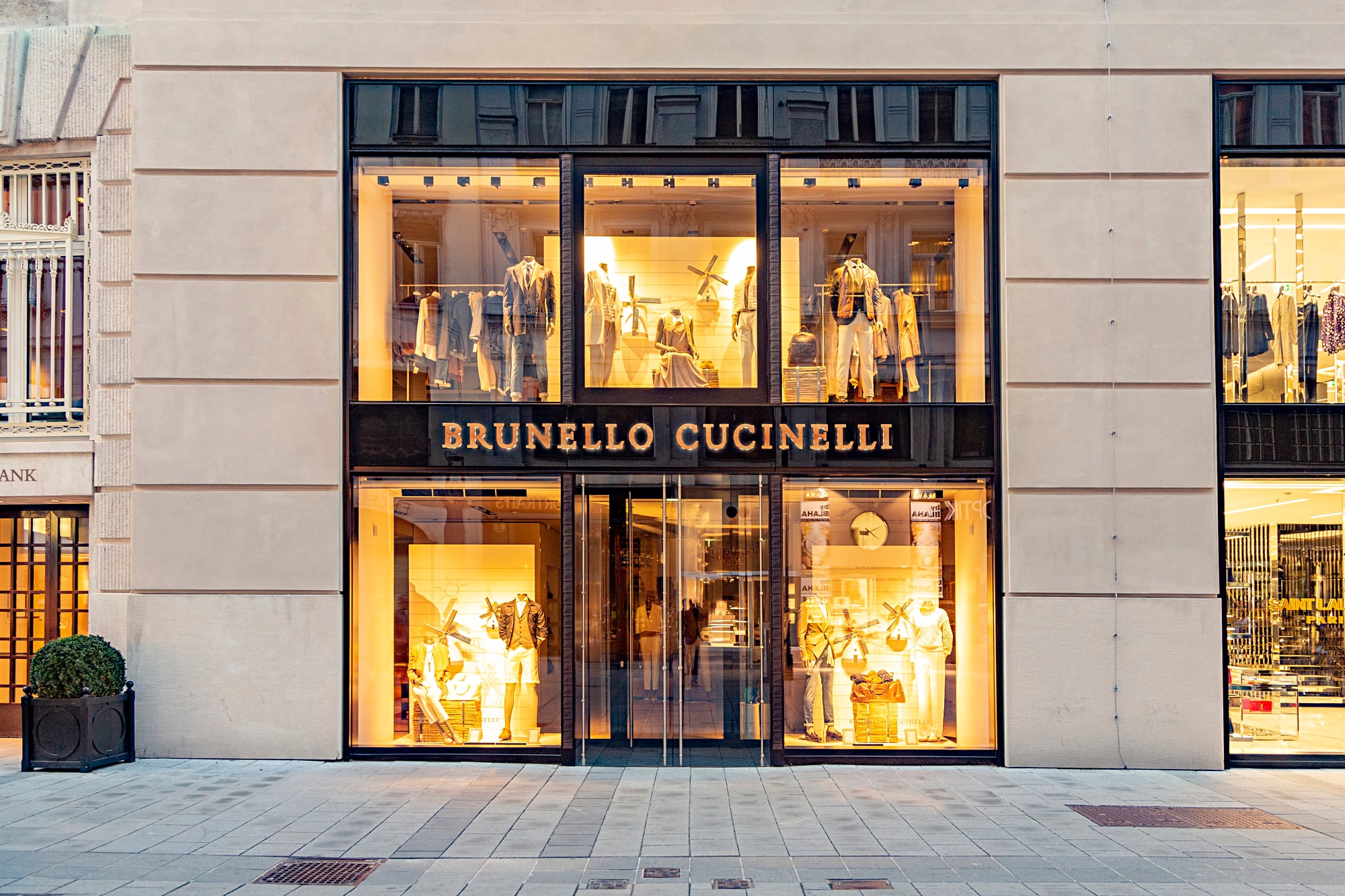
Brunello Cucinelli borrowed a small sum to start dyeing cashmere sweaters in a tiny shop in Italy. He was inspired by colorful Benetton sweaters but believed there was a market for similar designs made from luxury cashmere.
Starting with just a few kilograms of cashmere yarn that he couldn’t initially afford to pay for, Cucinelli built his empire on the simple idea that luxury should be both beautiful and ethically produced. He eventually transformed the medieval village of Solomeo into his company headquarters, proving that luxury brands could still maintain human-scale values.
From Humble to High-End
These brands prove that luxury isn’t born—it is built through decades of craftsmanship, innovation, and sometimes pure accident. Hermès went from outfitting horses to creating handbags with multi-year waiting lists, while Samsung transformed from selling noodles to manufacturing the world’s most advanced smartphones.
What connects these diverse origin stories is the founders’ focus on solving real problems with exceptional quality, whether that meant creating better travel trunks, more reliable timepieces, or simply finding a way to make a living. In an age when new brands try to manufacture exclusivity from day one, these origin stories remind us that true luxury status takes time, patience, and usually a willingness to start small and think big.
More from Go2Tutors!

- The Romanov Crown Jewels and Their Tragic Fate
- 13 Historical Mysteries That Science Still Can’t Solve
- Famous Hoaxes That Fooled the World for Years
- 15 Child Stars with Tragic Adult Lives
- 16 Famous Jewelry Pieces in History
Like Go2Tutors’s content? Follow us on MSN.