15 Oldest Restaurant Chains in the US
America has a complicated relationship with fast food. People complain about it, then keep going back.
And while the current landscape is crowded with trendy concepts and delivery-only brands, some chains have been feeding people for close to a century. These aren’t just survivors — they shaped the entire idea of what a restaurant chain could be.
Here are the 15 oldest ones still standing (and one or two that shaped history before fading out).
A&W (1919)

A&W holds a claim that’s hard to argue with: it’s the oldest fast food chain in America. Roy Allen started selling root beer from a roadside stand in Lodi, California, in 1919.
He partnered with Frank Wright a couple of years later, and those two initials became the brand. The chain pioneered the drive-in format long before anyone else was thinking about eating in their car.
Over a century later, A&W still operates hundreds of locations — often sharing space with KFC — and its root beer floats remain the main draw.
White Castle (1921)

White Castle didn’t just open early. It helped define what a hamburger chain could look like.
Founded in Wichita, Kansas in 1921, the chain introduced the concept of small, square burgers served fast and cheap. The iconic white porcelain buildings were deliberately designed to look clean and safe — a direct response to public skepticism about ground beef at the time.
White Castle still operates primarily in the Midwest and East Coast, and its cult following has never really wavered.
Howard Johnson’s (1925)

Before the interstate highway system, Howard Johnson’s was the road trip. Founded in Quincy, Massachusetts in 1925 by Howard Deering Johnson, the chain grew into one of the largest restaurant operators in the country by the mid-20th century.
At its peak, there were more than a thousand locations serving the iconic 28 flavors of ice cream alongside fried clams and pot roast. The chain declined sharply from the 1980s onward as competition intensified.
Today only a single location remains, in Lake George, New York — but its place in American food history is secure.
Steak ‘n Shake (1934)
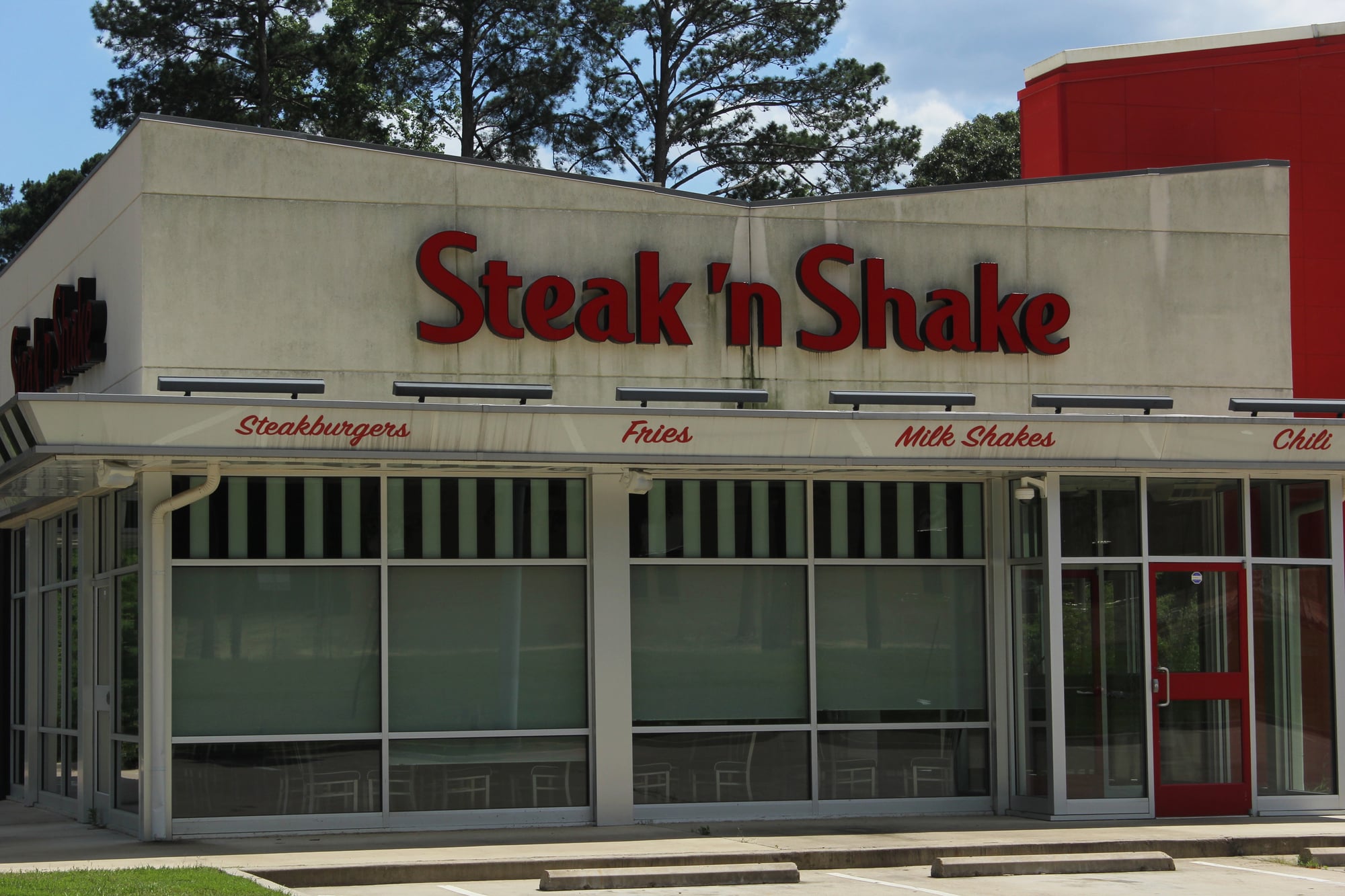
The name says it. Steak ‘n Shake opened in Normal, Illinois in 1934, built around the promise of steakburgers and hand-dipped milkshakes.
Founder Gus Belt reportedly ground steaks right in front of customers to prove the meat was real — hence the “in sight it must be right” motto. The chain never became as massive as some of its counterparts, but it developed a loyal following in the Midwest and South.
In recent years, Steak ‘n Shake has closed a number of corporate locations and shifted toward a franchise model, but it still operates across the country.
Big Boy (1936)
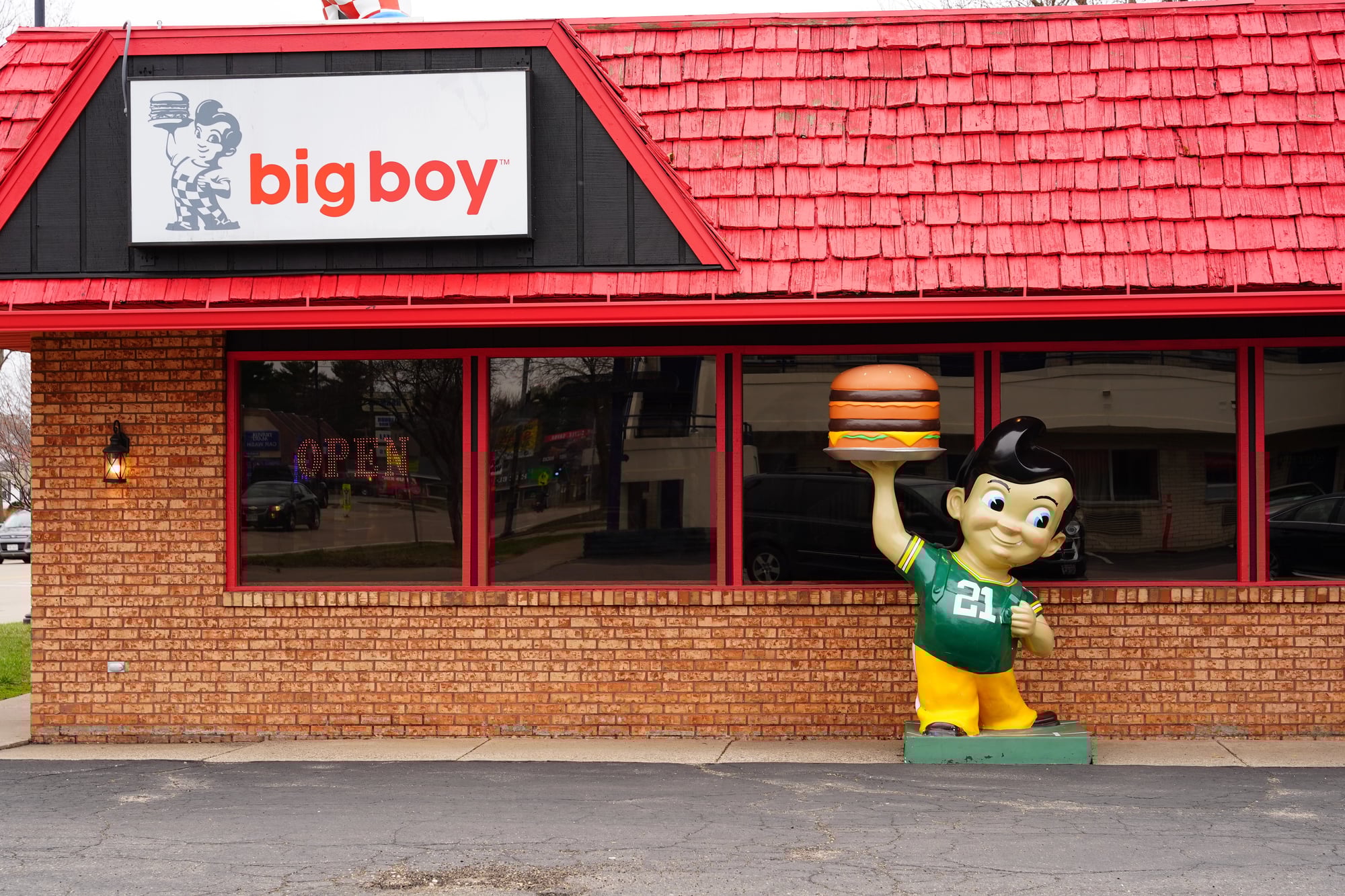
Bob Wian opened the first Big Boy in Glendale, California in 1936. The double-decker hamburger he created there became one of the most copied sandwiches in fast food history.
The chain licensed its name and mascot — the chubby kid in the red-and-white checkered overalls — to regional operators across the country, which is why you’ll find Frisch’s Big Boy in Ohio and Shoney’s in the South carrying versions of the same concept. The name and mascot still exist today under various regional operators.
Dairy Queen (1940)

Dairy Queen opened its first location in Joliet, Illinois in 1940, selling soft-serve ice cream from a stand in the parking lot of a friend’s restaurant. The concept spread fast.
Within a few years, hundreds of franchises had opened across the country. DQ eventually expanded beyond dessert into burgers and chicken, and today it operates thousands of locations worldwide.
Berkshire Hathaway, Warren Buffett’s company, acquired DQ in 1998 — Buffett has said it was partly because he just really liked the food.
McDonald’s (1940)

The original McDonald’s opened in San Bernardino, California in 1940, run by McDonald brothers.
But the chain as most people know it — the golden arches, the franchising model, the relentless expansion — came from Ray Kroc, who opened his first franchise location in Des Plaines, Illinois in 1955 and eventually bought the brothers out.
McDonald’s is now the largest restaurant chain in the world by number of locations, serving tens of millions of customers every day.
The San Bernardino original is long gone, but a museum marks the spot.
Dunkin’ (1950)

William Rosenberg opened the first Dunkin’ Donuts in Quincy, Massachusetts in 1950, the same city that launched Howard Johnson’s a quarter century earlier.
Rosenberg also co-founded the International Franchise Association, helping to shape how franchise businesses operate across industries.
The chain built its identity on affordable coffee and donuts long before specialty coffee became a cultural obsession.
In 2019, the company dropped “Donuts” from its name, officially becoming just Dunkin’ — a nod to the fact that coffee had become its primary product.
Jack in the Box (1951)

Jack in the Box opened in San Diego, California in 1951, and it was one of the first chains to use a two-way intercom for drive-through orders — a genuinely new idea at the time.
The chain grew primarily along the West Coast and in the Sun Belt.
It’s never had the national footprint of McDonald’s or Burger King, but it’s built a strong regional identity with a menu that leans into late-night eating and an advertising mascot with a surprisingly sharp wit.
Burger King (1953)
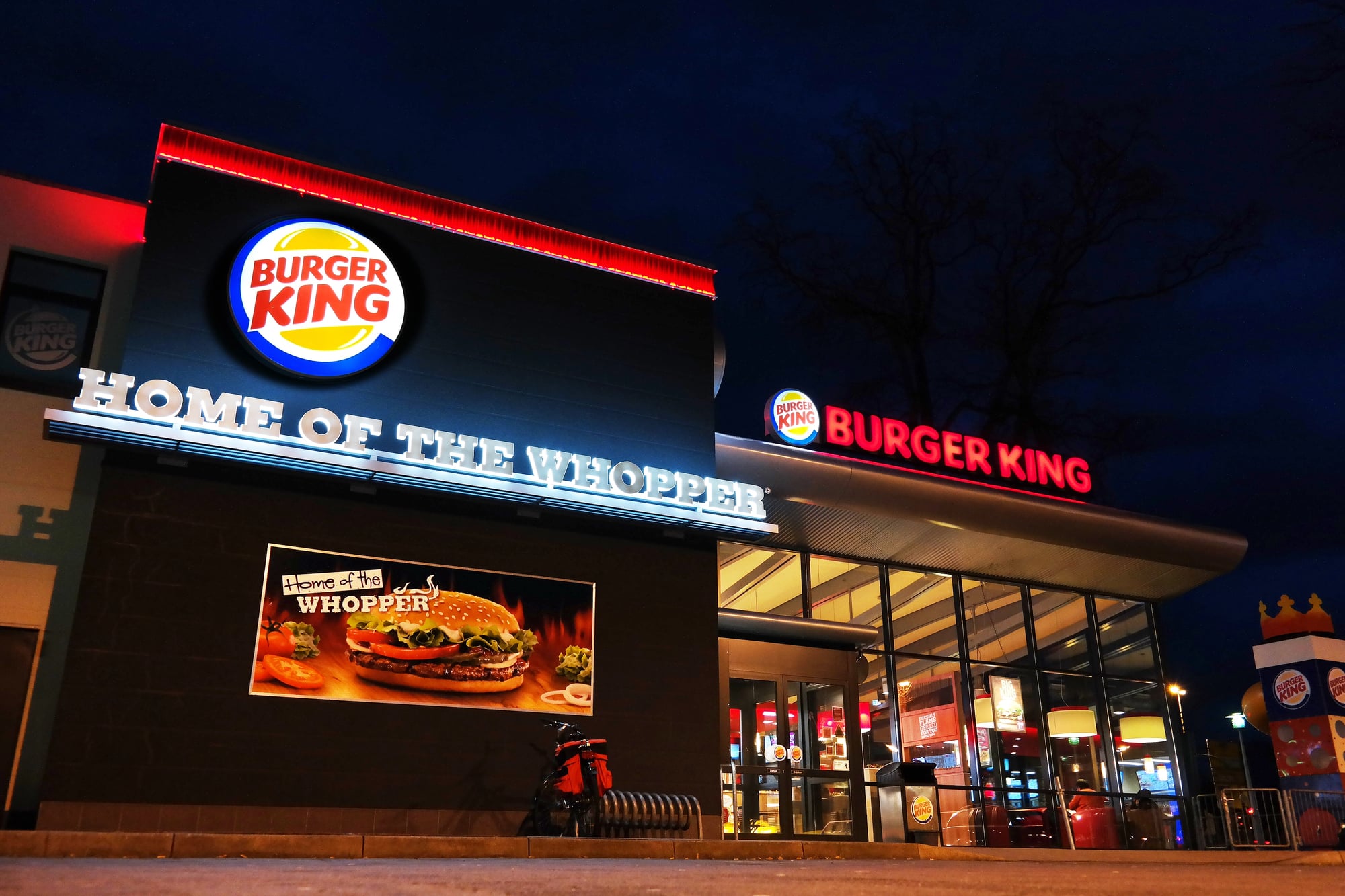
Burger King started in Jacksonville, Florida in 1953 under the name Insta-Burger King, built around a pressure-fryer called the Insta-Broiler.
The Jacksonville franchisees eventually bought out the original concept and renamed it Burger King after the Insta-Broiler failed.
The flame-broiled burger became the chain’s defining product and the centerpiece of decades of marketing that positioned Burger King directly against McDonald’s.
Today it operates more than 18,000 locations in over 100 countries.
Denny’s (1953)

Danny’s Donuts opened in Lakewood, California in 1953.
The name changed to Denny’s a few years later to avoid confusion with a competing chain.
Denny’s carved out a specific niche: a full-service diner open 24 hours a day, seven days a week.
For a long stretch of its history, Denny’s didn’t even have locks on its doors.
The chain became culturally associated with late nights, road trips, and the kind of meal that doesn’t fit neatly into breakfast, lunch, or dinner.
It still operates thousands of locations across the country.
Sonic Drive-In (1953)

Sonic’s origin story has a satisfying simplicity to it.
Troy Smith opened a root beer stand in Shawnee, Oklahoma in 1953 and attached speakers to the order boards so customers could talk to the staff without leaving their cars.
The format caught on.
Sonic kept the carhop model — and the skating carhops — long after most drive-ins had disappeared.
Today the chain operates primarily in the South and Midwest, and its menu of drinks and slushes with seemingly endless customization options has helped it stay relevant in an era dominated by coffee chains.
Waffle House (1955)
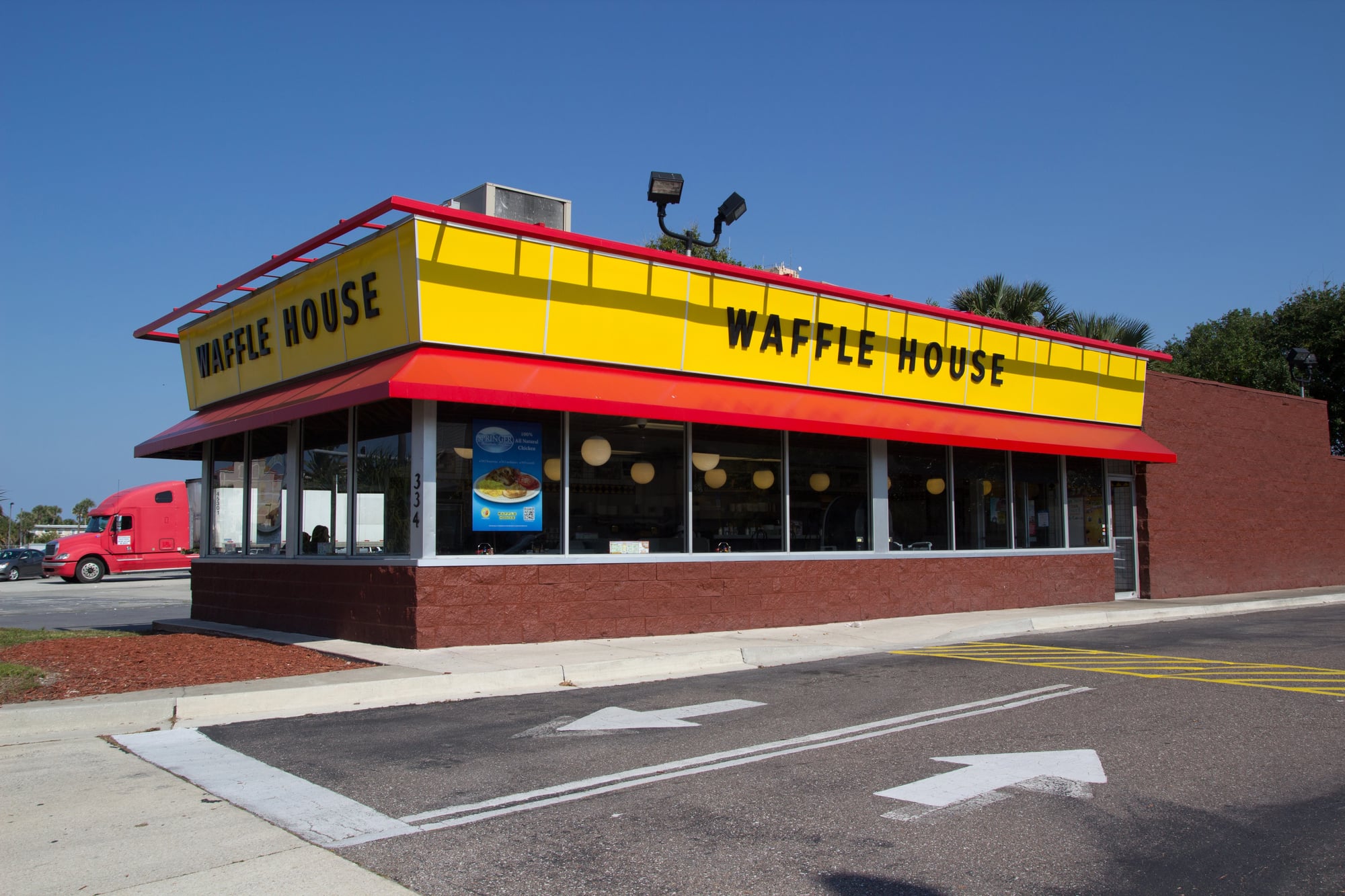
Joe Rogers Sr. and Tom Forkner opened the first Waffle House in Decatur, Georgia in 1955.
The concept was straightforward: a small, no-frills diner open around the clock, serving waffles, eggs, and hash browns.
Waffle House has never franchised — every location is company-owned — and the chain has stayed almost exclusively in the South and Southeast.
It’s also become something of an informal emergency management benchmark.
FEMA uses what insiders call the “Waffle House Index” to gauge disaster severity: if a Waffle House is closed, things are bad.
IHOP (1958)
Al Lapin Jr. opened the International House of Pancakes in Toluca Lake, California in 1958.
The chain grew quickly through franchising and became synonymous with all-day breakfast and stacks of pancakes in flavors that rotate seasonally.
IHOP has evolved significantly over the decades, expanding its menu well beyond breakfast.
In 2018, it briefly changed its name to IHOb (International House of Burgers) as a marketing stunt that generated enormous media coverage — and then quietly changed it back.
The pancakes remain the point.
Pizza Hut (1958)

Dan and Frank Carney borrowed $600 from their mother and opened the first Pizza Hut in Wichita, Kansas in 1958.
The building only had room for nine letters on the sign, and the squat red roof became one of the most recognizable shapes in American retail architecture.
Pizza Hut was the first chain to make pizza a mainstream American food rather than a regional specialty.
At its peak in the 1980s and 1990s, it was the largest pizza company in the world.
The dine-in model has shrunk considerably, but the chain still operates thousands of delivery and carryout locations globally.
The Ones That Outlasted the Era That Made Them

What’s striking about these chains isn’t just their age. Most of them were built around a single, simple idea — a hamburger, a root beer float, a waffle — and that simplicity turned out to be durable.
Trends came and went. Health crazes, recessions, pandemics, the rise of fast casual, the explosion of delivery apps.
And yet the sign with the golden arches is still there. So is the orange roof of a Denny’s at a highway exit at 2 a.m.
Some of these chains have reinvented themselves multiple times. Others have barely changed.
Either way, they’ve outlasted dozens of competitors that seemed more modern, more polished, more of-the-moment.
There’s something worth noticing in that — not as a lesson about nostalgia, but as a reminder that longevity usually comes from getting something fundamentally right and then not abandoning it.
More from Go2Tutors!

- The Romanov Crown Jewels and Their Tragic Fate
- 13 Historical Mysteries That Science Still Can’t Solve
- Famous Hoaxes That Fooled the World for Years
- 15 Child Stars with Tragic Adult Lives
- 16 Famous Jewelry Pieces in History
Like Go2Tutors’s content? Follow us on MSN.