Royal Scandals That Changed History
The monarchy has always existed in a peculiar space between the divine and the human.
For centuries, kings and queens ruled by what they claimed was God-given right, their authority supposedly beyond question.
But underneath those crowns and royal robes were people with all the messy, complicated desires that come with being human.
And when those desires collided with duty, the resulting scandals didn’t just fill gossip columns — they rewrote the course of nations.
These weren’t just tabloid fodder for their time.
The scandals that truly mattered were the ones that forced constitutional crises, sparked religious revolutions, or fundamentally altered how we think about monarchy itself.
Here’s a closer look at the moments when royal misbehavior stopped being just embarrassing and started making history.
A King Who Chose Love Over Country

When Edward VIII announced his abdication on December 11, 1936, he became the first English monarch to voluntarily give up the throne.
He’d been king for less than a year — from January to December 1936 — but that was long enough to create a constitutional crisis that shook the British Empire to its foundations.
The problem wasn’t just that he wanted to marry Wallis Simpson, an American socialite.
It was that she was divorced.
Twice.
The Church of England, which Edward headed as king, along with the British government and public, condemned the match.
Prime Minister Stanley Baldwin and his cabinet threatened to resign if Edward insisted on the marriage, which would have triggered a full constitutional crisis.
Edward tried to find a compromise, even suggesting a morganatic marriage where Wallis would have no royal rights, but Baldwin shot that down too.
In his famous radio address that December evening, Edward explained his impossible position: ‘I have found it impossible to carry the heavy burden of responsibility and to discharge my duties as King as I would wish to do without the help and support of the woman I love’.
It sounded romantic, and for decades that’s how the story was told. But there was a darker undercurrent.
British officials had grown seriously concerned about Edward’s handling of state secrets, discovering he left confidential documents openly visible at his residence, where Italian and German diplomats were among his social circle.
After his abdication, Edward would meet with Nazi officials and even Adolf Hitler, with the Nazis hoping to reinstall him on the throne to establish influence in England.
The abdication thrust Edward’s younger brother Albert onto the throne as George VI, which eventually led to Queen Elizabeth II’s reign.
The whole affair demonstrated that even in the 20th century, the British monarch couldn’t simply do as they pleased.
Parliament had the final say.
The Marriage That Split a Church
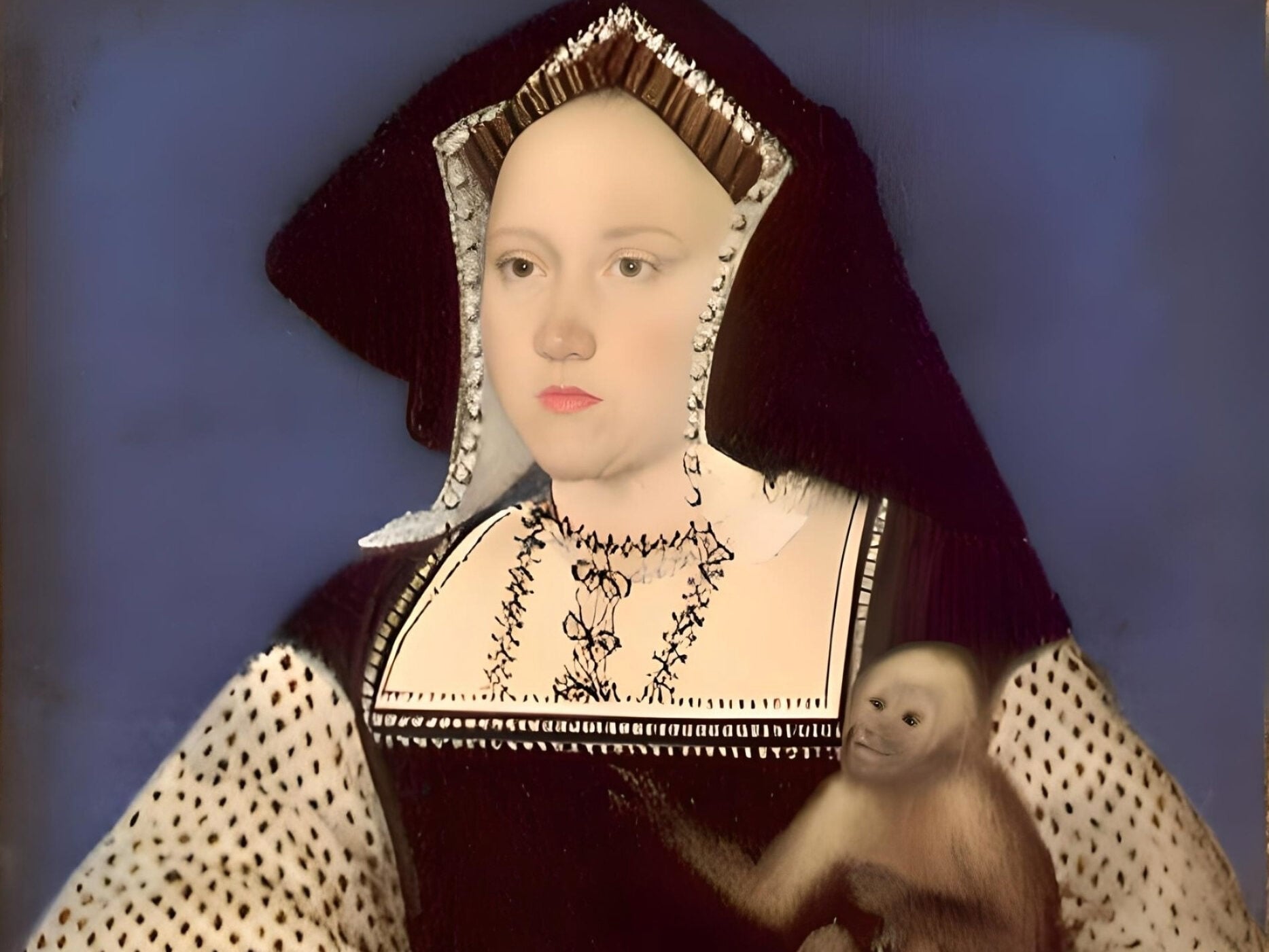
If Edward VIII’s abdication was dramatic, it pales in comparison to what Henry VIII pulled off four centuries earlier.
When Henry married Catherine of Aragon in 1509, she’d already been briefly married to his older brother Arthur, who died young.
Catherine gave birth seven times during their marriage, but only one child survived past infancy — their daughter Mary.
For Henry, who desperately needed a male heir to secure the Tudor dynasty, this was unacceptable.
By 1527, Henry had fallen passionately in love with Anne Boleyn, one of Catherine’s ladies-in-waiting, and she refused to become merely his mistress.
Henry petitioned Pope Clement VII for an annulment on the grounds that his marriage to his brother’s widow had been forbidden by God and therefore invalid.
Under normal circumstances, this might have worked — European monarchs had secured similar annulments before when the succession was at stake.
But timing is everything. Pope Clement VII feared the wrath of Catherine’s nephew, Holy Roman Emperor Charles V, whose troops had recently sacked Rome and briefly taken the Pope prisoner.
The Pope refused, and when it became clear he wouldn’t budge, Henry took matters into his own hands.
When Anne became pregnant in 1533, Henry secretly married her — while still technically married to Catherine — to ensure their child would be legitimate.
The Act of Supremacy, passed in November 1534, declared that Henry had always been the Supreme Head of the Church of England, erasing even the qualifying phrase that had limited his authority ‘as far as the law of Christ allows’.
The medieval principle that church and state were separate entities, with divine law standing higher than human law, was legislated out of existence overnight.
Henry and Anne’s first child turned out to be another daughter — the future Elizabeth I. Anne would lose her head three years later, but the damage to Rome’s authority was permanent.
The destruction of the Roman Catholic Church’s power in England led inevitably to the dissolution of the monasteries, reshaping English society and redistributing massive amounts of wealth and land.
All because a king wanted a different wife.
Death at a Hunting Lodge

On January 30, 1889, Crown Prince Rudolf of Austria was found dead at his hunting lodge in Mayerling alongside the body of his teenage lover, Baroness Maria Vetsera.
Rudolf had shot the young baroness before turning the gun on himself in what appeared to be a murder pact.
The scandal rocked the Austro-Hungarian Empire.
Rudolf’s father, Emperor Franz Joseph I, moved quickly to conceal documents related to the case, but the mystery only deepened public fascination.
Rudolf’s wife, Crown Princess Stephanie, later published what she claimed was her husband’s final letter to her, in which he wrote: ‘You are relieved of my presence and vexations; be happy in your own way…I go calmly to my death’.
The Mayerling incident exposed the rot at the heart of one of Europe’s great royal houses and became a symbol of aristocratic decadence at the end of the 19th century.
A Necklace That Cost a Queen Her Head

Marie Antoinette’s involvement in the Affair of the Diamond Necklace was actually a fraud perpetrated by con artists using her name, but it became one of the final grievances that led her to the guillotine in 1793.
A woman named Jeanne de Valois-Saint-Rémy, claiming to be descended from the royal Valois family, became the mistress of Cardinal de Rohan and used him in an elaborate scheme to steal an extravagantly expensive necklace.
Even though Marie Antoinette was innocent, the con artist La Motte escaped from prison and spread rumors that the queen was to blame.
The scandal fed into existing resentment of the Austrian-born queen.
An earlier incident had proven even more damaging to royal prestige: when artist Élisabeth Vigée Le Brun painted Marie Antoinette in 1783 wearing a simple muslin gown called a robe en chemise, far plainer than the queen’s usual elaborate court dress, public outrage was immediate.
The painting was swiftly removed, but the damage was done — Marie Antoinette had allowed herself to be shown as human and distinctly less than royal, shattering the mystique of monarchy forever.
The Marriage That Wouldn’t Die

The relationship between Prince Charles and Princess Diana stands as one of the most talked-about royal scandals in modern history, particularly Diana’s 1995 Panorama interview.
Seven hundred and fifty million people had watched Charles marry Diana in 1981, but he’d already fallen for Camilla Parker Bowles years earlier.
Charles and Diana officially separated in 1992, but it was Diana’s famous BBC interview in 1995 that truly exposed the dysfunction.
Diana’s statement that ‘there were three of us in this marriage, so it was a bit crowded’ — referring to Camilla — became one of the most memorable quotes in royal history.
But the interview itself was problematic: journalist Martin Bashir used fake documents and manipulation to convince Diana to participate, tactics the BBC later apologized for.
Before Diana’s interview, leaked phone conversations between Charles and Camilla had already scandalized the public — the media gleefully nicknamed the affairs ‘Tampongate’ and ‘Squidgeygate’ based on intimate details from the recordings.
These scandals greatly impacted public perception of the heir to the throne and raised serious questions about Charles’s ability to one day be king.
When Diana died in a Paris car crash in 1997, the royal family’s initially cold response sparked another wave of public anger, forcing them to show a more human face.
Why These Scandals Still Echo

The scandals that genuinely changed history share a common thread: they all challenged fundamental assumptions about royal power and privilege. Edward VIII’s abdication proved that Parliament could overrule a monarch’s personal wishes.
Henry VIII’s break with Rome demonstrated that even the Pope’s authority had limits when confronted by a determined king.
The Charles and Diana saga showed that public sympathy could matter more than royal protocol, forcing the monarchy to adapt or risk irrelevance.
Despite centuries of royal scandals, the monarchy endures, with each controversy serving as a moment of reflection that ultimately reinforces what the institution should and shouldn’t be.
These weren’t just personal failures — they were inflection points that redefined the relationship between rulers and ruled.
The crown may sit on one person’s head, but these scandals proved that its authority depends on something far more fragile than divine right. It depends on whether people still believe the story monarchs tell about themselves.
More from Go2Tutors!

- The Romanov Crown Jewels and Their Tragic Fate
- 13 Historical Mysteries That Science Still Can’t Solve
- Famous Hoaxes That Fooled the World for Years
- 15 Child Stars with Tragic Adult Lives
- 16 Famous Jewelry Pieces in History
Like Go2Tutors’s content? Follow us on MSN.



