15 Propaganda Campaigns That Fooled Entire Nations for Years
There’s something deeply unsettling about discovering that what you believed to be true was actually a carefully crafted lie. Throughout history, governments, corporations, and ideological movements have mastered the art of convincing entire populations to accept false narratives as fact.
These campaigns didn’t just fool a few people — they shaped the beliefs of millions, sometimes for decades. The most effective propaganda doesn’t announce itself.
It weaves into daily life so seamlessly that questioning it feels almost unnatural. From manufactured health scares to fabricated threats, these campaigns reveal just how vulnerable human perception can be when faced with coordinated deception.
The Great Fear of Comic Books

Comic books were going to destroy America’s children. That was the message Dr. Fredric Wertham hammered home in the 1940s and 1950s.
His book “Seduction of the Innocent” claimed comic books caused juvenile delinquency, homosexuality, and violent behavior. The campaign worked. Parents burned comic books in public bonfires.
Congress held hearings. The comic book industry nearly collapsed under the weight of censorship and public hysteria.
The War of the Worlds Broadcast Panic

Orson Welles didn’t set out to fool an entire nation on Halloween night 1938, but his radio adaptation of H.G. Wells’ “The War of the Worlds” did exactly that (though perhaps not to the extent later mythology suggested, but the panic was real enough for thousands of listeners who tuned in late and missed the fictional framing). The broadcast, presented as breaking news reports of a Martian invasion, sent people fleeing their homes and calling police stations across the country — and more importantly, it demonstrated just how easily a well-crafted media presentation could override rational thinking when people were already anxious about the possibility of war in Europe.
So when families heard urgent news bulletins describing strange explosions on Mars followed by cylindrical objects crashing in New Jersey, many didn’t question whether the reports were real; they simply reacted. And the reaction revealed something unsettling about how quickly fear could spread through a population that was already primed to expect bad news from their radios.
The aftermath was almost as significant as the initial panic. Newspapers, perhaps sensing an opportunity to discredit their new competitor (radio), amplified the story of mass hysteria far beyond what actually occurred, creating a legend that persists today.
But the real propaganda wasn’t Welles’ fictional broadcast — it was the subsequent narrative that painted radio audiences as uniquely gullible and susceptible to manipulation.
DDT: The Miracle Chemical

— Photo by PongMoji
DDT was marketed as humanity’s salvation from disease-carrying insects. Government campaigns in the 1940s and 1950s showed children being sprayed directly with the chemical at public pools and families enjoying picnics while DDT fog machines operated nearby.
The propaganda portrayed anyone questioning DDT’s safety as anti-progress. Scientists who raised concerns found their funding cut and their reputations attacked.
Rachel Carson’s “Silent Spring” finally broke through the narrative, but not before DDT had devastated bird populations and accumulated in the food chain for decades.
The Cig Industry’s Health Campaign

Cigarettes were good for you — that’s what cig companies spent decades convincing people to believe, and they did it with a sophistication that makes modern marketing look primitive. They didn’t just advertise their products; they manufactured an entire alternate reality where cig smoke was healthy, sophisticated, and even medically recommended.
Doctors appeared in advertisements endorsing specific brands, not because they were paid directly (though many were), but because the industry had created an ecosystem where questioning its benefits seemed almost anti-scientific. The campaign worked by co-opting the very institutions people trusted most: medical associations, research universities, and scientific journals all became unwitting participants in a decades-long deception that killed millions.
And the most insidious part wasn’t the advertisements themselves — it was the systematic suppression of research that contradicted the industry’s narrative, creating a false sense of scientific consensus that persisted well into the 1970s. What makes this particularly disturbing is how the industry knew the truth about its dangers as early as the 1950s, yet continued to fund studies and promote research that would muddy the waters just enough to keep the controversy alive.
They didn’t need to prove cigarettes were healthy — they just needed to create enough doubt that people could continue cig smoke with a clear conscience.
Radium: The Health Tonic

Radium was the wonder element that could cure everything from impotence to depression. In the early 20th century, companies added radium to toothpaste, chocolate, and drinking water, marketing these products as health tonics.
The Radium Institute promoted radium therapy as a miracle cure. Wealthy customers paid premium prices to drink radium-laced water and receive radium treatments.
The propaganda was so effective that even after people began dying from radiation poisoning, many refused to believe radium was dangerous.
The Satanic Panic

Satan was infiltrating American communities through daycare centers, heavy metal music, and role-playing games — or so millions of Americans believed during the 1980s and early 1990s, when a moral panic swept through the country with the force of a religious revival and the methodology of a witch hunt. The campaign didn’t emerge from a single source but rather coalesced around a perfect storm of cultural anxieties: working mothers leaving children in daycare, the rise of evangelical Christianity as a political force, and sensationalized media coverage that treated every unsubstantiated allegation as breaking news.
And the most troubling aspect wasn’t just that innocent people went to prison (though many did), but that the panic revealed how readily a supposedly rational society could abandon evidence-based thinking when the story being told confirmed their deepest fears about social change. The propaganda worked because it tapped into genuine concerns about child welfare and wrapped them in a narrative so compelling that questioning it felt like enabling child abuse.
Therapists used questionable techniques to “recover” memories of satanic rituals, law enforcement agencies created task forces to investigate satanic crime, and news programs presented the panic as investigative journalism rather than mass hysteria. But perhaps the most insidious element was how the movement positioned itself as protecting children while actually traumatizing them through aggressive interrogation techniques and suggestive therapy sessions that implanted false memories of abuse that never occurred.
The Belgian Baby Incubator Campaign

World War I needed American public support, and nothing generated sympathy quite like stories of German soldiers killing Belgian babies. Newspapers reported that German troops were removing infants from incubators in Belgian hospitals, leaving them to die.
The stories were fabricated by British intelligence, but they worked perfectly. American public opinion shifted dramatically against Germany.
The baby incubator story became one of the most effective pieces of wartime propaganda, helping draw America into the conflict.
The Margarine Conspiracy

Butter was under attack, but not from health advocates — from dairy farmers who convinced state governments across America to ban margarine or force it to be sold in unappetizing gray blocks that consumers had to color yellow themselves using included dye packets, which sounds almost comically petty until you realize it worked for decades. The anti-margarine campaign wasn’t just about protecting dairy profits (though it certainly was that); it was about convincing people that artificial meant dangerous, natural meant wholesome, and anyone suggesting otherwise was probably in the pocket of big chemical companies who wanted to poison American families with their factory-made butter substitutes.
State legislatures passed laws requiring restaurants to post signs warning customers when margarine was being served instead of butter, as if margarine were a controlled substance rather than a food product. Wisconsin banned margarine sales entirely for years. The propaganda was so effective that many people genuinely believed margarine was harmful, not because of any scientific evidence, but because the dairy industry had successfully framed the debate as tradition versus modernity, wholesome farming versus industrial corruption.
And the most remarkable thing about this campaign was its longevity — it persisted well into the 1960s in some states, long after margarine had been proven safe and even healthier than butter in many respects. But by then, the narrative had become so embedded in American food culture that changing minds required more than just evidence; it required overcoming decades of carefully cultivated suspicion.
The Reefer Madness Campaign

Marijuana turned peaceful citizens into violent criminals overnight. That was the central message of the anti-cannabis campaign that began in the 1930s and shaped American drug policy for nearly a century.
Harry Anslinger, head of the Federal Bureau of Narcotics, crafted stories of marijuana-fueled violence and madness. The 1936 film “Reefer Madness” showed clean-cut teenagers descending into murder and insanity after trying cannabis.
The campaign successfully criminalized marijuana and created a moral panic that persists in many communities today.
The Food Pyramid Deception
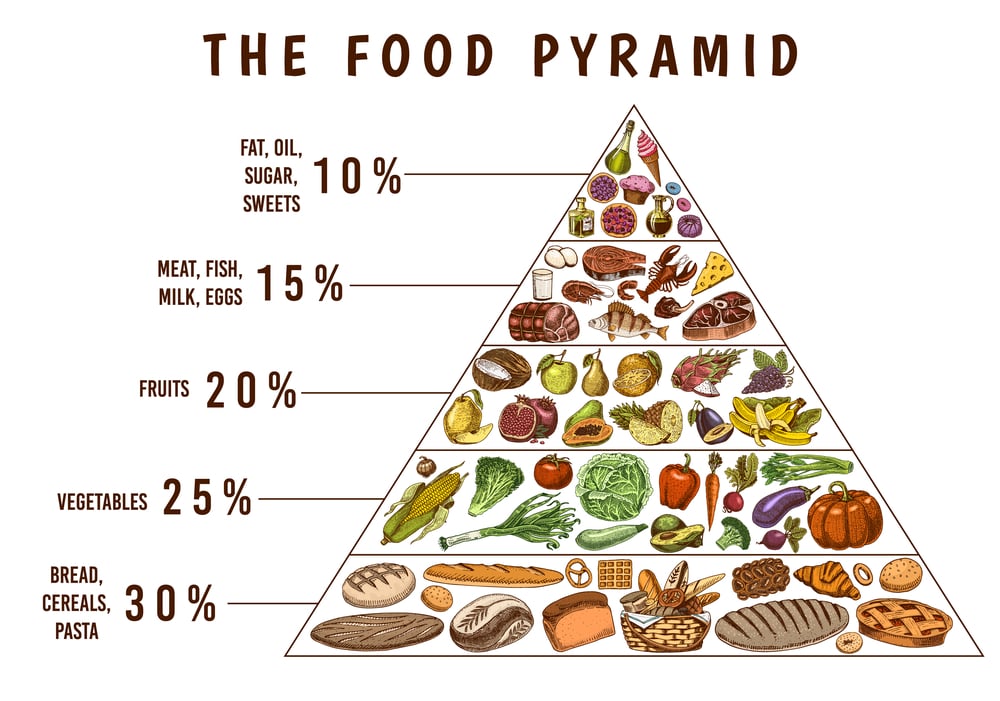
The government’s food pyramid wasn’t based on nutritional science — it was shaped by agricultural lobbies who needed Americans to eat more grain, and they succeeded so completely that questioning the pyramid’s recommendations felt like questioning nutrition science itself, even though the science actually suggested something quite different about optimal human diet. The propaganda worked by presenting industry-influenced dietary guidelines as objective scientific consensus, complete with the authority of government endorsement and the credibility of medical professionals who had been trained to trust USDA recommendations without examining the political and economic forces that shaped them.
What made this campaign particularly effective was its subtlety: there were no obvious advertisements or marketing campaigns, just the slow, steady repetition of dietary advice that happened to align perfectly with the financial interests of grain producers, food manufacturers, and agricultural subsidies that kept certain crops artificially cheap and abundant. And the health consequences were devastating — rising obesity rates, increased diabetes, and widespread metabolic dysfunction that persisted for decades while nutritionists continued to recommend the very foods that were making people sick, simply because the official guidelines said they should.
The pyramid’s influence extended far beyond individual food choices, shaping school lunch programs, hospital meal plans, and dietary education for an entire generation of Americans who were taught to fear dietary fat while loading up on processed carbohydrates that their bodies were never designed to handle in such quantities.
The Iran Nuclear Crisis

Iran was six months away from nuclear weapons. That timeline stayed remarkably consistent for over a decade, despite the obvious impossibility of a moving deadline that never seemed to move.
Israeli and American officials repeatedly warned that Iran was on the verge of producing nuclear weapons, using this threat to justify sanctions, military preparations, and diplomatic isolation. The campaign was so effective that many people still believe Iran has active nuclear weapons, despite international inspections finding no evidence of weapons production.
The Fluoride Water Campaign

Adding fluoride to drinking water would prevent tooth decay in children — that’s how the campaign began in the 1940s, though the full story reveals a more complex relationship between public health, industrial waste disposal, and the kind of convenient science that emerges when powerful interests need a problem solved. The Aluminum Company of America and other industries were producing fluoride as a toxic byproduct of manufacturing, facing expensive disposal costs and potential lawsuits from communities damaged by fluoride pollution, when researchers discovered that low levels of naturally occurring fluoride seemed to strengthen teeth (which was true, though the leap from natural occurrence to mass medication was considerable).
The campaign to fluoridate water supplies succeeded by framing opposition as anti-science ignorance while downplaying legitimate concerns about mass medication without individual consent, long-term health effects, and the ethics of treating entire populations with industrial-grade chemicals to address a problem that primarily affected children who weren’t yet brushing their teeth properly. And the most troubling aspect wasn’t necessarily the health debate itself, but how quickly questioning fluoridation became stigmatized as conspiracy thinking, even when the questions came from credentialed scientists and medical professionals who simply wanted more research before implementing such a widespread intervention.
Public health officials dismissed concerns by citing studies funded by the very industries that needed fluoride waste disposal solutions, creating a circular validation system that persisted for decades and made genuine scientific inquiry nearly impossible in many professional settings.
The Low-Fat Diet Revolution

Dietary fat caused heart disease — that became the nutritional gospel in America for nearly half a century, based largely on research that was questionable from the start and industry influence that was carefully hidden from public view.
Ancel Keys’ Seven Countries Study cherry-picked data to support his fat-heart hypothesis, ignoring countries that didn’t fit his theory. The sugar industry secretly funded research to shift blame away from sugar and onto fat.
The campaign was so successful that low-fat products dominated grocery stores for decades, even as obesity and diabetes rates soared.
The WMD Intelligence Campaign

Iraq possessed weapons of mass destruction that posed an imminent threat to American security — that’s the narrative that convinced a majority of Americans to support the 2003 invasion of Iraq, despite the fact that UN weapons inspectors had found no evidence of active WMD programs and several intelligence agencies had expressed serious doubts about the claims being made by the Bush administration. The campaign worked by presenting disputed intelligence as established fact, using the credibility of military leaders and intelligence officials to sell a case that many of them privately questioned, and creating an atmosphere where challenging the evidence felt unpatriotic in the aftermath of 9/11.
The propaganda succeeded through repetition rather than proof: the same questionable claims about mobile weapons labs, uranium purchases, and chemical weapons stockpiles were presented over and over until they became accepted background facts in political discourse, even among people who considered themselves skeptical of government claims. And the most insidious element was how the campaign used the tragedy of September 11th to short-circuit normal skeptical thinking, suggesting that the risks of inaction were too great to worry about the quality of evidence.
Colin Powell’s presentation to the UN became the centerpiece of the campaign, lending the credibility of a respected military leader to intelligence that was already known to be shaky, creating a moment of apparent certainty that overwhelmed the doubts many people felt about rushing into another Middle Eastern conflict.
The Subliminal Advertising Scare

Hidden messages in advertisements were controlling consumer behavior without people realizing it. That was the claim that terrified America in the late 1950s after market researcher James Vicary announced he had increased popcorn and Coca-Cola sales by flashing subliminal messages during movie screenings.
The story was completely fabricated. Vicary later admitted he made up the entire experiment to save his failing research company.
But the panic was real, leading to congressional hearings and broadcasting regulations that persist today. The campaign revealed how easily fears about hidden manipulation could spread, even without evidence.
When the Spell Breaks

These campaigns share a common thread that cuts deeper than their individual deceptions: they succeeded because they told people what they were already prepared to believe, whether that was the danger lurking in their neighborhoods, the miracle cures that could solve their problems, or the threats that justified their fears. The most effective propaganda doesn’t force new ideas into unwilling minds — it amplifies existing anxieties and desires until they drown out competing voices.
What’s particularly unsettling is how many of these campaigns eventually collapsed not because people became more skeptical, but because the interests behind them changed or new propaganda campaigns emerged to replace them. The lesson isn’t that truth always wins, but that human societies seem to require shared narratives to function, even when those narratives are built on deception.
Understanding this vulnerability might be the first step toward developing better defenses against the next campaign that promises simple answers to complex problems.
More from Go2Tutors!

- The Romanov Crown Jewels and Their Tragic Fate
- 13 Historical Mysteries That Science Still Can’t Solve
- Famous Hoaxes That Fooled the World for Years
- 15 Child Stars with Tragic Adult Lives
- 16 Famous Jewelry Pieces in History
Like Go2Tutors’s content? Follow us on MSN.