15 Surprising Facts About the World’s First Computers
The word “computer” once meant something entirely different than what sits on your desk today. Before silicon chips and glowing screens, computers were rooms full of vacuum tubes that could barely add numbers without catching fire.
These mechanical ancestors of modern technology were stranger, more temperamental, and far more fascinating than most people realize.
ENIAC Weighed 30 Tons and Took Up an Entire Room
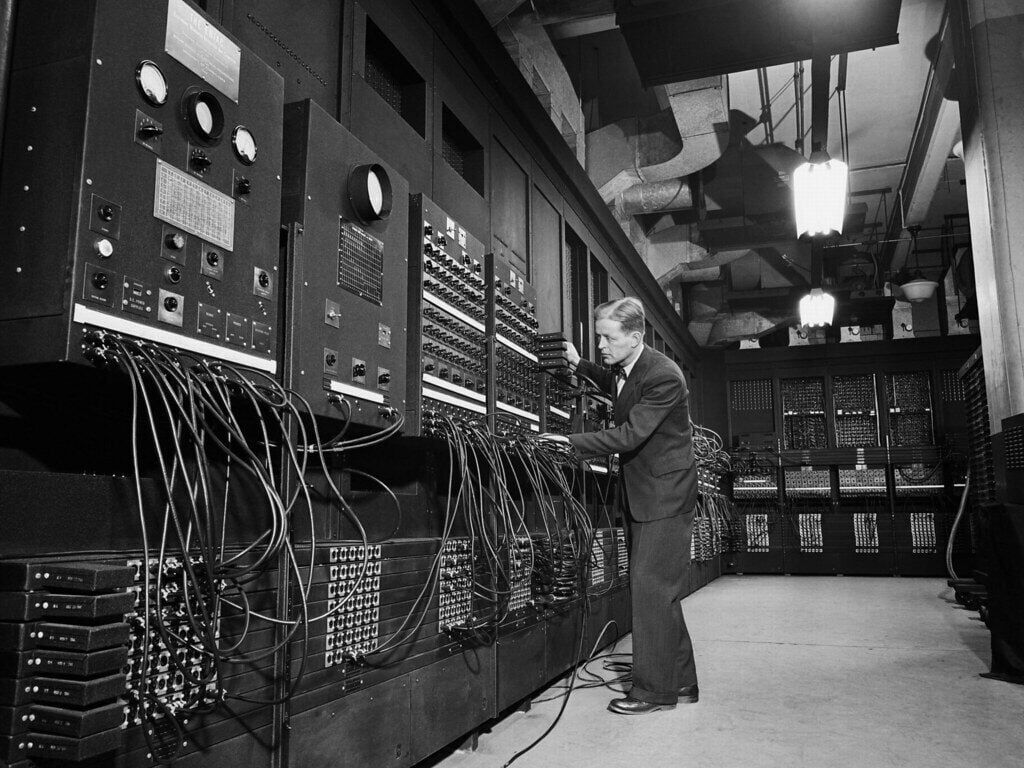
ENIAC wasn’t a computer. It was a building project.
Thirty tons of metal, vacuum tubes, and wiring stretched across 1,800 square feet of floor space. The thing consumed 150 kilowatts of power — enough to dim the lights in nearby Philadelphia neighborhoods when it fired up.
Programming Meant Physically Rewiring the Machine
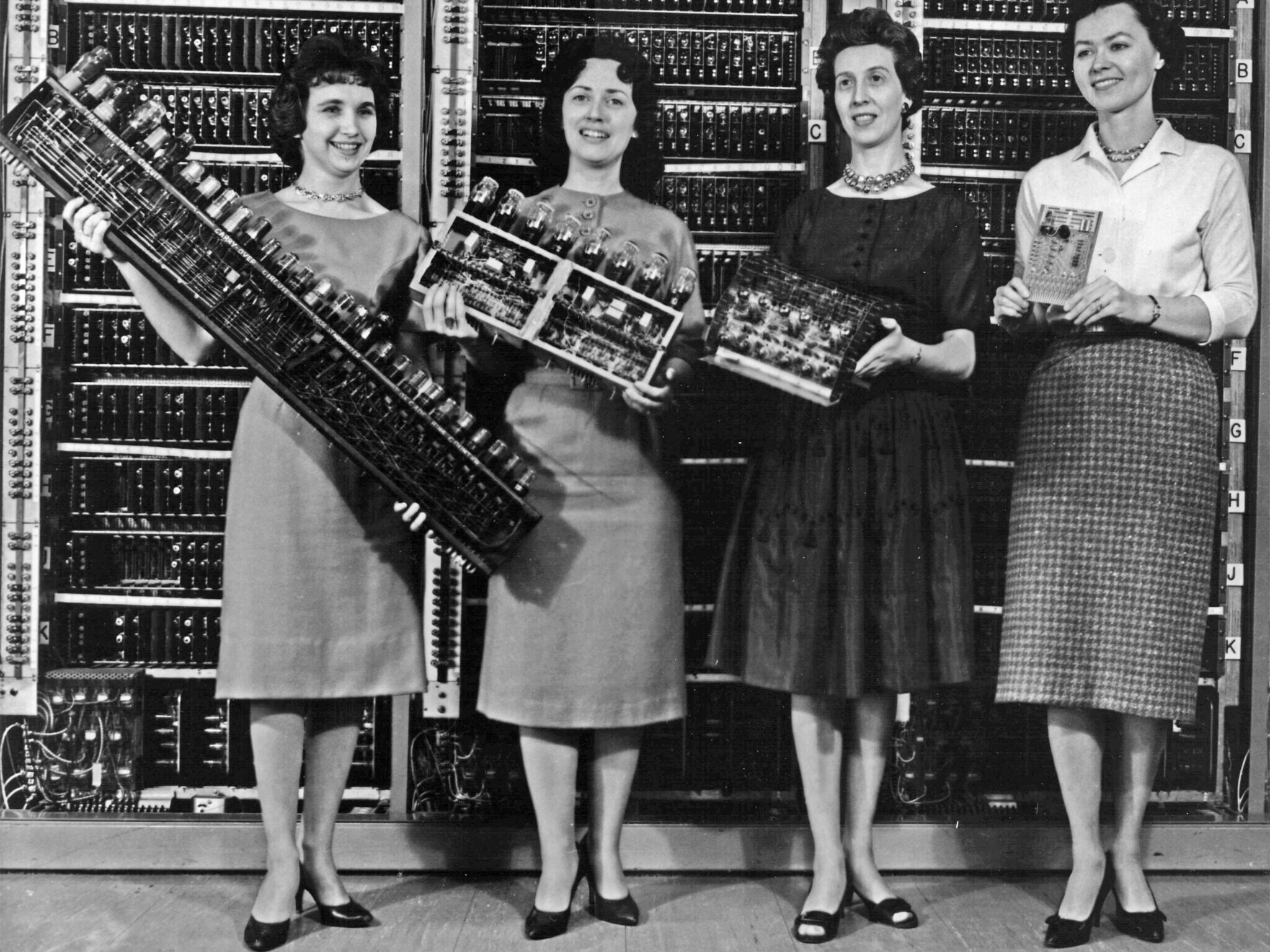
Betty Holberton and her colleagues didn’t write code — they became electricians. Programming ENIAC required unplugging cables from one panel and reconnecting them to another, flipping thousands of switches in precise sequences, and hoping nothing came loose during computation (which happened constantly, because the vibration from all those vacuum tubes had a way of shaking connections apart, and you’d discover this only after hours of calculation had produced complete nonsense).
So programming wasn’t typing. It was crawling.
And yet this cumbersome process was revolutionary — these women were creating the very concept of software, even though the word didn’t exist yet and wouldn’t for another decade.
Early Computers Were Human Beings
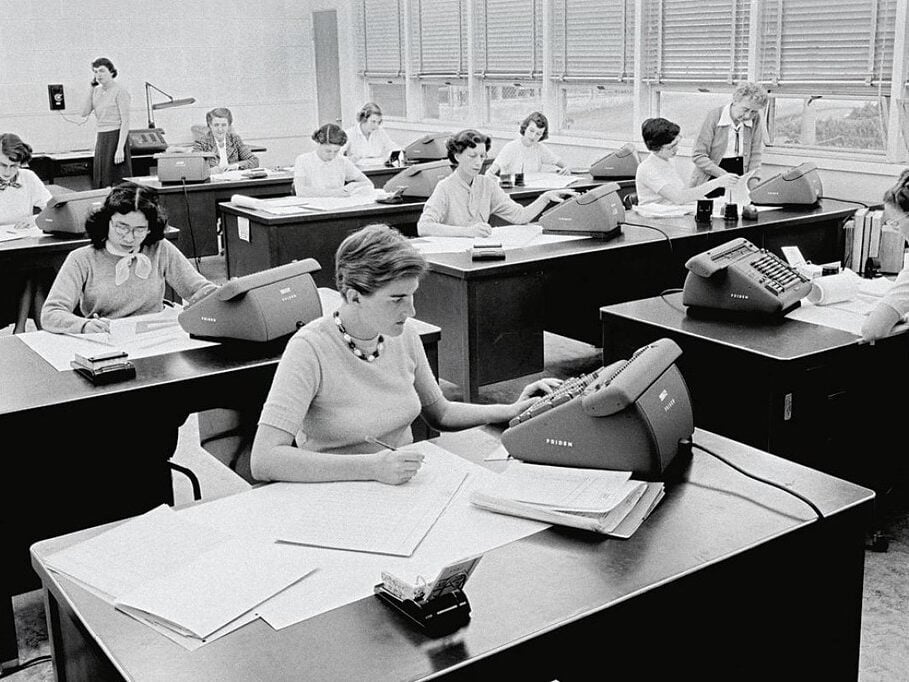
Before machines took the job, “computer” was a profession. Human computers — mostly women during World War II — sat at desks with mechanical calculators and computed artillery trajectories, weather predictions, and astronomical data. They worked in rows like factory workers, each responsible for one piece of a massive calculation.
These human computers were often more accurate than the early mechanical ones. They caught their own errors, double-checked suspicious results, and didn’t randomly overheat in the middle of important calculations.
The machines that replaced them inherited the job title, but not the reliability.
The First Computer Bug Was an Actual Bug

Grace Hopper found a moth stuck in a relay of the Mark II computer in 1947. The moth had died there, preventing the relay from closing properly.
Hopper taped the dead moth into her logbook and wrote “First actual case of bug being found.” The term “bug” for computer problems had been used before, but Hopper’s moth gave it a literal meaning that stuck.
Vacuum Tubes Failed Constantly and Unpredictably
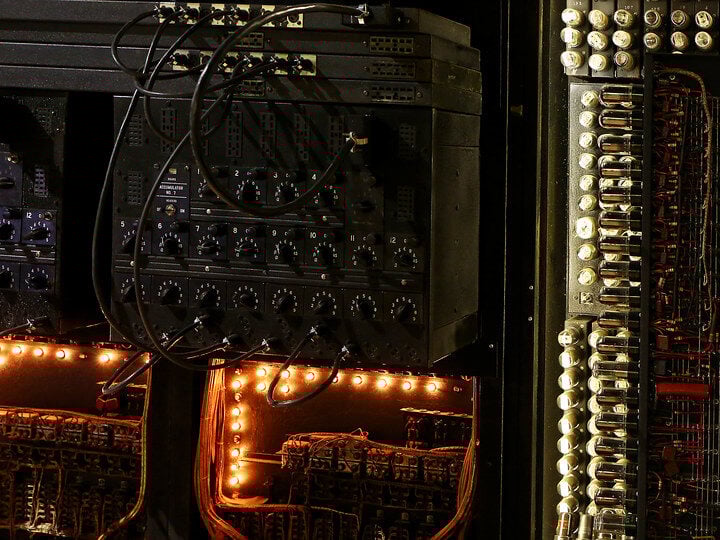
ENIAC contained 17,468 vacuum tubes, and statistically, one failed every two days. But statistics don’t capture the actual experience, which was more like having a car that randomly refused to start, except instead of being late for work, you’d lose three days of calculations because tube number 8,847 decided to give up halfway through a computation and nobody could figure out which one had failed until they tested each tube individually (a process that took longer than the original calculation), and by the time they found and replaced the dead tube, two more had usually failed.
Patience wasn’t optional in early computing. It was the primary job requirement.
The heat these tubes generated could warp the metal frames holding them, which created new problems that had nothing to do with the electronics and everything to do with basic physics fighting against human ambition.
Memory Was Measured in Individual Words, Not Gigabytes
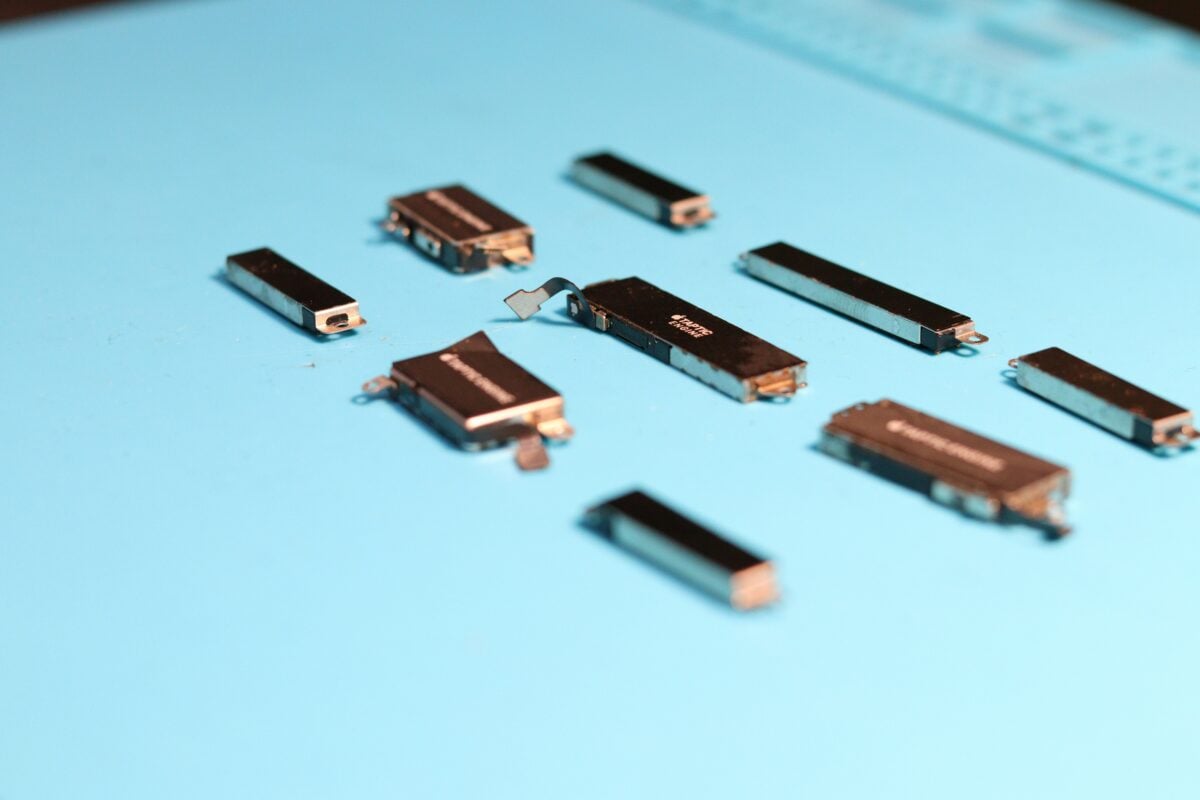
The Manchester Mark 1 stored 128 words of memory. Not 128 gigabytes or 128 megabytes — 128 words.
Each word was about 40 bits. The entire memory of one of the world’s first stored-program computers held less information than a single tweet.
Programmers didn’t have the luxury of wasteful code. Every instruction mattered. Every variable had to justify its existence. Memory wasn’t just precious — it was rationed like food during wartime.
Computers Were Initially Considered Women’s Work

Programming was secretarial work that happened after the important men finished building the hardware. The real engineering was mechanical — designing circuits, assembling components, making the machine physically function.
Programming was just feeding it instructions, which seemed clerical enough to assign to women who cost less to employ and weren’t needed for the serious technical work. This assumption aged poorly.
Programming turned out to be the harder problem, requiring mathematical sophistication and logical thinking that made circuit design look straightforward by comparison. But the damage was done in reverse — women had accidentally been handed the keys to the future of technology.
Room-Sized Computers Had Less Power Than a Pocket Calculator
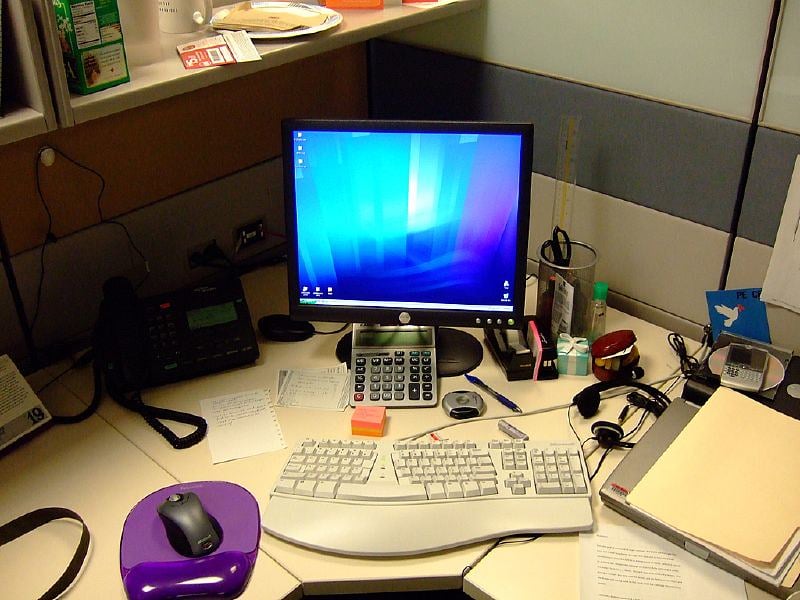
ENIAC could perform 5,000 addition operations per second, which sounds impressive until someone points out that a $10 calculator from 1975 could outperform it (and fit in your shirt pocket, and run on a battery smaller than ENIAC’s smallest vacuum tube, and never overheat, and never require a dedicated team of technicians to keep it functioning). But ENIAC was doing something that had never been done before: automated calculation on a scale that made human computers obsolete, even if the machine itself was temperamental, expensive, and absurdly large.
The comparison isn’t quite fair, though — ENIAC was built to solve problems that had never been solved before, while calculators were built to solve problems ENIAC had already proven machines could handle. But still.
A pocket calculator.
Storage Required Literal Physical Space
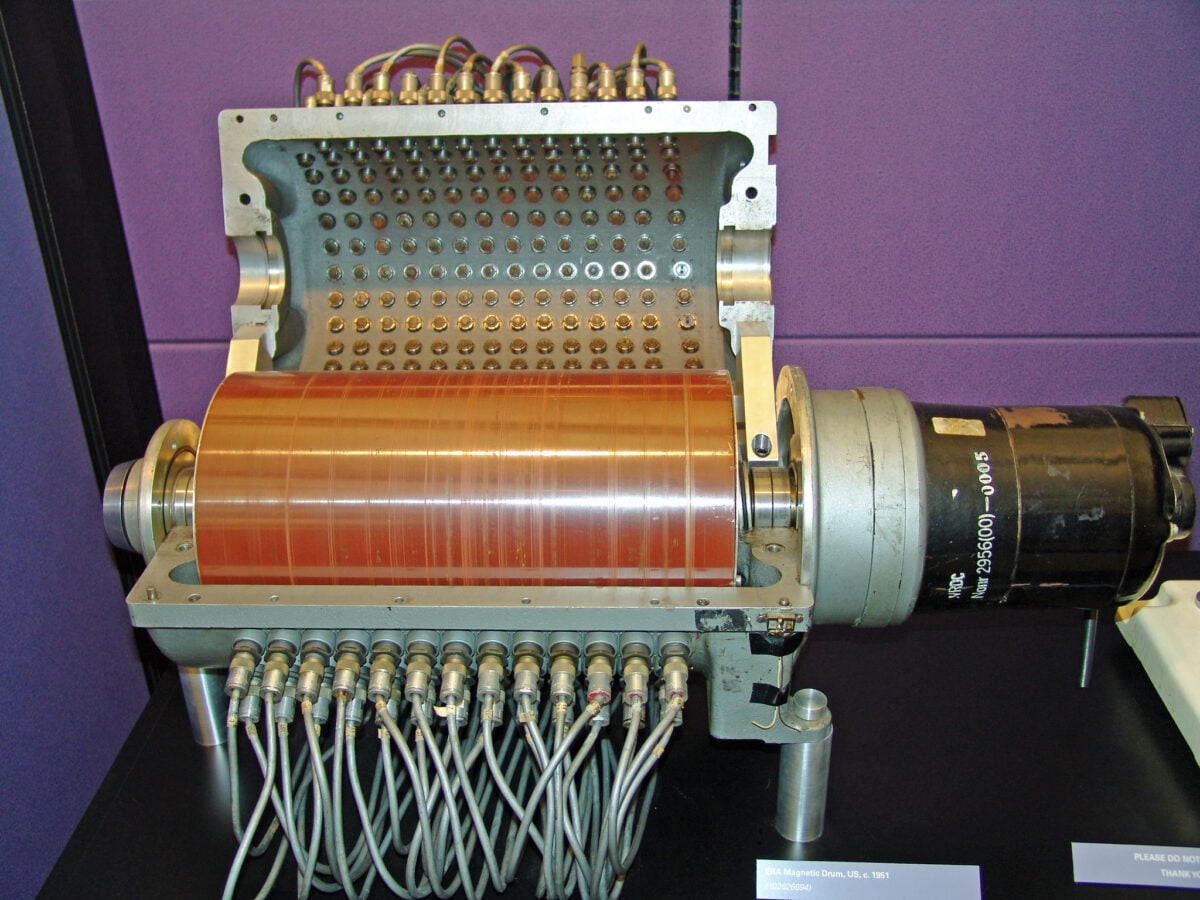
Early computers stored data on magnetic drums — metal cylinders coated with magnetic material that spun like record players. One drum might hold 2,000 words of data and take up the space of a large filing cabinet.
Accessing specific information meant waiting for the drum to rotate to the right position, which introduced delays measured in milliseconds that felt eternal when you were trying to run a program. Paper tape and punch cards provided additional storage, but these required physical filing systems.
Computer data lived in filing cabinets, sorted by hand, and backed up by making duplicate physical copies. Losing data meant literally losing pieces of paper or accidentally dropping a box of cards.
The First Computers Couldn’t Store Programs

ENIAC was a calculator, not a computer in the modern sense. Programs weren’t stored — they were the physical configuration of the machine.
Each new calculation required rewiring panels and resetting switches. The concept of stored programs, where instructions and data lived in the same memory space, was still a few years away.
This limitation made ENIAC incredibly powerful for repetitive calculations and nearly useless for anything requiring flexibility. Programming wasn’t writing instructions — it was rebuilding the machine for each new task.
Input and Output Happened at Human Speed
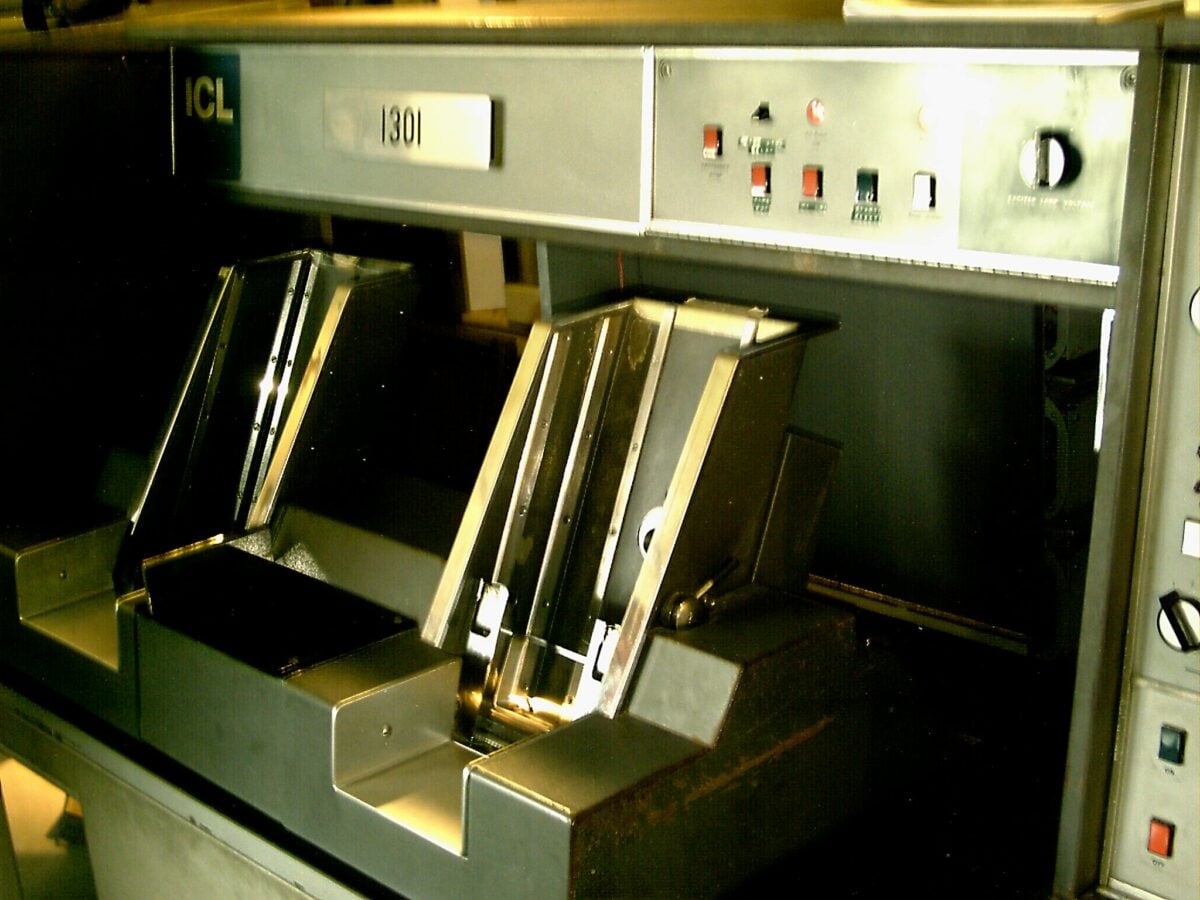
Feeding data into early computers meant typing numbers on switches or feeding punch cards through mechanical readers. Getting results back meant waiting for mechanical printers to type answers one character at a time.
The computers could calculate faster than humans, but they couldn’t communicate any faster than human hands could work. This bottleneck meant that the spectacular speed of electronic calculation was often wasted waiting for mechanical input and output systems to catch up.
The computers spent most of their time idle, waiting for humans to feed them new problems or collect their answers.
Computers Required Full-Time Engineering Support
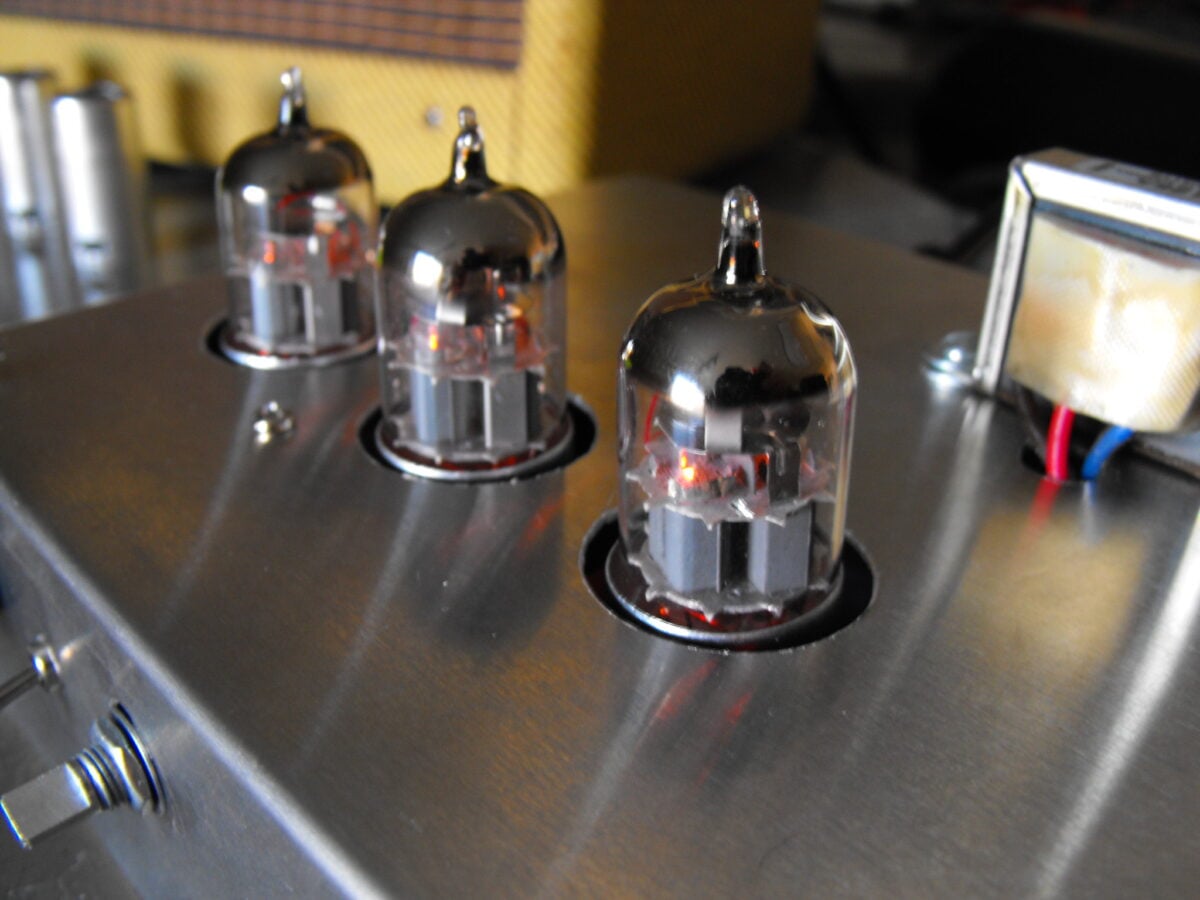
ENIAC needed a dedicated team of engineers and technicians just to keep it running. Vacuum tubes had to be tested and replaced daily.
Electrical connections loosened from vibration and needed constant tightening. Dust and humidity affected the delicate electronics, so the computer room required climate control that was more precise than most scientific laboratories.
These early computers weren’t appliances — they were research projects that happened to occasionally produce useful calculations between maintenance sessions.
Programming Languages Didn’t Exist

Programmers communicated with early computers through pure machine language — binary numbers representing basic operations like “add,” “subtract,” or “move data.” There were no programming languages, no compilers, and no operating systems.
Every instruction had to be written in the computer’s native binary code. This made programming incredibly tedious and error-prone.
A single misplaced digit could crash the entire system or produce wildly incorrect results. Debugging meant checking thousands of binary numbers by hand to find the one that was wrong.
Early Computers Were Analog, Not Digital
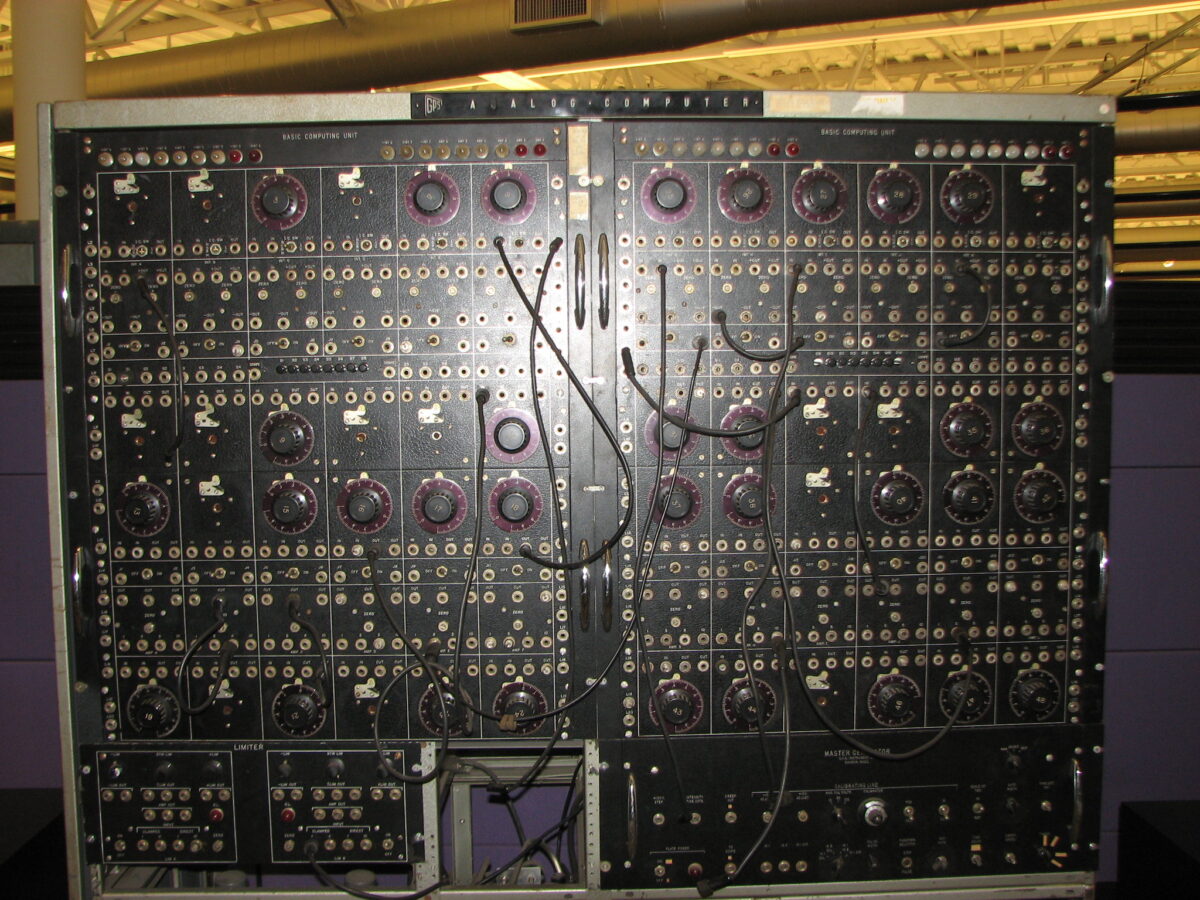
Before digital computers dominated, analog computers solved problems by representing numbers as physical quantities like electrical voltages or mechanical positions. These machines could solve certain types of mathematical problems faster than early digital computers, and they were often more reliable because they had fewer components that could fail.
Analog computers excelled at simulation problems — modeling the flight path of artillery shells or predicting weather patterns. But they couldn’t store programs or handle the complex logical operations that digital computers made possible.
The First Computer Network Connected Only Two Machines
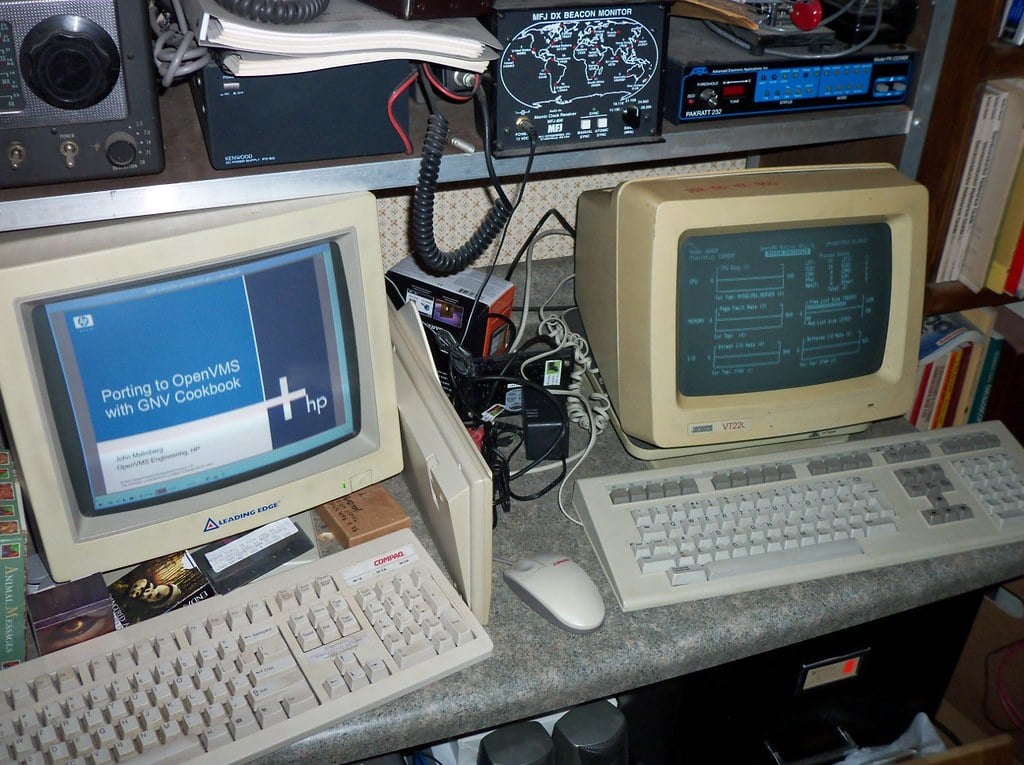
Long before the internet, computer networks meant connecting two machines in the same building to share data or processing power. These connections were often just electrical cables running between computers, allowing them to pass information back and forth for calculations too large for either machine to handle alone.
These primitive networks laid the groundwork for everything that followed, but the scale was intimate — two machines in adjacent rooms sharing calculations like neighbors borrowing tools.
Looking Back at the Digital Dawn

These mechanical ancestors of modern computing were magnificent in their crudeness. They solved problems that had never been solved before using technology that barely worked, maintained by people who were inventing computer science as they went along. Every calculation was an achievement, every successful program a minor miracle of human persistence over mechanical failure.
The computers that followed inherited the ambition of these early machines, but not their temperament. Modern computers work so reliably that we’ve forgotten how remarkable it is that they work at all.
More from Go2Tutors!

- The Romanov Crown Jewels and Their Tragic Fate
- 13 Historical Mysteries That Science Still Can’t Solve
- Famous Hoaxes That Fooled the World for Years
- 15 Child Stars with Tragic Adult Lives
- 16 Famous Jewelry Pieces in History
Like Go2Tutors’s content? Follow us on MSN.