15 Survival Stories That Shouldn’t Be Possible
Throughout history, humans have found themselves in situations that would make even the most seasoned adventurer break into a cold sweat. Yet somehow, against all odds and scientific predictions, ordinary people have walked away from circumstances that should have been their final chapter. These aren’t your typical camping mishaps or getting lost for a few hours—we’re talking about scenarios where survival experts would shake their heads in disbelief.
The human body and spirit have limits that scientists understand pretty well, but every so often, someone comes along and completely rewrites the rulebook. Here is a list of 15 survival stories that challenge everything we thought we knew about human endurance.
Poon Lim’s 133 Days Alone at Sea

Chinese sailor Poon Lim holds the record for the longest time surviving alone on a life raft after his merchant ship was torpedoed by a German U-boat in 1942. He spent 133 days drifting across the South Atlantic with minimal supplies, catching fish with makeshift hooks and collecting rainwater in a canvas tarp.
What makes this even more remarkable is that he actually gained weight during his ordeal, proving that resourcefulness can trump even the most desperate circumstances.
Juliane Koepcke’s Amazon Jungle Miracle

When 17-year-old Juliane Koepcke’s plane broke apart at 10,000 feet over the Peruvian Amazon in 1971, she somehow survived the fall while strapped to her seat. She then walked through dense jungle for 11 days with a broken collarbone, deep cuts, and one working eye.
Her father’s advice about following the water downstream saved her life—she eventually found a small boat and shelter where local workers discovered her. The fact that she was the sole survivor out of 92 passengers makes her story almost impossible to believe.
Steven Callahan’s 76-Day Atlantic Crossing

When Steven Callahan’s sailboat sank during a solo Atlantic crossing in 1982, he ended up drifting 1,800 miles in a five-and-a-half-foot life raft. For 76 days, he survived on fish he caught with a spear gun and rainwater he collected, all while constantly repairing his failing raft.
He lost a third of his body weight and developed sores all over his body, but his engineering background helped him jury-rig solutions that kept him alive until Spanish fishermen spotted him off the coast of Guadeloupe.
Aron Ralston’s Canyon Amputation

Most people know about Aron Ralston’s story from the movie ‘127 Hours,’ but the reality is even more harrowing than Hollywood portrayed. Trapped for five days with his arm pinned under an 800-pound boulder in Utah’s Blue John Canyon, Ralston used a dull multi-tool to amputate his own arm below the elbow.
The procedure took over an hour, and he then rappelled 65 feet down the canyon wall and hiked six miles before rescuers found him. The combination of mental fortitude and physical determination required for this escape defies comprehension.
Bahia Bakari’s Plane Crash Survival

In 2009, 12-year-old Bahia Bakari was the only survivor when Yemenia Flight 626 crashed into the Indian Ocean near the Comoros Islands. Despite not knowing how to swim, she clung to wreckage for nine hours in rough seas before being rescued.
The plane had broken apart on impact, killing all 152 other passengers and crew members. Her survival in choppy waters without a life jacket, while being just a child, seems to defy every law of physics and probability.
Joe Simpson’s Siula Grande Descent

British mountaineer Joe Simpson’s 1985 ordeal in the Peruvian Andes reads like fiction, but every terrifying detail is true. After breaking his leg in a climbing accident, his partner was forced to cut the rope, sending Simpson plummeting into a crevasse.
He spent three days crawling and hopping four miles back to base camp with a shattered leg, no food, and minimal water. The psychological strength needed to keep moving while in excruciating pain and certain he would die makes this one of mountaineering’s most incredible survival stories.
Mauro Prosperi’s Sahara Marathon Mistake

Italian police officer Mauro Prosperi got lost during a 1994 desert marathon in Morocco and ended up wandering the Sahara for nine days. He survived by drinking his own urine, eating bats he found in an abandoned shrine, and at one point even attempted self-harm before deciding to keep fighting.
A nomadic family eventually found him 180 miles off course, having lost 35 pounds and suffered severe dehydration. The fact that he walked the equivalent of nearly seven marathons through one of the world’s harshest environments without proper supplies is mind-boggling.
Yossi Ghinsberg’s Amazon Nightmare
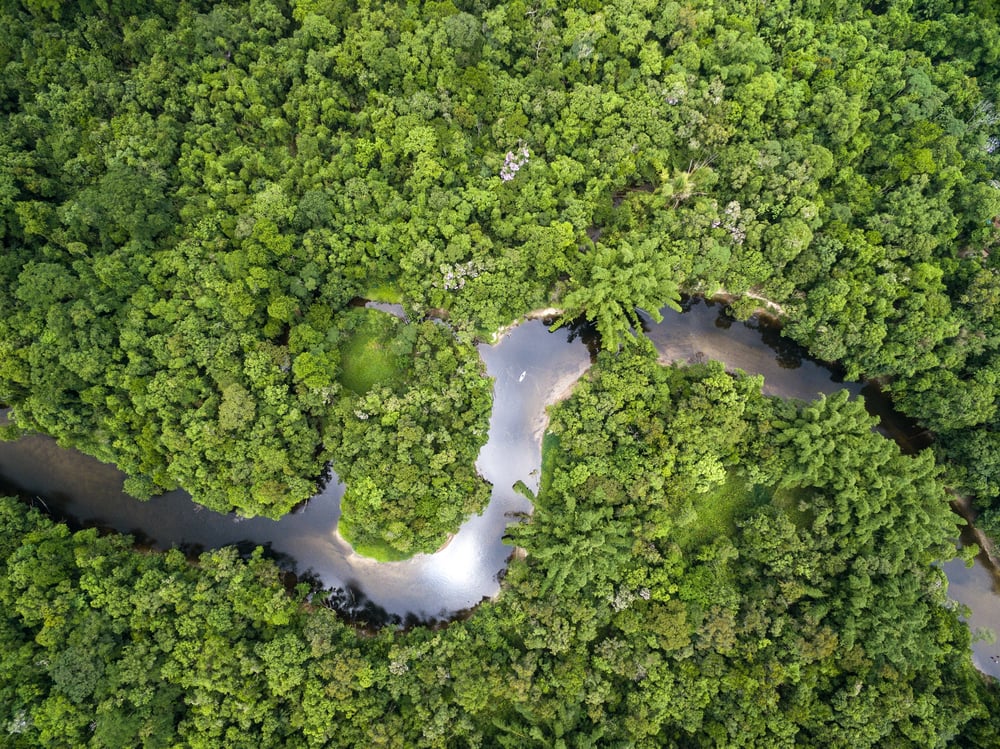
Israeli backpacker Yossi Ghinsberg spent three weeks alone in the Bolivian Amazon in 1981 after becoming separated from his group during a river rafting accident. He survived on fruits, roots, and insects while dealing with infected wounds, hallucinations, and encounters with jaguars and other predators.
His feet became so infected that he could see the bone, yet he continued walking through the dense jungle. Kevin Gale, a fellow traveler who had been searching for him, finally spotted him from a rescue plane just as Ghinsberg was on the verge of complete collapse.
Harrison Okene’s Underwater Air Pocket

Nigerian cook Harrison Okene survived for three days underwater in an air pocket after his tugboat capsized in 2013. He was trapped 100 feet below the surface in complete darkness with no food or fresh water, listening to fish eating his deceased crewmates.
The temperature was around 50 degrees Fahrenheit, and he had to drink his own urine to stay alive. When South African divers finally reached the wreck expecting only to recover bodies, they nearly had heart attacks when Okene grabbed one of their hands through the murky water.
Beck Weathers’ Everest Resurrection

During the 1996 Mount Everest disaster, American pathologist Beck Weathers was left for dead twice after developing severe hypothermia and snow blindness. He lay unconscious in the snow for 15 hours in sub-zero temperatures and hurricane-force winds that should have killed him within hours.
Somehow, he regained consciousness and walked back to camp on his own, though severe frostbite later required the amputation of his right hand, parts of his left hand, and his nose. The fact that his body could restart itself after being essentially frozen solid puzzles medical experts to this day.
Ricky Megee’s Australian Outback Ordeal
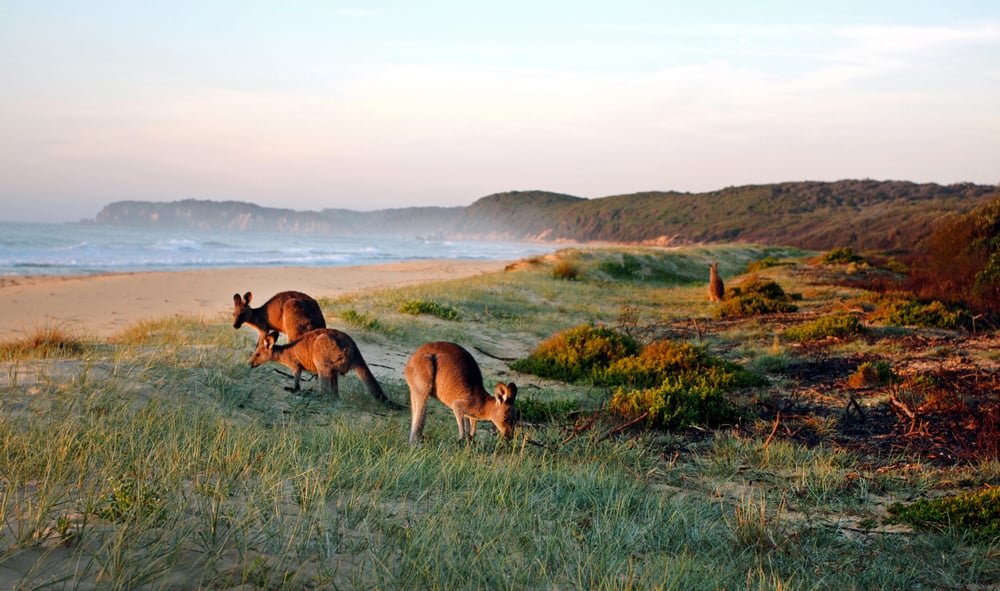
Australian drifter Ricky Megee survived 71 days in the remote Western Australian outback in 2006 with no supplies after claiming he was drugged and abandoned by strangers. He lost 125 pounds, eating leeches, frogs, grasshoppers, and anything else he could catch while walking hundreds of miles through some of the continent’s most unforgiving terrain.
When cattle ranchers finally found him, he was barely recognizable and weighed only 105 pounds. Whether his story about being drugged is true or not, his survival in one of the world’s most inhospitable environments is undeniably remarkable.
Anna Bågenholm’s Frozen Revival

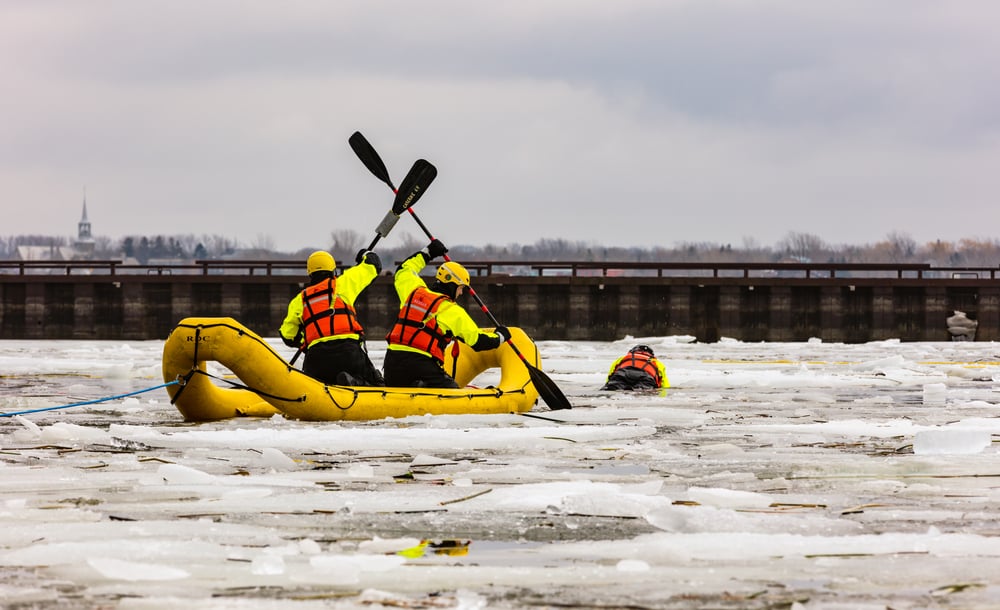
Swedish radiologist Anna Bågenholm holds the record for surviving the lowest body temperature ever recorded in a human being. In 1999, she fell through ice while skiing and became trapped under a frozen stream for 80 minutes, with her body temperature dropping to 56.7 degrees Fahrenheit.
Her heart stopped beating, and she was clinically dead, yet doctors managed to revive her using a heart-lung machine. She made a complete recovery with no lasting brain damage, which shouldn’t be possible according to everything medical science knows about hypothermia and brain death.
Ernest Shackleton’s Endurance Expedition
While not a single person’s survival story, Ernest Shackleton’s entire crew surviving 634 days trapped in Antarctic ice deserves recognition as one of history’s greatest survival feats. After their ship Endurance was crushed by ice in 1915, all 28 men lived on ice floes and eventually Elephant Island before Shackleton and five others made an 800-mile journey in a small boat to South Georgia Island.
They then crossed the island’s unmapped mountains to reach a whaling station and organize a rescue. The fact that not a single crew member died during this nearly two-year ordeal seems impossible given the conditions they endured.
Vesna Vulović’s 33,000-Foot Fall

Yugoslav flight attendant Vesna Vulović holds the Guinness World Record for surviving the highest fall without a parachute. In 1972, she fell 33,330 feet when her plane exploded over Czechoslovakia, landing in a snow-covered forest.
She spent 27 days in a coma and was paralyzed from the waist down, though she eventually regained the ability to walk. The fact that a human body could survive impact from that height, even with snow as cushioning, challenges everything we know about physics and human physiology.
Truman Duncan’s Desert Survival

In 2010, 84-year-old Truman Duncan survived five days in the Arizona desert after his car broke down on a remote road. With temperatures reaching 114 degrees Fahrenheit, he had no water and very little food, yet he managed to stay alive by staying in whatever shade he could find and rationing his energy.
Rescue crews found him severely dehydrated but conscious and alert. Most survival experts say that someone his age shouldn’t last more than a day or two in those conditions, making his survival a testament to pure willpower and perhaps a lifetime of desert living experience.
When the Impossible Becomes Reality

These stories remind us that human beings are capable of far more than we give ourselves credit for, even when science says otherwise. While we’ve learned a lot about the human body’s limits, these survivors prove that mental determination can sometimes override physical constraints in ways that still baffle researchers.
Their experiences have contributed valuable knowledge to survival training and emergency medicine, showing that sometimes the most important survival tool isn’t gear or knowledge—it’s the refusal to give up when everything seems hopeless.
More from Go2Tutors!

- The Romanov Crown Jewels and Their Tragic Fate
- 13 Historical Mysteries That Science Still Can’t Solve
- Famous Hoaxes That Fooled the World for Years
- 15 Child Stars with Tragic Adult Lives
- 16 Famous Jewelry Pieces in History
Like Go2Tutors’s content? Follow us on MSN.



