15 Things We Miss About MySpace
MySpace was the internet’s first real taste of social media as we know it today. Before Facebook took over and Instagram made everything about aesthetics, MySpace gave people a place to be loud, creative, and unapologetically themselves.
It was messy, personal, and honestly a lot of fun. For millions of people who grew up online in the early 2000s, logging into MySpace felt like walking into a room where everyone already knew your name.
It’s wild to think how much that platform shaped the way people use social media today. Here’s a look at the things that made MySpace genuinely great, and why so many people still bring it up with a big smile.
Your Profile, Your Rules
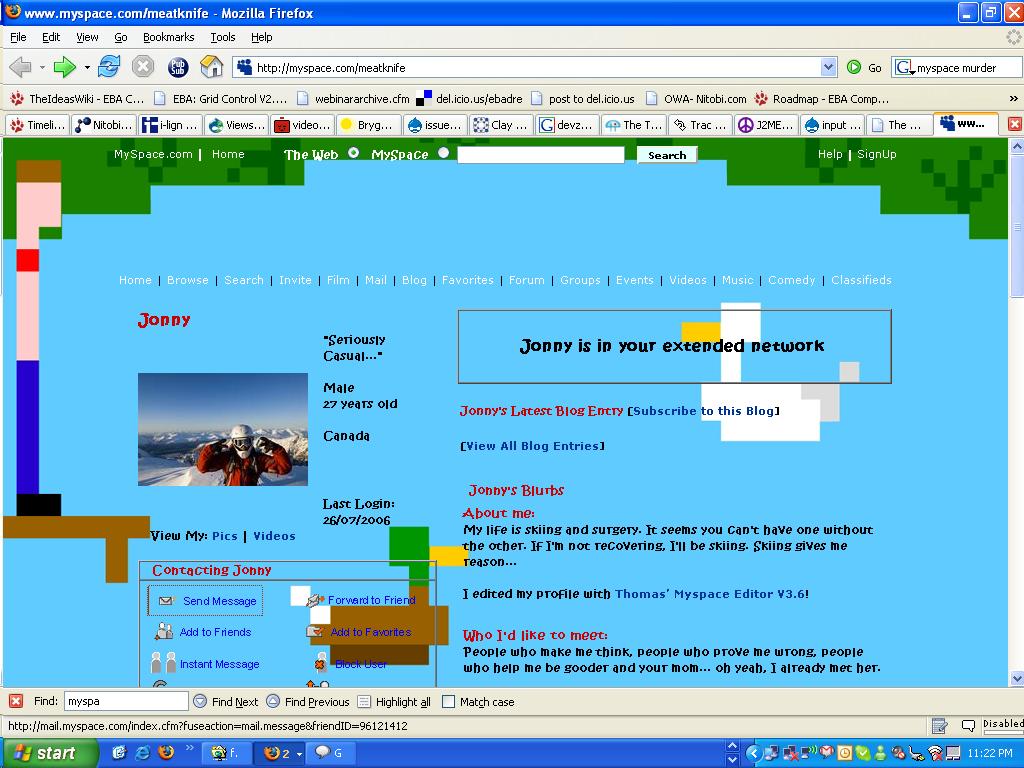
MySpace lets users customize their profiles in ways that no other platform has matched since. You could change your background, font colors, layout, and add HTML code to make your page look completely different from everyone else’s.
Some pages were beautiful. Some were chaotic disasters with flashing text and tiled backgrounds that made your eyes hurt.
Either way, it was yours.
The Top 8
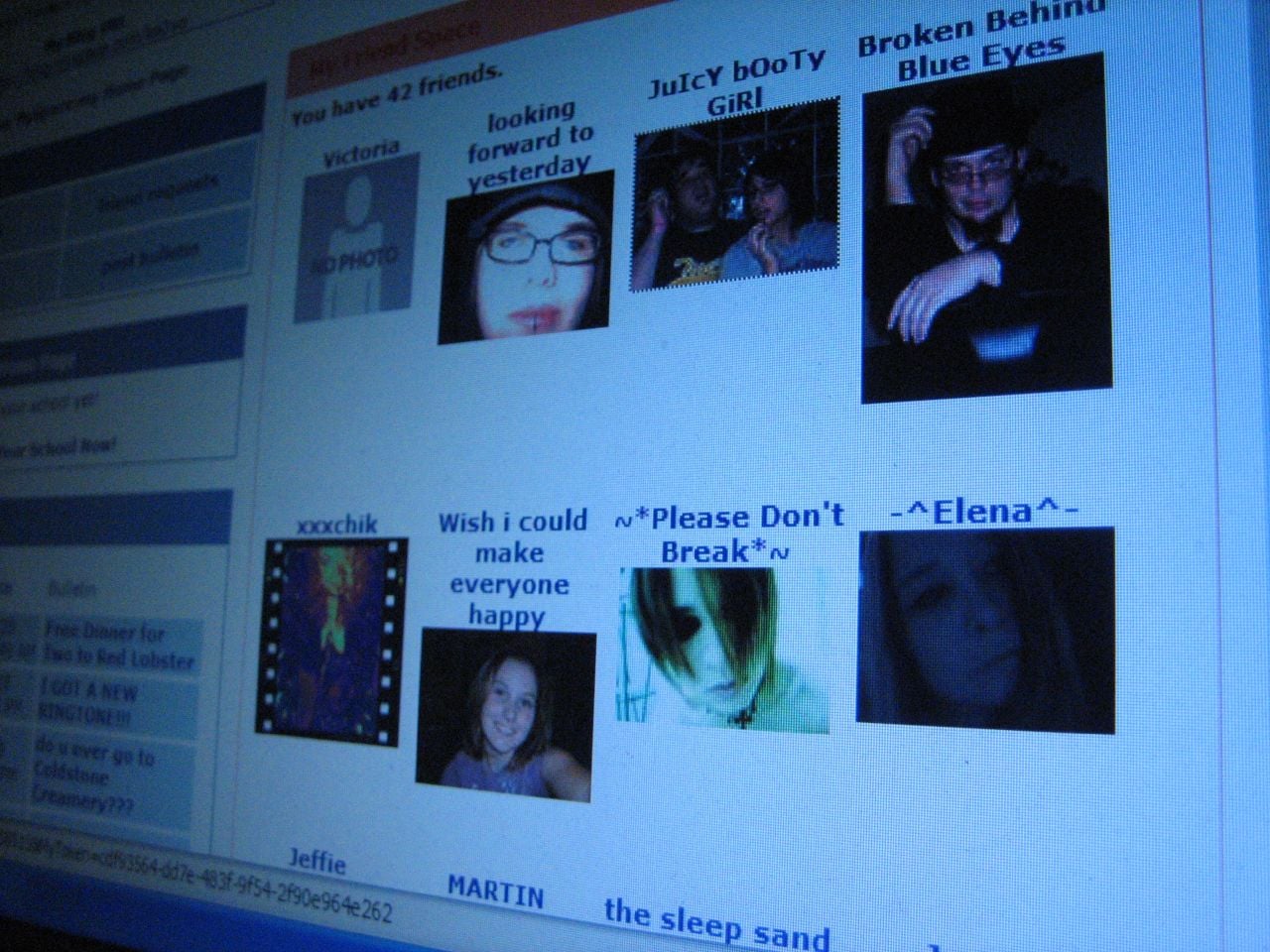
Nothing on the internet has ever been as quietly stressful or as deeply satisfying as the MySpace Top 8. It was a grid of your eight closest friends displayed right on your profile for everyone to see.
Getting bumped from someone’s Top 8 was a whole social event. Friendships were tested, conversations were had, and apologies were made, all because of eight little squares.
Profile Songs
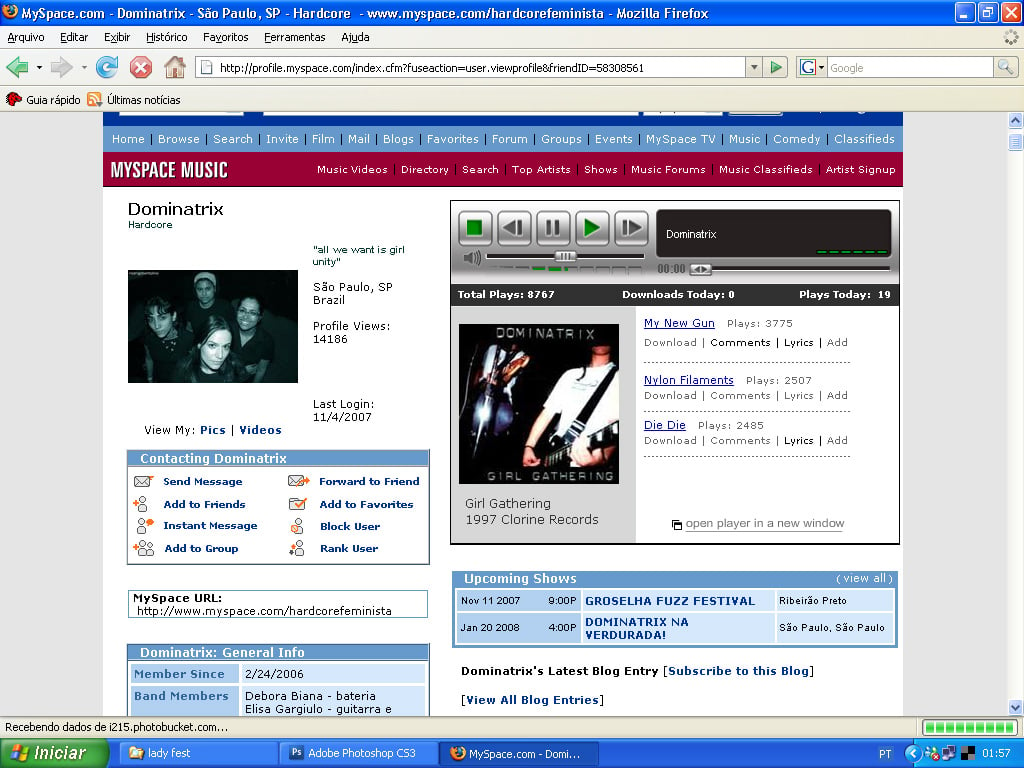
Every MySpace profile had a song that played automatically when someone visited your page. It was the clearest possible way to tell the world who you were without saying a single word.
Whether it was an emo anthem or a hip-hop track, that song was a statement. People actually discovered new music this way, which made it one of the most genuinely useful features the platform ever had.
Tom as Your First Friend
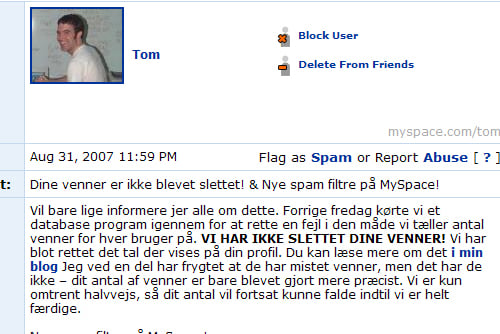
Tom Anderson, one of MySpace’s co-founders, was automatically added as everyone’s first friend when they joined. It sounds small, but it actually made the whole experience feel warmer and less intimidating.
You were never alone on the platform because Tom was always there. He later sold the company, stepped away from tech, and became a travel photographer, which honestly makes him even cooler.
Bands and Musicians Had Real Power There
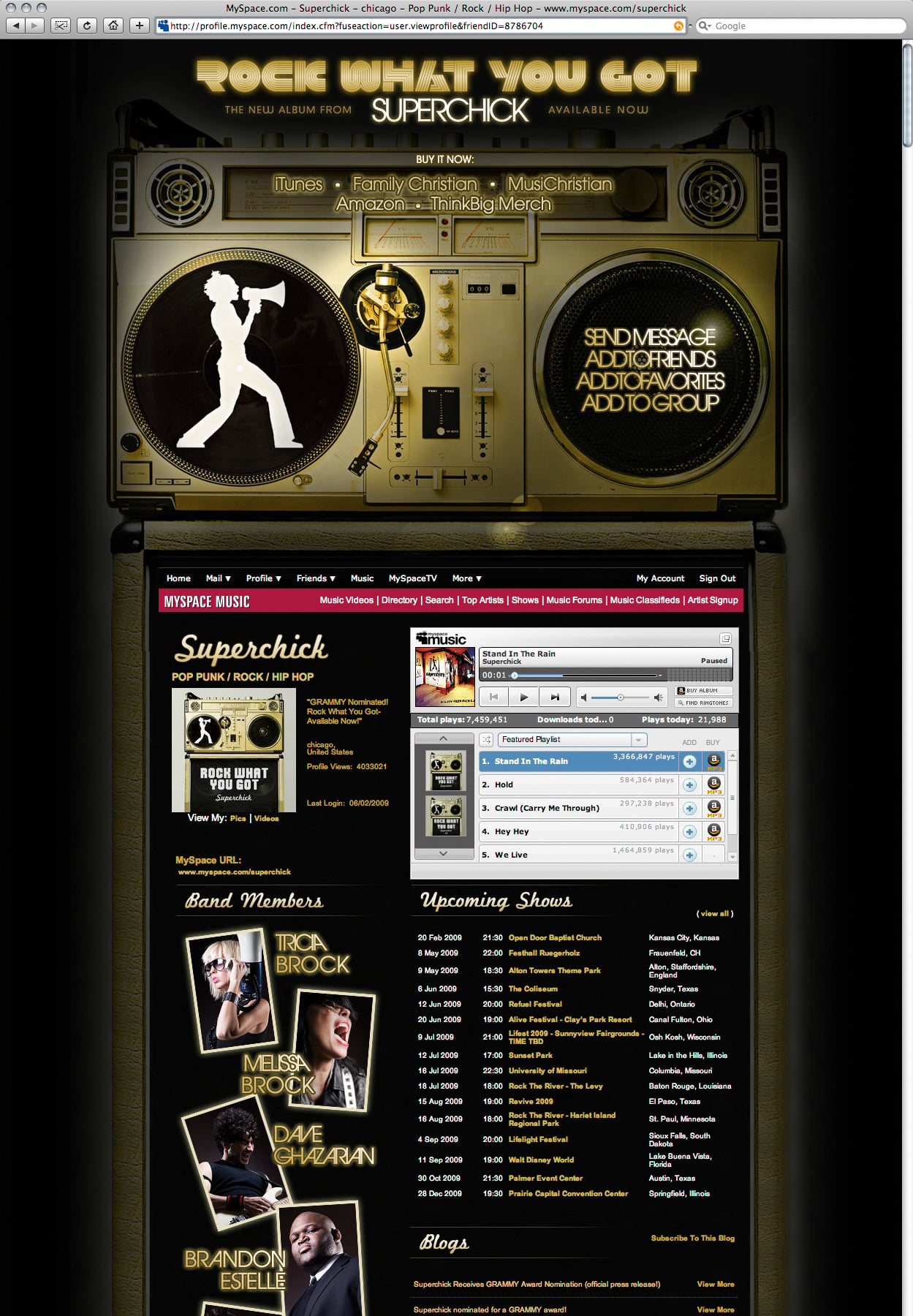
MySpace was a serious launchpad for musicians long before streaming platforms existed. Artists like Arctic Monkeys, Lily Allen, and Soulja Boy built huge fan bases entirely through MySpace before any major label came knocking.
Fans could follow their favorite bands, stream new tracks directly on the page, and leave comments that the artists actually read and replied to. It was the closest thing to direct artist access that fans had ever experienced.
The Comment Section Felt Personal
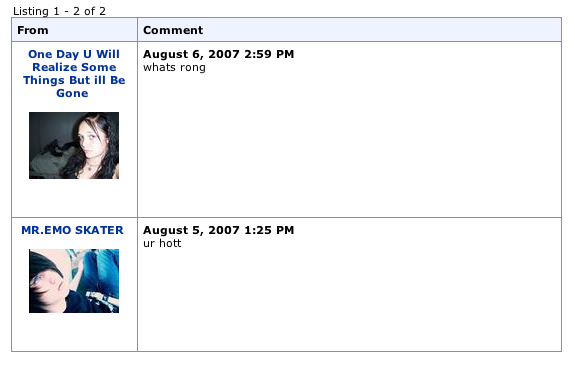
Leaving a comment on someone’s MySpace page was a real social act. It wasn’t just a like or a quick emoji reaction.
People wrote full sentences, inside jokes, and genuine messages that everyone else could also read. It created this public but personal dynamic that felt like leaving a note on someone’s locker, except the whole school could walk by and see it.
Mood Updates
Before Twitter made status updates a daily habit, MySpace had a simple mood feature that let you tell your friends exactly how you were feeling. Options ranged from ‘happy’ to ‘annoyed’ to ‘contemplative.’
It was basic, but it opened the door to emotional honesty online in a way that felt new at the time. People actually checked in on friends based on their mood updates, which was a surprisingly genuine form of connection.
Glitter Graphics and GIFs
MySpace profiles were absolutely full of animated glitter graphics, sparkle text, and looping GIFs long before GIFs became a mainstream communication tool. People would paste these onto their pages, send them as comments, and use them to decorate every inch of their profiles.
It looked like a craft store exploded across the internet. But it was joyful, expressive, and completely free of any pressure to look polished or professional.
The Discover Side of the Platform
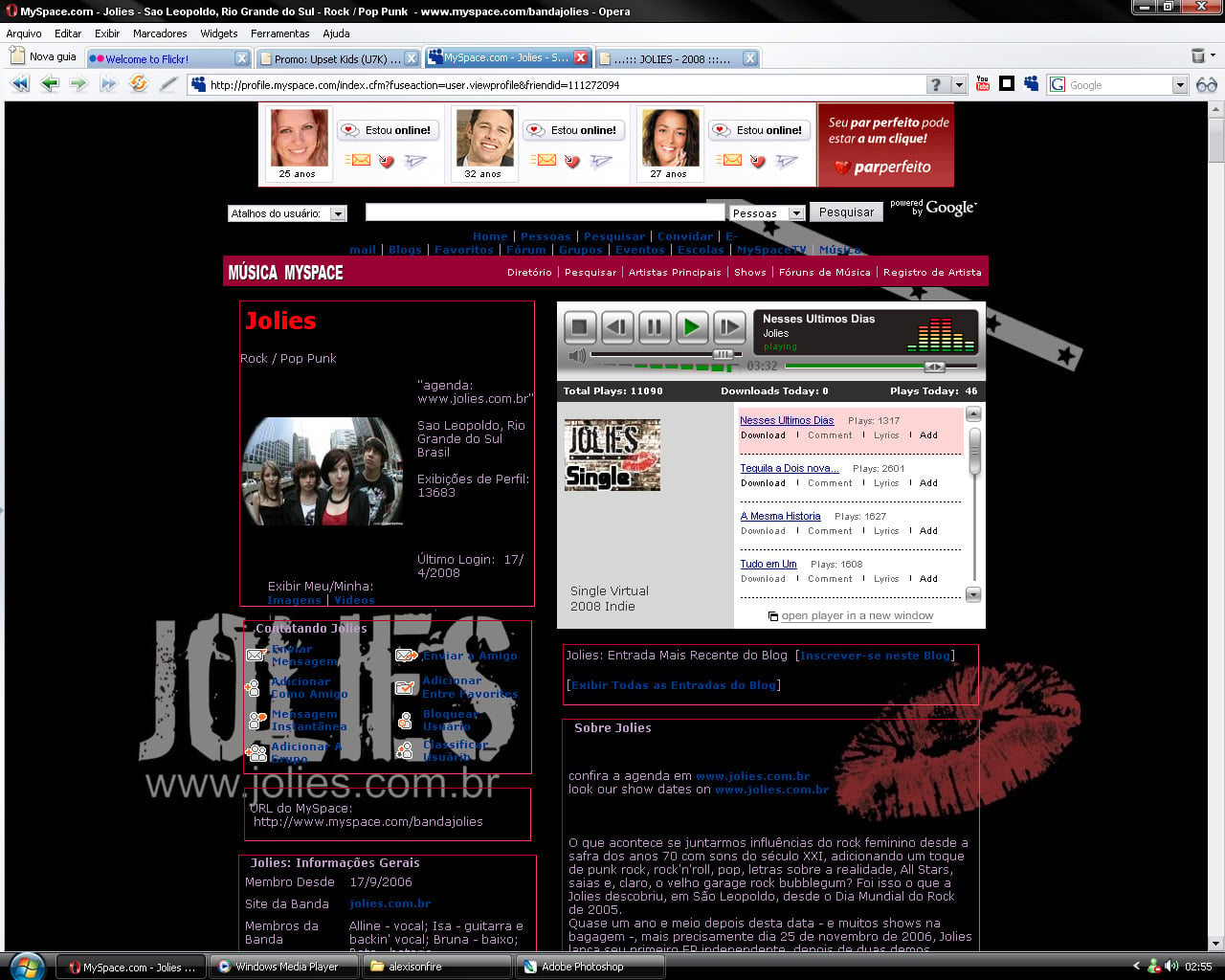
MySpace had a built-in way to find new people, new music, and new communities that felt organic rather than algorithmic. You could click through friends of friends and end up meeting someone from a completely different city who loved the same niche band as you.
There was a genuine sense of exploration baked into the design. It felt like wandering through a neighborhood you had never visited before.
Bulletins
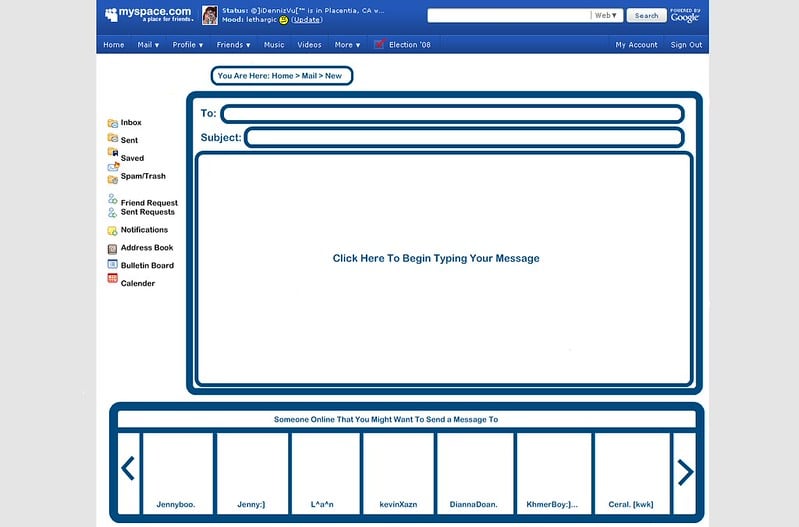
Bulletins were like a public noticeboard on your profile where you could post updates, chain messages, quizzes, and announcements for all your friends to read. They were completely unfiltered and required zero polish.
Some bulletins were actually useful. Most of them were wild chain letter surveys that promised bad luck if you didn’t repost, and somehow people still passed them around religiously.
Photo Comments
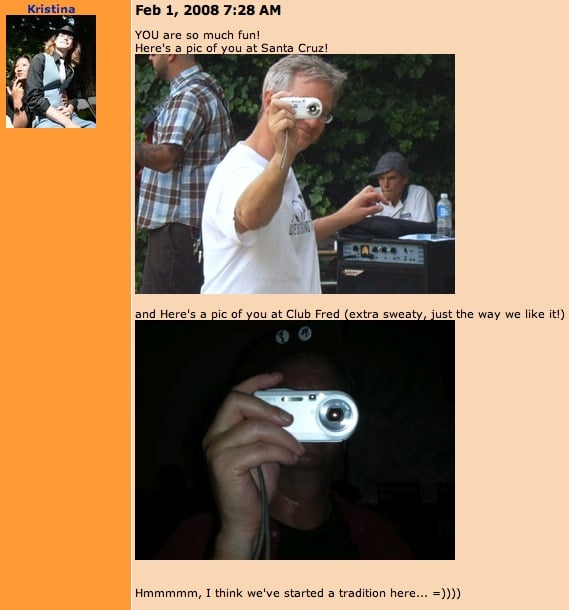
Leaving a comment directly on someone’s photo on MySpace felt very different from double-tapping an image today. People wrote real things, genuine compliments, funny captions, and full conversations would break out in the comment thread of a single picture.
It made photos feel alive in a way that a simple counter just doesn’t replicate. You knew people actually looked at your photo because they bothered to type something out.
The Away Message Culture
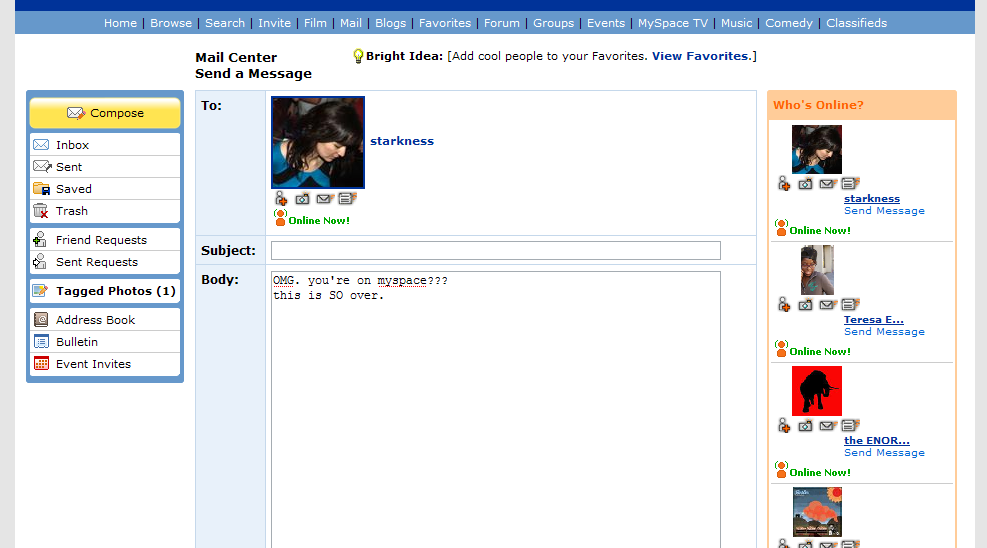
MySpace and early internet culture had a strong tradition of crafting the perfect away message or status. People spent real time thinking about what lyric, quote, or inside joke to put on their profile to reflect where they were emotionally that week.
It was performative in a way, but also very human. People were figuring out how to express themselves online, and the away message was their first drafting ground.
No Algorithm Telling You What to See
MySpace showed you content from the people you actually chose to follow, in order, without any invisible system deciding what mattered. You saw what your friends posted because you were friends with them, full stop.
Today’s social media feeds are heavily filtered and curated by systems designed to keep you scrolling. MySpace just showed you the thing, and you decided what to do with it.
Creative Freedom Without Judgment
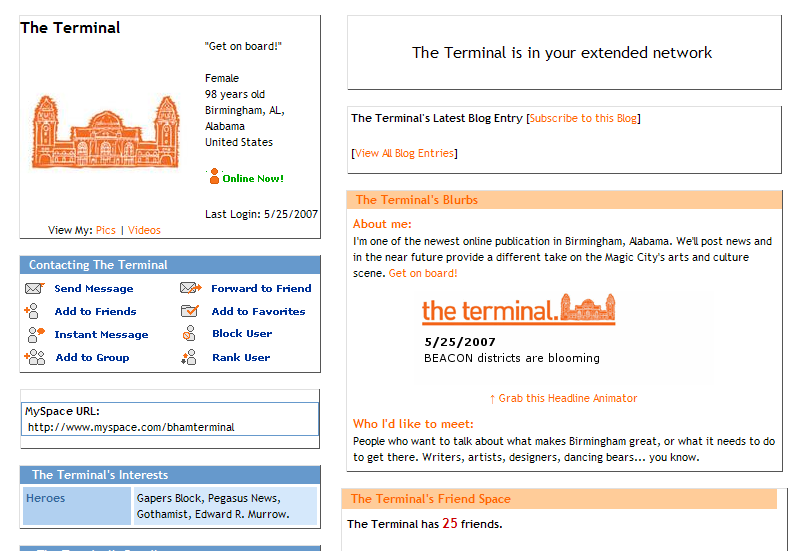
Strange how comfort grew in such messy spaces. Odd designs popped up everywhere, blurry pictures too.
A quote might make you wince, yet it stayed online without comment. Timing never mattered, image less so. Curiosity ran stronger than judgment back then. Creativity wandered freely, unbothered by eyes watching. Not much demanded perfection. Mistakes just lived there, quiet and accepted.
A Real Sense of Online Community
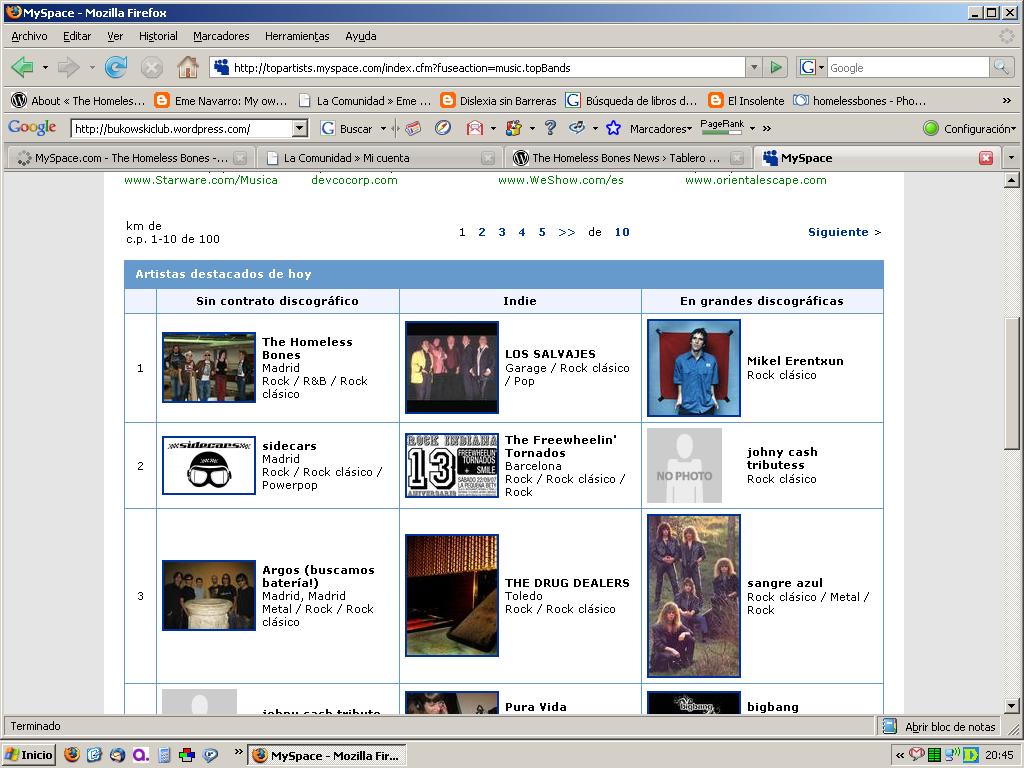
Folks found their people on MySpace through niche groups – wrestling diehards, anime watchers, neighborhood skaters – all tucked into corners online. Not sprawling crowds here.
Instead, compact circles, often guided by someone passionate down to their bones. Real bonds formed inside these spaces, connections that stuck around long after logins faded.
MySpace’s Lasting Traces
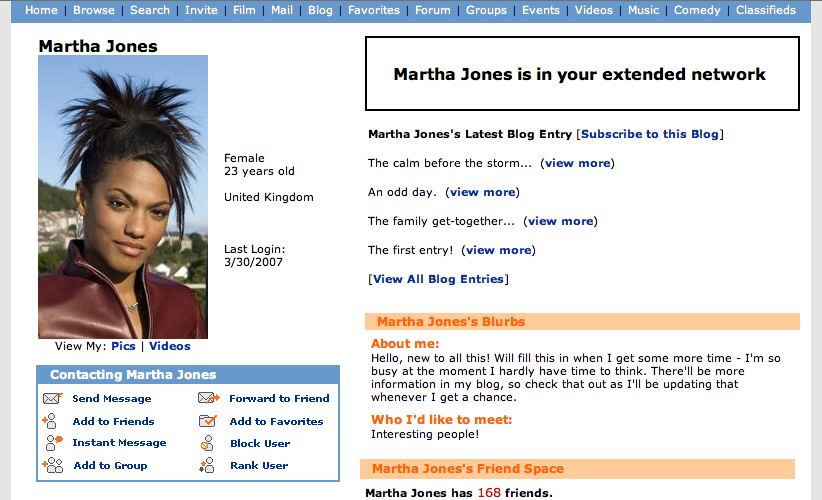
Not gone – just stepped back. Passing along pieces others later picked up without knowing where they began.
What you see now? Built on what bloomed there first: pages shaped by choice, songs shared openly, voices testing space online. Came before clean designs, before slick scrolling, before short bursts ruled attention. Took shape when no one knew how far it could go. Later versions tightened edges, added speed, chased trends. Yet never brought the raw spark that lived in those cluttered early layouts. A messy start, sure – but alive in ways newer things can’t copy.
More from Go2Tutors!

- The Romanov Crown Jewels and Their Tragic Fate
- 13 Historical Mysteries That Science Still Can’t Solve
- Famous Hoaxes That Fooled the World for Years
- 15 Child Stars with Tragic Adult Lives
- 16 Famous Jewelry Pieces in History
Like Go2Tutors’s content? Follow us on MSN.