16 Early Computers That Could Do the Impossible
The first computers were machines that defied belief. These room-sized giants filled with thousands of glowing vacuum tubes could perform calculations that would take human mathematicians weeks or months to complete. What made these early machines truly remarkable wasn’t just their size or complexity—it was their ability to accomplish tasks that seemed absolutely impossible for their time. From predicting election results to breaking supposedly unbreakable codes, these pioneering computers changed the world by doing things no machine had ever done before.
Each breakthrough represented a quantum leap in human capability, turning science fiction into reality. Engineers and mathematicians worked with primitive tools and components, creating machines that could think faster than any human brain and solve problems that had puzzled humanity for centuries. Here is a list of 16 early computers that achieved the impossible and paved the way for our digital world.
ENIAC

The Electronic Numerical Integrator and Computer completed in 1946 could perform 5,000 additional operations per second, doing the work of 50,000 human calculators. This 30-ton monster filled an entire room at the University of Pennsylvania and contained 18,000 vacuum tubes that generated so much heat it needed its own air conditioning system.
ENIAC was believed to have done more calculations during its ten years of operation than all of humanity had accomplished until that point, making the impossible seem routine.
UNIVAC I
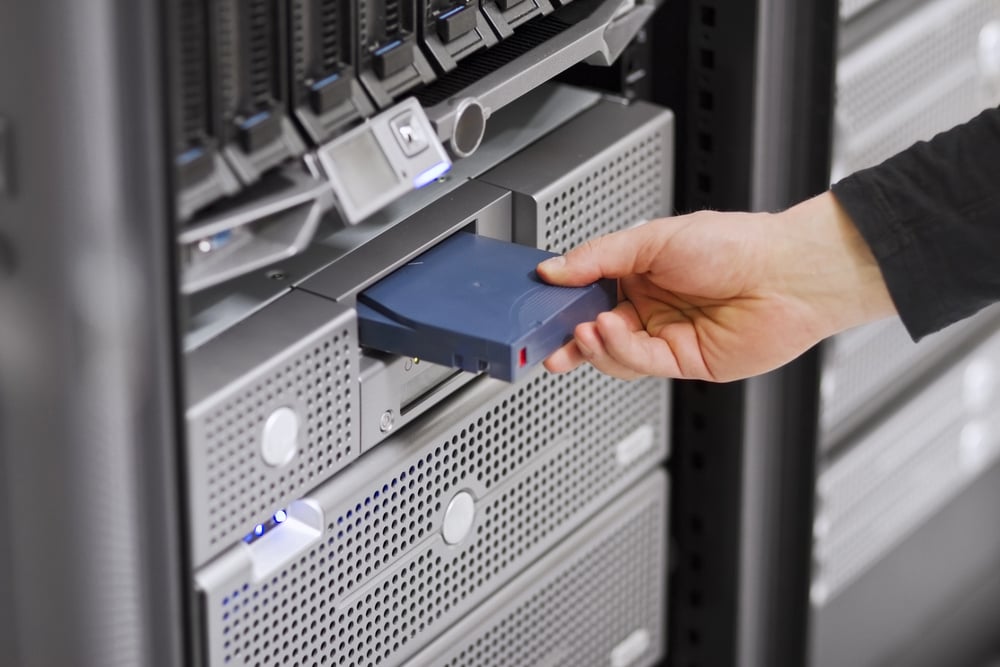
The Universal Automatic Computer gained fame in 1952 when it correctly predicted Dwight Eisenhower’s landslide victory in the presidential election after analyzing only a tiny fraction of the votes. This 16,000-pound machine used magnetic tape for the first time, revolutionizing data storage and processing.
The prediction seemed so unlikely that CBS initially doubted the computer’s results, but UNIVAC proved that machines could forecast the future better than human experts.
Like Go2Tutors’s content? Follow us on MSN.
Atanasoff-Berry Computer

Built between 1939 and 1942 at Iowa State University, the ABC was the world’s first electronic digital computer capable of solving linear algebraic equations with up to 29 variables simultaneously. John Atanasoff and Clifford Berry created a machine that could handle 30 different operations at once using dynamic capacitors for memory storage.
This groundbreaking computer proved that electronic circuits could replace mechanical calculators for complex mathematical problems.
Harvard Mark I

This 51-foot-long electromechanical computer completed in 1944 could perform three additions or subtractions per second, which seemed lightning-fast compared to manual calculations. The Mark I supported Allied war efforts by calculating ballistics tables, radar computations, and anti-submarine warfare tactics with unprecedented accuracy.
Its reliability during wartime operations proved that computers could handle critical military calculations when human lives depended on precise results.
Colossus

The British code-breaking computer at Bletchley Park could crack German Lorenz cipher messages that were considered mathematically unbreakable. Built in 1943, Colossus used 1,500 vacuum tubes to perform logical operations at electronic speeds, helping Allied forces intercept and decode high-level enemy communications.
This secret machine shortened World War II by giving the Allies crucial intelligence advantages that seemed impossible to achieve through conventional means.
Like Go2Tutors’s content? Follow us on MSN.
Whirlwind I
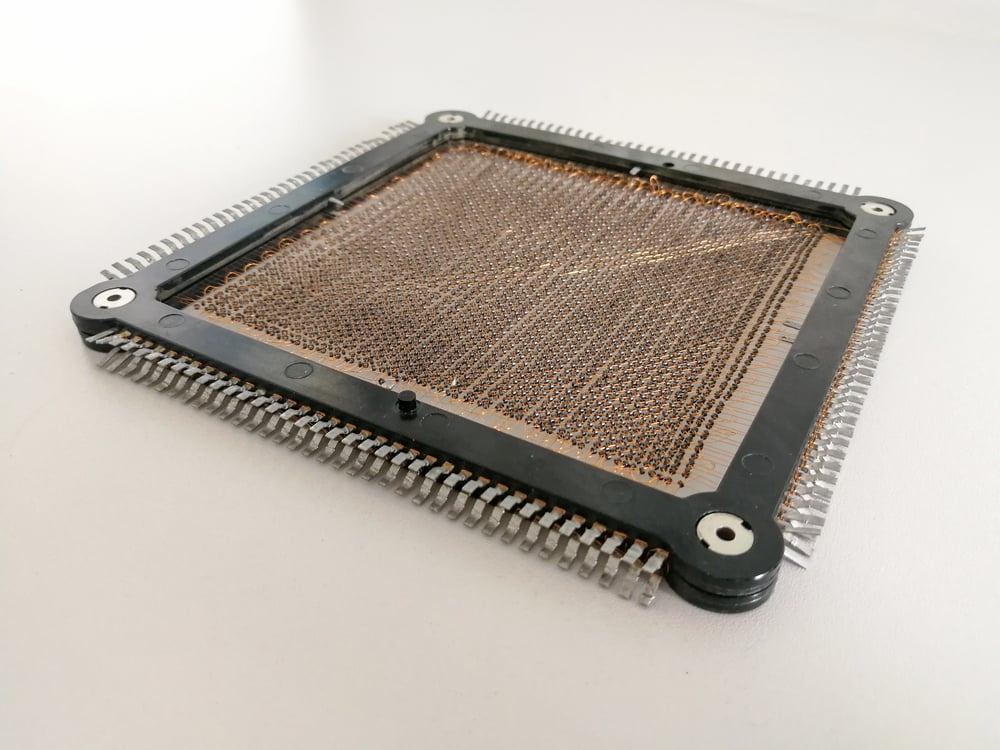
Completed in 1951 at MIT, Whirlwind was the first computer capable of real-time processing, responding to events as they happened rather than processing data in batches. The machine pioneered magnetic core memory, which became the standard for high-speed computer memory for the next 25 years.
Whirlwind could track multiple aircraft simultaneously and calculate interception courses, making it the foundation for modern air traffic control systems.
Atlas Computer

When the University of Manchester switched on Atlas in 1962, it instantly doubled the entire United Kingdom’s scientific computing capacity. This supercomputer could handle one million instructions per second and pioneered virtual memory, multiprogramming, and time-sharing concepts that seemed impossibly advanced.
Atlas was so powerful that when it went offline, half of Britain’s computational capability disappeared, demonstrating how one machine could transform an entire nation’s research capabilities.
Z3

Konrad Zuse’s German computer, completed in 1941, was the first programmable computer using binary floating-point arithmetic and program control from punched film. The Z3 could solve complex engineering problems automatically, performing calculations that would take human engineers days or weeks to complete.
This machine proved that computers could handle sophisticated mathematical operations using binary logic, laying the groundwork for all modern digital computers.
Like Go2Tutors’s content? Follow us on MSN.
IBM 305 RAMAC

Introduced in 1956, the RAMAC was the first computer to use magnetic disk storage, allowing businesses to access stored information on demand in just 600 milliseconds. The system featured 50 spinning disks that could store and retrieve data randomly rather than sequentially, revolutionizing how computers handled large amounts of information.
This breakthrough made it possible for computers to serve multiple users simultaneously and process business transactions in real-time.
Manchester Baby

Built in 1948 at the University of Manchester, the Small-Scale Experimental Machine was the first computer to store programs electronically in memory alongside data. The Baby successfully ran its first stored program on June 21, 1948, proving that computers could modify their own instructions while running.
This concept of stored-program architecture became the foundation for virtually every computer built since, making modern software development possible.
EDVAC

The Electronic Discrete Variable Automatic Computer, completed in 1949, was the first stored-program computer in the United States and could modify its own programming during operation. EDVAC used binary number representation and could perform both arithmetic and logical operations using the same electronic circuits.
This machine demonstrated that computers could be truly general-purpose tools capable of solving any problem that could be expressed mathematically.
Like Go2Tutors’s content? Follow us on MSN.
CDC 6600

Released in 1964, the Control Data Corporation 6600 was the first computer specifically designed as a supercomputer, capable of executing three million instructions per second. Seymour Cray’s innovative design used parallel processing and pipelining to achieve computational speeds that seemed impossible for the era.
The CDC 6600 could solve complex scientific problems in hours that would take other computers weeks, opening new frontiers in weather forecasting, nuclear research, and space exploration.
SAGE AN/FSQ-7
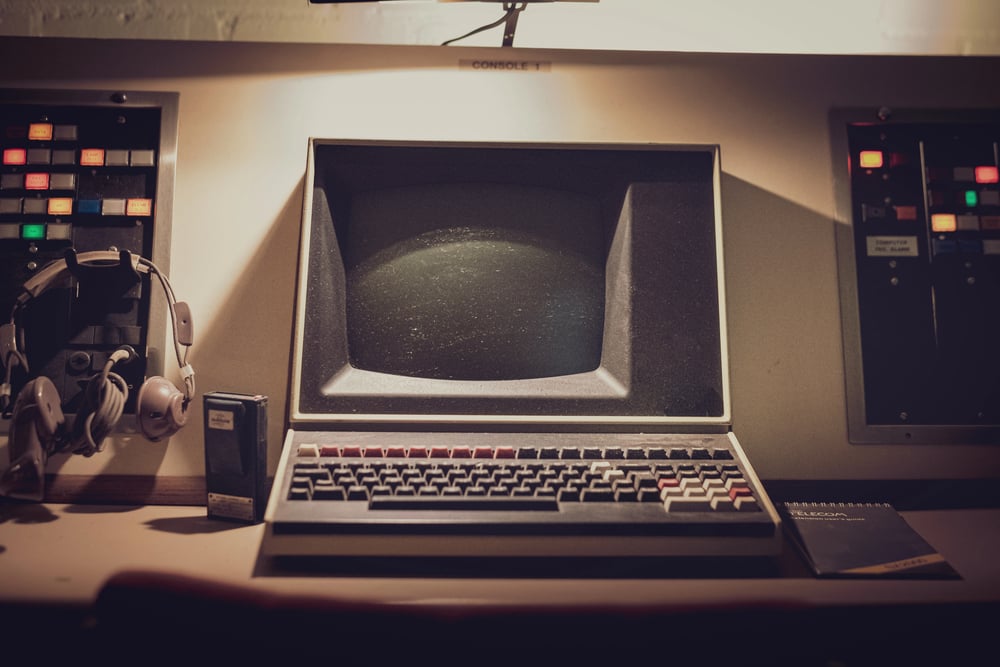
This massive air defense computer system weighed 250 tons and could track enemy bombers while calculating interception courses for guided missiles in real-time. Deployed during the Cold War, SAGE featured the first real-time cathode ray tube displays and could coordinate responses across multiple military installations simultaneously.
The system could actually launch and guide Bomarc missiles to their targets, proving that computers could make life-and-death decisions faster and more accurately than human operators.
IBM System/360

Announced in 1964, the System/360 was the first computer family designed with compatibility across different models, allowing businesses to upgrade without losing their software investments. This revolutionary approach meant that programs written for smaller 360 models would run on larger ones, solving the impossible problem of software compatibility.
The System/360 established the concept of computer architecture that remains fundamental to the industry today.
Like Go2Tutors’s content? Follow us on MSN.
DEC PDP-8
Introduced in 1965, the PDP-8 was the first commercially successful minicomputer, proving that powerful computing could fit in a closet rather than requiring an entire room. At $18,000, it cost less than traditional mainframes while still handling sophisticated real-time applications like laboratory data collection and industrial process control.
The PDP-8 made computing accessible to smaller organizations and launched the minicomputer revolution that brought computers to universities, hospitals, and research labs worldwide.
Altair 8800

Released in 1975, the Altair was the first affordable computer kit that hobbyists could actually build and program at home. Despite having no keyboard, monitor, or storage device, the Altair sparked the personal computer revolution by proving that individuals could own and operate their own computers.
This $439 kit inspired Bill Gates and Paul Allen to write their first software, launching Microsoft and demonstrating that the impossible dream of personal computing could become reality.
From Room-Sized Giants to Personal Revolution

These pioneering computers achieved the impossible by expanding the boundaries of what machines could accomplish. Each breakthrough built upon previous innovations, creating a cascade of technological advances that transformed calculation from a human endeavor into an electronic one.
What started as room-filling monsters capable of basic arithmetic evolved into sophisticated systems that could predict elections, break codes, and control missiles. These early computers didn’t just process numbers—they processed the future, turning mathematical theory into practical reality and proving that the impossible was simply the next challenge waiting to be solved.
More from Go2Tutors!

- 16 Historical Figures Who Were Nothing Like You Think
- 12 Things Sold in the 80s That Are Now Illegal
- 15 VHS Tapes That Could Be Worth Thousands
- 17 Historical “What Ifs” That Would Have Changed Everything
- 18 TV Shows That Vanished Without a Finale
Like Go2Tutors’s content? Follow us on MSN.