16 Everyday Objects Invented for Different Purposes
Most of the things you use without thinking about them were invented for something else entirely. The gap between what an object was designed to do and what it actually ended up doing is often wide — and occasionally bizarre.
Necessity gets credit for a lot of inventions, but accident, failure, and military surplus account for more than people realise. Here are sixteen objects whose origin stories bear almost no resemblance to what they became.
Bubble Wrap
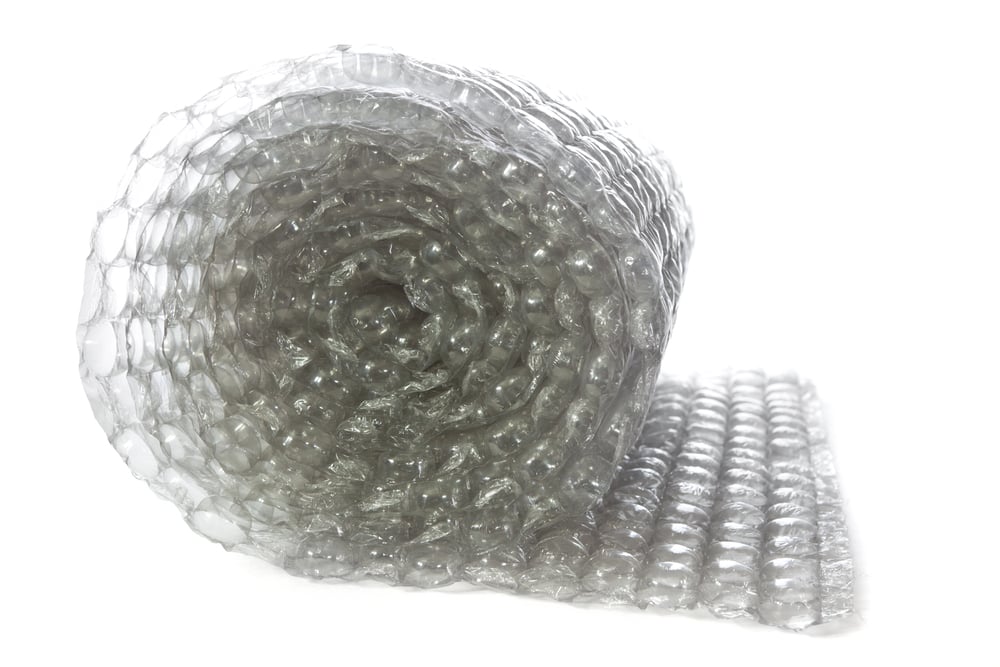
Al Fielding and Marc Chavannes created bubble wrap in 1957 while trying to make textured wallpaper. They sealed two shower curtains together with air pockets trapped between them, imagined it as a wall covering, and found no buyers.
They tried rebranding it as greenhouse insulation. That didn’t work either.
Three years later, a marketing manager at their company had the idea of using it to protect IBM computers during shipping. That worked.
Bubble wrap became a packaging material, then somehow became a stress-relief object that people seek out specifically for the satisfaction of popping it. Neither inventor could have predicted either use.
WD-40
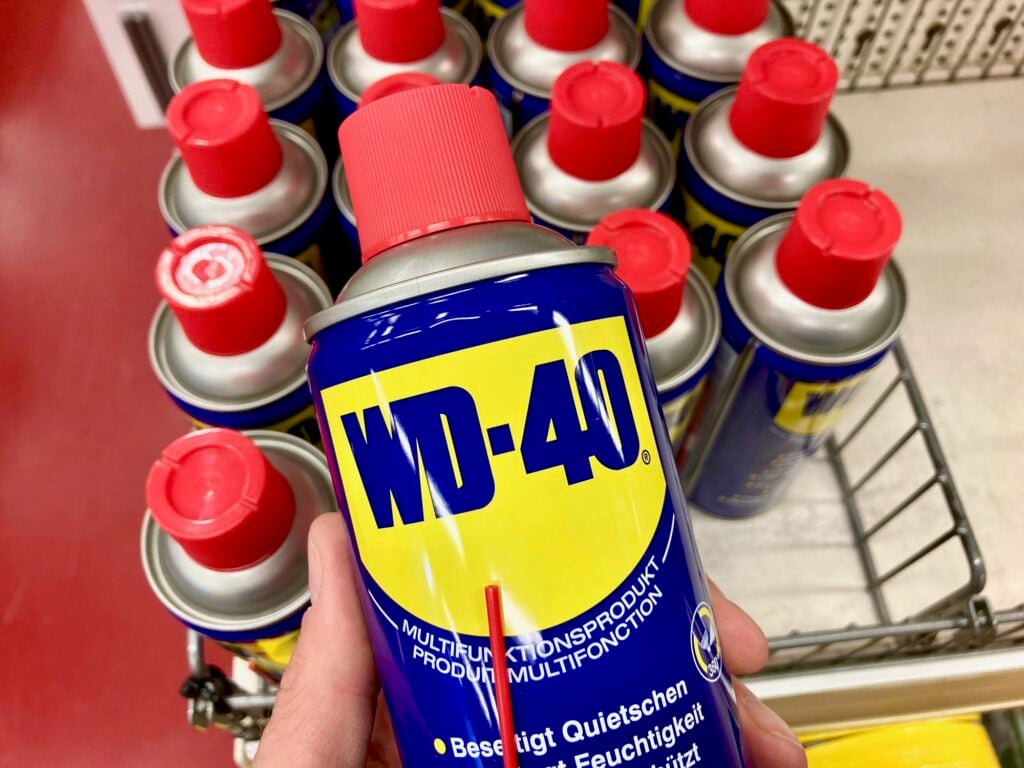
The name is a clue: Water Displacement, 40th attempt. The Rocket Chemical Company developed it in 1953 to protect the outer skin of the Atlas missile from rust and corrosion.
It took 40 formulations to get it right, and the product was industrial from the start — meant for aerospace applications, not household use. Workers at the company started sneaking cans home because it was useful for loosening stuck bolts and stopping squeaks.
The consumer version launched in 1958, and the original industrial purpose is now almost entirely forgotten by the people who keep a can under the sink.
Listerine
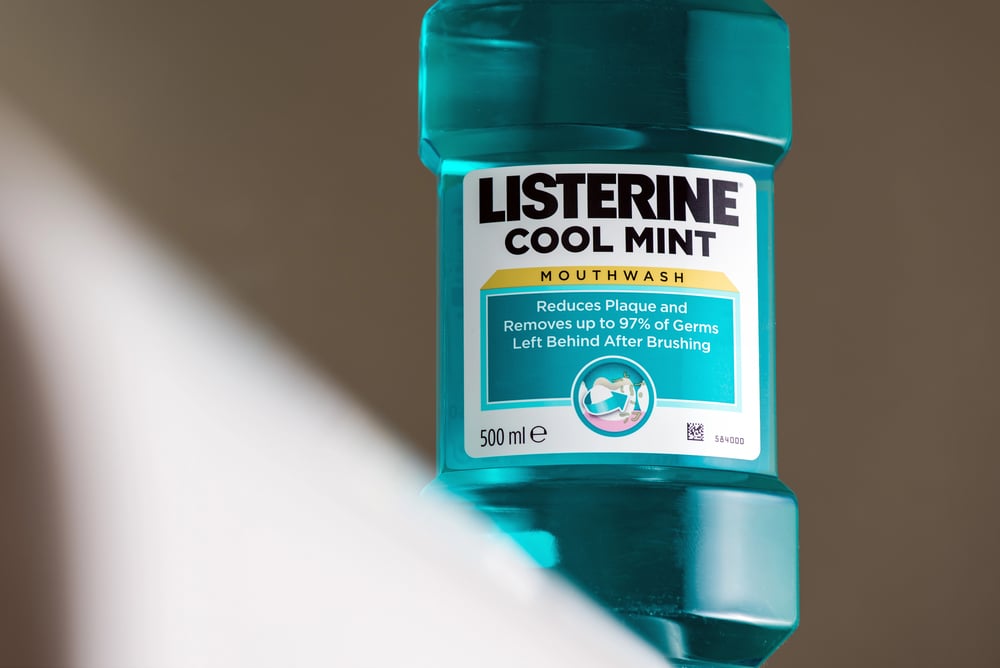
Listerine was formulated in 1879 as a surgical antiseptic, intended for use in operating theatres. It was later marketed as a floor cleaner and a treatment for gonorrhoea. For decades it had no particular connection to oral hygiene.
In the 1920s, the company pivoted to selling it as a cure for “chronic halitosis” — a medical-sounding term they essentially invented and then terrified the public about through an aggressive advertising campaign. It worked extraordinarily well.
The product became a mouthwash, halitosis became a household word, and the surgical antiseptic origin was quietly retired.
Play-Doh
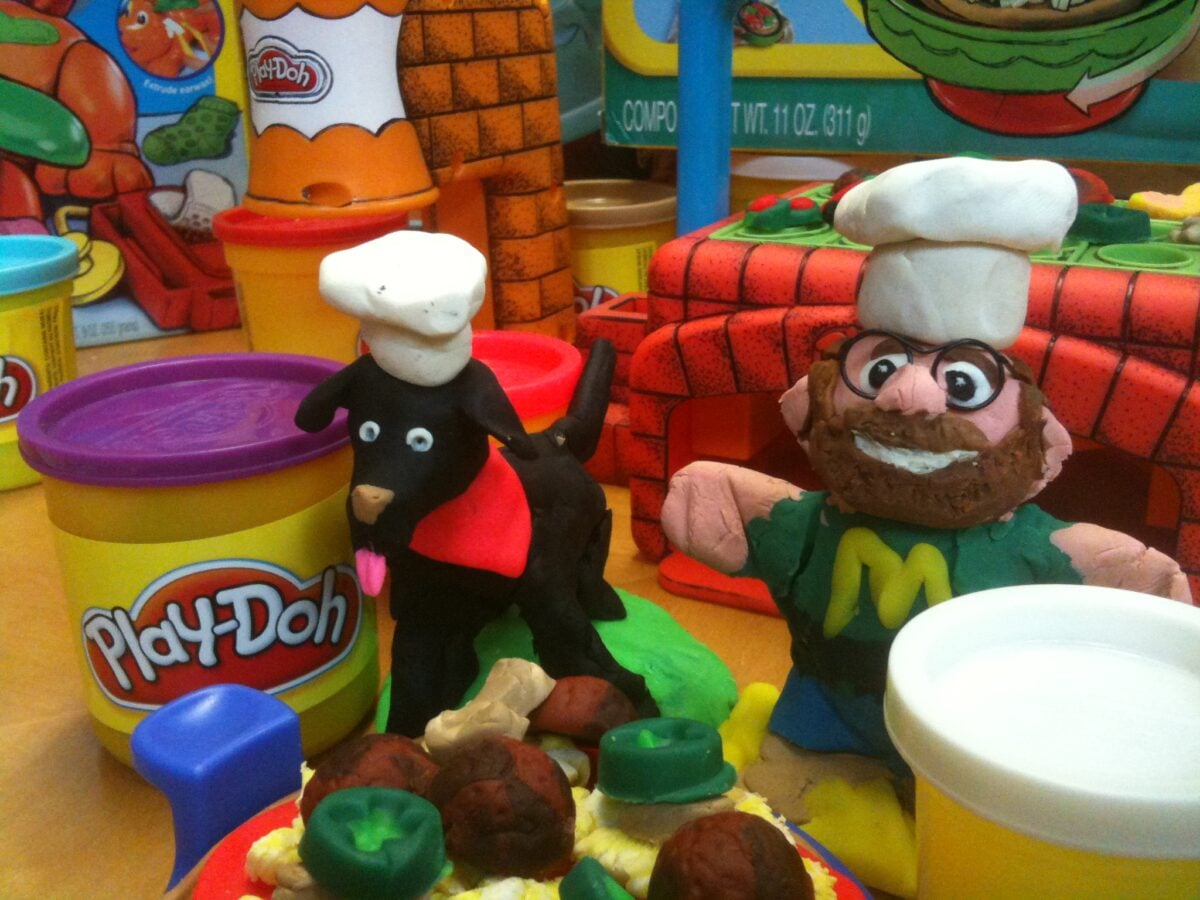
In the early 1950s, Noah McVicker developed a soft, pliable compound intended for cleaning wallpaper. Coal heating systems left a film on walls, and his product was designed to lift it.
When cleaner fuels came into widespread use, the market for the compound largely disappeared. His sister-in-law, a nursery school teacher, had been using it in her classroom as a modelling material and noticed the children loved it.
McVicker reformulated it, added colour, and sold it as a children’s toy in 1956. It became one of the best-selling toys in history.
The wallpaper cleaning version does not appear to have any fans.
Cornflakes

John Harvey Kellogg invented cornflakes in 1894 at the Battle Creek Sanitarium in Michigan, where he worked as superintendent. He was a strict vegetarian with strong views on diet, health, and — most intensely — the dangers of what he considered excessive physical pleasure.
Cornflakes were designed as a bland food that would reduce appetite and discourage impure thoughts, particularly in the morning. The therapeutic and moral intentions were entirely sincere.
His brother Will added sugar to the recipe over John’s objections, and the cereal became a commercial product marketed to a mass audience for reasons that had nothing to do with any of the original theory.
Superglue
Harry Coover at Eastman Kodak accidentally created cyanoacrylate in 1942 while trying to make clear plastic gun sights for Allied forces during the Second World War. The substance bonded to everything it touched and was immediately dismissed as useless.
He discovered it again in 1951 while testing materials for jet canopies and, this time, recognised what it was. Superglue reached the consumer market in 1958.
During the Vietnam War, military medics used it to seal wounds on the battlefield — bringing the origin story back around to wartime use, just not the one Coover had in mind.
Microwave Ovens

Percy Spencer, an engineer at Raytheon, was working with radar magnetrons in 1945 when he noticed that a chocolate bar in his pocket had melted. He hadn’t been near a heat source.
The microwaves from the magnetron had cooked it. He experimented deliberately next — first with popcorn, then with an egg, which exploded.
Raytheon patented the microwave cooking process the same year. The first commercial microwave oven was released in 1947, stood nearly six feet tall, weighed 340 kilograms, and cost around $5,000.
The countertop version familiar today came decades later, after significant miniaturisation.
Post-it Notes
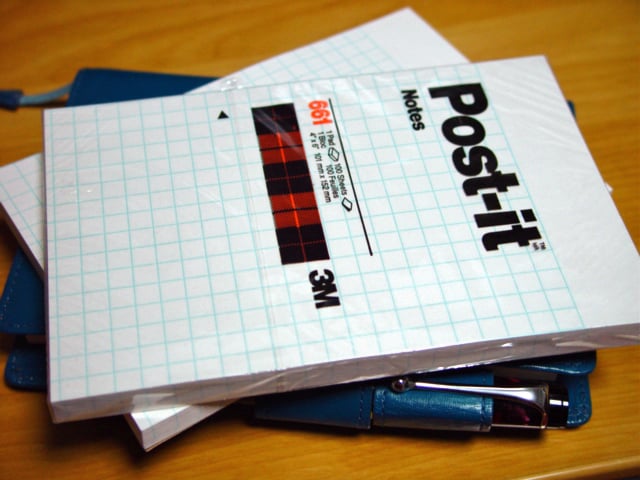
Spencer Silver developed a weak, reusable adhesive at 3M in 1968 while trying to create a strong one. It was considered a failure: it didn’t bond permanently, it left residue, and it had no obvious application.
Silver spent years trying to convince anyone at 3M to use it for something. Art Fry, a colleague who sang in a church choir and was frustrated by his bookmark falling out of his hymnal, had an idea in 1974.
He used Silver’s adhesive to make a bookmark that stayed put but could be removed without tearing the page. 3M launched Post-it Notes in 1980.
They have never been off the market since.
Viagra
Sildenafil was developed by Pfizer researchers in the late 1980s as a treatment for hypertension and angina. Clinical trials showed it wasn’t particularly effective for either condition.
During those trials, however, patients consistently declined to return their unused pills, and the trial nurses began to notice a pattern. Further investigation confirmed what the patients had apparently already worked out.
Pfizer changed direction entirely, rebranded the compound, and launched Viagra in 1998. It became one of the best-known pharmaceutical products in history.
The cardiac research that preceded it is rarely mentioned.
Duct Tape
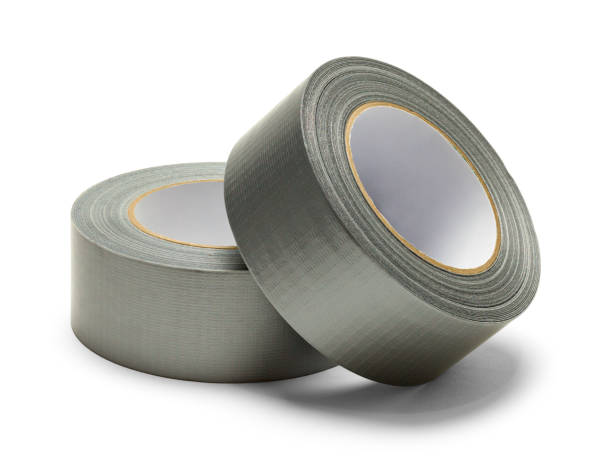
Duct tape was developed during the Second World War by Johnson & Johnson, at the request of the US military, who needed a waterproof tape strong enough to keep moisture out of ammunition cases. The original version was army green and called “duct tape” — partly because of its water-resistant properties, partly because of the cotton duck fabric used in its construction.
After the war, it found a new application in the booming housing construction industry for sealing ductwork in heating and cooling systems, which is where the “duct” name came from and where the silver colour was introduced. It was used for neither purpose by the population that eventually made it iconic.
Coca-Cola
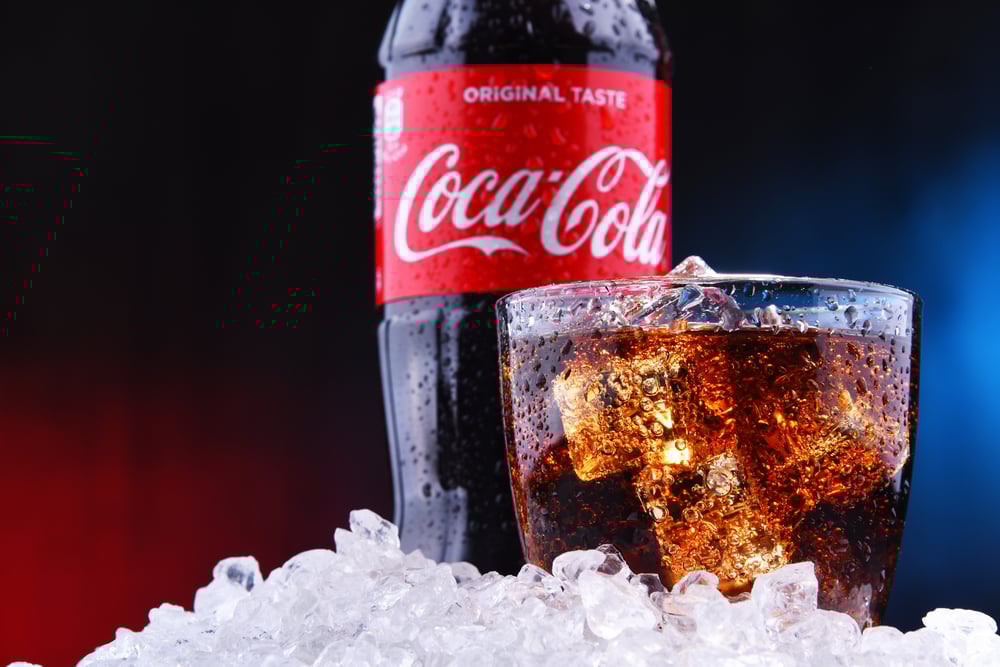
John Pemberton created Coca-Cola in 1886 as a medicinal tonic. It was marketed as a cure for morphine addiction, headaches, and nerve disorders, among other things — Pemberton himself was a morphine addict following a Civil War injury and was looking for a substitute.
The original formula contained cocaine from coca leaves and caffeine from kola nuts. It was sold at pharmacies as a health product.
Asa Candler bought the rights, stripped out the medicinal framing, removed the cocaine (eventually), and turned it into a beverage. The health tonic became the most recognised commercial product in the world.
Slinky

Richard James was a naval engineer working in 1943 to develop springs that could stabilise sensitive instruments on ships at sea. One of his tension springs fell off a shelf, walked across a series of surfaces, and coiled itself neatly on the floor.
He brought it home and his wife Betty watched neighbourhood children play with it for hours. She found the name in a dictionary — Swedish for sleek or smooth.
The Slinky launched at Gimbap’s department store in Philadelphia in 1945, sold 400 units in 90 minutes, and became one of the most enduring toys ever produced. The ships never got their stabiliser.
Chewing Gum

Thomas Adams Sr. acquired a large quantity of chicle — a natural latex from the sapodilla tree — from Antonio López de Santa Anna, the Mexican general and former president who had it shipped to New York in 1869. Santa Anna hoped Adams would find a way to vulcanise chicle into a rubber substitute that could be used for tyres and waterproof boots.
Adams spent more than a year trying to make rubber from it and failed entirely. He boiled some chicle on the stove one evening, rolled it into small rounds, and sold them to a local pharmacy.
The rubber substitute never materialised. The chewing gum market did.
Matches
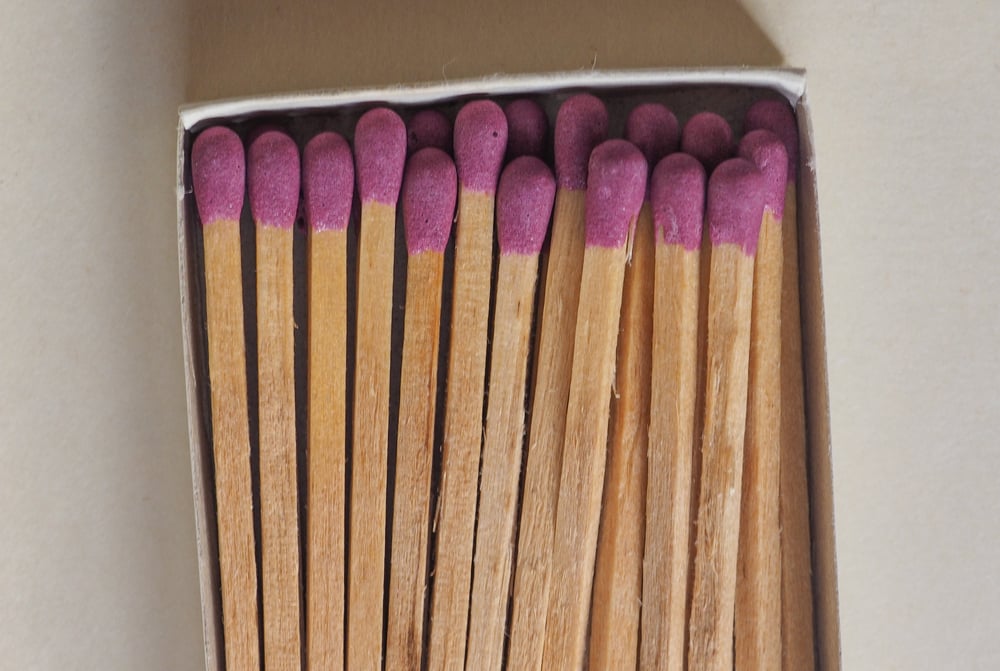
The friction match was invented by John Walker, an English chemist, in 1826 — by accident. He was trying to develop a compound that could be used to ignite guns more reliably.
While mixing chemicals one evening, he noticed a dried lump on the end of his stirring stick. When he scraped it on the stone floor to remove it, it ignited.
Walker saw the potential immediately and began selling “friction lights” from his pharmacy, each packed in a cardboard box with a piece of sandpaper. He never patented the idea.
Within a few years, others had copied and improved the design, and the match became universal.
Stainless Steel
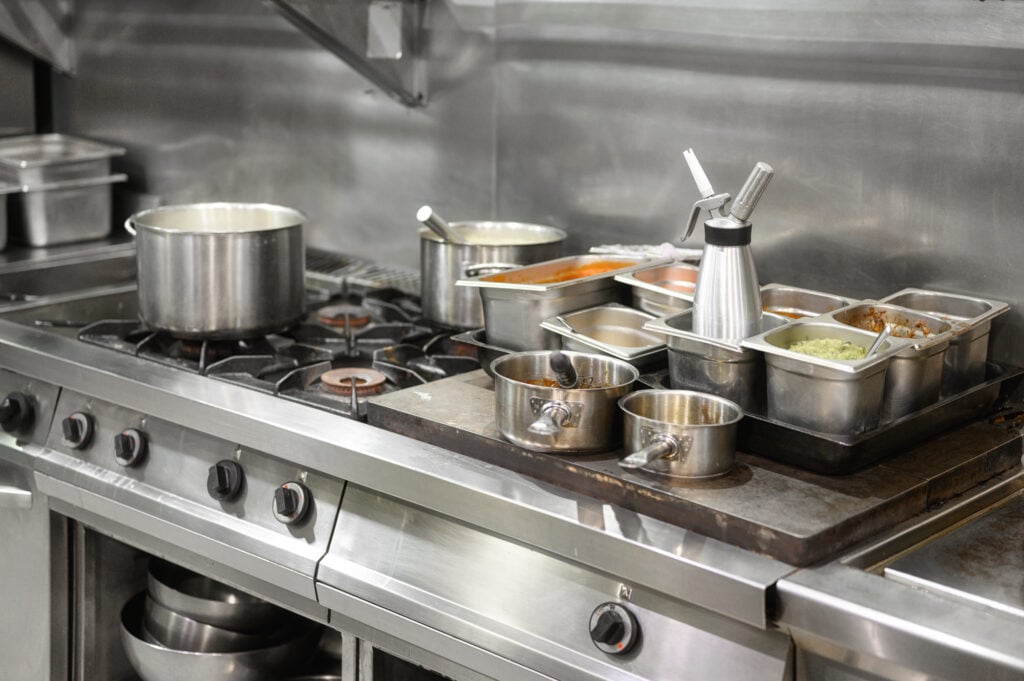
Harry Brearley was hired by a cutlery company in Sheffield in 1912 to solve a specific industrial problem: gun barrels were eroding too quickly, and a harder steel alloy was needed. He spent two years developing and testing alloys, none of which solved the gun barrel problem.
While clearing out his laboratory, he noticed that one of his rejected experimental samples had not rusted the way the others had. Brearley was initially more interested in its potential for cutlery than in the metallurgical significance of what he’d found.
The broader industrial applications of stainless steel — in surgery, construction, cookware, aerospace — came much later, and from many different hands.
Safety Glass
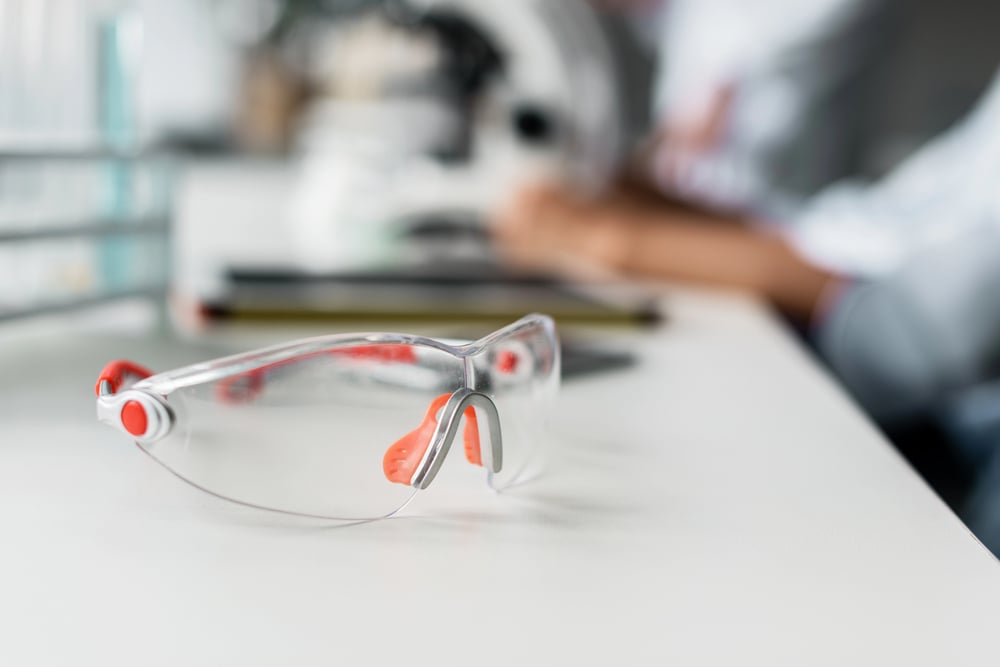
Édouard Bénédictus, a French chemist, dropped a glass flask in his laboratory in 1903 and noticed that although it cracked, it held its shape rather than shattering. The flask had contained cellulose nitrate solution, which had dried and coated the interior.
He noted it, filed it away, and didn’t pursue it seriously for several years. Then he read reports of car accident victims suffering severe injuries from shattered windscreen glass.
He connected the two things, patented laminated safety glass in 1909, and it eventually became mandatory in vehicle windscreens worldwide. The flask he dropped is now a footnote.
The glass that holds when it breaks is in every car on the road.
The Longer Arc
A quiet mismatch runs through many of these items – a space where what was meant didn’t match what happened. One sticky failure now holds notes on millions of desks worldwide.
What started as sealing gear in wet conditions now patches everything under a kitchen sink. A drink once sold for health reasons sits today in every corner store fridge.
Often, it’s not the tools made for everyday moments that stick around longest – instead, it’s those stumbling into usefulness sideways. Luck plays a role.
So does wonder. But mostly someone looking closely when things went wrong and spotting a new kind of right.
More from Go2Tutors!

- 16 Historical Figures Who Were Nothing Like You Think
- 12 Things Sold in the 80s That Are Now Illegal
- 15 VHS Tapes That Could Be Worth Thousands
- 17 Historical “What Ifs” That Would Have Changed Everything
- 18 TV Shows That Vanished Without a Finale
Like Go2Tutors’s content? Follow us on MSN.