16 Facts About the A380 SuperJumbo
The Airbus A380 is the biggest passenger airplane ever built, and it changed the way people think about air travel. This massive double-decker jet can carry over 500 people at once and flies to major cities around the world.
When it first took off in 2005, aviation fans couldn’t believe something so huge could actually get off the ground. Let’s explore some interesting facts about this giant of the skies.
The wingspan is wider than a football field
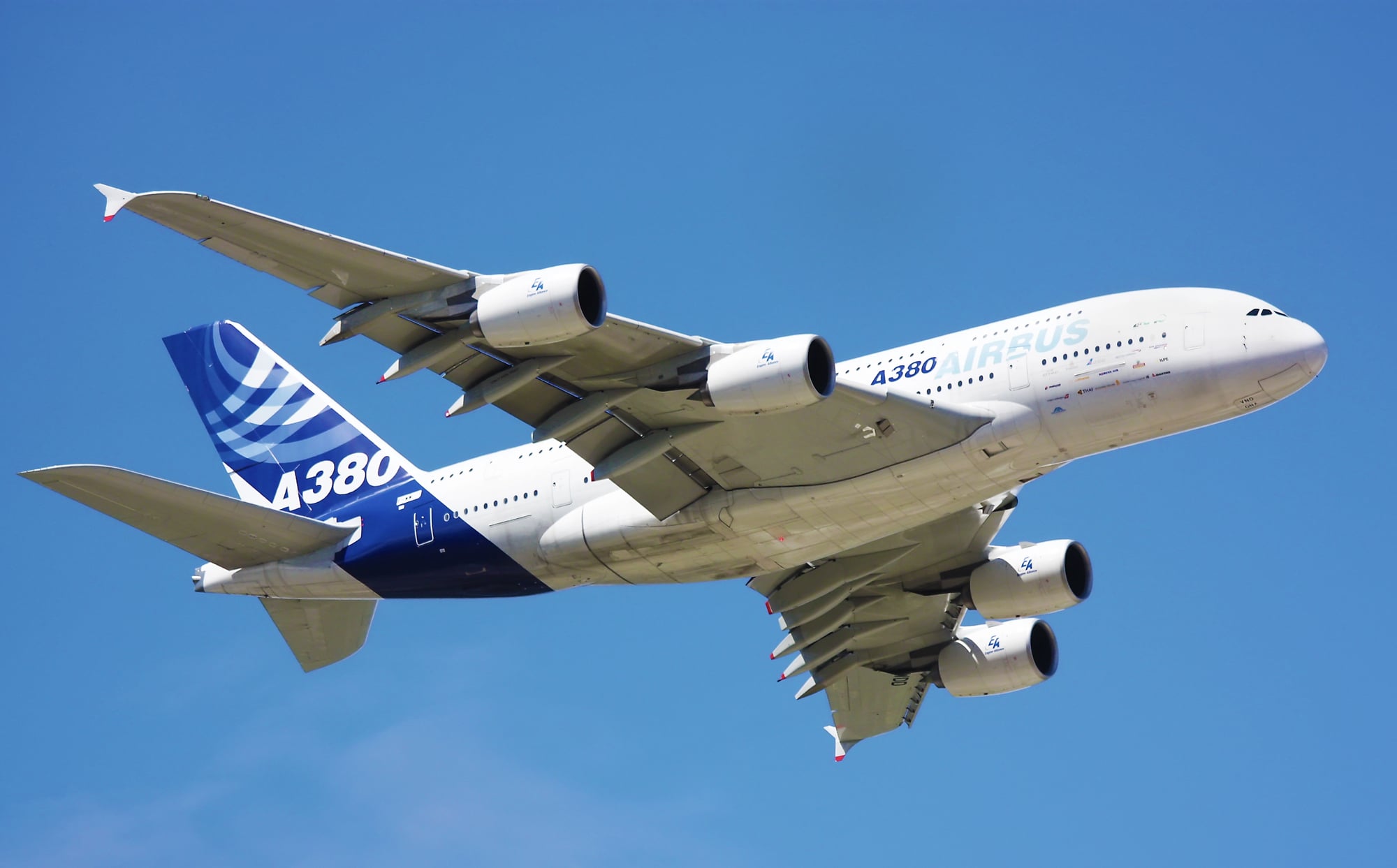
The A380’s wings stretch 261 feet from tip to tip, which is longer than an entire American football field including the end zones. Those wings are so big that special parking spots had to be created at airports just to fit them.
The wing area covers about 9,100 square feet, roughly the size of three tennis courts put together. All that surface area helps lift the plane’s massive weight, which can reach over 1.2 million pounds when fully loaded with passengers, cargo, and fuel.
It has two full decks for passengers
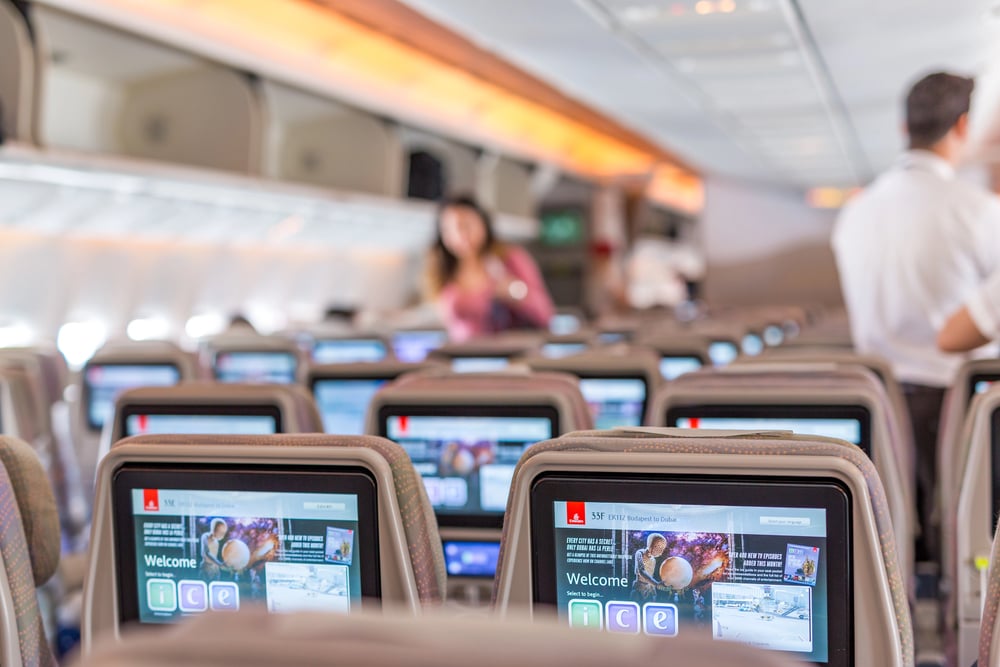
Unlike other jumbo jets that only have a small upper deck, the A380 has two complete floors running the entire length of the plane. Both decks are wide enough for two aisles, giving passengers more space to move around than on regular planes.
Some airlines put premium seats and bars on the upper deck while filling the lower deck with economy seats. The double-decker design means the plane can carry way more people without making the plane longer, which would create problems at airports.
Airlines have installed showers and bars onboard
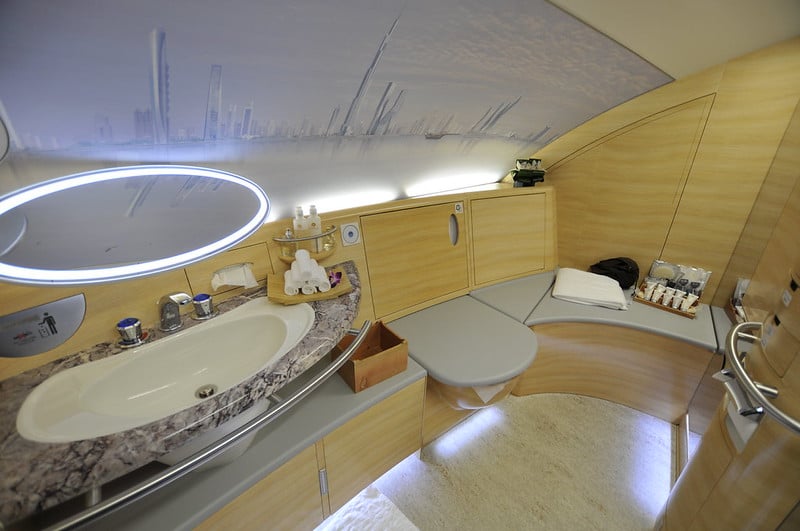
Emirates, the biggest A380 operator, put actual shower spas in their first-class cabins on the upper deck. Passengers can book a five-minute shower appointment during long flights, complete with heated floors and fancy toiletries.
Several airlines also installed onboard bars where passengers can stand around and socialize instead of staying stuck in their seats. Singapore Airlines even had private suites with double beds for a while.
These luxury features turned the A380 into more of a flying hotel than a regular airplane.
Only 251 were ever built
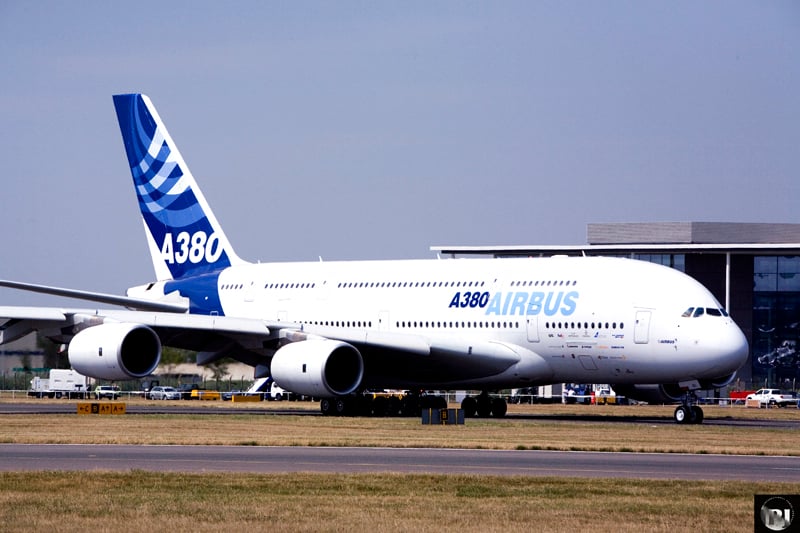
Airbus stopped making the A380 in 2021 after building just 251 of them over 14 years. The company originally hoped to sell at least 1,200 planes but couldn’t find enough buyers.
Airlines decided they preferred smaller, more fuel-efficient planes like the Boeing 787 that could fly the same routes without needing to fill 500 seats. The last A380 rolled out of the factory in France and went to Emirates, the airline that believed in the plane the most.
Production ended not because the plane was bad, but because the aviation industry changed its mind about what it wanted.
The engines are as tall as a person
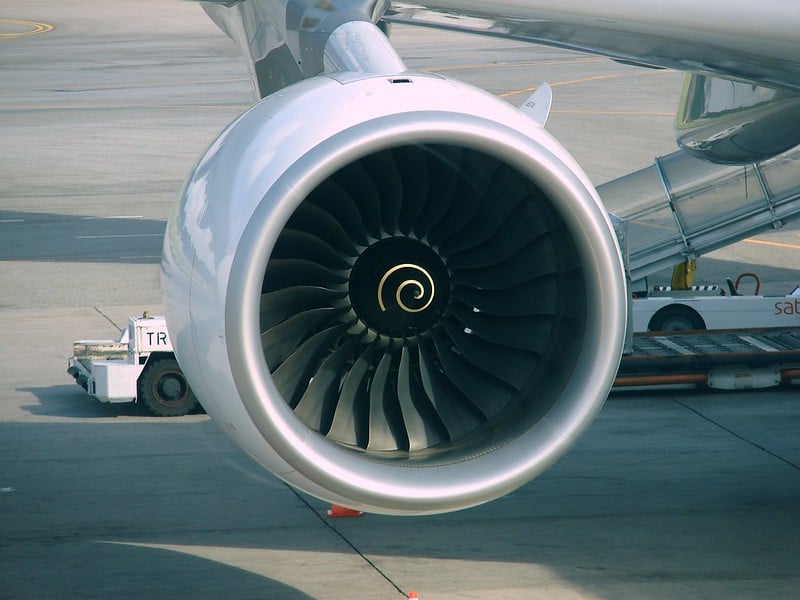
Each A380 has four massive jet engines, and each one stands about 10 feet tall. The Engine Alliance GP7200 engines that power many A380s are so powerful that one engine alone produces around 70,000 pounds of thrust.
That’s more power than all four engines on a Boeing 747 combined from earlier generations. The engines are also incredibly quiet for their size, meeting strict noise requirements even though they’re pushing a two-story building through the sky at 560 miles per hour.
Airports had to be redesigned to handle it
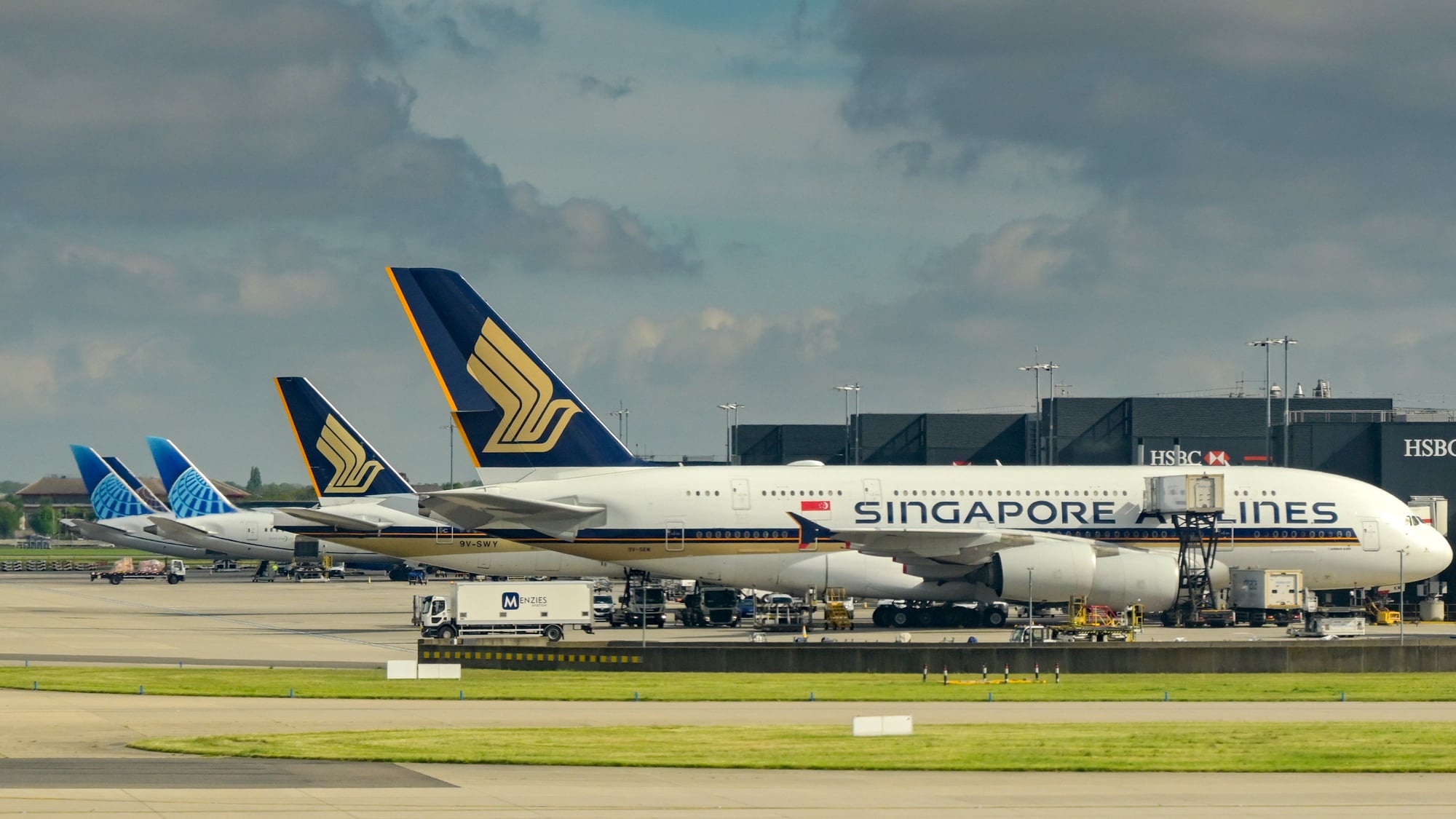
Before the A380 could start flying commercially, airports around the world spent billions of dollars upgrading their facilities. Runways needed to be reinforced because the plane weighs so much, and taxiways had to be widened so the wings wouldn’t hit things.
Parking gates required double jet bridges to load passengers on both decks at the same time. Some airports built entirely new terminals just for the A380.
London Heathrow’s Terminal 5 and Dubai International’s Concourse A were specifically designed with this giant plane in mind.
It can fly for over 8,000 miles nonstop
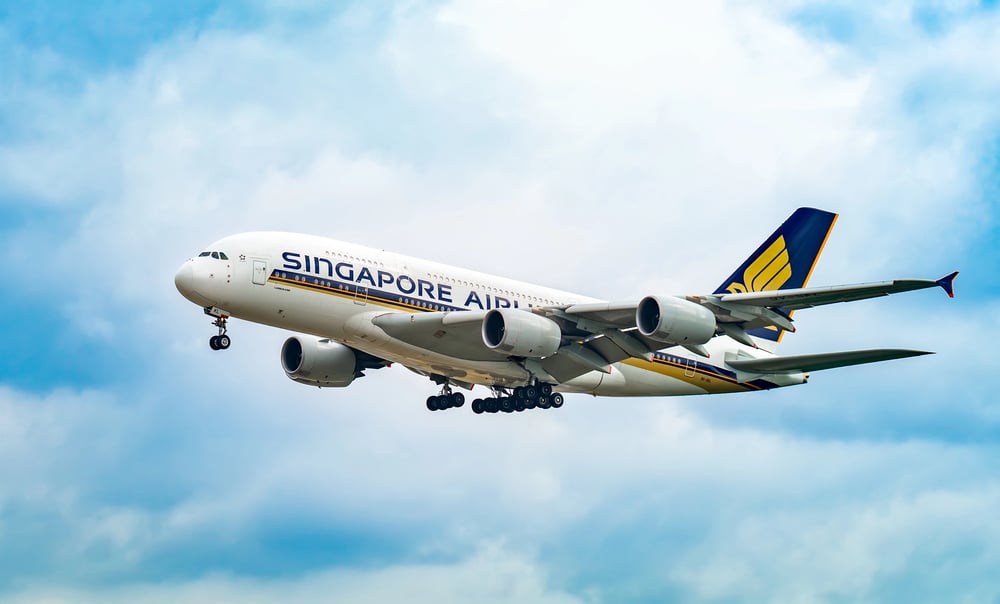
The A380 has a range of about 8,700 miles when fully loaded, meaning it can fly from Los Angeles to Sydney or from Dubai to San Francisco without stopping. The plane carries up to 84,600 gallons of fuel in tanks located in the wings and center of the fuselage.
On a typical 14-hour flight, the A380 burns through roughly 5,000 gallons per hour, though newer engines have made it somewhat more efficient. That range lets airlines connect almost any two major cities in the world with a single flight.
The upper deck is as long as the entire plane
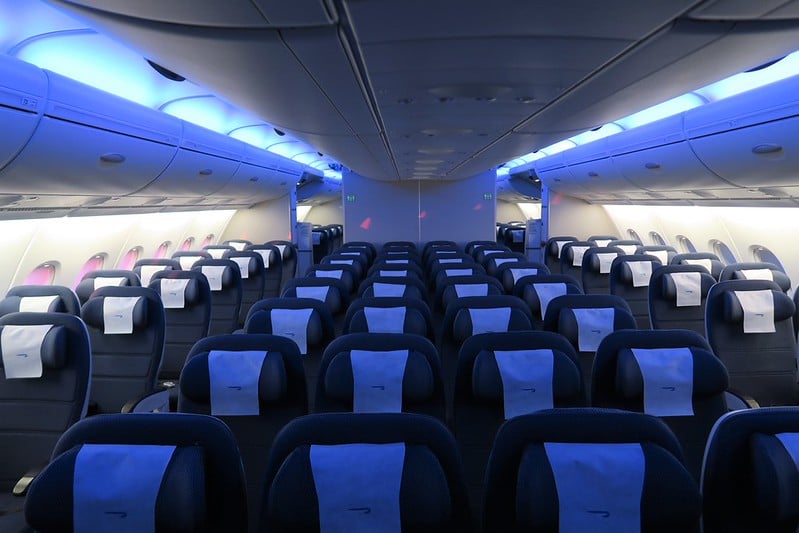
The upper deck on the A380 runs almost the full length of the aircraft at about 160 feet long. This is completely different from the Boeing 747, where the upper deck is just a small bump near the front.
Having a full-length second floor means airlines can fit in way more seats or luxury amenities without making the plane wider. Walking from the front to the back of the upper deck feels like strolling through a long hallway.
Some passengers prefer the upper deck because it feels more exclusive and quieter than the main floor below.
It takes over 1,500 gallons of paint to cover

Painting an A380 requires between 1,500 and 2,000 gallons of paint, depending on the airline’s color scheme. The whole process takes about two weeks and involves multiple layers to protect the plane from weather and corrosion.
Emirates’ distinctive red and white livery uses special paint that can withstand desert heat and sandstorms. The paint itself adds around 1,200 pounds to the plane’s total weight.
Some airlines skip painting the entire plane to save weight and money, leaving large sections in bare metal with a protective coating.
Passengers get off using three jet bridges
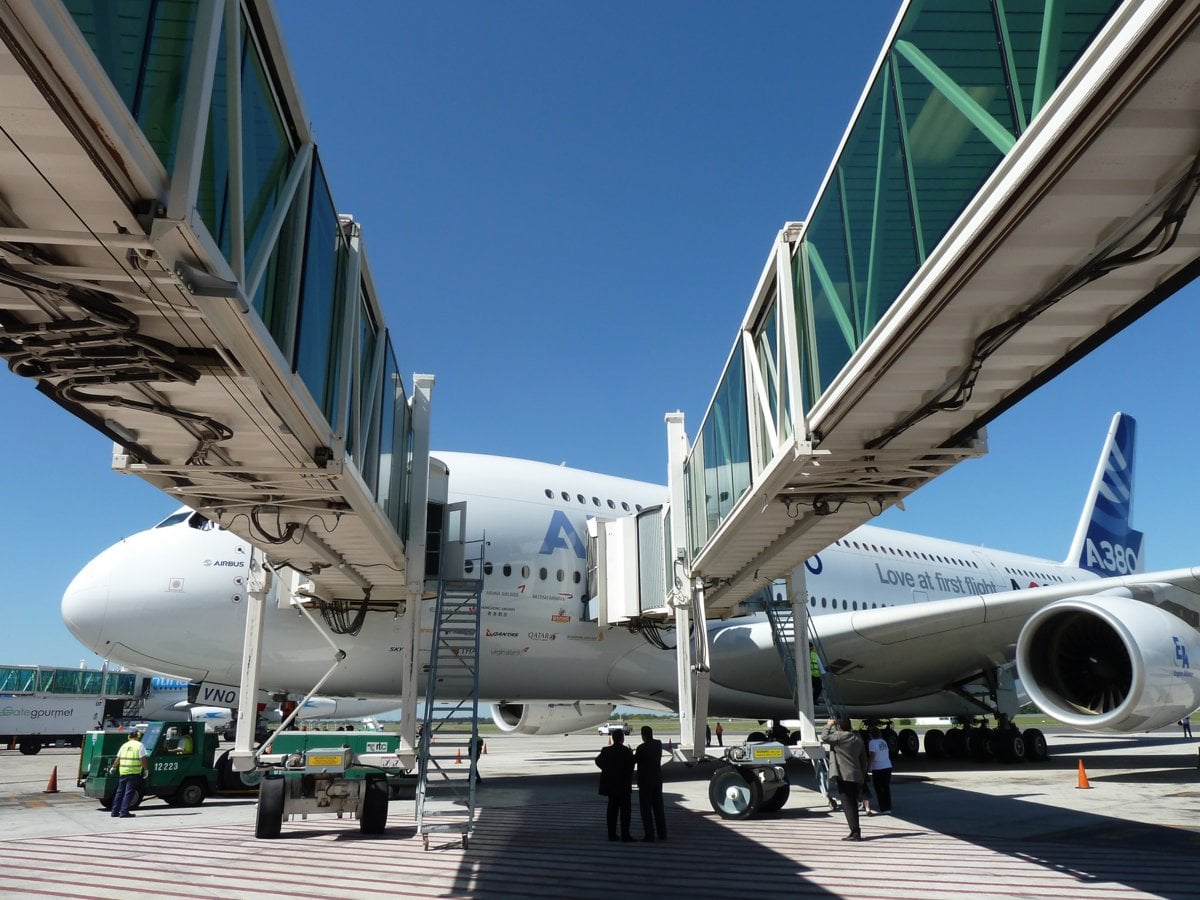
Most A380 gates use three jet bridges to speed up boarding and getting off the plane. Two bridges connect to doors on the upper deck while one connects to the lower deck.
This setup lets hundreds of passengers exit at the same time instead of creating a massive bottleneck. At some airports, ground crews also use stairs for additional exits when the plane arrives.
Even with all these exits, it still takes at least 30 minutes to completely empty a full A380 because there are just so many people on board.
The cockpit sits 24 feet off the ground
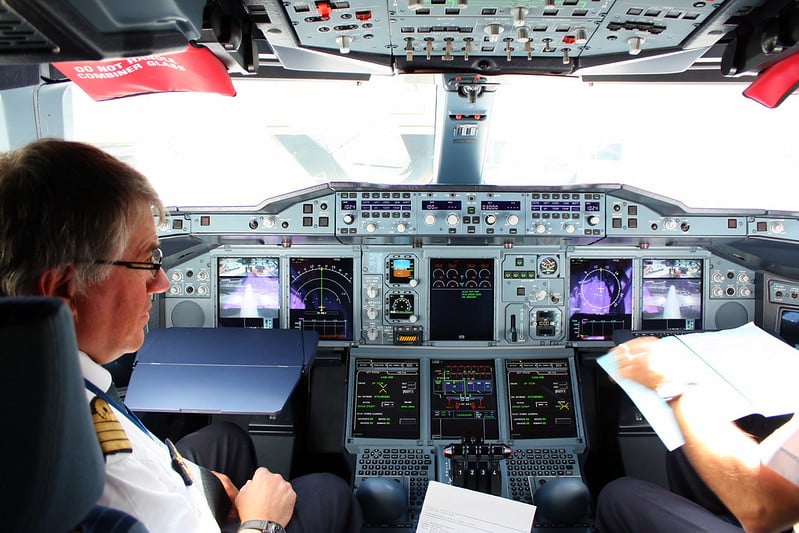
The pilots sit almost three stories above the tarmac when the A380 is on the ground. This high perch gives them an excellent view but makes the plane tricky to taxi around tight airport corners.
The cockpit uses a fly-by-wire system where computers translate pilot commands into control movements rather than using direct mechanical connections. Two pilots operate the plane using side-stick controllers similar to video game joysticks instead of traditional control yokes.
The instrument panel has eight large display screens that show everything from engine performance to weather radar.
Singapore Airlines flew the first commercial route
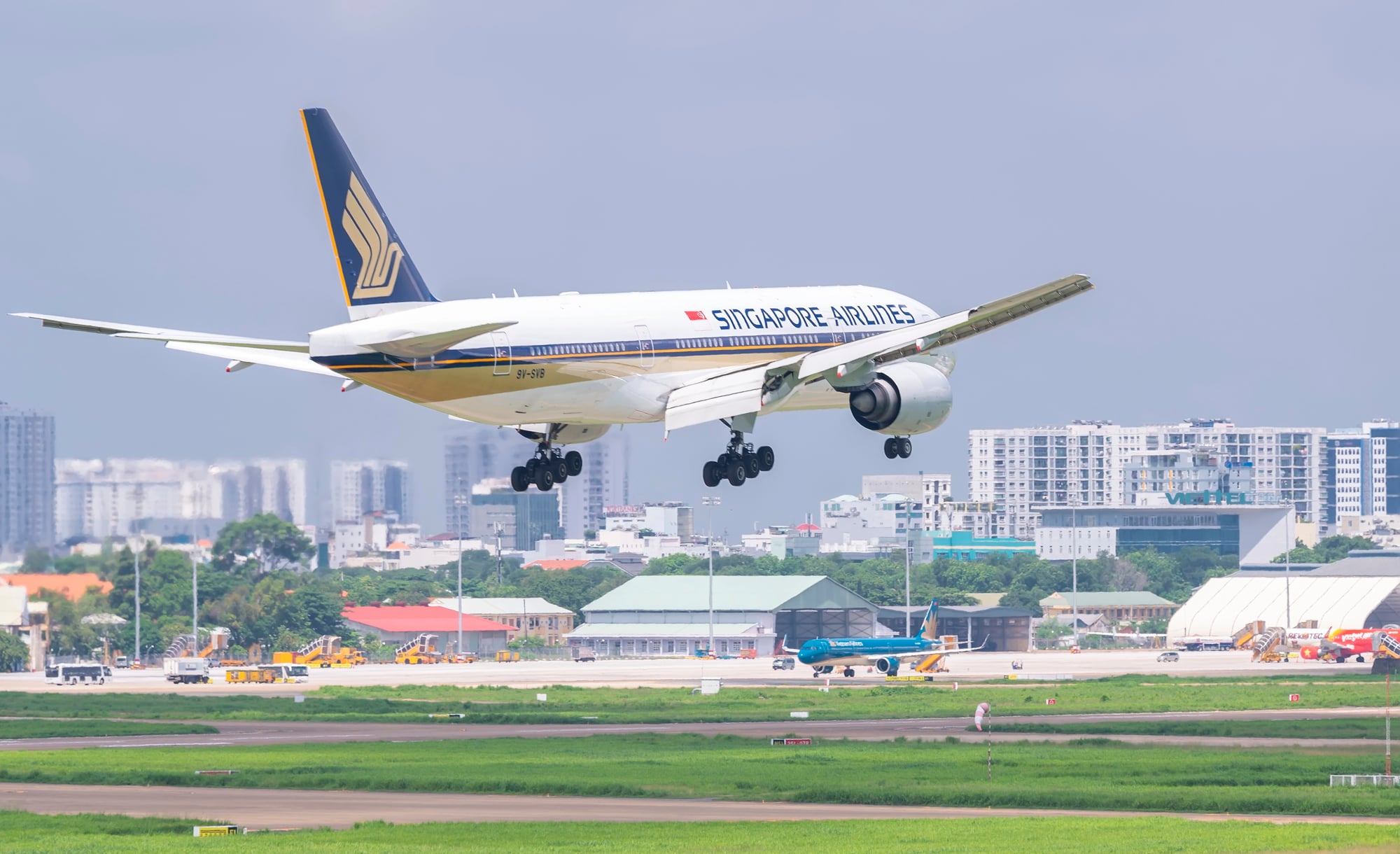
Singapore Airlines launched the first passenger flight of an A380 on October 25, 2007, flying from Singapore to Sydney. Tickets for that historic flight sold at auction for as much as $100,000, with proceeds going to charity.
The airline configured that first plane with just 471 seats even though it could have fit over 600. Passengers on board got special certificates and commemorative gifts to mark the occasion.
Singapore Airlines chose the Sydney route because Australians had been big supporters of the plane’s development.
It can hold over 800 people in all-economy layout
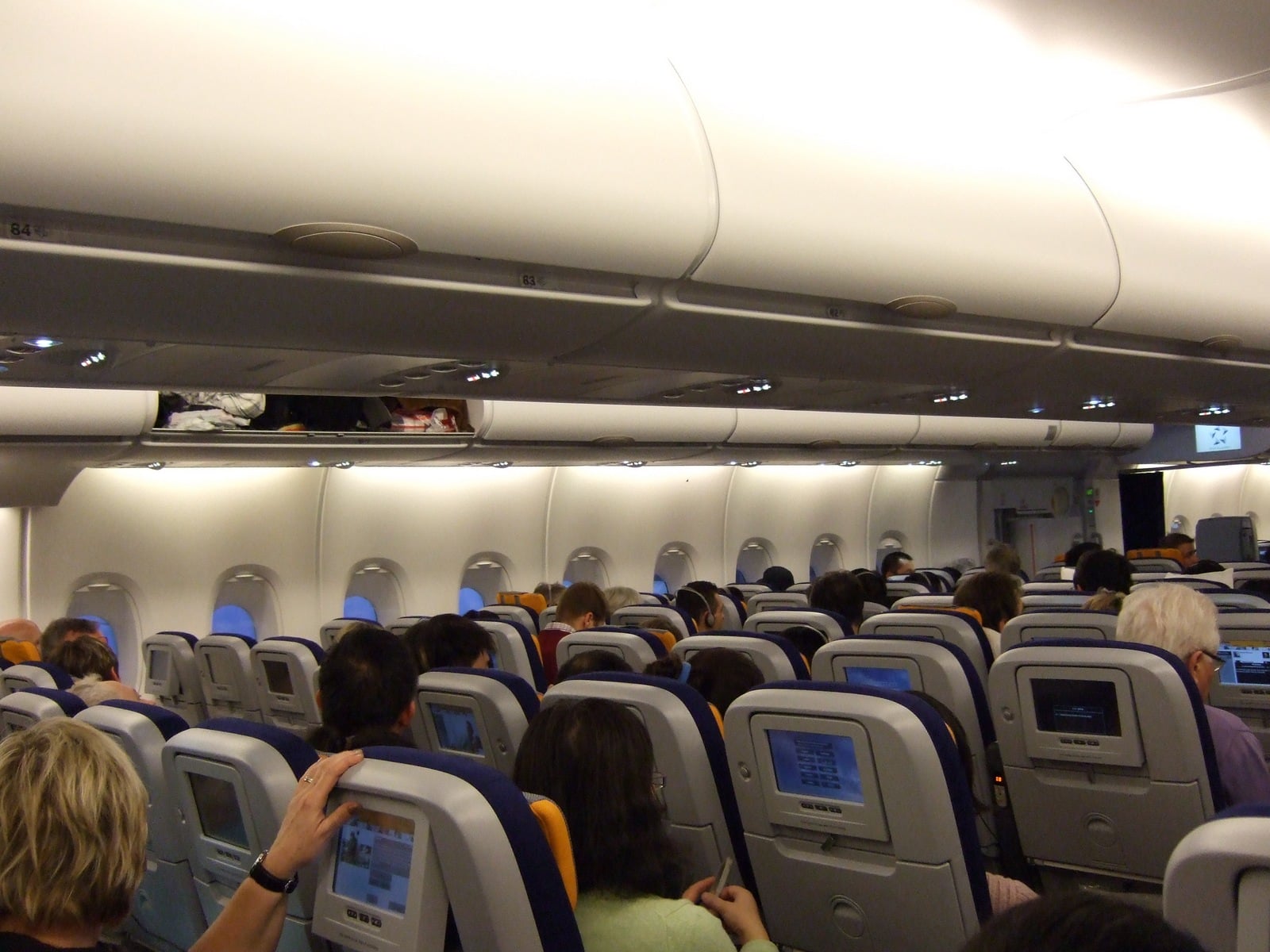
While most airlines configure their A380s with a mix of first class, business, and economy seats for around 500 passengers, the plane can theoretically hold 853 people if every seat was economy class. No airline has actually done this because it would be a nightmare to board and serve that many passengers.
Air Austral came close with a 840-seat configuration they planned but never used. Emirates has the highest capacity A380s currently flying with 615 seats across four classes.
The idea of cramming 800 people onto one plane shows just how enormous this aircraft really is.
Lufthansa uses them for specific routes only
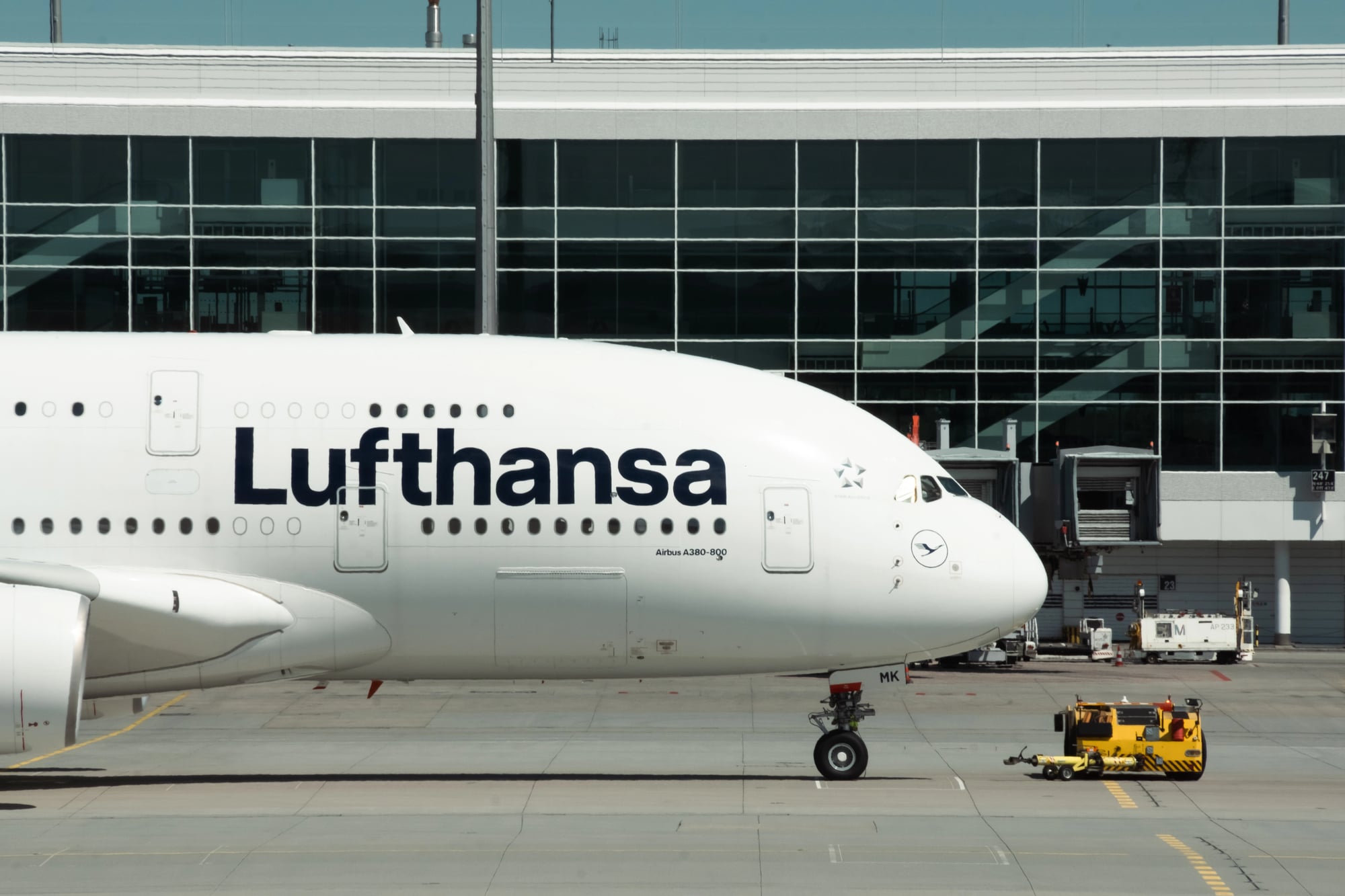
Lufthansa, the German airline, operates A380s exclusively on routes from Frankfurt and Munich to popular destinations like New York, Los Angeles, and Bangkok. They don’t fly the plane to smaller cities because filling all those seats would be nearly impossible.
The airline configured their A380s with 509 seats, including a spacious first class on the upper deck. Lufthansa actually tried to retire their A380 fleet during the pandemic but brought them back when travel demand surged again.
The planes work well for routes with consistent high demand but sit unused when passenger numbers drop.
More than twenty-five billion dollars went into building it

Spending around twenty five billion dollars, Airbus launched the A380 effort – a figure that ranks among aviation’s heaviest price tags. Delayed by technical hiccups and budget leaks, the debut flight slipped by nearly two full years.
Pieces of the jet came together slowly, each part shaped inside separate European plants before journeying toward central France. Final assembly unfolded in Toulouse, where giant segments arrived after long hauls over land and water.
Because the wings stretched so far, moving them meant building new pathways, even custom watercraft. Sales fell short, leaving much of the investment uncovered despite ambitious production hopes.
Flying companies have started phasing these out
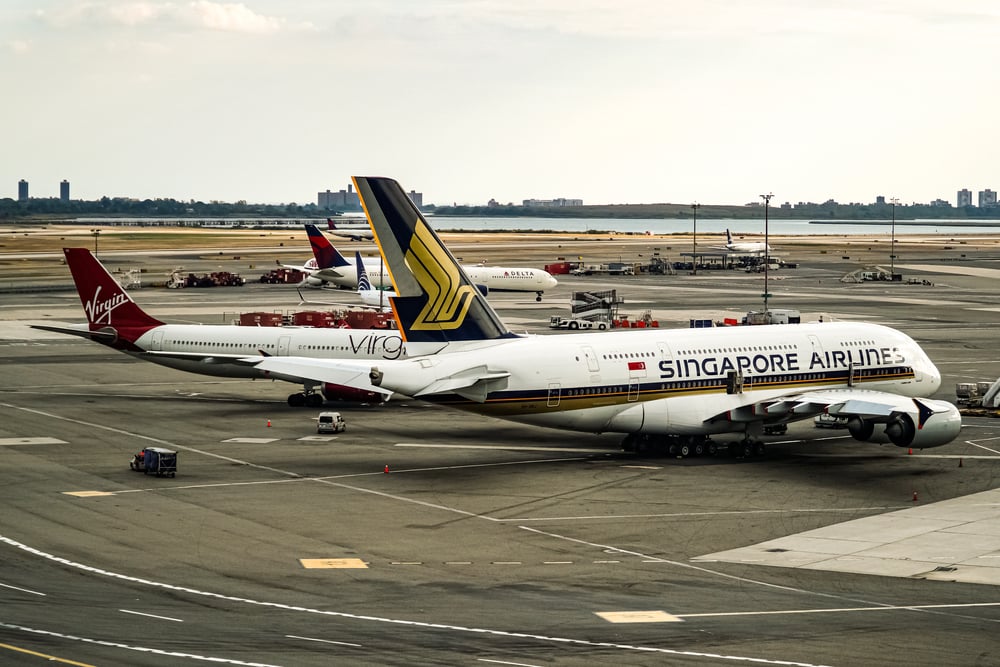
Though the A380 isn’t old, several airlines began phasing it out early. Air France took theirs out of service for good in 2020; others copied soon after.
Maintenance hits hard financially, especially since these models run on four engines while newer long-haul aircraft manage just fine with two. Storing one eats up extra ramp area, pushing parking fees higher.
Still, Emirates holds tight to its faith in the giant jet, aiming to operate it well into the future. Yet across the industry, fewer A380s take off each year as operators lean toward lighter, thriftier options such as the A350 and 787.
Even now, most folks pick it first
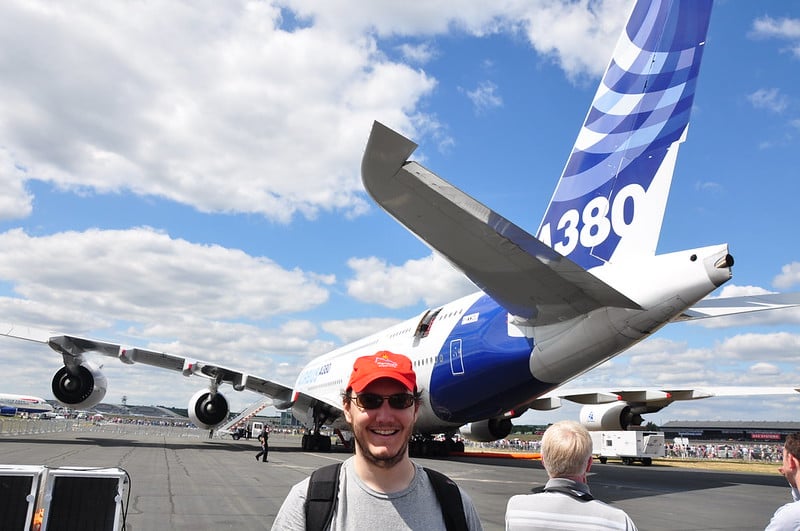
Even though airlines are ditching the A380, people really enjoy being on board. Quieter than most small jets, it offers roomier seating along with larger storage above.
Given an option, plenty choose this aircraft just for how relaxed the ride seems. Fans of flight continue showing up at terminals, simply to see these massive planes come and go.
Out there among giants, the A380 showed size wasn’t the problem – profit was. Still, its blend of bold design and roomy cabins holds weight today, especially now that production winds down.
More from Go2Tutors!

- The Romanov Crown Jewels and Their Tragic Fate
- 13 Historical Mysteries That Science Still Can’t Solve
- Famous Hoaxes That Fooled the World for Years
- 15 Child Stars with Tragic Adult Lives
- 16 Famous Jewelry Pieces in History
Like Go2Tutors’s content? Follow us on MSN.