16 Facts About the Taj Mahal Architecture
A gleaming white dome rises above Agra – this is where crowds gather, year after year, drawn by stories passed down through time. Not just romance lives within those walls; hidden patterns twist through stone carvings, seen only when light hits at dawn.
Craftsmen shaped marble with methods now lost, fitting pieces so tightly no blade can slip between. Some say the floors shift slightly underfoot – one wrong step could echo through vaulted halls.
Even shadows move differently here, stretching long in ways maps fail to explain. Let’s explore the remarkable architectural features that make this monument so special.
White Marble Changes Color Throughout the Day

Morning light kisses the dome, washing it in soft pink. Built by intent, not chance, the design leans on stone pulled from Makrana’s mines.
Noon arrives – harsh, bright – and the walls turn pale, like fresh cream under steady sun. Shift comes slowly when evening burns low; warmth seeps into the marble until edges glow amber.
Cloud cover mutters overhead, pulling everything dimmer, casting a cool ash-like hue across the façade. Night falls quiet, then – the moon lifts, and suddenly there is a hint of blue drifting through the air around it, subtle but unmistakable.
Above Everything, the Central Dome Climbs to 240 Feet in Height
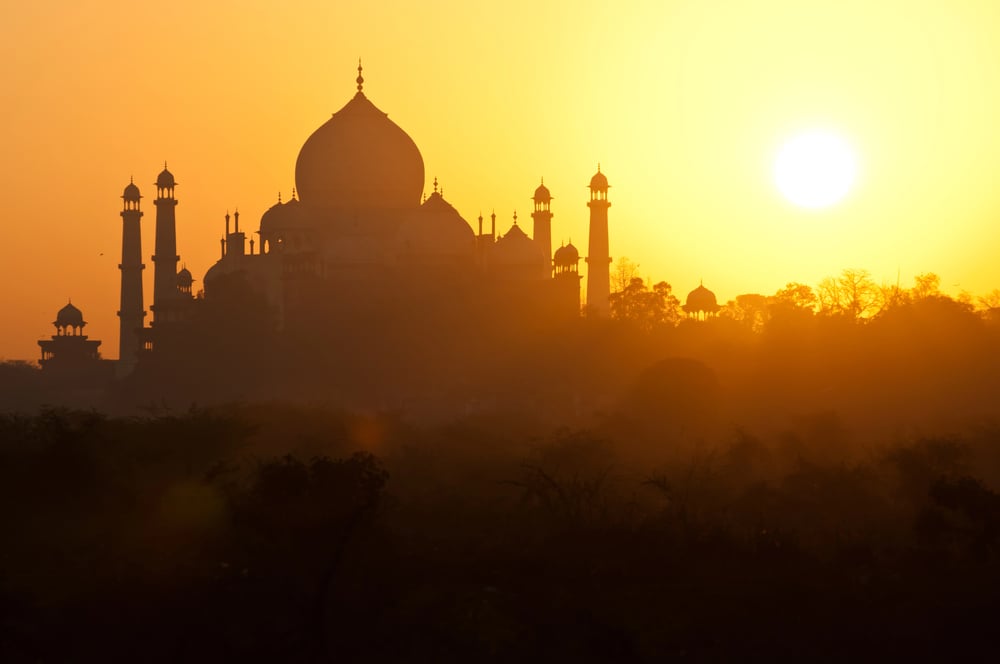
Rising high above everything else, the main dome reaches close to 240 feet from the ground – taller than most 20-floor buildings. At its widest point, the rounded top spans around 58 feet across.
It rests on a tube-shaped base standing 23 feet high. Built with two layers – one outside, one inside – the design leaves open space between them.
This setup gives the exterior dramatic height while ensuring rooms below feel balanced, never too towering overhead.
Four Minarets Lean Slightly Outward

Out toward the edges, four towers stand near the main building – each leaning slightly outward. A small tilt, just a few degrees off straight, built that way on purpose.
Should shaking ground ever break them loose, they’d tumble into open space instead of crushing what’s at the center. Long before today’s rules for strong buildings appeared, someone already planned ahead for when things go wrong.
On Sturdy Wooden Supports Rests the Structure

Under the layers of marble, thick ebony beams anchor everything below, buried far down into the earth. Near the banks of the Yamuna River, dampness lingers in the soil – this moisture stops the timber from losing strength.
When wood dries too much, it splits apart; yet soaked in wet ground, it holds firm through ages. For close to four centuries, this base has carried every stone above without breaking.
In later years, unease has risen because the river no longer flows like before.
Twenty-Eight Types of Precious Stones Decorate the Walls

Craftsmen inlaid semi-precious and precious stones into the marble using a technique called pietra dura, creating intricate floral patterns throughout the structure. These include jade from China, turquoise from Tibet, lapis lazuli from Afghanistan, sapphires from Sri Lanka, carnelian from Arabia, and dozens of other materials sourced from across Asia and beyond.
Some individual flowers contain up to 60 separate stone pieces fitted together so precisely that you can’t slide a blade between them. Many of these stones were stolen over the centuries, particularly during British colonial rule and times of political instability.
The Main Chamber Creates a 28-Second Echo

Inside the central dome, a single note sung or spoken can echo for nearly half a minute. The architects designed this acoustic property intentionally, knowing that prayers and Quranic recitations would be performed inside.
The sound bounces off the curved interior surfaces in a way that amplifies and sustains it, creating an almost otherworldly effect. Musicians and singers who visit often test this feature, and their voices seem to hang in the air long after they’ve stopped making sound.
Reflecting Pools Double the Visual Impact

The long rectangular pools in front of the building serve more than decorative purposes. They create a mirror image of the entire structure, effectively doubling its visual presence and adding to the sense of symmetry and balance.
These pools also helped cool the surrounding gardens through evaporation during hot months. The water comes from an underground system of clay pipes that still functions today, though it requires constant maintenance to prevent leaks and blockages.
The Platform Elevates the Tomb 23 Feet
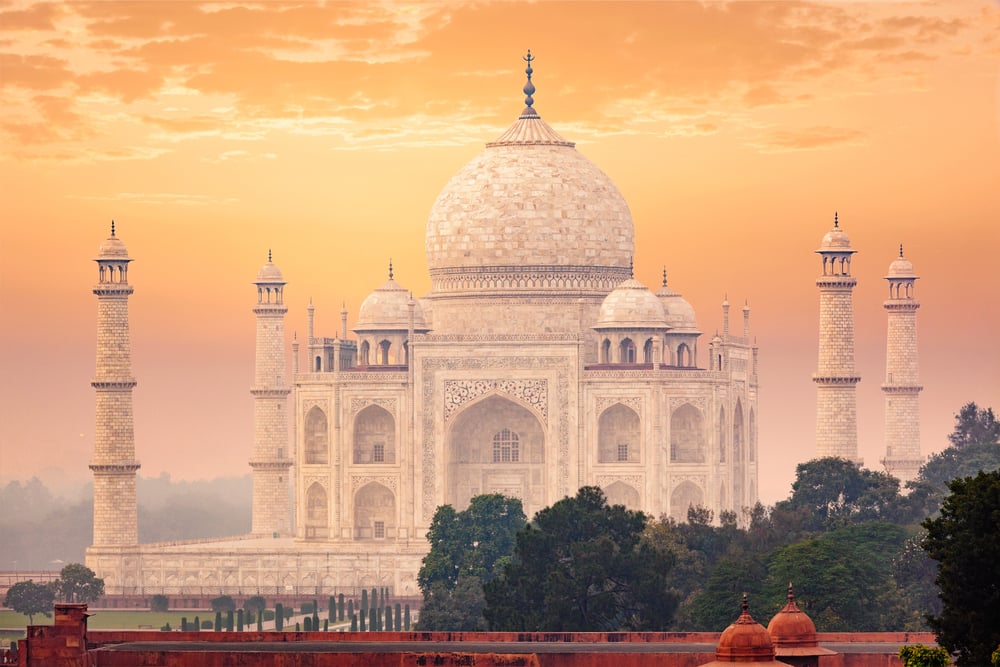
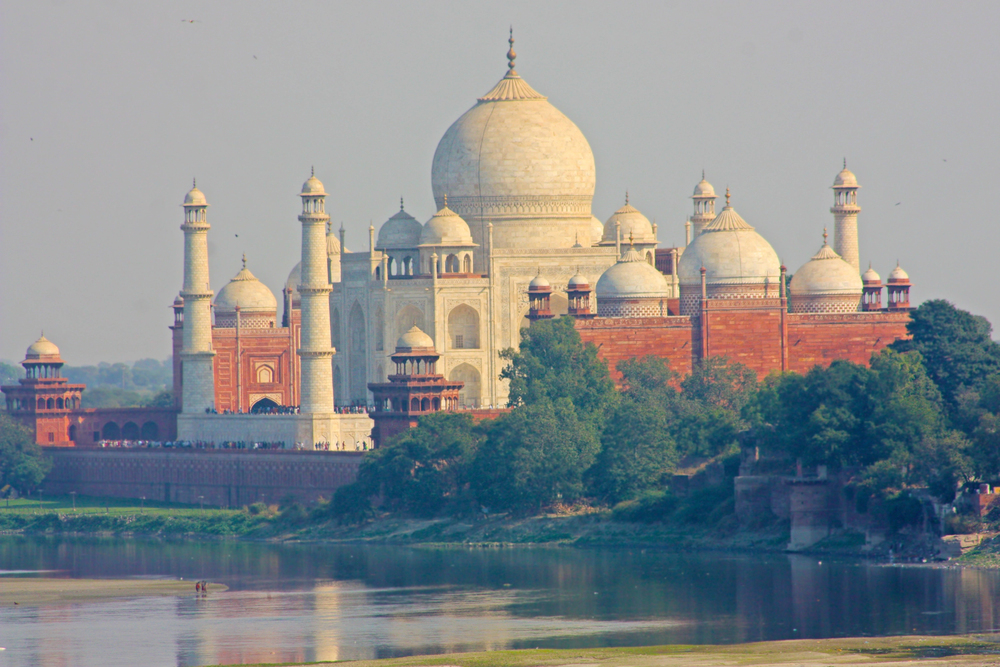
The entire marble structure sits on a raised platform that lifts it well above the gardens and surrounding area. This platform measures roughly 300 feet on each side and stands 23 feet tall, requiring visitors to climb stairs to reach the main level.
The elevation serves both practical and symbolic purposes, protecting the building from river flooding during monsoon season while also creating a sense of the structure floating above the earthly plane. The platform contains dozens of small rooms and chambers that stored supplies and provided space for guards.
Symmetry Governs Almost Everything Except the Graves

Every element of the Taj Mahal mirrors perfectly from left to right, creating absolute bilateral symmetry in the design. The four minarets, the gardens, the reflecting pools, the entrances, and even the placement of decorative elements all follow this strict pattern.
The only exception is inside the main chamber, where the actual graves of Mumtaz Mahal and Shah Jahan sit slightly off-center. This break from symmetry happened because Shah Jahan died before completing his own planned tomb across the river, and his sons buried him next to his wife instead, throwing off the carefully planned balance.
Construction Required 1,000 Elephants for Transport

Moving the massive quantity of materials to the building site demanded an enormous logistics operation. Records suggest that around 1,000 elephants hauled marble blocks, timber, and other supplies from quarries and workshops to Agra.
The marble alone came from sources over 200 miles away, and other materials traveled even farther. Teams of oxen and camels supplemented the elephant workforce, creating what must have been constant traffic along the roads leading to the construction site for over 20 years.
The Gateway Is Nearly as Impressive as the Tomb

Most visitors focus on the white marble mausoleum and overlook the massive red sandstone gateway that serves as the main entrance. This structure stands 98 feet tall and features intricate decorative work, including inlaid white marble calligraphy and geometric patterns.
The gateway frames the first view of the Taj Mahal perfectly, and architects positioned it so that the tomb appears to grow larger as visitors walk through the gateway and down the pathway toward it, creating a dramatic reveal effect.
Gardens Follow Persian Design Principles

The grounds surrounding the building follow the traditional Persian concept of paradise gardens, divided into four sections by water channels that represent the four rivers of paradise mentioned in the Quran. The original garden contained fruit trees, flowers, and various plants arranged in geometric patterns, though much of this vegetation has been replaced over the centuries with simpler grass lawns that require less maintenance.
The entire garden complex stretches about 1,000 feet from the gateway to the raised platform, providing a long approach that builds anticipation.
Marble Screens Filter Light Into Geometric Patterns
The windows throughout the structure use carved marble screens called jalis instead of glass. These screens feature geometric patterns cut through solid marble slabs, creating a lacework effect that filters sunlight into intricate shadows and shapes inside the building.
The patterns follow Islamic artistic traditions that avoid depicting living creatures, instead using abstract geometric forms and floral designs. These screens also provide ventilation while maintaining privacy and reducing the harsh glare of direct sunlight.
Corner Towers Serve as Visual Anchors

Four smaller domed towers called chattris sit at the corners of the raised platform, one at each edge. These octagonal structures echo the shape and style of the main dome but on a much smaller scale.
They serve no practical function but provide visual balance and help define the boundaries of the platform. Without these corner elements, the main structure might appear to float without clear connection to its base, but the chattris anchor it firmly to the platform below.
The Structure Took 22 Years to Complete

Construction began around 1632 and finished in 1653, requiring more than two decades of continuous work by thousands of laborers and craftsmen. Different sources provide varying estimates, but most historians agree that around 20,000 workers participated in the project at its peak, including masons, stone carvers, calligraphers, painters, and other specialists.
The project consumed a staggering amount of resources and money, contributing to financial problems for the Mughal empire in later years. Some accounts suggest that Emperor Shah Jahan cut off the hands of the master builders to prevent them from ever creating something comparable, though most historians dismiss this as legend rather than fact.
Standing After Centuries of Challenges

The Taj Mahal has survived floods, wars, pollution, earthquakes, and centuries of weathering that would have destroyed lesser buildings. Modern conservation efforts fight against acid rain and air pollution that yellow the marble, requiring regular cleaning to maintain its white appearance.
The foundation continues to hold despite concerns about the declining Yamuna River and shifting groundwater levels. Engineers monitor the structure constantly, and restoration work never really stops, but the fundamental soundness of the original design keeps the building standing strong nearly 400 years after completion.
Small cracks appear and get repaired, stones that were stolen get replaced when possible, and new techniques help preserve what remains while respecting the original architectural vision.
More from Go2Tutors!

- The Romanov Crown Jewels and Their Tragic Fate
- 13 Historical Mysteries That Science Still Can’t Solve
- Famous Hoaxes That Fooled the World for Years
- 15 Child Stars with Tragic Adult Lives
- 16 Famous Jewelry Pieces in History
Like Go2Tutors’s content? Follow us on MSN.



