16 Forgotten Technologies That Helped Build the Pyramids
The Great Pyramid of Giza stands as one of the most enduring mysteries of human achievement. For over 4,500 years, this massive structure has sparked countless theories about how ancient Egyptians managed to move, lift, and precisely position millions of stone blocks without modern machinery.
While some leap to fantastical explanations involving aliens or lost civilizations, the truth is far more impressive: the Egyptians were ingenious engineers who developed sophisticated technologies that have been largely forgotten by history. These weren’t primitive people struggling with basic tools.
Copper Tube Drilling Systems

Ancient Egyptians didn’t just chip away at granite with stone tools. They developed hollow copper tubes that could drill precise circular holes in some of the hardest stone known to mankind.
These tubes, when combined with abrasive sand and applied pressure, created perfectly round cores that archaeologists still find scattered around pyramid construction sites. The technique required constant rotation and downward pressure while feeding abrasive material into the cutting zone.
Wooden Rockers for Stone Transport

Moving 15-ton blocks across desert sand sounds impossible until you see the elegant solution Egyptian engineers developed. Wooden rockers — curved runners attached to the bottom of stone blocks — transformed massive rectangular stones into manageable loads that could be rolled rather than dragged.
The physics are brilliant: instead of overcoming the full friction of a flat surface, workers only needed to tip the weight past the balance point. So a dozen men could move what would otherwise require dozens more.
Gypsum-Based Mortar Systems
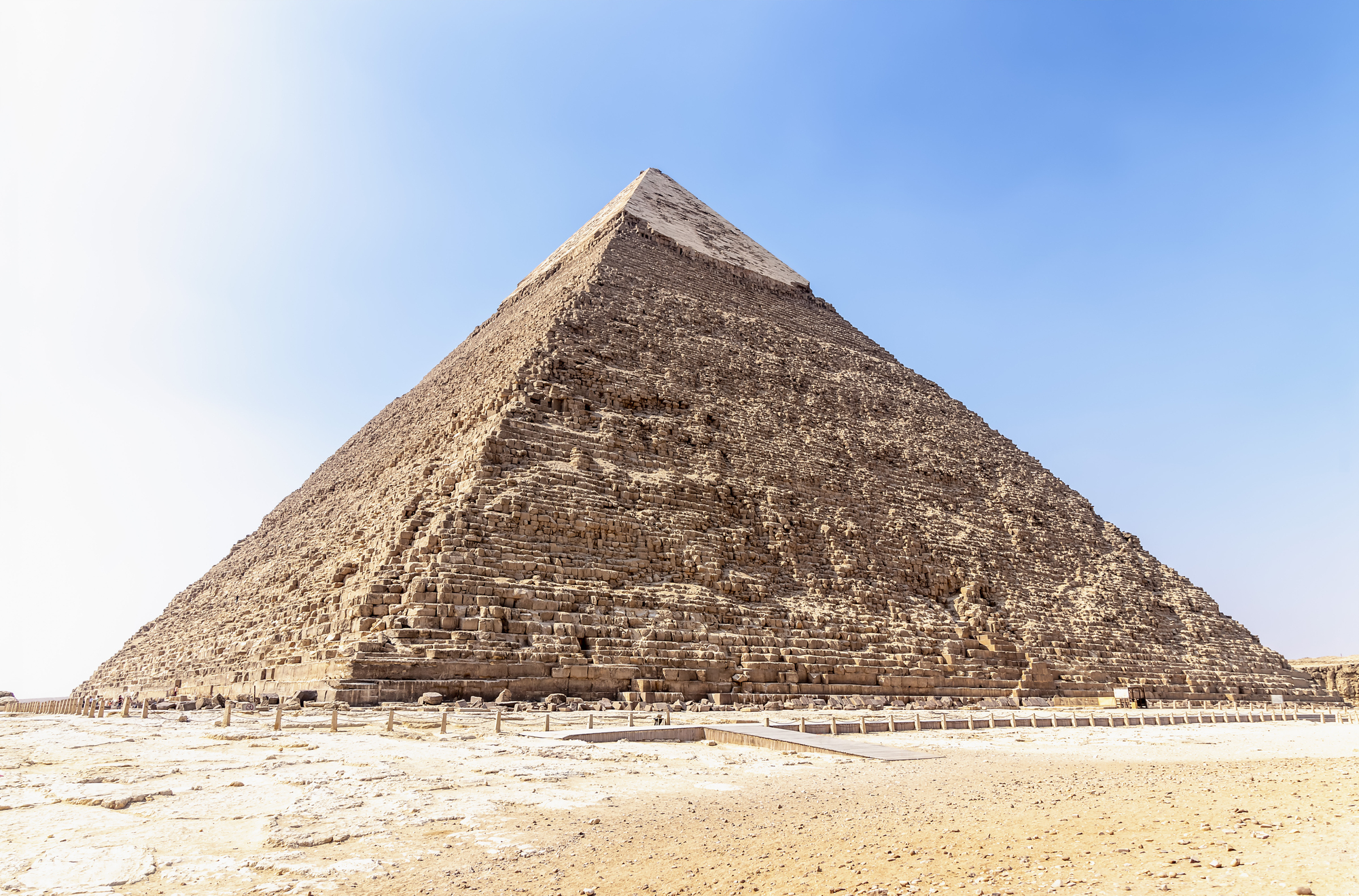
The mortar holding pyramid blocks together wasn’t just mud and straw (though that assumption persists because people underestimate ancient chemistry). Egyptian builders developed a sophisticated gypsum-based mortar that could be applied thin — sometimes just paper-thin layers between massive stones — yet bond permanently once set.
This mortar had to cure quickly enough to prevent blocks from sliding during construction, but remain workable long enough for precise positioning, which is a narrow window that requires understanding the chemical properties of the mixture. The formula wasn’t standardized across all construction — different pyramids show variations that suggest continuous refinement and adaptation based on local materials and specific engineering requirements.
Arsenical Copper Cutting Tools

Egyptian metallurgy of the Old Kingdom produced arsenical copper alloys specifically designed for cutting stone. Not pure copper, which would dull quickly against limestone, but carefully balanced copper-arsenic mixtures that were significantly harder and could be resharpened repeatedly.
These weren’t mass-produced tools. Each cutting implement was forged for specific tasks — wider blades for rough cuts, narrow ones for detail work, different hardness levels depending on the stone being cut.
Weighted Pendulum Leveling Devices

Ancient builders needed to ensure massive stone blocks sat perfectly level across distances measured in hundreds of feet. Their solution: weighted pendulums that could detect variations smaller than what the human eye could see.
These devices worked like oversized plumb bobs, but designed specifically for horizontal surfaces. By observing how the pendulum hung relative to fixed reference points, workers could identify high and low spots that needed adjustment before setting the next course of stones.
Ramp Systems with Integrated Counterweights

Everyone knows the Egyptians used ramps, but most people imagine simple dirt slopes (which would have been massively inefficient and required more material than the pyramids themselves). The actual ramp systems were far more sophisticated: integrated networks with counterweight mechanisms that helped lift stones rather than just providing an inclined path to drag them up.
These weren’t just earthen mounds — they were engineered structures with wooden frameworks, stone foundations, and mechanical advantages built into their design. And here’s where it gets interesting: the ramps changed as construction progressed, adapting to the increasing height and decreasing surface area of the pyramid.
Water-Level Surveying Tools

Getting pyramid corners perfectly square across a base measuring several acres required surveying precision that modern instruments can barely match. Egyptian engineers used water-filled channels and tubes to establish level reference points across vast distances.
Water finds its own level naturally, making it an ideal tool for transferring elevation measurements from one location to another. By creating temporary channels filled with water, surveyors could mark identical heights at opposite corners of the construction site.
Limestone Concrete for Fine Finishing
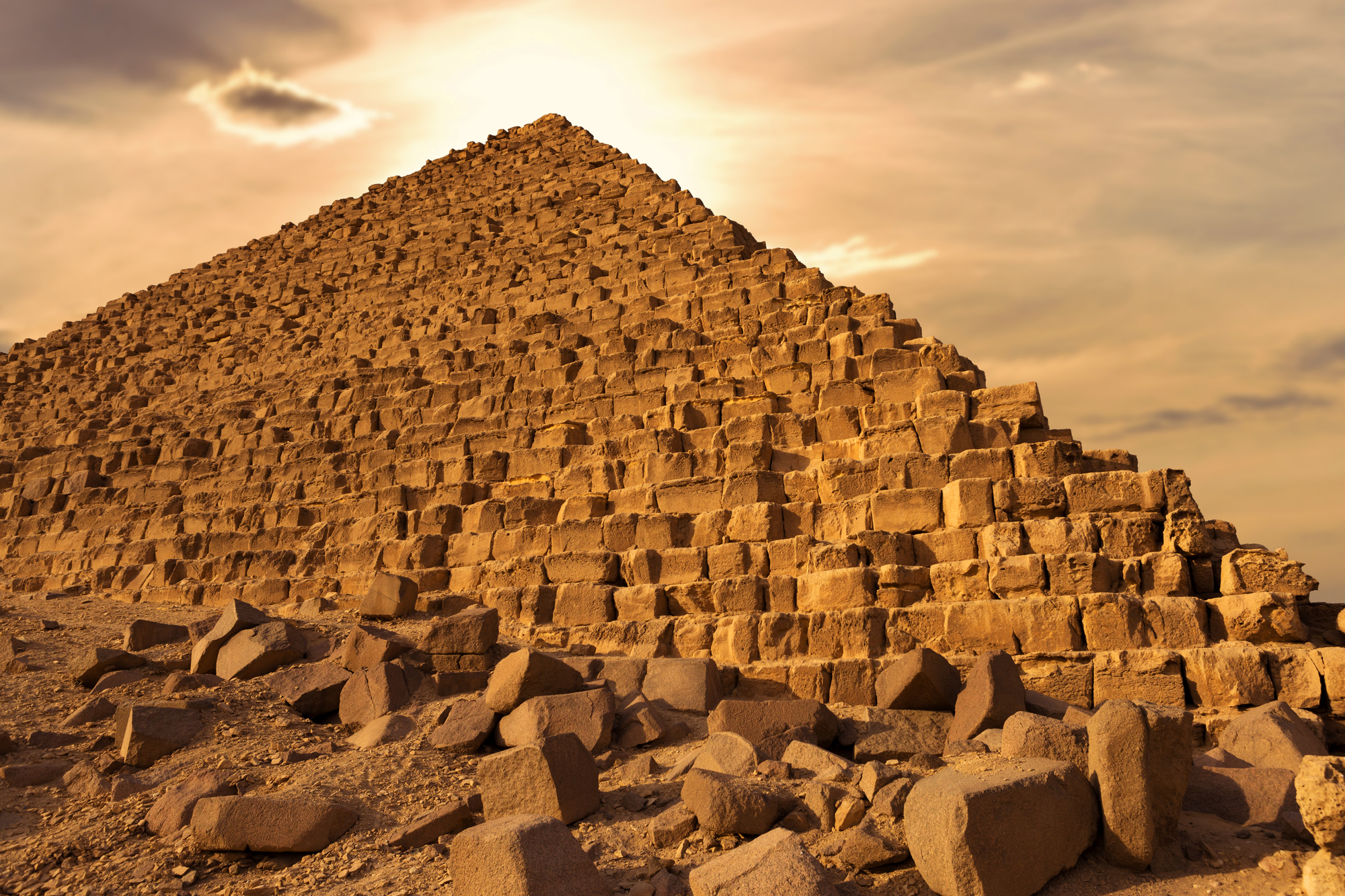
The smooth outer surfaces of pyramids weren’t achieved by cutting individual stones to perfection. Egyptian builders developed a limestone concrete that could be poured and shaped into precise geometric forms, then polished to create seamless surfaces.
This wasn’t crude cement. The limestone concrete matched the color and texture of natural stone so closely that many people today still assume pyramid surfaces were carved rather than cast.
Copper-Reinforced Wooden Levers

Moving stones weighing several tons required leverage systems that could handle enormous stress without breaking. Egyptian engineers created composite levers using copper reinforcement strips embedded in hardwood beams.
The copper prevented the wood from splitting under extreme loads while maintaining flexibility that solid metal levers couldn’t provide. These tools could multiply human force by ratios of 10:1 or higher, making seemingly impossible lifting tasks manageable for small crews.
Precision Measuring Wheels
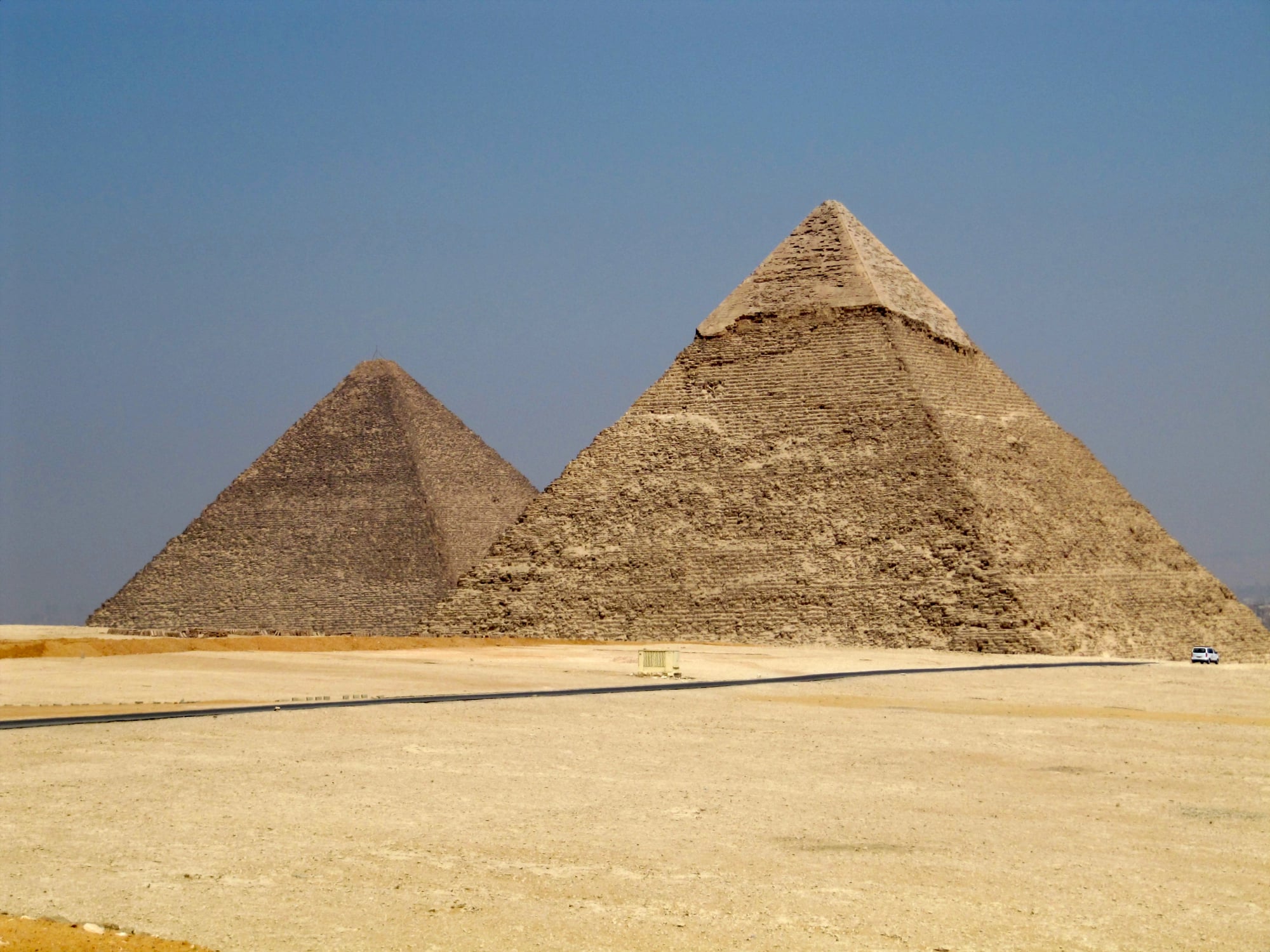
Maintaining accurate distances and angles during pyramid construction required measuring tools more sophisticated than ropes and rulers. Egyptian builders used wheels of known circumference that could be rolled along surfaces to measure distances precisely.
These measuring wheels were calibrated to Egyptian units of measurement and marked to show fractional distances. By rolling the wheel and counting rotations, workers could establish exact measurements even across irregular terrain or around obstacles.
Abrasive Cutting Compounds

Cutting tools alone couldn’t shape the hardest stones used in pyramid construction. Egyptian craftsmen developed abrasive compounds using crushed quartz and other minerals suspended in liquid carriers that enhanced the cutting power of bronze and copper tools.
Different abrasive mixtures were formulated for different types of stone. Granite required harder abrasives than limestone, while delicate carving work needed finer particles that wouldn’t leave deep scratches.
Mortise and Tenon Joining Systems

Connecting wooden framework elements and securing stone blocks required joining methods stronger than simple rope lashing. Egyptian builders developed sophisticated mortise and tenon joints cut with remarkable precision.
These joints distributed stress across larger surface areas than simple butt joints and could be assembled without metal fasteners. The precision required to cut matching mortises and tenons in both wood and stone demonstrates advanced understanding of structural engineering principles.
Shaduf-Based Lifting Devices

The shaduf — a counterweighted lifting beam — wasn’t just used for irrigation (though that’s where most people know it from, if they know it at all). Egyptian builders adapted this technology for construction, creating mechanical advantage systems that could lift stones far heavier than human strength alone could manage.
Construction shadufs were built larger and stronger than their agricultural counterparts, designed to handle loads measuring in tons rather than buckets of water. And they could be positioned at various heights as construction progressed, creating a network of lifting stations that moved materials efficiently from ground level to working height.
Reed and Rope Tension Systems

Creating stable lifting and positioning systems without metal cables required understanding how organic materials behave under stress. Egyptian engineers developed rope and reed combinations that could handle enormous loads without stretching or breaking.
These weren’t simple ropes twisted from plant fibers. The tension systems used multiple rope types working together — some optimized for strength, others for flexibility, still others for resistance to abrasion.
Inclined Plane Pulley Networks
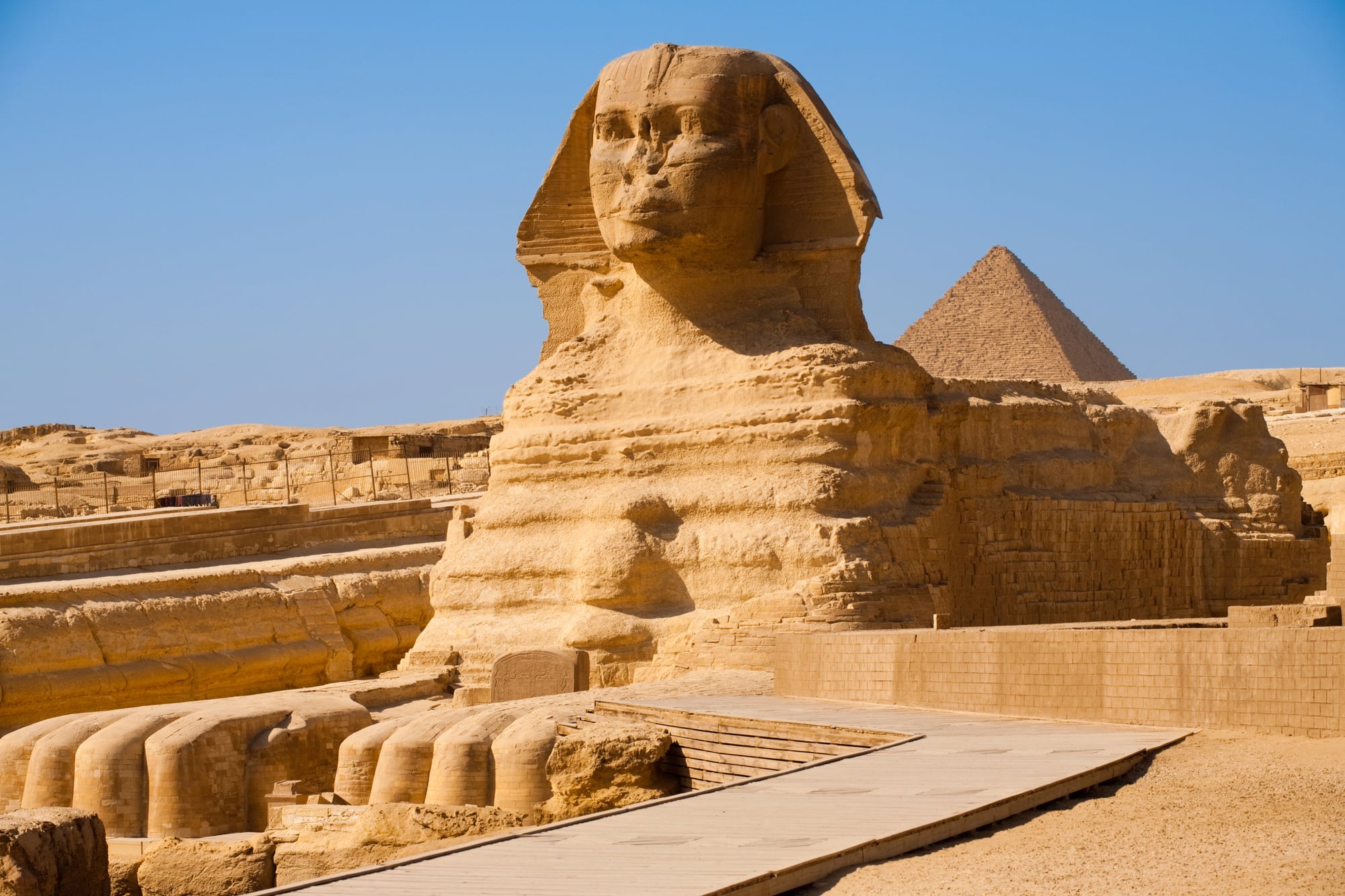
The Egyptians understood that pulleys could change the direction of applied force, but their pulley systems went beyond simple redirection (which is where most people’s understanding stops, assuming ancient builders just used brute force for everything). They created networks of pulleys integrated into inclined planes that multiplied force while simultaneously changing its direction, allowing workers positioned at advantageous locations to lift stones that would otherwise require crews positioned in impossible places.
These networks weren’t permanent installations — they were modular systems that could be reconfigured as construction needs changed. Workers could add or remove pulley points, adjust angles, and redirect forces based on what specific lifting task they faced.
Heated Sand Expansion Techniques

Fitting massive stone blocks together with joints so tight that mortar layers become nearly invisible required positioning accuracy measured in fractions of inches. Egyptian builders used heated sand as a positioning aid — sand expands when heated and contracts when cooled, providing fine adjustment capability for final stone placement.
Workers would place heated sand between stones that needed slight repositioning, then remove or add sand as it cooled to achieve perfect fits. The technique worked because sand could be added or removed in tiny quantities, allowing adjustments too small to achieve through mechanical methods alone.
The Mastery Hidden in Plain Sight

These technologies weren’t just clever solutions to construction problems — they represent a comprehensive understanding of physics, materials science, and engineering that challenges assumptions about ancient capabilities. The Egyptians didn’t build the pyramids through sheer human effort and primitive tools.
They developed sophisticated technologies that in many cases weren’t improved upon for thousands of years. What makes this particularly remarkable is how these techniques were refined across multiple pyramid projects.
More from Go2Tutors!

- The Romanov Crown Jewels and Their Tragic Fate
- 13 Historical Mysteries That Science Still Can’t Solve
- Famous Hoaxes That Fooled the World for Years
- 15 Child Stars with Tragic Adult Lives
- 16 Famous Jewelry Pieces in History
Like Go2Tutors’s content? Follow us on MSN.