Photos Of Hiroshima After the 1945 Bombing
August 6, 1945. A single aircraft.
A single bomb. And then, in less than a second, a city of 350,000 people became ground zero for something the world had never seen before.
What followed was not just destruction — it was a new kind of silence. One that photographers, journalists, and survivors would spend decades trying to capture and explain.
The photographs that emerged from Hiroshima in the days, weeks, and months after the bombing are among the most studied and debated images in modern history. Some were taken by survivors.
Others by American military personnel. A few by Japanese photojournalists who risked their lives to document what had happened.
Together, they form a visual record that words alone can’t quite carry.
The City That Vanished
Before you can understand what the photographs show, you need a sense of what existed before. Hiroshima was a mid-sized Japanese city with a functioning downtown, tram lines, wooden residential neighborhoods, and several reinforced concrete buildings near the center.
It was also home to a significant military headquarters, which made it a strategic target. When the bomb detonated at roughly 1,900 feet above the city, the blast wave, heat flash, and pressure destroyed nearly everything within a mile radius.
Photographs taken from the air just after the blast show a gray-brown smear where buildings once stood, surrounded by what looked like scorched earth in every direction. The rivers that ran through Hiroshima were visible from above — nearly everything else had simply disappeared.
Yōsuke Yamahata and the Day After
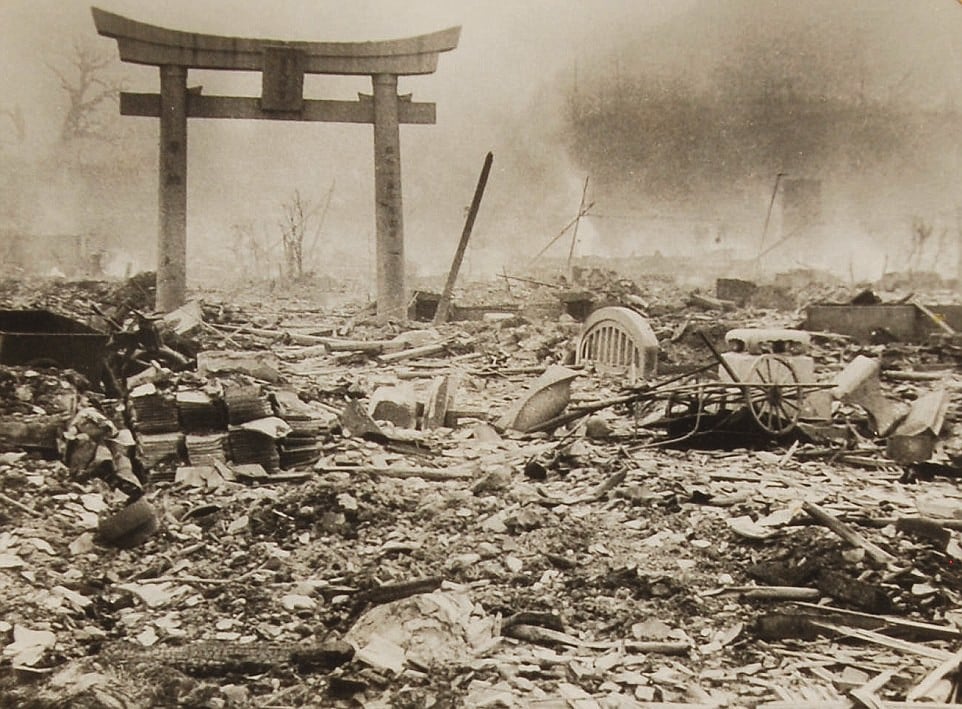
One of the most complete photographic records of Hiroshima’s immediate aftermath came not from Hiroshima but from Nagasaki, photographed by Yōsuke Yamahata just one day after its bombing on August 9. His images — hundreds of them taken over a single day — became the closest thing to a systematic visual documentation of what a bombed city looked like in human terms.
Yamahata photographed survivors with burns across their bodies, mothers carrying children, men sitting stunned by the road, and entire neighborhoods reduced to ash and debris. He later said he had worked in a kind of trance, separated from emotion by the mechanics of his camera.
He died of cancer in 1966, likely linked to radiation exposure from that day.
The Genbaku Dome Stands Alone

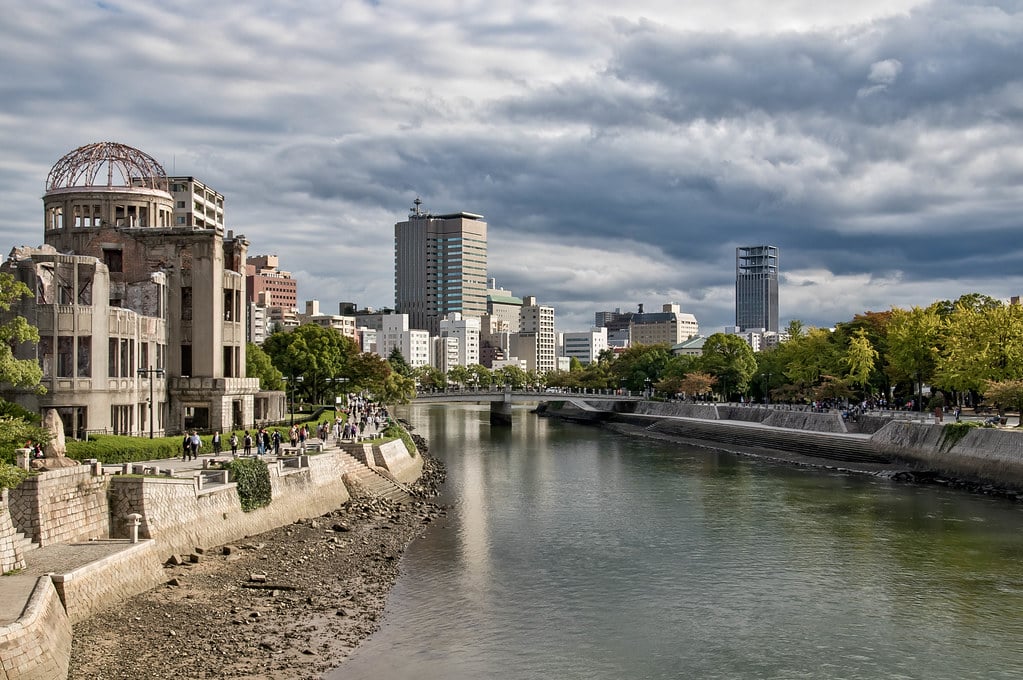
One image repeated more than almost any other from Hiroshima is the Genbaku Dome — known today as the Hiroshima Peace Memorial. It was the Hiroshima Prefectural Industrial Promotion Hall, a European-style domed building located almost directly below the bomb’s detonation point.
Because the blast came from almost directly above, the structure’s vertical walls absorbed the force downward rather than laterally, leaving the skeleton of the dome partially standing while everything around it collapsed. Early photographs show it in isolation — a crumbling frame surrounded by flat rubble stretching to the horizon.
It became, almost immediately, a symbol. The city chose to preserve it exactly as it stood rather than demolish it.
What the Military Photos Showed
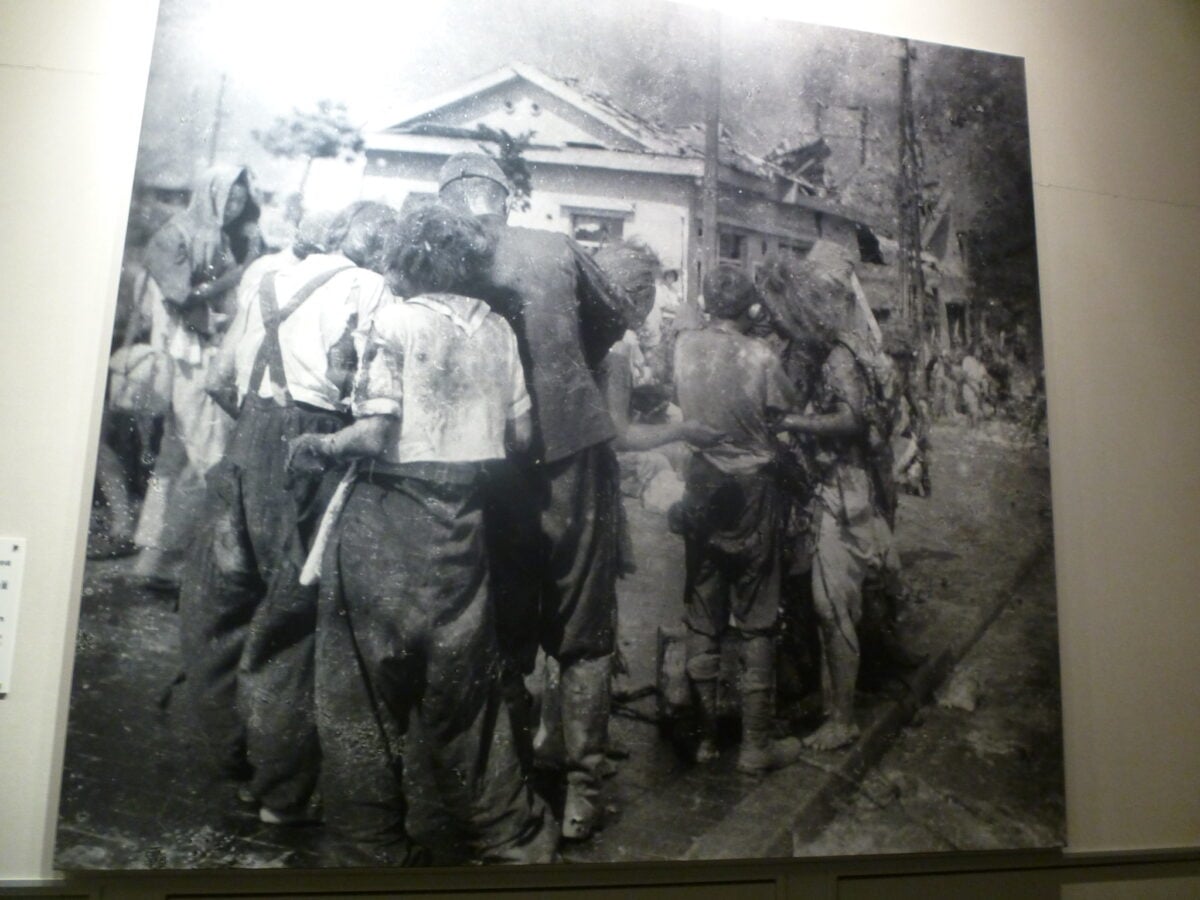
American military photographers entered Hiroshima shortly after Japan’s surrender in September 1945. Their images were clinical and systematic — wide shots of flattened districts, measurements of blast radius, documentation of structural damage.
These photos served a dual purpose: recording the effects of the weapon for scientific study and providing evidence of the bomb’s military effectiveness. Many of these images were classified for years.
The U.S. government restricted photographic and film documentation of the human toll — particularly images of badly injured or dead civilians — out of concern for public reaction both at home and abroad. Some footage taken by a Japanese film crew was confiscated and not publicly released for decades.
Kikujiro Fukushima’s Street-Level Record
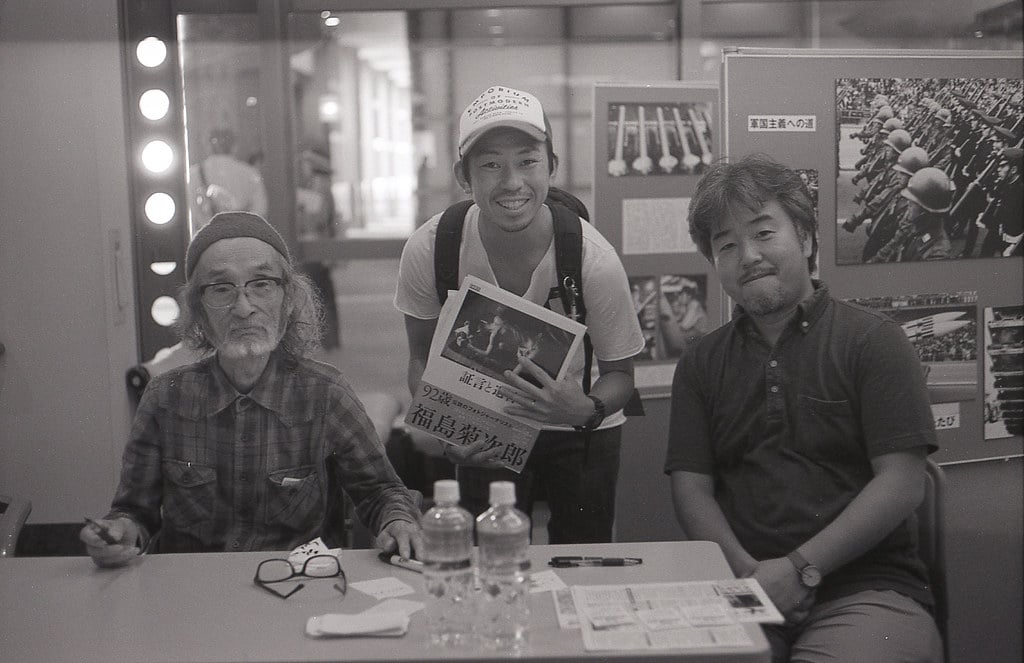
Japanese photographer Kikujiro Fukushima entered Hiroshima days after the bombing and photographed what he found at street level. His images differ from the aerial surveys in a fundamental way — they put you in the rubble with the people who remained.
His photographs show survivors moving through debris, makeshift shelters assembled from scraps, and the strange geometry of a city where only isolated walls and chimneys still stood. There is one photograph in particular that historians often reference: a child sitting among the ruins, alone, looking directly at the camera.
The expression is hard to categorize. It isn’t grief exactly. It’s something beyond that.
Burn Shadows and Permanent Marks

Among the most haunting artifacts recorded in photographs were what became known as “nuclear shadows” — dark imprints left on walls, steps, and pavement where a person or object had stood at the moment of detonation. The intense flash of the bomb bleached exposed surfaces, leaving behind a darker outline where something had blocked the light.
One of the most documented examples was a shadow on the steps of the Sumitomo Bank building — the outline of a person who had been sitting on the steps when the bomb detonated. The person was gone.
The shadow remained. Photographs of these marks circulated widely and became one of the most visceral ways of understanding the speed and total nature of the destruction.
The Survivors Who Photographed Themselves
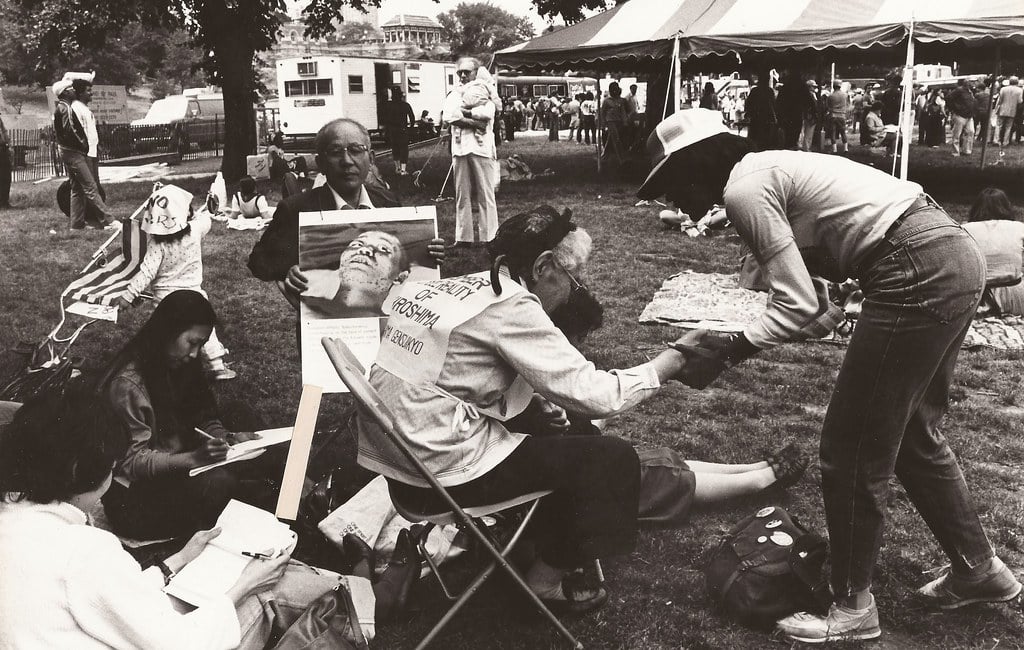
Some of the most intimate images came from survivors — called hibakusha — who documented their own experiences in the weeks and months after the bombing. These photographs were personal rather than journalistic.
They showed family members at temporary medical stations, children in makeshift schools, and communities beginning the slow process of clearing rubble and rebuilding. These images carry a different weight than the official documentation.
They weren’t taken to prove a point or record a statistic. They were taken because someone wanted to remember, or because they needed proof that something had actually happened.
How the Photos Were Suppressed
For several years after the bombing, the American occupation government exercised strict control over what images could be published in Japan. Graphic photographs of casualties, radiation injuries, and widespread civilian suffering were censored.
Japanese newspapers and publications were prohibited from running images that might fuel anti-American sentiment or challenge the official narrative around the bombing’s necessity. This suppression had lasting effects. Many Japanese civilians learned the full visual scope of the destruction slowly, over years.
Some images did circulate underground. Others were published outside Japan — in European newspapers, in left-leaning American publications — before they reached Japanese audiences widely.
Color Photography Changes Everything
Most of the earliest photographs from Hiroshima were in black and white, which creates a certain kind of distance. The images feel historical, documented, fixed in time.
When color photographs and footage began to emerge — some taken by Japanese filmmakers, others from later visits — something shifted. Color brought the landscape into closer contact with the present.
The brown and gray rubble looked like actual dirt and concrete rather than a monochrome abstraction. The pale sky overhead looked like a real sky.
For viewers seeing these images decades later, the color photographs are often more disturbing than the black and white ones precisely because they feel less distant.
The Children’s Photographs
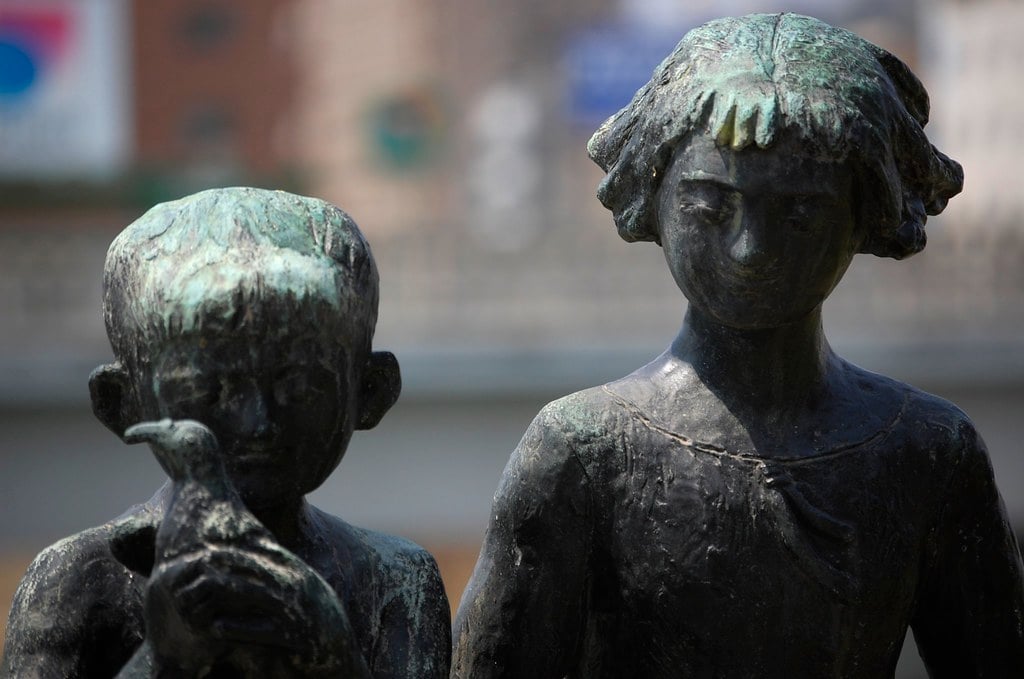
A significant subset of Hiroshima photographs focus specifically on children — in part because the city’s schools had mobilized thousands of students to help with wartime labor in the days before the bombing. An estimated 6,000 to 8,000 students and teachers were killed in the blast.
Photographs of children in the aftermath — some with severe burns, some wandering alone, some being treated in field hospitals — became central to anti-nuclear advocacy movements in the decades that followed. The image of Sadako Sasaki, a child who developed leukemia years after surviving the blast and folded paper cranes in her hospital room, is not a photograph from the immediate aftermath, but it draws directly from the same visual and moral universe.
Rebuilding in the Frame
Not all the photographs from Hiroshima are about destruction. By late 1945 and into 1946, photographers were also documenting reconstruction — the first temporary structures, the reopening of tram lines, the planting of gardens in empty lots.
These images matter too. They show a city moving through something almost impossible, not because the damage wasn’t immense but because daily life — buying food, going to school, crossing a street — has its own stubborn persistence.
Some historians argue these photographs of recovery were actually suppressed for different reasons: they made the city look resilient when the official narrative needed it to appear devastated.
The Long Exposure of Radiation
Years passed before what pictures missed in 1945 started showing up. Slowly, radiation illness appeared, followed by higher numbers of cancer cases.
Health problems kept coming, stretching far beyond the blast itself. This new record did not happen quickly; instead it built quietly through time, shaped more by years than moments.
Years after the explosion, faces stayed marked. Pictures from the fifties, sixties, then seventies capture that slow aftermath.
Not ruins anymore – lives shaped by what remained. Eugene Smith framed suffering with quiet precision; others, Japanese lensmen going back again and again, did the same.
Their photos widened the frame of memory. What counts as a Hiroshima image changed because of them.
What Cameras Capture and What They Miss
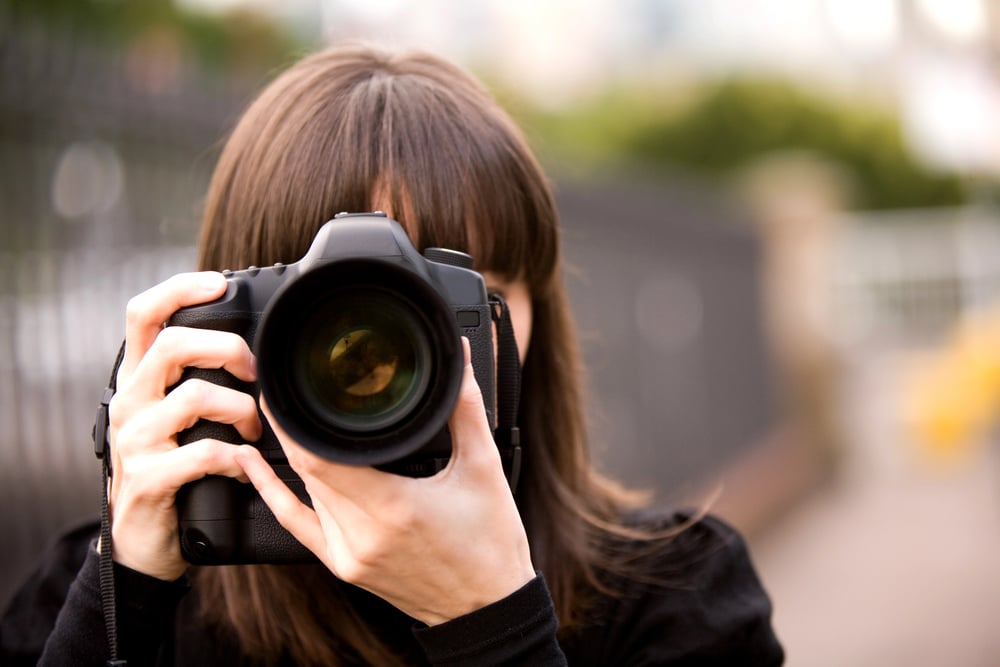
Something stays hidden when you look at photos. Heat climbing past four thousand degrees.
A shockwave racing beyond the speed of sound. Radiation slipping through skin without warning, then lingering deep in tissue long after.
What shows in an image misses all of it. A photograph keeps something exact: the outline of a structure, someone’s expression, how soot clings to pavement.
Not everything unfolds within one frame, only fragments stay visible. Still, images from Hiroshima shifted how people everywhere see atomic arms, more than reports or records ever did.
These pictures turned distant horror into something seen, touched, recognized. Names came back through expressions frozen in time.
The City Always In Pictures
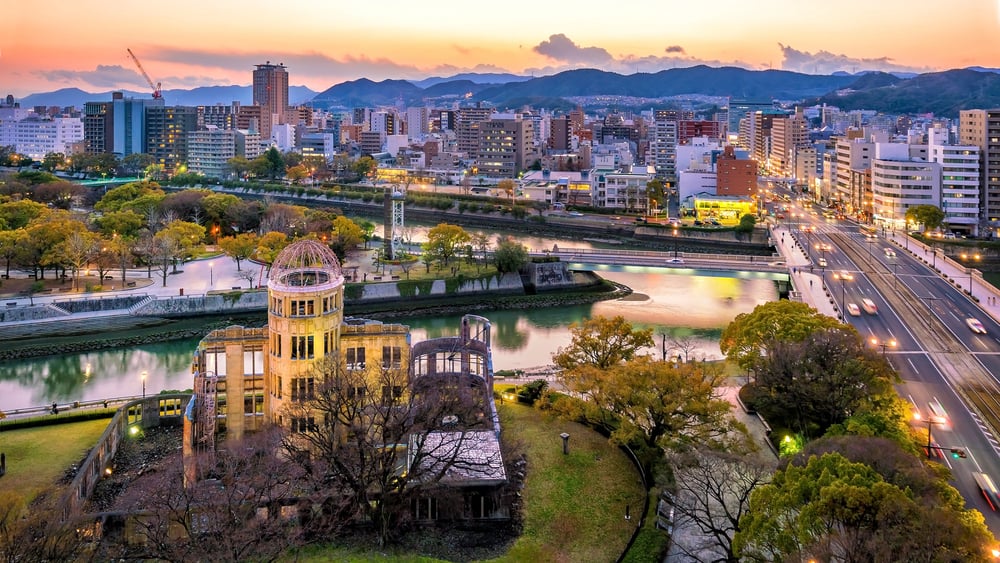
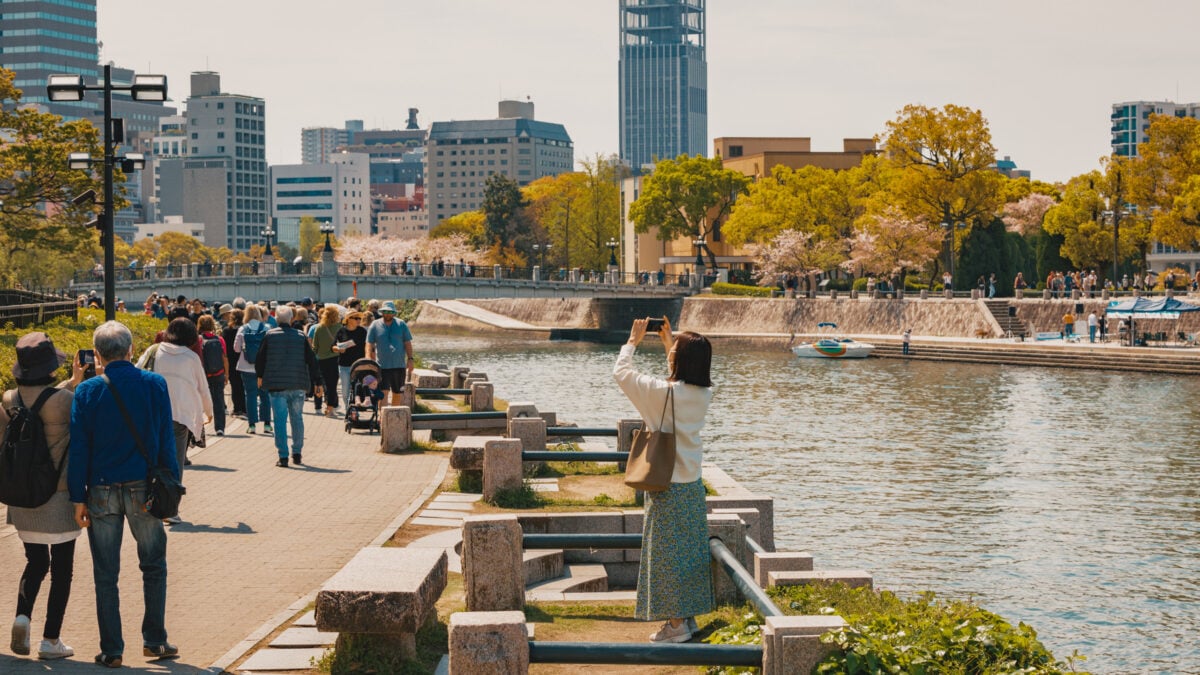
Now home to more than a million residents, Hiroshima pulses with quiet motion. Close to the middle lies the Peace Memorial Park, where lenses gather each August 6 to catch moments others might miss.
Behind metal barriers, the Genbaku Dome remains – silent, cracked, upright. Water moves along old river paths, shaping the streets just like before.
Now folks snap pictures of Hiroshima everywhere – using phones, high-end gear, passing through as visitors, reporters, or kin of those who lived through it. What shows up in their frames is nothing like the scenes shot by Yōsuke Yamahata or Kikujiro Fukushima.
Still, lifting any lens toward this ground and clicking feels somehow tied to what came before. The streets, buildings, silence – they’ve turned into proof on their own.
So long as feet return here to witness, that record refuses to close.
More from Go2Tutors!

- The Romanov Crown Jewels and Their Tragic Fate
- 13 Historical Mysteries That Science Still Can’t Solve
- Famous Hoaxes That Fooled the World for Years
- 15 Child Stars with Tragic Adult Lives
- 16 Famous Jewelry Pieces in History
Like Go2Tutors’s content? Follow us on MSN.