16 lost masterpieces the world will never see
Throughout history, countless works of art have vanished without a trace, leaving behind only memories, photographs, and heartbreaking stories. From ancient wonders toppled by earthquakes to modern masterpieces destroyed by war, these lost treasures represent some of humanity’s greatest cultural losses. Whether stolen by looters, consumed by flames, or simply lost to time, each missing piece takes with it a unique window into the past.
The reasons behind these disappearances are as varied as the artworks themselves. Wars have claimed the most victims, particularly World War II, when systematic looting and bombing campaigns wiped out entire collections. Natural disasters, theft, and even deliberate destruction by owners have all played their part in this ongoing tragedy.
Here is a list of 16 masterpieces that have vanished from our world, each representing a devastating loss to human culture and artistic heritage.
The Amber Room
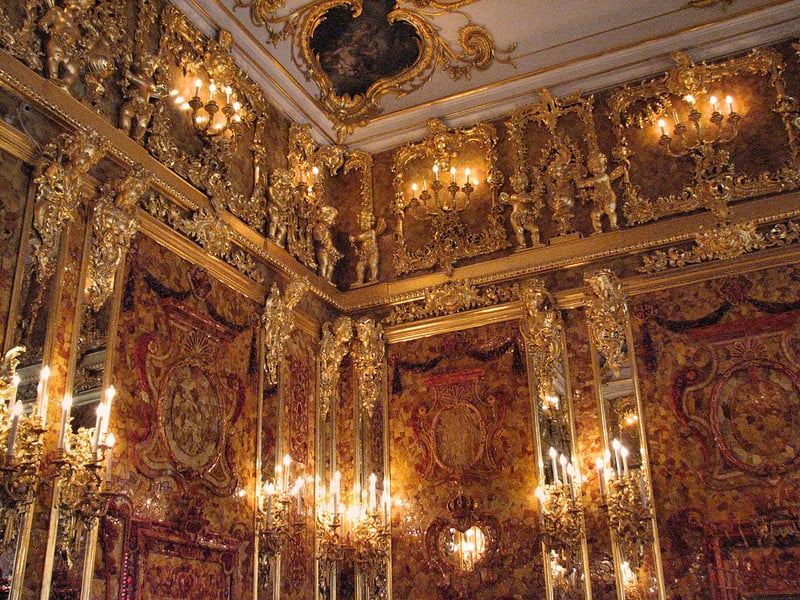
Often called the ‘Eighth Wonder of the World,’ the Amber Room was an opulent salon with walls lined entirely in amber panels, gold leaf, and mirrors. Created in Prussia in the early 18th century, it eventually became part of Catherine Palace near Saint Petersburg. The room took over 40 years to complete, with twelve amber panels creating a golden glow as if emanating from within, separated by eighteen rectangular mirrored columns. When the Nazis invaded Russia during World War II, they discovered the room beneath wallpaper where curators had tried to hide it, then dismantled and transported it to Königsberg Castle. The amber panels were last seen on January 12, 1945, and many believe they were destroyed in subsequent Allied bombing raids.
Raphael’s Portrait of a Young Man
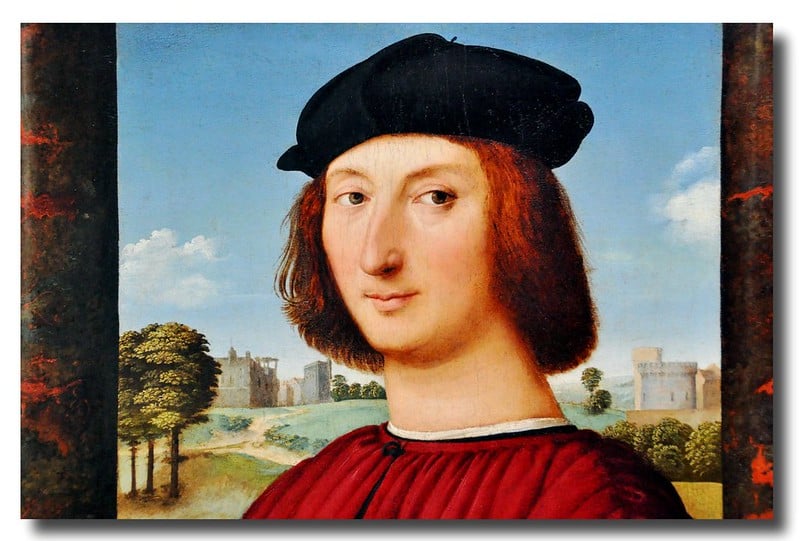
This Renaissance masterpiece from 1513-1514 is considered Poland’s most famous art loss from World War II. The painting was taken from the Czartoryski family collection in Krakow in 1939 to be placed in Hitler’s planned Führer Museum. It went missing at the end of the war, though unverified rumors occasionally surface suggesting it was found somewhere, most recently claimed to be in a Swiss bank vault. The work represents one of Raphael’s finest portraits, showcasing his mastery of capturing both physical likeness and psychological depth. Its current whereabouts remain completely unknown, making it one of the art world’s most sought-after missing pieces.
Gustav Courbet’s The Stone Breakers

Painted in 1849, this classic example of social realism depicted poor laborers removing rocks from a roadside with unsentimental detail. Courbet broke with artistic convention by capturing the men’s straining muscles and tattered clothing in gritty detail after being inspired by a chance meeting with two downtrodden workers. The Stone Breakers was destroyed during World War II along with 154 other pictures when a transport vehicle moving the paintings to Königstein castle near Dresden was bombed by Allied forces in February 1945. This painting helped launch Courbet’s career and became an icon of social realism in art.
Van Gogh’s Painter on His Way to Work
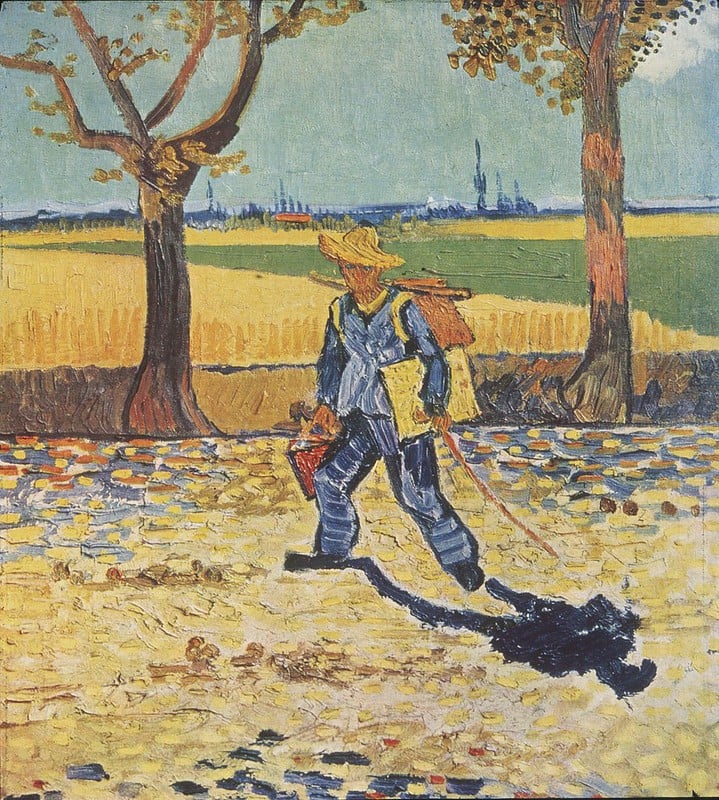
This 1888 self-portrait showed Van Gogh walking to his easel with painting supplies, capturing the artist in his element. The work was stolen by the Nazis during World War II and later lost in a fire during an Allied bomb attack on the town of Magdeburg, Germany. Fortunately, the painting’s legacy survives through print reproductions that were made before its destruction. The piece represented Van Gogh’s dedication to his craft, showing him as a working artist rather than the tortured figure of popular imagination. Its loss particularly stings because it offered insight into how Van Gogh saw himself as a professional painter.
Gustav Klimt’s University Ceiling Paintings
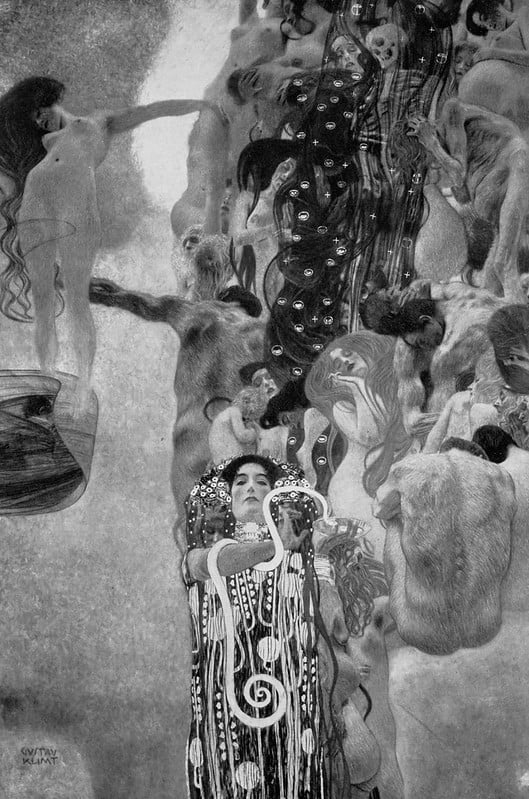
Gustav Klimt created three massive ceiling panels for the University of Vienna titled Philosophy, Medicine, and Jurisprudence between 1894-1907. The paintings came under fierce attack for their supposed ‘pornography’ and ‘perverted excess,’ and none ended up being displayed at the university. In May 1945, the paintings were destroyed when retreating German SS forces set fire to Schloss Immendorf castle in Austria to prevent it from falling into enemy hands. All that remains now are preparatory sketches and a few photographs, with only one complete photograph of Medicine taken just before its destruction. These works represented Klimt’s bold vision of human knowledge and existence.
Johannes Vermeer’s The Concert
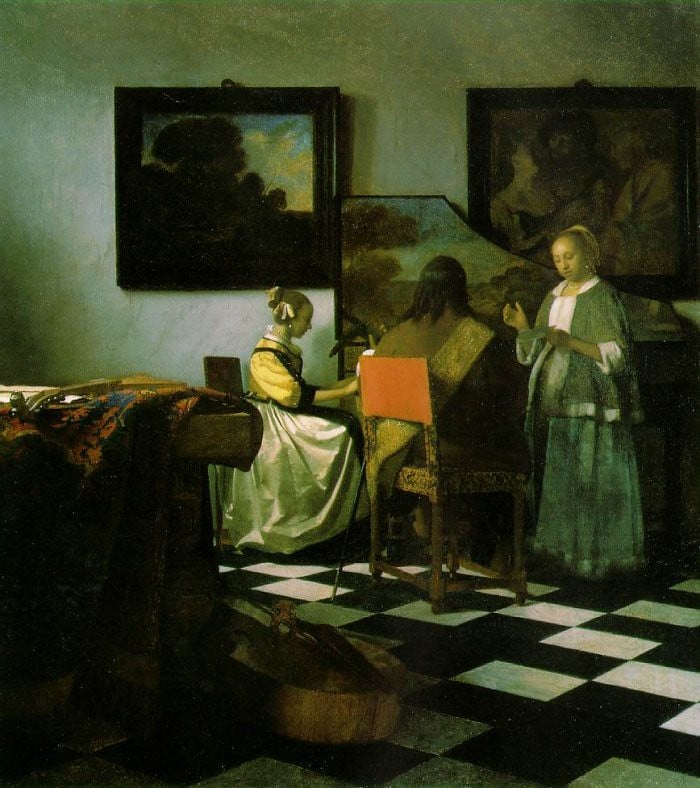
This masterpiece was estimated to have a value of $200 million when it was stolen from Boston’s Isabella Stewart Gardner Museum in 1990. Two individuals disguised as law enforcement agents made off with 13 artworks in what became the biggest art heist in modern history. The stolen works included paintings by Rembrandt, Edgar Degas, and Govert Flinck, with empty frames still hanging in their original spots as a reminder of what was lost. The Concert is considered the priciest stolen painting in history, and the whereabouts of all the stolen pieces remain unknown to this day. The theft devastated the art world and highlighted the vulnerability of even the most secure museums.
The Colossus of Rhodes

One of the Seven Wonders of the Ancient World, this massive bronze statue of the sun god Helios towered over the Greek city of Rhodes for most of the 3rd century B.C. The behemoth stood 110 feet tall and reportedly took sculptor Chares of Lindos a full 12 years to complete. While the Colossus proved an incredible sight for visitors to the city’s bustling harbor, it stood for only 56 years before toppling in a 226 B.C. earthquake. The statue then lay in ruins for several centuries before Arab merchants sold off its remains for scrap. No drawings of the Colossus survive today, but ancient sources note that Helios was depicted standing with a torch held in his outstretched hand. This engineering marvel represented the pinnacle of ancient bronze-working techniques.
Leonardo da Vinci’s Medusa Shield
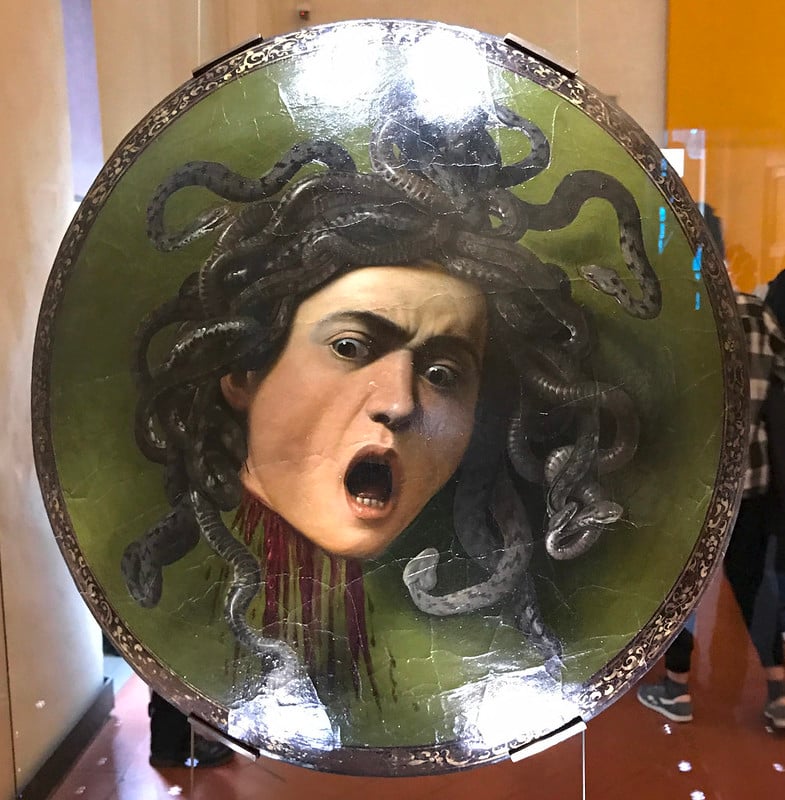
According to a 1550 account by art historian Giorgio Vasari, Leonardo da Vinci painted a Medusa head on a shield so realistically that it initially frightened his father. The father considered it a macabre masterpiece and secretly sold it to a group of Florentine merchants. The shield has long since vanished, and some modern experts now argue that Vasari’s account may have been little more than a myth. Whether real or legendary, the description captures da Vinci’s reputation for creating art so lifelike it seemed to breathe. The mystery surrounding this piece reflects how many early Renaissance works have been lost to time and poor record-keeping.
Diego Rivera’s Man at the Crossroads

In 1932, artist Diego Rivera was commissioned by John D. Rockefeller to create a mural for New York’s Rockefeller Center with the theme ‘Man at the Crossroads Looking with Hope and High Vision to the Choosing of a New and Better Future.’ Rivera responded with a revolutionary work referencing scientific progress, civil rights, and the working class. The ardent leftist also included a depiction of communist leader Vladimir Lenin, which offended his wealthy patrons. When Rivera refused to remove Lenin from his mural, the Rockefellers had the work covered with canvas and later destroyed. Rivera later painted another version titled ‘Man, Controller of the Universe’ in Mexico City. This incident highlighted the tension between artistic freedom and patron expectations.
Kurt Schwitters’ Merzbau

Dada artist Kurt Schwitters spent between 1923 and 1937 continuously building and altering his home into an experiential environment called ‘Merzbau.’ It was destroyed in an Allied bombing in 1943, and although the interactive art concept using cast-off objects was incredibly influential to other artists, all that remains are a few 1933 photographs by Wilhelm Redemann. The Merzbau represented a completely new form of art that turned living space into sculpture. Schwitters used his collage techniques on an architectural scale, creating something striking from discarded materials. This pioneering installation art influenced countless later artists working in environmental and conceptual art.
Jan van Eyck’s Just Judges Panel
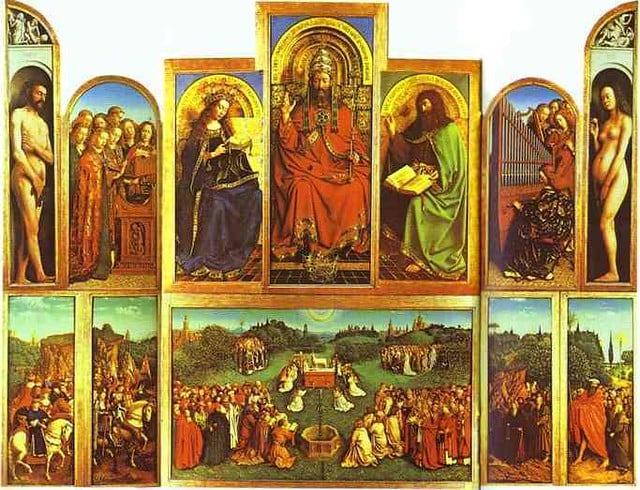
The Ghent Altarpiece, created by Flemish artists Jan and Hubert van Eyck, consists of 12 individual oil-painted panels depicting religious scenes. The center panel shows people paying homage to God, while other scenes include biblical figures like Adam and Eve, Jesus Christ, and John the Baptist. The entire masterpiece measures 11 feet tall and 15 feet wide when opened. The artwork has been stolen multiple times throughout history, starting in 1566 when Protestant militants stormed St. Bavo cathedral. One panel, ‘The Just Judges,’ was stolen in 1934 and has never been recovered, despite extensive investigations. The missing panel has been replaced by a copy, but the original remains one of art history’s most famous unsolved thefts.
Claude Monet’s Water Lilies Panel
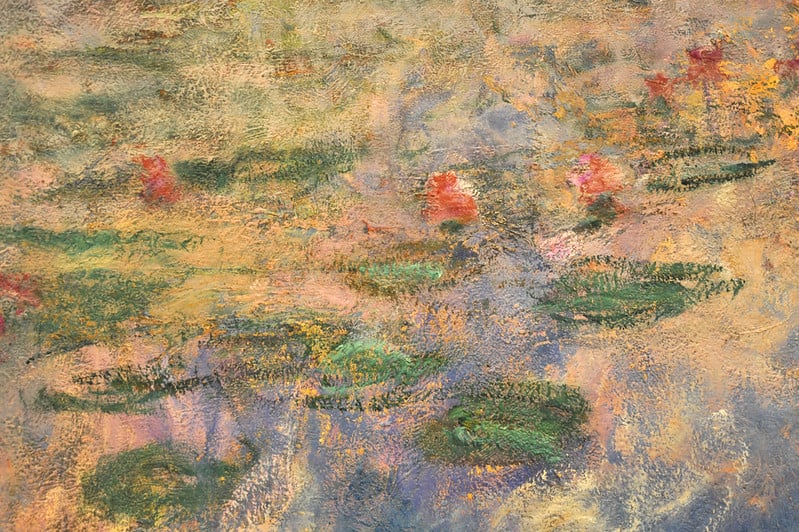
A Water Lilies panel painted by impressionist Claude Monet between 1914-1926 was destroyed in a 1958 fire at New York’s Museum of Modern Art. The fire started due to negligence by repairmen working on air conditioning when a piece of clothing caught fire near open paint cans. While MoMA staff tried their best to rescue the most iconic pieces by carrying them down the stairway, firefighters accidentally destroyed several artworks in the process, including part of Monet’s panel. This loss was particularly tragic because Monet’s Water Lilies series represented his final great artistic achievement. The destroyed panel was part of the artist’s revolutionary exploration of light, color, and natural forms that influenced generations of abstract painters.
Caravaggio’s Nativity with St. Francis and St. Lawrence

Painted in 1600, this piece portrays the nativity of Jesus and was kept in the Oratory of Saint Lawrence in Palermo. The theft of this Caravaggio is among the most bizarre stories of lost art, with an extraordinary fate befalling the great early Baroque masterpiece. The painting disappeared in 1969 in what many believe was a Mafia-orchestrated theft. Despite numerous investigations and alleged confessions, the work has never been recovered. This represents a significant loss of Caravaggio’s religious work, showing his mastery of dramatic lighting and emotional intensity. The theft highlighted the vulnerability of religious art housed in smaller, less secure locations.
Francis Bacon’s Pope Series
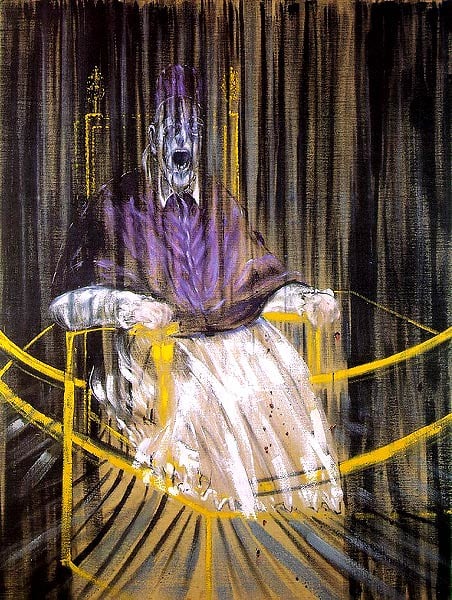
Figurative painter Francis Bacon created a series of 50 reinterpretations of Velázquez’s ‘Pope Innocent X’ painting. Many of the paintings in this series were destroyed by the artist’s own hand, as Bacon had a tendency to destroy art he wasn’t satisfied with. Bacon’s interpretation depicted a bleak, caged reimagining of the pope portrait, which experts interpreted as representing the death of God or the killing of a father figure. The artist himself stated he was simply following Velázquez’s lead in refreshing another master’s work. These destroyed paintings represented some of Bacon’s most psychologically intense explorations of power, religion, and human suffering.
Graham Sutherland’s Churchill Portrait

This 1954 portrait was commissioned from artist Graham Sutherland as Winston Churchill’s 80th birthday gift, funded by the House of Commons and House of Lords. Churchill, who saw the painting before its public presentation, said it made him ‘look like a down-and-out drunk who has been picked out of the gutter in the Strand.’ Although intended to hang in the Houses of Parliament, Churchill instead hid it away at his country house in South East England before eventually having it destroyed. The portrait was meant to capture Churchill’s strength and determination, but the aging statesman saw only an unflattering reminder of his mortality. This destruction represents a rare case of a subject rejecting their own commissioned portrait so completely that they chose to eliminate it entirely.
William Hogarth’s A Harlot’s Progress

This series of 6 works by English painter William Hogarth, seen as the father of ‘satirical caricatures,’ depicted the story of a young lady who comes to London, falls into prostitution, and dies aged 23. The original paintings were gutted in a fire, but due to the massive number of copies sold, they managed to survive in reproduction form for about 30 years. Hogarth’s moralistic narrative paintings were groundbreaking in their social commentary and storytelling approach. The loss of the originals was particularly significant because Hogarth pioneered a new form of sequential visual narrative that influenced both art and literature. His technique of embedding moral lessons within compelling stories created a template for modern graphic storytelling.
Where Great Art Goes to Disappear
These 16 lost masterpieces represent more than just missing paintings and sculptures—they’re windows into vanished worlds that we can never fully recover. From the golden glow of the Amber Room to Van Gogh’s self-portrait walking to work, each loss diminishes our understanding of human creativity and cultural achievement. The systematic looting during World War II alone accounted for hundreds of thousands of stolen artworks, with international efforts still ongoing to locate and return Nazi plunder to rightful owners. While some pieces may yet surface in forgotten attics or private collections, others are gone forever, leaving only photographs, descriptions, and the enduring hope that somewhere, somehow, these treasures of human imagination might one day return to light. Today’s reconstructions, like the new Amber Room completed in 2003, serve as powerful reminders of what we’ve lost while honoring the vision and skill of the original creators. The search for these missing masterpieces continues, driven by the belief that great art belongs not to any individual, but to all humanity.
More from Go2Tutors!

- 16 Historical Figures Who Were Nothing Like You Think
- 12 Things Sold in the 80s That Are Now Illegal
- 15 VHS Tapes That Could Be Worth Thousands
- 17 Historical “What Ifs” That Would Have Changed Everything
- 18 TV Shows That Vanished Without a Finale
Like Go2Tutors’s content? Follow us on MSN.



