17 Predictions That Came True Too Late
History is packed with brilliant minds who saw the future coming from miles away, only to watch everyone else catch up decades or even centuries later. These visionaries often faced ridicule, dismissal, or simple indifference when they first shared their insights.
Their predictions weren’t just lucky guesses—they were based on careful observation, scientific reasoning, or plain old common sense that others weren’t ready to accept. Here are 17 predictions that eventually proved spot-on, even though they came true way too late to help the people who made them.
Ignaz Semmelweis and Hand Washing

Back in 1847, Hungarian doctor Ignaz Semmelweis noticed something weird at his hospital in Vienna. The maternity ward run by doctors had a death rate three times higher than the one run by midwives.
After some detective work, he figured out that doctors were going straight from autopsy rooms to deliver babies without washing their hands. When he made handwashing mandatory, death rates plummeted.
The medical establishment basically laughed him out of the profession, calling his ideas ridiculous. It took another 20 years and Louis Pasteur’s germ theory before people realized Semmelweis had been right all along.
Alfred Wegener’s Continental Drift

In 1912, German meteorologist Alfred Wegener looked at a world map and had what seemed like an obvious thought—the continents looked like puzzle pieces that could fit together. He proposed that all the continents had once been joined in a supercontinent called Pangaea and had slowly drifted apart over millions of years.
Geologists absolutely roasted him for this idea because he couldn’t explain exactly how continents could move. It wasn’t until the 1960s, when scientists discovered plate tectonics and seafloor spreading, that everyone realized Wegener had nailed it decades earlier.
Like Go2Tutors’s content? Follow us on MSN.
Barbara McClintock’s Jumping Genes

Geneticist Barbara McClintock spent the 1940s and 1950s studying corn plants and discovered something that blew her mind—genes could actually move around and jump from one part of a chromosome to another. She called them ‘jumping genes’ or transposable elements.
The scientific community thought she was completely off base because the prevailing wisdom said genes stayed put in fixed positions. McClintock was so ahead of her time that she stopped publishing her research for years.
When molecular biology finally caught up in the 1970s, her work became foundational to understanding genetic regulation, earning her a Nobel Prize in 1983.
Rachel Carson’s Environmental Warnings

Marine biologist Rachel Carson saw trouble brewing in America’s relationship with pesticides long before anyone else wanted to admit it. Her 1962 book Silent Spring warned that widespread use of chemicals like DDT was devastating bird populations and poisoning the environment.
Chemical companies launched a massive campaign to discredit her, calling her an alarmist and worse. Carson died just two years after her book was published, but by the 1970s, everything she predicted had come to pass—bird populations were crashing, and DDT was finally banned in the United States.
Nikola Tesla’s Wireless World

In the 1890s, Nikola Tesla was already envisioning a world where people could communicate wirelessly across vast distances. He predicted that one day everyone would carry a small device that could send messages, make calls, and even access information from anywhere in the world.
People thought he was dreaming up science fiction nonsense. Tesla died in 1943, decades before his wireless vision became reality with cell phones and the internet.
Today, his predictions about wireless communication seem almost conservative compared to what our smartphones can actually do.
Like Go2Tutors’s content? Follow us on MSN.
John Snow’s Cholera Investigation

During London’s 1854 cholera outbreak, doctor John Snow did some serious detective work and figured out that the disease was spreading through contaminated water, not ‘bad air’ as everyone believed. He traced the outbreak to a specific water pump on Broad Street and convinced local officials to remove the pump handle.
The outbreak ended, but the medical establishment refused to accept his water theory for another 30 years. Snow died in 1858, long before germ theory proved he’d been absolutely right about how cholera spreads.
Galileo’s Moving Earth

When Galileo Galilei supported Copernicus’s idea that Earth orbits the sun rather than the other way around, he ran into some serious opposition from the Catholic Church. In 1633, he was forced to recant his views and spent the rest of his life under house arrest.
The Church didn’t officially admit that Galileo had been right until 1992—that’s 359 years later. Talk about taking your time to acknowledge a mistake.
Gregor Mendel’s Laws of Inheritance
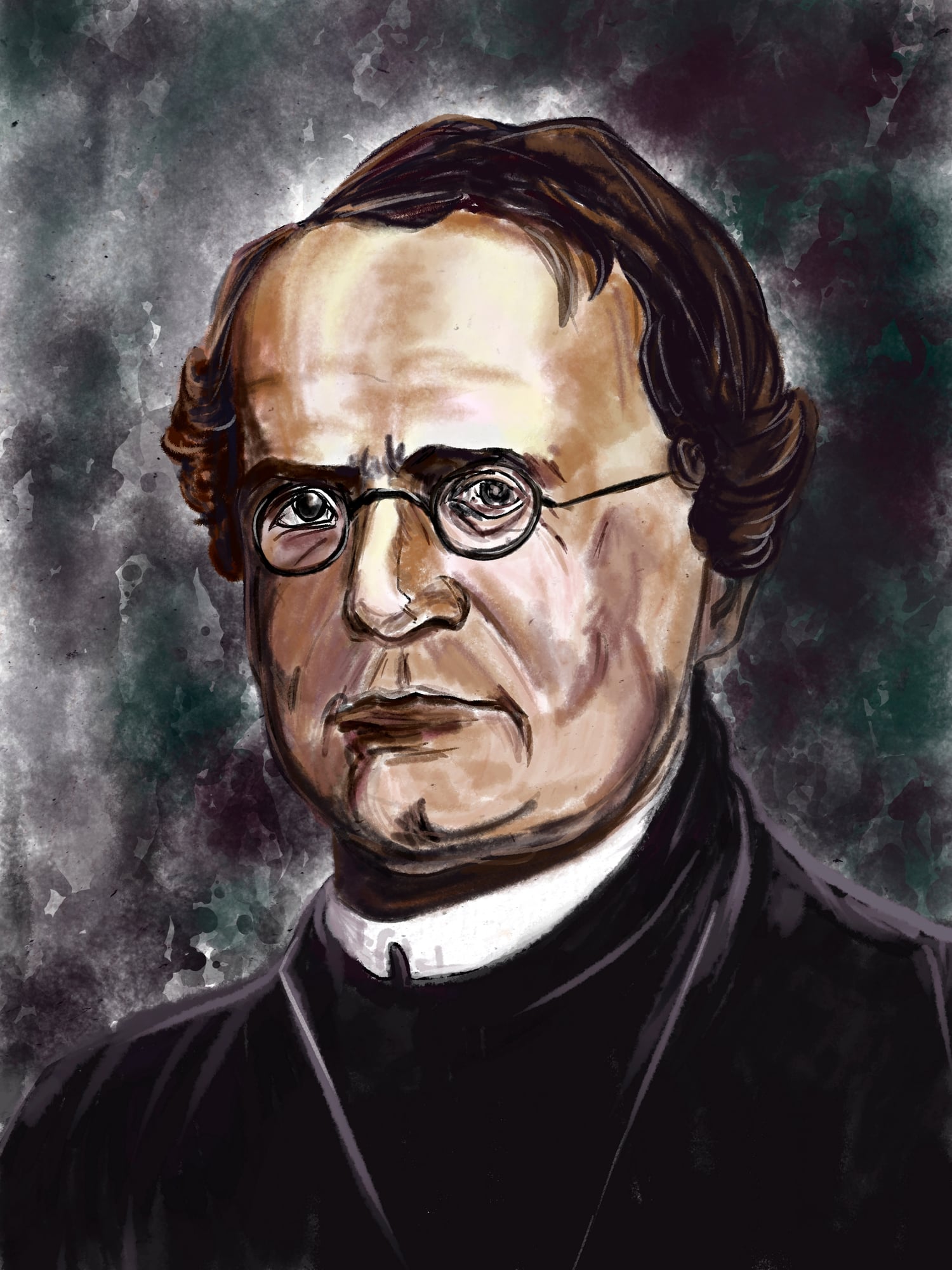
Austrian monk Gregor Mendel spent eight years in the 1860s breeding pea plants and discovered the basic laws of genetic inheritance. His work showed how traits passed from parents to offspring in predictable patterns, laying the groundwork for what would become genetics.
When he published his findings, the scientific community pretty much ignored them completely. Mendel died in 1884, and it wasn’t until 1900 that three different scientists independently rediscovered his work and realized he’d cracked the code of heredity 35 years earlier.
Like Go2Tutors’s content? Follow us on MSN.
Srinivasa Ramanujan’s Mathematical Insights

Indian mathematician Srinivasa Ramanujan developed thousands of mathematical formulas and theorems in the early 1900s, many of which seemed to come out of nowhere. His notebooks were filled with results that he claimed to receive in dreams from a Hindu goddess.
Western mathematicians initially dismissed much of his work as unrigorous or simply wrong. After Ramanujan died young at age 32 in 1920, mathematicians spent decades proving that most of his seemingly impossible formulas were actually correct.
Some of his work is still being verified and applied to modern problems in physics and computer science.
William Harvey’s Blood Circulation

In 1628, English physician William Harvey published his theory that blood circulates through the body in a closed loop, pumped by the heart. This was revolutionary thinking at a time when people believed blood was consumed by tissues and needed constant replenishment from food.
Harvey faced decades of ridicule from fellow physicians who clung to ancient Greek ideas about how the body worked. It took nearly 50 years for his circulation theory to gain widespread acceptance, long after Harvey had endured years of professional isolation and mockery.
Charles Darwin’s Evolution Theory
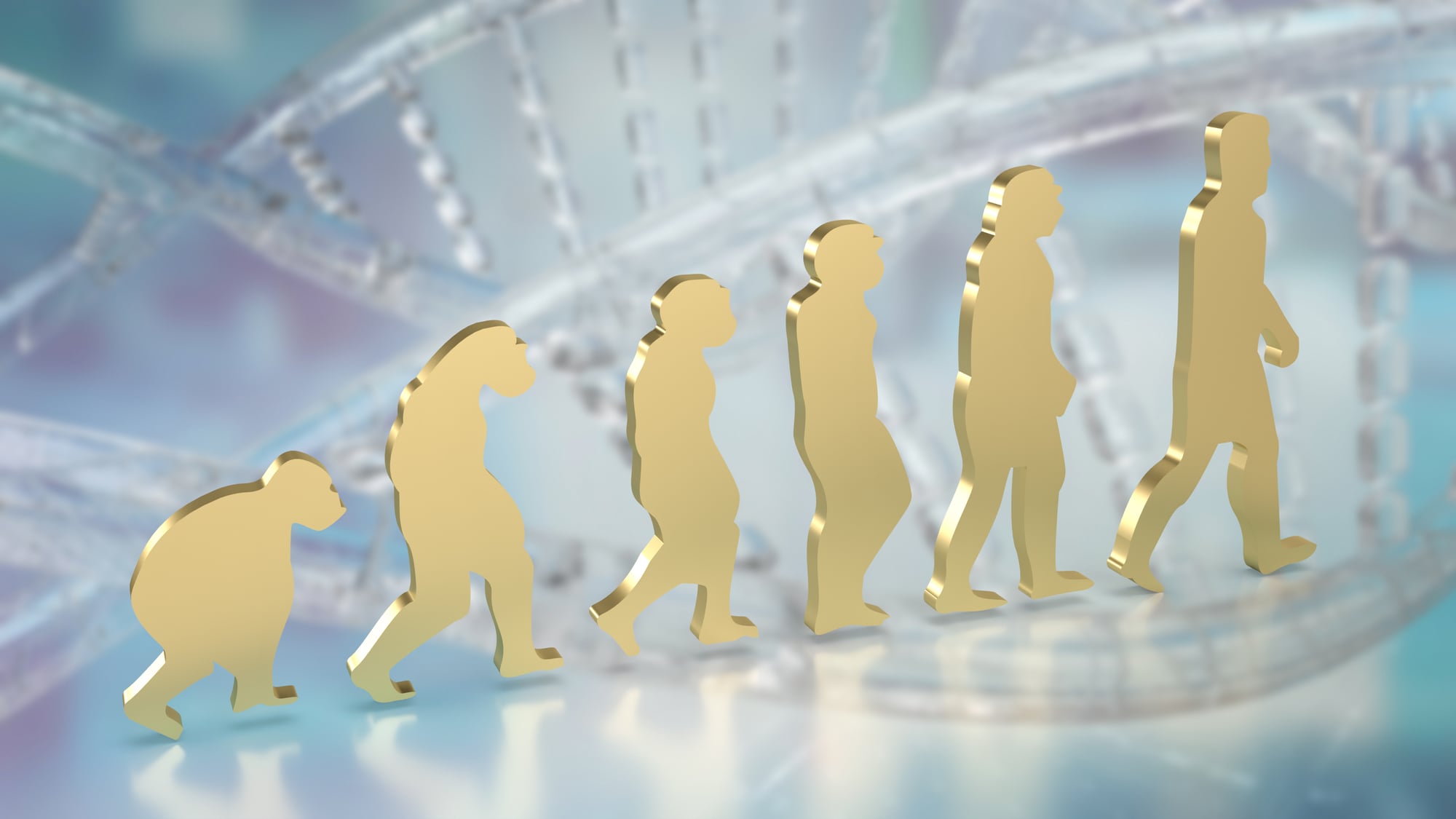
Charles Darwin knew his theory of evolution would cause a stir, so he sat on On the Origin of Species for over 20 years before publishing it in 1859. Even then, the idea that all life forms descended from common ancestors through natural selection was too radical for many to accept.
Religious leaders and some scientists attacked Darwin’s work, preferring creation stories to evolutionary explanations. While Darwin lived to see some acceptance of his ideas, it took decades for evolution to become the unifying principle of biology that it is today.
Like Go2Tutors’s content? Follow us on MSN.
Leonardo da Vinci’s Flying Machines

Leonardo da Vinci was sketching detailed designs for flying machines in the late 1400s and early 1500s, centuries before the Wright brothers got off the ground. His notebooks contained plans for helicopters, parachutes, and ornithopters that looked remarkably similar to modern aircraft.
Da Vinci understood principles of aerodynamics that wouldn’t be formally studied until much later. While he never built working versions of his flying machines, many of his designs were surprisingly close to actual aircraft that would eventually take to the skies 400 years later.
Alexander Fleming’s Antibiotic Discovery

When Alexander Fleming discovered penicillin in 1928, he realized he’d stumbled onto something that could kill bacteria without harming human cells. He published his findings and tried to interest other researchers in developing this ‘mold juice’ into a medicine.
For over a decade, nobody paid much attention to Fleming’s discovery. It wasn’t until World War II created an urgent need for infection-fighting drugs that other scientists finally picked up Fleming’s work and turned penicillin into the life-saving antibiotic we know today.
Lise Meitner’s Nuclear Fission Explanation

Austrian-Swedish physicist Lise Meitner was the first person to correctly explain nuclear fission in 1939, after her former colleague Otto Hahn discovered that uranium atoms could be split. Meitner realized that Einstein’s famous equation E=mc² meant enormous amounts of energy would be released when heavy atomic nuclei broke apart.
Despite her crucial insight, she was excluded from the Nobel Prize that Hahn received for the discovery. Her prediction about nuclear fission’s explosive potential proved terrifyingly accurate just six years later at Hiroshima and Nagasaki.
Like Go2Tutors’s content? Follow us on MSN.
Joseph Lister’s Antiseptic Surgery

British surgeon Joseph Lister read about Louis Pasteur’s germ theory in the 1860s and made a logical connection—if germs cause disease, then keeping them away from surgical wounds should prevent infections. He started using carbolic acid to sterilize his surgical instruments and clean wounds.
His patients’ infection rates dropped dramatically, but other surgeons thought his antiseptic methods were unnecessary fuss. It took nearly 20 years for antiseptic surgery to become standard practice, during which time countless patients died from preventable infections.
Rosalind Franklin’s DNA Structure

Rosalind Franklin’s X-ray crystallography work in the early 1950s provided crucial evidence for DNA’s helical structure. Her famous ‘Photo 51’ clearly showed the twisted shape of the DNA molecule.
While James Watson and Francis Crick used Franklin’s data to build their famous double helix model, Franklin died of cancer in 1958 at age 37, four years before Watson and Crick won the Nobel Prize. Her essential contributions to understanding DNA structure weren’t fully recognized until years after her death.
Buckminster Fuller’s Global Thinking

Designer and inventor Buckminster Fuller spent decades in the mid-20th century talking about ‘Spaceship Earth’ and the need to think globally about resource management and environmental sustainability. He predicted that humanity would need to learn to live within planetary limits and work together as a global crew.
Fuller’s ideas about interconnected systems and sustainable design seemed too abstract and idealistic for most people at the time. Today, as we grapple with climate change and resource depletion, Fuller’s ‘operating manual for spaceship Earth’ philosophy feels remarkably prescient.
Like Go2Tutors’s content? Follow us on MSN.
When Tomorrow Arrives Today

These predictions remind us that being right isn’t always enough—timing matters just as much as truth. Each of these visionaries saw patterns and possibilities that their contemporaries missed, but they paid a price for being ahead of their time.
Some faced ridicule, others were ignored, and many died before seeing their ideas vindicated. Their stories teach us to listen more carefully to unconventional thinking and to remember that today’s impossible idea might be tomorrow’s obvious truth.
The next time someone presents a wild-sounding prediction, it might be worth considering whether they’re seeing something the rest of us have missed.
More from Go2Tutors!

- 18 Unexpectedly Valuable Collectibles You Might Have Lying Around
- 20 Little-Known Historical Battles That Had Huge Consequences
- 20 Historical Artifacts That Scientists Can’t Explain
- 15 Inventions That Were Immediately Banned After Being Created
- 20 Actors Who Were Almost Cast in Iconic Roles
Like Go2Tutors’s content? Follow us on MSN.