16 Most Expensive Magic Cards
If you’ve ever dug through your old Magic: The Gathering collection hoping to find a forgotten fortune, you’re not alone. These pieces of cardboard—some of them literally printed in someone’s basement in 1993—now sell for the price of a house.
Or a car. Or at minimum, a really nice vacation.
The market for rare Magic cards has exploded over the past decade, driven by nostalgia, competitive players, and collectors who treat these cards like fine art. Here’s a look at the cards that’ll make your wallet cry.
Black Lotus (Alpha)
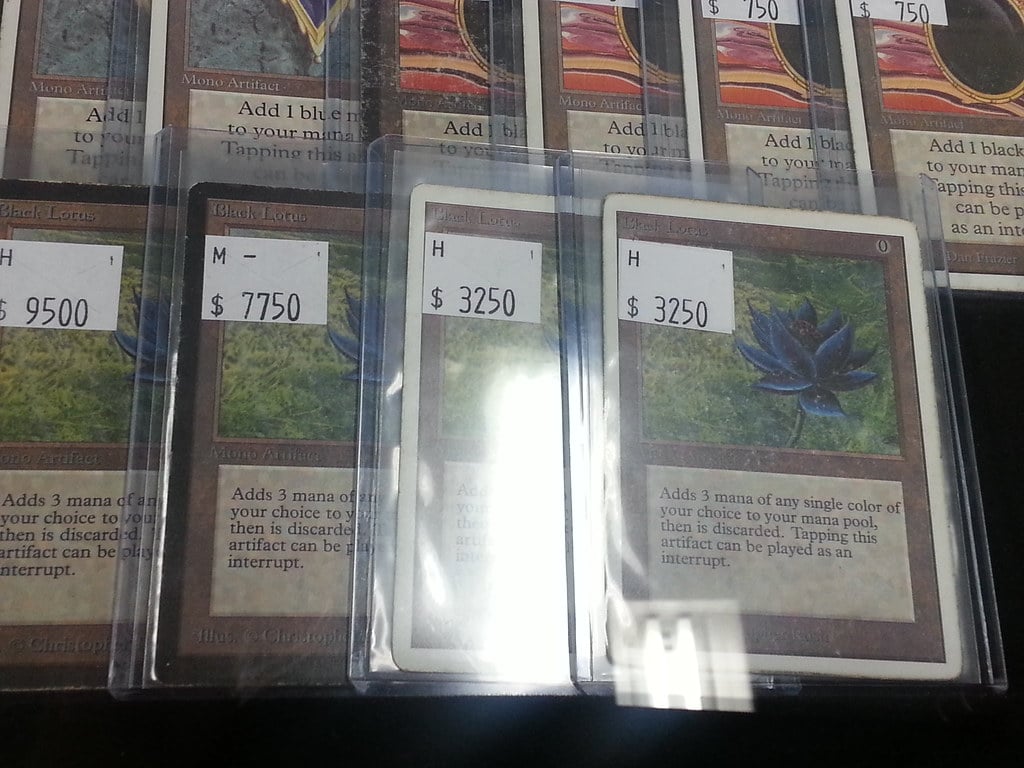
This is the big one. The holy grail.
The card everyone knows even if they’ve never played Magic in their lives. Black Lotus from the Alpha set can sell for over $500,000 in pristine condition, and even played copies go for six figures.
It lets you add three mana of any color immediately with zero cost, which doesn’t sound that broken until you realize it basically lets you play your entire hand on turn one. Richard Garfield has admitted the Power Nine (which includes Black Lotus) were design mistakes, but they’re the most beloved mistakes in gaming history.
Only around 1,100 Alpha Black Lotus cards were ever printed.
Ancestral Recall (Alpha)
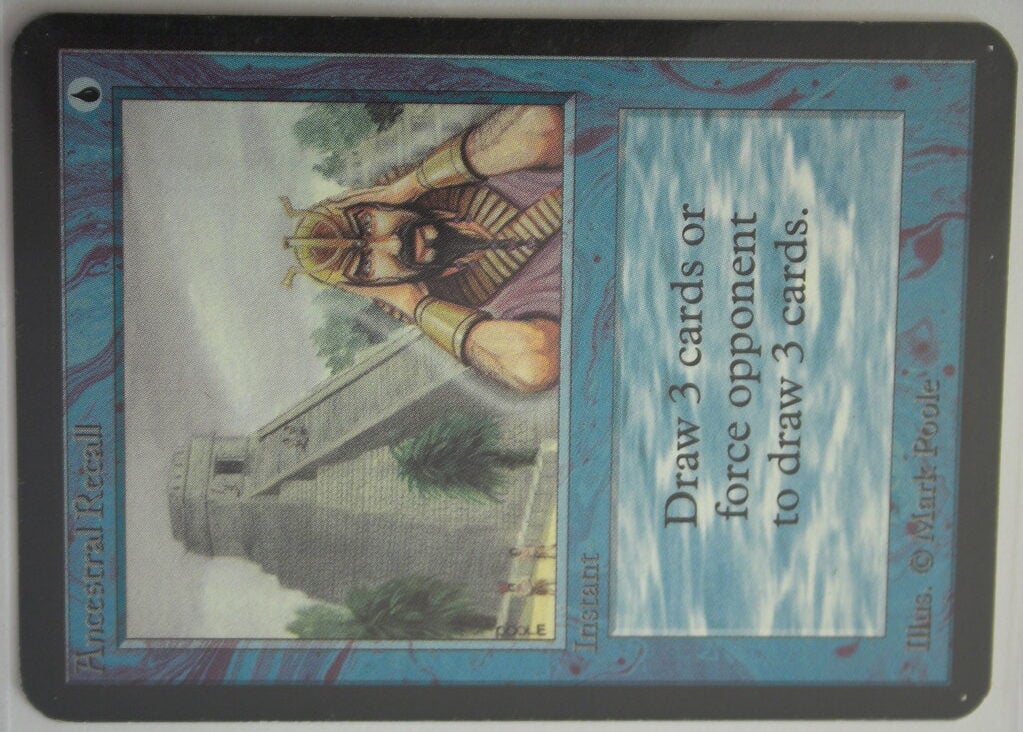
Draw three cards for one blue mana. That’s it.
That’s the whole card. In a game where card advantage wins matches, this is basically cheating made legal (well, legal in Vintage format only, and even then it’s restricted to one copy).
Alpha copies sell for around $100,000 to $200,000 depending on condition. It’s part of the Power Nine, and honestly, in terms of pure game impact, some players argue this is even better than Black Lotus because it generates long-term advantage rather than just a temporary mana boost.
Time Walk (Alpha)

Take an extra turn for two mana. Alpha versions fetch around $70,000 to $150,000. The Power Nine again (you’ll notice a pattern here).
Taking extra turns in Magic is incredibly powerful because you get another draw, another combat phase, and all your lands untap. Modern Magic design would never print something like this—extra turn spells now cost seven or eight mana and have restrictions.
But in 1993, Richard Garfield was just throwing spaghetti at the wall to see what stuck, and this particular spaghetti turned out to be worth a down payment on a house.
Mox Sapphire, Ruby, Jet, Emerald, and Pearl (Alpha)

I’m grouping these together because they’re basically the same card in different colors. Each Mox lets you add one mana of a specific color for zero cost, which is absurd. They’re artifacts, so any deck can use them.
Alpha copies of each run between $50,000 and $100,000, with Sapphire (blue) typically being the most expensive because blue has historically been the strongest color in competitive Magic. These five cards plus Black Lotus, Time Walk, Timetwister, and Ancestral Recall make up the Power Nine—the most broken cards ever printed and also the most valuable.
Timetwister (Alpha)

The least expensive of the Power Nine, which is like saying it’s the cheapest Lamborghini. Both players shuffle their hands and graveyards into their libraries and draw seven new cards.
Alpha copies go for around $30,000 to $50,000. It’s powerful but considered the weakest of the nine because it helps your opponent too (they also get seven fresh cards), and in Magic, helping your opponent is generally a bad strategy.
Still, in the right deck, this thing is a monster.
Black Lotus (Beta)
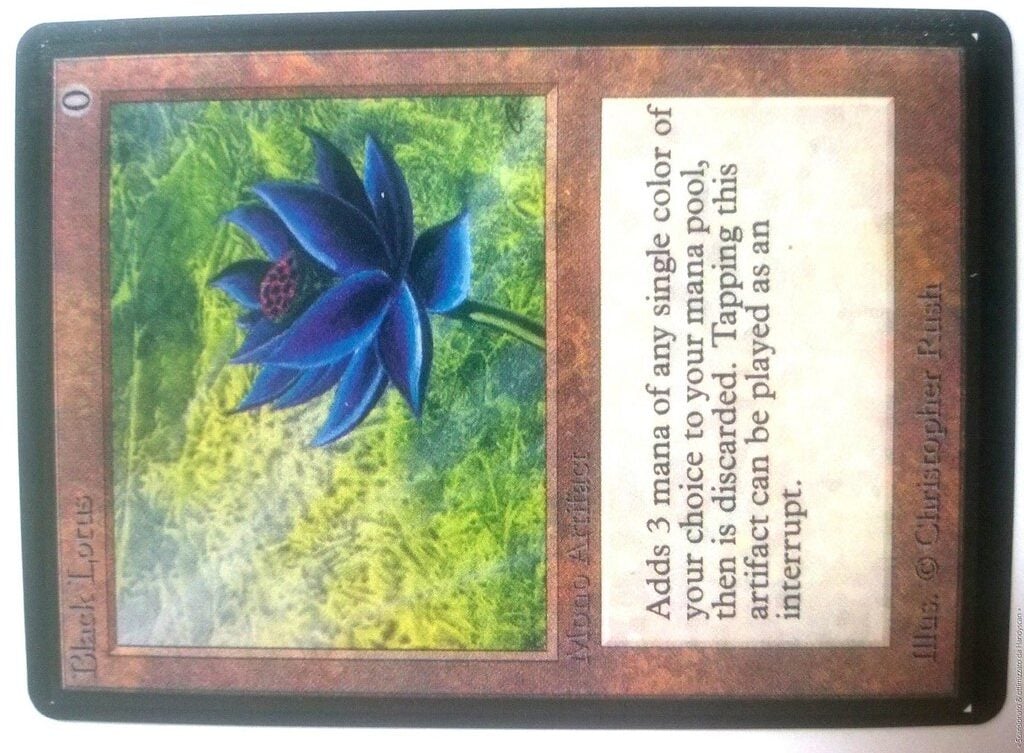
Beta was the second print run of Magic cards in 1993, with a much larger printing than Alpha. Beta Black Lotus cards sell for $100,000 to $300,000.
They’re identical to Alpha in function but you can tell them apart because Beta cards have slightly different corner cuts and Alpha cards have more rounded corners. Also Beta has a bigger print run so there’s more supply.
People get really particular about Alpha versus Beta.
Underground Sea (Alpha)
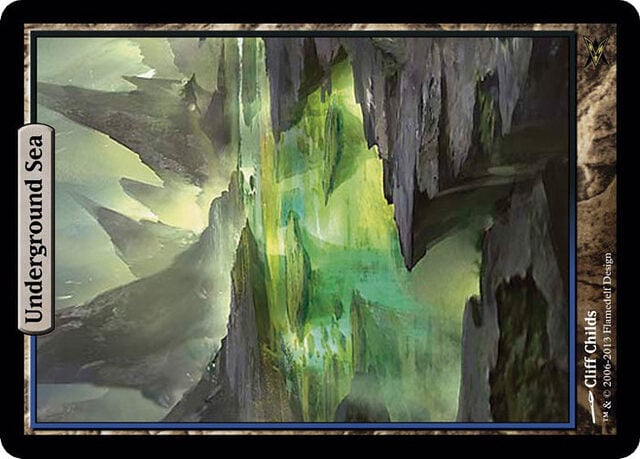
Dual lands from Alpha are incredibly expensive, and Underground Sea (blue/black) is typically the priciest. These lands tap for two different colors of mana with no downside, which doesn’t sound exciting until you realize how important mana consistency is.
Alpha copies sell for $20,000 to $40,000. In formats where these are legal, they’re auto-included in any deck running those colors.
Wizards of the Coast stopped printing dual lands without drawbacks years ago (they’re considered too good), which makes the originals from Alpha/Beta/Unlimited incredibly sought after.
Tropical Island (Alpha)

Another dual land, this one produces green or blue mana. It goes for around $15,000 to $30,000 in Alpha.
The art shows a peaceful island with palm trees, which is ironic because there’s nothing peaceful about the prices. These lands are so expensive that even competitive players who need them for tournaments sometimes use proxies in casual games just to avoid the wear and tear on $20,000 pieces of cardboard.
Volcanic Island (Alpha)
Blue and red mana, yours for the low price of $15,000 to $30,000 if you find an Alpha copy. The dual lands are essential for competitive play in older formats, and their prices have only gone up as more players enter the market and the supply stays fixed (they’re never reprinting these with the original art and frame).
Tundra (Alpha)

This one produces white or blue mana. Alpha copies run $12,000 to $25,000. All the dual lands follow a similar price pattern, with slight variations based on how popular those color combinations are in competitive formats.
White-blue control decks have been a staple forever, so Tundra stays in demand.
Taiga (Alpha)

Red-green dual land from Alpha, around $10,000 to $20,000. Taiga has historically been one of the less expensive duals because red-green wasn’t as popular in Vintage and Legacy formats, but prices have climbed anyway because collectors want complete sets.
Shichifukujin Dragon (Unique)

This card was literally printed once as a tournament prize in Japan in 1996. One copy exists.
It sold at auction for around $87,000 in 2022 (though some sources claim it went for even more privately). The art shows a dragon with the Seven Lucky Gods from Japanese mythology.
Unique cards occupy a weird space in the market because there’s no real comp to base prices on—it’s worth whatever someone will pay.
1996 World Champion (Unique)

There’s only one of these too. It was created for Tom Chanpheng after he won the 1996 World Championship, and the card literally has his face on it and makes you the winner of the game immediately when you play it (which you can’t do in any sanctioned format because only one exists and Tom owns it).
It’s never been sold publicly, but it’s been valued at over $100,000, maybe higher. Imagine owning the only copy of a Magic card that just says “you win” on it.
Summer Magic Blue Hurricane
Summer Magic, also called Edgar, was a print run from 1994 that was recalled due to printing errors, most copies were destroyed, and only a few survived. Blue Hurricane is one of the rarest Summer Magic cards because it was printed with the wrong color border.
There are maybe a dozen copies floating around. They sell for around $15,000 to $25,000 when they come up, which isn’t often.
Mox Diamond (Stronghold, Signed)

Okay, this one’s a bit different. Regular Mox Diamond cards aren’t insanely expensive—maybe $500-800.
But a copy signed by artist Dan Frazier sold for around $16,000. Signed cards occupy their own market niche. The signature can dramatically increase value if it’s from a popular artist and the card is already desirable.
But it’s also weird because some collectors hate signed cards (they consider it defacement) while others seek them out specifically.
Scrubland (Alpha)
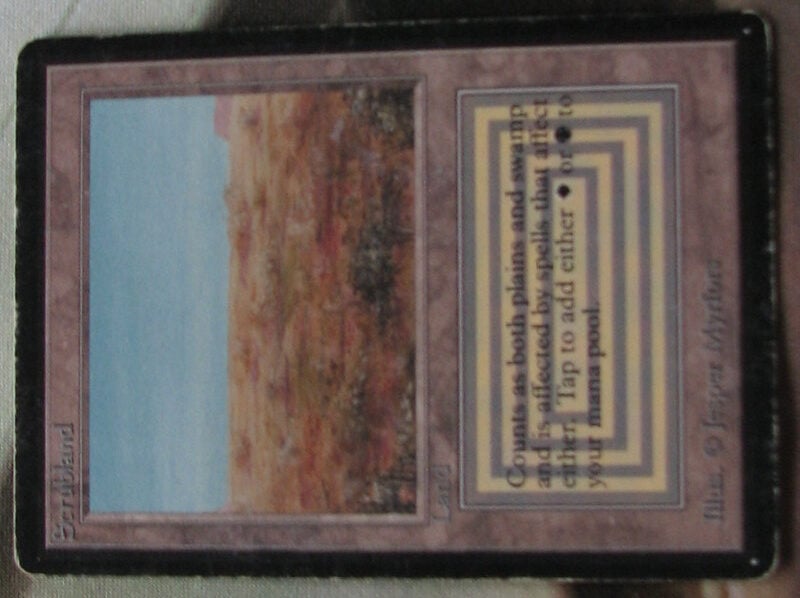
White-black dual land, completing our tour of the original duals. Alpha Scrubland goes for $10,000 to $20,000.
It’s featured in plenty of competitive Legacy decks, especially ones running death and taxes strategies. The art is pretty bleak—just some dead wasteland—which actually fits the white-black color identity perfectly when you think about it.
Time to Mortgage Your House?

Most of us will never own an Alpha Black Lotus, and that’s fine. The beauty of Magic is you can build competitive decks in Modern or Standard for a few hundred dollars and have just as much fun (maybe more, since you won’t be terrified of spilling water on a card worth more than your car).
But there’s something fascinating about these absurdly expensive pieces of cardboard—they represent gaming history, incredible art, and the wild speculation that happens when nostalgia meets scarcity. Plus it’s fun to dream about finding one in your parents’ attic.
More from Go2Tutors!

- The Romanov Crown Jewels and Their Tragic Fate
- 13 Historical Mysteries That Science Still Can’t Solve
- Famous Hoaxes That Fooled the World for Years
- 15 Child Stars with Tragic Adult Lives
- 16 Famous Jewelry Pieces in History
Like Go2Tutors’s content? Follow us on MSN.



