16 Times Fiction Inspired Real Inventions
Science fiction writers have always been dreamers, but they’ve also turned out to be surprisingly accurate fortune tellers. From submarines cruising through ocean depths to tiny computers we carry in our pockets, countless modern inventions started as wild ideas in novels, movies, and TV shows. The connection between imagination and innovation runs deeper than most people realize—inventors have been reading science fiction for inspiration since the genre began.
What makes this relationship even more fascinating is how specific these predictions often were. Writers didn’t just imagine flying cars or robots in general terms. They described exact details, mechanisms, and uses that inventors later brought to life with startling accuracy. Here is a list of 16 times fiction showed us the future before it
Submarines

Jules Verne’s 20,000 Leagues Under the Sea painted such a vivid picture of underwater travel that it changed a young boy’s life forever. American inventor Simon Lake read Verne’s detailed descriptions of the Nautilus and became completely captivated by the idea of exploring beneath the waves.
Lake spent years perfecting his designs and in 1898 launched the Argonaut, the first submarine to successfully operate in open ocean waters.
Helicopters

The same Jules Verne who inspired submarines also became a future aviation pioneer dreaming about flight. Young Igor Sikorsky read Verne’s Clipper of the Clouds and became fascinated with the idea of a flying machine that could hover and move in any direction.
Sikorsky often quoted Verne’s famous line: “Anything that one man can imagine, another man can make real”—and he proved it by inventing the modern helicopter.
Like Go2Tutors’s content? Follow us on MSN.
Rockets
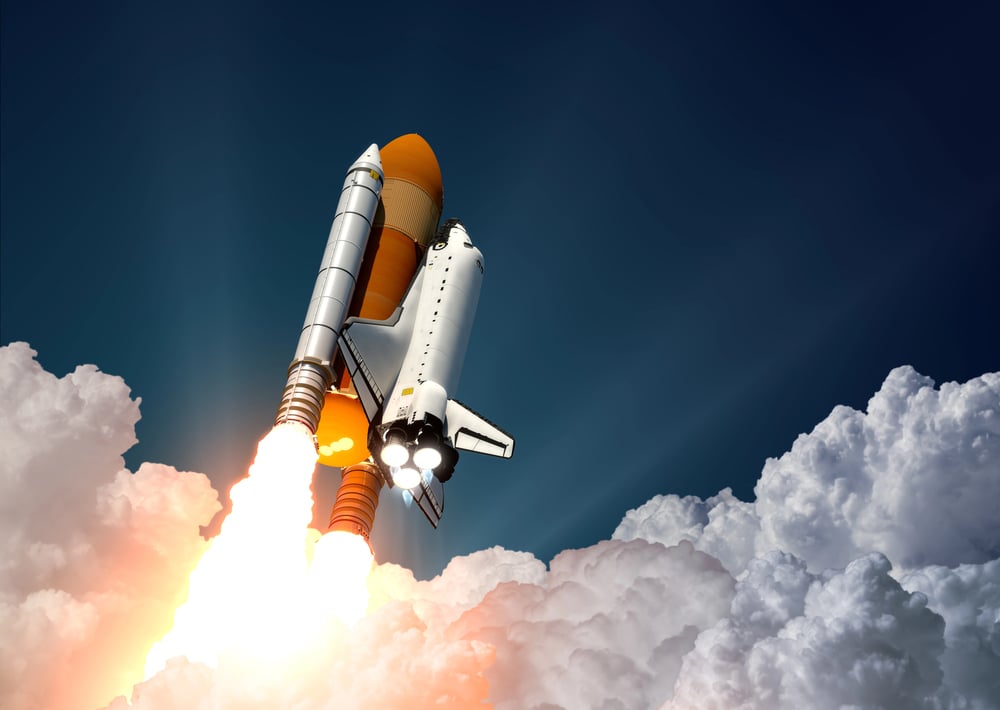
H.G. Wells probably had no idea his Martian invasion story would launch the space age. Robert Goddard, the scientist who built America’s first liquid-fueled rocket, became obsessed with spaceflight after reading Wells’ War of the Worlds in a newspaper serial.
Goddard later said the concept of interplanetary travel “gripped my imagination tremendously,” leading him to successfully launch his revolutionary rocket on March 16, 1926.
Mobile Phones

Captain Kirk’s communicator wasn’t just a cool gadget—it was a blueprint for the future. Martin Cooper, the Motorola engineer who invented the first mobile phone, directly credited Star Trek as his inspiration.
Cooper and his team created their groundbreaking device in just 90 days, and he made his first call to a rival at Bell Labs from the streets of New York City, proving that science fiction had become science fact.
TASER

The Tom Swift adventure books gave young readers more than exciting stories—they gave NASA physicist Jack Cover an idea that would change law enforcement. Cover was such a fan of the series that when he invented his electric stunning device, he named it TASER as an acronym for “Thomas A. Swift’s Electric Rifle.”
The books described a boy inventor with an electric weapon, and Cover made that childhood fantasy into a real tool used worldwide today.
Like Go2Tutors’s content? Follow us on MSN.
Earbuds
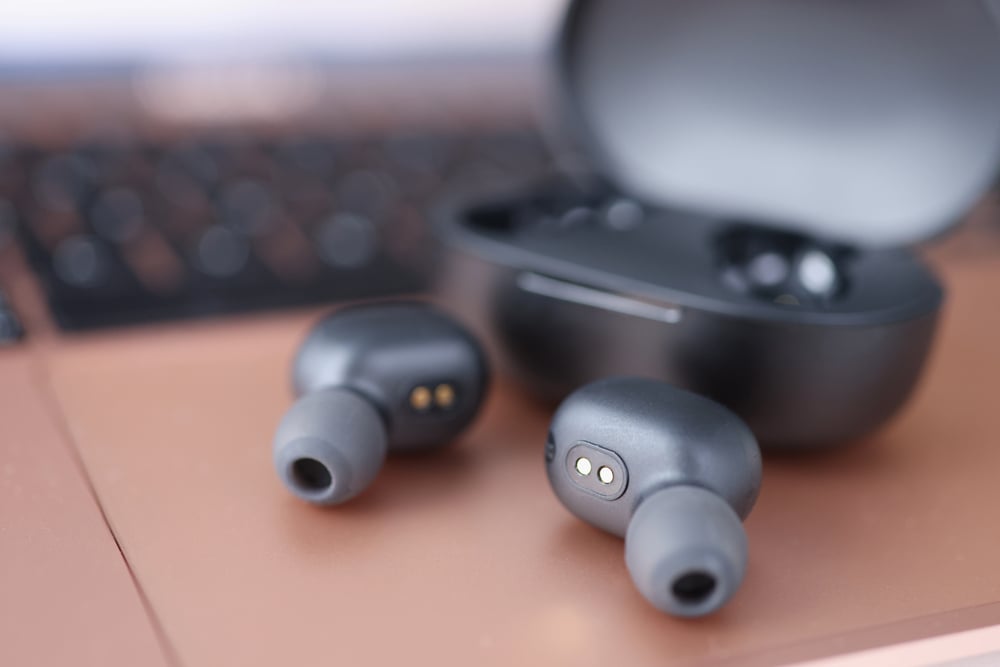
Ray Bradbury’s dystopian vision in Fahrenheit 451 included tiny wireless devices called “seashells” that people wore in their ears to listen to “an electronic ocean of sound.” Bradbury described these eerily similar to modern earbuds, complete with their addictive nature and constant stream of content.
When Apple unveiled AirPods in 2016, they were essentially bringing Bradbury’s 1953 prediction to life, right down to the small white design.
Tablets

Stanley Kubrick’s 2001: A Space Odyssey showed astronauts using flat, rectangular devices to watch movies and read information during their space journey. These fictional tablets were so convincing that Samsung actually used footage from Kubrick’s 1968 film in a legal dispute with Apple, arguing that the movie proved tablets weren’t Apple’s original idea.
Whether or not Kubrick invented the concept, his vision certainly helped inspire the tablet revolution that transformed how we consume media.
Satellites

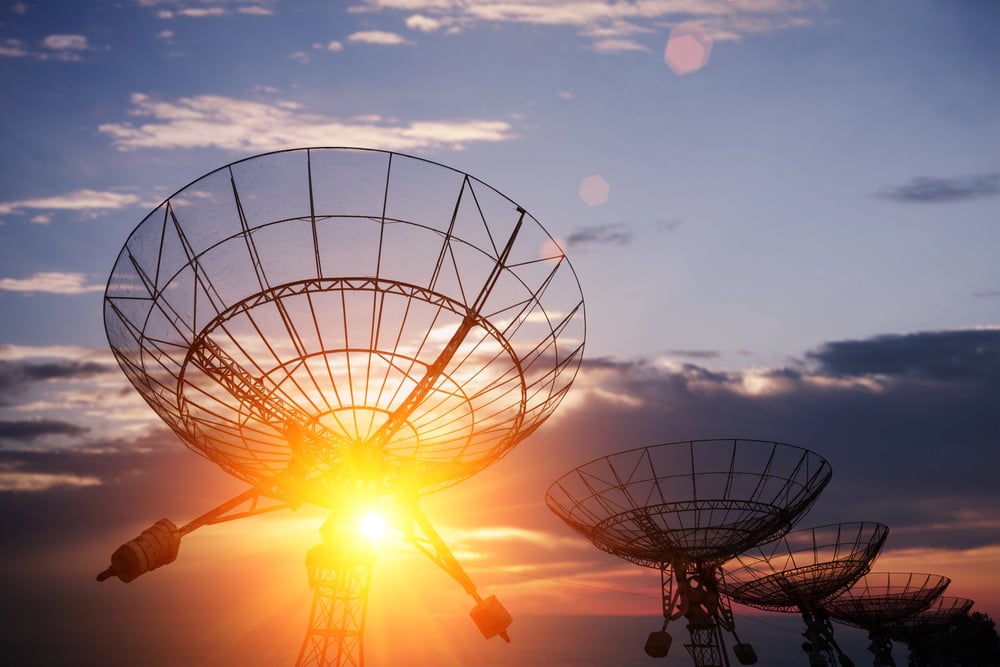
Arthur C. Clarke wasn’t content to just write about the future—he wanted to engineer it. Long before the first satellite orbited Earth, Clarke published detailed descriptions of how radio signals could bounce off satellites for global communication.
His technical precision was so accurate that when communication satellites became reality, they worked almost exactly as he had imagined, revolutionizing everything from television broadcasts to international phone calls.
Like Go2Tutors’s content? Follow us on MSN.
The Internet

Mark Twain’s 1898 short story imagined a device called a “telectroscope” that would make the “daily doings of the globe visible to everybody” through a worldwide network. Young Tim Berners-Lee read Arthur C. Clarke’s similar vision of interconnected machines in a 1964 story and became fascinated with the idea.
Berners-Lee carried that inspiration with him to MIT, where he invented the World Wide Web and gave us the connected world Twain and Clarke had dreamed about.
Credit Cards

Edward Bellamy’s 1887 novel Looking Backward imagined the year 2000 as a socialist utopia, but his most lasting prediction was much more capitalist. Bellamy described a payment system using cards that worked remarkably like modern credit cards, complete with receipts for both customers and merchants.
His vision was so detailed and practical that it essentially provided a roadmap for the cashless payment systems we use every day.
Defibrillators

Mary Shelley’s Frankenstein introduced the world to the idea of using electricity to restart life, though her version involved considerably more grave robbing. The concept of electrical resuscitation inspired Dr. Claude Beck, who in 1947 saved a teenage patient’s life using his homemade defibrillator—two silver paddles wired to an electrical outlet.
Beck’s device was less gothic than Shelley’s vision but far more practical, launching the medical technology that has saved countless lives.
Like Go2Tutors’s content? Follow us on MSN.
Space Stations

Edward Everett Hale’s 1869 story The Brick Moon described a brick sphere accidentally launched into orbit with people aboard, creating the first fictional space station. Hale’s stranded “Lunarians” had to figure out how to survive in space, much like real astronauts would over a century later.
The Soviet Union’s Salyut program launched the first real space station in 1971, and today’s International Space Station continues the tradition Hale imagined.
Virtual Reality
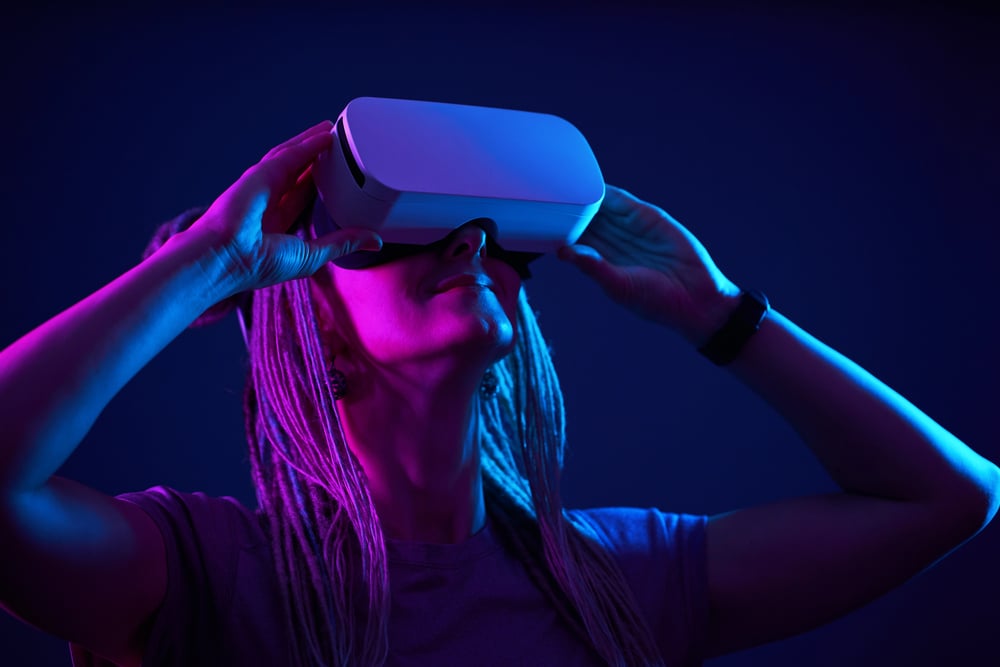
Neal Stephenson’s 1992 novel Snow Crash described a fully immersive online world called the “Metaverse” where people interacted through customizable avatars. Philip Rosedale, creator of the virtual world Second Life, credits Stephenson’s detailed vision with inspiring his own work.
Stephenson painted such a compelling picture of virtual reality that it influenced an entire generation of developers working to make digital worlds feel as real as the physical one.
Video Calling

The Jetsons showed us a future where families could see each other during phone calls, with George Jetson chatting face-to-face with his boss Mr. Spacely through a device called the Visaphone. This 1962 cartoon prediction seemed impossibly futuristic at the time, but it perfectly described what would become essential technology.
Today’s video calling platforms like Zoom and FaceTime work exactly as the Jetson family demonstrated, connecting people across the globe with both audio and video.
Like Go2Tutors’s content? Follow us on MSN.
Smart Watches

Chester Gould’s comic strip about detective Tracy featured a police officer with a two-way wrist radio starting in 1946, and by 1964 Gould had added video capability. The comic showed Tracy solving crimes with help from his wrist-mounted communication device, which could make calls, send messages, and display information.
Modern smartwatches deliver on almost everything Gould imagined, though thankfully most of us use them for fitness tracking rather than chasing criminals.
Nuclear Power

H.G. Wells explored the potential of atomic energy in his 1913 novel The World Set Free, describing a future powered by atomic reactions. Physicist Leo Szilard read Wells’ book and became fascinated with the idea of nuclear chain reactions, eventually developing the science that led to both nuclear power and nuclear weapons.
Wells had envisioned atomic energy as a force for good, though the reality proved more complex than his optimistic predictions.
When Dreams Become Blueprints
These inventions prove that fiction and science have always worked hand in hand, with imagination leading the way toward innovation. The writers who dreamed up submarines and satellites weren’t trying to create instruction manuals—they were simply exploring what might be possible.
Yet their detailed visions provided inventors with both inspiration and surprisingly accurate technical guidance. Today’s science fiction continues this tradition, with authors imagining technologies that tomorrow’s innovators will likely bring to life, proving that the best way to predict the future is often to write it first.
More from Go2Tutors!

- 16 Historical Figures Who Were Nothing Like You Think
- 12 Things Sold in the 80s That Are Now Illegal
- 15 VHS Tapes That Could Be Worth Thousands
- 17 Historical “What Ifs” That Would Have Changed Everything
- 18 TV Shows That Vanished Without a Finale
Like Go2Tutors’s content? Follow us on MSN.