Strange Tales Connected to the Titanic Wreck Site
The Titanic’s final resting place, two and a half miles beneath the North Atlantic, has become more than just a maritime graveyard. Since Robert Ballard first located the wreck in 1985, the site has accumulated an extraordinary collection of unexplained phenomena, eerie coincidences, and downright bizarre occurrences that go far beyond the tragedy itself.
These stories emerge from deep-sea explorers, researchers, and crew members who’ve descended into those crushing depths, only to encounter something that defies easy explanation.
The phantom SOS signals

Radio operators have reported picking up distress calls from the Titanic’s coordinates for decades after the sinking. The signals follow the same pattern — three short, three long, three short — transmitted on frequencies that ships abandoned years ago.
So here’s the thing: these aren’t ghost stories passed down through maritime folklore, they’re documented incidents logged by Coast Guard stations and commercial vessels (complete with timestamps and coordinates that place them directly above the wreck site). But the most unsettling part — and this is where it gets genuinely strange — is that when rescue teams investigate, they find nothing but empty ocean and the faint electronic signature of a transmission that shouldn’t exist.
Modern ships don’t even carry the equipment necessary to send signals on those obsolete frequencies, which makes the whole phenomenon that much more baffling.
The Marconi room recordings
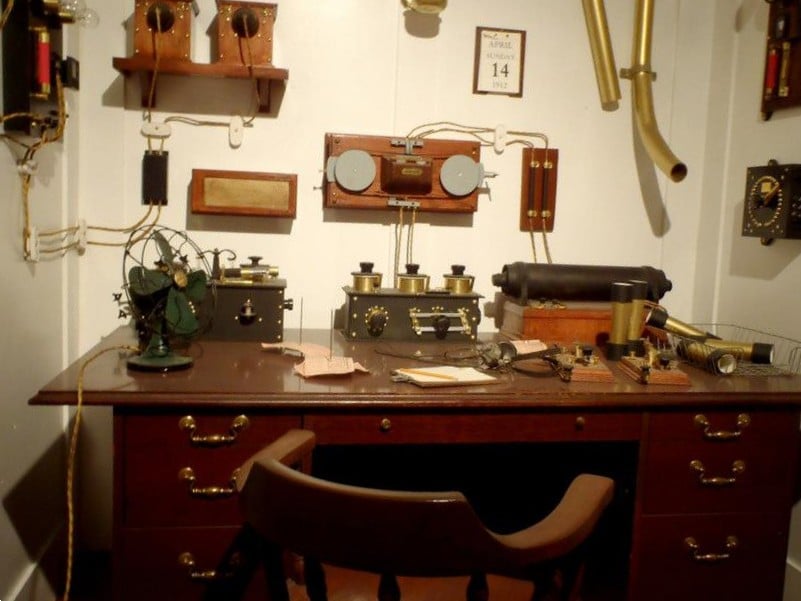
Deep-sea exploration teams have reported capturing audio recordings from inside the Titanic’s remains that contain what sounds like Morse code transmissions. These aren’t the usual creaks and groans of metal under pressure — they’re rhythmic, deliberate patterns that match the cadence of manual telegraph operation.
The recordings happen specifically near what remains of the Marconi wireless room, where Jack Phillips and Harold Bride worked frantically to send distress calls as the ship went down. Audio analysis has revealed that some of these patterns, when translated from Morse code, spell out partial messages: fragments of passenger lists, incomplete coordinates, and occasionally the letters “MGY” — the Titanic’s call sign.
But here’s what makes it genuinely eerie (and this detail consistently appears in multiple expedition reports): the transmissions only occur when human-operated submersibles approach the wireless room area. Unmanned ROVs never capture these sounds, no matter how sensitive their recording equipment. It’s as if whatever is creating these signals responds only to the presence of living people.
The most unsettling recording, captured during a 1998 expedition, reportedly contains a clear Morse transmission spelling out “STILL HERE… STILL HERE…” repeated seventeen times before cutting to silence.
Objects that move between dives

Submersible crews routinely photograph and catalog items scattered around the wreck site to document the ongoing deterioration. Personal effects, pieces of the ship, debris fields — everything gets mapped and recorded for scientific purposes.
Yet certain objects refuse to stay where expeditions leave them. A child’s leather boot, first photographed near the bow section in 1995, has appeared in expedition photos taken years apart in completely different areas of the debris field.
The boot shows up in the stern section, then near the scattered luggage area, then back at the bow — always in clear, well-lit photographs that rule out misidentification. Currents at that depth move slowly and predictably; they don’t transport objects across the half-mile gap between the ship’s broken sections.
The same phenomenon affects other personal items: a woman’s handbag, a pair of reading glasses, a pocket watch that multiple expeditions have photographed in different locations spanning decades. These objects appear pristine despite the corrosive environment that’s eating away the ship itself.
The woman in the first-class dining room
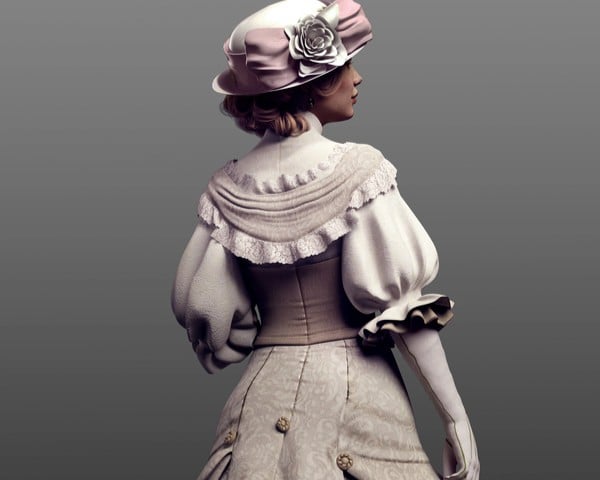
She appears in the background of deep-sea photographs like a figure caught in peripheral vision. Not clearly, never prominently — just a pale shape that resembles a woman in Edwardian dress standing among the wreckage of what was once the first-class dining saloon.
Photography crews notice her later, when reviewing footage back on the surface. The figure shows up in expedition photographs taken decades apart by different teams using different equipment, always in roughly the same location among the debris where elegant dinners once happened.
She appears translucent against the dark water, her form wavering as if seen through old glass. What’s particularly strange is that she only appears in still photographs, never in continuous video footage — as if whatever creates this image can only manifest in the split second of a camera’s flash.
Maritime archaeologists have examined the photos extensively. The figure isn’t a trick of light, equipment malfunction, or pareidolia — the human tendency to see familiar shapes in random patterns.
The shape is too consistent across different expeditions, different cameras, different lighting conditions. And yet no one has ever seen her while actually diving; she exists only in the developed images, like a guest who arrived after the party ended.
The survivor testimonies that change
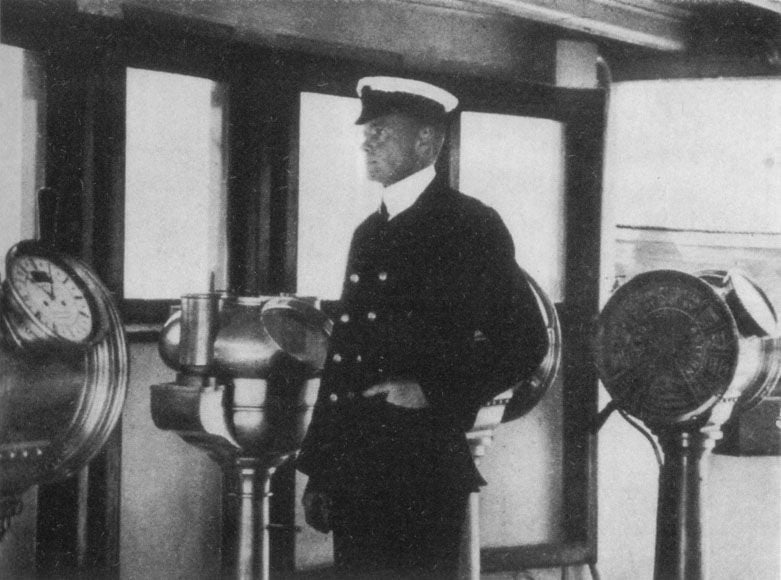
Historical records of Titanic survivor accounts have remained consistent for over a century — until research teams started finding contradictions in archived interviews that don’t match the established versions. These aren’t minor discrepancies or faded memories; entire sections of recorded testimonies have somehow altered to include details that were never there before.
A 1912 interview with survivor Charles Lightoller, the ship’s second officer, was recently discovered to contain passages describing “strange lights beneath the water” and “voices calling from below long after the ship had sunk.” These details don’t appear in any of the widely known versions of his testimony, yet the recordings bear all the authentication marks of genuine period documentation.
The voice patterns match, the recording technology is consistent with 1912 equipment, even the background sounds are accurate for interviews conducted in New York immediately after the disaster. Similar alterations have appeared in written survivor accounts housed in different archives around the world.
Passengers describe seeing figures walking on the water, hearing music continuing to play long after the ship’s orchestra had stopped, witnessing lights moving beneath the surface in organized patterns. These testimonies read like eyewitness accounts of events that couldn’t have happened — except they’re written in the survivors’ own handwriting, on period paper, with ink that tests as genuinely aged.
The compass anomalies
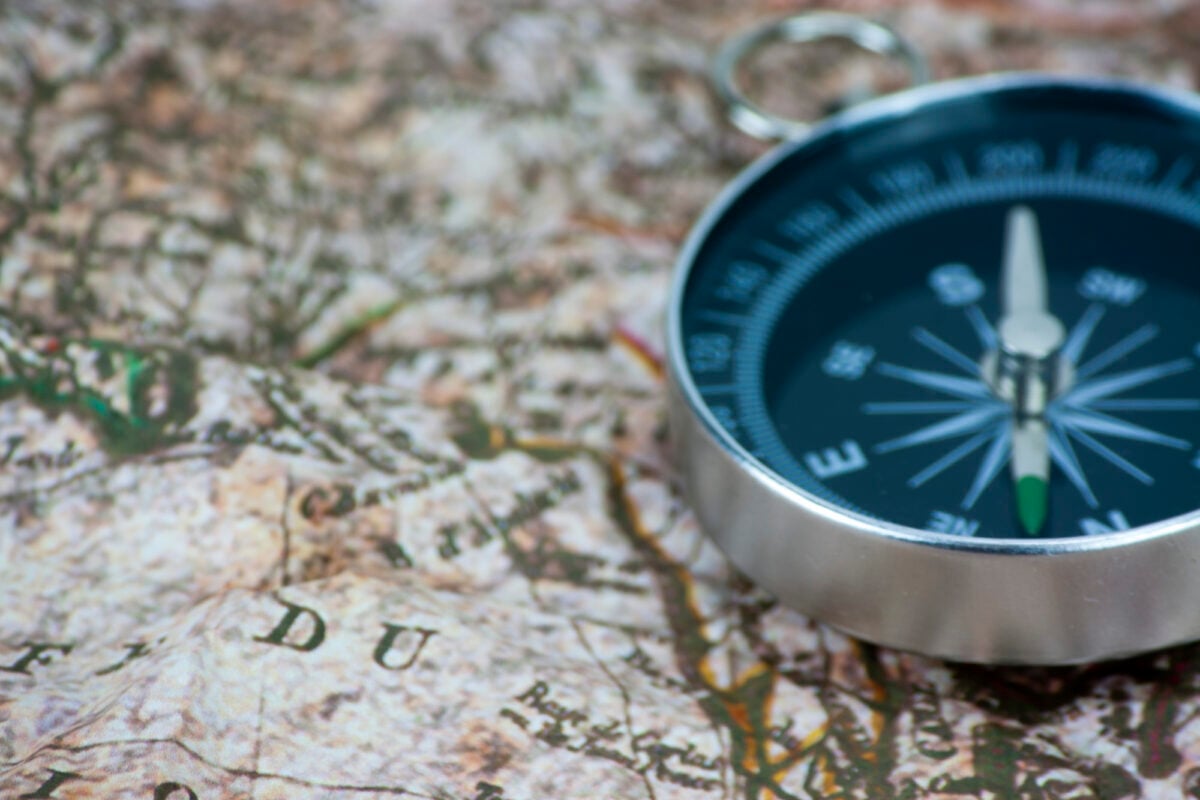
Navigation equipment goes haywire when approaching the Titanic’s coordinates. Magnetic compasses spin wildly, GPS readings drift off course by several hundred yards, and depth sounders return impossible readings that place the ocean floor simultaneously at different depths.
The phenomenon affects every submersible that approaches the wreck, regardless of how modern or well-calibrated their instruments are. Experienced deep-sea pilots have learned to navigate by dead reckoning once they enter what they call “the bubble” — a roughly circular area about two miles in diameter centered on the wreck site where normal navigation becomes unreliable.
Electronic equipment functions perfectly until crossing this invisible boundary, then immediately begins displaying readings that make no sense. Compasses point toward magnetic north in one moment, then swing to indicate a completely different direction without any corresponding change in the submersible’s heading.
The most disturbing reports come from pilots who describe their compasses pointing consistently downward during certain dives, as if magnetic north had somehow relocated to a point directly beneath the ocean floor. This defies every known principle of how magnetic fields behave, yet it’s been documented by multiple expedition teams using different equipment across different years.
The photographs with extra passengers

Modern digital cameras occasionally capture images of the Titanic’s wreck that include people who weren’t part of the diving expedition. These figures appear dressed in period clothing appropriate to 1912, standing or sitting among the submersible crew in photos taken inside the diving vessel itself.
The phenomenon first gained attention during a 2010 expedition when crew members reviewing their dive photos noticed a man in a formal dinner jacket sitting in the submersible’s passenger compartment during shots taken at the wreck site. The man wasn’t part of their three-person team, and the submersible’s small interior would have made an extra person immediately obvious to everyone aboard.
Yet there he was in multiple frames: a middle-aged gentleman with a mustache and formal attire that matched first-class passenger fashion from 1912. Similar photos have surfaced from other expeditions.
A woman in an elaborate hat appears seated behind the pilot in one shot. A young man in a ship steward’s uniform stands in the background of a crew photo taken inside the submersible.
These figures always appear naturally integrated into the scenes, never ghostly or transparent — they look like they belong there, which makes their presence even more unsettling.
The temperature drops

The water temperature around the Titanic wreck should remain constant at just above freezing year-round. At that depth, seasonal changes don’t penetrate, and the environment stays remarkably stable.
Yet dive teams consistently report sudden temperature drops that can’t be explained by ocean currents or seasonal variations. These drops happen at specific locations around the wreck and follow patterns that repeat across different expeditions.
The water near the grand staircase area regularly measures ten to fifteen degrees colder than the surrounding environment. The temperature around what remains of the first-class cig room drops so dramatically that some submersibles’ heating systems struggle to compensate.
Most unsettling are the localized cold spots that move. Dive teams report encountering areas of frigid water that seem to travel alongside their submersibles, maintaining the same relative position for minutes at a time before dissipating.
These mobile cold zones don’t behave like any known oceanographic phenomenon, and they often coincide with other unexplained occurrences — compass anomalies, audio recordings, or equipment malfunctions.
The lifeboat that returns
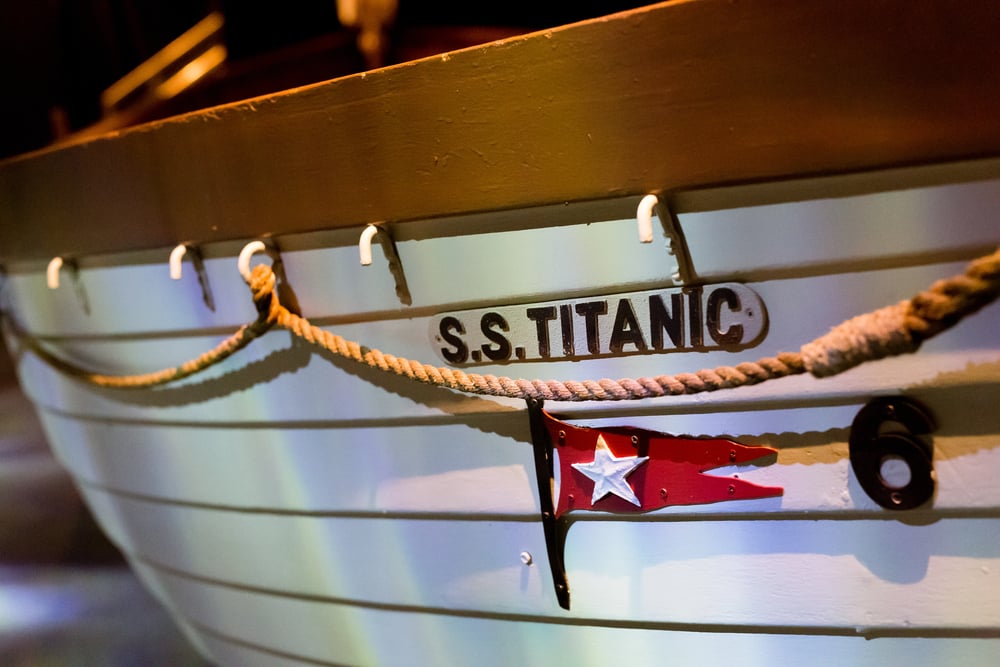
Wreck site surveys occasionally detect a wooden lifeboat floating on the surface directly above the Titanic’s remains. The boat appears seaworthy and matches the specifications of the original Titanic lifeboats, complete with period-appropriate construction details and fittings.
When rescue vessels approach to investigate, the boat vanishes without leaving any trace on radar or sonar. These sightings have been reported by multiple expedition ships across different years, always under similar circumstances: clear weather, daylight conditions, and excellent visibility that should make misidentification impossible.
The boat appears solid and real, casting shadows and creating small wakes as it moves on the surface swells. Crew members observe it through binoculars for several minutes before it simply disappears.
Maritime authorities have investigated these reports extensively, checking for abandoned vessels, movie productions, or historical recreations that might explain the sightings. No registered boat matches the descriptions, and no legitimate reason exists for a wooden lifeboat to appear repeatedly at those coordinates.
The boat shows up in expedition logs spanning decades, described in nearly identical terms by crews who had no contact with previous expedition reports.
The dining room service
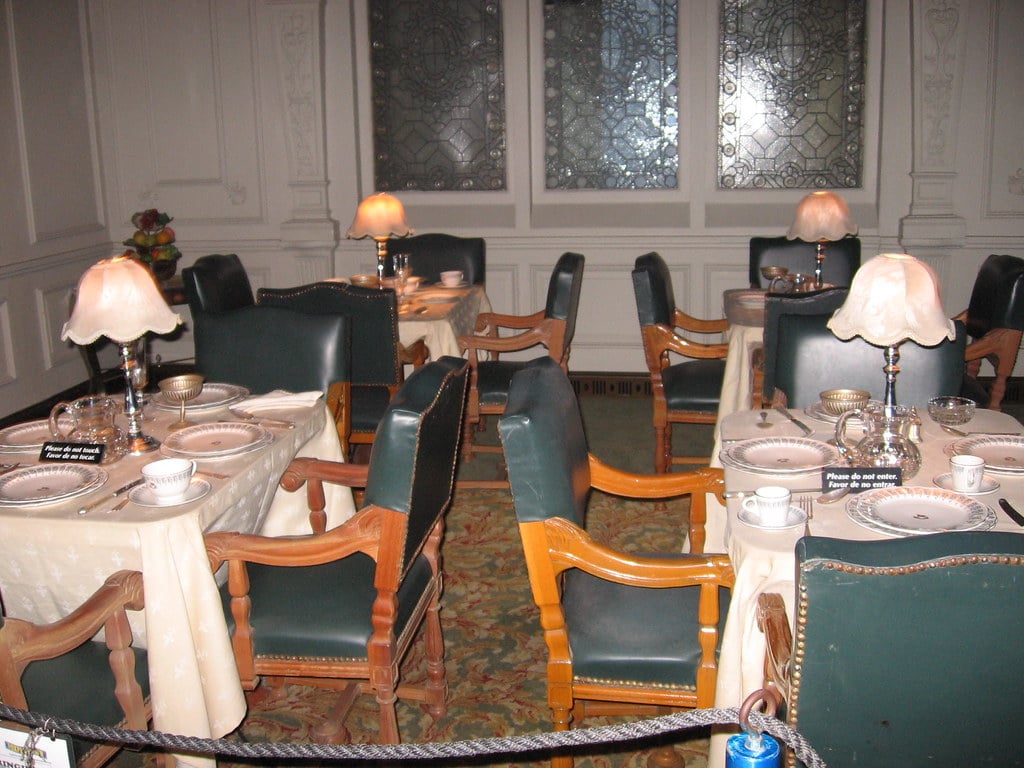
Expedition cameras have captured images of the Titanic’s first-class dining saloon that show place settings arranged on tables, complete with china, silverware, and crystal glasses positioned as if prepared for service. The images are particularly striking because they show the dining room as it might have appeared on the night of the sinking — elegant table arrangements ready for passengers who never arrived.
These photographs contradict everything known about the wreck’s condition. The dining saloon suffered extensive damage during the sinking and subsequent deterioration; tables and chairs should be scattered debris, and any china or glassware should have been destroyed long ago.
Yet multiple expeditions have documented these perfectly arranged place settings, complete with folded napkins and polished silverware that somehow survived over a century on the ocean floor. The most detailed photographs show individual place settings that include personal details: place cards with names, specific wine glasses positioned for multi-course meals, even floral arrangements that appear fresh despite the impossible environment.
When expeditions return to photograph the same areas, the place settings are gone — the dining room appears as it should, filled with debris and decay.
The distress flares

Surface vessels operating near the Titanic coordinates report seeing distress flares launched from the water above the wreck site. The flares follow the pattern used by ships in 1912: white rockets that explode in a shower of stars, fired at regular intervals in the internationally recognized signal for a vessel in mortal danger.
Coast Guard records document dozens of these sightings, each followed by thorough search and rescue operations that find nothing but empty ocean. The flares appear real enough to trigger full emergency responses — they’re visible for miles, photographed by multiple witnesses, and consistent with genuine maritime distress signals.
Yet when rescue vessels arrive at the calculated launch position, they find no trace of any boat or person who could have fired them. The timing of these flare sightings often coincides with the anniversary of the Titanic disaster, but they’ve also been reported throughout the year with no apparent pattern.
What makes them particularly eerie is that they always appear during night hours, matching the timeframe when the original Titanic fired her own distress rockets on that April night in 1912.
When the deep remembers
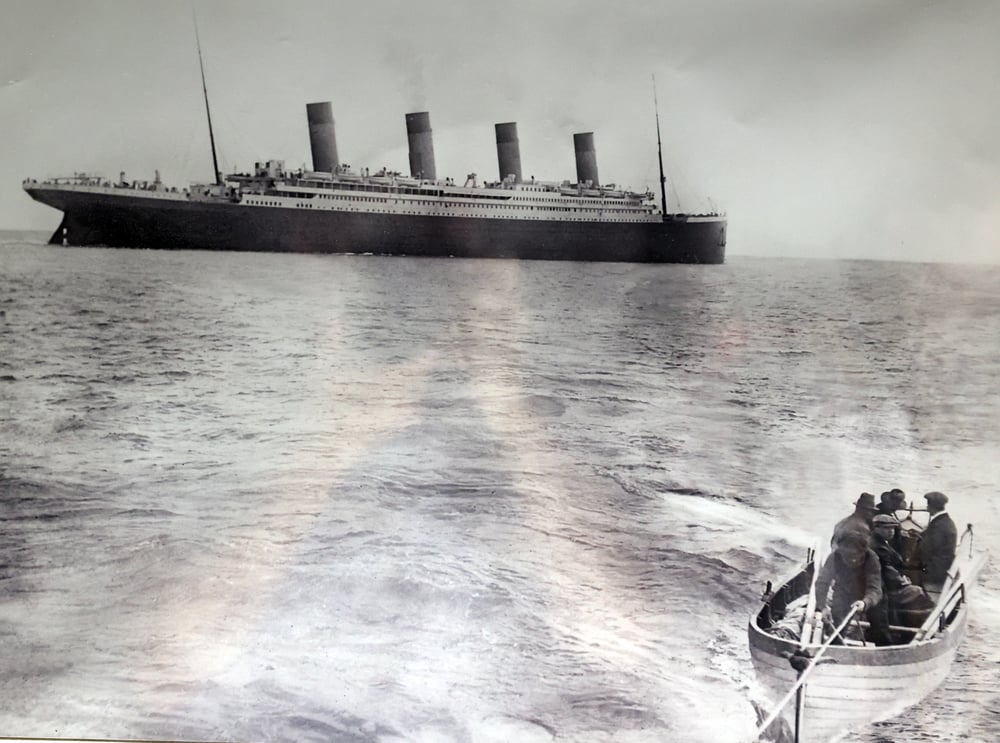
The Titanic’s wreck site has become a repository for more than just twisted metal and faded artifacts. Something about that specific patch of ocean floor seems to hold onto moments, preserving them in ways that traditional physics can’t explain.
Perhaps the sheer emotional weight of what happened there — over fifteen hundred lives lost in a single night — has somehow imprinted itself on the environment. Deep-sea exploration continues to reveal new mysteries faster than science can explain the old ones.
Each expedition brings back stories that sound impossible until you hear them from multiple sources, documented with photographs and instrument readings that resist easy dismissal. The Titanic site has become a place where the normal rules seem suspended, where the boundary between past and present grows thin enough for strange things to slip through.
More from Go2Tutors!

- The Romanov Crown Jewels and Their Tragic Fate
- 13 Historical Mysteries That Science Still Can’t Solve
- Famous Hoaxes That Fooled the World for Years
- 15 Child Stars with Tragic Adult Lives
- 16 Famous Jewelry Pieces in History
Like Go2Tutors’s content? Follow us on MSN.