16 Waterfalls That Powered Early Industrial Revolutions
The sound of rushing water meant more than natural beauty to early industrialists—it meant power, profit, and progress. Before steam engines and electricity transformed manufacturing, entrepreneurs built their factories right next to waterfalls, harnessing the relentless energy of falling water to drive their machinery.
These cascading torrents became the backbone of entire industries, turning sleepy riverside communities into bustling industrial centers almost overnight. Here’s a list of 16 waterfalls that became the engines of early industrial development, each one shaping the economic landscape of its region in profound ways.
Great Falls of the Passaic River

New Jersey’s Great Falls drops 77 feet through a narrow gorge, creating enough force to power Alexander Hamilton’s vision of American manufacturing. Hamilton chose this spot in 1791 to establish Paterson as the nation’s first planned industrial city. The Soc
iety for Establishing Useful Manufactures built an intricate system of raceways that channeled water to dozens of mills. By the 1830s, Paterson had earned the nickname ‘Silk City’ as textile mills hummed along the river’s edge, their looms powered entirely by the thundering cascade.
Niagara Falls

Long before tourists flocked to see the famous honeymoon destination, entrepreneurs eyed Niagara’s massive flow as an industrial goldmine. The falls generate roughly 6 million cubic feet of water per minute, making it one of the most powerful water sources in North America.
Early mills clustered along the Niagara River used smaller portions of this flow to grind grain and power sawmills. The abundance of energy eventually attracted chemical companies and aluminum smelters, which needed enormous amounts of consistent power to operate their energy-intensive processes.
Blackstone River Falls
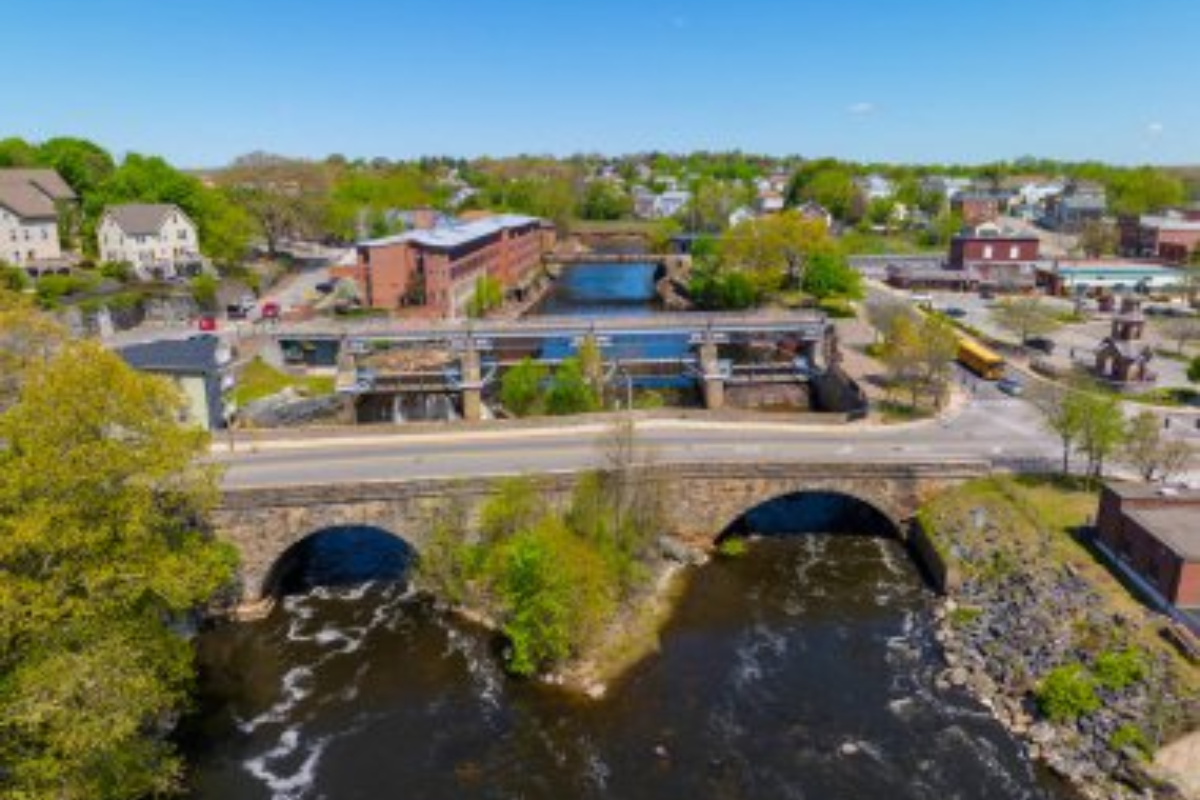
The Blackstone River’s series of waterfalls between Worcester, Massachusetts, and Providence, Rhode Island, earned the region recognition as the birthplace of the American Industrial Revolution. Samuel Slater built his first successful textile mill at Pawtucket Falls in 1789, using water wheels to power cotton-spinning machinery copied from British designs.
The 45-mile river corridor eventually supported over 1,000 mills, with each waterfall site becoming a carefully planned industrial village complete with worker housing and company stores.
Cohoes Falls

The Mohawk River plunges 90 feet at Cohoes, New York, creating a natural power source that transformed this area into a major textile center. The Harmony Manufacturing Company built the first large mill here in 1836, followed by the massive Harmony Mills complex that employed thousands of workers.
The consistent flow of the Mohawk River meant that production rarely stopped, unlike steam-powered competitors who faced fuel shortages. Irish and French-Canadian immigrants flocked to work in the mills, creating a diverse industrial community centered around the roaring waterfall.
Amoskeag Falls

Manchester, New Hampshire’s Amoskeag Falls on the Merrimack River powered what became the largest cotton textile operation in the world. The Amoskeag Manufacturing Company’s sprawling complex stretched for over a mile along the river, with dozens of mill buildings connected by covered bridges.
At its peak in the early 1900s, the operation employed 17,000 workers and produced enough fabric each day to circle the Earth. The 50-foot falls provided such reliable power that the company rarely needed backup steam engines, giving them a significant cost advantage over competitors.
Spokane Falls

The dramatic basalt ledges of Spokane Falls made eastern Washington an unlikely industrial center in the late 1800s. James Monaghan built the first flour mill here in 1873, taking advantage of the consistent year-round flow. The Washington Water Power Company later constructed a series of dams and powerhouses that supplied electricity to mining operations throughout the region.
Unlike many eastern waterfalls that powered textile mills, Spokane Falls primarily supported lumber mills and grain processing facilities that served the expanding agricultural frontier.
Holyoke Falls
The Connecticut River’s 60-foot drop at Holyoke, Massachusetts, became the foundation for one of America’s first planned industrial cities. The Holyoke Water Power Company constructed an elaborate three-tier canal system in the 1840s that could distribute water to multiple levels of mills simultaneously.
This engineering marvel allowed paper mills, textile factories, and machine shops to operate side by side, each drawing power from the same waterfall. The city’s nickname ‘Paper City’ reflected its dominance in paper manufacturing, with mills producing everything from newsprint to high-quality writing paper.
Fall River Falls

The Quequechan River’s eight waterfalls within a two-mile stretch made Fall River, Massachusetts, an ideal location for textile manufacturing. Mill owners built their factories in tiers along the river, with each waterfall powering a different set of operations.
The compact geography meant that raw cotton could enter at the top of the system and emerge as finished cloth at the bottom, creating an efficient production line powered entirely by falling water. By 1870, Fall River had become the largest cotton textile center in America, with over 100 mills operating along its waterfalls.
Bellows Falls

Vermont’s Bellows Falls on the Connecticut River created a 50-foot drop that early settlers quickly recognized as a source of industrial power. The first mills appeared in the 1780s, grinding grain for local farmers and processing lumber from the surrounding forests.
The narrow gorge concentrated the river’s flow, creating exceptional power density that attracted paper mills and machine shops. Unlike many industrial waterfalls that became heavily polluted, Bellows Falls maintained relatively clean water due to the rural nature of its watershed, making it ideal for paper production that required high water quality.
Tiverton Falls

Rhode Island’s Tiverton Falls on the Sakonnet River powered some of New England’s earliest industrial operations outside of major cities. The 15-foot cascade provided steady power for gristmills and sawmills that served local communities throughout the colonial period.
After the Revolution, textile entrepreneurs built cotton mills here to take advantage of both the waterpower and the nearby port facilities. The combination of falling water and ocean access meant that raw materials could arrive by ship and finished goods could be exported directly, eliminating costly overland transportation.
Pawtucket Falls

The Merrimack River’s Pawtucket Falls in Lowell, Massachusetts, became the centerpiece of America’s most ambitious planned industrial city. The Boston Associates invested millions of dollars in the 1820s to create a network of power canals that could support dozens of large textile mills simultaneously.
The 30-foot falls provided enough energy to power looms producing over 50 million yards of cloth annually by the 1850s. Lowell’s success inspired similar developments at waterfalls across New England, proving that industrial cities could be designed from scratch around natural power sources.
Schuylkill Falls

Pennsylvania’s Schuylkill River falls at what is now Philadelphia powered some of the earliest mills in the Mid-Atlantic region. Colonial millers built operations here as early as the 1680s, taking advantage of the river’s reliable flow and proximity to the growing city.
The falls supported flour mills that processed grain from Pennsylvania’s fertile interior, as well as paper mills that supplied the printing industry in Philadelphia. The relatively modest height of these falls meant that mill owners had to build efficient water wheels and gear systems to maximize the available power.
Oswego Falls

New York’s Oswego River falls created a natural industrial site where Lake Ontario drains toward the Atlantic Ocean. Early mills here processed grain from the expanding settlements around the Great Lakes, with flour and lumber flowing east while manufactured goods moved west.
The 15-foot falls provided consistent power year-round, unlike many smaller streams that dried up during summer months or froze solid in winter. Oswego’s position as a Great Lakes port meant that waterfall-powered mills could serve markets far beyond the immediate region.
Chicopee Falls

The Chicopee River’s falls in Massachusetts became an extension of the Springfield Armory’s manufacturing operations, with waterpower supporting the production of military firearms. Private manufacturers built mills along the 30-foot falls to produce gun barrels, triggers, and other precision components for the growing arms industry.
The consistent power from the falls allowed these mills to maintain the tight tolerances required for interchangeable parts, a revolutionary concept in early American manufacturing. The combination of skilled craftsmen and reliable waterpower made Chicopee a center for precision metalworking.
Genesee Falls

Rochester, New York’s High Falls on the Genesee River created a 96-foot drop that earned the city its nickname ‘Flour City.’ The falls powered numerous gristmills that processed wheat from western New York and the emerging Midwest, making Rochester one of America’s largest flour-producing centers by the 1830s.
Mill owners built elaborate races and flumes to channel water to multiple mill wheels, creating a complex system that operated continuously during daylight hours. The abundance of waterpower also attracted lumber mills and later, precision instrument manufacturers who needed consistent, smooth-running machinery.
Farmington Falls

Maine’s Sandy River falls at Farmington powered mills that served the state’s growing lumber industry throughout the 1800s. The 20-foot cascade provided enough energy to operate sawmills that processed logs floated down from the northern forests, as well as gristmills that ground grain for local communities.
The seasonal nature of log drives meant that mill owners had to carefully manage their water usage, storing power during high-water periods and operating efficiently during drier months. This careful resource management made Farmington’s mills models of efficiency that other waterfall operations tried to emulate.
From Water Wheels to Worldwide Industry

These 16 waterfalls didn’t just power machines—they powered the transformation of America from an agricultural society into an industrial powerhouse. The mill towns that grew around these cascading waters became laboratories for new manufacturing techniques, labor systems, and urban planning concepts that spread worldwide.
Today, many of these sites have been converted to hydroelectric plants or preserved as historical landmarks, but their legacy lives on in the industrial cities they created. The next time you hear water rushing over rocks, remember that similar sounds once announced the dawn of the modern industrial age, one waterfall at a time.
More from Go2Tutors!

- The Romanov Crown Jewels and Their Tragic Fate
- 13 Historical Mysteries That Science Still Can’t Solve
- Famous Hoaxes That Fooled the World for Years
- 15 Child Stars with Tragic Adult Lives
- 16 Famous Jewelry Pieces in History
Like Go2Tutors’s content? Follow us on MSN.



