17 Ancient Construction Tools That Still Work
Walk into any modern construction site and you’ll see high-tech equipment everywhere—laser levels, pneumatic nail guns, computerized machinery. Yet tucked away in toolboxes and still getting daily use are instruments that haven’t changed much in thousands of years. These ancient tools proved so effective that no amount of technological advancement has managed to improve on their basic design.
What’s remarkable about these enduring tools is how they demonstrate that good engineering transcends time periods. Here is a list of 17 ancient construction tools that remain as useful today as they were centuries ago.
Hammer

The hammer might be the most obvious tool on this list, though its staying power is remarkable. Archaeological evidence shows hammers being used over 3 million years ago — the basic concept hasn’t needed much tweaking since then. Modern hammers might have ergonomic grips and specialized heads, yet the fundamental physics remain unchanged: a weighted head attached to a handle for delivering controlled force.
Today’s carpenters still reach for hammers dozens of times per day, just like their ancient counterparts did. The tool’s simplicity makes it nearly impossible to improve upon in any meaningful way.
Chisel

Stone carvers in ancient Egypt used chisels to create intricate hieroglyphs and sculptures that still amaze visitors today. The tool’s design is elegantly simple: a sharp, flat blade that concentrates force into a precise cutting edge. Modern chisels are made from better steel — they might have comfortable handles, but they work exactly the same way.
Woodworkers and stone masons continue using chisels for detailed work that power tools can’t match. There’s something satisfying about the direct connection between your hand, the tool, and the material that keeps this ancient implement relevant.
Like Go2Tutors’s content? Follow us on MSN.
Plumb Bob

Ancient builders needed to ensure their walls were perfectly vertical, so they developed the plumb bob — a pointed weight suspended from a string. Gravity does all the work, creating a perfectly straight reference line that never needs calibration or batteries. Roman builders used plumb bobs to construct structures so precise that many still stand today.
Even with laser levels and digital measuring tools available, many craftspeople still prefer the reliability of a simple plumb bob. It works in any weather, never breaks down, and provides an accuracy that’s hard to beat.
Square

Right angles are crucial in construction, and the square has been helping builders achieve them for millennia. Ancient Egyptian builders used simple wooden squares to ensure their massive stone blocks fit together perfectly. The tool’s L-shaped design creates a 90-degree reference that makes construction possible.
Modern squares might be made from aluminum or steel instead of wood — they serve the identical function though. Carpenters check corners, mark cut lines, and verify angles using this unchanged ancient technology.
Level

The earliest levels used water in a long tube to show when surfaces were truly horizontal. Later versions replaced water with an air bubble in liquid, creating the spirit level we know today. This ingenious tool harnesses physics to provide perfect accuracy — the bubble always seeks the highest point, indicating when something is level.
Construction workers today still rely on levels for everything from hanging pictures to building foundations. Digital levels exist, but many professionals trust the simple, visual feedback of a traditional bubble level more than electronic readouts.
Like Go2Tutors’s content? Follow us on MSN.
Wedge

Wedges represent one of humanity’s most fundamental tools, used to split materials by converting downward force into outward pressure. Ancient civilizations used wooden and stone wedges to quarry massive blocks for their monuments. The mechanical advantage created by the wedge’s triangular shape makes it incredibly effective at separating materials along natural weak points.
Modern construction still employs wedges in various forms — from simple door shims to hydraulic splitters. The basic principle remains unchanged: the wedge amplifies force and redirects it where you need it most.
Adze

This curved cutting tool looks like a hoe but works more like an axe turned sideways. Ancient shipbuilders used adzes to shape timber for boats, carefully removing wood to create smooth, curved surfaces. The tool’s design allows for controlled removal of material while following the natural grain of the wood.
Timber framers and boat builders today still prefer adzes for certain shaping tasks. The tool provides a level of control and feel that power tools struggle to match — especially when working with irregular or curved surfaces.
Trowel

Masons in ancient Rome used trowels to spread mortar and shape it around stones and bricks. The flat, angled blade design hasn’t changed because it perfectly matches the task: scooping, spreading, and smoothing materials with precision. A good trowel becomes an extension of the mason’s hand.
Bricklayers and plasterers continue using trowels daily — often becoming quite attached to their particular tool. The balance, weight, and feel of a well-used trowel can’t be replicated by any machine.
Like Go2Tutors’s content? Follow us on MSN.
Compass

Long before GPS, builders used compasses to establish true directions and create perfect circles. Ancient architects relied on magnetic compasses for orientation and drawing compasses for geometric layouts. These tools enabled the construction of circular structures and ensured buildings faced the desired directions.
Modern construction still uses both types of compasses regularly. Surveyors need magnetic bearings — architects and draftspeople create circles and arcs with drawing compasses that function identically to ancient versions.
Measuring Rod

Standardized measurement was crucial for ancient construction projects, leading to the development of measuring rods marked with consistent units. Egyptian builders used cubit rods — other cultures developed their own standard lengths. These tools ensured that different workers could build components that would fit together perfectly.
Today’s measuring tapes and rulers serve the same essential function — they’re more portable and durable than ancient wooden rods though. The concept of standardized measurement remains fundamental to all construction work.
Pulley

The pulley system revolutionized ancient construction by allowing workers to lift massive stones and beams with manageable effort. Greek and Roman builders used complex pulley arrangements to construct their monumental buildings. The mechanical advantage created by routing rope through multiple wheels makes heavy lifting possible.
Construction cranes today use sophisticated pulley systems that operate on identical principles. The basic physics haven’t changed: pulleys still redirect force and provide mechanical advantage for lifting heavy loads.
Like Go2Tutors’s content? Follow us on MSN.
Auger

Ancient woodworkers needed to create punctures in timber, so they developed the auger: a spiral cutting tool that removes material as it penetrates. The helical design efficiently carries wood chips out of the opening while the sharp point guides the cut. Roman carpenters used hand-powered augers for construction projects.
Modern drill bits follow the same spiral pattern established thousands of years ago. While power tools now turn the auger, the cutting geometry remains virtually unchanged because it works so effectively.
File

Metalworkers in ancient times needed to smooth and shape their work, leading to the development of files: steel tools with rows of sharp ridges. These cutting teeth remove small amounts of material with each stroke, allowing precise control over the shaping process. Ancient blacksmiths used files to finish tools and weapons.
Files remain essential in modern metalworking and woodworking shops. The basic design can’t be improved upon since rows of sharp edges cutting in one direction provide the perfect balance of material removal and control.
Saw

The saw’s development marked a major advancement in woodworking, allowing builders to cut timber efficiently along straight lines. Ancient saws used sharpened bronze or iron teeth set at angles to slice through wood fibers. The back-and-forth motion powered by human muscle provided controlled cutting.
Modern saws might be powered by electricity, yet hand saws still follow the same tooth design and cutting action developed centuries ago. Professional carpenters often prefer hand saws for precision cuts where power tools would be too aggressive.
Like Go2Tutors’s content? Follow us on MSN.
Mallet
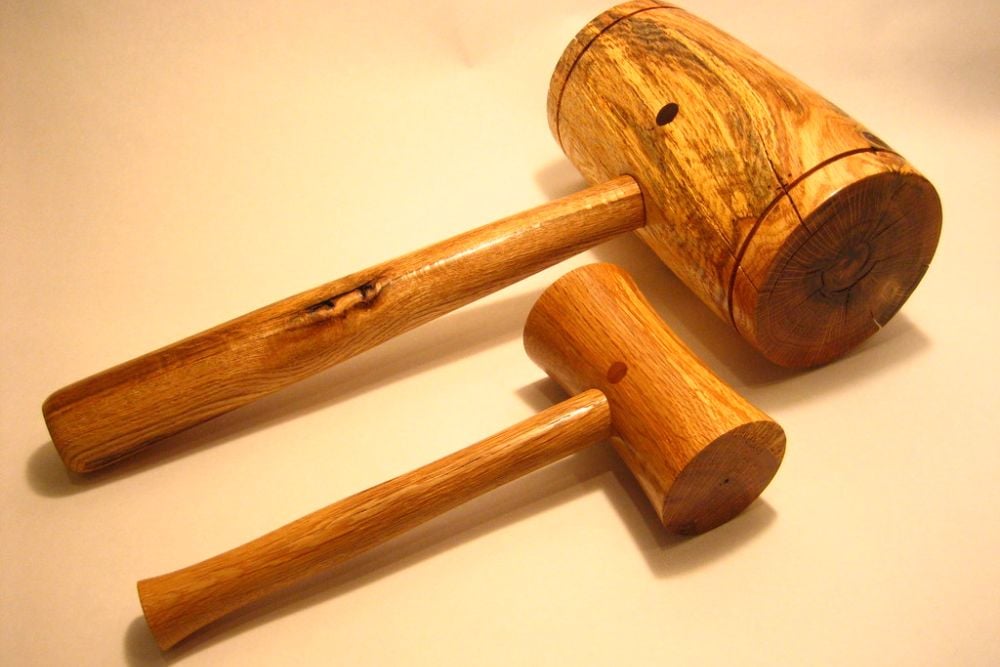
Unlike hammers designed to drive nails, mallets deliver force without damaging delicate surfaces. Ancient woodworkers used wooden mallets to drive chisels and shape joints without leaving marks. The soft striking surface distributes impact force while providing excellent control.
Woodworkers and carvers today still reach for mallets when working with chisels or when assembling delicate joints. The gentle impact and precise control make mallets irreplaceable for fine work.
Drawknife

This two-handled blade allowed ancient woodworkers to remove wood by pulling the sharp edge toward themselves. The drawknife excels at shaping curved surfaces and removing large amounts of material quickly. Craftspeople could control the depth and angle of the cut with remarkable precision.
Traditional woodworkers still use drawknives for shaping spokes, handles, and curved components. The direct connection between hands and the cutting edge provides feedback that helps create smooth, flowing curves.
Plane
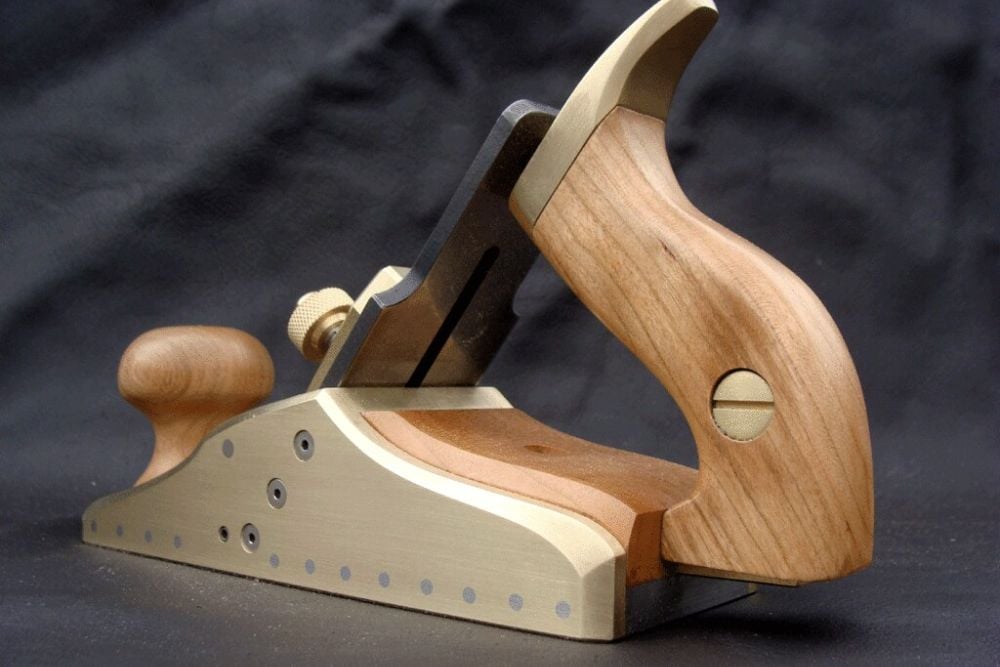
Ancient Roman carpenters developed planes to smooth wooden surfaces and create uniform thickness. The tool uses a sharp blade held at a precise angle to shave off thin curls of wood. A well-tuned plane can create surfaces smoother than sandpaper while removing material efficiently.
Woodworkers today still rely on planes for surface preparation and precise fitting. Despite the availability of power sanders and planers, hand planes offer unmatched control for fine work and produce superior surface quality.
Like Go2Tutors’s content? Follow us on MSN.
Tools That Transcend Time

These ancient tools survived because they solved fundamental problems with elegant simplicity. Each one represents thousands of years of refinement, with generations of craftspeople making small improvements until the design reaches near perfection. Modern materials and manufacturing have made them more durable and precise, though the core concepts remain unchanged.
The persistence of these tools reminds us that good design doesn’t always need updating. Sometimes the original solution is so well-conceived that it continues working perfectly centuries later. In our rush toward automation and digitization, these humble implements prove that human ingenuity often got things right the first time.
More from Go2Tutors!

- 16 Historical Figures Who Were Nothing Like You Think
- 12 Things Sold in the 80s That Are Now Illegal
- 15 VHS Tapes That Could Be Worth Thousands
- 17 Historical “What Ifs” That Would Have Changed Everything
- 18 TV Shows That Vanished Without a Finale
Like Go2Tutors’s content? Follow us on MSN.