18 Classic Cars That Are Investments Now
The roar of an engine, the gleam of chrome, the smell of leather seats aging gracefully. While most cars lose value the moment they leave the showroom, a select group of classics defies this rule with stunning financial returns. Unlike modern vehicles that depreciate rapidly, classic cars often appreciate in value, especially when well maintained. They’re tangible assets, often seen as part passion project, part financial portfolio.
According to the Historic Automobile Group International (HAGI) Top Index, which tracks the performance of high-end classic cars, has increased by a staggering 264.49% since its inception in December 2008. Below are eighteen automobiles that combine driving pleasure with serious investment potential—machines that prove nostalgia can indeed pay dividends.
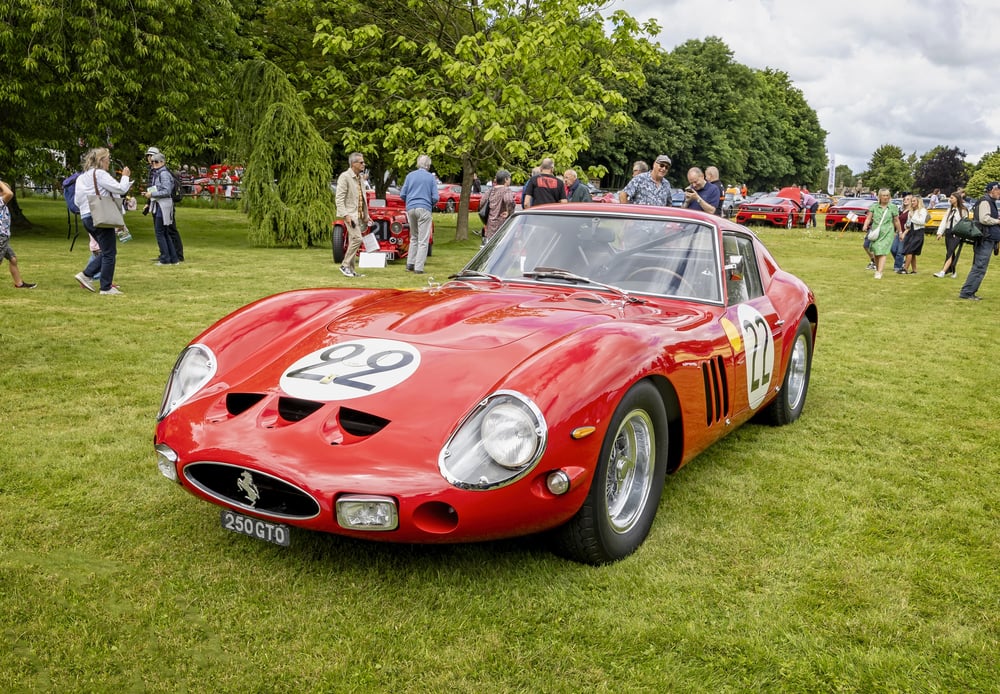
Ferrari 250 GTO
— Photo by njarvis
The holy grail of classic car collecting commands astronomical prices for good reason. Only 36 units were ever produced between 1962 and 1964, making it an extremely rare and desirable model. The 250 GTO has reached astronomical prices at auctions, with one example selling for $70 million in 2018. These racing legends combine motorsport pedigree with breathtaking design.
The car’s classic design and storied history, including its many racing victories, have contributed to its enduring popularity and high resale value. Not exactly attainable for most enthusiasts, but they set the benchmark for what serious appreciation looks like.
Porsche 911 (1964-1973)

— Vector by frizio
The classic Porsche 911 for sale continues to be one of the most sought-after investments in 2025. With their unmistakable shape, rear-engine layout, and unmatched driving feel, the early 911s (especially the 1964–1973 models) are steadily increasing in value. The air-cooled models particularly command premium prices.
And the numbers prove it. In 2022, a Porsche 911 Turbo S sold for a record $1.3 million. The combination of exceptional engineering and timeless design makes these cars increasingly valuable as new generations discover their appeal.
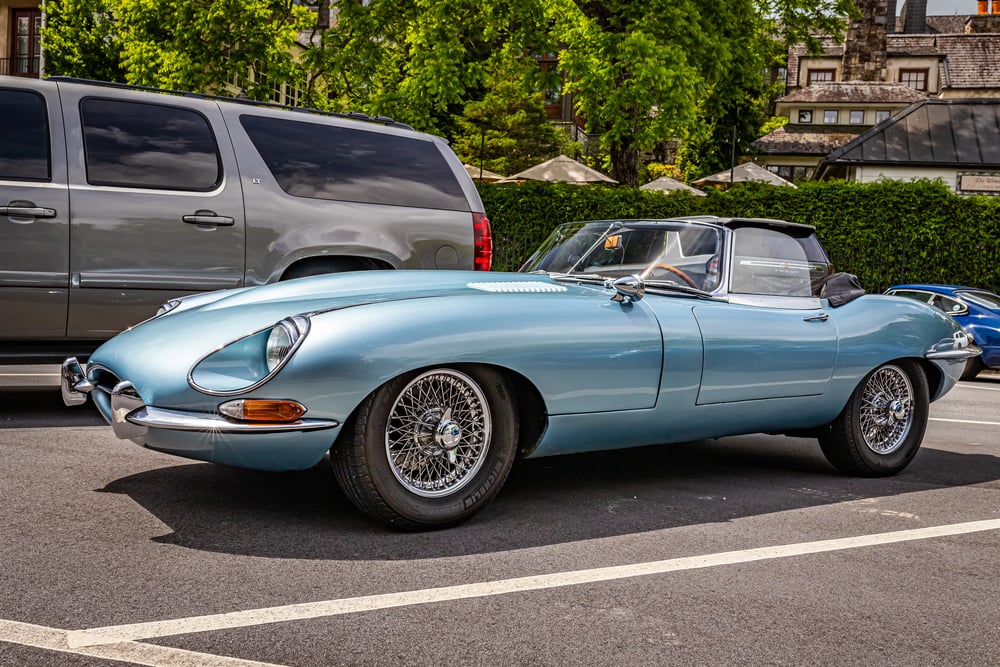
Jaguar E-Type Series 1
— Photo by adifferentbrian
Heralded by Enzo Ferrari as “the most beautiful car ever made”, the Jaguar E-Type is a staple in any serious collector’s garage. Series 1 models with their covered headlights are particularly prized. This British masterpiece launched in 1961 and immediately captured hearts worldwide.
The flat-floor models from the earliest production runs are especially coveted. The very earliest E-Types, the S1, especially with the flat floor, have always been the most desirable to collectors and investors. As such, prices vary anywhere from £130,000 for higher mileage models, to upwards of £250,000 for low-mile cars and concourse restorations.
Ferrari F355 (1994-1999)

— Photo by bettorodrigues
Modern Ferraris often get overlooked, but the F355 represents exceptional value in today’s market. The F355 represents the sweet spot of Ferrari collecting, offering modern reliability with classic aesthetics. Gated manual transmissions command premium prices, with investment ranges between $120,000-$150,000 depending on condition.
Evolved from the less-fancied Ferrari 348 series, the F355 was more powerful, handled more rewardingly and was more reliable than its predecessor. It was also Ferrari’s first model with an F1-style steering wheel paddle gearchange, although the six-speed manual is considered more collectable. Still drives like a proper Ferrari should.
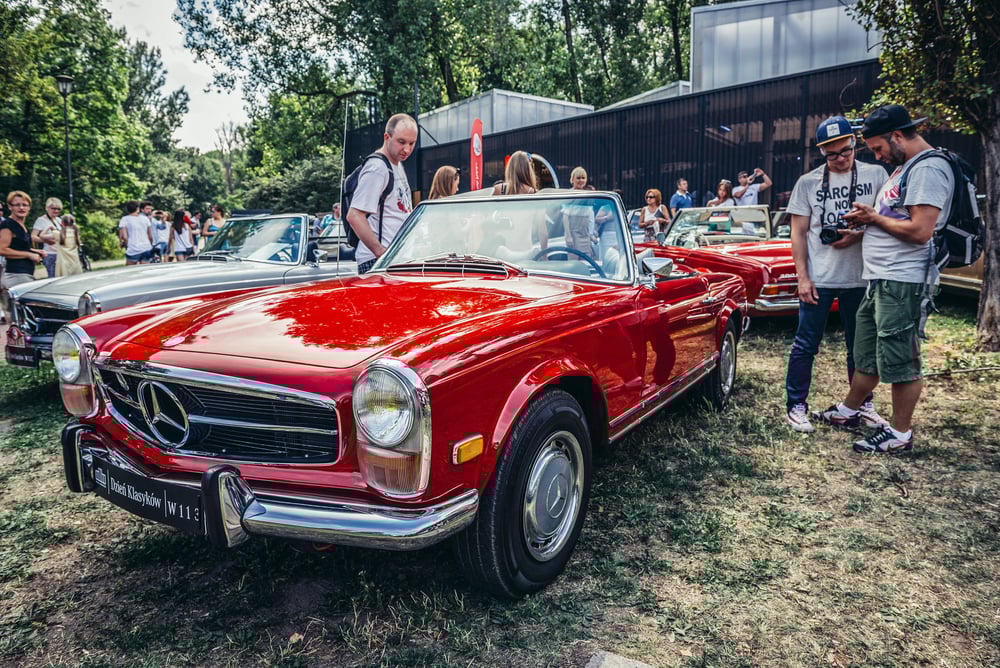
Mercedes-Benz 280 SL
— Photo by fotokon
Known affectionately as the “Pagoda” due to its unique roofline, the 280 SL is a stylish, practical classic. With timeless design and bulletproof engineering, it’s a favourite at every classic car shop. These cars offer something many classics can’t—genuine everyday usability.
Their combination of elegance and reliability makes them perfect for newcomers to classic car ownership. Values have remained remarkably stable while many other classics experience wild price swings.
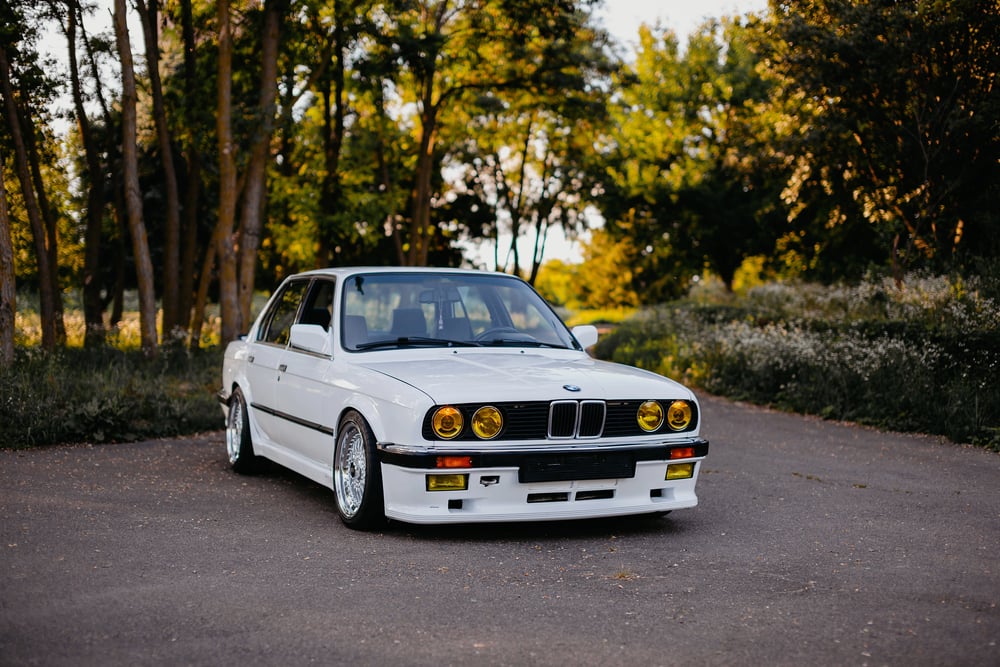
BMW E30 M3
— Photo by Kucheruk
The E30 M3 is a motorsport legend. Lightweight, agile, and engineered to perfection, it’s quickly becoming a classic in high demand, especially with younger buyers. Built from 1985 to 1991, these cars dominated touring car racing across Europe.
Young collectors particularly gravitate toward these machines. Something about the aggressive bodywork and four-cylinder engine that screams at 7,000 RPM just speaks to them. Not surprising, really.
Toyota 2000GT

— Photo by brostock01
Japanese classics are gaining recognition in the collector world. The 2000GT is at the top of that list. Its rarity, combined with its racing heritage and stunning design, makes it an ultra-collectible investment-grade car. Only 351 examples were built between 1967 and 1970.
The Bond connection doesn’t hurt either—two modified examples appeared in “You Only Live Twice.” Talk about provenance that sells.
Chevrolet Corvette C2 Stingray

— Photo by Elf+11
The C2 Corvette Stingray, especially the 1963 Split Window Coupe, is a must-have for American classic car enthusiasts. Its sculpted bodywork and raw power make it an unforgettable ride. That distinctive split rear window lasted only one year before safety concerns forced a redesign.
American muscle at its finest, with styling that still turns heads decades later. The split-window models command the highest prices, but all C2 Corvettes have shown steady appreciation.
Aston Martin DB5

— Photo by wjarek
Immortalized by its association with fictional super-spy James Bond, the Aston Martin DB5 is not only a symbol of British elegance but can also be a sound investment due to its rarity and cinematic legacy. James Bond drove one in “Goldfinger,” instantly cementing its place in popular culture.
Beyond the movie fame, these cars represent peak 1960s British automotive engineering.
• Hand-built aluminum bodies • Sophisticated engineering for the era
• Racing pedigree from successful GT campaigns • Timeless proportions that age gracefully
Porsche 930 Turbo

— Photo by bopra77
Prices vary wildly, not least because there are numerous different iterations of these cars that were sold during its 14 year run, but you should expect to pay at least £20,000, and even then you’re looking at a model to fix up. The original “widow maker” earned its reputation through unforgiving handling characteristics.
The 930 Turbo combined cutting-edge technology with the signature Porsche handling and design. Its turbocharged engine provided exhilarating acceleration, while its aggressive styling set it apart from other sports cars of the time. Early turbocharged Porsches that taught drivers to respect boost lag.
Honda S2000 (2000-2001)

Early AP1 models have seen remarkable appreciation, with values increasing 37.5% from $28,000 to $38,500 in 2025 alone. The combination of high-revving naturally aspirated engine and perfect weight distribution makes these increasingly sought-after.
Modern classics are hot right now, particularly among younger collectors who grew up playing Gran Turismo. The S2000’s 9,000 RPM redline remains something special in an era of forced induction.
Ferrari 250 GT California Spyder

Ferrari produced only 106 units of the 250 GT California Spyder between 1957 and 1963, making it one of the rarest Ferraris ever built. This convertible sports car is renowned for its elegant design, powerful 3.0-liter V12 engine, and superior performance.
Its value today regularly exceeds $17 million at auction. These represent the absolute pinnacle of 1950s sports car design—assuming you have eight figures to spare.
BMW 507
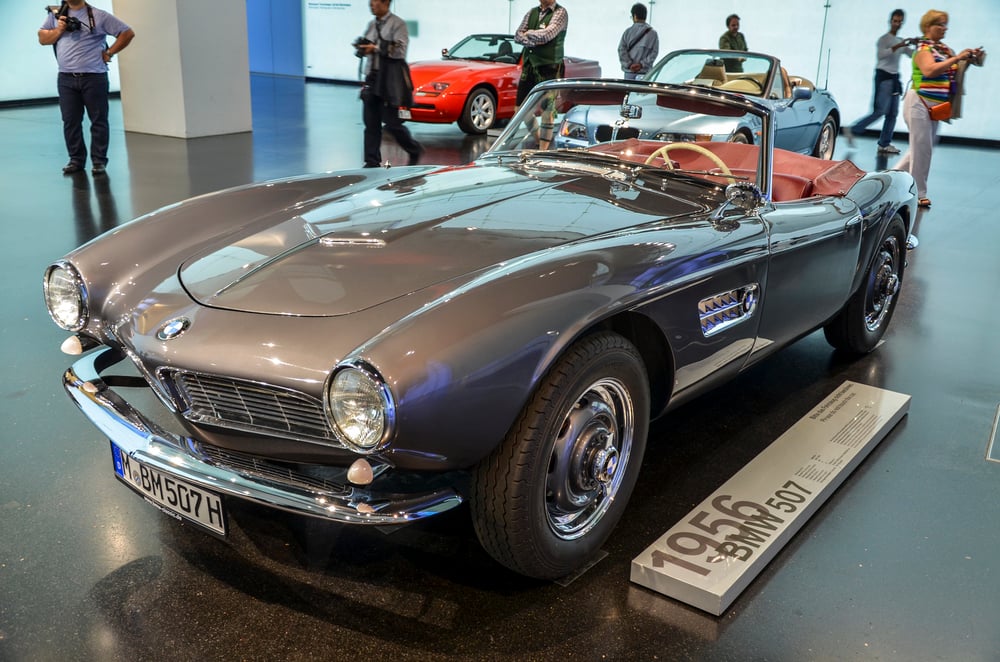
— Photo by hlor171717.gmail.com
Produced between 1956 and 1959, the BMW 507 is one of the rarest cars in the brand’s history, with only 252 units made. It was designed as a high-performance roadster aimed at the American market, featuring an elegant body and a powerful 3.2-liter V8 engine.
Due to its rarity and luxury status, the 1957 BMW 507 can be worth up to $2 million today. BMW’s attempt to compete with Mercedes in the luxury sports car market—a beautiful failure that’s now worth a fortune.
Jaguar XJ-S

— Photo by hlor171717.gmail.com
Although the Jaguar XJ-S never really lived up to its E-Type cousin – with comparisons being made from the moment it drove off the production line – people are now cottoning on to the fact that this is an extremely desirable tourer and one of the best classic cars for investment in 2025.
The unloved successor to the E-Type is finally getting its due. Sometimes being underappreciated for decades works in an investor’s favor.
Oldsmobile Toronado (1966-1970)

This front-wheel-drive luxury flagship represents exceptional value, with average prices around $21,165. The innovative engineering and distinctive styling make it a standout investment, especially considering its Motor Trend Car of the Year heritage.
American innovation at its finest—the first front-wheel-drive car since the Cord 810. The styling screams 1960s optimism, and prices remain surprisingly reasonable for such groundbreaking engineering.
Shelby Cobra 427
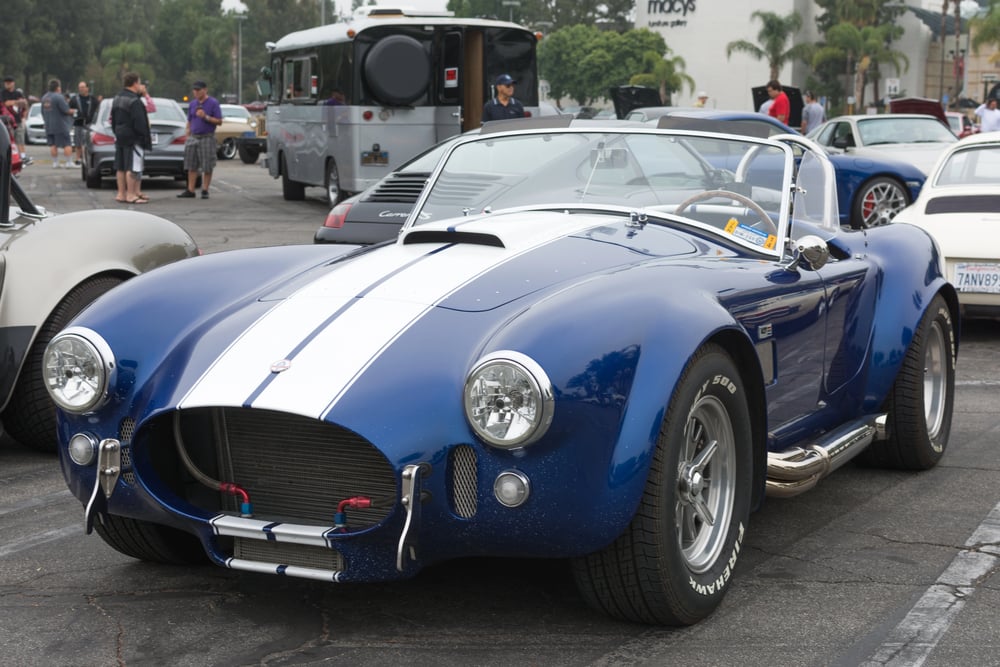
— Photo by bettorodrigues
The Shelby Cobra 427 is celebrated for its raw power and racing pedigree. With limited production and a legendary status among American muscle cars, it remains a strong contender for those looking to invest in a classic car. Carroll Shelby’s masterpiece combined British handling with American muscle.
The ultimate example of trans-Atlantic cooperation producing something greater than the sum of its parts. Original 427s command astronomical prices, but even well-executed replicas have investment potential.
Maserati Ghibli (1990s)

It’s the peak development of the Maserati Biturbo family of models, an elegant but practical four-seater two-door coupe styled by the late, great Marcello Gandini. This isn’t the modern sedan, but the gorgeous coupe from the 1990s.
As the donor car’s name suggests, the Maserati Ghibli was powered by twin-turbo engines with the Cup model’s 2.0-litre unit being particularly noteworthy — its 330PS output is impressive enough but in terms of power-per-litre it outguns the Bugatti EB110, Jaguar XJ220, McLaren F1… Gandini’s final masterpiece before his retirement.
Lamborghini Countach
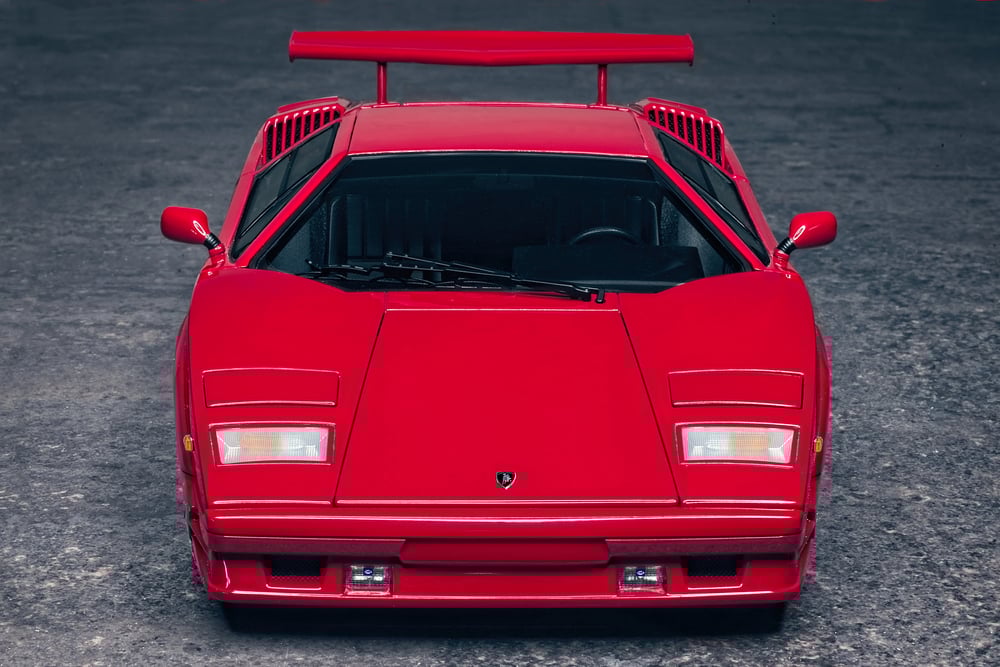
— Photo by Lightspruch
The Lamborghini Countach is one of the most iconic supercars of the 1970s and 1980s. Its wedge-shaped design and scissor doors made it an instant icon, and it has continued to be one of the most recognizable supercars in the world. The poster car that launched a thousand teenage dreams.
Every supercar since owes something to Marcello Gandini’s radical design. Early models without the controversial body add-ons are particularly sought after by purists.
The Smart Money Approach

— Photo by welcomia
The classic car market in 2025 offers unprecedented opportunities for investors who understand market dynamics and choose their vehicles wisely. From undervalued American classics to emerging JDM icons, there are investment opportunities at every price point. Success requires patience, research, and understanding that not every classic will appreciate—but the right ones can deliver returns that make traditional investments look pedestrian.
More from Go2Tutors!

- 16 Historical Figures Who Were Nothing Like You Think
- 12 Things Sold in the 80s That Are Now Illegal
- 15 VHS Tapes That Could Be Worth Thousands
- 17 Historical “What Ifs” That Would Have Changed Everything
- 18 TV Shows That Vanished Without a Finale
Like Go2Tutors’s content? Follow us on MSN.