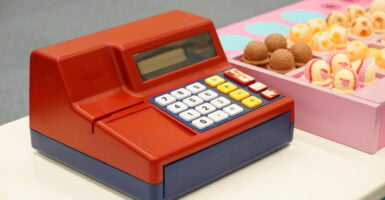
22 Toy Cash Registers From Before Touchscreens
Every child who has ever played store has wanted the same thing: a drawer that pops open with a ring. Toy makers obliged for more than a century with tin, wood, and plastic versions of the machine behind every counter. The registers below belong to a world of coins, paper receipts, and buttons that clicked.
Fisher-Price Cash Register #972
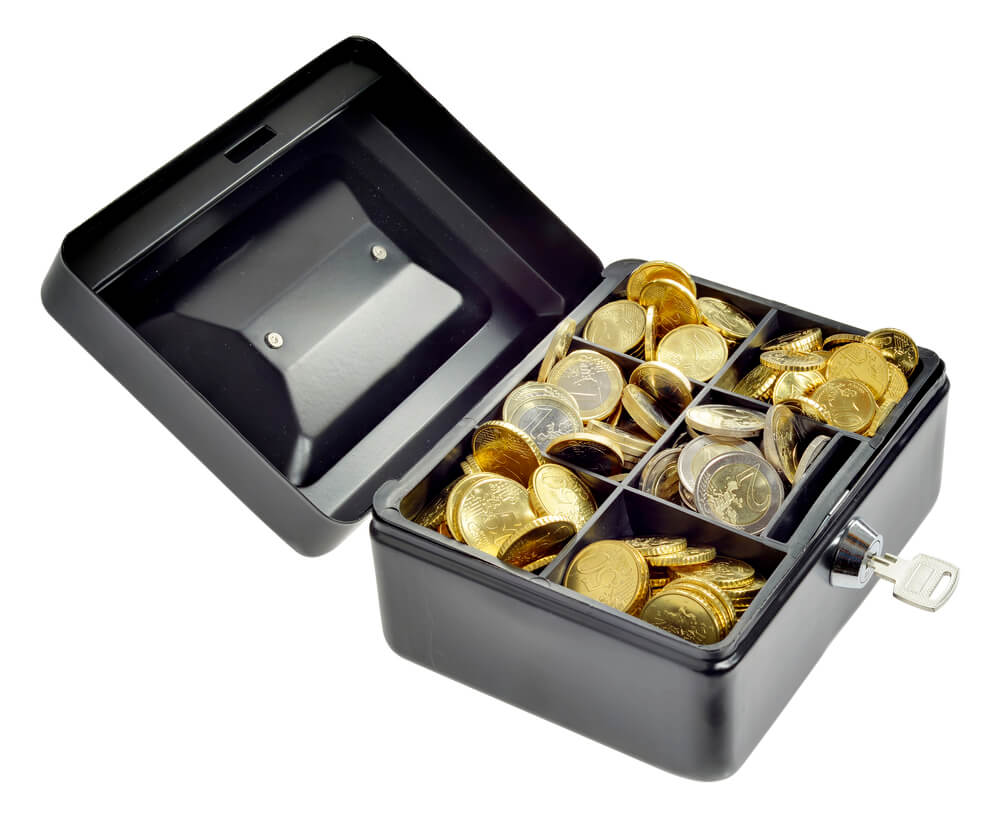
The #972 was the first cash register Fisher-Price ever made, and it came with wooden coins to match its sturdy toy-chest style. It was built to survive years of enthusiastic play. Collectors look for the original coins and intact lithography, and a missing coin or two lowers the price.
Fisher-Price Cash Register #926

Fisher-Price introduced the #926 a few years after the #972 was discontinued, and the newer model stayed in production from 1975 to 1990. It was similar in spirit but updated in materials and styling. Unscuffed plastic and a working drawer matter most, since a sticky mechanism is a common flaw.
Tin Lithographed Counter Registers
Tin lithography prints colorful artwork directly onto flat metal sheets before they are stamped and folded, and J. Chein & Co. of New Jersey began using the process in 1930. Registers in this style carried bright graphics of coins and counters. Rust and flaking paint drag prices down, while crisp color brings premiums.
Occupied Japan Tin Registers
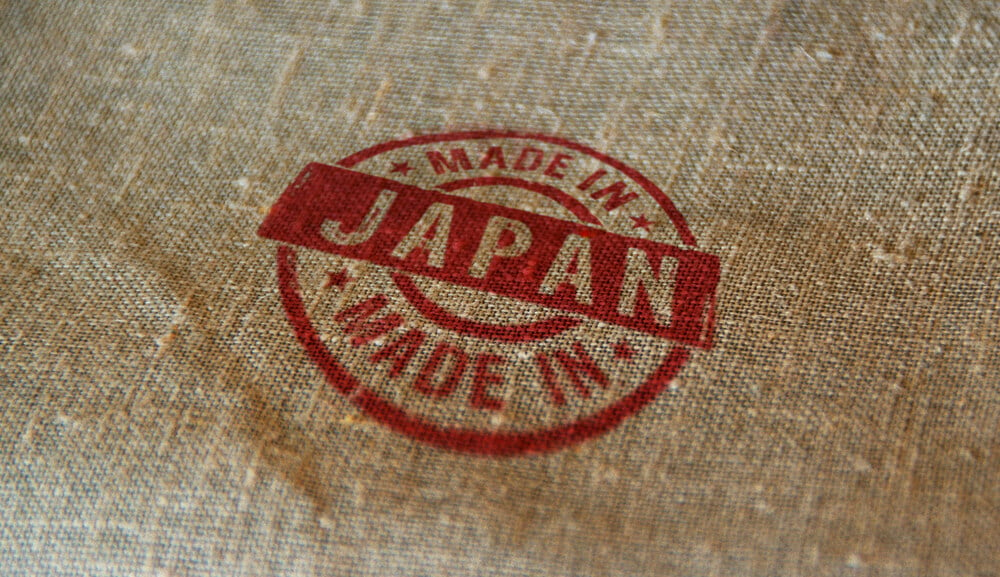
Japanese tin toys exported to the United States between 1945 and 1952 were stamped with the words Occupied Japan, which gives collectors a precise window for dating them. Toy registers from the period often combined bright lithography with a mechanical bell. Dents and rust reduce value, and an intact stamp adds interest.
Prewar German Shop Toys
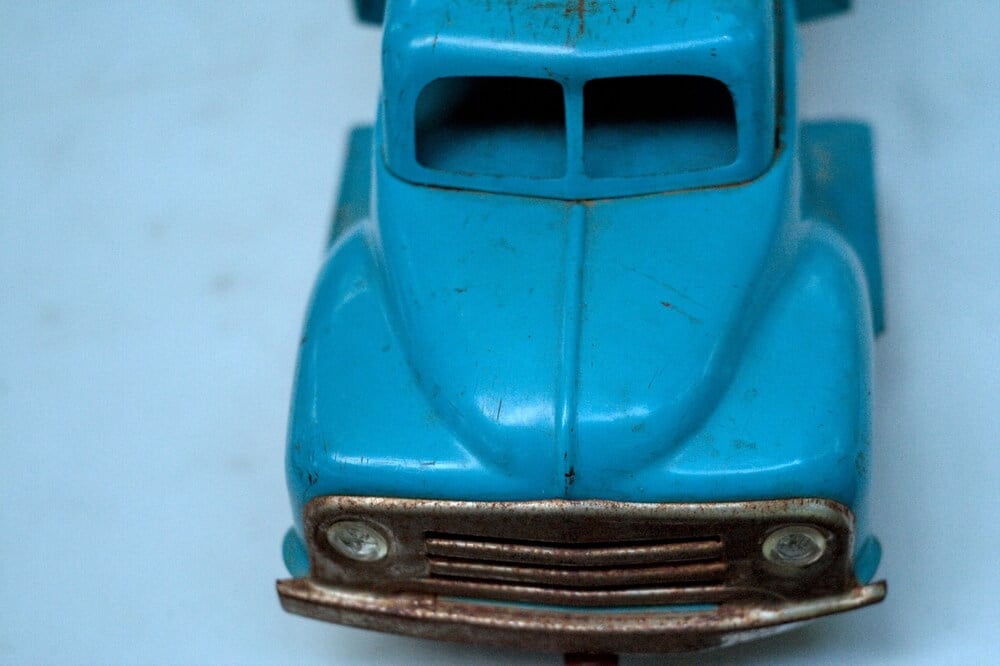
Germany’s toy industry, centered on cities such as Nuremberg, made detailed miniature shops for children, and a small register often anchored the counter. The tradition of children’s shops was strong in German toy making. Original paint and complete accessories are rare, so surviving sets are priced according to condition.
Bell-and-Drawer Mechanical Registers
The simplest toy registers imitated the real thing with a button that rang a bell and sprang open a drawer. The satisfying ring was the entire attraction. A bell that no longer chimes and a drawer that sticks are the issues that cut value.
Pop-Up Number Registers
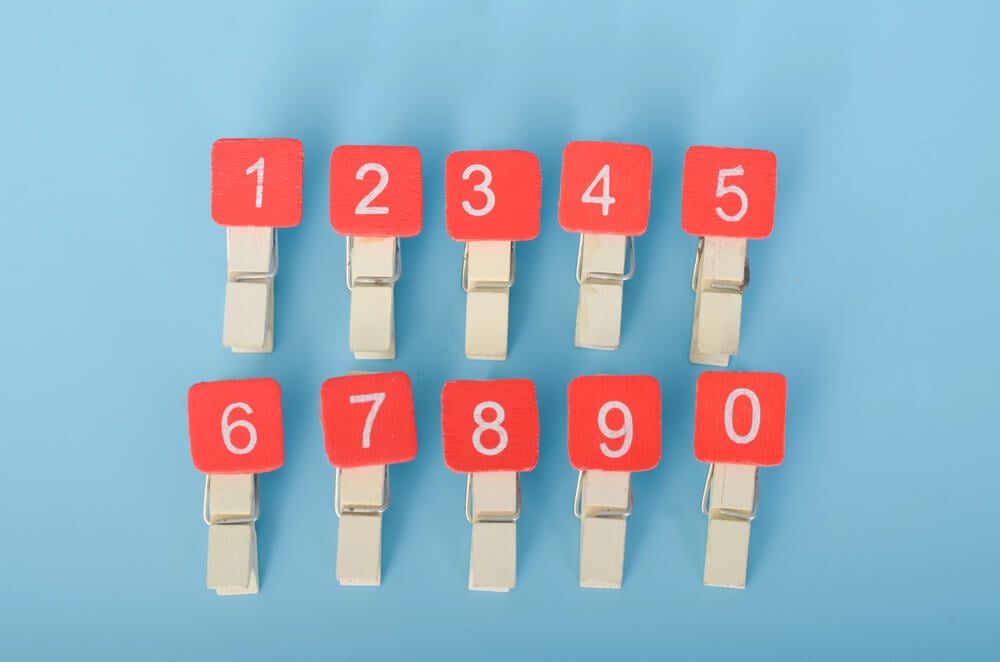
Some toy registers displayed numbers by flipping tabs up as keys were pressed, mimicking the numbered flags of full-sized machines. Children quickly learned which key produced which number. Missing tabs and cracked key tops are the main condition problems.
Hand-Crank Registers
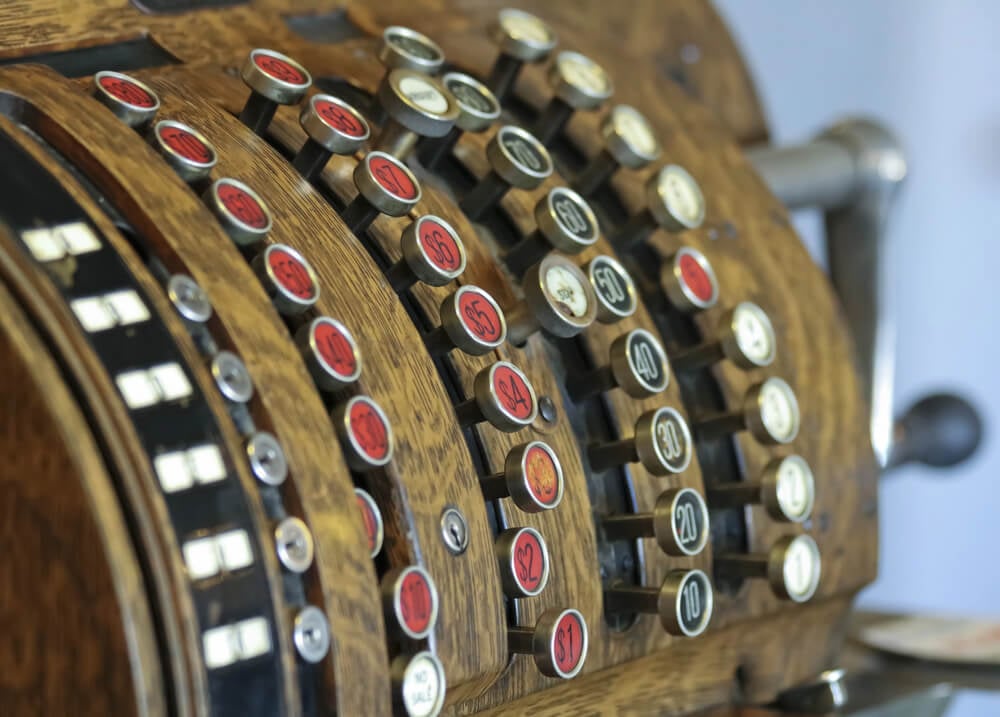
Toy versions copied the motion of an old mechanical machine with a crank that moved a mechanism and popped the drawer. The physical effort made each pretend sale feel earned. Bent cranks and worn gears lower value.
Register Still Banks
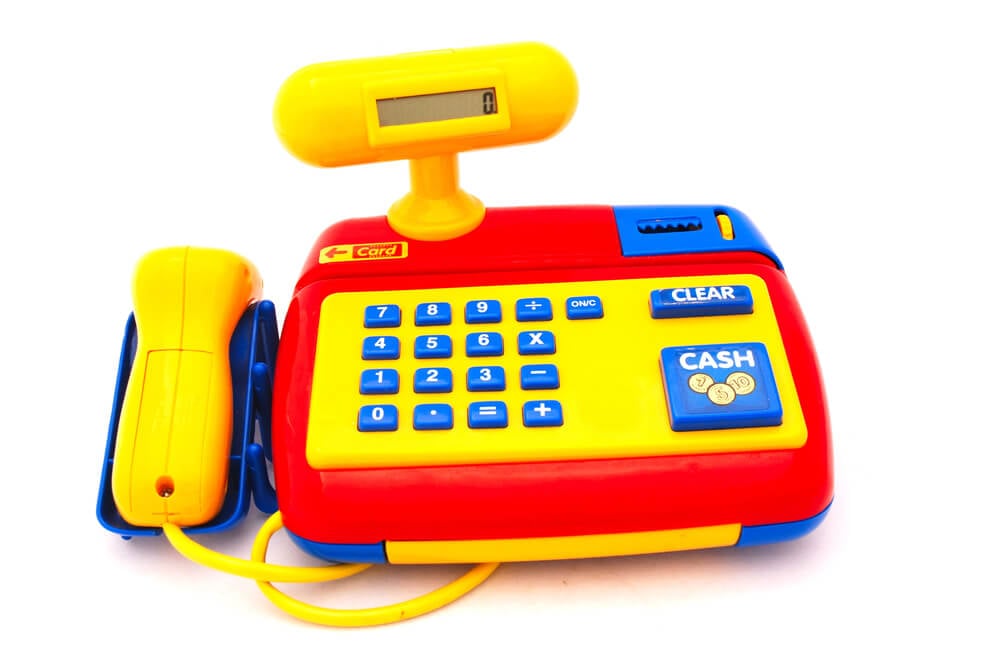
Some registers did double duty as banks, collecting coins in a hidden compartment as keys were pressed. They taught saving as they entertained. Intact coin slots and unrepaired mechanisms matter most, and original paint increases the price.
Wooden Play Registers
Wooden registers, made by firms such as Melissa & Doug, offered a sturdier, quieter alternative to plastic and tin. Their painted keys and sliding drawers had a classic look. Chipped paint and missing play money are the usual condition issues.
Little Tikes Plastic Registers
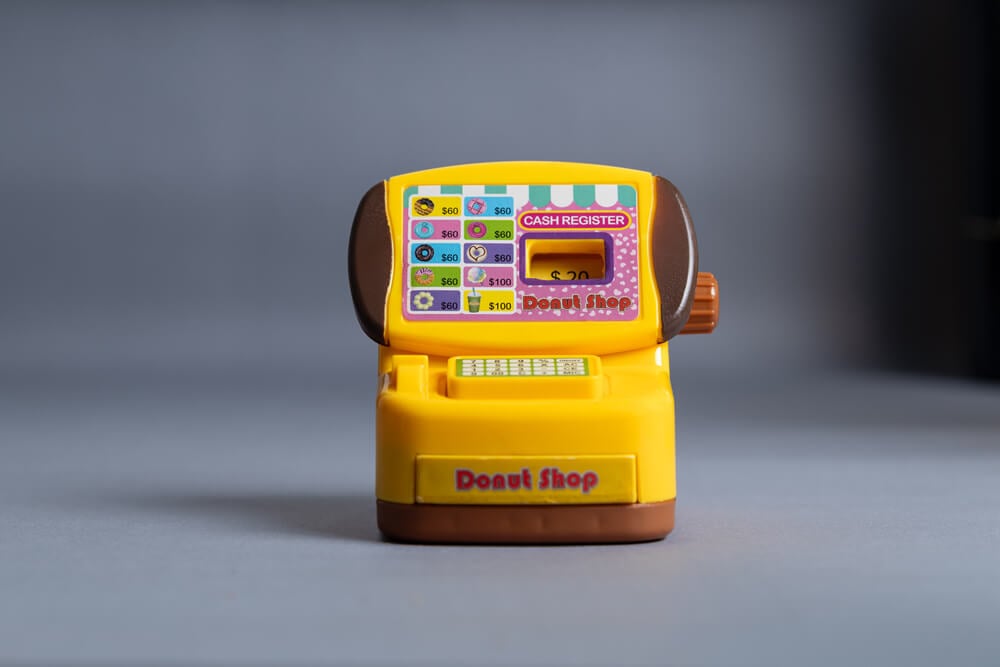
Little Tikes, founded in 1970 in Hudson, Ohio, made rugged molded plastic toys, and its registers carried the same oversized, kid-proof design. The chunky keys suited small hands. Sun-faded plastic and cracked drawers are common flaws.
Battery-Powered Calculator Registers

By the late twentieth century, some toy registers included a real calculator that added up purchases. Children could pretend to ring up a sale and watch numbers appear on a small display. Corroded battery compartments are the usual cause of failure, so clean contacts matter.
Laser Scanner Registers
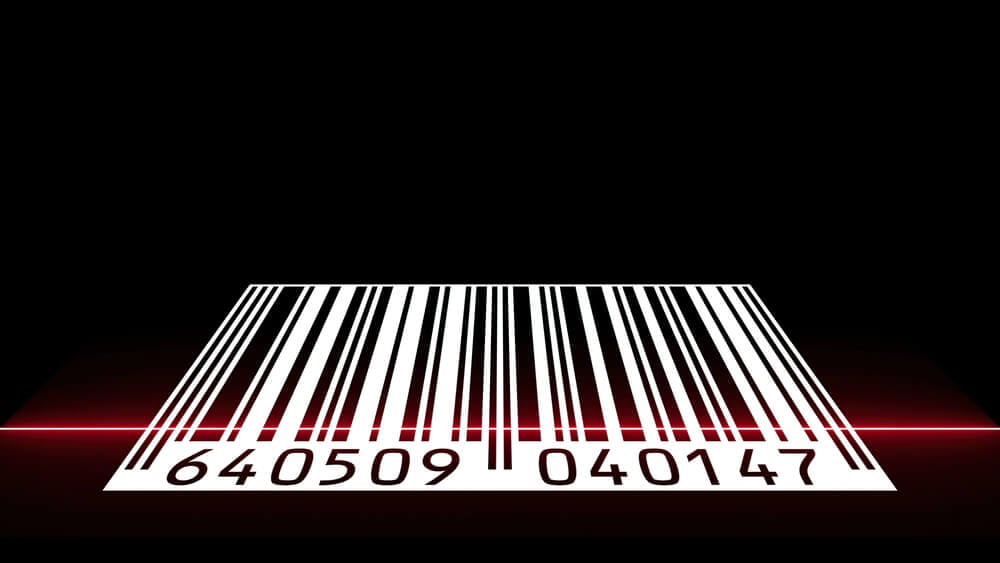
Supermarkets began using laser scanners in the 1970s, and toy registers eventually added a handheld scanner that beeped as items were passed over it. The scanner made play shopping feel contemporary. Working lights and sound, along with the original scanner, bring the best prices.
Credit Card Slot Registers
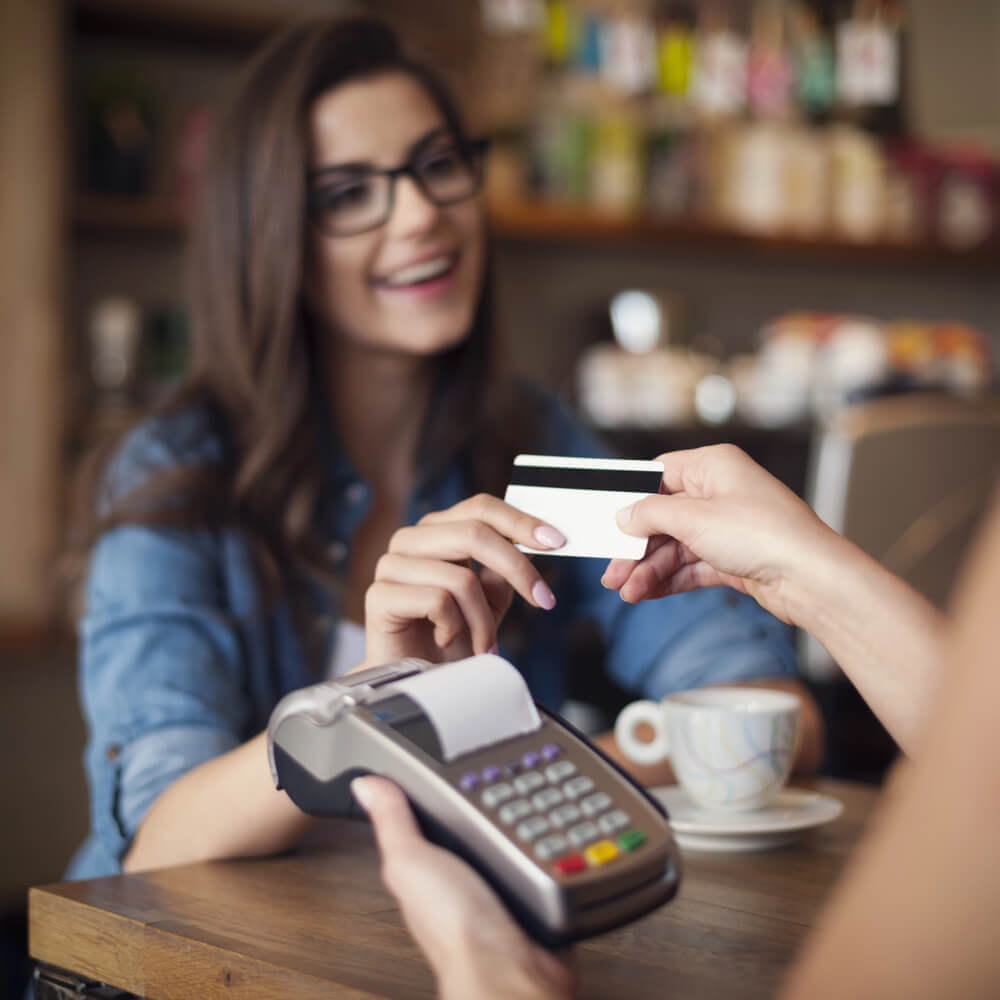
As plastic cards replaced cash, toy registers added a slot that accepted a plastic card and sometimes a swipe sensor. The card became as much a part of playing store as the coins. A set that still includes its original card is more valuable than one that lost it.
Registers With Locking Drawers
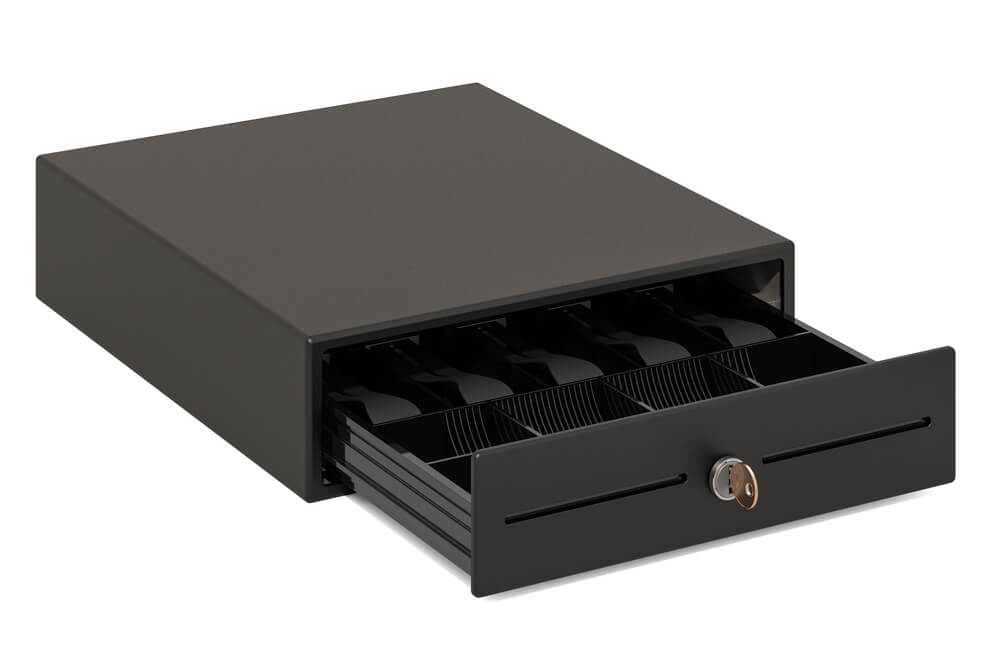
Some registers included a drawer with a lock and tiny key, giving young shopkeepers a sense of responsibility. The key was easy to lose, which makes complete examples uncommon. Intact keys and working locks are what collectors seek.
Dollhouse-Scale Registers
Miniature registers made for dollhouse shops reproduced the look of a full-sized machine in just a few inches. Their detail was often surprisingly accurate. Tiny parts break and go missing easily, so complete examples are worth more.
Counting and Learning Registers
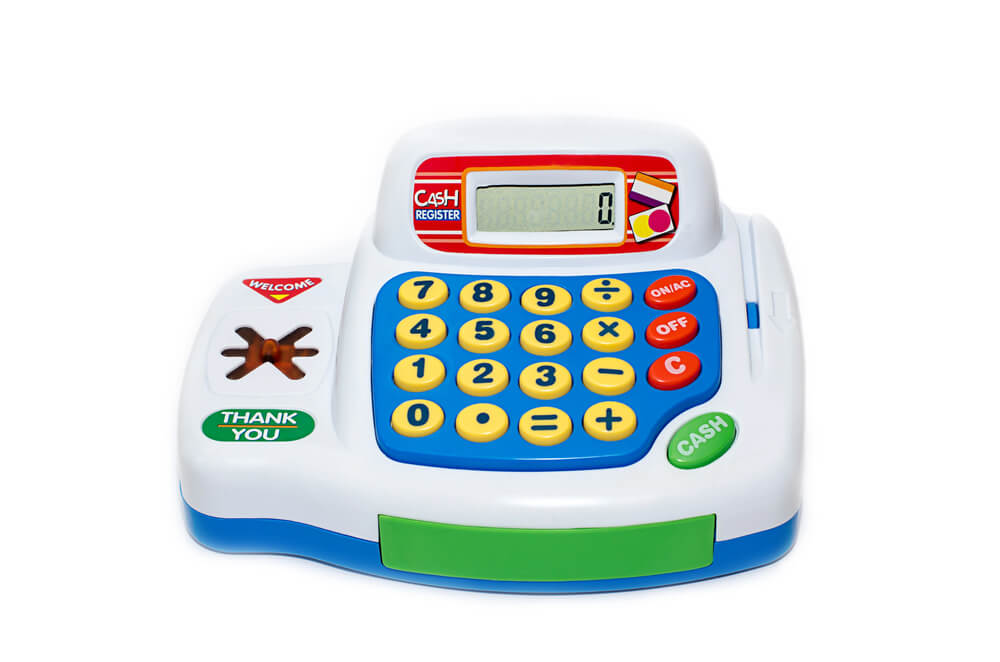
Preschool-oriented registers used numbered keys and color-coded buttons to teach counting and addition. Their bright design made math feel like a game. Original instructions and working buttons are what buyers check.
Checkout Counter Sets With Scales
Some registers were sold in checkout counter sets that included a toy scale for weighing produce. The sets let children act out an entire shopping trip. Complete sets with all the accessories are far less common than a register alone.
Registers in Play Kitchens and General Stores
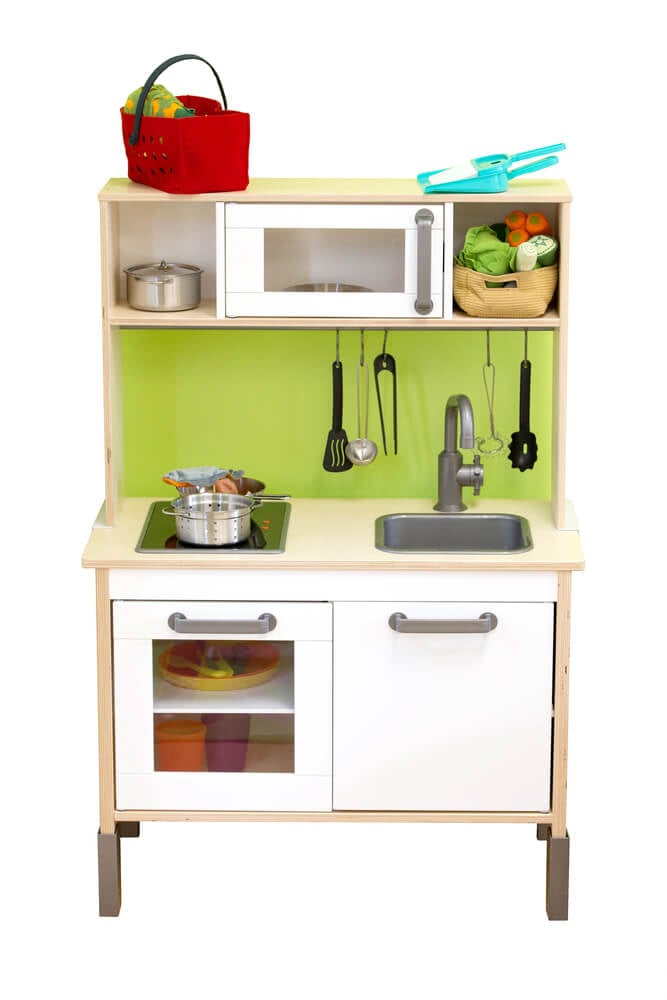
Play kitchens and general-store sets often included a register as part of the package, so it was one piece among many. The register tended to be played with hardest. Condition and completeness of the entire set drive the price.
Registers Styled Like Brass Originals
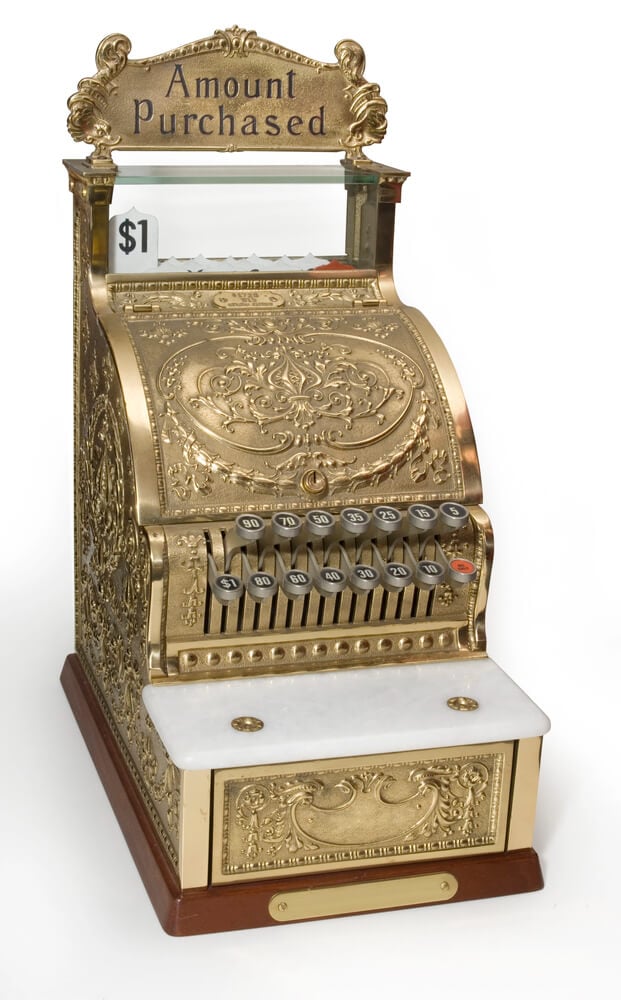
James Ritty and his brother John patented an early cash register in 1879, and National Cash Register was named in 1884; their ornate brass machines inspired toy versions with scrollwork and a ringing bell. The brass-look registers had a distinct old-fashioned charm. Intact plating and a working bell are the keys to value.
Receipt-Printing Registers
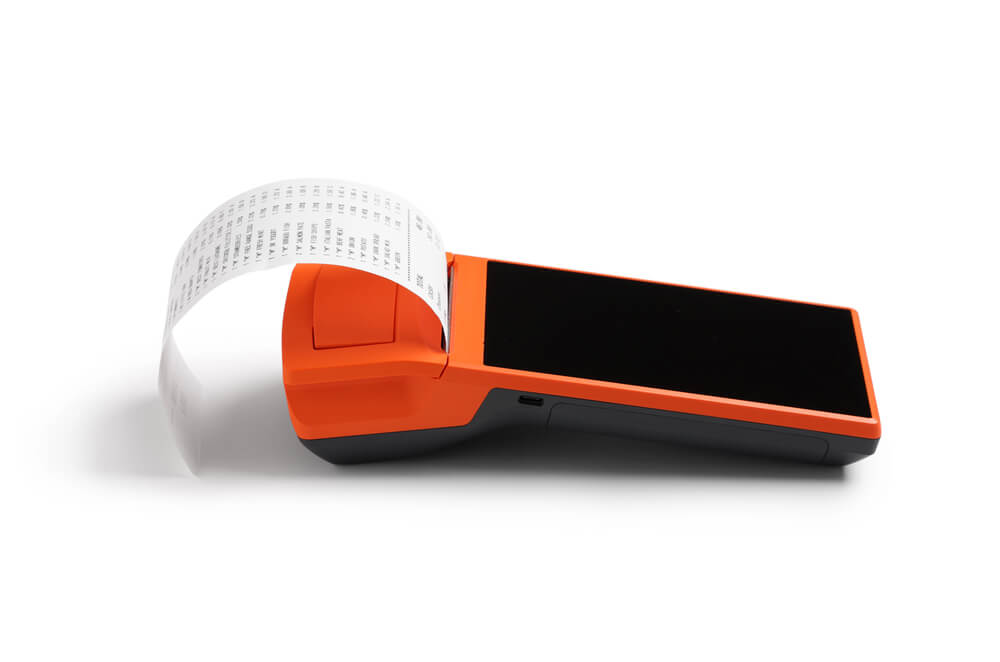
A few toy registers spooled out paper receipts, which gave a child a ticket to hand across the counter. The paper rolls are almost always used up or lost. Original paper rolls and unjammed mechanisms are hard to find.
Musical and Sound-Effect Registers
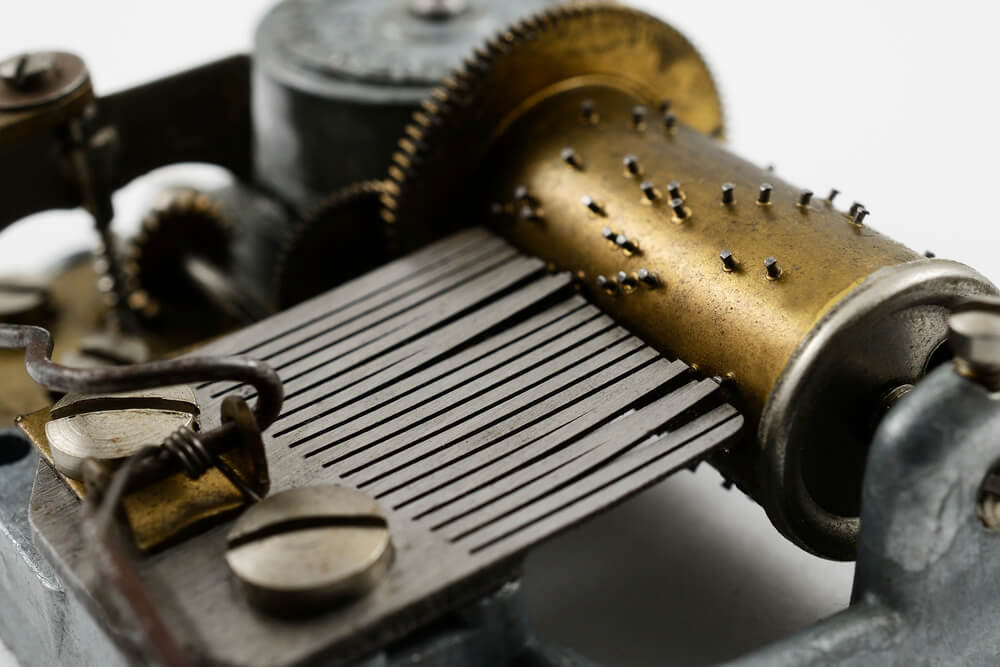
Battery-powered registers played tunes or recorded sounds when the drawer opened. The cheerful noise was the signature of a toy sale. Working speakers and clean battery contacts are what to check.
The Sound of a Sale

Every one of these registers made the same promise: a pretend purchase should feel real. The ring, the drawer, and the click of a key gave children a miniature version of grown-up commerce. The details changed with the decades, but the ritual stayed the same.
Today, most checkout counters have no drawer at all, and a child might not recognize what the toy was imitating. That distance is part of what makes surviving registers appealing. They preserve a gesture of buying and selling that the real world has largely retired.
ore from Go2Tutors!

- 27 Silver Dollars and Half Dollars Worth Keeping
- 28 Restaurant Menu Items Nobody Orders Anymore
- 17 Places Built in Seemingly Impossible Spots
- 27 Vintage Rings Worth More Than They Look
- 25 Restricted Sites Tourists Can’t Enter
Like Go2Tutors’s content? Follow us on MSN.