25 American Restaurants Preserved Inside Historic Buildings
Plenty of restaurants hang old photographs on the wall and call it heritage. These ones went further, moving into buildings that were already doing something else for decades or centuries, and letting the architecture stay put.
The previous lives are wonderfully varied: jails, banks, churches, train stations, sheep pens, and dairy barns. Dinner just happens to come with the original ceiling.
The Manhattan Tavern Where Washington Said Farewell
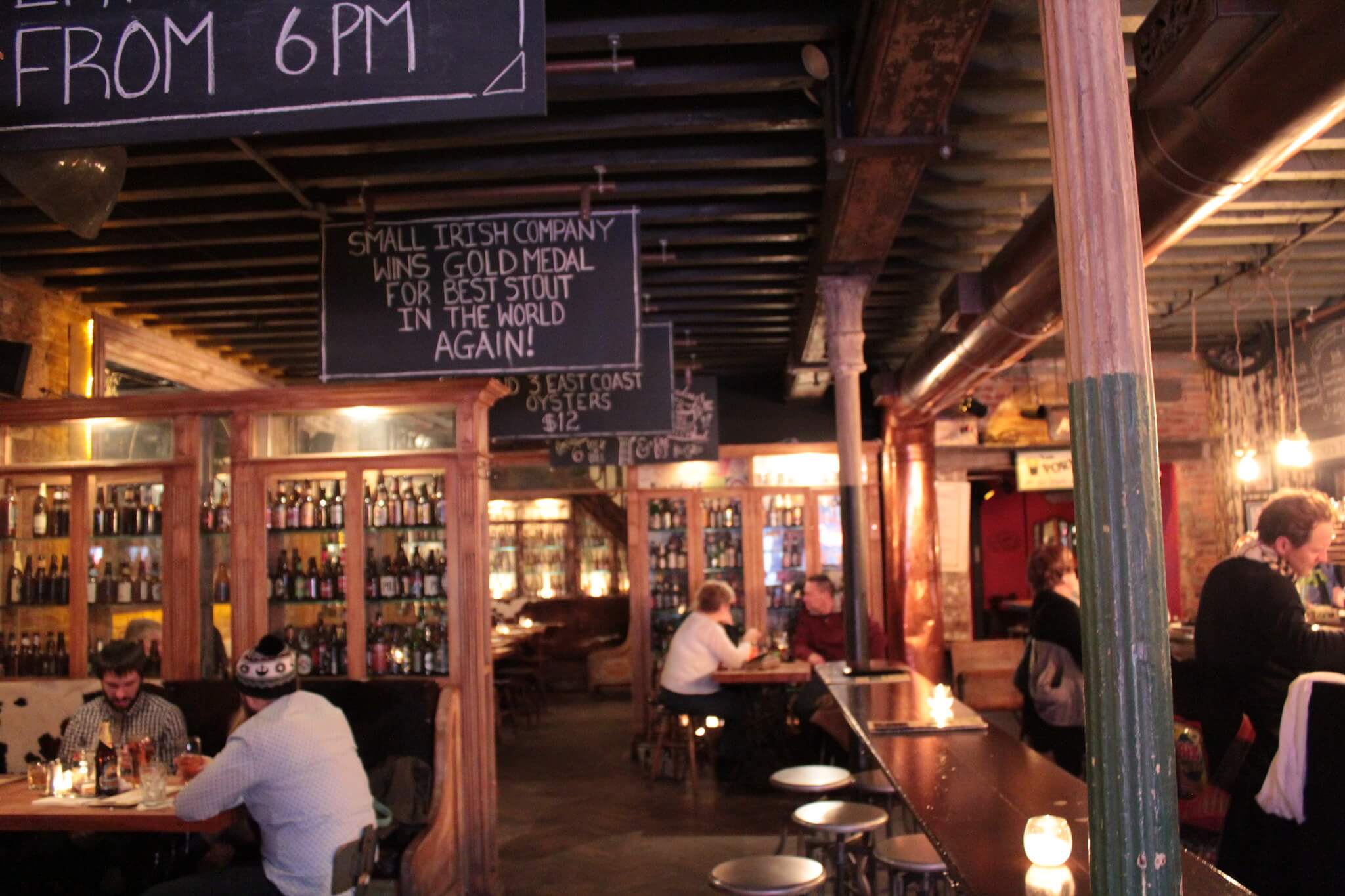
Fraunces Tavern stands in Lower Manhattan in a building that dates to 1719, which makes it one of the oldest structures in the borough. Samuel Fraunces bought the property in 1762 and turned it into a tavern.
On December 4, 1783, George Washington bade farewell to his officers in an upstairs room. The building later became a museum with a restaurant under the same roof, so the history and the meal share an address.
An Oyster Bar Inside a House From 1704
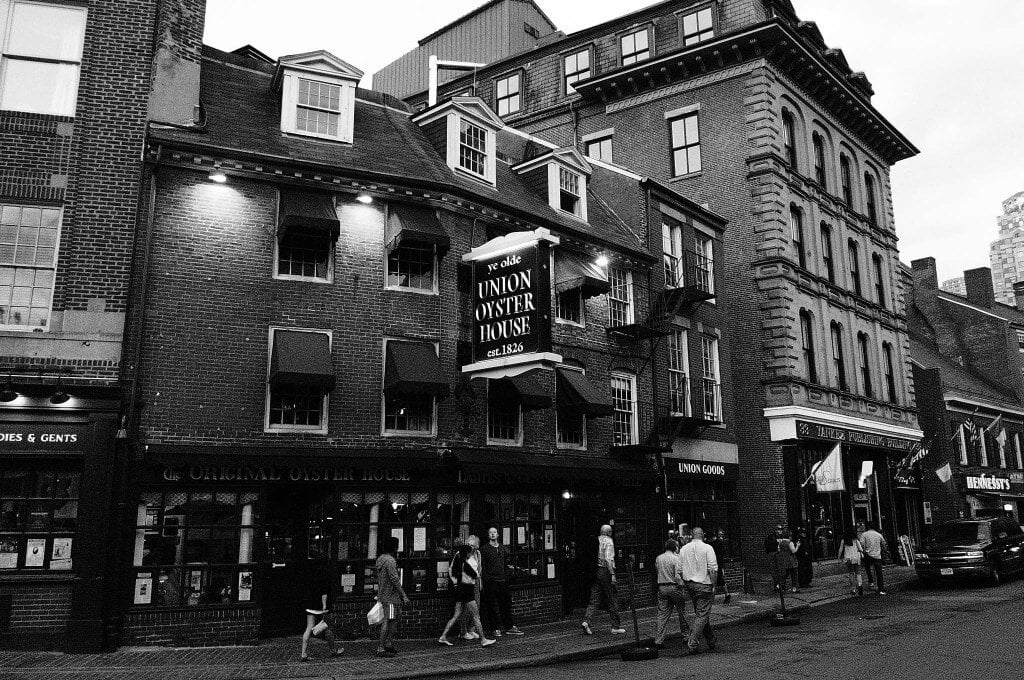
The Union Oyster House in Boston occupies a brick building whose origins stretch back to about 1704, long before the city had any notion of becoming a tourist destination. The restaurant itself has been serving since 1826.
Daniel Webster is remembered as a loyal regular at the semicircular raw bar, which is still where many diners head first. Few American dining rooms can claim a wooden counter that has outlasted that many presidents.
Colonial Hospitality in Old Town Alexandria
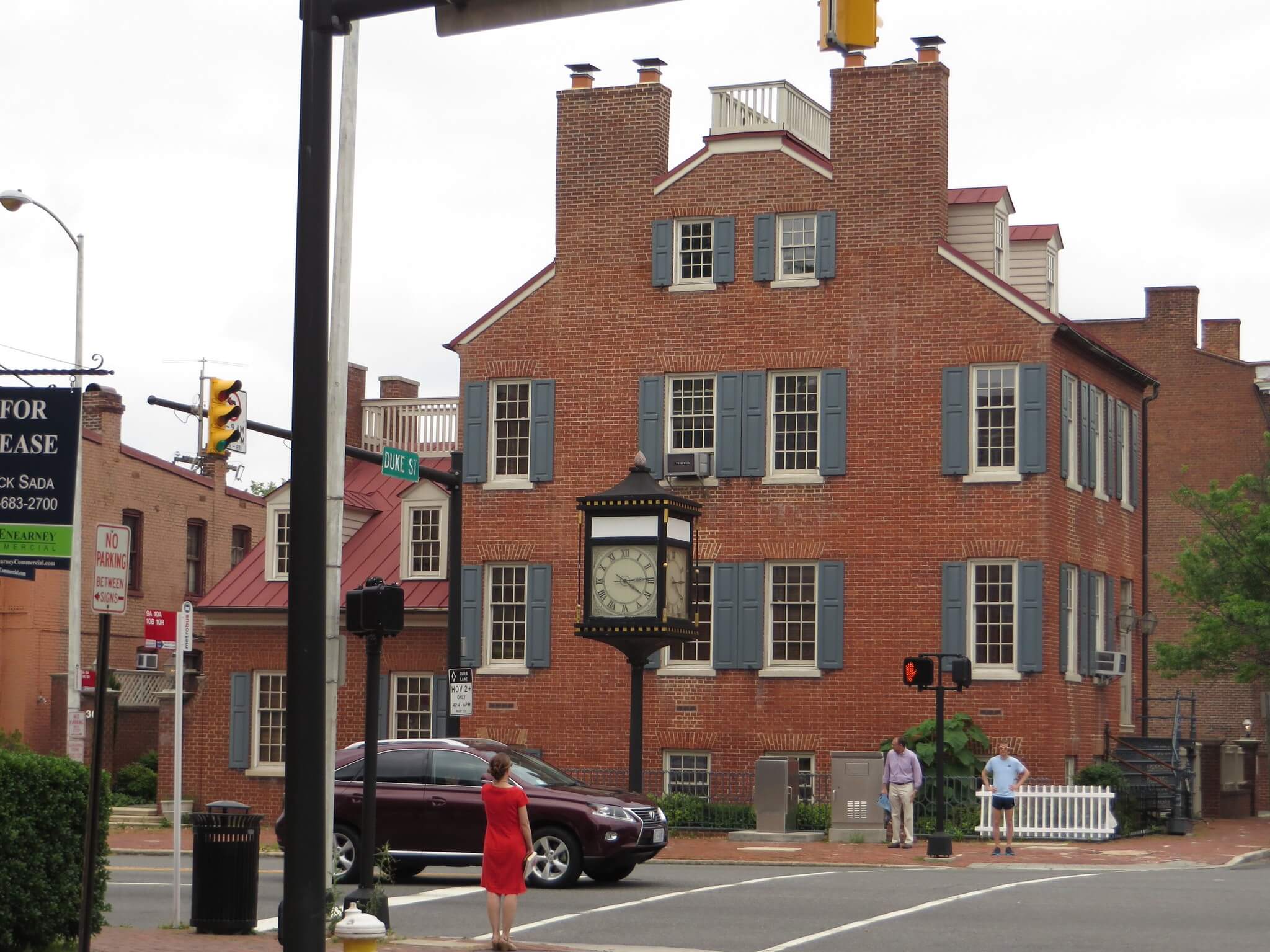
Gadsby’s Tavern in Alexandria, Virginia, grew from a tavern built in 1785 and an adjoining City Hotel added in 1792. George Washington is recorded as attending birthday celebrations there in the 1790s, back when it was among the most fashionable gathering spots in the young country.
The complex is now cared for as a museum, and a restaurant serves meals in the tavern in period style.
The Oyster Bar Under the Vaults of Grand Central
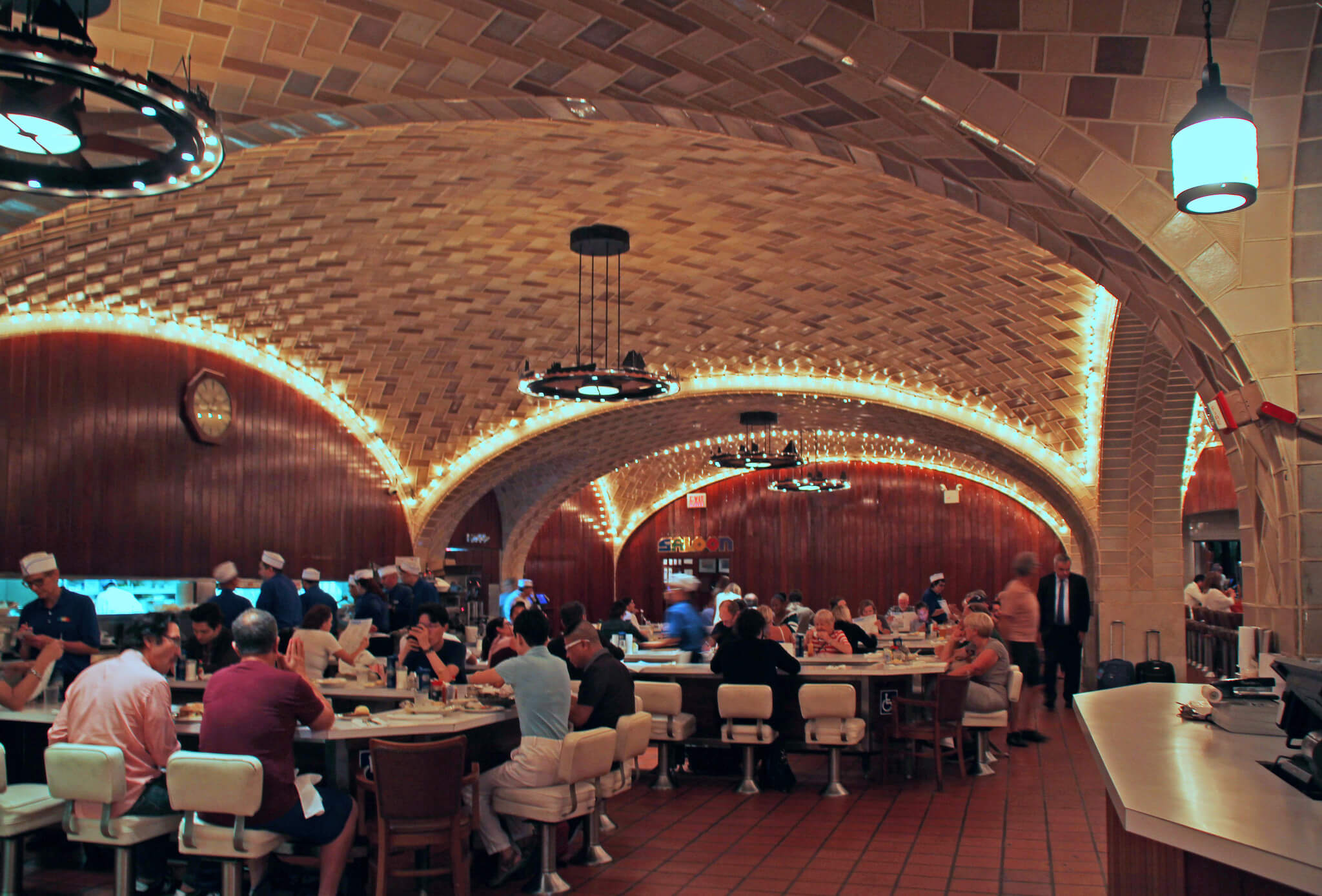
The Grand Central Oyster Bar opened with the terminal in 1913 and sits below sweeping vaulted ceilings of Guastavino tile. That tile technique, brought to America by the Guastavino family, creates arches strong enough to carry heavy loads without steel beams.
Just outside the restaurant, a low archway forms a well-known acoustic quirk where a whisper in one corner carries clearly to the opposite one. Commuters hurry past it daily, and many never realize the trick exists.
Kansas City’s Grand Station Hall Turned Dining Room
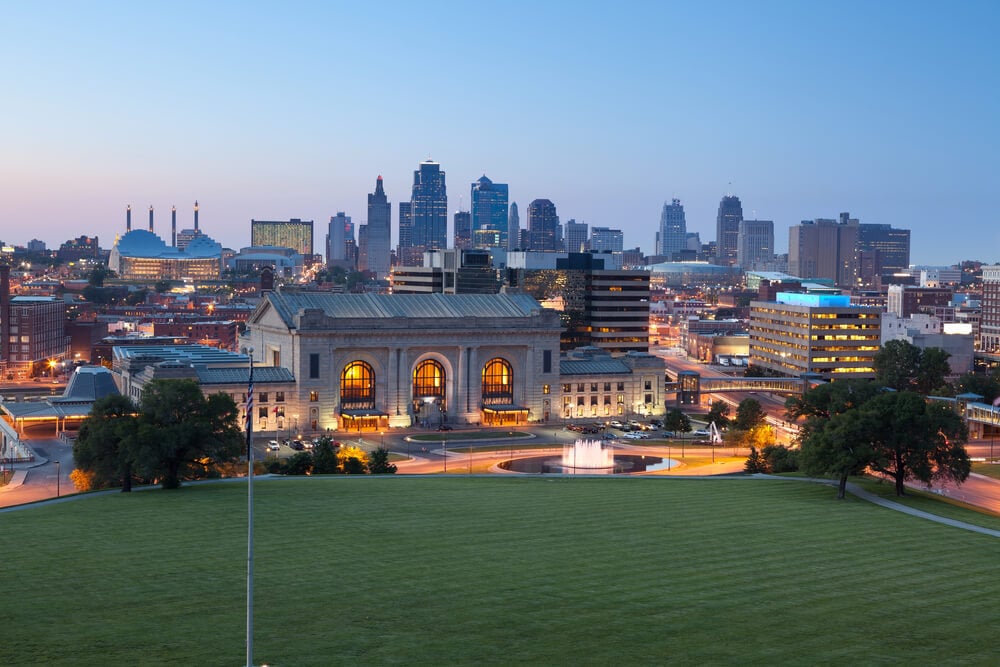
Pierpont’s occupies a space inside Kansas City’s Union Station, a grand railroad terminal that opened in 1914. The room began as a respite for women traveling through the station, a very different purpose from the white-tablecloth service that followed.
After years of decline, the station was restored and reopened in 1999, and the building now hosts museums, theaters, and restaurants. Travelers who once changed trains here are replaced by people lingering over steak.
A Boston Jail Cell Block Serving Cocktails
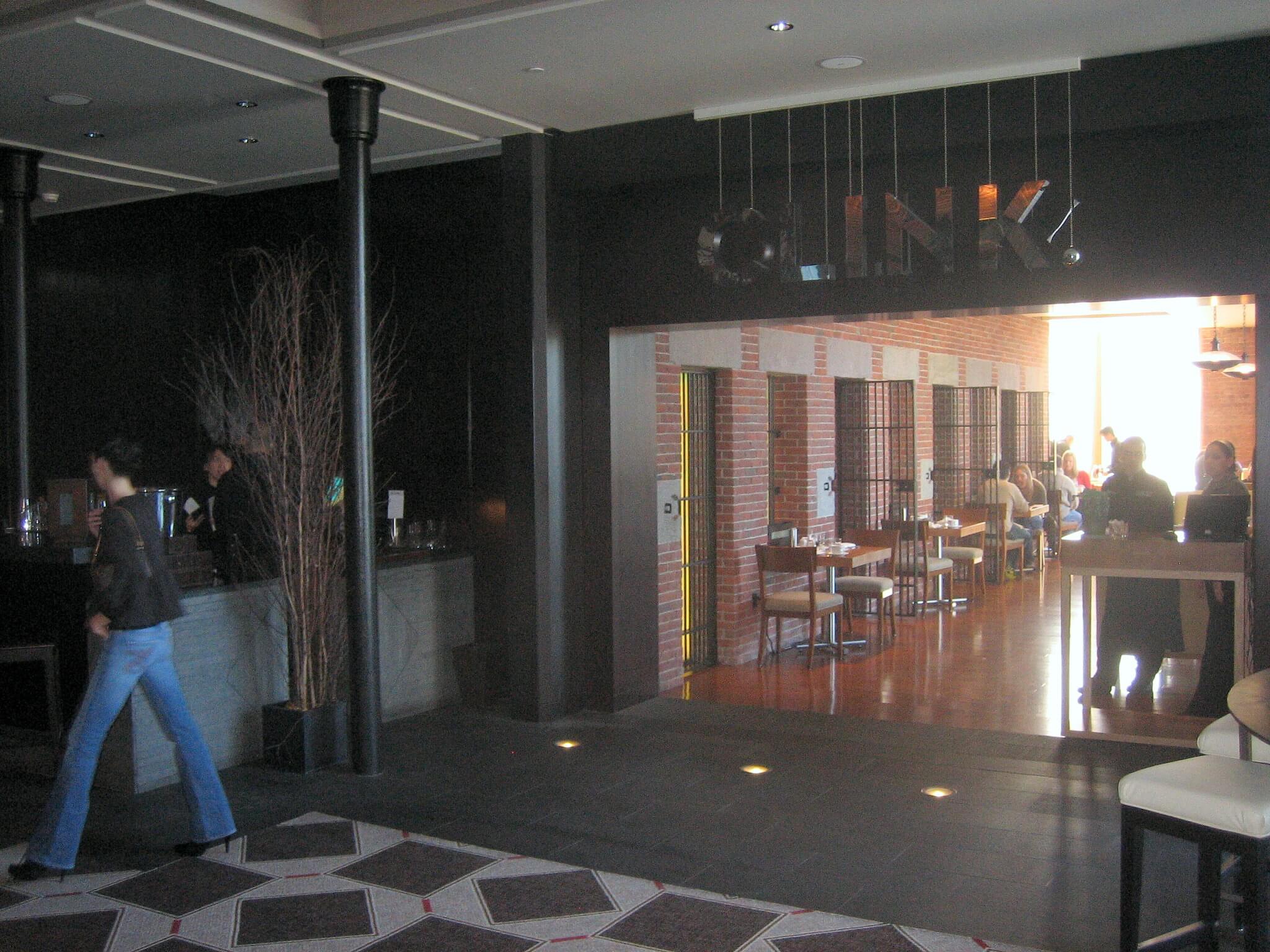
The Clink takes its name from old slang for jail, and the choice is not a stretch. It sits within Boston’s Liberty Hotel, which occupies the Charles Street Jail, a granite landmark designed by Gridley J. F. Bryant and completed in 1851.
The jail held inmates until 1990, and when it was converted into a hotel the original cell block architecture was kept, with iron-barred cell doors still in view. Diners now eat and drink inside a building that once held inmates.
A Pittsburgh Church With Brewing Tanks on the Altar
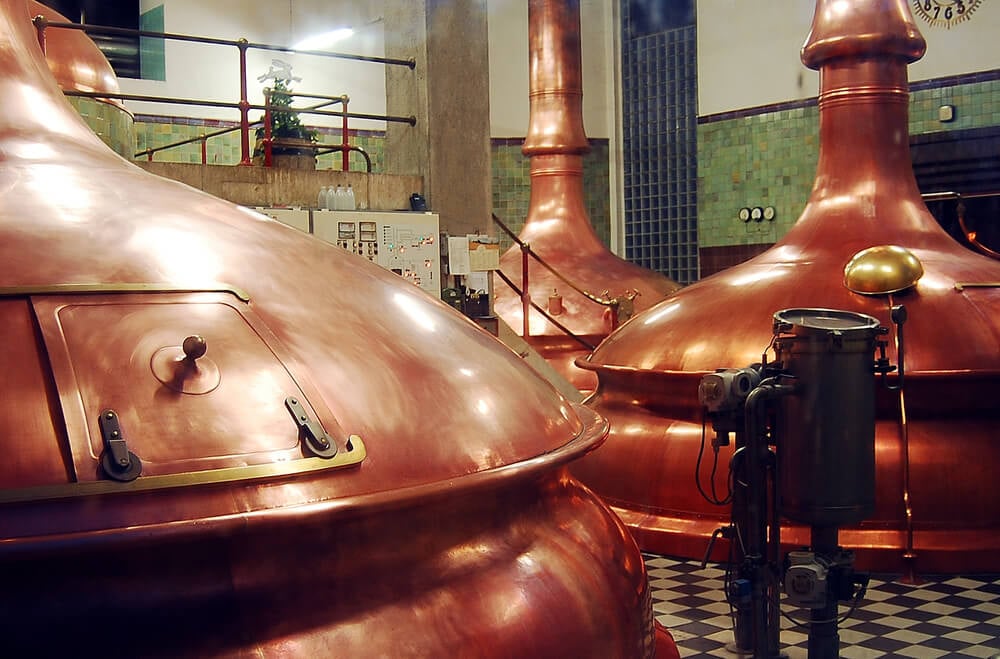
The Church Brew Works occupies the former St. John the Baptist Church in Pittsburgh’s Lawrenceville neighborhood, built in 1902. The parish closed in the 1990s, and the building was converted into a brewpub that opened in 1996.
Gleaming copper brewing tanks now stand where the altar once was, directly beneath soaring stained glass. Many of the church’s original fixtures remain, and the vaulted nave still looks like a place built for something far more solemn than lunch.
Central Park’s Sheepfold Became a Restaurant
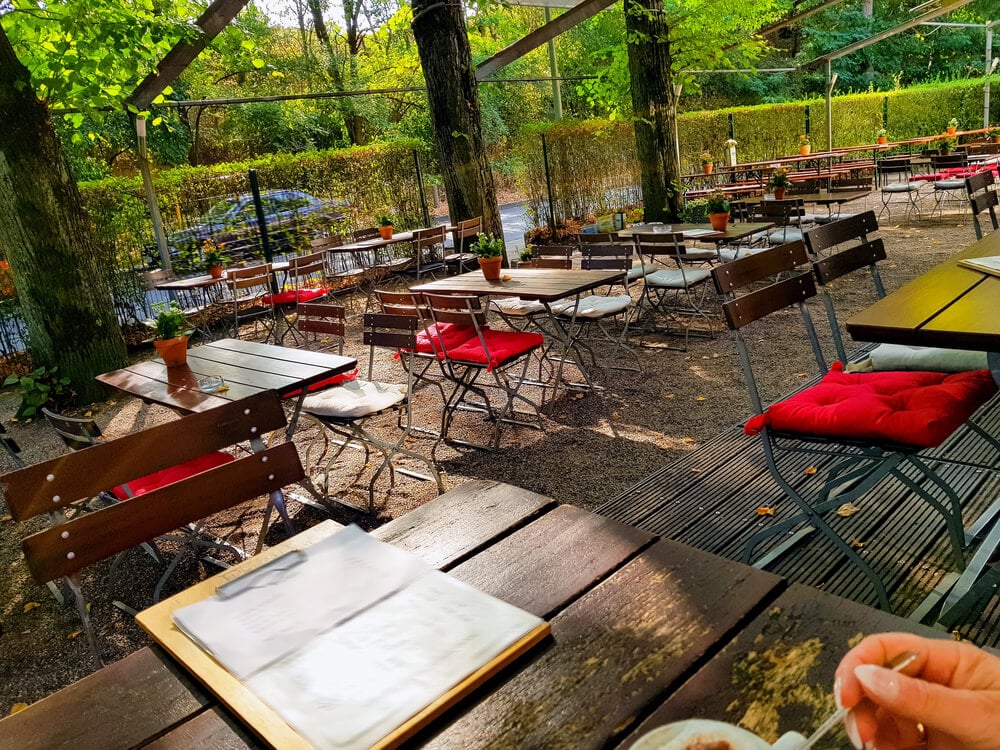
Tavern on the Green occupies the old Central Park sheepfold, built in 1870 and designed by Calvert Vaux with Jacob Wrey Mould. A flock of sheep lived there and grazed on what is still called Sheep Meadow, until the animals were moved out in 1934.
The structure was then converted into a restaurant, opening that same year. Its rustic Victorian Gothic lines are a rare survivor, and the building has outlasted generations of New York restaurant trends.
A Dallas Mansion Built in the Roaring Twenties
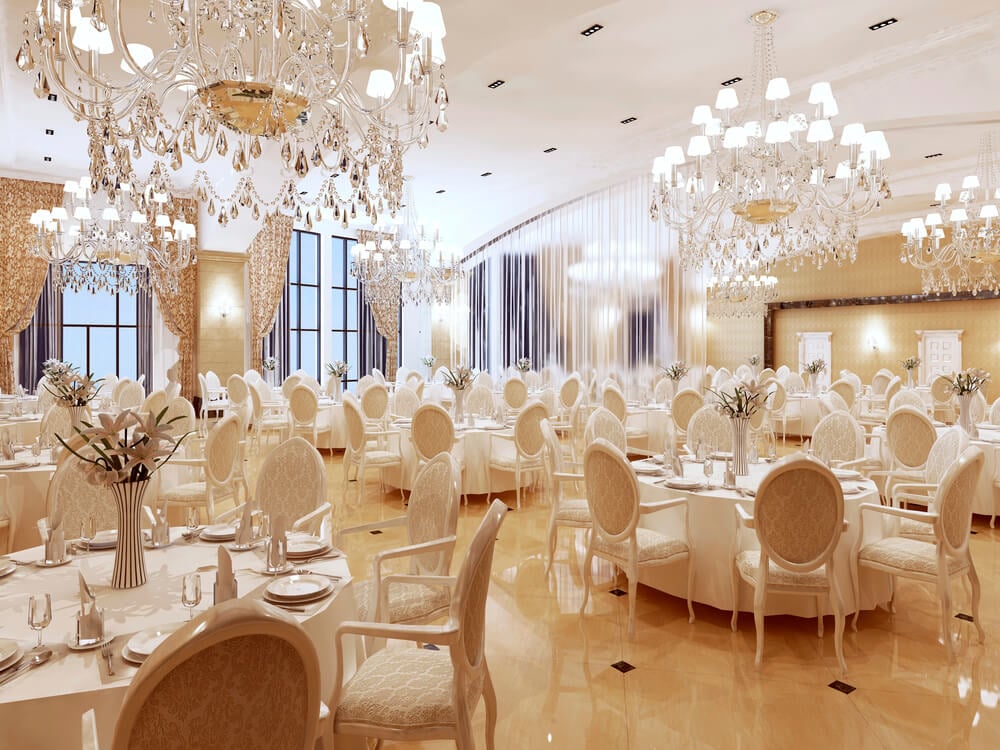
The restaurant at the Rosewood Mansion on Turtle Creek is set inside a Dallas house built in 1925 for Sheppard King, known as the King Mansion. The Italian Renaissance style home was designed to impress, with the formality of a grand private residence.
Rather than being demolished as the city grew around it, the mansion was converted to a hotel with a restaurant at its heart. Diners eat in rooms that were built for private family life.
Rockefeller’s Dairy Barns Turned Farm-to-Table Destination
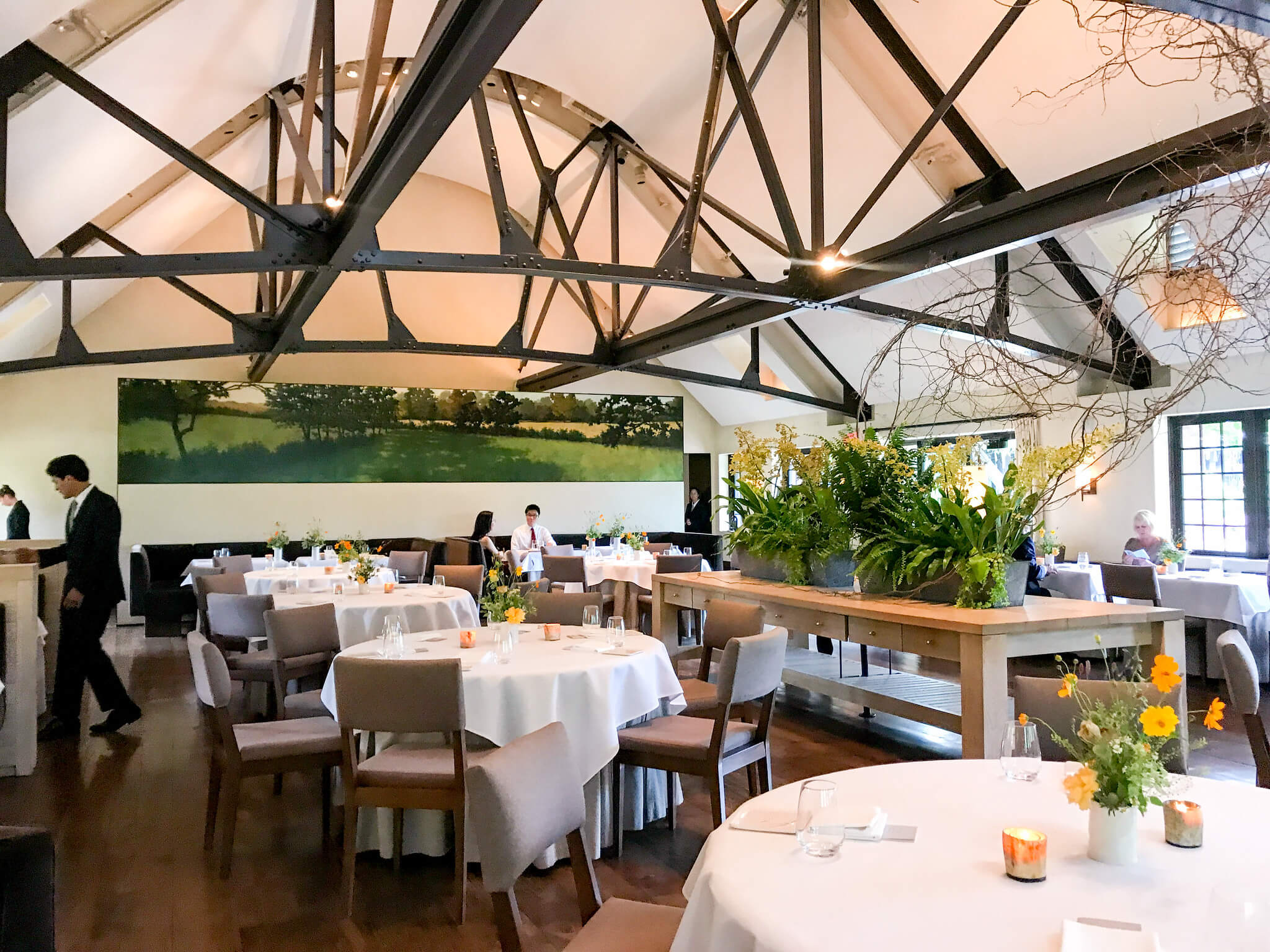
Blue Hill at Stone Barns sits in Pocantico Hills, New York, inside stone barns originally built in the 1930s as part of John D. Rockefeller Jr.’s estate. The structures were designed for dairy operations and later became the Stone Barns Center for Food and Agriculture.
The restaurant occupies part of the complex and sources much of its menu from the surrounding working farm. Cattle no longer fill the barns, but agriculture remains the point.
Newport’s White Horse Tavern and Its Three Centuries
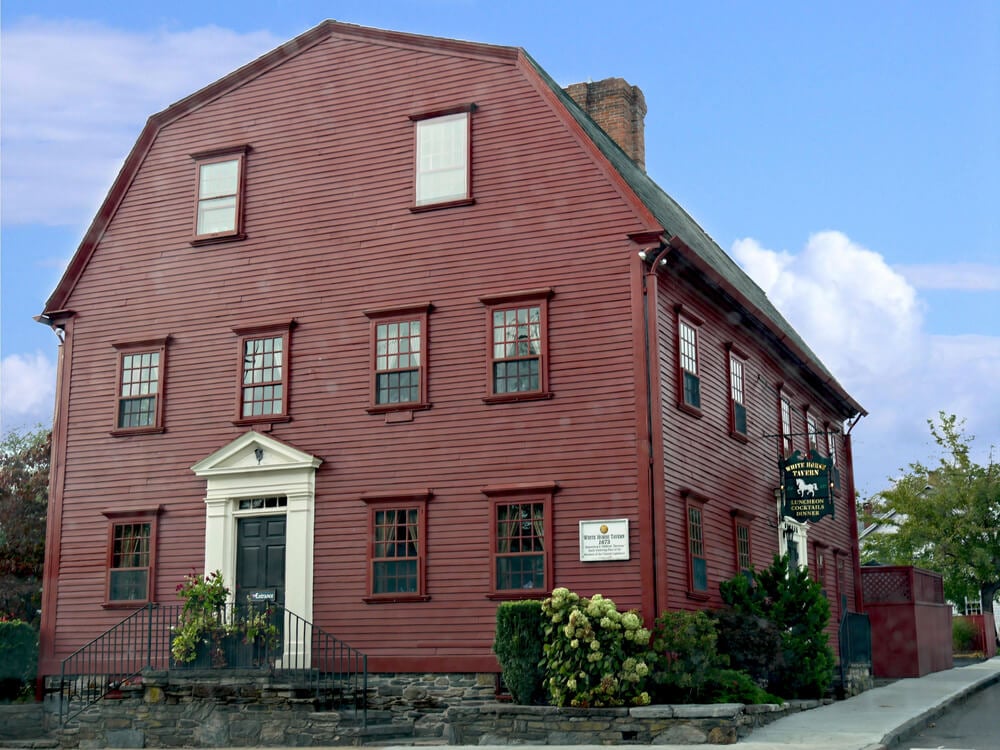
The White Horse Tavern in Newport, Rhode Island, is a building that dates to 1673, and it has been celebrated for roughly 350 years as one of the oldest tavern buildings in the country. Its low ceilings, dark beams, and small-paned windows survive from the colonial period.
The structure has served as a tavern, a meeting place, and even a seat of local government in its long history. Diners can eat at tables in rooms where people have been doing exactly that since before the nation existed.
Bardstown’s Stagecoach Stop in Bourbon Country
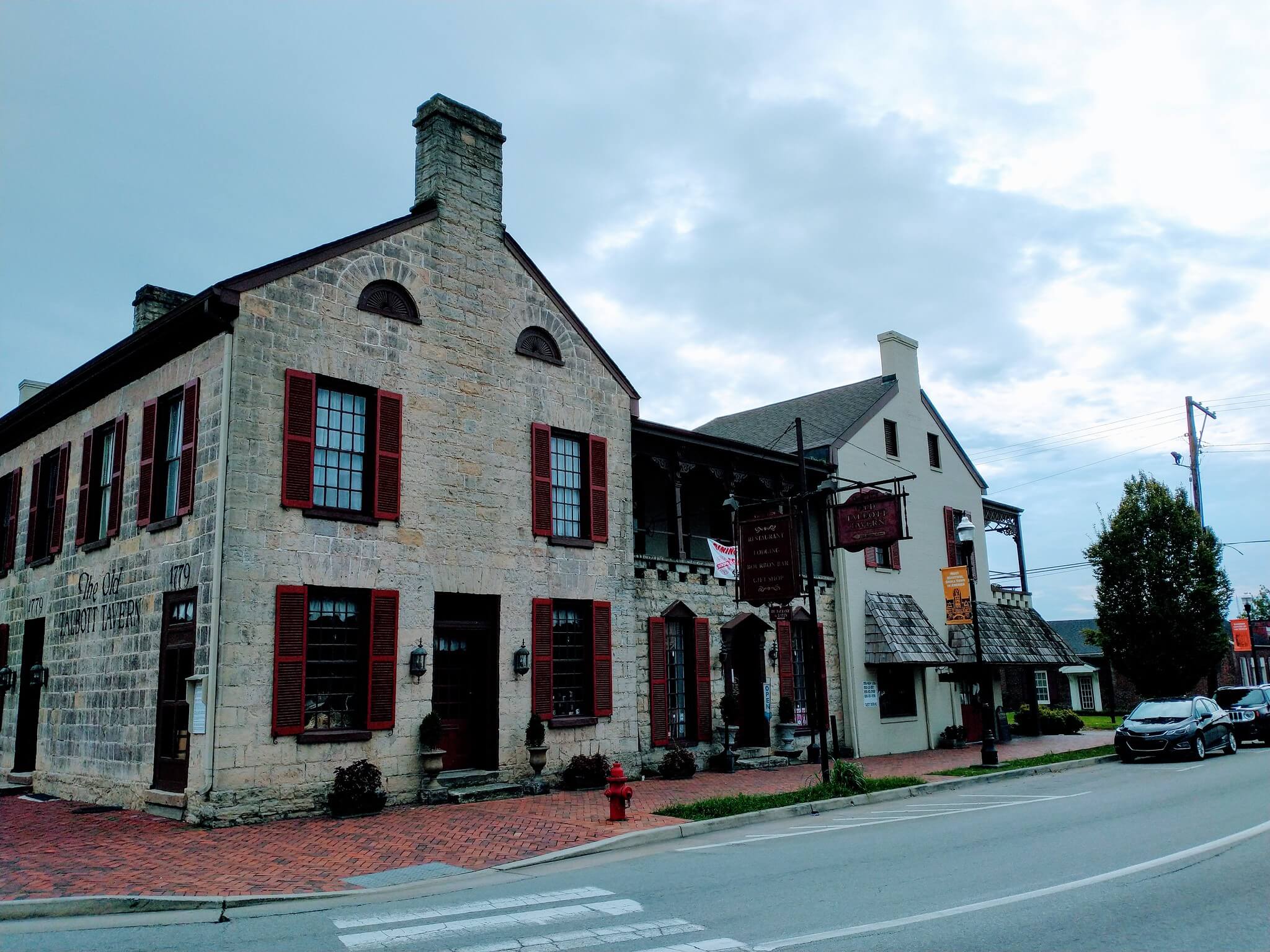
The Old Talbott Tavern in Bardstown, Kentucky, has been welcoming travelers since about 1779, when stagecoaches rolled up the road to its door. Local lore connects some famous names to its tables, and Abraham Lincoln is among the figures associated with the place.
The building sits in the heart of Kentucky’s bourbon country, and the bar program reflects that.
Seafood Under the Rails at Denver Union Station
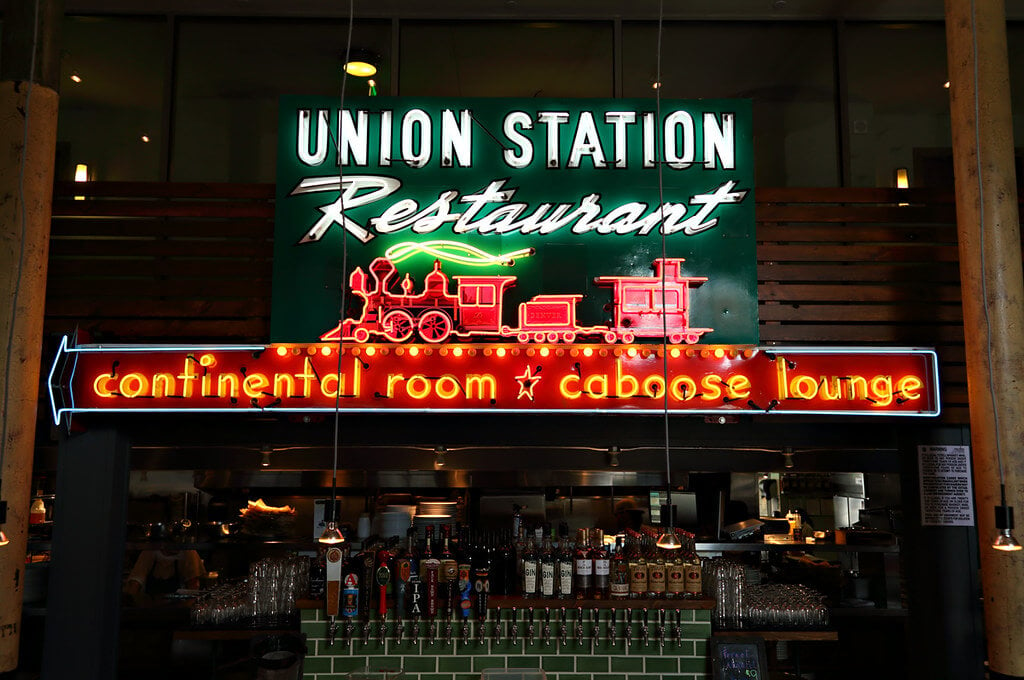
Denver Union Station opened in 1881, and the Beaux-Arts central building took its present form in the early twentieth century. After years of uncertain use, it was restored and reopened in 2014 as a hotel, transit hub, and cluster of restaurants.
Stoic and Genuine serves seafood and oysters inside the station, a notable choice for a city a mile above sea level. Passengers still pass through the great hall as plates of shellfish leave the kitchen.
A Texas Gin on the Guadalupe River
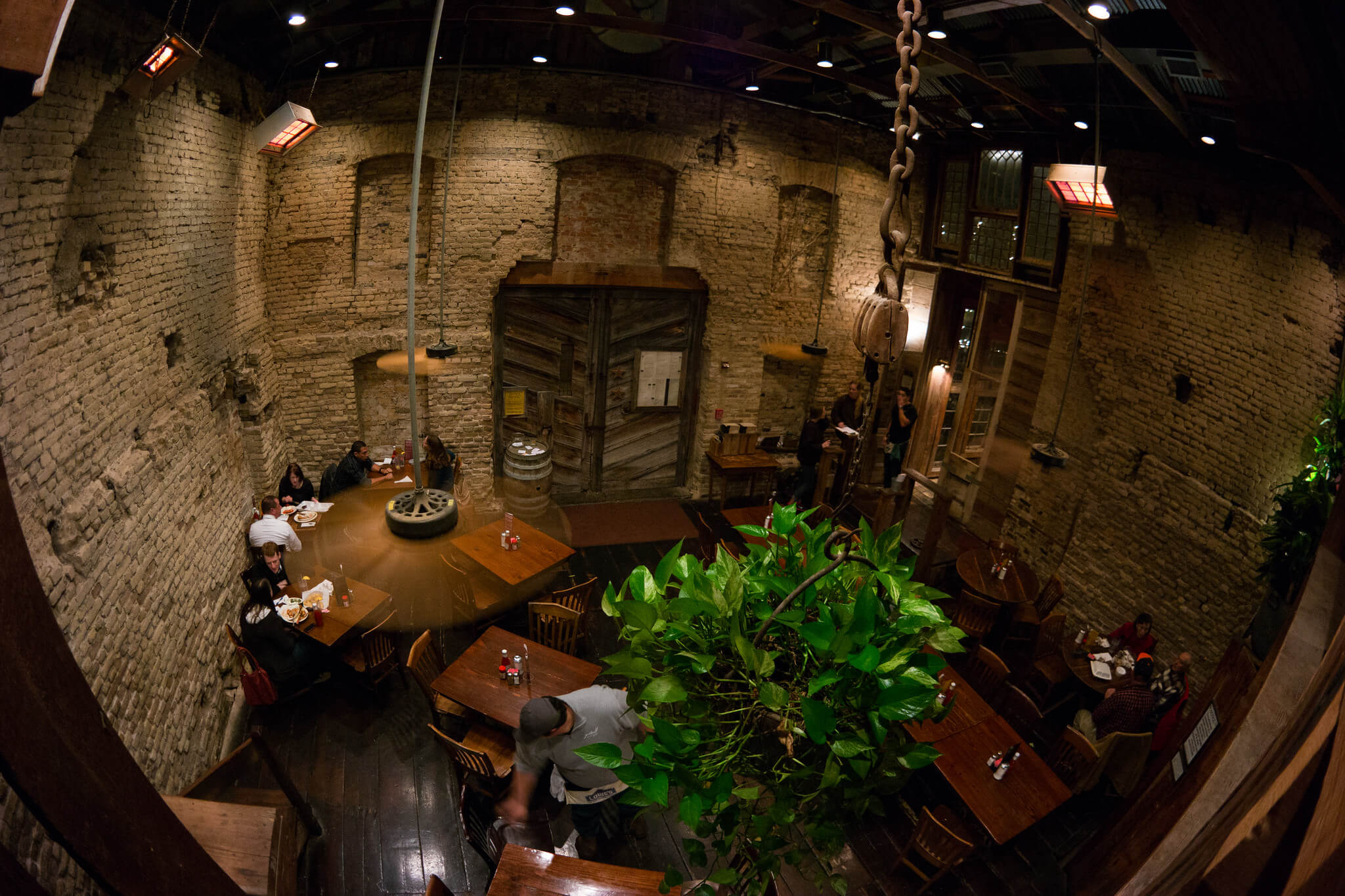
The Gristmill River Restaurant and Bar sits in Gruene, Texas, in a historic building dating to 1878 that once served as a cotton gin. The restaurant opened in 1977 and has operated for more than four decades, spreading across multiple levels beside the Guadalupe River.
Gruene is a small historic district that has drawn visitors for generations. Weathered metal and old timbers keep the industrial past visible at every table.
Cleveland’s Brewpub in the Market Avenue Buildings
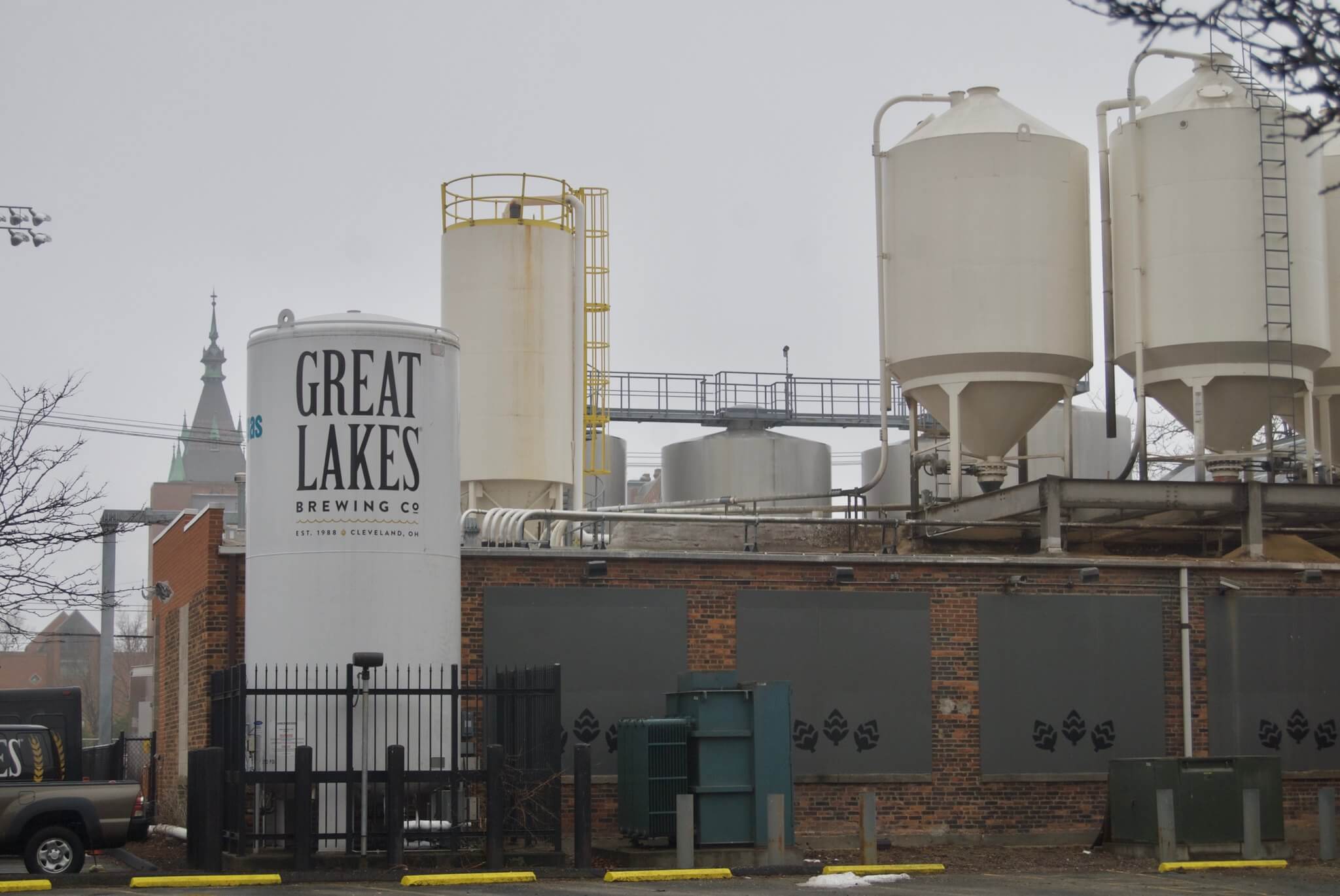
Great Lakes Brewing Company occupies a cluster of nineteenth-century buildings on Market Avenue in Cleveland’s Ohio City neighborhood. The brewpub opened in 1988 in structures that date to the 1860s.
Legend ties the tavern to Eliot Ness, and visitors point to marks in the wood of the bar said to be from a gunfight. Whether the story is exact or embroidered, it adds to the sense that the room has seen a lot.
Savannah’s Pink Mansion on Reynolds Square
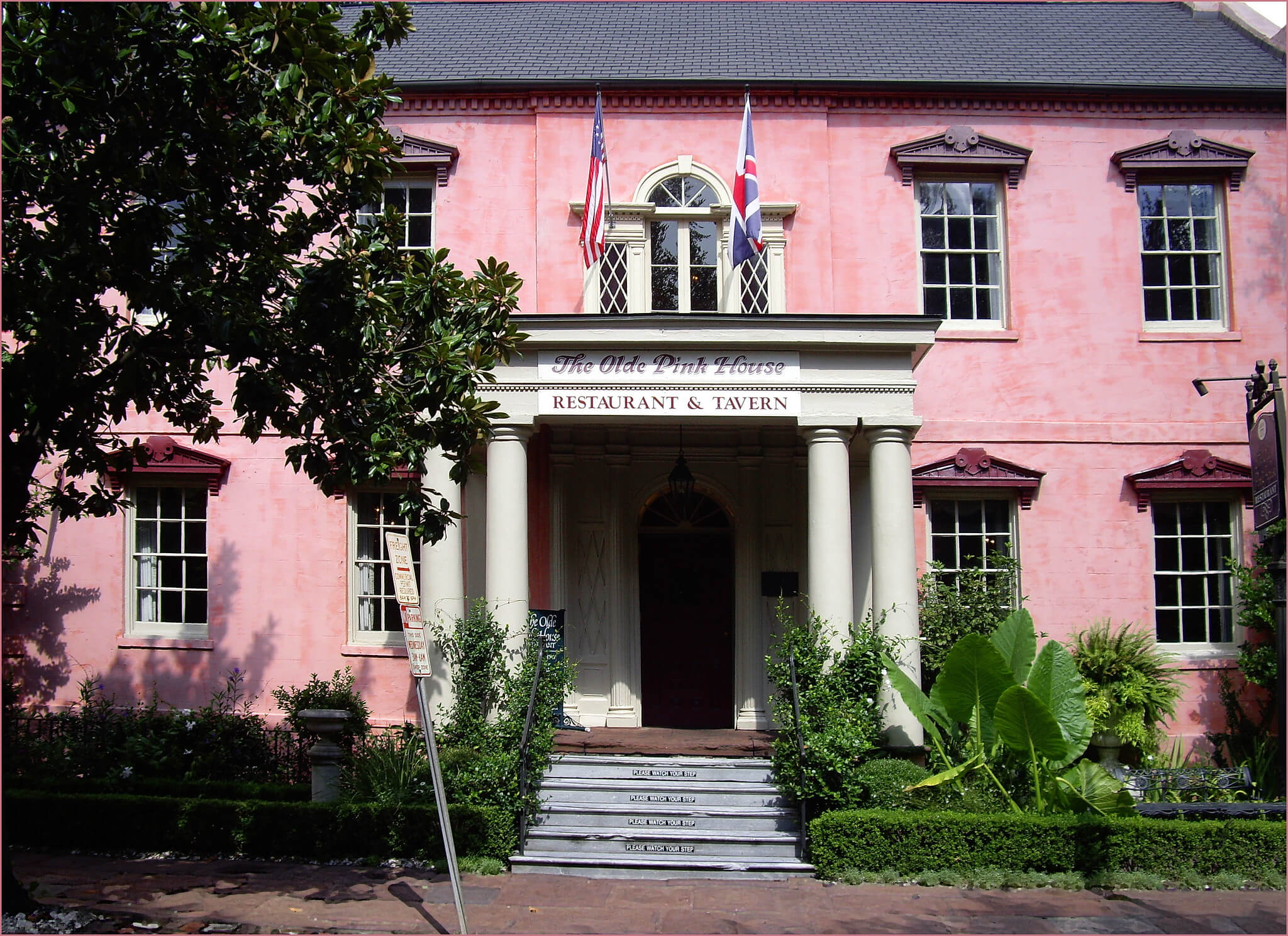
The Olde Pink House in Savannah, Georgia, is a Georgian mansion built in 1771 for James Habersham Jr. It later became the Planters Bank of Georgia in 1812, which means the elegant rooms have held both family dinners and ledgers.
The building is covered in pink stucco, which gives the restaurant its name. A tavern in the cellar adds another layer to its long history.
The Turquoise Victorian of the Garden District
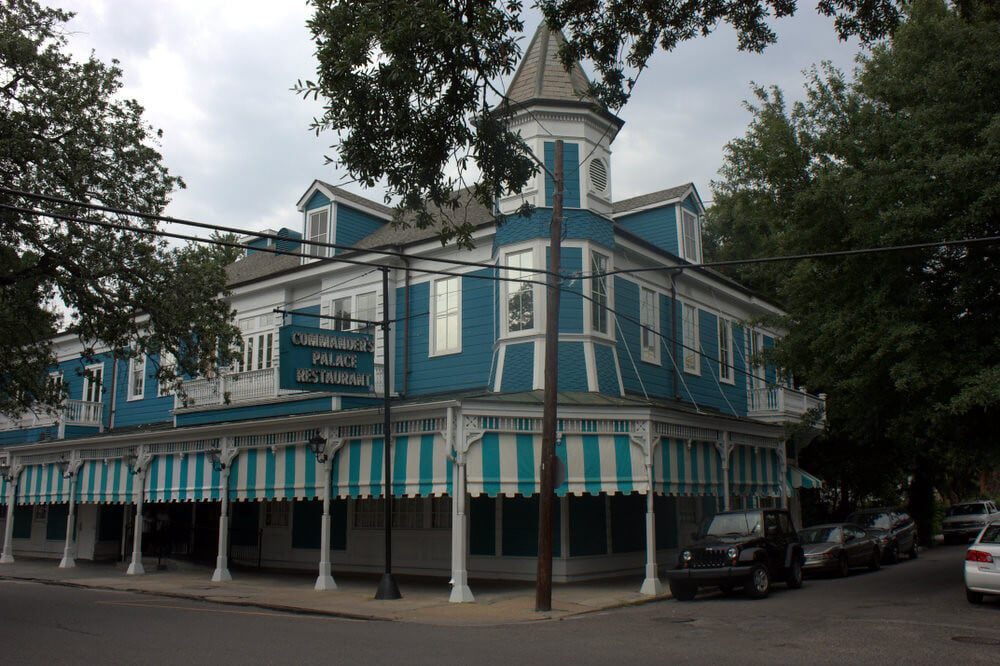
Commander’s Palace occupies a turquoise and white Victorian building at 1403 Washington Avenue in New Orleans, and the restaurant opened in 1893. The Brennan family took over in 1969, and kitchens under chefs Paul Prudhomme and Emeril Lagasse made it famous nationwide.
The building’s gingerbread trim and striped awnings set it apart in the Garden District. Jazz brunch has been a ritual here for generations.
Antoine’s and the Birth of Oysters Rockefeller
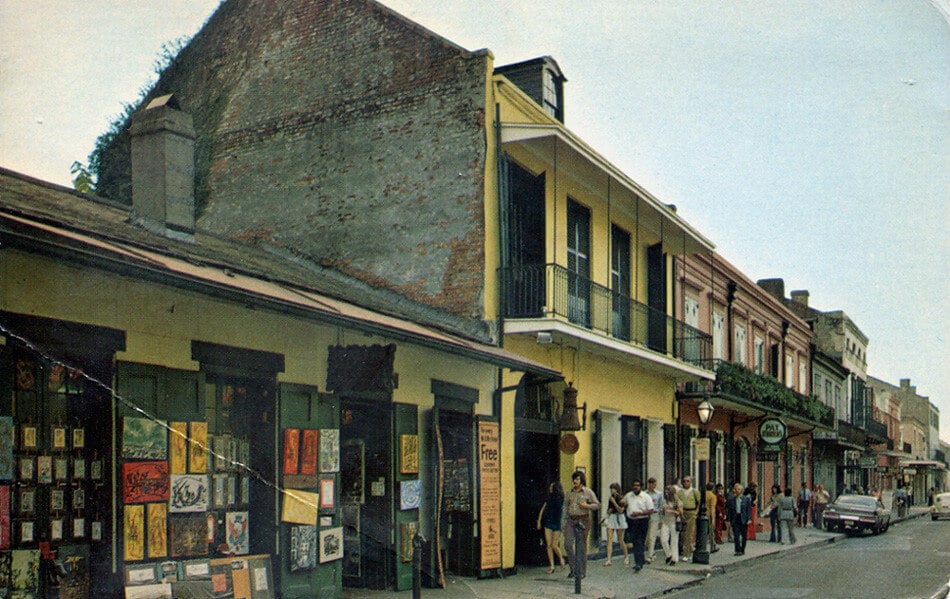
Antoine’s opened in the French Quarter in 1840 and is widely recognized as the oldest family-run restaurant in the country. It is run from a building on Rue Saint Louis that holds a maze of dining rooms, each with its own character.
In 1899 the kitchen created Oysters Rockefeller, a dish named for the richness of its sauce, which was compared to the wealth of John D. Rockefeller. The recipe is still guarded as a family secret.
A New Mexico Family Home Turned Landmark
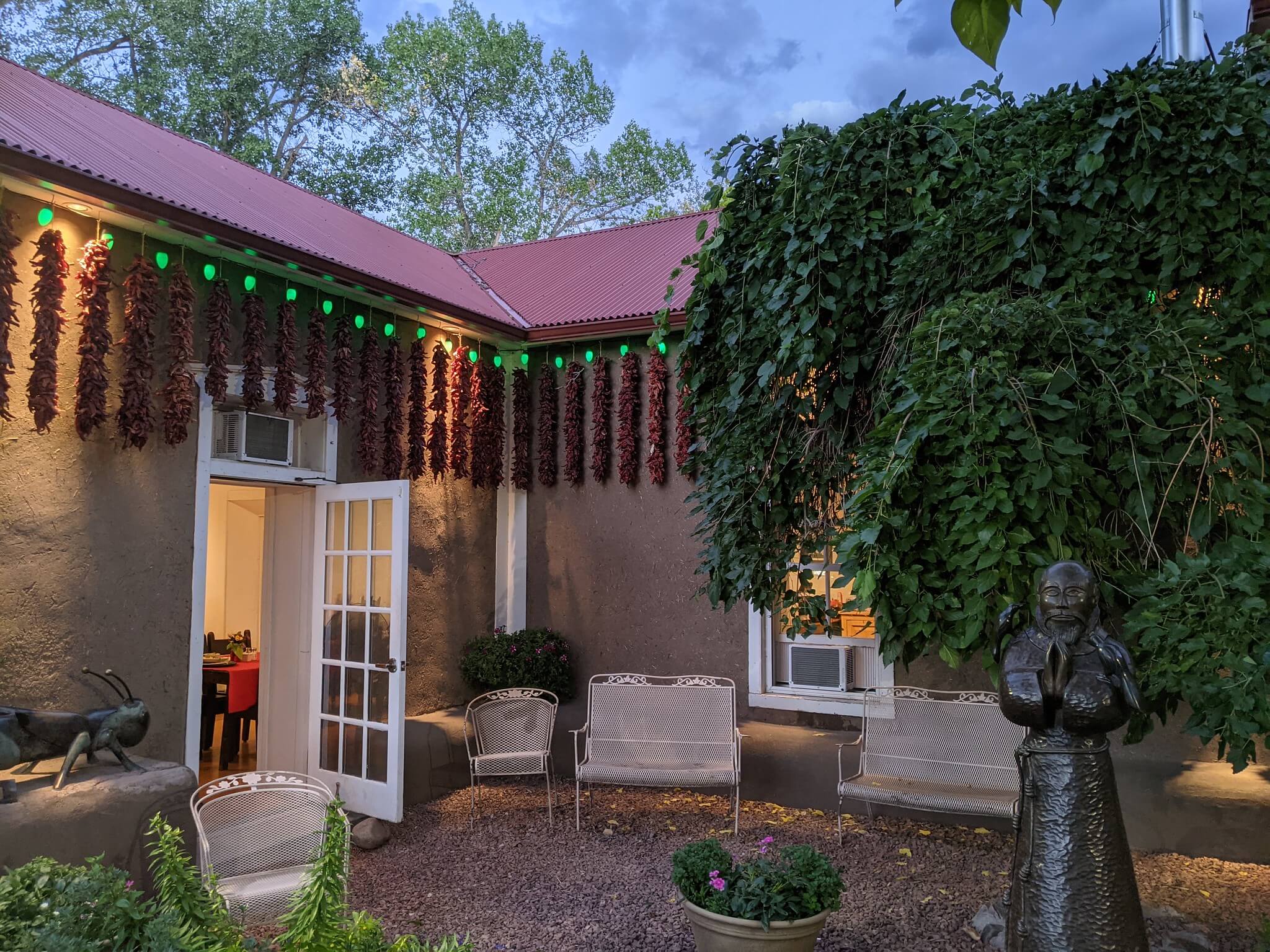
Rancho de Chimayo in northern New Mexico occupies the former Jaramillo family home, which was converted into a restaurant in 1965. The adobe house sits in the village of Chimayo, known for its historic sanctuary and weaving traditions.
Florence Jaramillo, known to many as Mrs. J, ran the restaurant for roughly 60 years. Many dishes use recipes that came directly from the family kitchen.
A South Dakota Opera House With Plates on the Stage
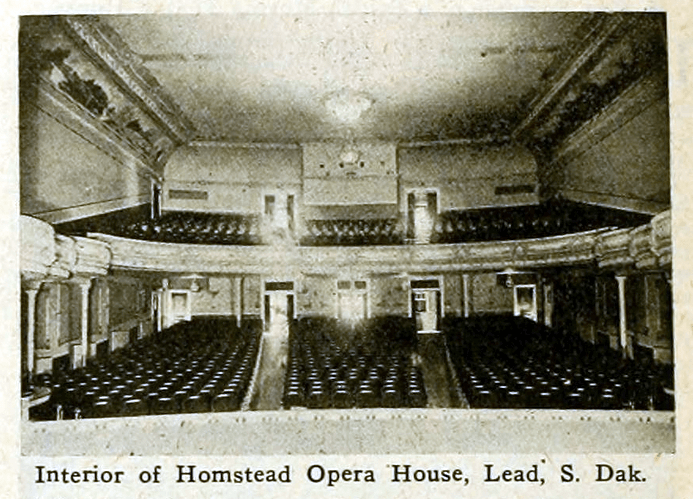
The Goss Opera House in Woonsocket, South Dakota, is an early twentieth century theater that has been restored and operates as a restaurant. Small prairie towns once built opera houses to host traveling stage companies, lectures, and community gatherings.
This one survived long after most of its peers disappeared or were demolished. Diners eat in a space designed for audiences rather than appetites.
Hudson Valley Dining Right on the Tracks
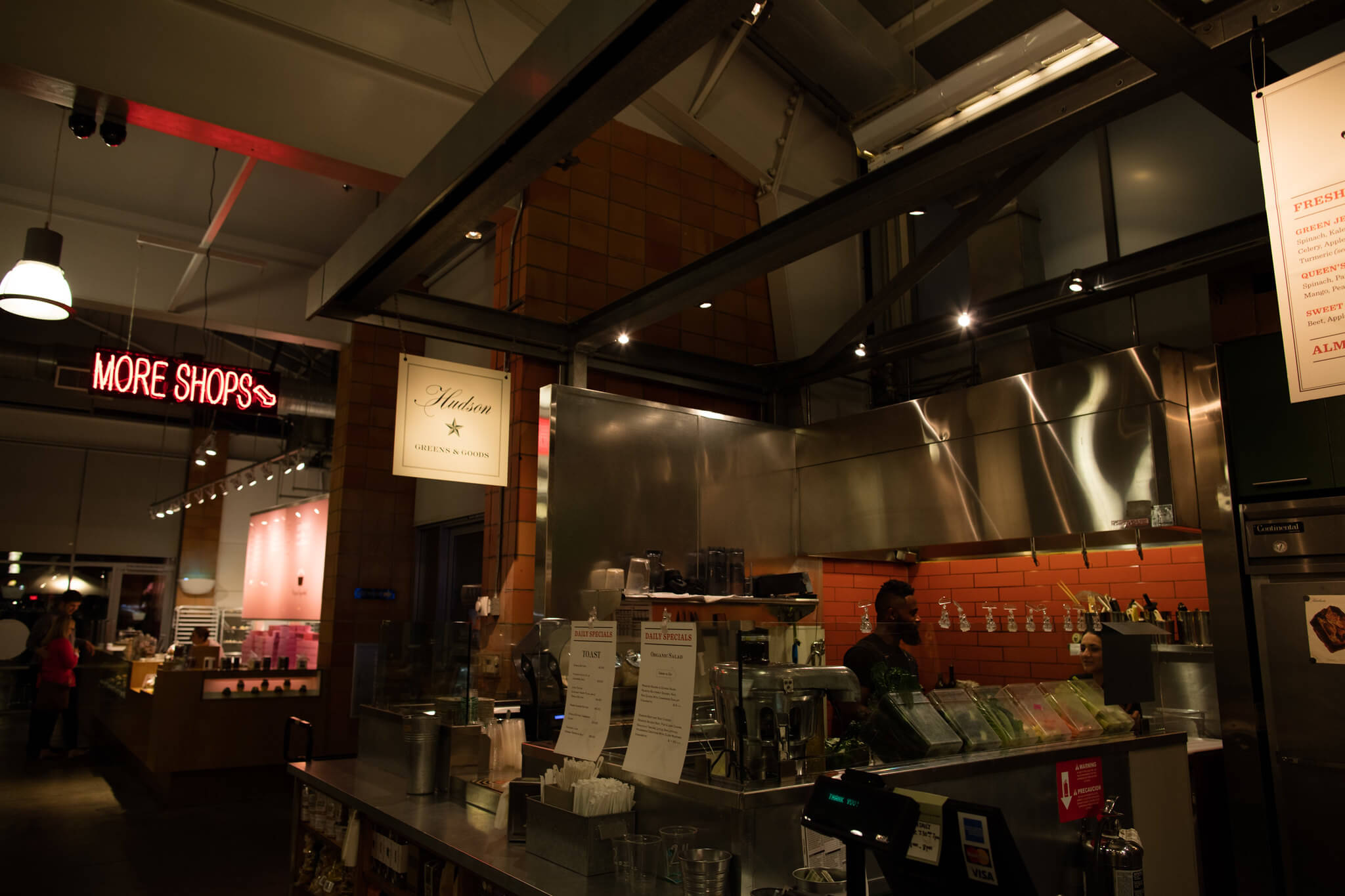
The Cold Spring Depot is a restaurant inside a historic train depot in Cold Spring, New York, right beside the tracks of the Metro-North Hudson Line. The building is a reminder of the days when rail travel connected river towns to the city.
Commuter trains still glide past the windows, so lunch comes with a view of the working railroad. The setting keeps the depot’s original purpose visible.
Dinner in a Bank Vault in Magee, Mississippi
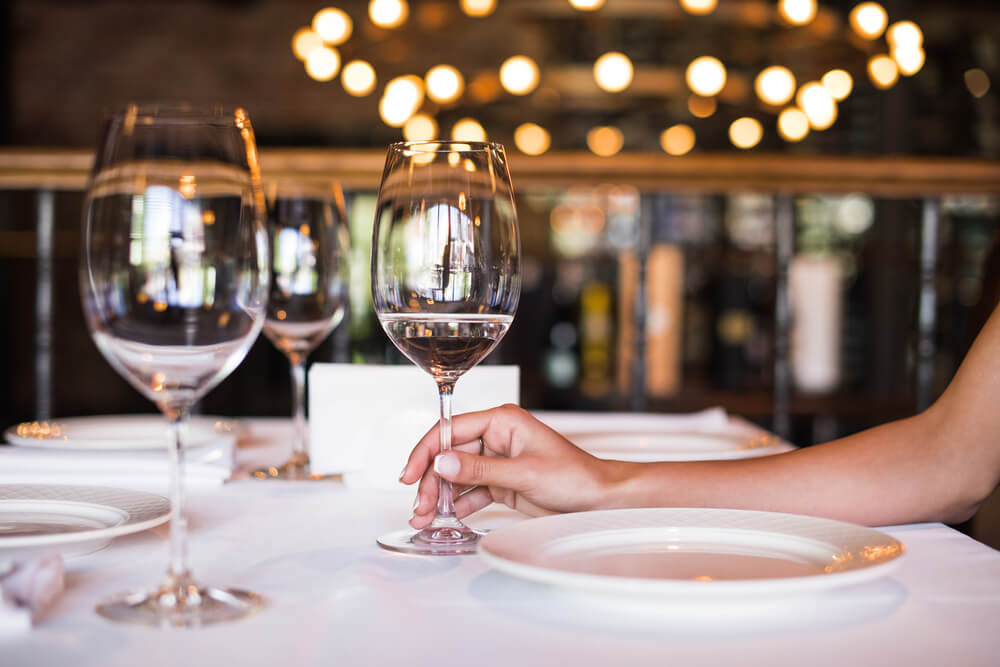
The Vault in Magee, Mississippi, is a restaurant in a former bank building, and it lives up to its name by seating diners in an actual bank vault. Heavy steel doors and thick walls give a private dining experience unlike any other in town.
The building is a reminder of the days when downtown banks were designed to look and feel indestructible. Eating where cash was once secured makes for a conversation piece.
A Tremont Bank With a Vault for a Dining Room
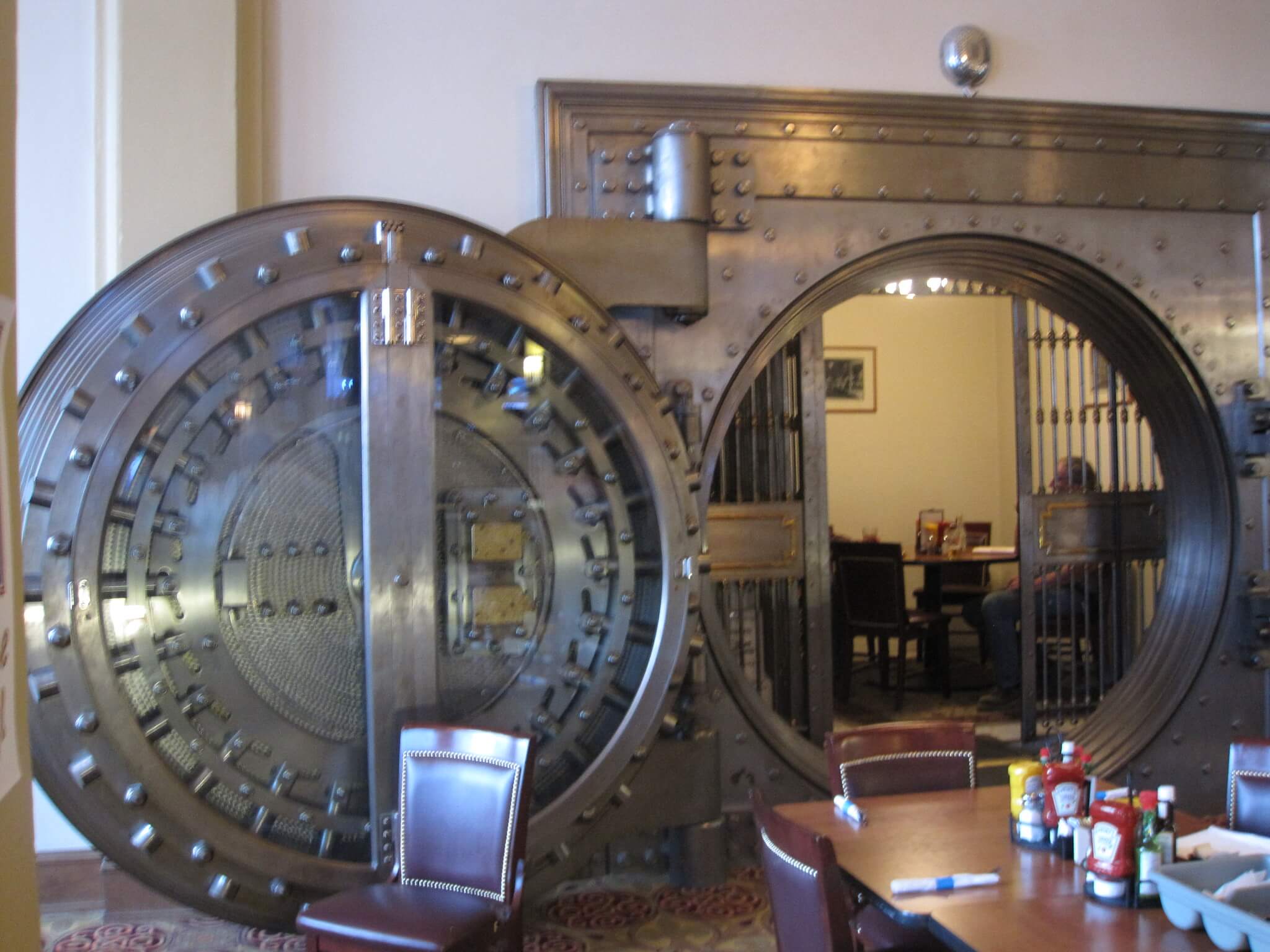
Dante, in Cleveland’s Tremont neighborhood, operates in a historic bank building and offers diners the chance to eat in the old vault. Chef Dante Boccuzzi opened the restaurant in a neighborhood known for its churches and steeples.
The building’s masonry and vault door remain striking features. Seating guests behind a vault door turns private dining into an event.
Charleston’s Victorian House on Queen Street
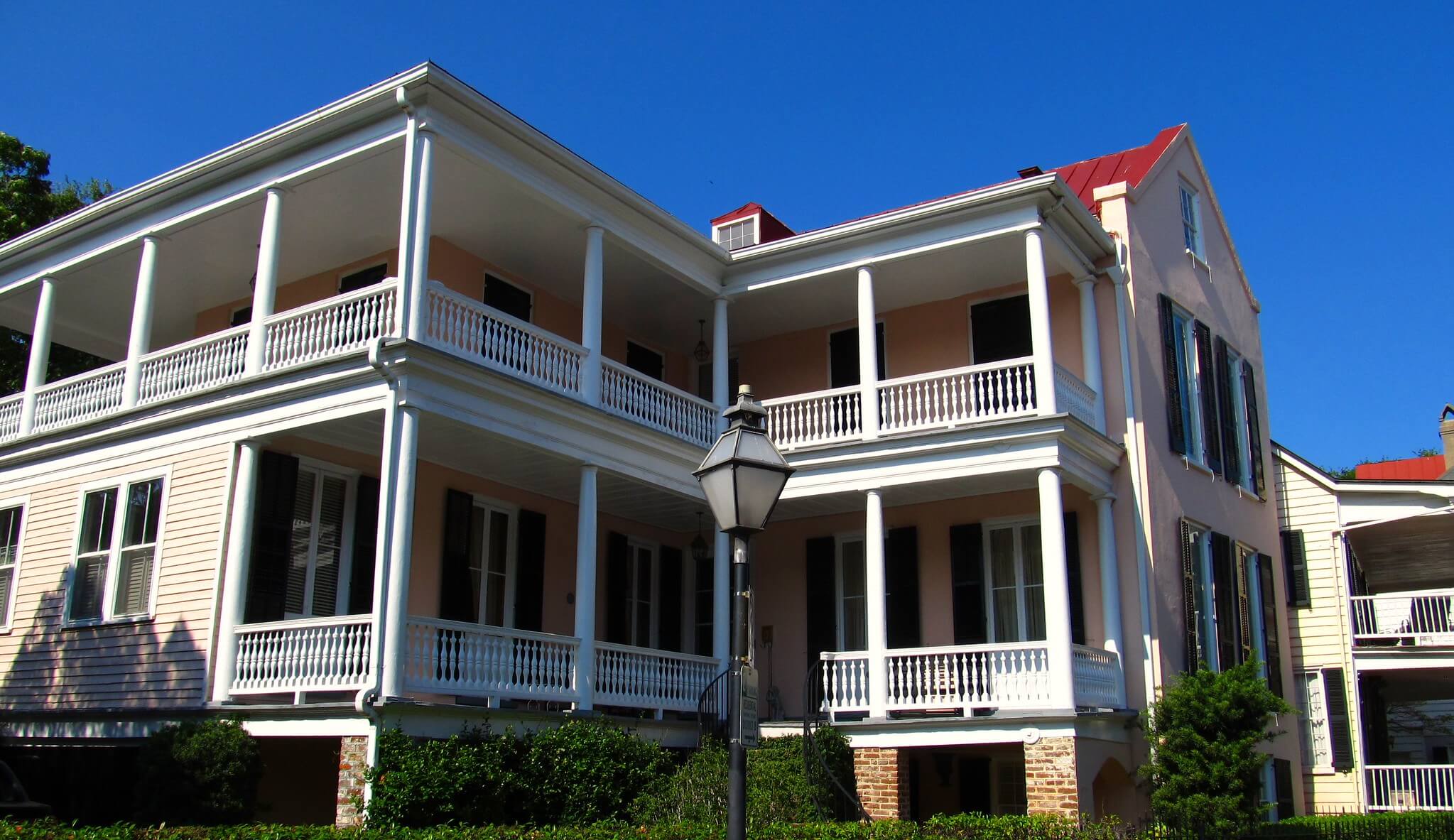
Husk occupies a Victorian house on Queen Street in Charleston, South Carolina, built in the late nineteenth century. The restaurant is known for a rule that its menu would feature only ingredients from the American South, which famously kept olive oil off the shelves.
Porches wrap the exterior, and the interior rooms retain the proportions of a family home. The strict menu philosophy suits a house that is itself a Southern original.
Los Angeles French Dip in the Pacific Electric Building
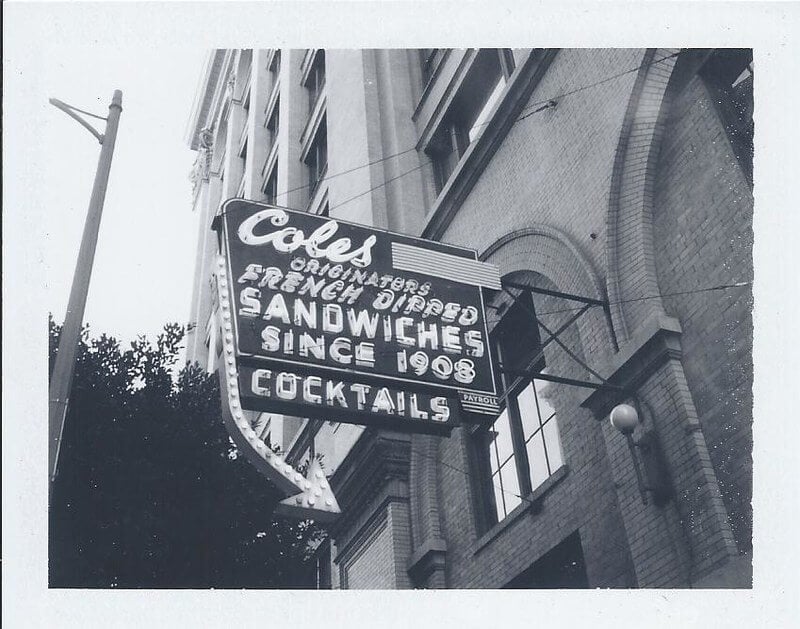
Cole’s opened in 1908 in the Pacific Electric Building in downtown Los Angeles, a station for the famed Red Car trolleys. For more than a century it served diners in a room with a historic downtown atmosphere.
Cole’s claims to have invented the French dip sandwich, a claim contested by another downtown restaurant. Either way, the setting kept the old transit era alive.
What a Building Remembers
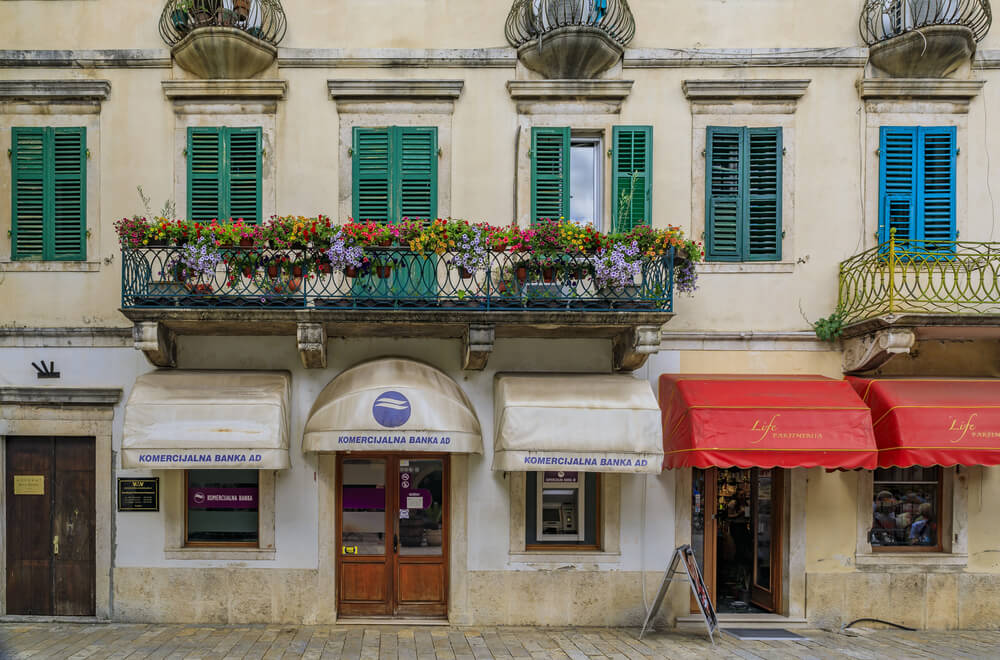
Looking across these rooms, a pattern emerges. The buildings that survive tend to be those that find a second purpose, and restaurants are surprisingly good at it.
They need big rooms, sturdy walls, and a sense of occasion, and a former jail, church, or train station delivers all three. The meal becomes a reason to keep the lights on.
Preservation advocates often say that the best way to save an old building is to use it. A tavern from the 1600s or a bank vault from the early 1900s will only last if people keep walking through the door. Every reservation at a table like these quietly funds the upkeep of something irreplaceable.
The next time a menu comes with a plaque on the wall, it is worth reading the plaque first.
More from Go2Tutors!

- 27 Silver Dollars and Half Dollars Worth Keeping
- 28 Restaurant Menu Items Nobody Orders Anymore
- 17 Places Built in Seemingly Impossible Spots
- 27 Vintage Rings Worth More Than They Look
- 25 Restricted Sites Tourists Can’t Enter
Like Go2Tutors’s content? Follow us on MSN.