25 Declassified Military And Intelligence Operations That Sound Too Strange To Be Real
Governments keep secrets — some for national security, some to avoid embarrassment, and many simply because bureaucratic momentum is harder to stop than a freight train. But secrets have a way of surfacing eventually, prised loose by congressional investigations, Freedom of Information Act lawsuits, the periodic mass releases of old records, and the occasional retired official who decides the public has waited long enough.
What follows is a tour through operations that genuinely happened and have genuinely been declassified, drawn from across the Cold War and the decades since. Some were exposed by the Church Committee in the 1970s; others trickled out through the National Security Archive, the JFK records releases, or formal program acknowledgments years after the fact.
A few were creative, several were desperate, and a number were simply bizarre. None of them needed embellishment to be remarkable.
Operation Acoustic Kitty
The CIA’s effort to turn a housecat into a mobile listening device is the kind of story that sounds invented and isn’t. During the 1960s, the agency’s Directorate of Science and Technology surgically implanted a microphone, a transmitter, and a wire antenna into a cat, hoping it could wander near Soviet officials and quietly record their conversations.
The plan ran aground on a basic truth that every cat owner already knows: cats do not take orders. According to former CIA officer Victor Marchetti, the project cost something on the order of $20 million across roughly five years, and the most repeated account holds that on an early outing near the Soviet compound in Washington, the cat was struck and killed by a taxi almost immediately.
A 1967 internal memo concluded the technique wasn’t practical, and the program was shut down. The documents surfaced when the agency’s files were declassified in 2001, and they remain partially redacted even now.
Project ARTICHOKE
Government scientists wanted to know whether interrogation, drugs, and hypnosis could be combined to control a human mind — to compel actions, extract information, or induce amnesia on command. Project ARTICHOKE, formally launched by the CIA in 1951, pursued exactly that, and it fed directly into the far better-known MKUltra program that followed.
The experiments involved drugs, hypnosis, and coercive interrogation, sometimes on subjects who had no idea what was being done to them. The program never produced the reliable “mind control” its planners imagined, because no such capability exists, but the willingness to chase it on unwitting people became one of the defining scandals exposed when the abuses were laid out before the Church Committee in 1975.
Much of the documentary record survives only because investigators forced it into the open. CIA Director Richard Helms had ordered most of the MKUltra-era files destroyed in 1973.
Operation CHAOS
Domestic surveillance of American citizens is supposed to be outside the CIA’s charter, which is what makes Operation CHAOS so striking. From the late 1960s into the early 1970s, the agency monitored the antiwar movement and other domestic dissidents, ultimately compiling files on roughly 7,000 Americans and a much larger index of names and organizations.
The justification was a hunt for foreign influence — officials wanted to know whether the protests roiling American campuses were being funded or directed from abroad. They found essentially no evidence of it, yet the surveillance continued for years.
CHAOS became one of the central exhibits when the Church Committee catalogued the intelligence community’s domestic overreach in the mid-1970s.
The Bay Of Pigs And The Castro Assassination Plots
The 1961 Bay of Pigs invasion failed spectacularly and publicly. Less visible at the time was how determined, and how strange, the parallel campaign to kill Fidel Castro had become.
The CIA recruited Mafia figures to arrange Castro’s death and developed poison pills meant to be slipped into his food. Over the years, planners floated an almost comic range of schemes, including the famous notion of a poisoned or exploding cigar and a contaminated diving suit.
None came close to working. The full catalogue of these plots was documented internally in the agency’s “Family Jewels” report and aired publicly by the Church Committee, which devoted an entire interim report to assassination planning in 1975.
Operation TIMBER SYCAMORE
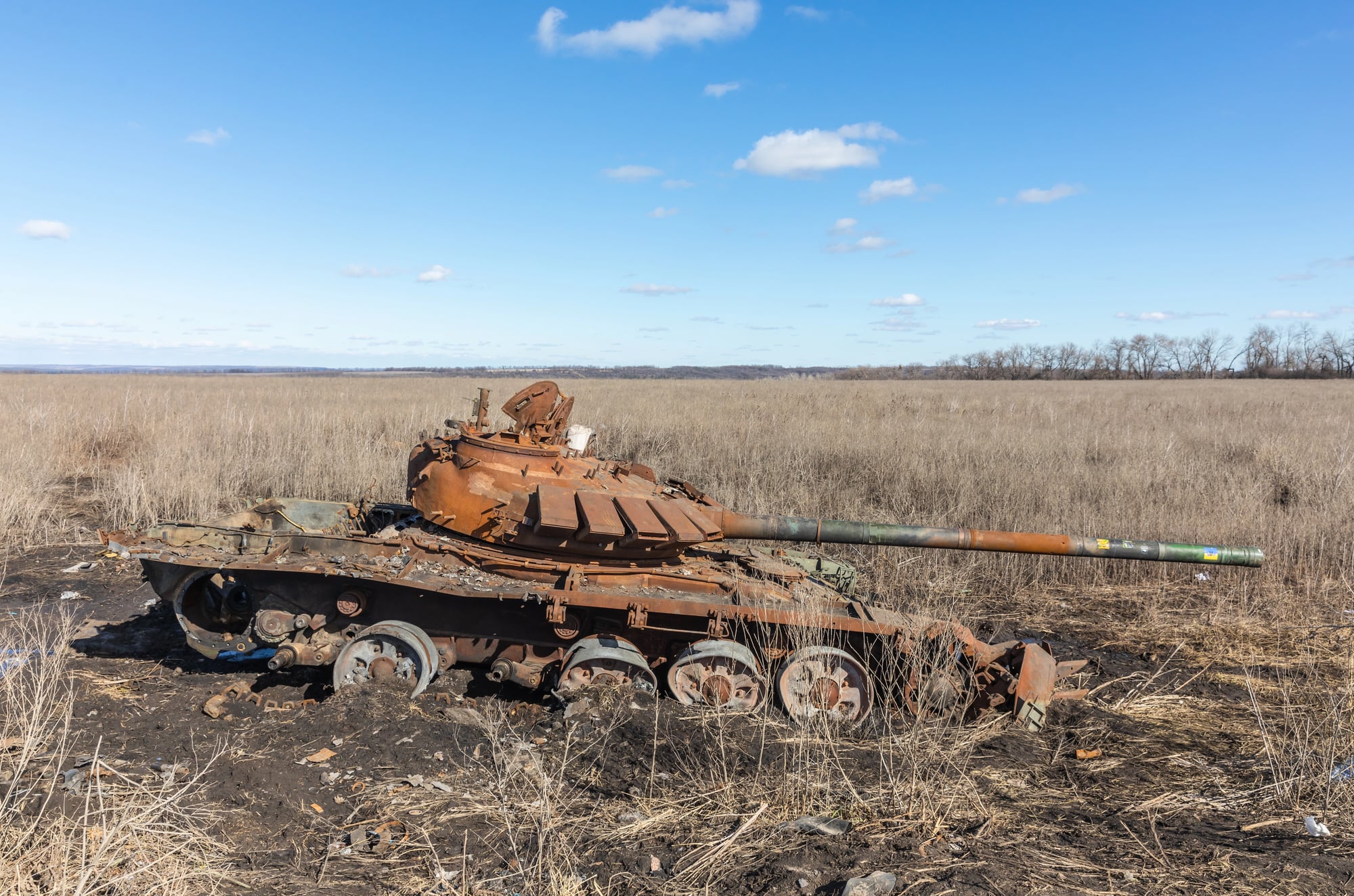
Not every entry here is decades old. TIMBER SYCAMORE was a classified CIA program, reportedly authorized around 2013, to arm and train Syrian rebels fighting the Assad government.
It was one of the largest covert arming efforts of its era, and for years it was an open secret that officials refused to confirm. As with many such programs, the results were contested.
Weapons and training intended for vetted groups did not always stay with them, and the strategic payoff was hotly debated inside the government. The effort was reported to have been wound down in 2017.
The Phoenix Program
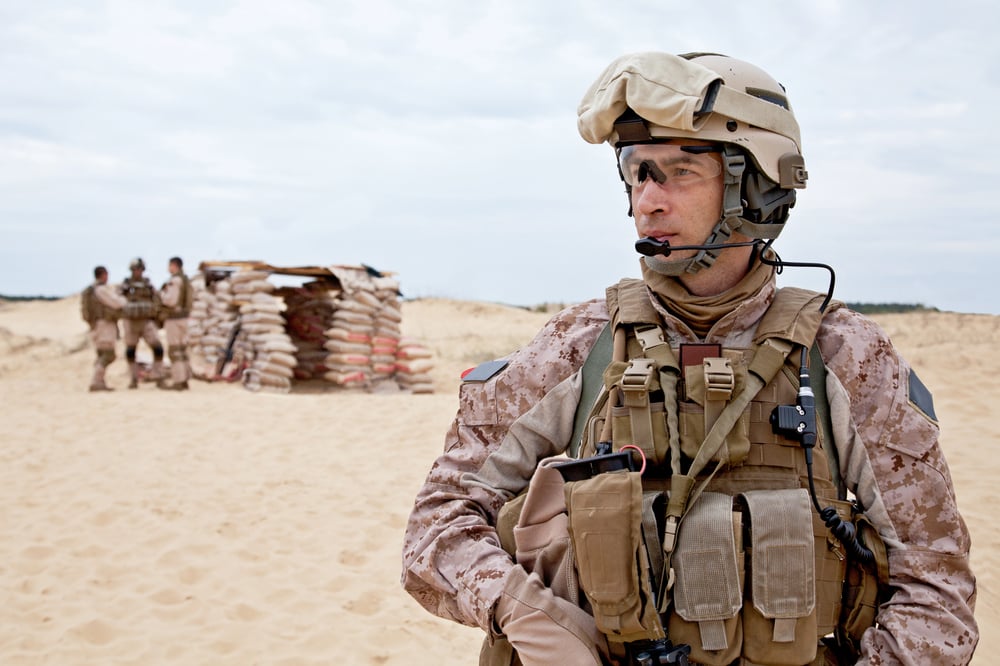
The Phoenix Program was the United States’ systematic effort to dismantle the Viet Cong’s civilian support network in South Vietnam, running from the late 1960s into the early 1970s. It combined intelligence-gathering with the detention, interrogation, and killing of suspected members of that infrastructure.
The official tallies attributed tens of thousands of deaths to the program, and its targeting was frequently criticized as unreliable, with innocent civilians swept up alongside genuine combatants. Phoenix was investigated in congressional hearings in the early 1970s, and it remains one of the most studied and most disputed counterinsurgency efforts in American history — cited by some as effective and by others as a euphemism for assassination.
Project MKNAOMI
While MKUltra chased the mind, its sibling program MKNAOMI handled the hardware. This was the CIA’s effort, pursued with the Army’s biological warfare specialists at Fort Detrick, to develop and stockpile toxins and the means to deliver them covertly.
The program’s most infamous artifact surfaced during the 1975 Church Committee hearings, when Senator Frank Church held up a CIA dart gun designed to fire a tiny, near-undetectable toxin-tipped projectile. The episode became one of the iconic images of the entire investigation.
The stockpile itself had become a scandal because President Nixon had ordered biological agents destroyed in 1969–70, yet the CIA had quietly retained a cache of toxins in violation of that order.
Operation GOLD
In the mid-1950s, American and British intelligence dug a tunnel from West Berlin into the Soviet sector to tap into underground Soviet and East German communication cables. Operation GOLD (known to the British as Operation STOPWATCH) was an extraordinary feat of engineering, running hundreds of meters under one of the most sensitive borders on earth and harvesting a flood of intercepted traffic.
The sting in the tale is that the Soviets knew about the tunnel before the first shovel went in. George Blake, a British intelligence officer secretly working for Moscow, had betrayed the plan.
The Soviets allowed it to operate anyway rather than expose their source, eventually “discovering” the tunnel in 1956 in a way that let them score a propaganda win. Historians still debate how much each side ultimately gained from a wiretap that both sides, in different ways, controlled.
The School Of The Americas
For decades the U.S. Army trained Latin American military officers at the School of the Americas, an institution that became notorious across the region. Its purpose was to build anti-communist partnerships during the Cold War; its legacy was tangled up with some of the era’s worst human-rights abuses.
In 1996 the Pentagon acknowledged that training manuals once used at the school had included material on coercive interrogation and other improper techniques. A number of the school’s graduates were later implicated in coups, death squads, and atrocities in countries including El Salvador, Guatemala, and Chile.
Sustained public pressure led to the school being renamed and restructured in 2001, though critics argued the change was largely cosmetic.
Operation NORTHWOODS
In 1962, senior Pentagon planners drafted one of the most disturbing proposals in American military history: a series of staged, fabricated attacks — including faked terrorism against American targets — designed to manufacture public support for an invasion of Cuba. The documents were detailed, complete with proposed pretexts.
Crucially, the plan was rejected by civilian leadership and never carried out. But the fact that it was drawn up and forwarded at all is what makes it so sobering.
The Northwoods documents were declassified in 1997 through the Assassination Records Review Board and reached a wide audience in 2001 via James Bamford’s book on the NSA — which means this is precisely the kind of operation the original framing of “declassified in the last decade” got wrong. It came out a quarter-century ago, and it’s been unsettling people ever since.
The Stargate Project And Government Remote Viewing
For more than two decades, U.S. intelligence agencies funded research into “remote viewing” — the claimed ability to gather information about distant places through psychic perception. The umbrella effort, eventually known as the Stargate Project, grew out of Cold War anxiety that the Soviets were investing in parapsychology and that America couldn’t afford to fall behind.
Operatives were asked to mentally “describe” distant military sites and locate targets. When the CIA commissioned an outside review in 1995, the conclusion was blunt: the program had produced nothing of demonstrable intelligence value, and it was shut down.
The declassified files are a fascinating monument to how seriously two superpowers were willing to take the paranormal when each suspected the other of doing the same.
Operation MONGOOSE
After the Bay of Pigs, the Kennedy administration redoubled its efforts to undermine Castro through a coordinated campaign of sabotage and subversion known as Operation MONGOOSE. Running through 1961 and 1962, it pulled together the CIA, the military, and other agencies under intense White House pressure to do something about Cuba.
The program funded sabotage of Cuban infrastructure and economic targets and overlapped with the assassination planning documented elsewhere. Some of the brainstormed schemes were genuinely strange, reflecting a planning culture willing to entertain almost anything.
MONGOOSE wound down amid the Cuban Missile Crisis, when the stakes of provoking Havana and Moscow suddenly became impossible to ignore. It was laid bare, like so much else here, by the Church Committee.
Operation PAPERCLIP
In the aftermath of World War II, the United States recruited German scientists and engineers to work on American military and space programs — and quietly smoothed over the Nazi pasts of many of them. Operation PAPERCLIP brought more than 1,500 specialists to the U.S. in the years after 1945.
The most famous recruit was Wernher von Braun, the rocket engineer whose wartime V-2 program had relied on concentration-camp slave labor and who went on to become a central figure at NASA. Background investigations were often deliberately sanitized to let valuable recruits through, a compromise officials justified as keeping that expertise out of Soviet hands.
Successive document releases over the decades have steadily filled in how much was known, and overlooked, at the time.
The Family Jewels
In the early 1970s, amid mounting scrutiny, the CIA compiled an internal accounting of its own potentially illegal activities. Known informally as the “Family Jewels,” the dossier catalogued assassination plotting, domestic surveillance, mail opening, the human experiments, and collaboration with organized crime.
The report helped trigger the landmark Church Committee investigation and the Rockefeller Commission. The full document, running to nearly 700 pages, was finally released by the CIA in June 2007 — not in the last decade, as the earlier draft of this list claimed, but a genuinely significant disclosure that let the public read the agency’s own confession in its own words for the first time.
Operation CONDOR
Operation CONDOR was a coordinated campaign of political repression and assassination carried out by the right-wing military dictatorships of South America in the 1970s and 1980s. Members included Chile, Argentina, Uruguay, Paraguay, Bolivia, and Brazil, who shared intelligence and pursued dissidents across one another’s borders.
Declassified U.S. documents released over the years have illuminated Washington’s awareness of, and in some respects support for, the regimes involved. CONDOR’s reach extended even to assassinations carried out in foreign capitals, including the 1976 car-bombing of former Chilean official Orlando Letelier in Washington, D.C.
The exact death and disappearance tolls are still studied and debated by historians and human-rights investigators, but the scale was vast.
Project VENONA
VENONA was a decades-long U.S. effort, begun in 1943, to break the encrypted communications of Soviet intelligence. Painstaking cryptanalytic work eventually decrypted portions of thousands of messages and exposed the extent of Soviet espionage inside the American government during and after the war.
The catch was that revealing VENONA’s success would have tipped Moscow off, so the decrypted intelligence usually couldn’t be used in open court. As a result, many identified Soviet contacts were never prosecuted.
The program was kept secret even from many senior officials and wasn’t publicly acknowledged until its release in 1995 — a date the program’s own history makes unavoidable, and another reason the “last decade” framing never fit.
Operation MOCKINGBIRD And CIA Media Influence
The CIA’s Cold War relationships with American journalists and news organizations have been the subject of intense scrutiny since the 1970s. The shorthand “Operation Mockingbird” is often used for these efforts, though historians note the label is used more loosely in popular accounts than the documentary record strictly supports.
What is well established, largely through the Church Committee and reporting by Carl Bernstein in 1977, is that the agency maintained relationships with journalists who shared information or provided cover, and that it influenced media output in various ways during the Cold War. After the 1970s investigations, the agency adopted formal policies restricting the use of accredited American journalists.
The episode remains a touchstone in debates about the press and government secrecy.
Operation GLADIO
During the Cold War, NATO and Western intelligence services established secret “stay-behind” networks across Western Europe — armed and trained cells meant to wage guerrilla resistance if the Soviets ever invaded and occupied. In Italy the network was code-named GLADIO, a name that came to stand for the whole continent-spanning effort.
The networks were exposed dramatically in 1990, when Italian Prime Minister Giulio Andreotti confirmed their existence to parliament, setting off investigations across Europe. The most explosive and contested questions concern whether elements of these networks were linked to domestic terrorism and political manipulation in countries like Italy.
Those allegations remain partly disputed, but the basic existence of the stay-behind armies is documented fact.
MKUltra
The most notorious of the CIA’s Cold War programs deserves its own entry. MKUltra, launched in 1953, was a sprawling effort to master techniques of mind control, behavior modification, and interrogation.
It funded experiments at universities, hospitals, and prisons, frequently on subjects who never consented and sometimes never knew. The program dosed people with LSD and other drugs, including in operations where unwitting members of the public were drugged so researchers could observe the effects.
Director Richard Helms ordered most of the files destroyed in 1973, but a cache of financial records survived and surfaced through a FOIA request in 1977, fueling Senate hearings that exposed the program’s scope. MKUltra is the reason “the CIA tested LSD on Americans” is a historical fact rather than a conspiracy theory.
Project SUNSHINE
Project SUNSHINE was a U.S. effort, beginning in the mid-1950s, to study how far radioactive fallout from nuclear testing had spread through the environment and the human body. To measure the uptake of strontium-90 in human bone, researchers collected tissue samples — including, disturbingly, from deceased infants and children — often without the knowledge or consent of the families involved.
The program came to fuller public light through the 1990s work of the Advisory Committee on Human Radiation Experiments, convened under President Clinton, which investigated Cold War radiation research. SUNSHINE sits alongside other declassified studies in which Americans were exposed to or studied for radiation effects without their informed consent, a body of history the government formally reckoned with only decades later.
The Tuskegee Syphilis Study
Not a military operation, but a U.S. Public Health Service program too consequential to omit from any honest list of secret government experiments on unwitting people. Beginning in 1932 and running an appalling forty years, the study followed hundreds of Black men with syphilis in Alabama while deliberately withholding treatment so researchers could observe the disease’s full progression.
The men were never told they had syphilis and were denied penicillin even after it became the standard cure in the 1940s. The study was exposed by a whistleblower and press reporting in 1972, ending only under public outrage.
It led directly to landmark reforms in research ethics and informed consent, and to a formal presidential apology in 1997. It stands as the starkest American example of how secrecy and institutional momentum can sustain something indefensible.
Operation LAC
In the largest known open-air biological test on American soil, the U.S. Army sprayed clouds of fine particles over wide swaths of the country in the late 1950s to study how a biological agent might disperse across a continent. Operation LAC — Large Area Coverage — released the particles from aircraft to be tracked downwind across hundreds of miles.
The Army used a fluorescent compound it considered harmless as a stand-in for a real agent, though later questions arose about the safety of repeated exposure to such materials. LAC was one of a series of dispersal tests, including releases over populated cities, that became public largely through later congressional inquiry in the late 1970s.
The episode is a vivid illustration of how readily Cold War planners treated the open country, and its residents, as a laboratory.
Project AZORIAN
One of the boldest intelligence operations of the Cold War, Project AZORIAN was the CIA’s audacious mission to raise a sunken Soviet ballistic-missile submarine from the floor of the Pacific Ocean — from a depth of roughly three miles. To do it without tipping off Moscow, the agency partnered with billionaire Howard Hughes, who provided a cover story: that his purpose-built ship, the Hughes Glomar Explorer, was mining manganese nodules from the seabed.
The 1974 recovery attempt was only partially successful, with much of the submarine reportedly breaking apart during the lift. AZORIAN also produced an enduring piece of legal language: when a journalist sought records about the operation, the CIA’s refusal to confirm or deny their existence created the “Glomar response,” now a standard tool of government secrecy.
Details of the operation itself were officially acknowledged only decades later.
The Berlin And Beyond: The CORONA Spy Satellites
For years, Americans were told that a program called Discoverer was launching scientific and biomedical research satellites. In reality, Discoverer was the public cover for CORONA, the first U.S. photo-reconnaissance satellite program, which from 1960 onward photographed the Soviet Union and other denied areas from orbit and returned the film to Earth in capsules snatched from the air by aircraft.
CORONA revolutionized intelligence, replacing dangerous U-2 overflights with imagery gathered safely from space, and it quietly debunked the feared “missile gap” by revealing the true, smaller size of the Soviet arsenal. The program was formally declassified in 1995, when President Clinton ordered the release of the early satellite imagery, finally letting the public see one of the Cold War’s best-kept and most consequential secrets.
Reading The Record
Step back from these twenty-five and a few honest patterns emerge — patterns more interesting than any “they only told us last year” hook.
First, most government secrets don’t come out through a single dramatic declassification. They come out in layers, over decades: a whistleblower here, a congressional committee there, a FOIA request, a mass records release, a formal apology a half-century late.
The Church Committee in 1975, the radiation-experiment review in the 1990s, the JFK records act, the 1995 imagery release — these were the real moments the curtain lifted, and most of them are not recent.
Second, the through-line in the worst of these operations isn’t cartoonish villainy. It’s the conviction that a sufficiently important goal — beating the Soviets, winning a war, gathering intelligence — justified treating human beings as means rather than ends, and that secrecy would keep anyone from ever having to answer for it.
The secrecy usually held for a long time. It rarely held forever.
And that’s the genuinely reassuring note to end on. Acoustic Kitty and the spy submarine make for great stories, but the operations that matter most on this list are the ones that produced reform: the ethics rules that came out of Tuskegee, the oversight committees that came out of the Family Jewels, the consent standards that came out of the radiation studies.
The lesson of the declassified record isn’t that the government can keep anything secret. It’s that, given enough time and enough pressure, it mostly can’t — and that the sunlight, when it finally arrives, tends to change the rules going forward.
More from Go2Tutors!

- The Romanov Crown Jewels and Their Tragic Fate
- 13 Historical Mysteries That Science Still Can’t Solve
- Famous Hoaxes That Fooled the World for Years
- 15 Child Stars with Tragic Adult Lives
- 16 Famous Jewelry Pieces in History
Like Go2Tutors’s content? Follow us on MSN.



