25 Forgotten Computer Accessories With Modern Collector Demand
Somewhere in a closet sits a tangle of cables and gray plastic that may be worth more than the computer it once served. Accessories were treated as disposable add-ons, which is exactly why clean survivors now attract serious bids.
The twist is that nobody is hunting these items for speed or storage. Collectors want the click, the glow, the odd shape, and the sheer nerve of a device that tried something strange.
IBM Model M Keyboard
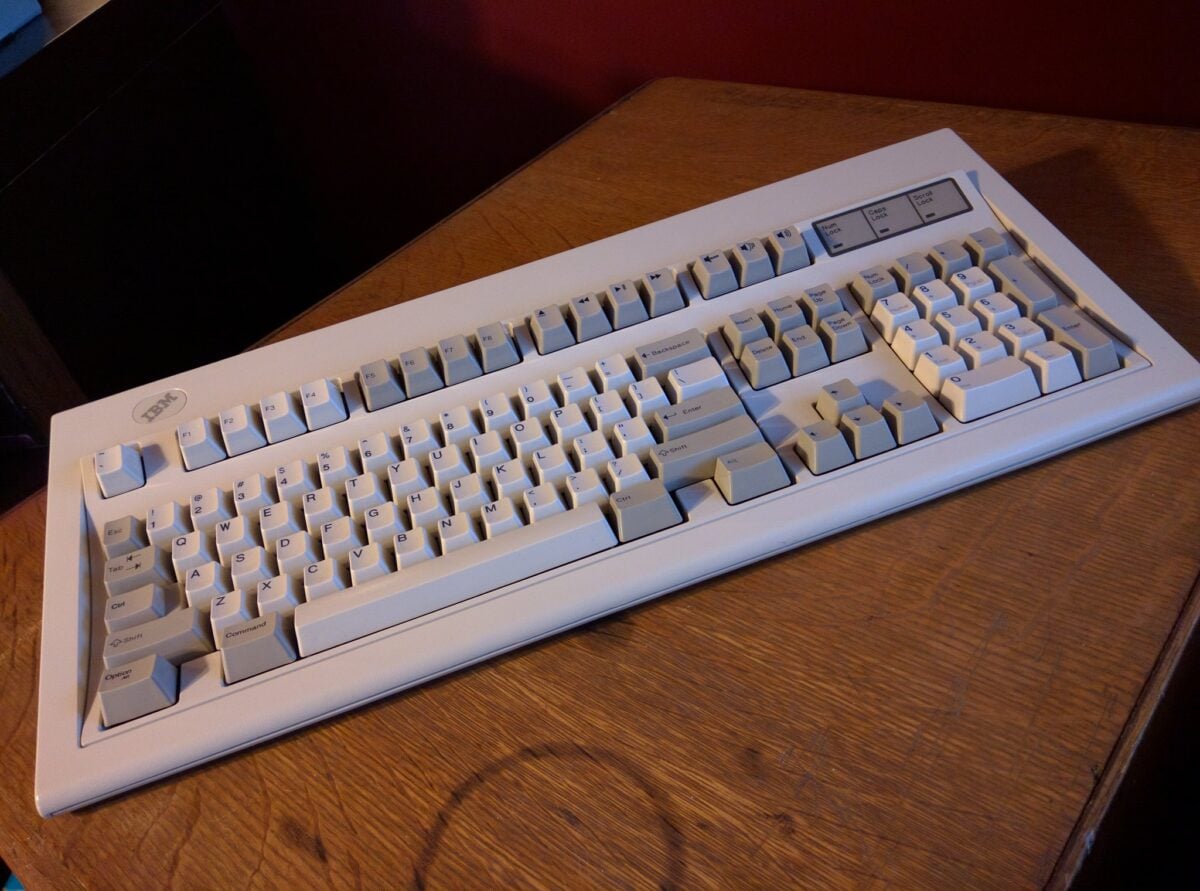
Introduced in 1985, the Model M uses a buckling-spring mechanism that produces the loud, crisp clatter office workers either loved or fled. The design proved so durable that Unicomp in Lexington, Kentucky still builds buckling-spring keyboards in the same tradition.
Original IBM-made units are the ones collectors chase, and prices swing with condition, since yellowed plastic, missing keycaps, and rare layouts all change what a board is worth.
Apple Extended Keyboard II
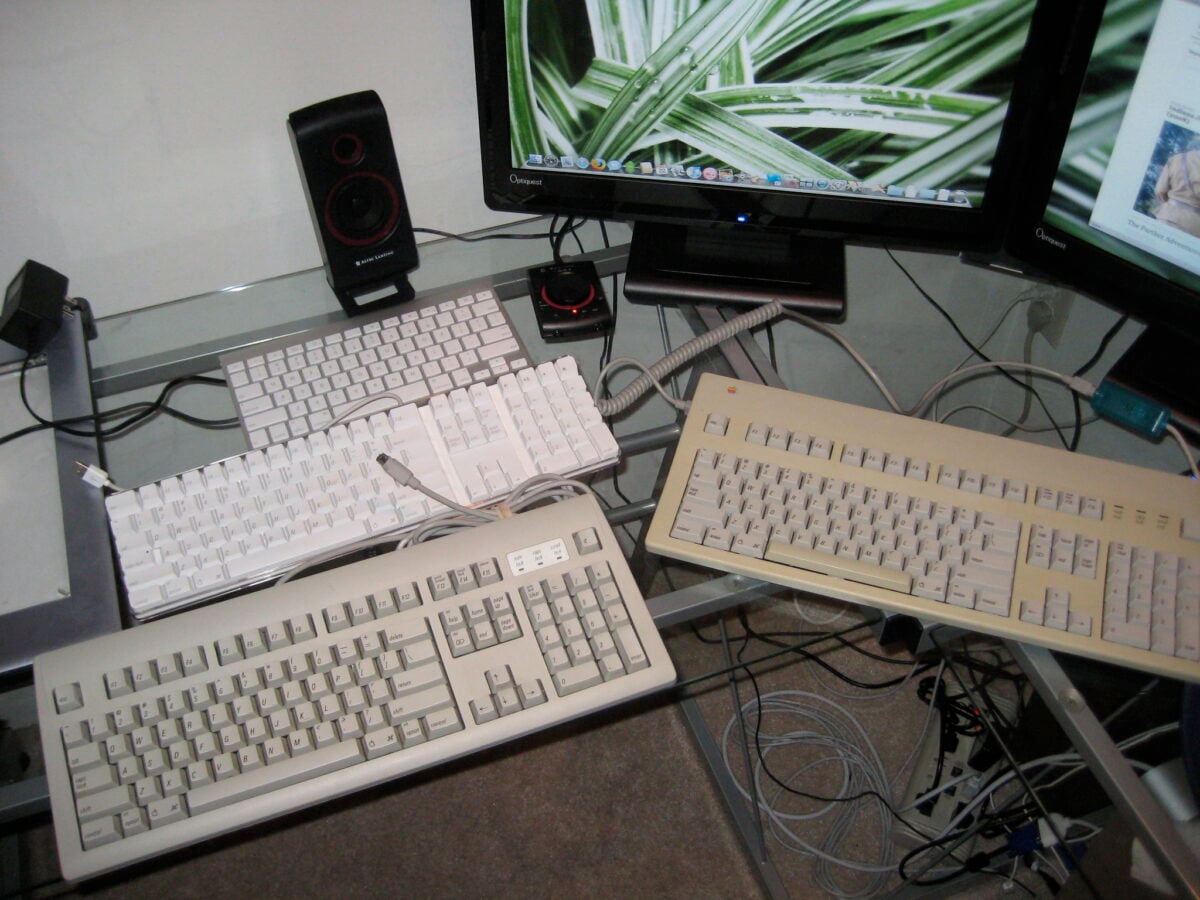
Apple released the Extended Keyboard II in 1990, a heavy Apple Desktop Bus board built around Alps mechanical switches. It was meant for professionals who needed function keys and a full navigation cluster, and it felt nothing like the thin keyboards that followed.
Today it is a favorite among mechanical keyboard fans who adapt it to modern computers, and value depends heavily on condition, with discoloration and worn switches pushing prices down.
IBM PCjr Chiclet Keyboard
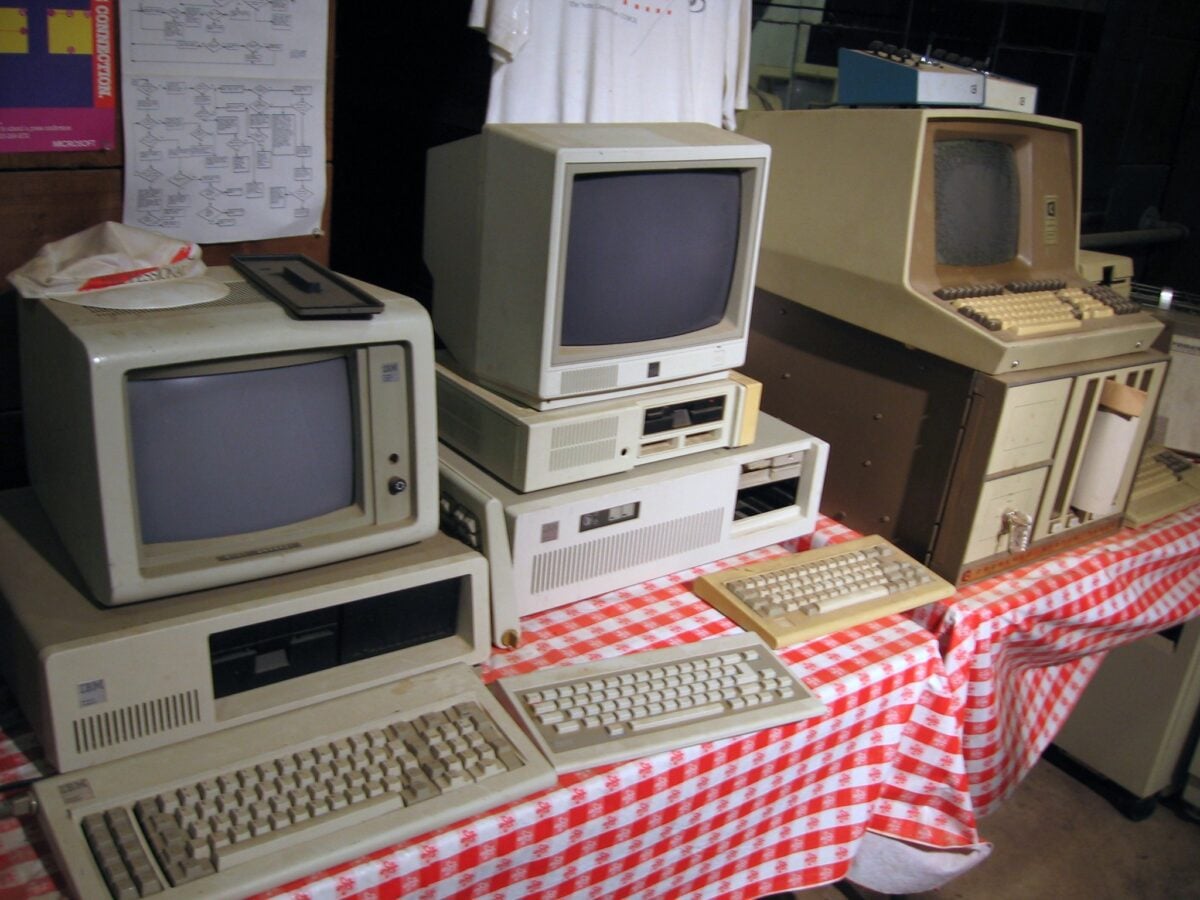
The IBM PCjr arrived in 1983 with a wireless infrared keyboard that used small rubber keys, earning it the nickname Chiclet. The keyboard became a symbol of a home computer that never found its audience, and the machine was dropped within about two years.
That failure is the appeal for collectors today, who prize complete units with intact cords and working infrared, with pricing tied closely to condition.
Optimus Maximus Keyboard
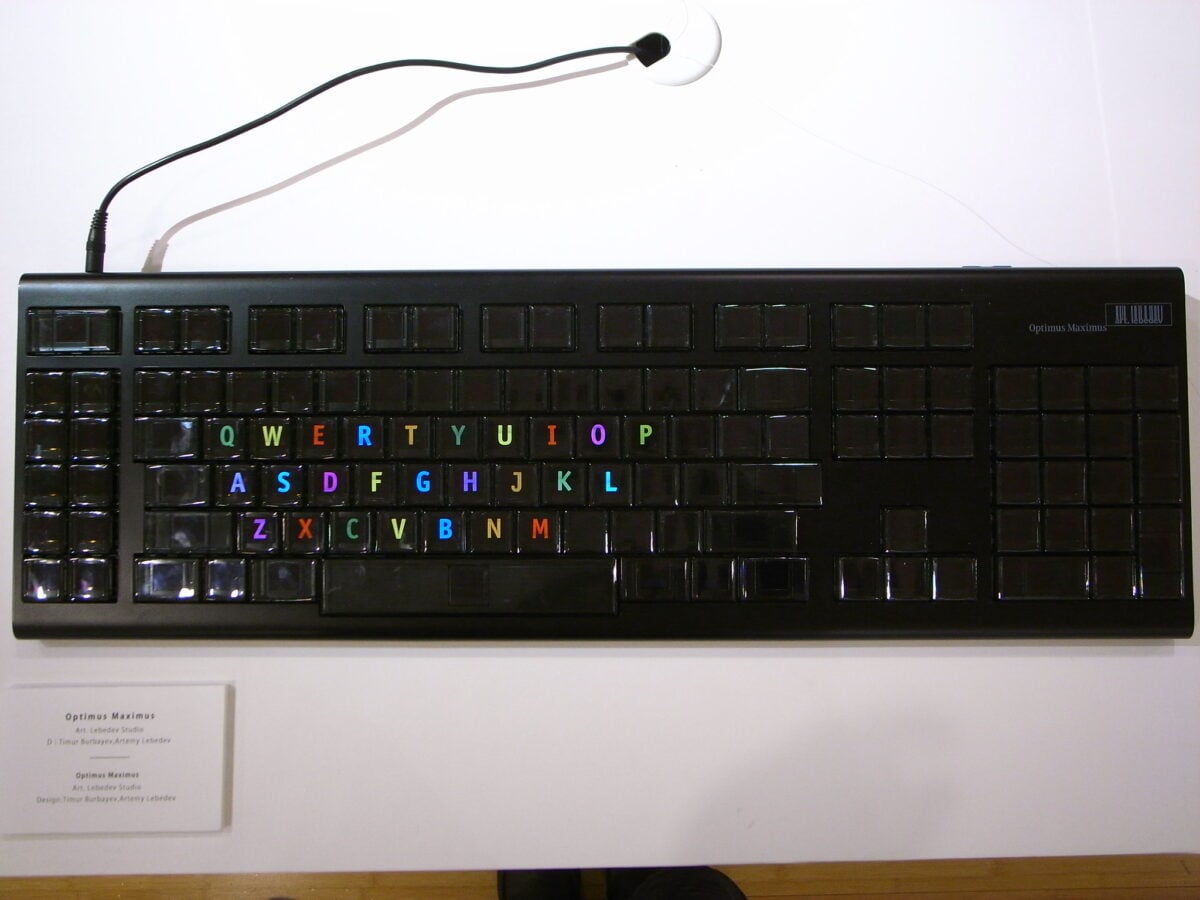
Art Lebedev Studio of Moscow built the Optimus Maximus with a tiny OLED screen inside every key, so the legends could change to match the software in use. It drew crowds at CES 2008, and the idea of a keyboard that rewrites itself felt years ahead of its time.
Production stayed limited, so surviving units are scarce, and any sale price depends on whether the key screens still light evenly.
Apple USB Hockey Puck Mouse
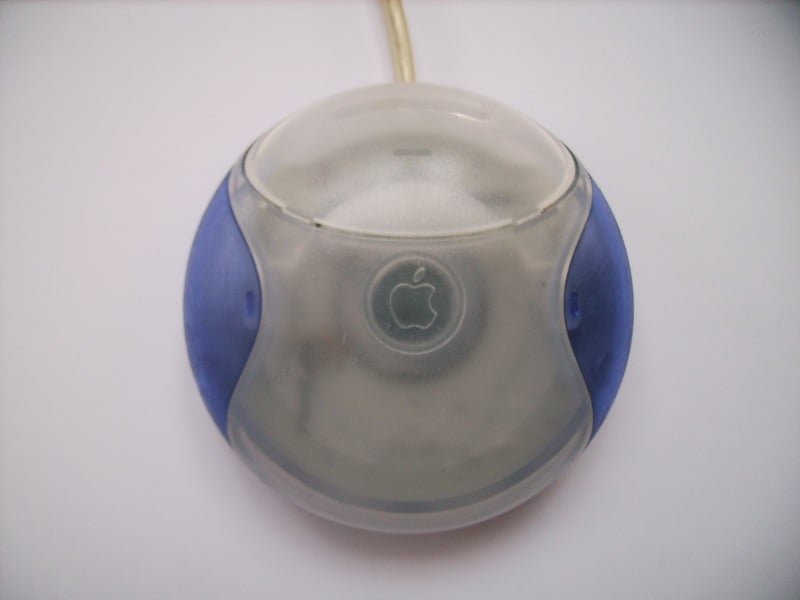
Shipped with the 1998 iMac, the round Apple USB Mouse earned the nickname hockey puck because users could not tell which way it was pointing. Critics hated it, and Apple replaced it with the Apple Pro Mouse in 2000.
Translucent colors such as grape and bondi blue are now sought after as period-correct iMac companions, and cracked cases or yellowed plastic cut into the asking price.
Atari CX40 Joystick
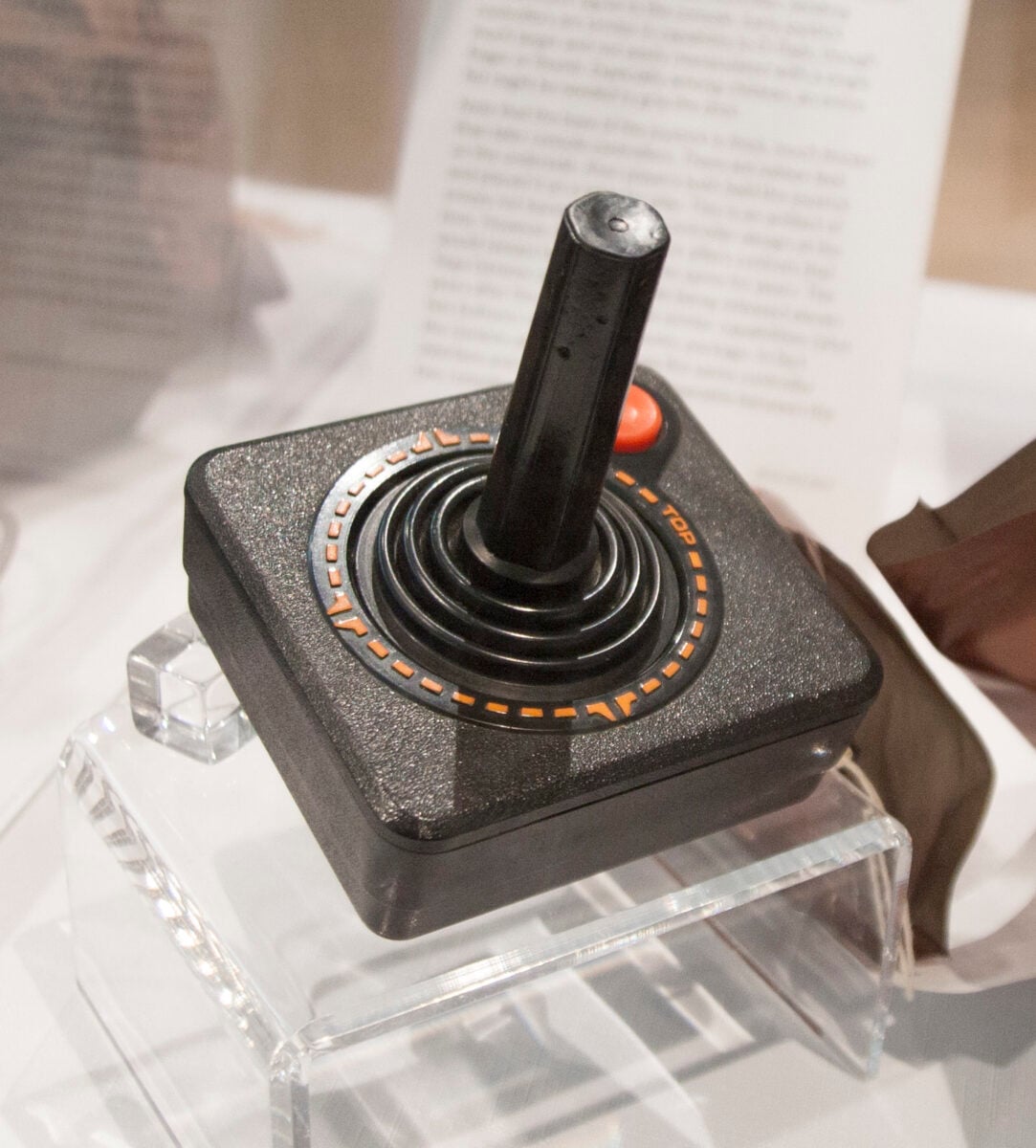
The CX40 launched in 1977 alongside the Atari 2600, and its nine-pin connector became a quiet standard for the decade. Commodore and Atari computers accepted it directly, which let one stick serve several machines.
Its single red button and stiff stick remain a reference point for retro gamers, and prices depend on whether the rubber boot and wiring survived intact.
Mattel Power Glove
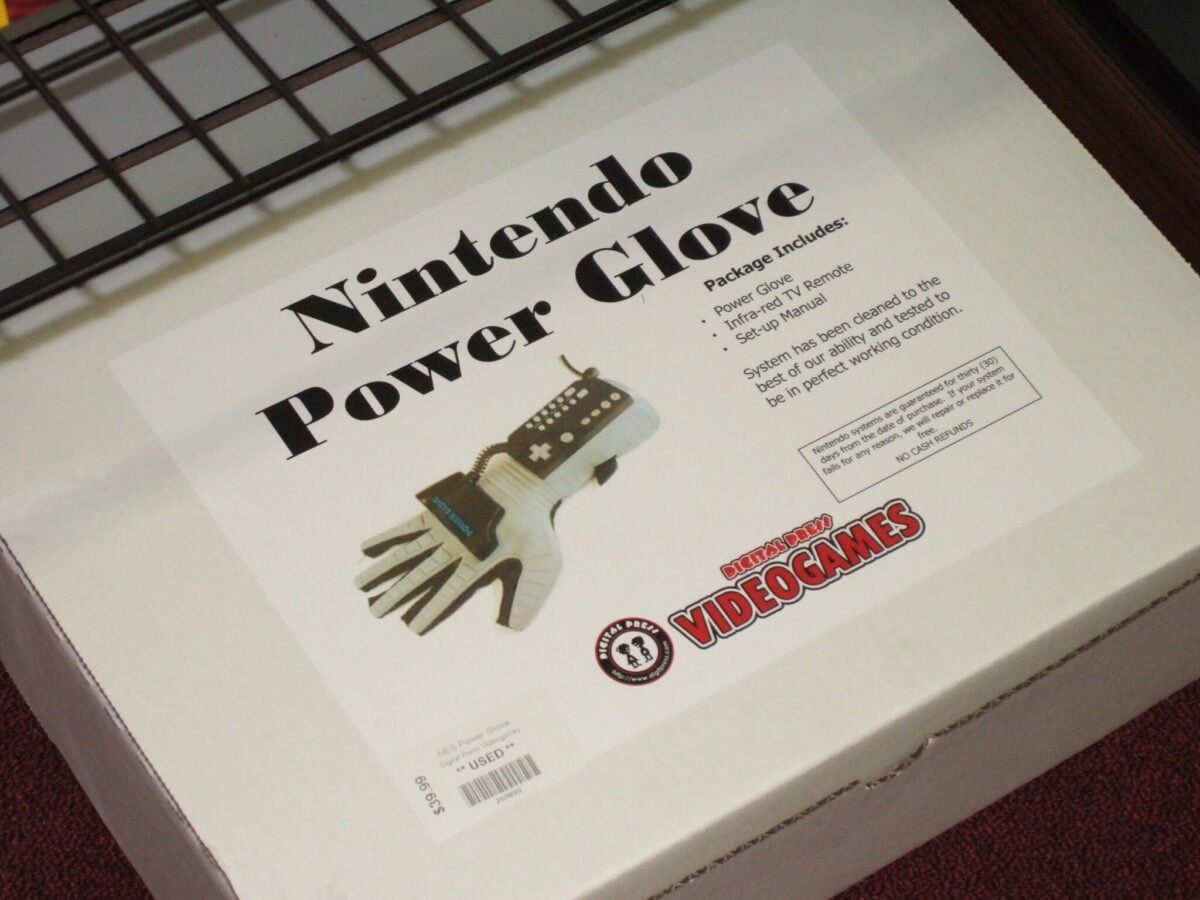
Mattel sold the Power Glove for the NES in 1989, and it appeared on screen in the film The Wizard that same year. Only two games were designed specifically for it, and Bad Street Brawler was one of them.
Its clumsy controls made it a punchline, but that reputation fuels demand, and complete boxed examples with working sensors command far more than loose gloves with cracked wiring.
Iomega Zip Drive
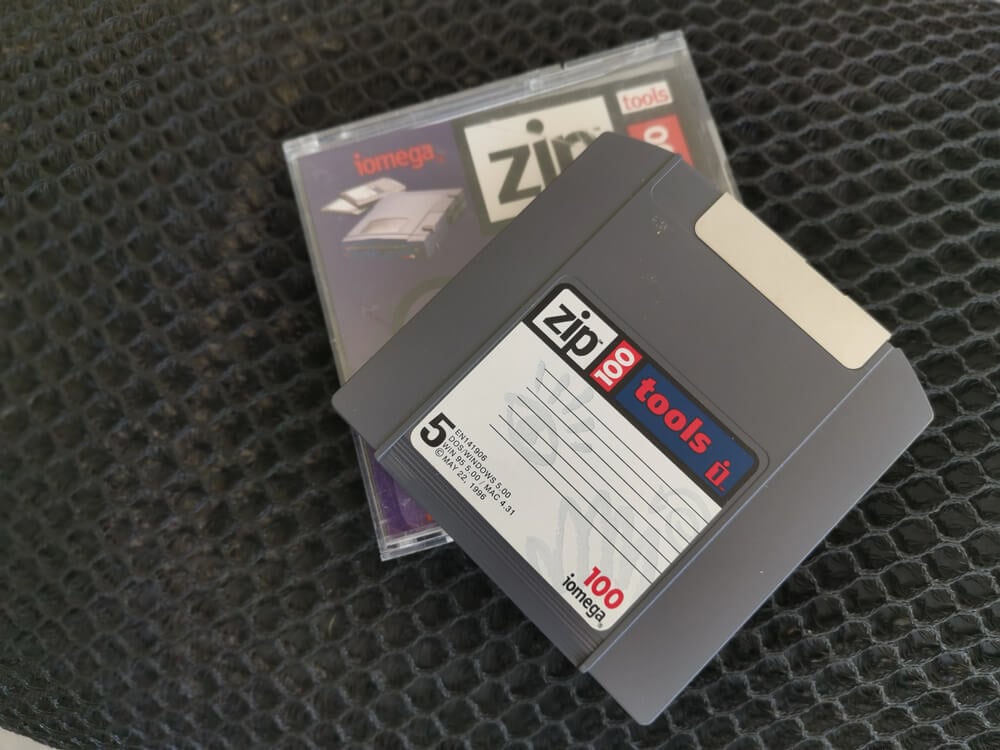
Iomega introduced the Zip drive in 1994 with 100 MB disks, which felt enormous when floppies held 1.44 MB. The brightly colored drives were everywhere in the late 1990s, until a failure mode called the click of death damaged reputations and disks alike.
Collectors now look for clean blue units, and condition matters because a working drive is far less common than a dead one.
Iomega Jaz Drive
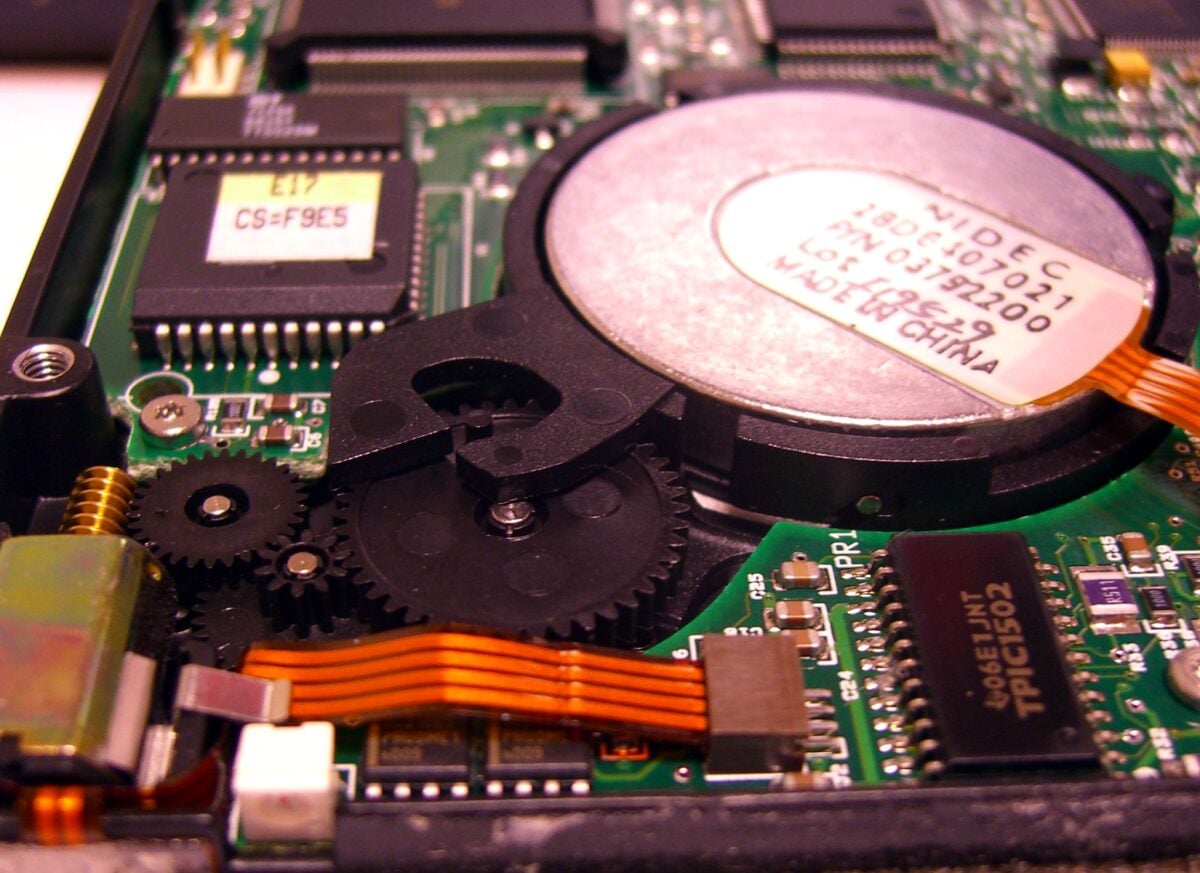
The Jaz drive reached the market in 1995 with removable cartridges holding 1 GB, and a 2 GB version followed. It behaved like a hard drive that could be carried in a jacket pocket, which made it a favorite of designers and video editors.
Cartridges wear out, so a Jaz that still reads reliably is valued above a nice-looking shell, and prices follow the condition of the drive and its media.
Imation LS-120 SuperDisk Drive
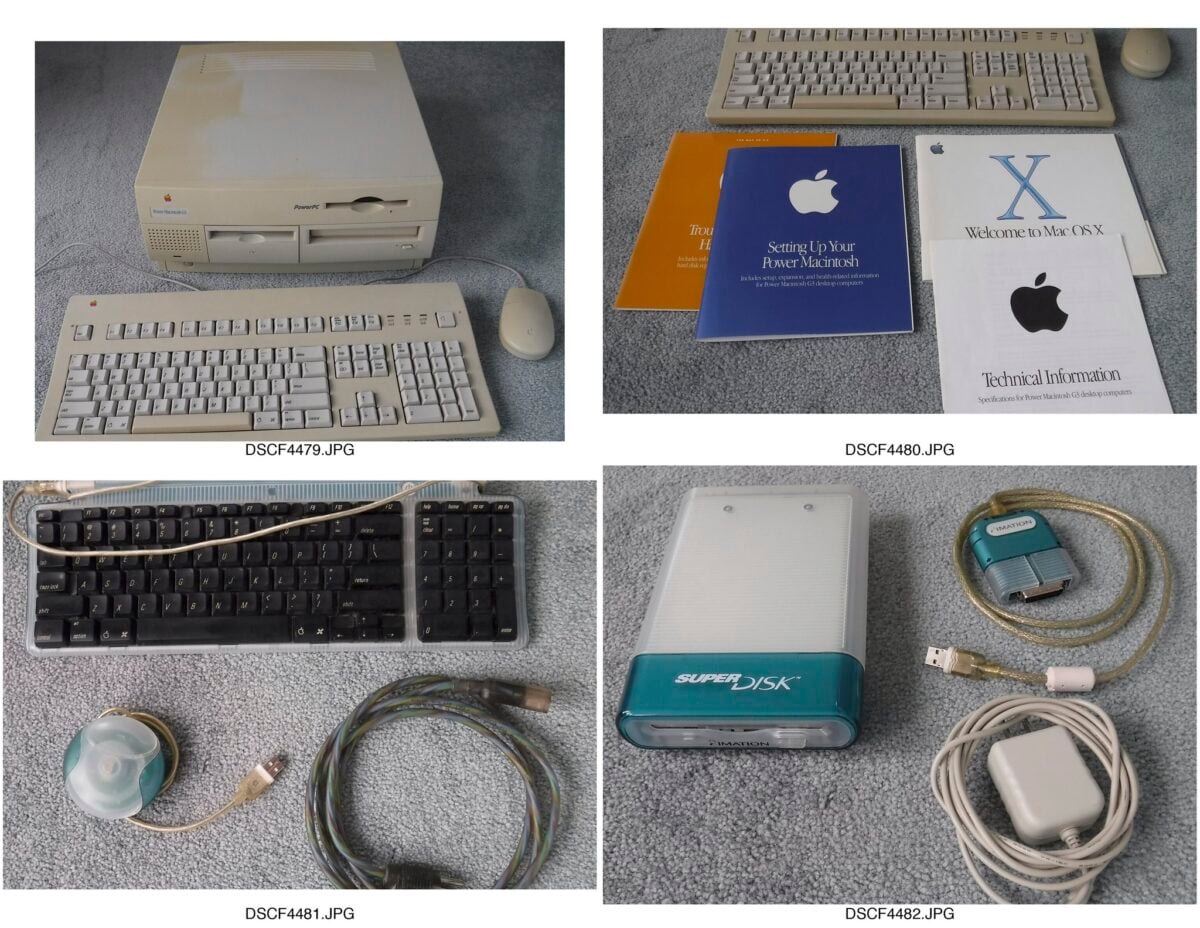
The SuperDisk fit 120 MB on a disk shaped like a floppy and could still read standard 1.44 MB floppies. Imation promoted it in the late 1990s, and some PC makers built it into desktops.
It lost the format war to cheaper options, which makes the surviving drives and disks a niche prize, and condition of the read head determines whether a unit is a collectible or a paperweight.
Sinclair ZX Microdrive
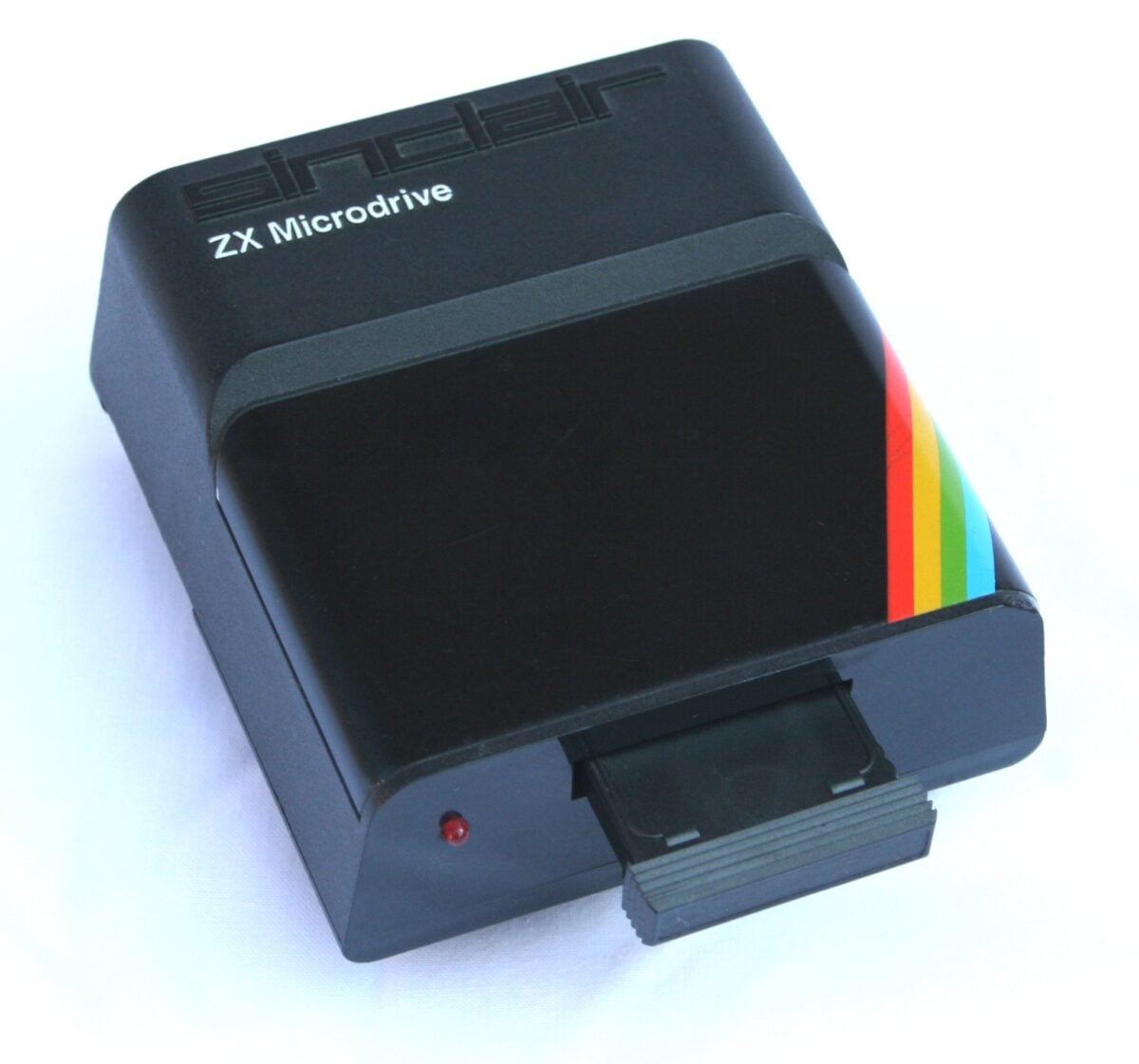
Sinclair brought out the ZX Microdrive in 1983 as a cheap storage system for the ZX Spectrum, using small cartridges of continuous tape looped inside. It was faster than cassette loading but notoriously unreliable, which is part of its legend among British computer fans.
Boxed sets with cartridges in good condition are scarce, and prices rise or fall with how well the tape loops have aged.
Commodore 1530 Datasette
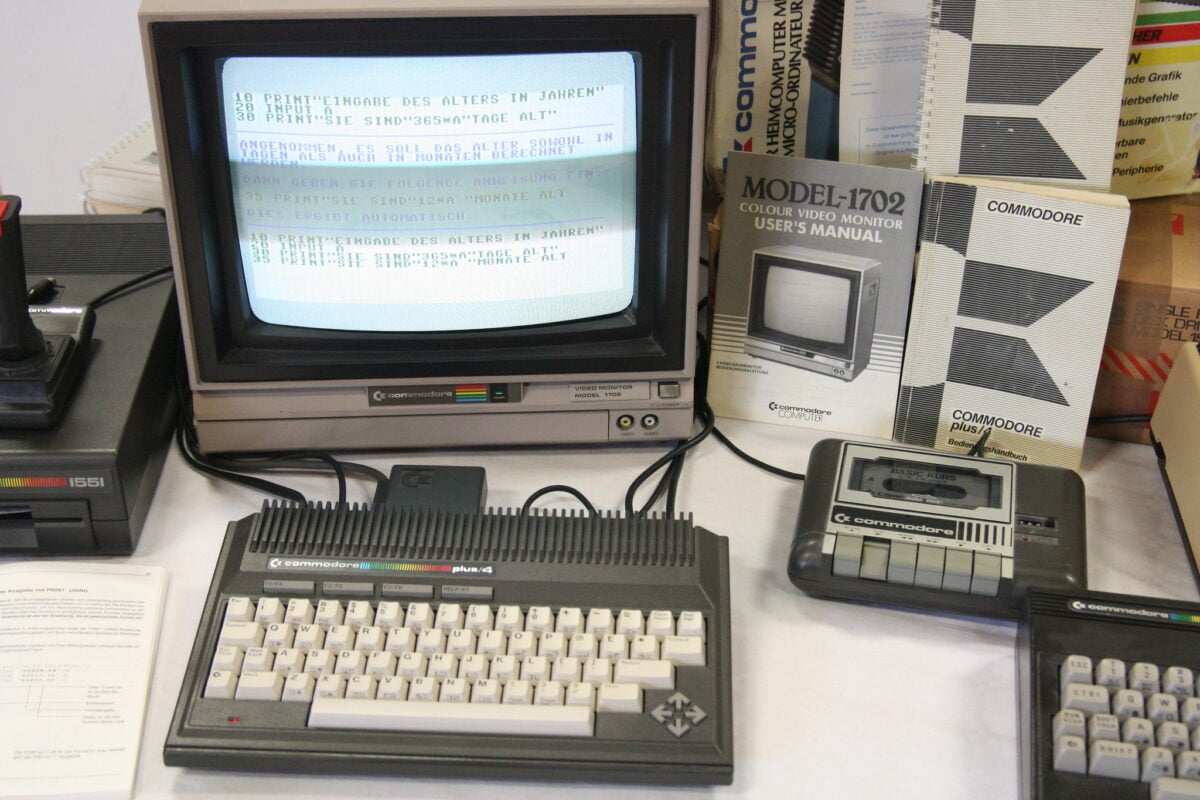
The Datasette was Commodore’s tape recorder for the VIC-20 and Commodore 64, built to load programs from audio cassettes. Its slow loading was a rite of passage for a generation of young programmers, who waited minutes for a game to appear.
Working units are still prized by enthusiasts who want authentic setups, but old rubber belts often perish, so condition drives the price.
Commodore 1541 Disk Drive
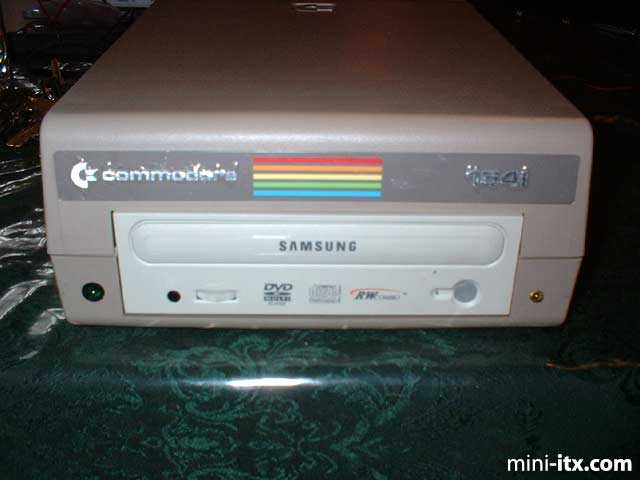
The 1541 was the standard 5.25-inch floppy drive for the Commodore 64, and it carried its own processor inside the case. It was famously slow, yet it became the gateway to a large library of games and tools.
Collectors often prefer the early cream-colored cases, and prices depend on alignment, power supply health, and the condition of the plastic.
Hayes Smartmodem
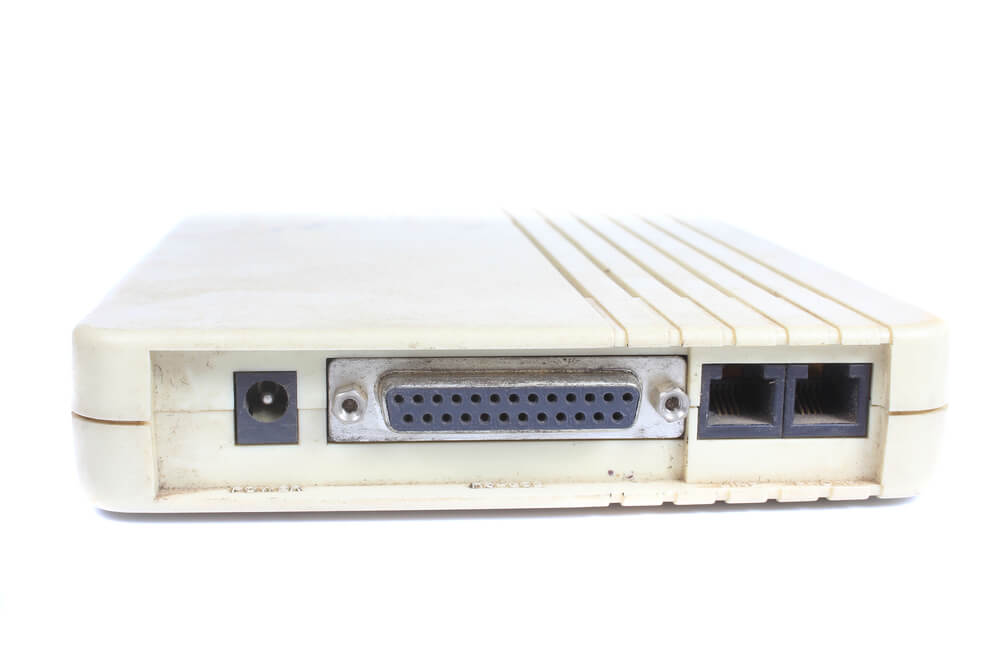
Hayes introduced the Smartmodem in 1981, a 300 baud device that accepted commands typed directly from the computer. Its command set, which begins with the letters AT, was copied by nearly every modem that followed.
Original units with the metal case and indicator lights intact attract retro networking fans, and condition plays a large part in what a seller can ask.
Apple AirPort Base Station
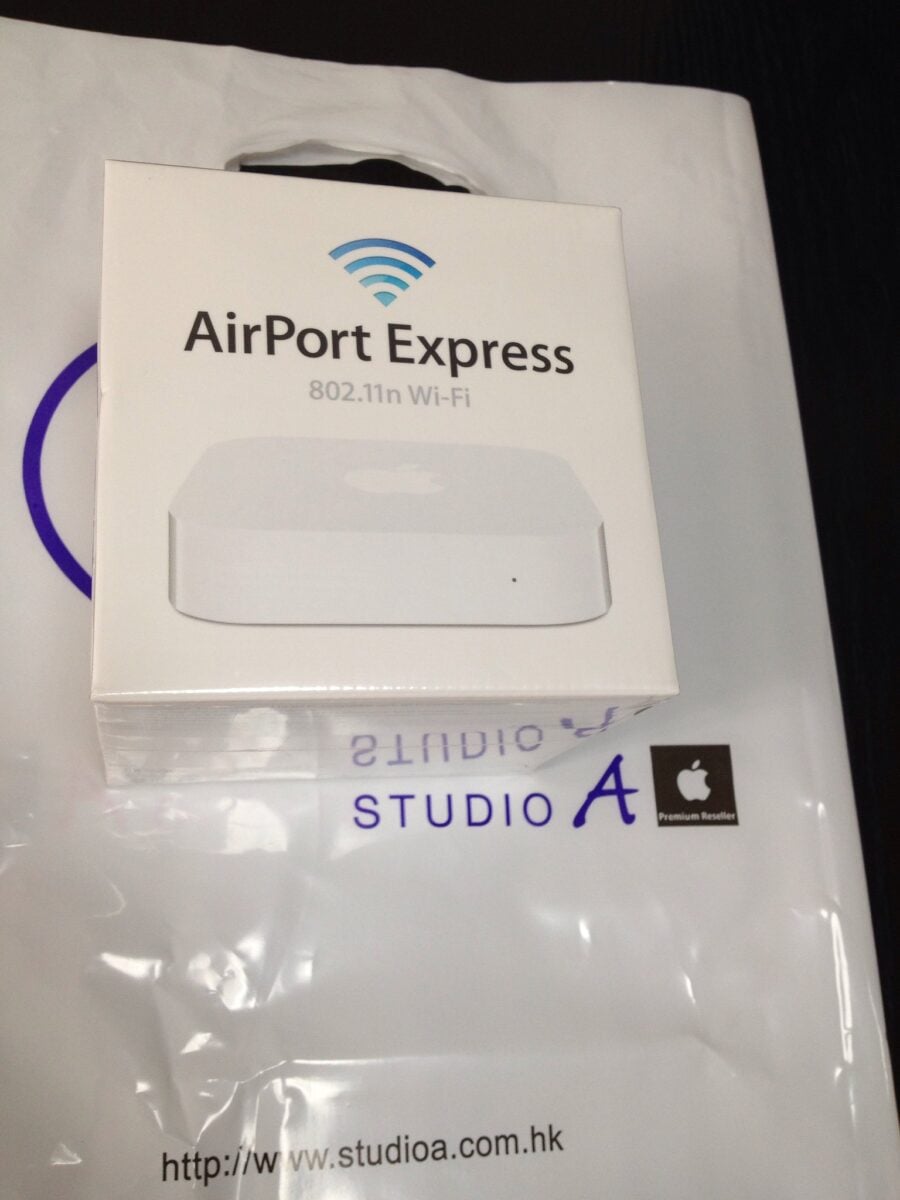
Apple unveiled AirPort in 1999 alongside the iBook, bringing wireless networking at 11 Mbps to ordinary consumers. The first base station was a rounded graphite dome that looked like a small flying saucer, and it set the tone for home networking hardware.
Collectors treat the original as a design artifact, and scratched domes or missing power supplies lower its value.
Apple QuickTake 100
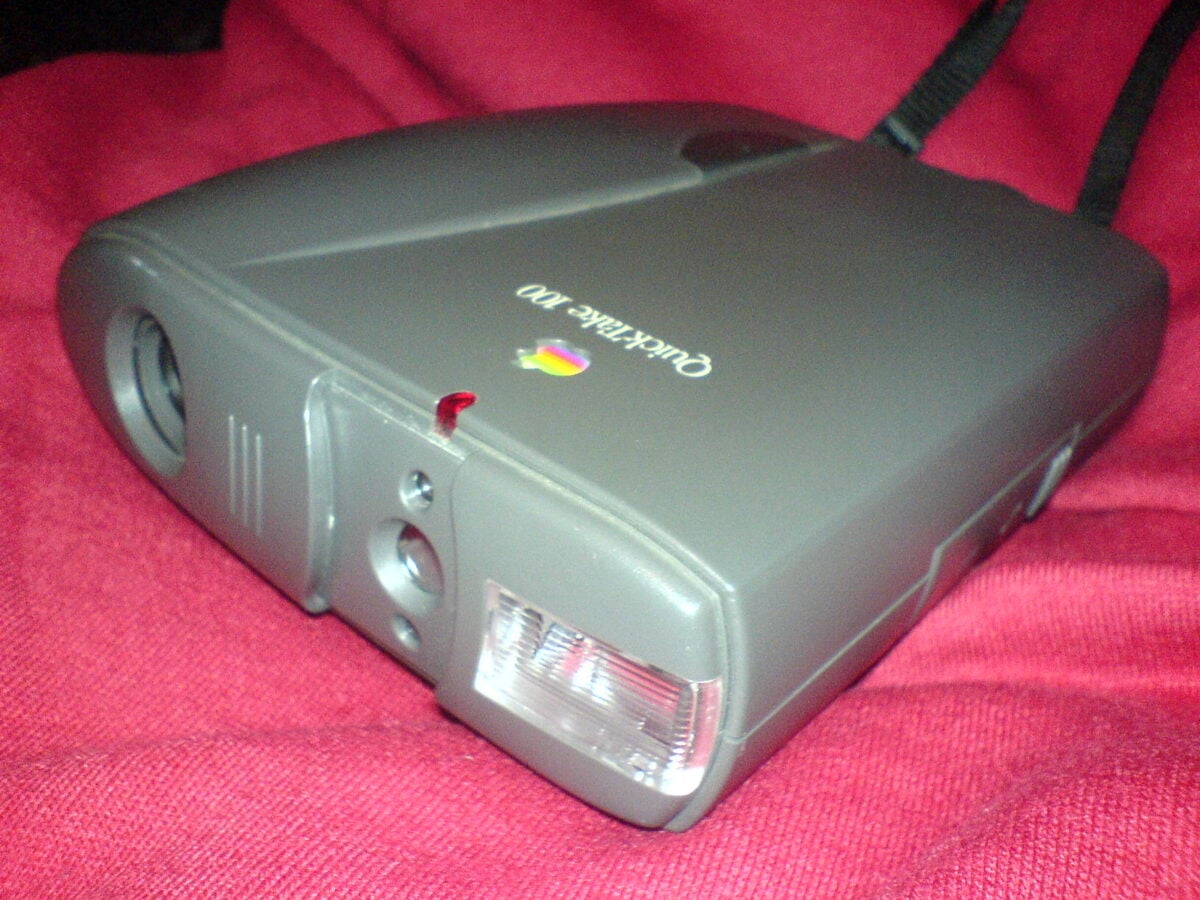
Apple released the QuickTake 100 in 1994, a consumer digital camera built with Kodak that stored eight images at 640 by 480 resolution. It connected to a Mac through a serial cable, and photos had to be transferred one at a time.
Cameras that still power on are uncommon, and boxed examples with cables and software are valued well above loose bodies in worn condition.
Connectix QuickCam
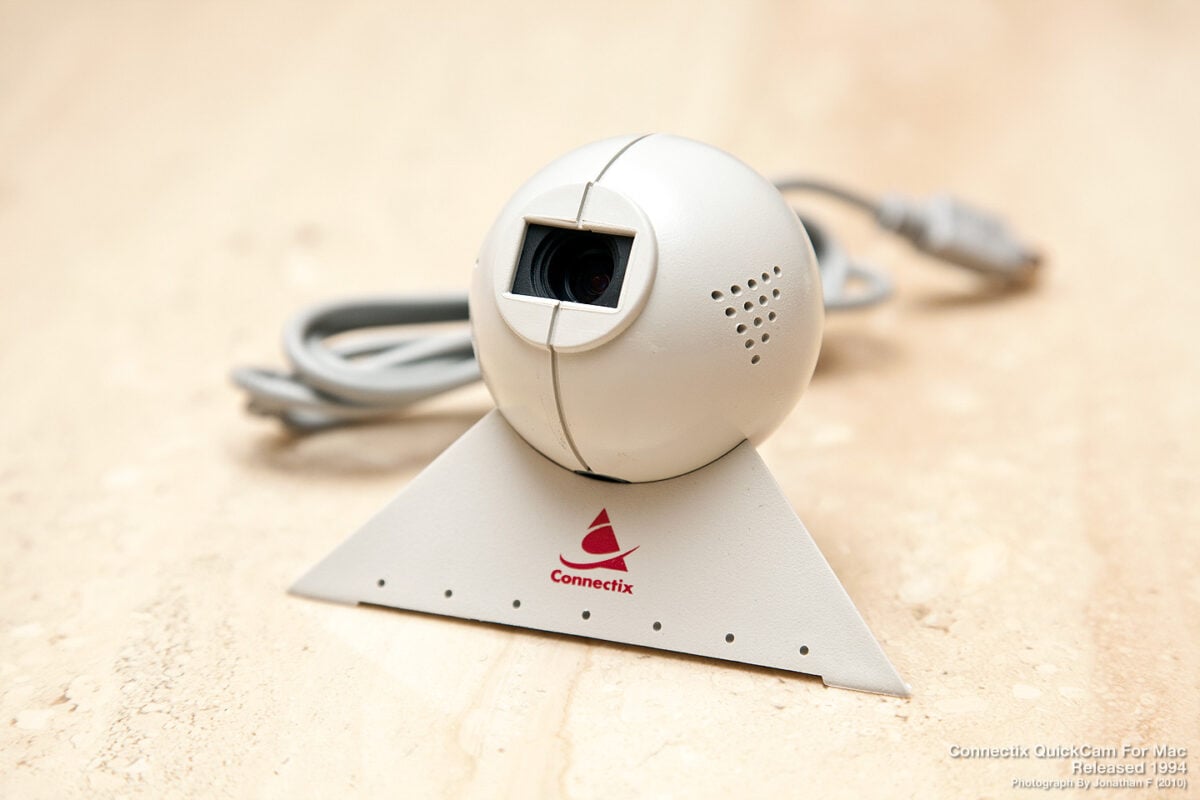
The Connectix QuickCam arrived in 1994 as one of the earliest consumer webcams, shooting grayscale video for the Mac. It sat on top of the monitor like a small gray orb, and people used it for everything from video calls to watching coffee pots.
The original is a staple of computing museums, and boxed examples in clean condition are the ones collectors target.
Apple iSight
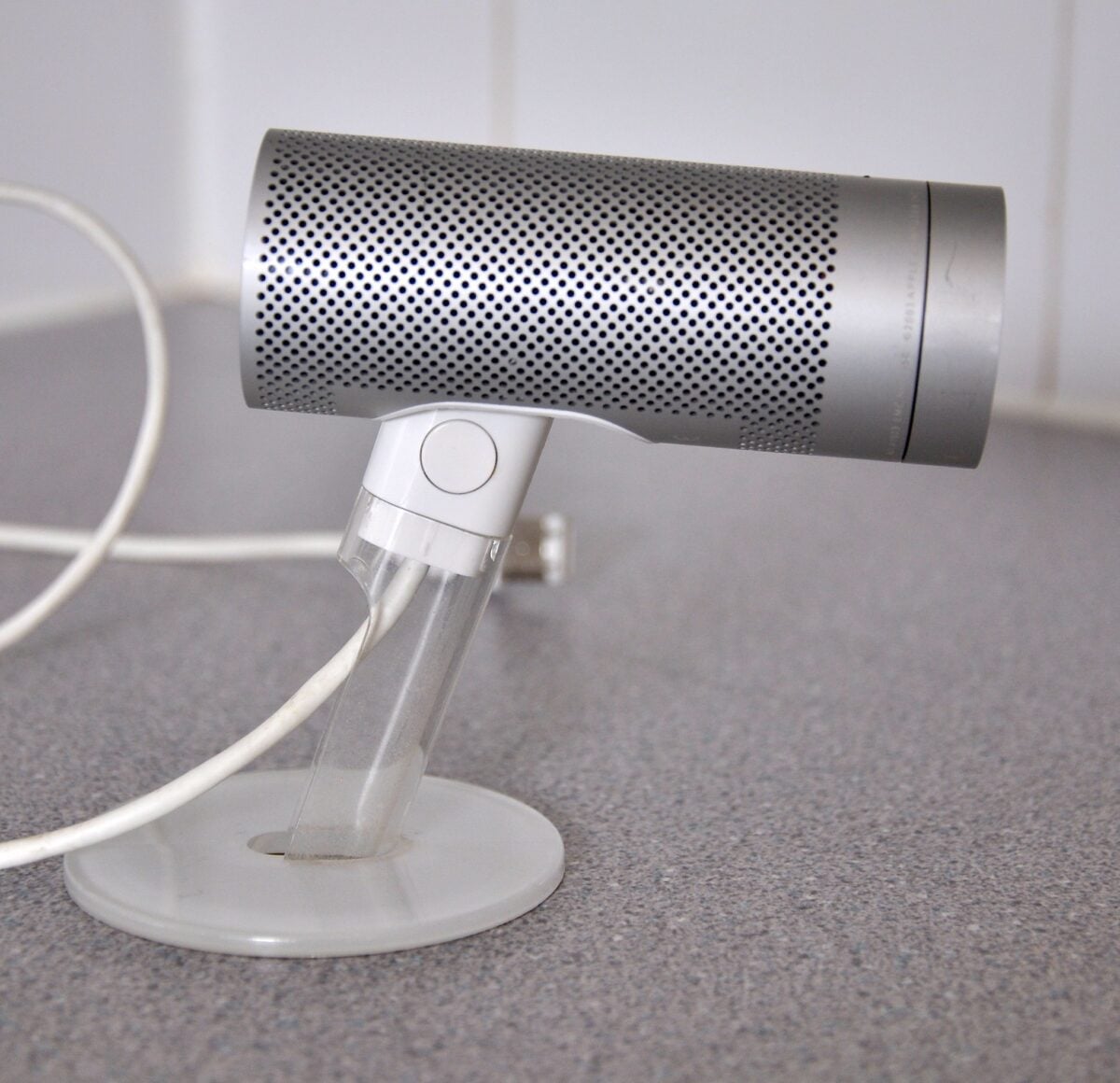
Apple launched the external iSight camera in 2003, connecting to Macs through FireWire and mounting neatly on top of a display. Its aluminum body and rolling lens cover made it look more like a studio tool than a webcam.
It remains popular among Apple collectors, and condition matters, since lens scratches and missing mounting clips reduce the price.
CueCat Barcode Scanner
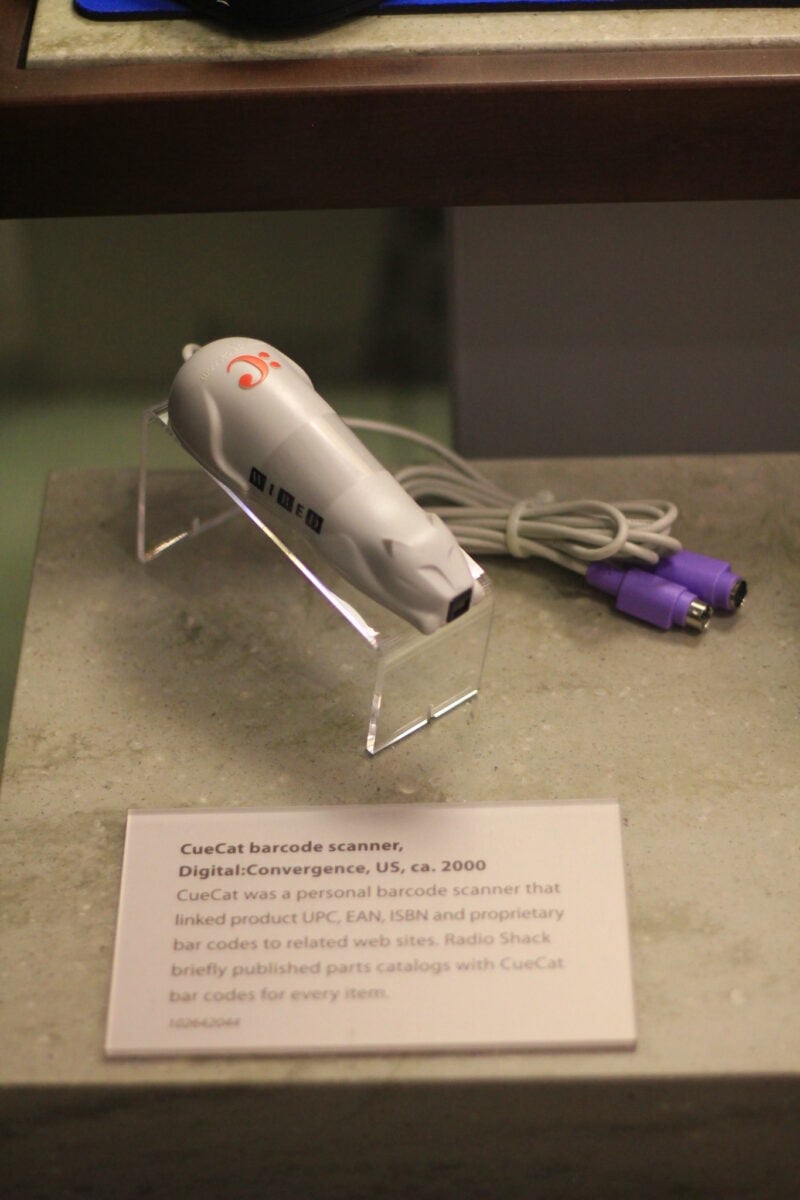
Digital Convergence distributed the cat-shaped CueCat around 2000 through RadioShack and magazines, hoping readers would scan printed codes to open web pages. The company overreached, privacy complaints followed, and the idea collapsed.
Because so many were handed out free, the survivors are common, but boxed units in clean condition and unusual color variants are what collectors seek, and The Henry Ford even holds one in its collection.
Harman Kardon SoundSticks
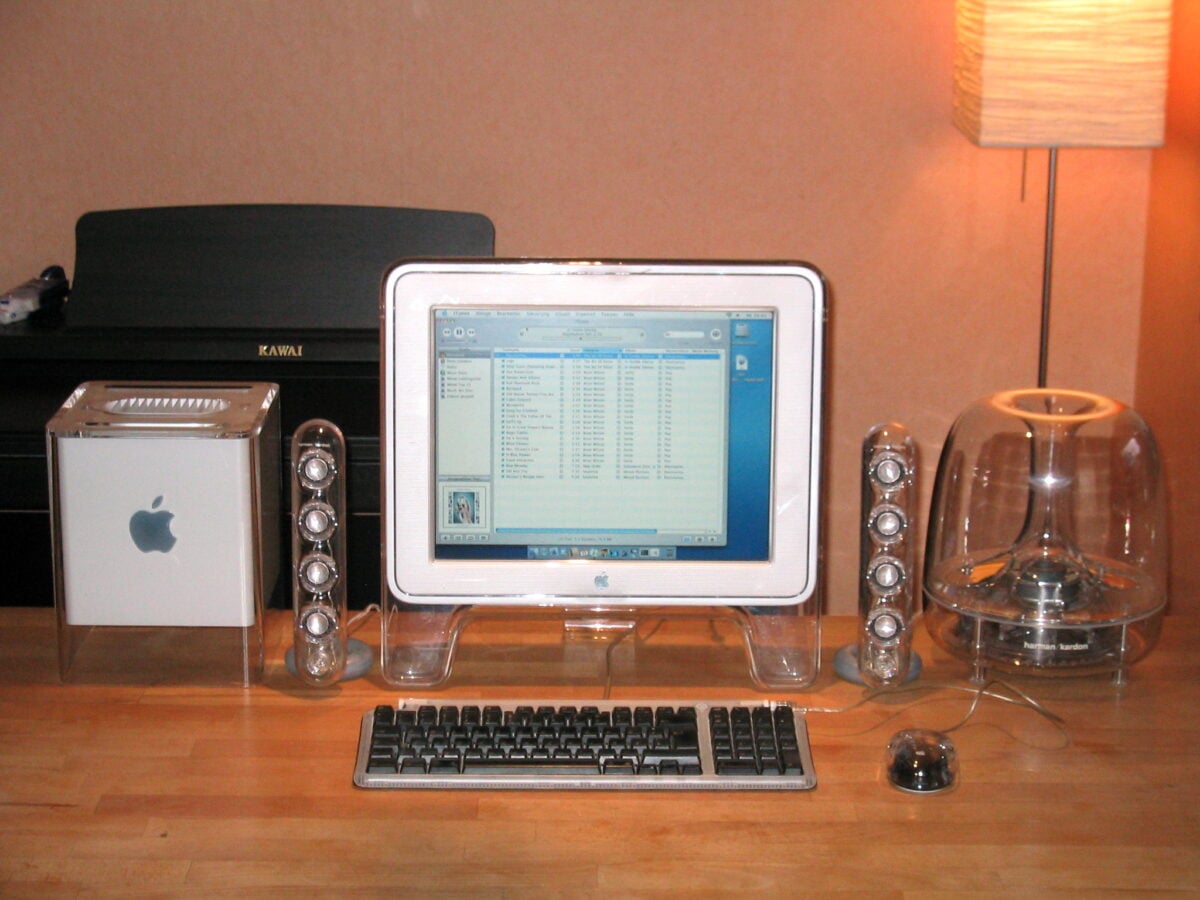
The SoundSticks were launched in 2000 alongside the Power Mac G4 Cube, a transparent speaker set with a subwoofer base. They were designed to look like a lab experiment, and the New York Museum of Modern Art collected them.
Original sets with the matching cables and clear acrylic free of scratches are in demand, and condition of the plastic largely sets the price.
Creative Sound Blaster
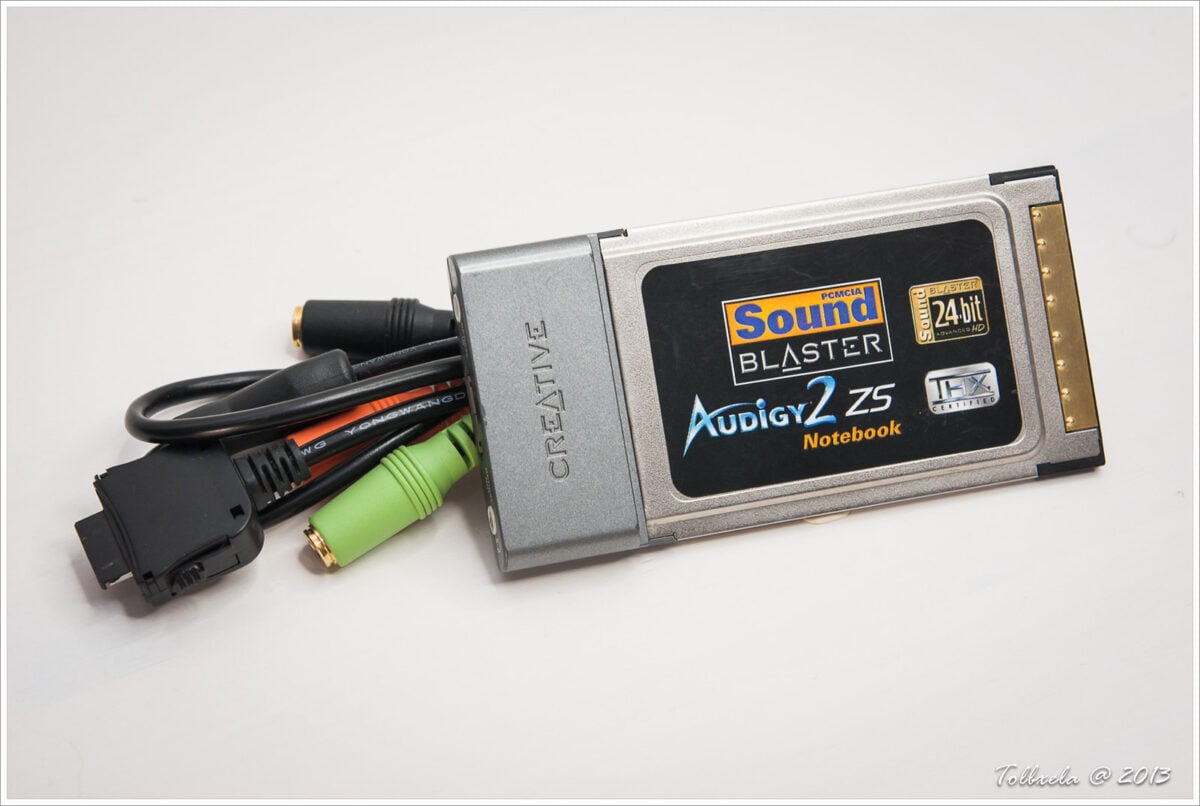
Creative Labs released the original Sound Blaster in 1989, adding digital audio to PC games at a time when most computers could only beep. It also supported the AdLib sound standard, which helped it win over developers.
The card became the default in PC gaming, and original boxed cards with manuals are sought after by retro builders, with value following the condition of the board and packaging.
Roland MT-32
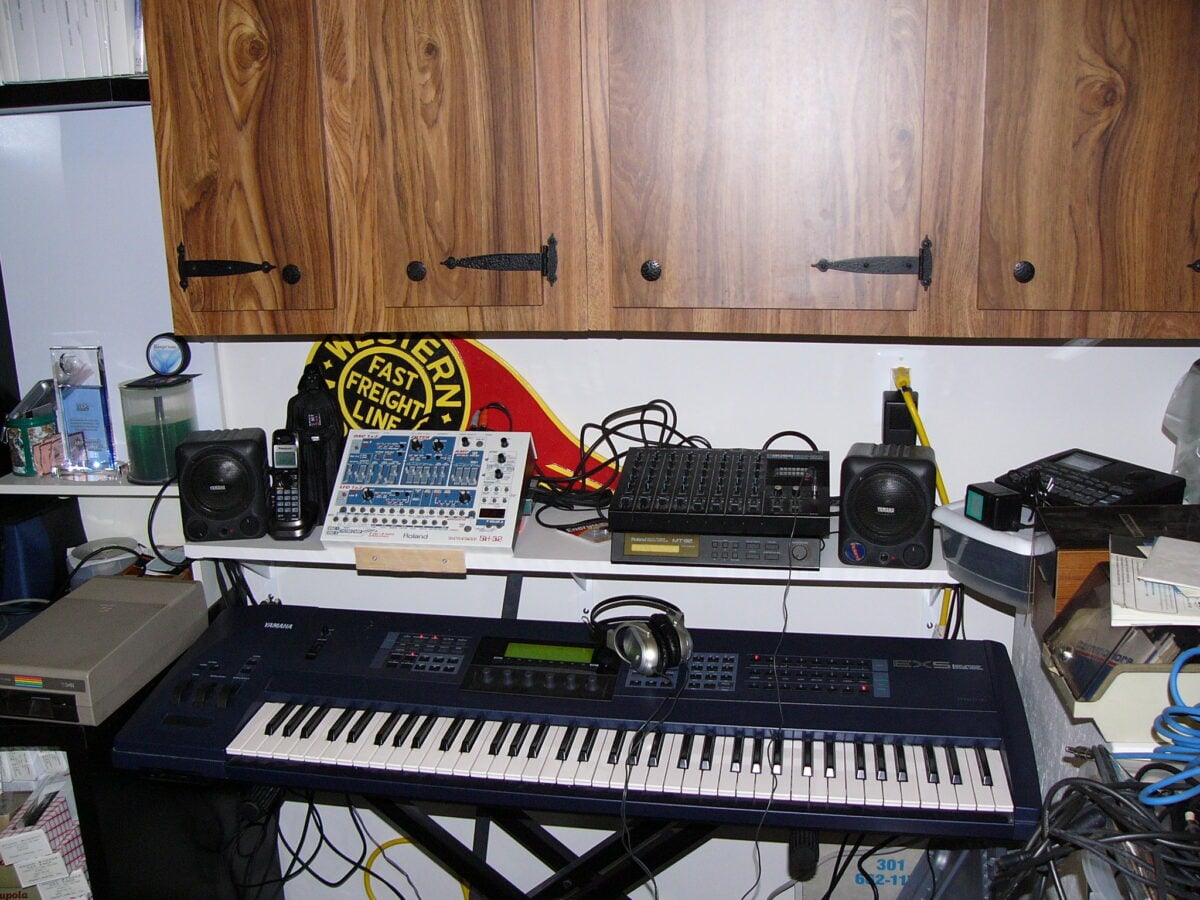
Roland introduced the MT-32 in 1987 as a MIDI sound module, and it became the preferred way to hear music in many Sierra and LucasArts adventure games. Its distinctive sound is still emulated in software such as DOSBox.
Real units are valued by retro gaming purists, and prices depend on the ROM revision, whether the display and buttons work, and the condition of the case.
Gravis UltraSound
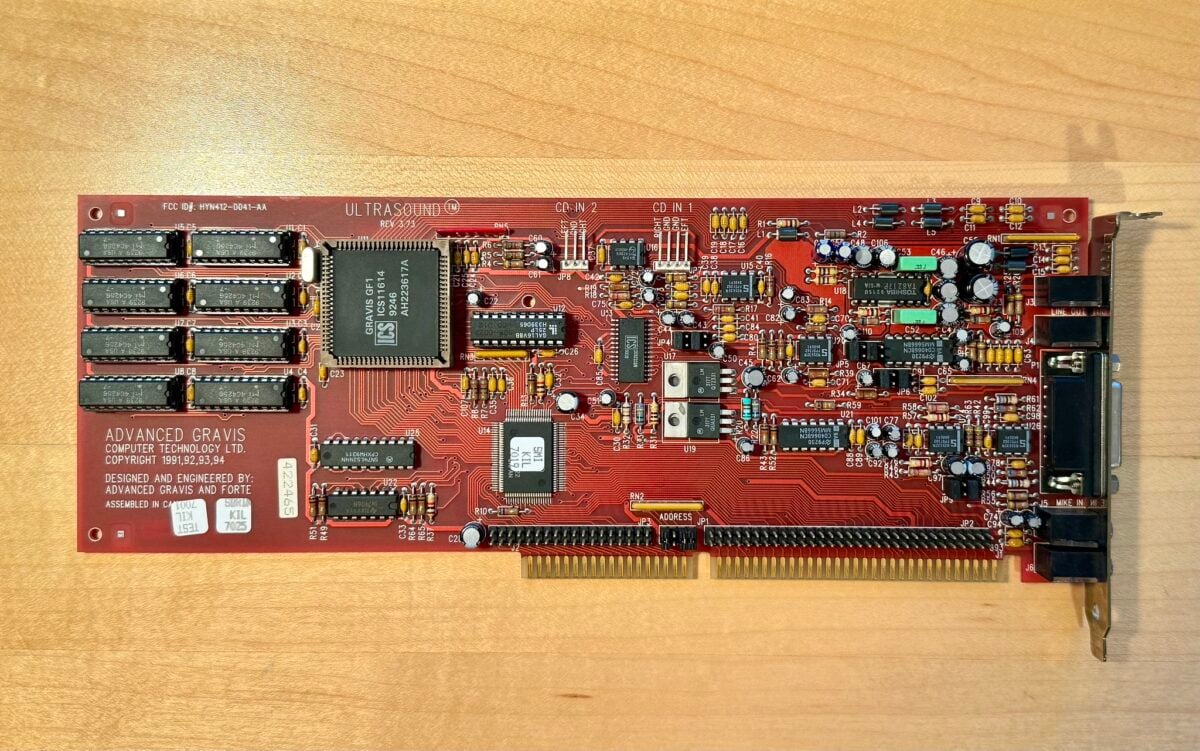
Advanced Gravis released the UltraSound in 1992, a sound card that used wavetable synthesis and stored samples in onboard memory. It gained a devoted following in the demoscene, where programmers prized its sound quality.
It never matched Sound Blaster sales, which now helps its collectibility, and boards in clean condition with their original memory and software are the ones that fetch the most.
3dfx Voodoo Graphics
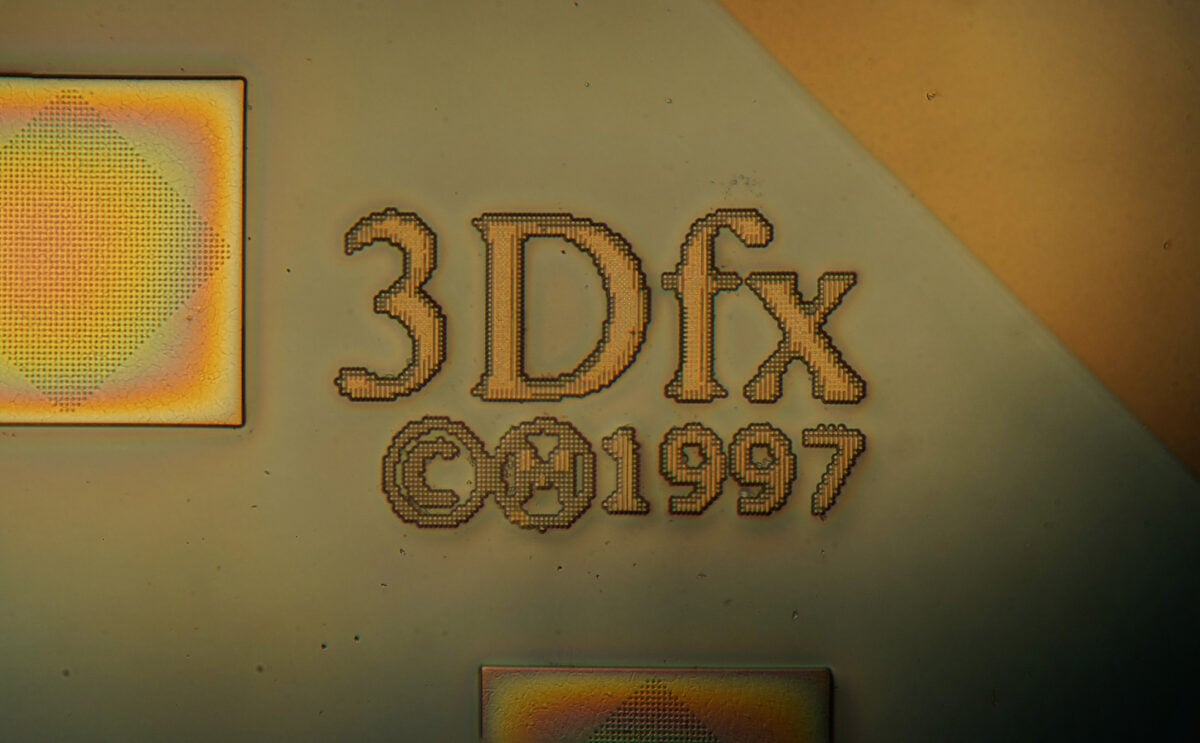
The 3dfx Voodoo Graphics card appeared in 1996 as a dedicated 3D accelerator that worked alongside an existing graphics card through a pass-through cable. It transformed PC gaming, and the company eventually lost out to rivals.
Original cards from brands such as Diamond are prized by retro builders, and condition of the board, fan, and connectors affects value substantially.
KoalaPad Touch Tablet
Koala Technologies released the KoalaPad in 1983, a small touch tablet bundled with drawing software for machines such as the Apple II and the Commodore 64. It let ordinary users draw with a stylus rather than a keyboard, an unusual idea at the time.
Surviving pads with their software are collected as early creative tools, and boxed examples in good condition fetch the best prices.
What the Dust Really Remembers
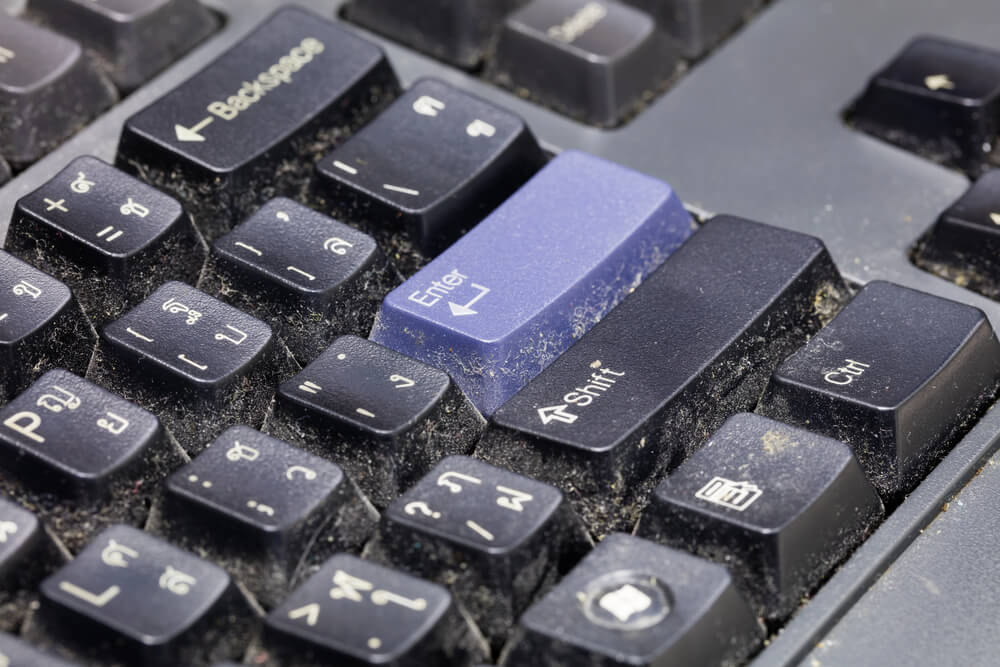
None of these accessories won its market, and several became cautionary tales. A sound card that lost to a cheaper rival, a camera that held eight photos, and a mouse nobody could hold correctly all share the same distinction: they were built by people willing to guess wrong in public.
That is the quiet logic behind modern demand. Collectors are paying for evidence of a time when computing was still being improvised, and the condition of each piece decides how much of that story survives.
The best finds are not the rarest, but the ones that still work.
More from Go2Tutors!

- 27 Silver Dollars and Half Dollars Worth Keeping
- 28 Restaurant Menu Items Nobody Orders Anymore
- 17 Places Built in Seemingly Impossible Spots
- 27 Vintage Rings Worth More Than They Look
- 25 Restricted Sites Tourists Can’t Enter
Like Go2Tutors’s content? Follow us on MSN.