25 Roadside Attractions From the Past That Are Still Standing and Worth the Stop
Before interstate highways got efficient and GPS got bossy, American road trips ran on a different logic. You followed the signs — hand-painted ones, barn-sized ones, the kind that started teasing you forty miles out with countdown promises of something enormous or inexplicable or both.
The roadside attraction was a genuine institution, born out of the automobile era and the very human need to make a long drive into something worth remembering. Most of those old stops are gone now.
These twenty-five are not.
Lucy the Elephant — Margate City, New Jersey
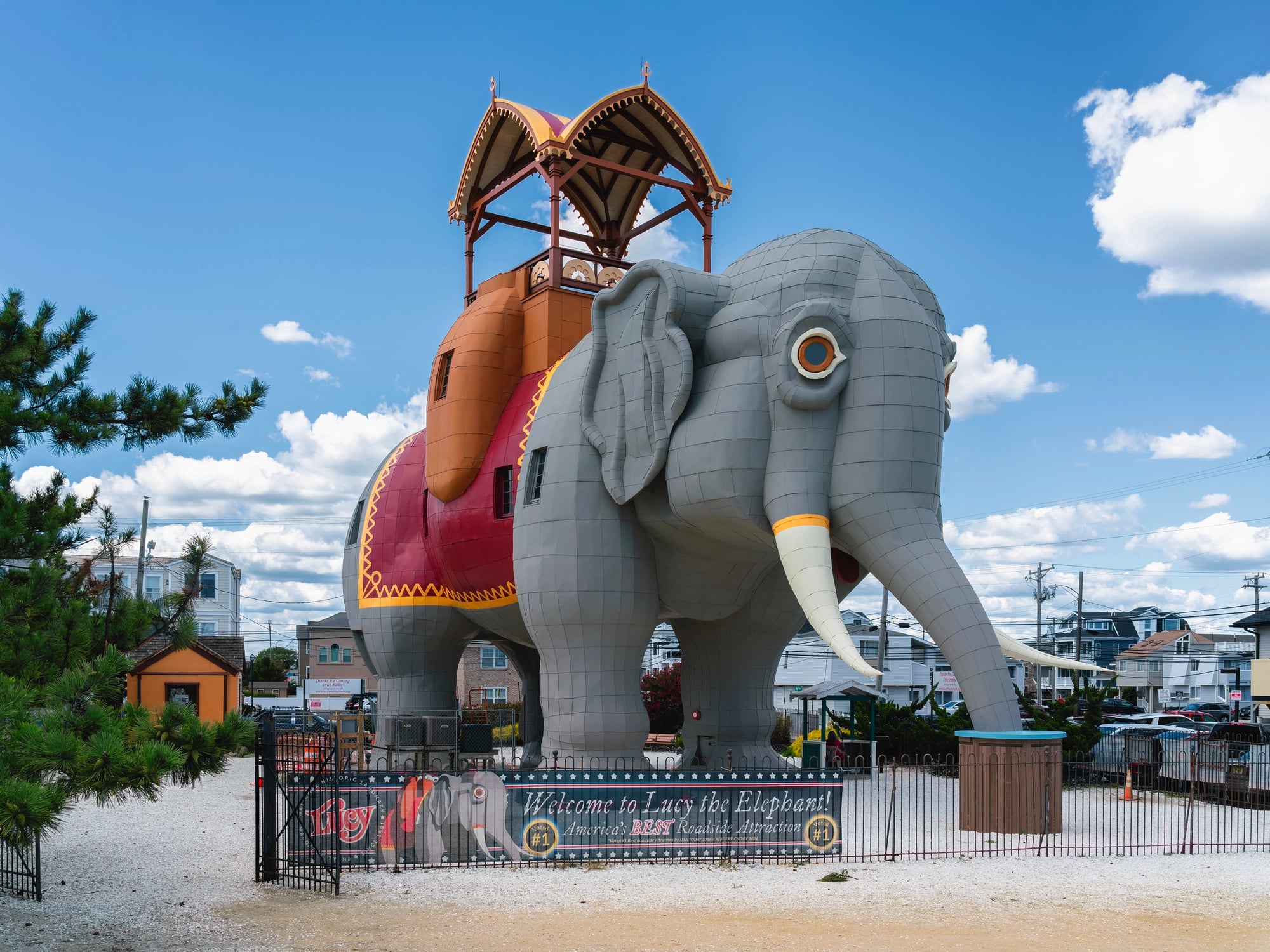
Built in 1881 by a real estate developer named James Lafferty, Lucy was designed with a single cynical purpose: to lure potential land buyers to the New Jersey shore. The gimmick was so successful that Lafferty patented the design and briefly built two more elephant-shaped structures elsewhere.
The others were demolished. Lucy survived hurricanes, arson attempts, and decades of neglect before being moved to its current location and restored by a dedicated preservation group.
She stands six stories tall, is listed as a National Historic Landmark, and offers interior tours with views of the Atlantic from her back.
Wall Drug — Wall, South Dakota
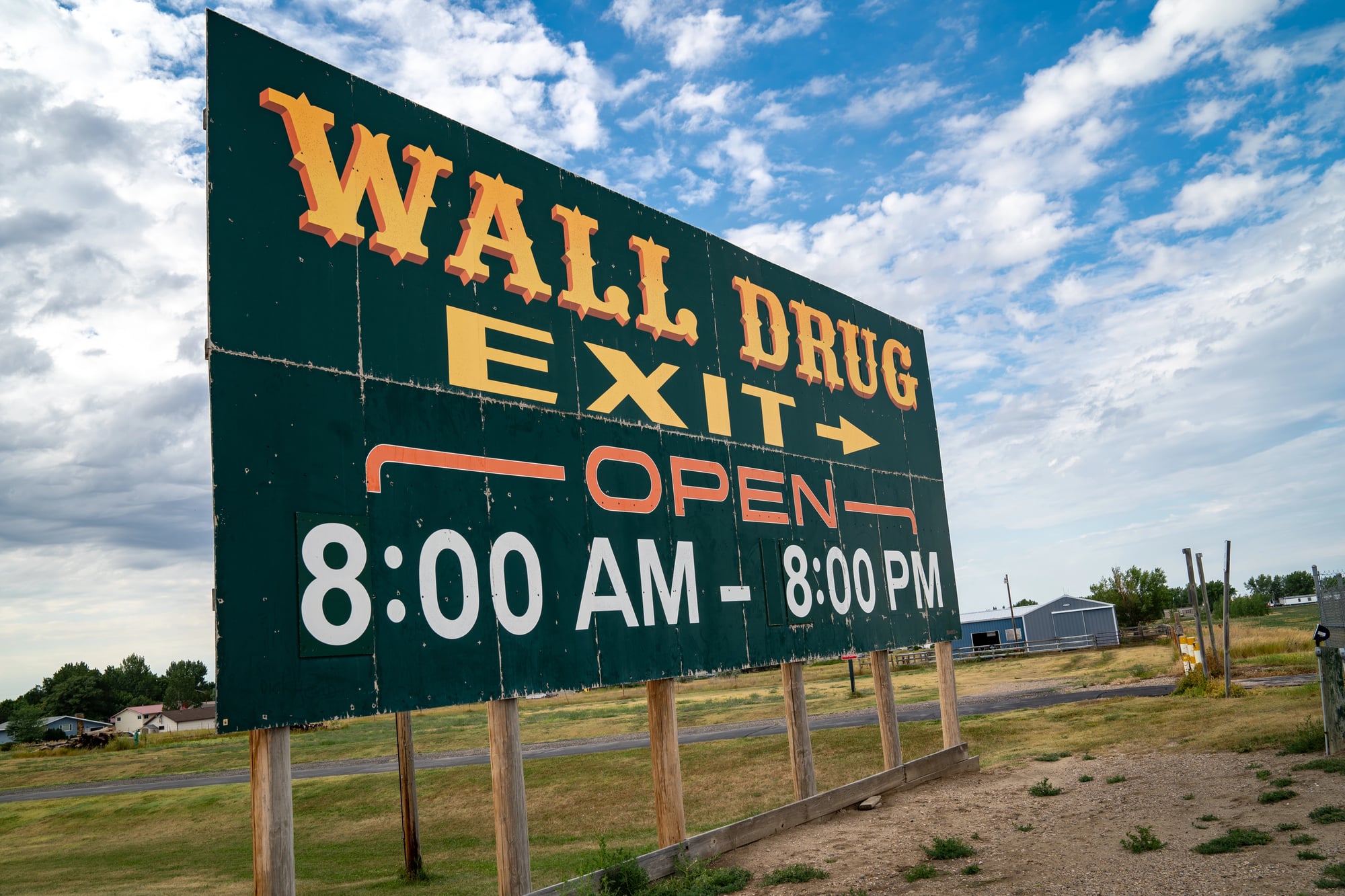
In 1931, Ted and Dorothy Hustead opened a pharmacy in a small South Dakota town with a population of 326 people and a problem: nobody was stopping. Dorothy’s solution was to put up billboards along the road to Mount Rushmore offering free ice water.
The first signs went up in 1936, and the traffic came. Wall Drug now covers 76,000 square feet, employs hundreds of people, and features a dinosaur statue, a giant jackalope, five-cent coffee, and an indoor chapel.
The billboards stretch for hundreds of miles in every direction and have appeared on every continent, including Antarctica, where admirers erected one as a joke that became a tradition.
Cadillac Ranch — Amarillo, Texas
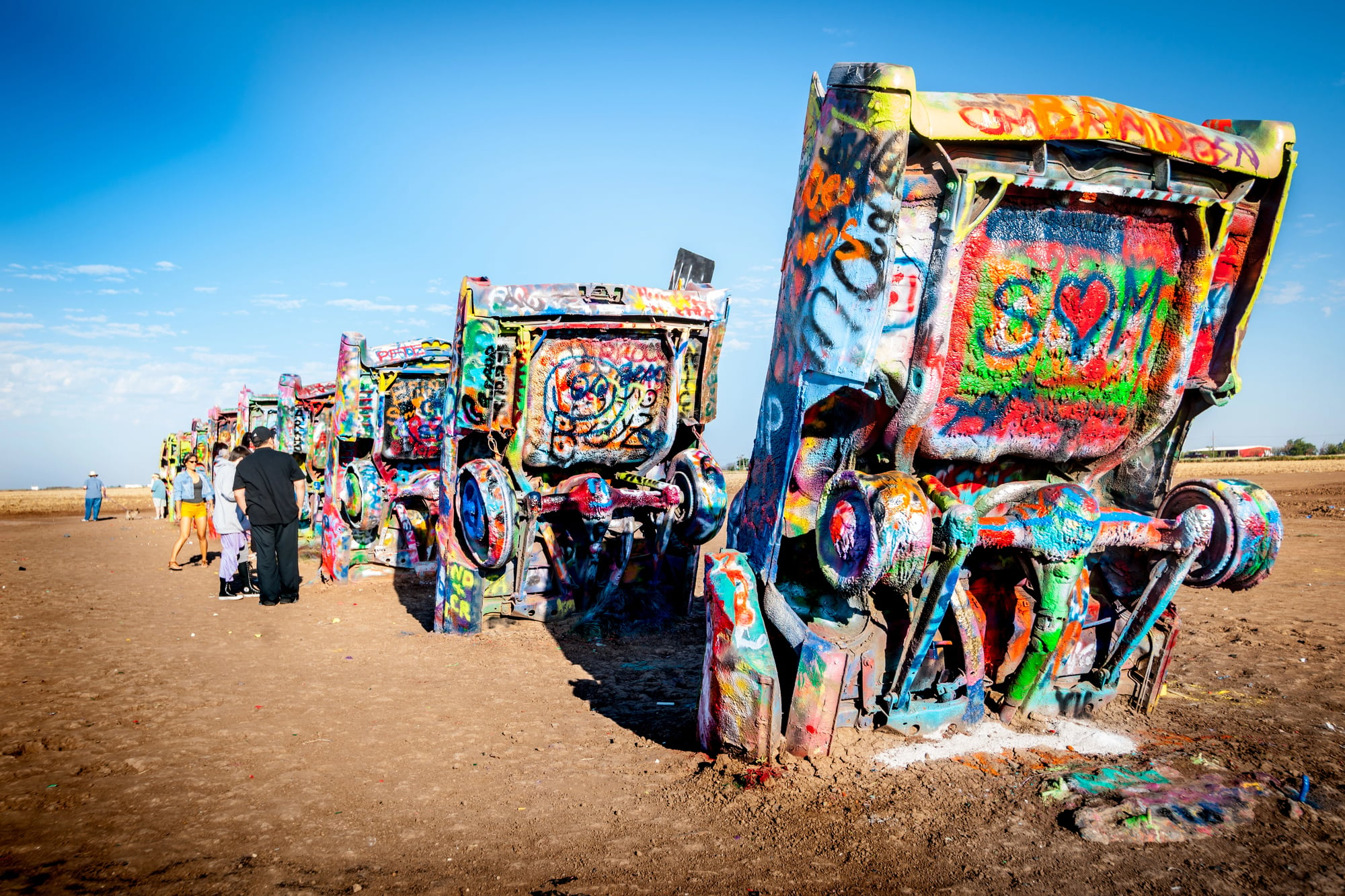
In 1974, a group of artists operating under the name Ant Farm buried ten Cadillacs nose-first in a wheat field off what was then Route 66, at an angle matching the slope of the Great Pyramid of Giza. The cars span Cadillac models from 1949 to 1963, representing the rise and fall of the tailfin era.
The original installation was on a different patch of ground and had to be relocated when Amarillo expanded. Visitors are encouraged to bring spray paint and add their own layers, which means the cars are never the same color twice.
The artist collective disbanded in 1978 but the installation endures on what is now I-40.
The Mystery Spot — Santa Cruz, California
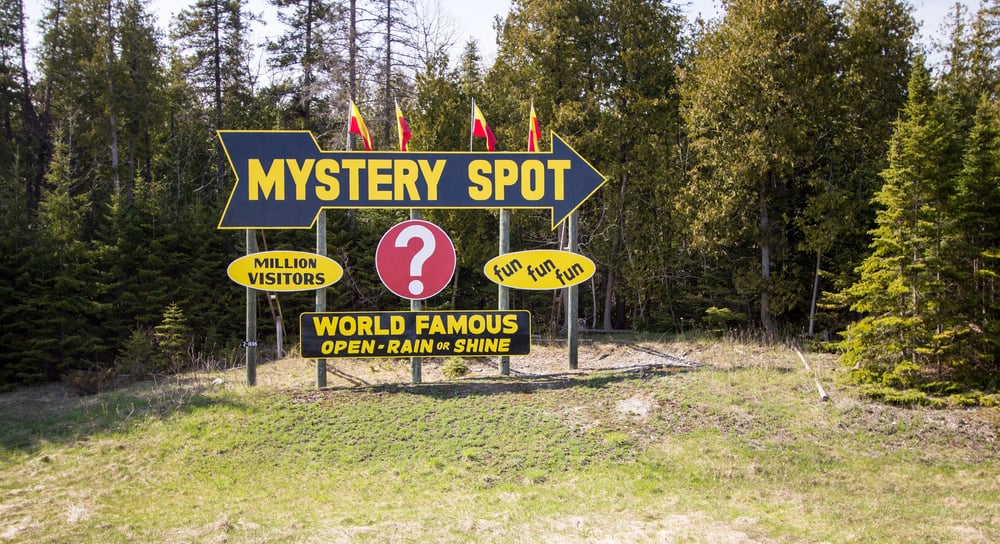
George Prather opened this site in 1939 after reportedly feeling dizzy on a hillside walk and deciding there was something commercially interesting about that experience. The Mystery Spot features a tilted wooden structure — a “gravity house” — in which orbs appear to roll uphill and people seem to grow or shrink depending on where they stand.
The California Office of Historic Preservation identified it as the first and most significant example of its type in the state. It is, of course, an optical illusion created by the carefully engineered tilt.
The tours have been running continuously for over eighty years, and the gift shop’s yellow bumper sticker has appeared on car bumpers across the country for decades.
Wigwam Motel — Holbrook, Arizona
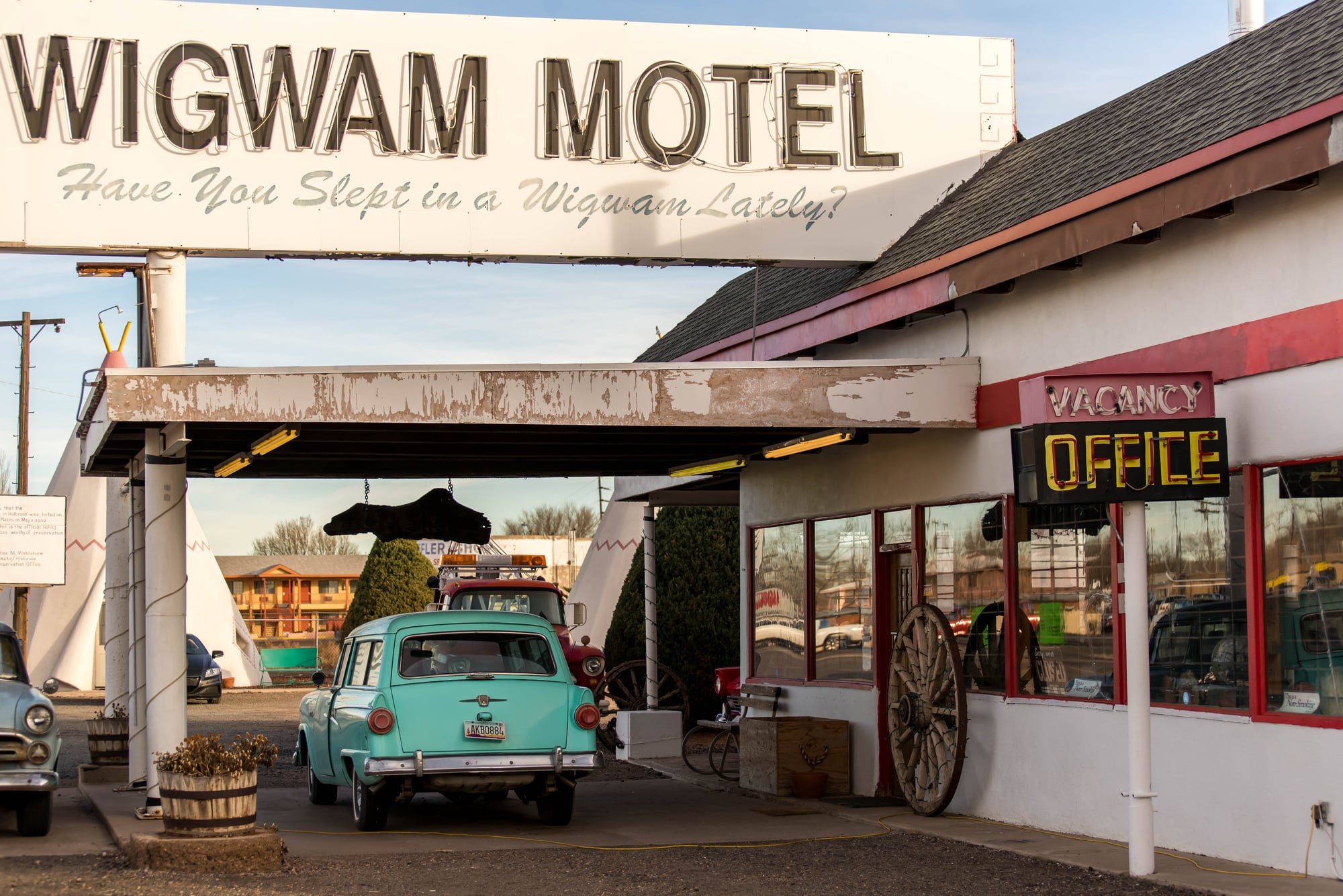
Designed and built along Route 66 in 1950 by Frank Redford, the Wigwam Motel in Holbrook features fifteen concrete structures shaped like traditional Indigenous dwellings, each large enough to serve as a functional motel room. It is one of only three surviving Wigwam Villages from a chain that once operated across several states.
The Holbrook location is listed on the National Register of Historic Places and still accepts overnight guests. Classic cars parked in the forecourt and neon signs glowing at dusk give it a quality that restoration projects sometimes strip out — the sense that the original instinct for spectacle is still intact.
World’s Largest Round of Twine — Cawker City, Kansas
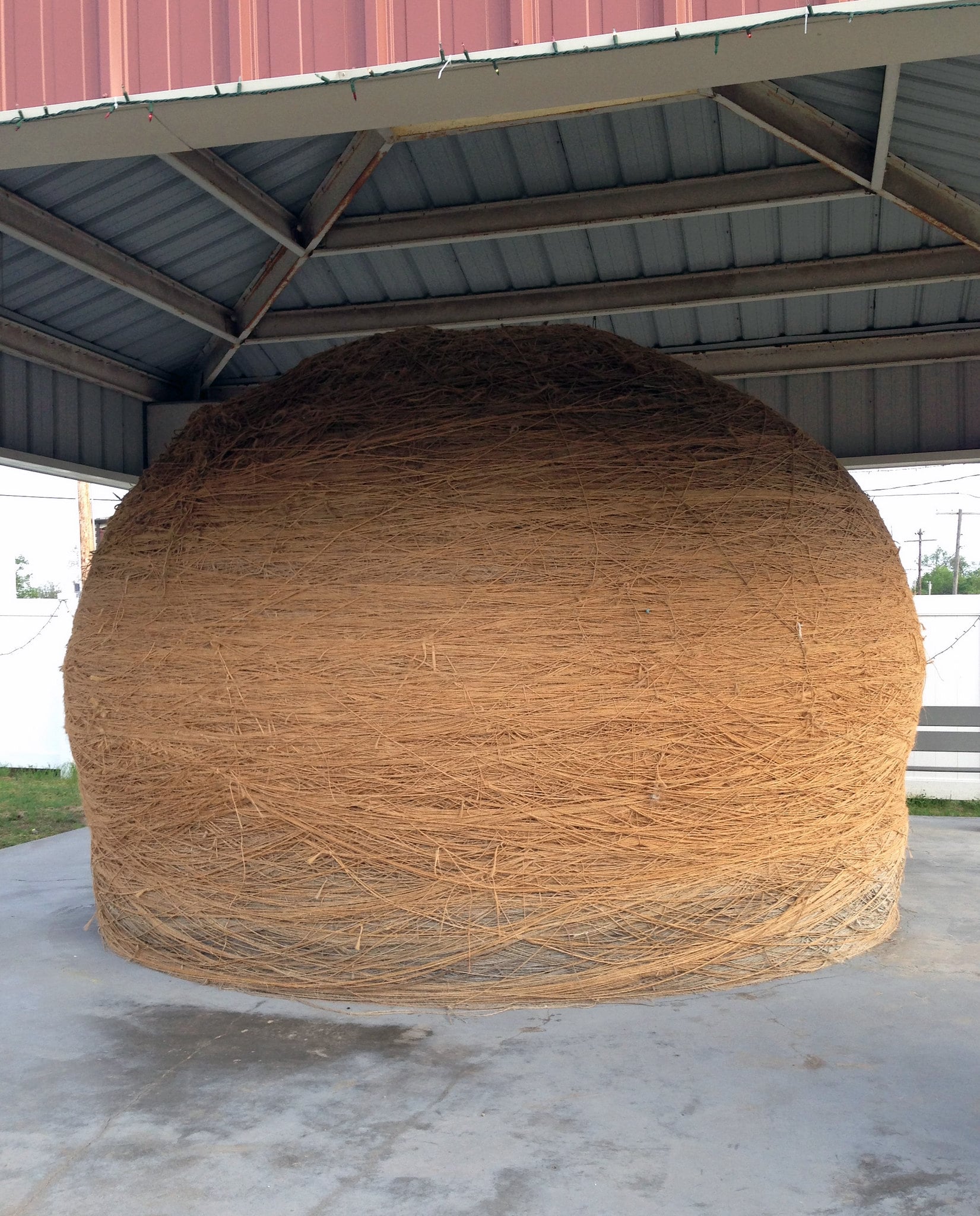
Frank Stoeber started winding twine on his farm in 1953 as a practical way to deal with leftover sisal. He wound it for eight years before donating the result to the town of Cawker City in 1961.
Guinness World Records certified it as the world’s largest in 1973, and the orb has been growing ever since, with the town hosting annual “Twine-a-thon” events at which visitors are invited to add strands. It currently weighs over 27,000 pounds and measures more than 46 feet in circumference.
The title is contested — Darwin, Minnesota has its own candidate — but Cawker City’s version has the advantage of being a community project that is technically still in progress.
Corn Palace — Mitchell, South Dakota
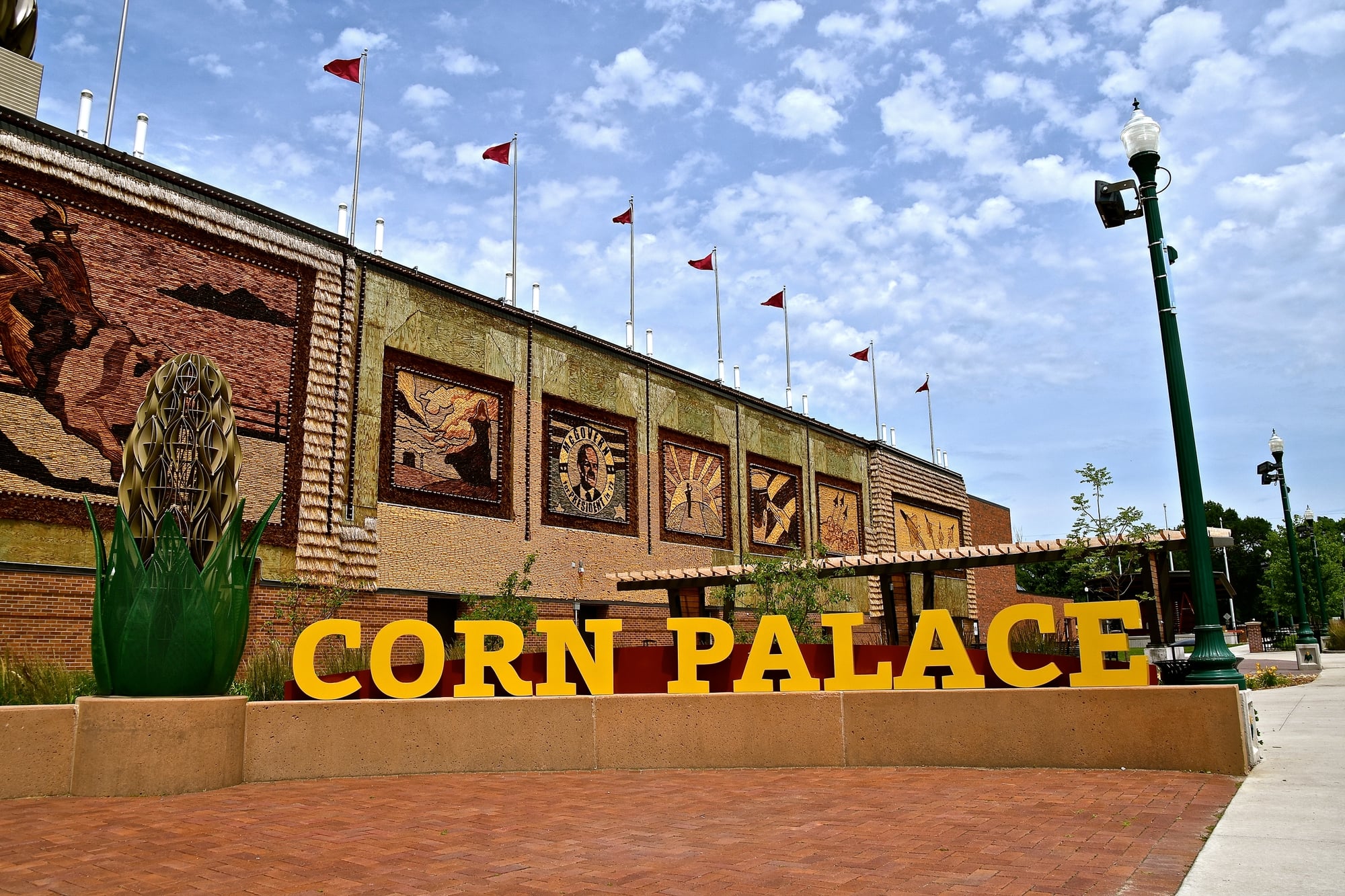
The Corn Palace has been rebuilt and renovated several times since the first version opened in 1892, but the central concept has never changed: a building decorated entirely with murals made from natural corn, grasses, and other grains, changed out annually. The current Moorish-style structure dates to 1921.
Each year’s murals take weeks to complete and require thousands of bushels of corn. The building hosts concerts, sporting events, and the annual Corn Palace Festival.
More than 500,000 people visit each year, which is an extraordinary number for a city of 25,000 in rural South Dakota, and most of them come primarily to look at the outside walls.
South of the Border — Dillon, South Carolina
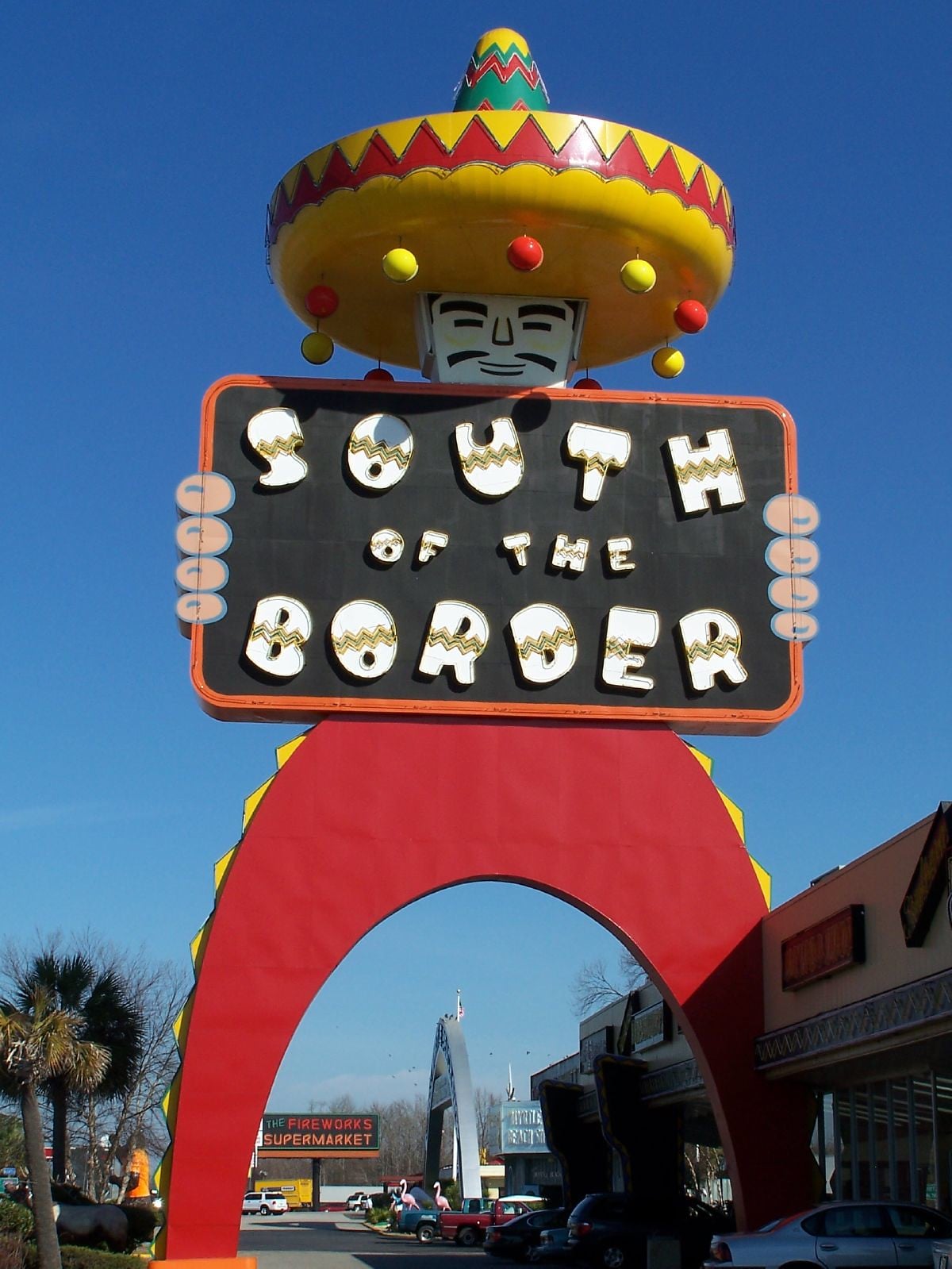
The billboards start in Maryland and count down the miles to a place on the North Carolina–South Carolina state line that is equal parts attraction, motel, gas station, and self-aware spectacle. South of the Border opened in 1950 as a small beer stand and grew into a sprawling complex anchored by a 200-foot sombrero tower that visitors can ascend for views of the surrounding flatlands.
The signage has been described as “deliberately campy,” which is doing a lot of work to describe what is essentially an extended pun straddling two states. The complex has weathered changing taste and periodic calls for its demolition and is still operating.
Salvation Mountain — Niland, California
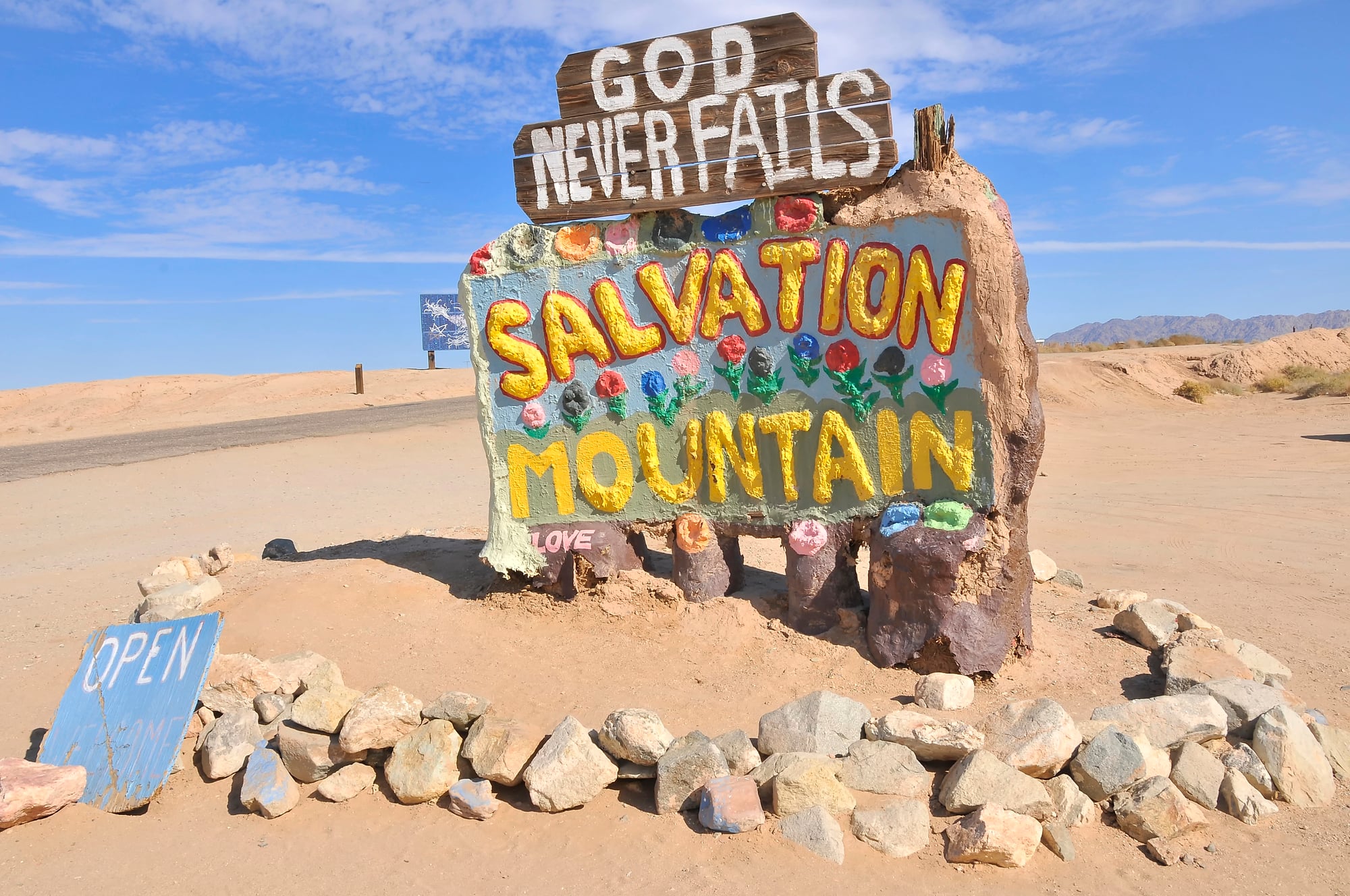
Leonard Knight arrived near the Salton Sea in 1984 intending to launch a hot air balloon. When the balloon failed, he stayed to build a small monument.
The monument grew for nearly thirty years into a 50-foot-tall, 150-foot-wide folk art structure made from adobe clay, straw, and thousands of gallons of donated paint, covered in the message “God Is Love” alongside flowers, trees, and scripture. Knight, lean and blue-eyed and completely uninterested in fame, gave tours personally until his health declined.
He died in 2014. Volunteers maintain the site now, which is open every day from sunrise to sunset and free to enter.
The desert light makes the colors look different at every hour.
Coral Castle — Homestead, Florida
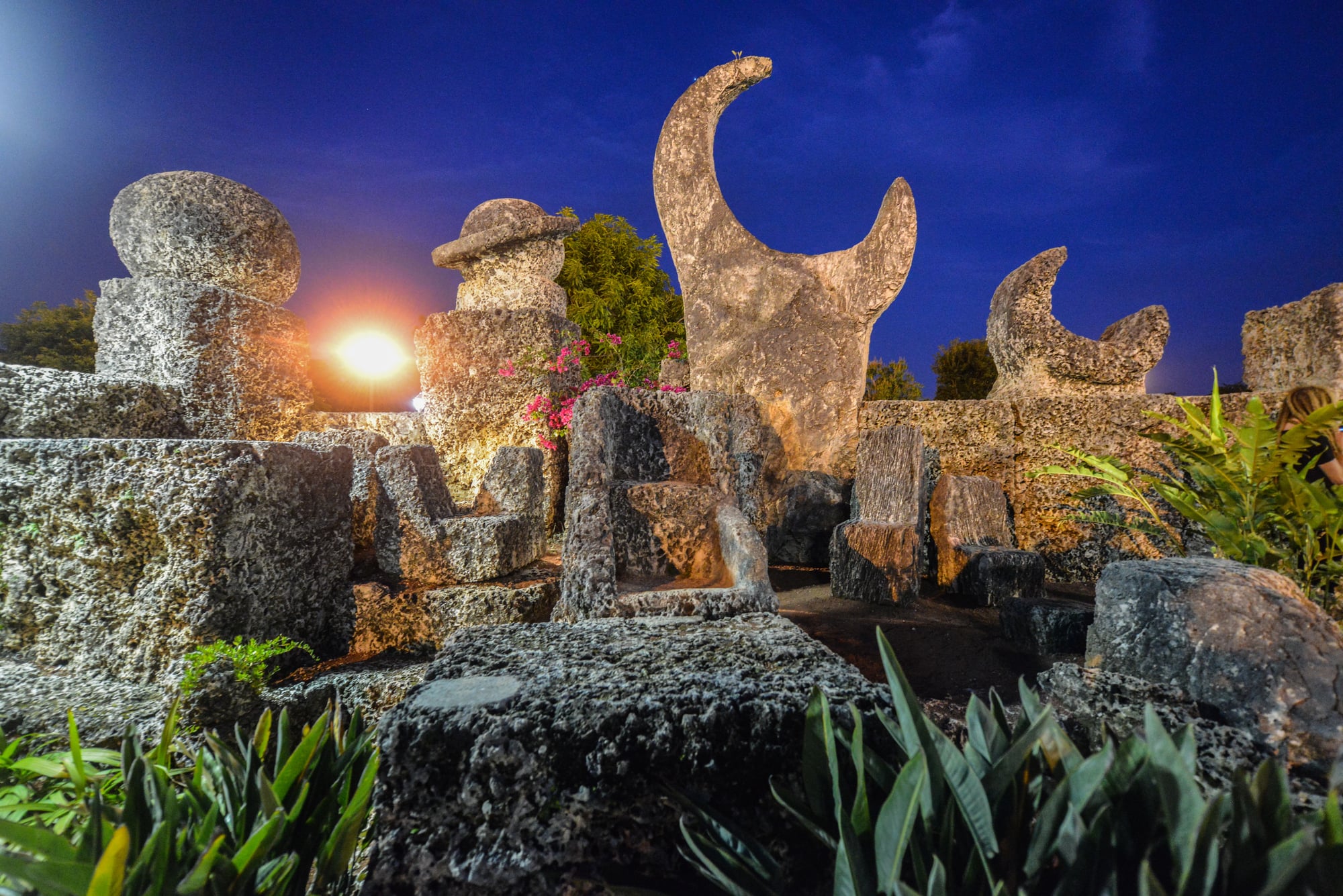
Edward Leedskalnin was a Latvian immigrant who was jilted by his fiancée the day before their wedding in 1913. After relocating to Florida, he began construction around 1923 and spent the next twenty-eight years carving and stacking over 1,100 tons of coral rock into an elaborate structure he called Rock Gate Park, working entirely alone and almost always at night.
When he died in 1951, he left no explanation of how he moved the largest stones — some weighing over thirty tons — without equipment. Leedskalnin made vague references in his writings to “the secret of magnetism.”
Engineers and archaeologists have studied the site for decades without reaching a consensus. The castle is now a museum at 28655 South Dixie Highway in Homestead, open daily to visitors.
Rock City Gardens — Lookout Mountain, Georgia
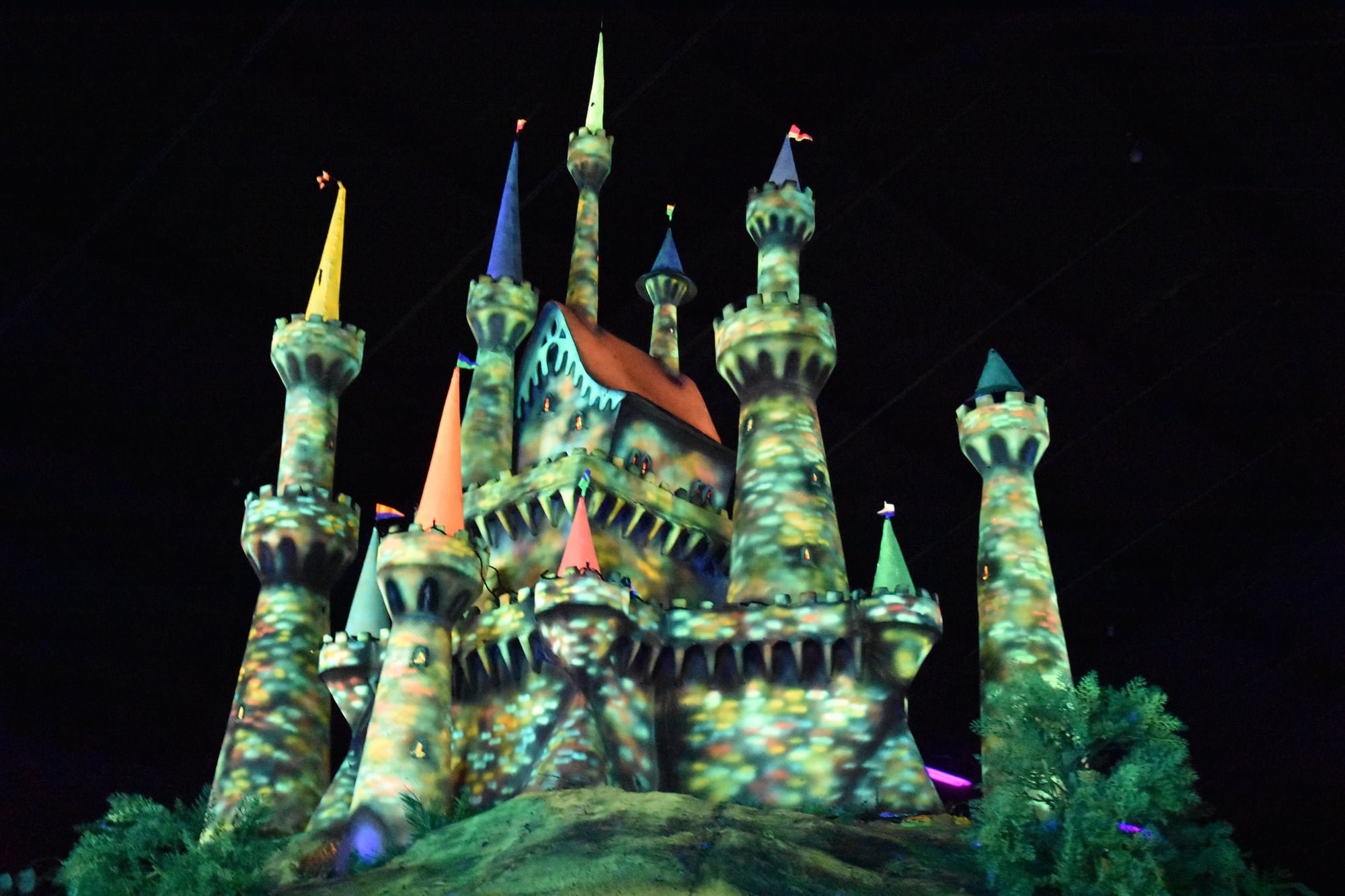
Frieda Carter began arranging her family’s mountain property in the early 1930s — winding stone paths, suspension bridges, and miniature gnome-populated grottos among natural rock formations that included a viewpoint from which, on clear days, seven states are allegedly visible. Her husband Garnet turned it commercial in 1932.
The attraction became famous for its billboard campaign, in which the marketing team persuaded farmers across the Southeast to let them paint “See Rock City” on the sides of barns in exchange for a small fee. At the campaign’s peak, over 900 barns carried the message.
The gardens are still open and the “seven states” claim is still on the signage.
Grotto of the Redemption — West Bend, Iowa
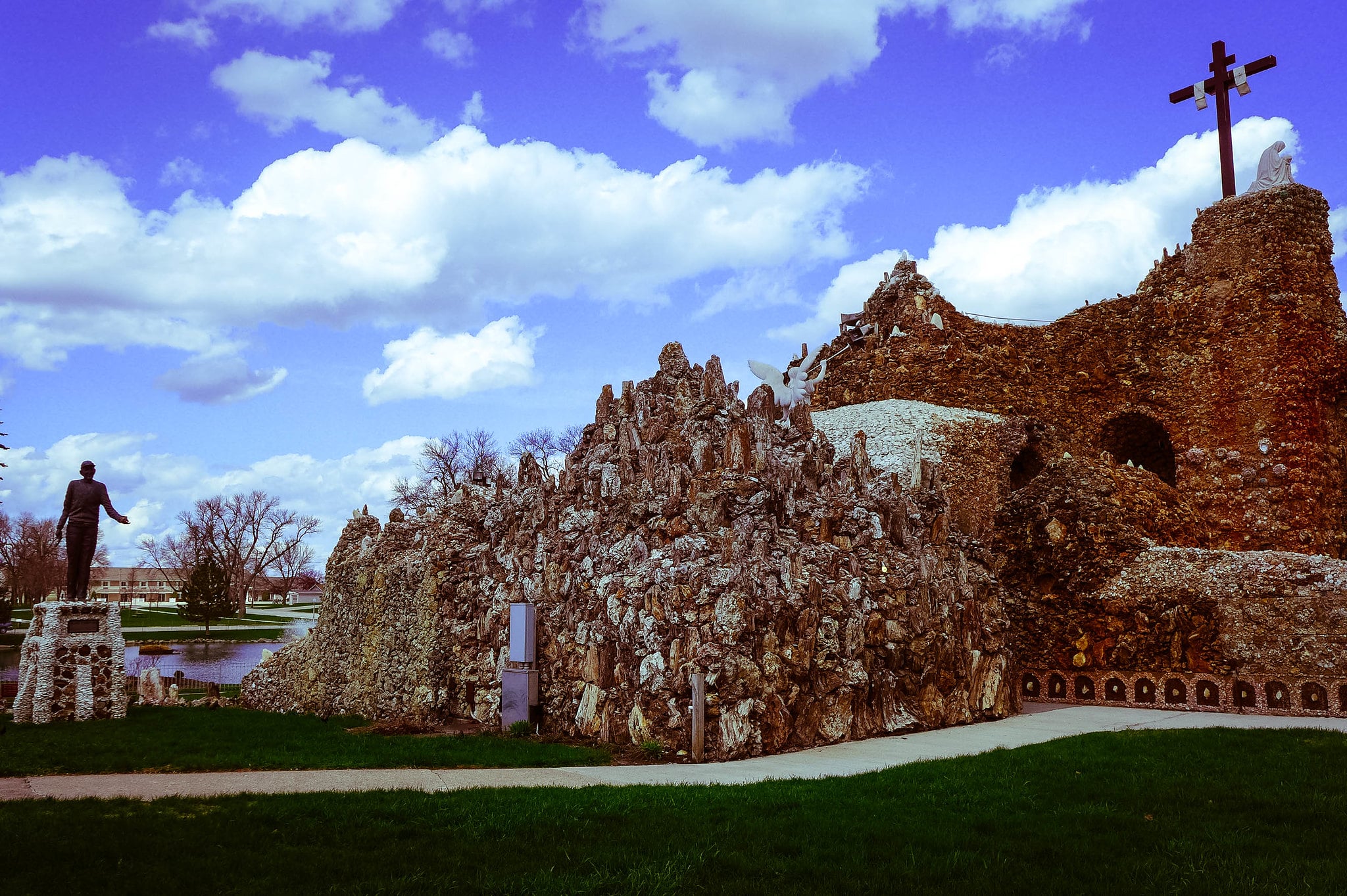
Father Paul Dobberstein began construction in 1912 after recovering from a serious illness and making a vow to the Virgin Mary. He spent the rest of his life — forty-two years — building nine interconnected grottos out of rocks, minerals, and precious and semi-precious stones collected from around the world, depicting scenes from the life of Jesus.
The structure is considered the largest man-made grotto in the world and contains some of the most valuable collections of minerals and gems in the state of Iowa. Dobberstein died in 1954.
Father Louis Greving continued the work for another twenty years. The site is listed on the National Register of Historic Places and open to visitors year-round.
The Enchanted Highway — Regent, North Dakota
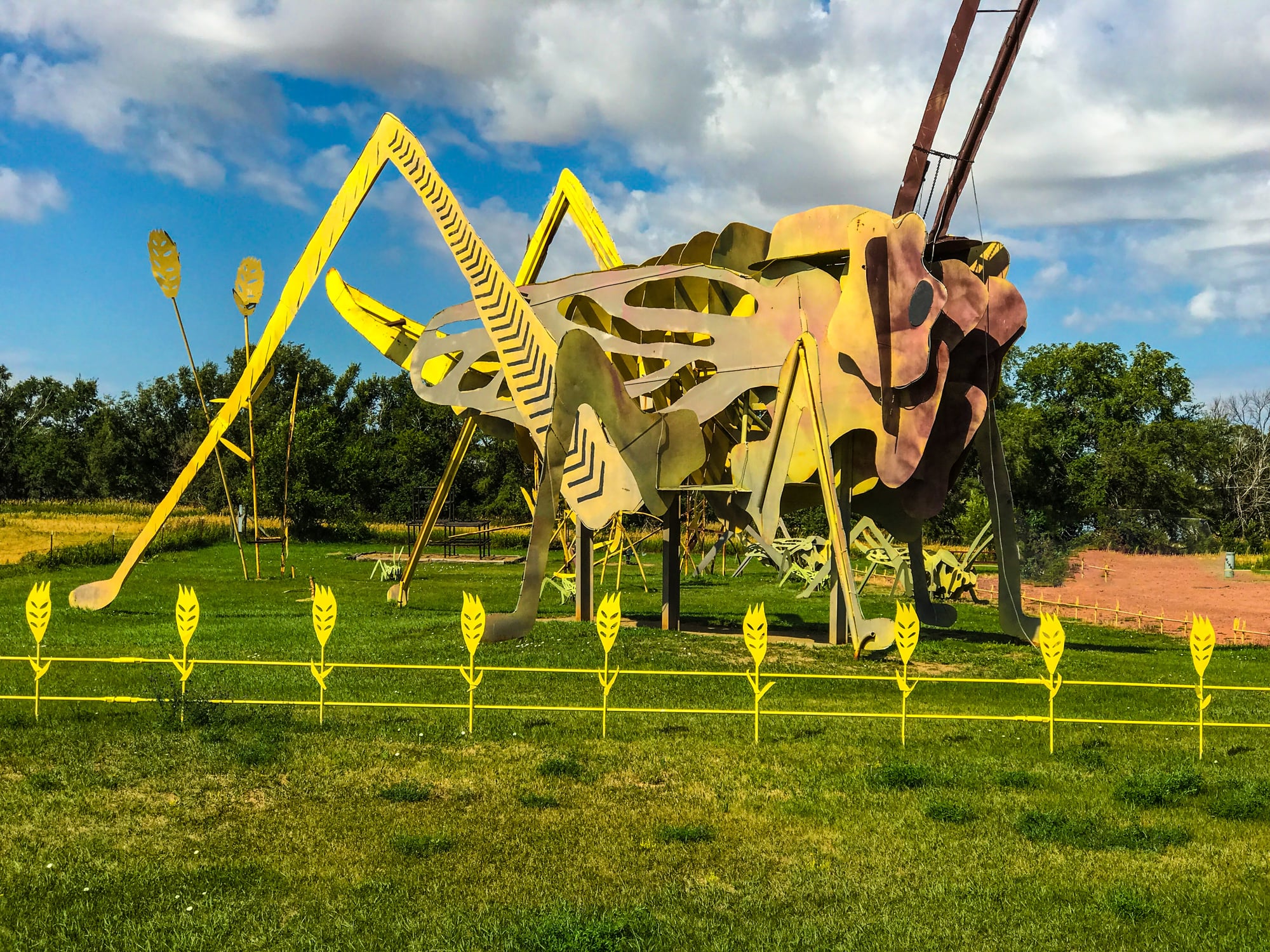
Artist Gary Greff spent his own money building a series of enormous scrap-metal sculptures along a 32-mile stretch of highway in the North Dakota badlands starting in 1989, hoping to bring tourism to the area and save his home town of Regent from dying. The sculptures — a family of tin people, giant pheasants, grasshoppers, deer, and fish — stand some forty feet tall and are visible from a significant distance across the flat prairie.
The largest, “Geese in Flight,” is claimed to be the world’s largest scrap-metal sculpture. Greff built each piece largely by himself.
The highway now draws visitors specifically for the sculptures, which is precisely what he intended.
National Fresh Water Fishing Hall of Fame — Hayward, Wisconsin
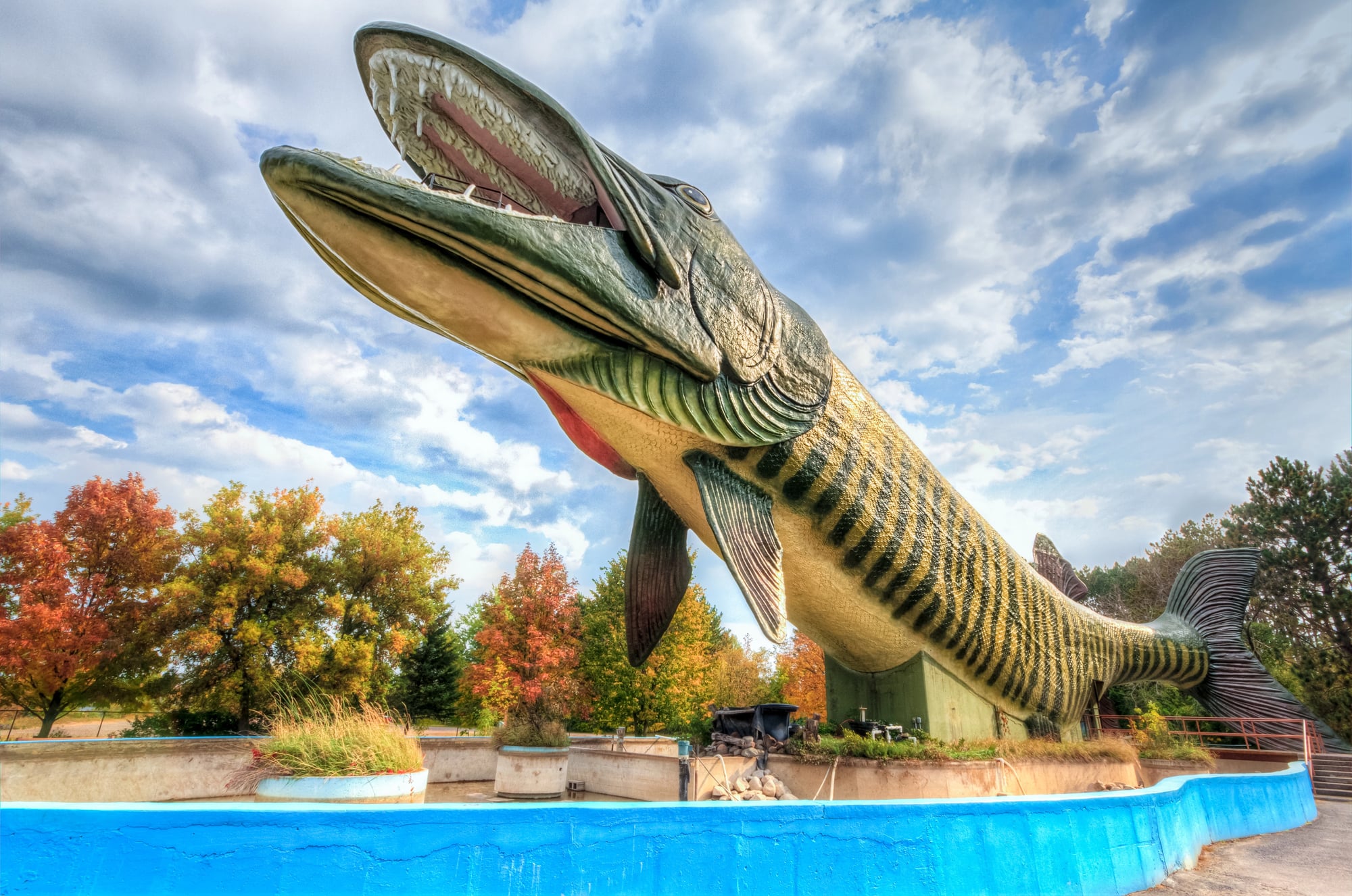
The museum’s central building is a 143-foot-long muskie — a giant fiberglass fish with its mouth open at the second-floor level, allowing visitors to stand inside it and look out over the surrounding area. The muskie was completed in 1978 and remains one of the largest fish-shaped structures in the world.
The museum itself holds thousands of artifacts related to freshwater fishing history, including vintage tackle, outboard motors, and record catches. The combination of serious archival intent and an enormous novelty exterior is one of the more honest representations of what roadside attraction culture was always about.
Blue Whale of Catoosa — Catoosa, Oklahoma
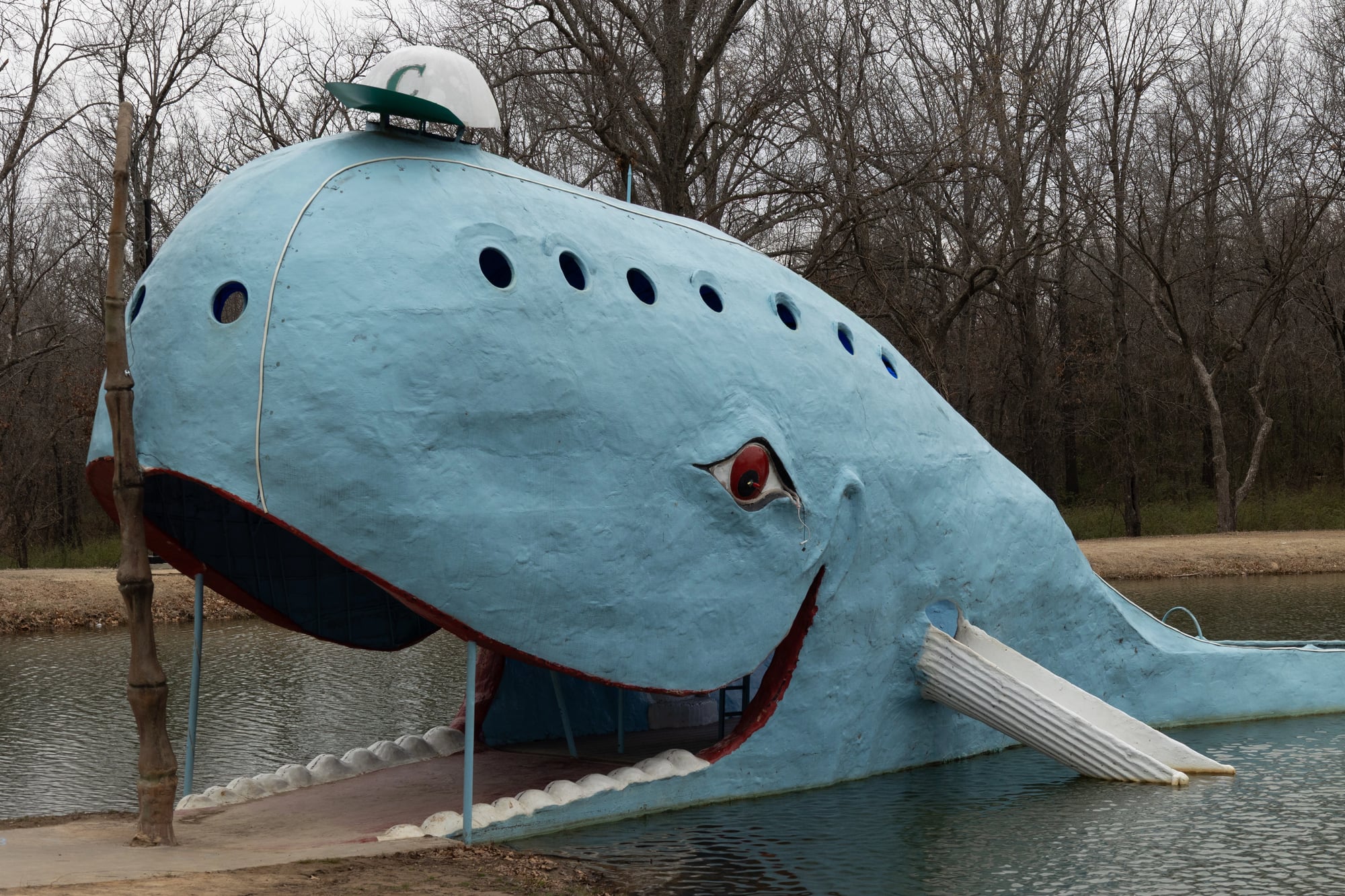
Hugh Davis built the Blue Whale — a smiling, cartoonish structure stretching 80 feet along the edge of a pond — for his wife Zelta as an anniversary gift. She collected whale figurines, and he built her a large one to swim in.
The whale was completed in 1972 and served for years as an informal community swimming area along Route 66. The attraction was nearly demolished after the Davis family stopped maintaining it but was saved by a community restoration effort in the early 2000s.
It now sits repainted and reinforced on the Arkansas River oxbow lake, welcoming visitors who did not expect to find a giant turquoise whale smiling at them from a pond in northeastern Oklahoma.
Mystery Hill “America’s Stonehenge” — North Salem, New Hampshire
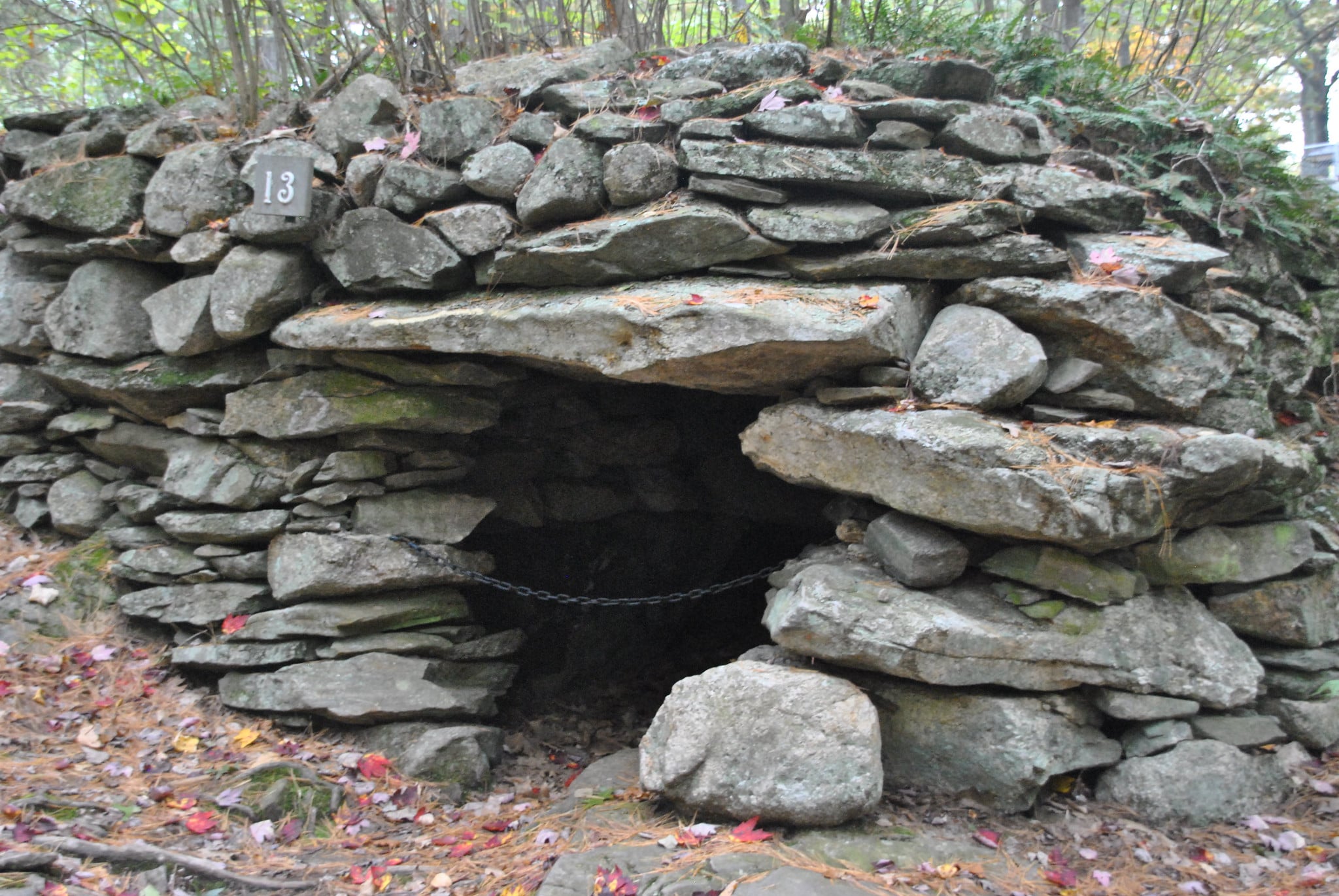
The stone chambers and walls of this site in southern New Hampshire have been the subject of serious disagreement since the 1930s, when writer William Goodwin claimed they were the remains of an Irish monastic settlement. Archaeologists have proposed explanations ranging from Colonial-era root cellars to genuine pre-Columbian construction.
The site has carbon dating evidence suggesting some stones have been in place for over four thousand years, though what that proves about their purpose is disputed. It has been a tourist attraction since 1958 and is still open to the public.
The debate about who built it and why has never been resolved, which is exactly why people keep coming.
Carhenge — Alliance, Nebraska
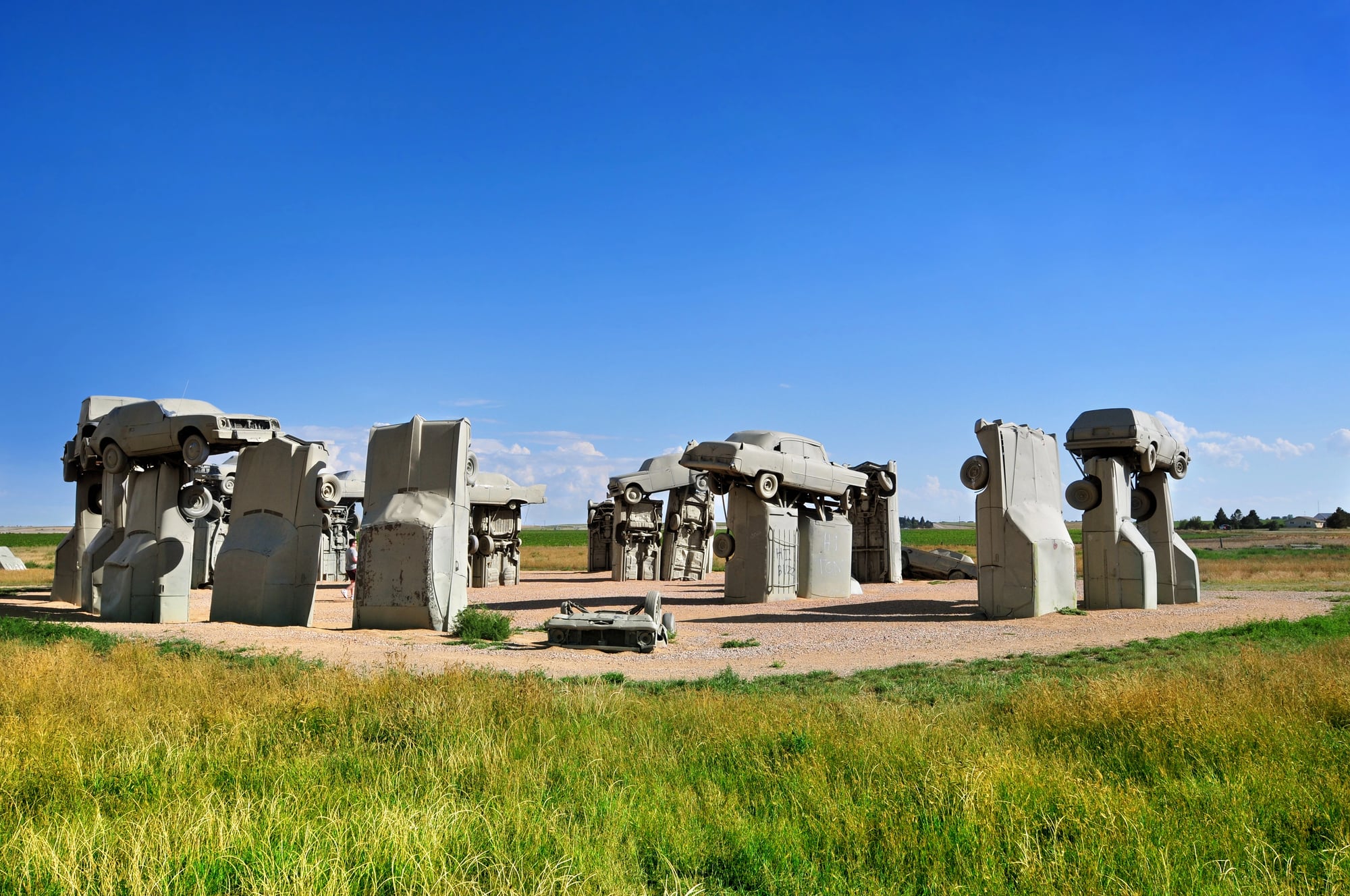
Jim Reinders built Carhenge in 1987 as a tribute to his father, replicating Stonehenge’s layout and dimensions using thirty-eight vintage American automobiles painted gray and arranged in a field on the Nebraska plains. The original reaction from the local community was mixed — some residents found it an eyesore, others found it amusing.
Alliance’s city council initially tried to remove it. Reinders donated it to a nonprofit, which prevailed.
It is now one of Nebraska’s most-visited tourist attractions and draws visitors who come specifically because the juxtaposition of ancient monument and American car culture is stranger and funnier in person than it sounds on paper.
The Shoe House — Hellam, Pennsylvania
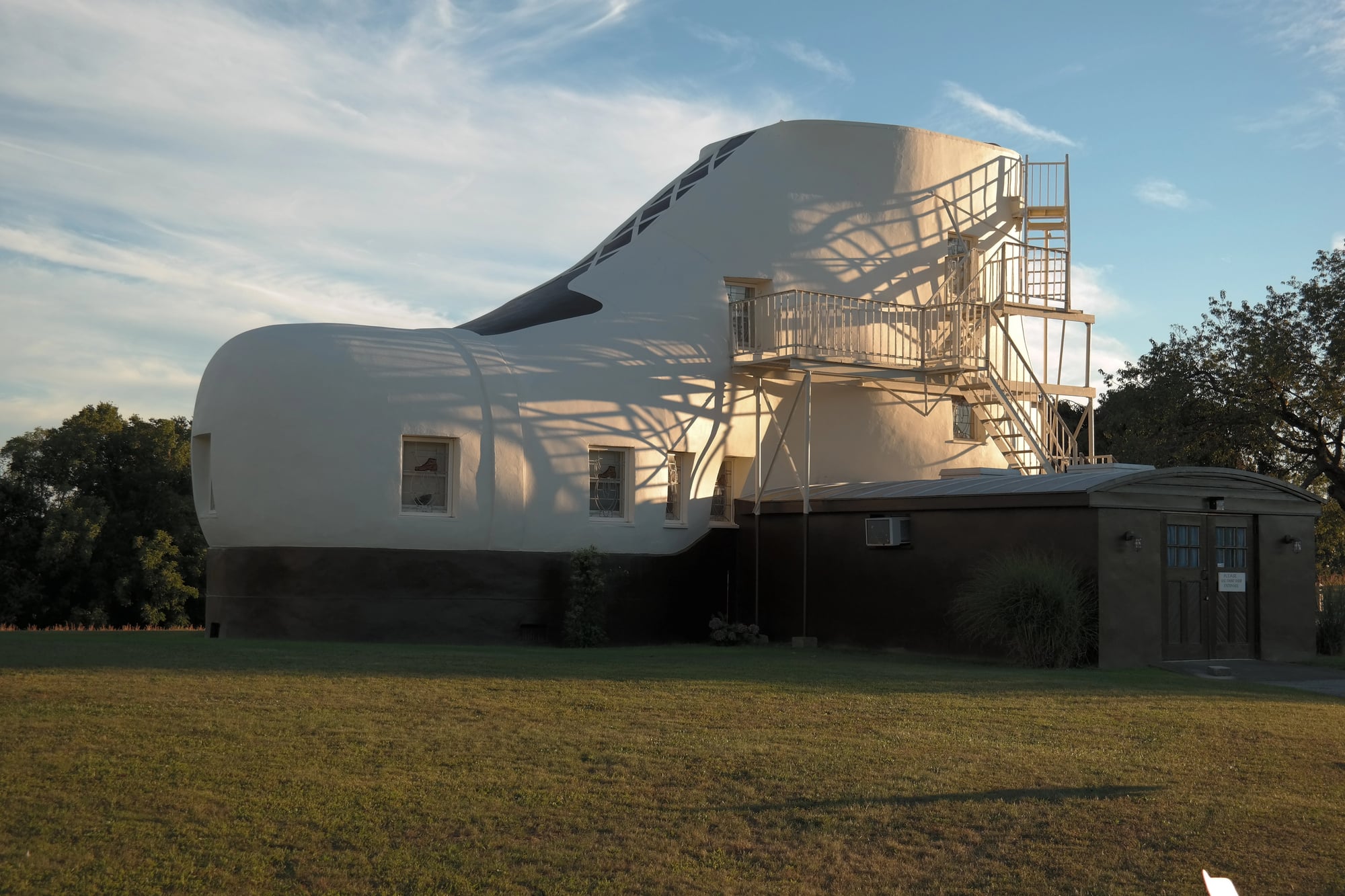
Mahlon Haines was a York, Pennsylvania shoe salesman who in 1948 had a large house built in the shape of a high-top work boot. The five-story structure, complete with a pointed toe and heel, was built to serve as a promotional gimmick and also as a guest house where Haines invited elderly couples and orphans to stay free of charge.
It has seventeen rooms. The property changed hands several times after Haines’ death but has been operated as a tourist attraction and ice cream shop for many years.
The proportions are faithful enough to the original design that the effect, from the road, is genuinely disorienting.
Teapot Dome Service Station — Zillah, Washington
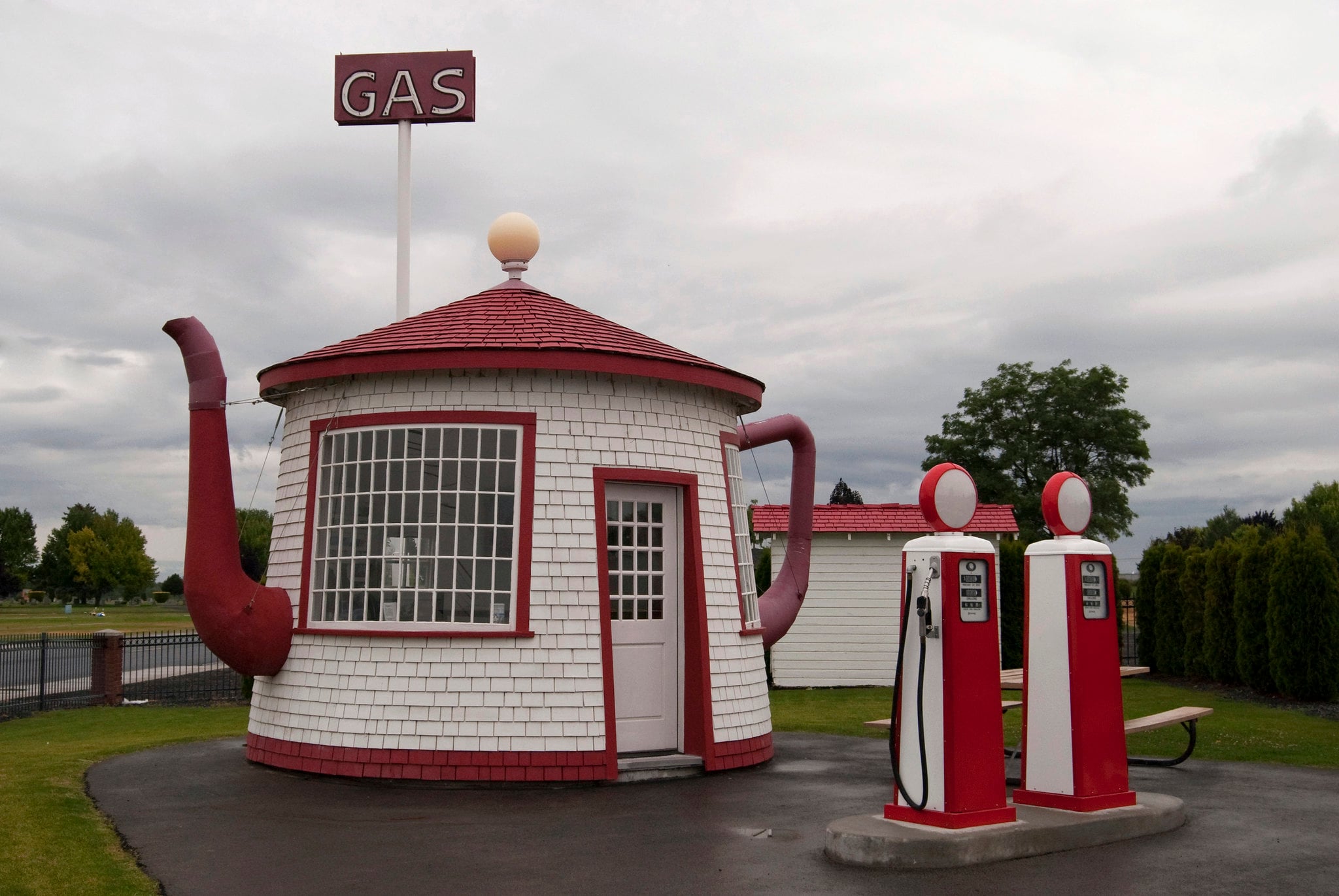
Built in 1922 as a political statement mocking the Teapot Dome oil scandal that had just implicated President Warren Harding’s administration, this small building shaped like a teapot with a handle and spout was one of the most pointed pieces of architectural satire in American history. It originally operated as a gas station.
A car crash damaged it significantly in later years and it was moved to a park in downtown Zillah, where it is listed on the National Register of Historic Places and accessible for free. Most visitors do not know the political backstory.
Most also do not need to — it is simply an extremely specific shape for a building.
The World’s Largest Chest of Drawers — High Point, North Carolina
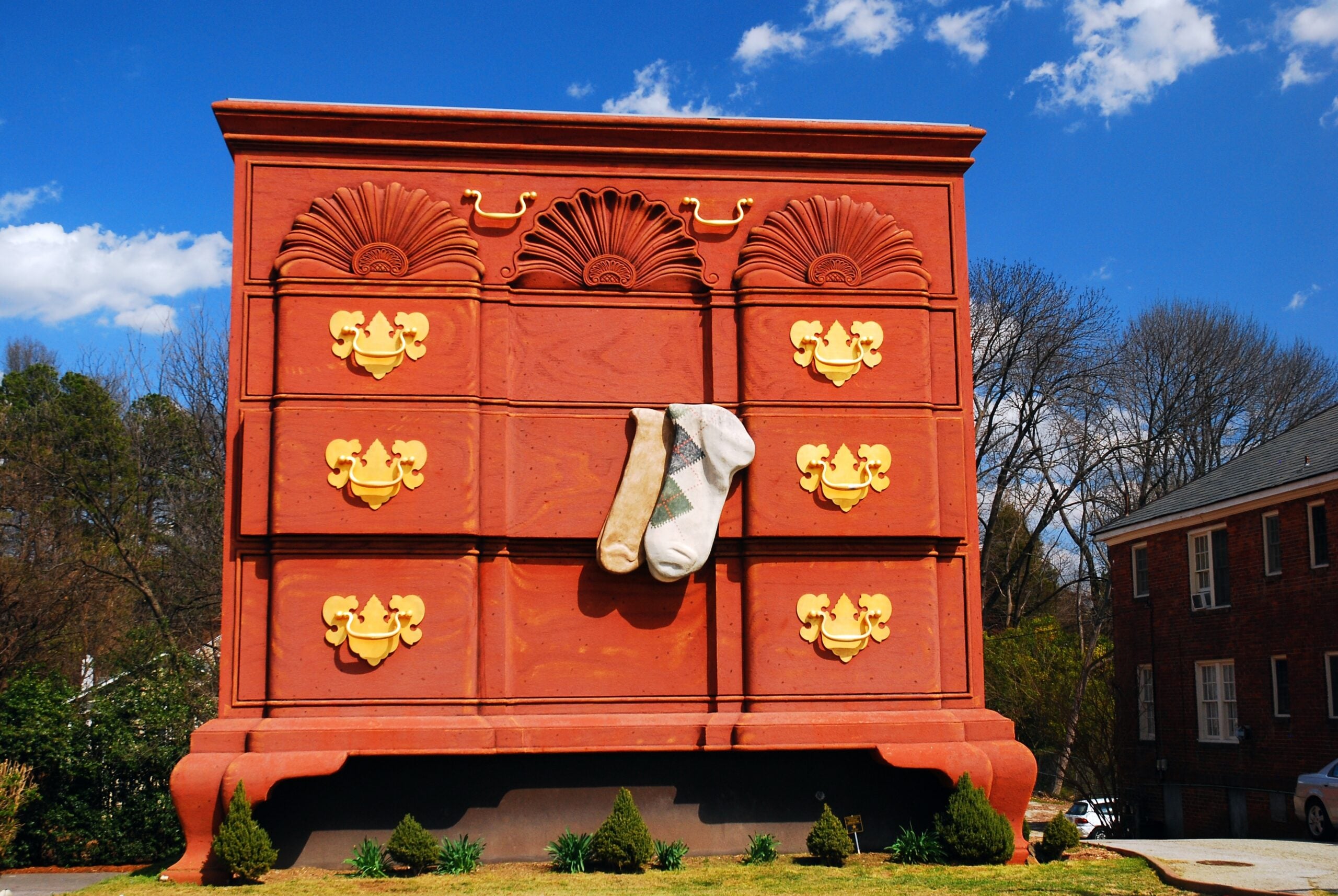
The High Point Chamber of Commerce built a 20-foot-tall chest of drawers in 1926 to symbolize the city’s dominance in the American furniture industry. It was expanded to 38 feet and refurbished multiple times.
The piece de resistance is a pair of oversized socks dangling from one of the drawers, added to represent High Point’s parallel role in the textile and hosiery industries. The building is structurally sound, recognizably furniture-shaped from the street, and completely representative of the impulse that drove American promotional architecture: if you want people to remember what your town makes, make a large version of it and put it by the road.
Forevertron — Baraboo, Wisconsin
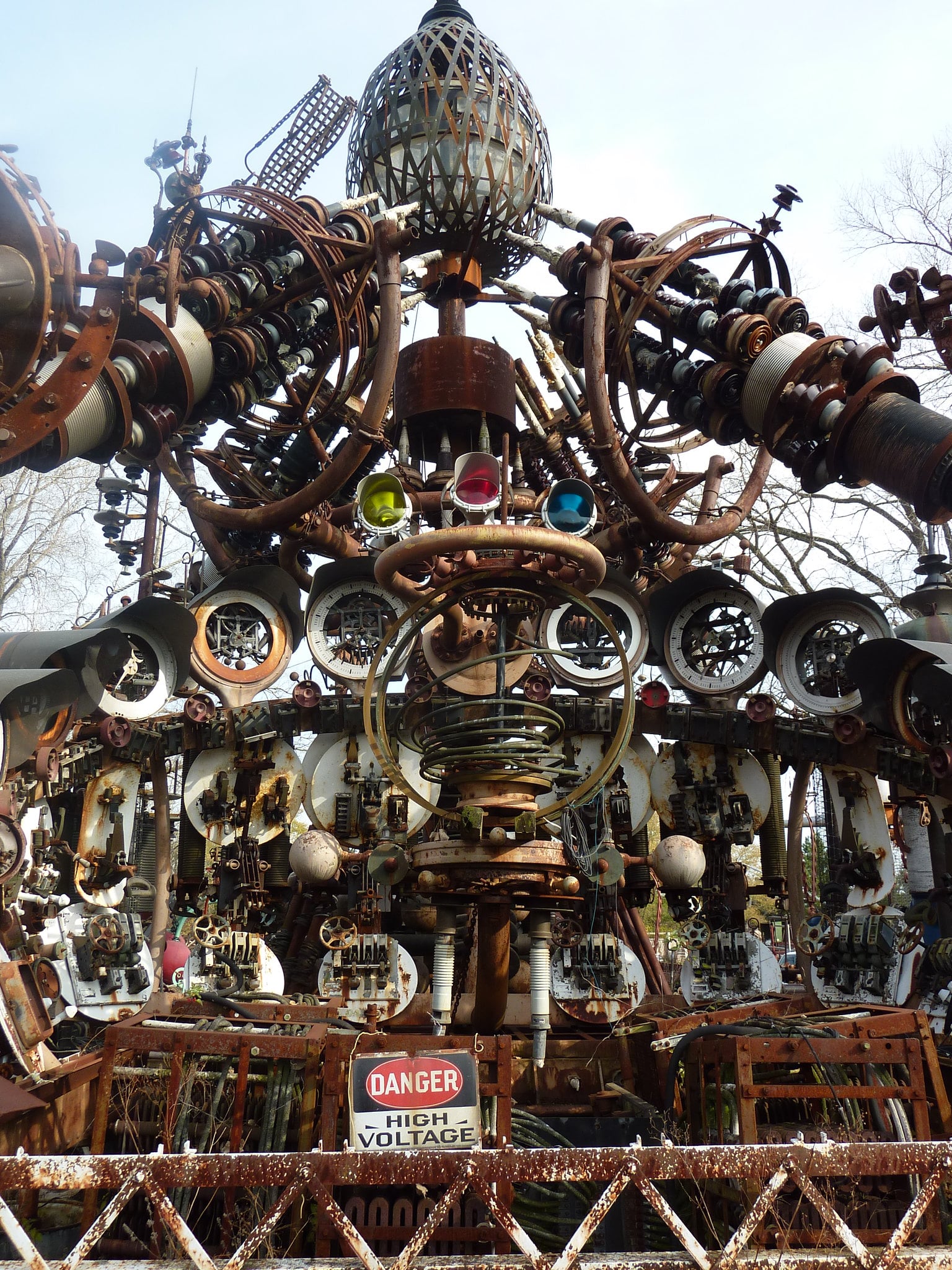
Tom Every — who worked under the name Dr. Evermor — spent decades constructing the world’s largest scrap-metal sculpture on a site outside Baraboo, Wisconsin. The centerpiece is the Forevertron, a 50-foot-tall machine assembled from parts salvaged from industrial sites, power plants, and NASA’s Apollo program.
Every described it as a device intended to propel himself into the cosmos on a magnetic force beam inside a glass egg. He added surrounding sculptures — birds, a band, a theater — until the site became its own small metal world.
Every died in 2020. The Forevertron site is maintained by his family and open to visitors, set in a meadow where the scale of the project only becomes clear once you’re standing in the middle of it.
Paul Bunyan and Babe the Blue Ox — Bemidji, Minnesota
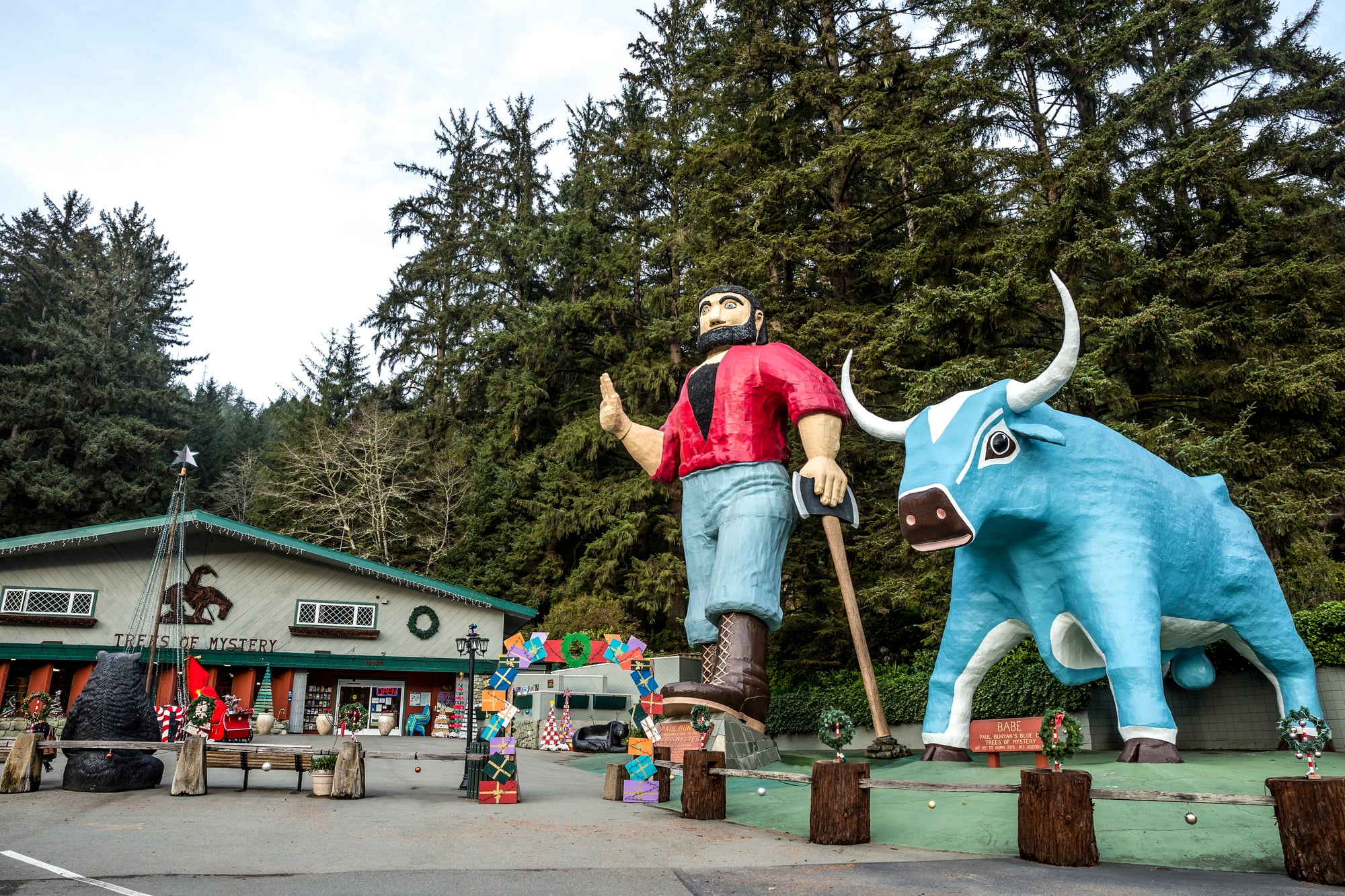
Two statues of Paul Bunyan and his giant companion ox were installed in Bemidji in 1937 for a winter carnival and were never removed. The concrete figures stand about eighteen feet tall and are among the oldest Paul Bunyan statues in the United States.
Bemidji’s version came before the franchise of giant Bunyans that appeared across northern Minnesota and Wisconsin, and the town has leaned into the claim of being the original. The statues have their own dedicated parking area and appear on the city’s official branding.
Babe’s ears have been touched by so many visitors over the decades that the concrete in that spot has been worn smooth.
Rock ‘n’ Roll Highway 50 Roadside Art — Salina, Kansas
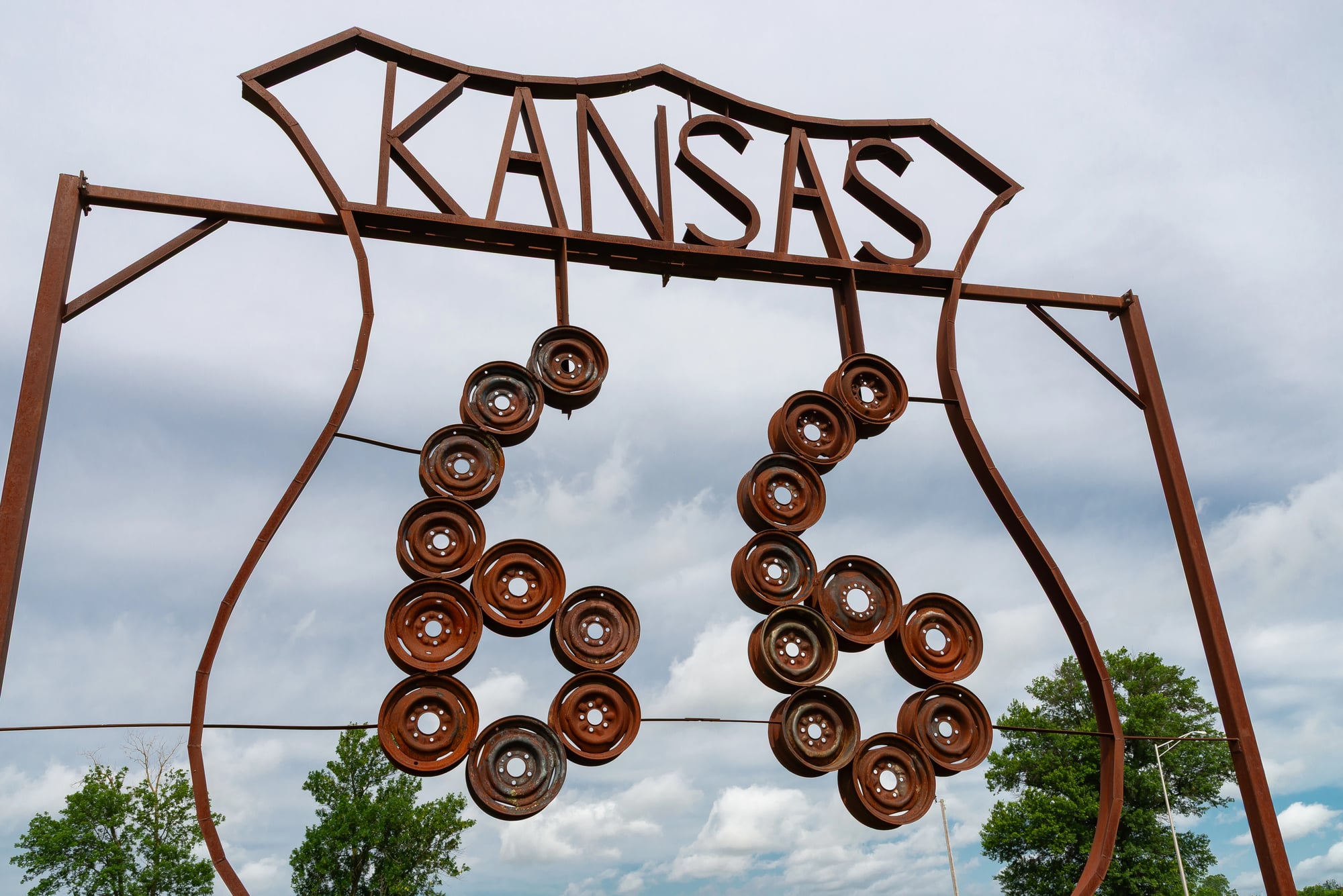
A stretch of US-50 in central Kansas has been informally designated for its collection of outdoor sculptures and art installations created by local artists, many of which reference the region’s agricultural and musical history. The most distinctive is “Ad Astra,” a 44-foot-tall wind-driven kinetic sculpture of a sunflower installed in 1999.
The individual pieces vary in age and quality, but taken together they represent one of the more coherent regional outdoor art programs in the country — where a state with flat land and long horizons essentially turned the landscape itself into a gallery.
Oregon Vortex and House of Mystery — Gold Hill, Oregon
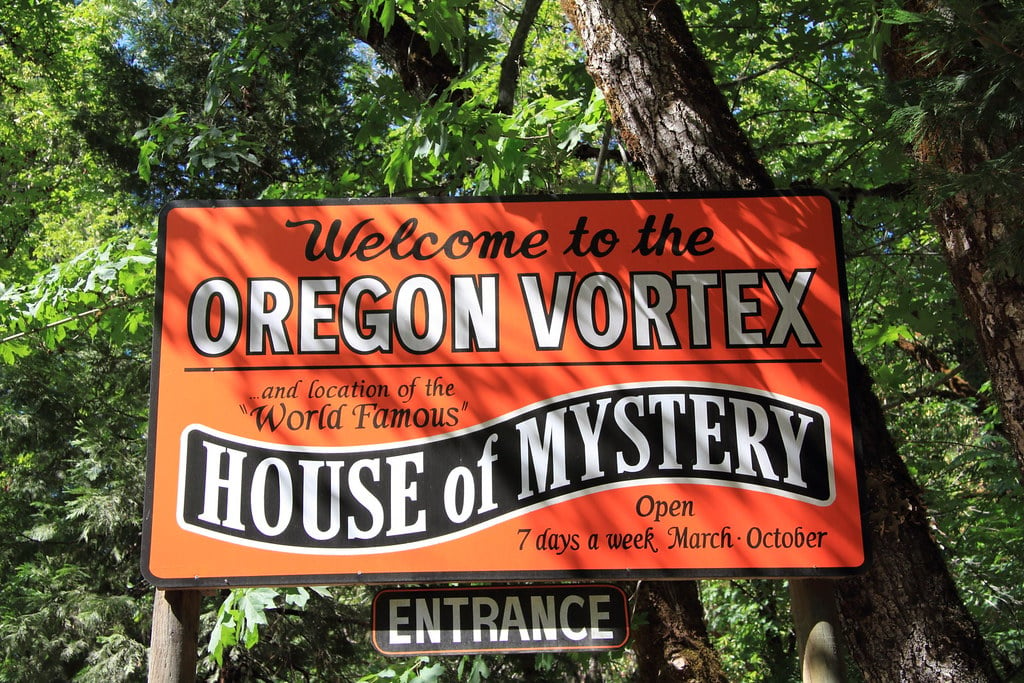
The Oregon Vortex predates California’s Mystery Spot by nearly a decade, opening to the public in 1930 on a site that had reportedly made horses uncomfortable enough that Native peoples avoided it. The attraction features a tilted house — the former assay office of a gold mining company — in which the same visual distortions occur as in every other “gravity house” in America.
The difference here is age and atmosphere. Gold Hill is sufficiently remote and the surrounding landscape sufficiently dense that the whole experience feels less like a gift shop with an optical illusion attached and more like something genuinely unexplained, which is exactly what the Oregon Vortex has been telling visitors for nearly a century.
The Road Less Taken, Still Taken
The golden age of American roadside attraction-building ran roughly from the 1920s through the 1970s, a period when the highway was genuinely competitive for attention and a creative person with land and conviction could build something that drew traffic for generations. The attractions that survived did so because they were either weird enough to resist replacement or beloved enough to be saved.
Several on this list have been moved, restored, or rescued from demolition by communities that decided, sometimes at the last minute, that the thing was worth keeping.
What they share, beyond their strangeness and their roadside location, is the quality of being completely specific to the person or place that made them. No algorithm suggested the Blue Whale.
No market research recommended the Shoe House. Ed Leedskalnin built Coral Castle to process grief using techniques nobody has been able to replicate.
The roadside attraction, at its best, was the physical record of a particular human being’s particular obsession — and the ones still standing are the ones that obsession ran deep enough to outlast them.
More from Go2Tutors!

- The Romanov Crown Jewels and Their Tragic Fate
- 13 Historical Mysteries That Science Still Can’t Solve
- Famous Hoaxes That Fooled the World for Years
- 15 Child Stars with Tragic Adult Lives
- 16 Famous Jewelry Pieces in History
Like Go2Tutors’s content? Follow us on MSN.