26 Country Flags With Hidden Symbols Most Citizens Don’t Notice
Most people can recognize their own country’s flag. They’ve seen it their whole lives — on government buildings, at sporting events, stitched onto backpacks.
But recognizing something and actually seeing it are two different things. Flags are dense with intentional meaning: colors chosen for specific reasons, shapes borrowed from history, and symbols embedded so quietly that even lifelong citizens walk right past them.
Some of these details were placed there by designers who wanted future generations to look closer. A few were accidents that became tradition.
All of them are worth knowing.
Denmark

The Danish flag, the Dannebrog, is the oldest continuously used national flag in the world — in active use since the 13th century. The off-center cross design, which became the template for every other Nordic country’s flag, represents Christianity, but the specific placement of the cross toward the hoist side is deliberate: it creates two rectangles on the left and three on the right, a proportional ratio that has been codified into Danish law. Most Danes know the flag’s age.
Very few could tell you its legal dimensions.
Nepal
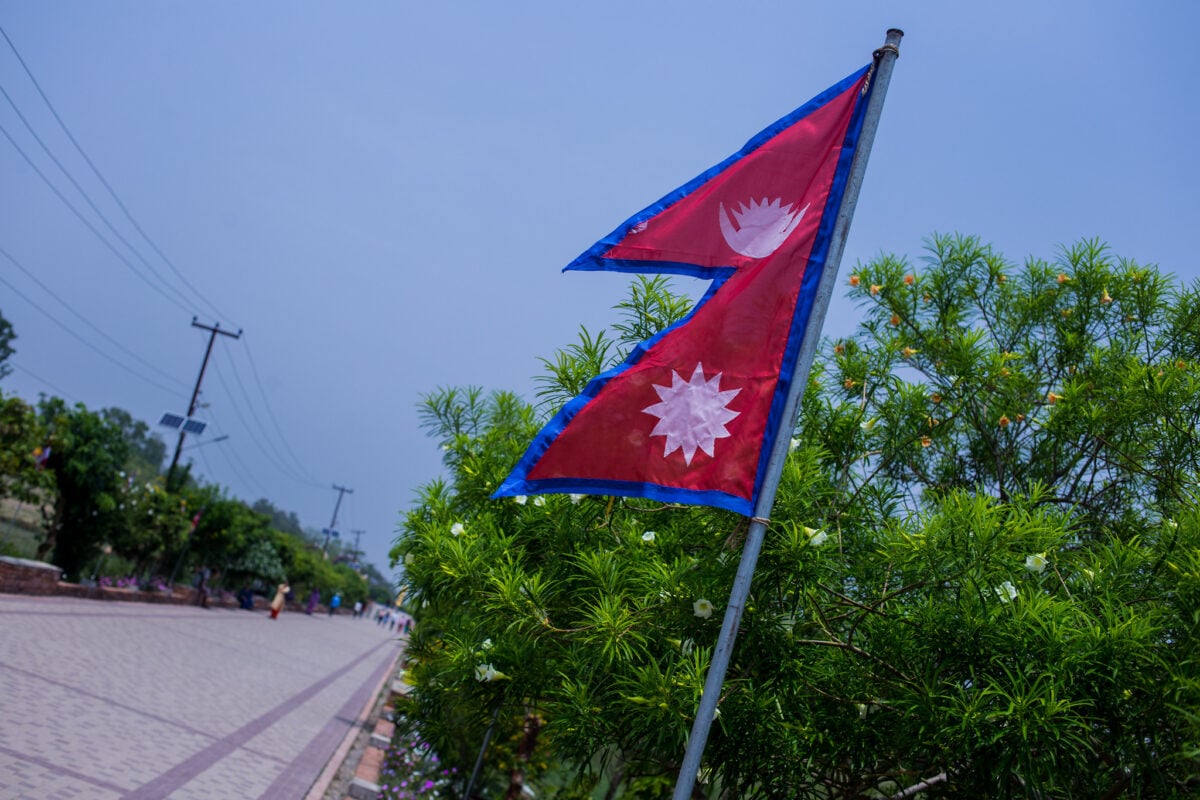
Nepal’s flag is the only national flag in the world that isn’t rectangular or square. It’s a double pennant — two stacked triangles — and that shape isn’t a design quirk, it’s a merger.
Two separate pennant flags used by rival branches of the ruling Shah dynasty were combined into one when the country unified, and the double triangle was the physical result of that compromise. The moon symbol in the upper triangle and the sun in the lower each originally represented those rival factions.
So the whole flag is essentially a peace agreement made visible.
Cyprus

The map of the island sits right in the center of Cyprus’s flag — which sounds obvious until you realize almost no other country does this. But the detail most people overlook is the color: the island outline is rendered in copper-orange, a direct reference to the Greek word “Kypros,” from which the element copper (Cu on the periodic table) takes its name.
Cyprus was, for centuries, one of the world’s primary sources of copper. The flag is quietly saying: this island didn’t just produce copper, it named it.
Mozambique

Mozambique’s flag contains an AK-47. Not a stylized weapon, not a vague military symbol — an actual, recognizable assault rifle, complete with a bayonet attached.
It sits alongside a hoe and an open book in the flag’s central emblem, and it’s the only national flag in the world with a specific modern firearm depicted on it. The rifle represents defense and vigilance, placed there after the country’s independence from Portugal in 1975.
To be fair, Mozambique earned the symbolism — the liberation struggle was real, recent, and brutal.
Australia
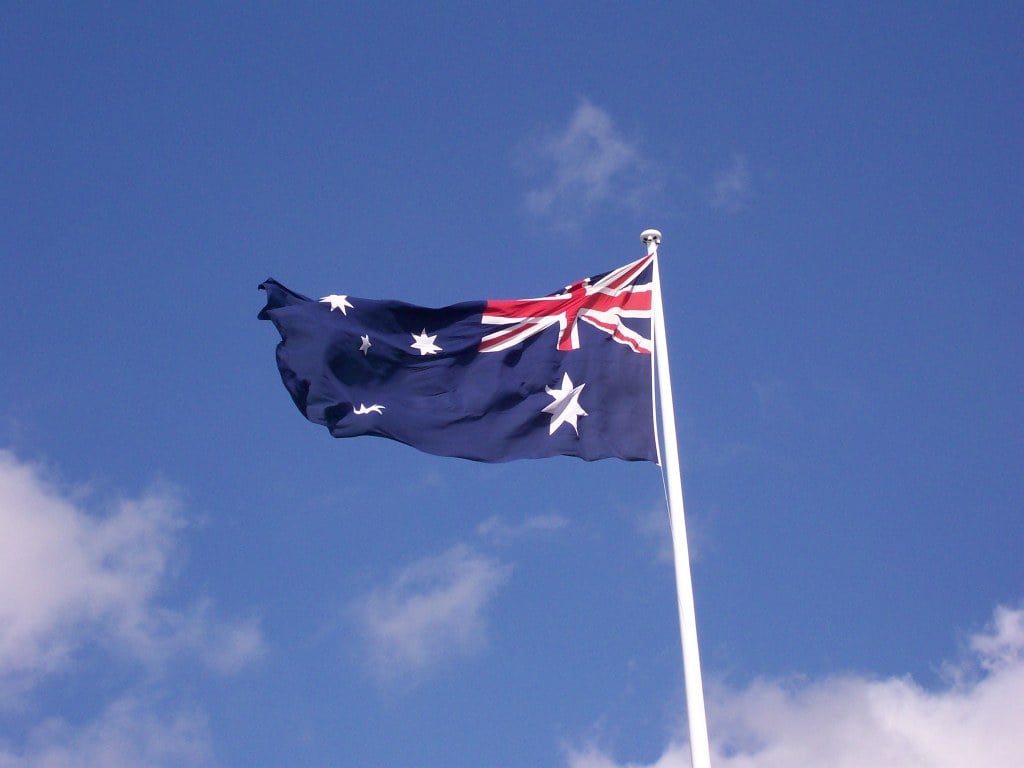
The Southern Cross constellation on Australia’s flag is well known, but the number of points on the stars is not. Four of the five stars in the Southern Cross have seven points each, while the smallest star has only five — a reflection of the actual brightness variations of those stars as seen from the Southern Hemisphere.
The large Commonwealth Star beneath the Union Jack also has seven points: six representing the six states, and a seventh added in 1908 to represent the territories. Most Australians know the stars are there.
Fewer could explain why they’re different sizes.
South Korea
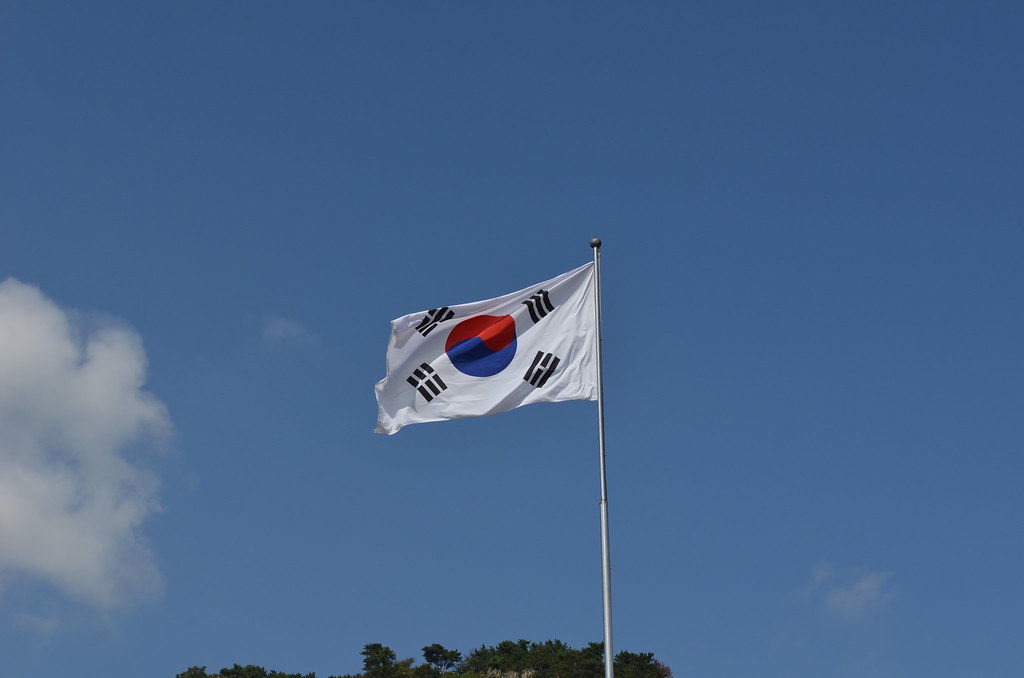
The Taegukgi — South Korea’s flag — is a masterclass in layered meaning that rewards patient attention. At its center is the taeguk, a red-and-blue circular symbol representing the balance of opposing cosmic forces (similar in concept to yin and yang), and surrounding it are four black trigrams from the I Ching, each positioned at a corner of the white field.
Each trigram represents a pairing: heaven and earth, water and fire — and they’re arranged so that opposite trigrams mirror each other diagonally. The whole flag functions less like a national symbol and more like a philosophical diagram that happens to fly on a pole.
United States
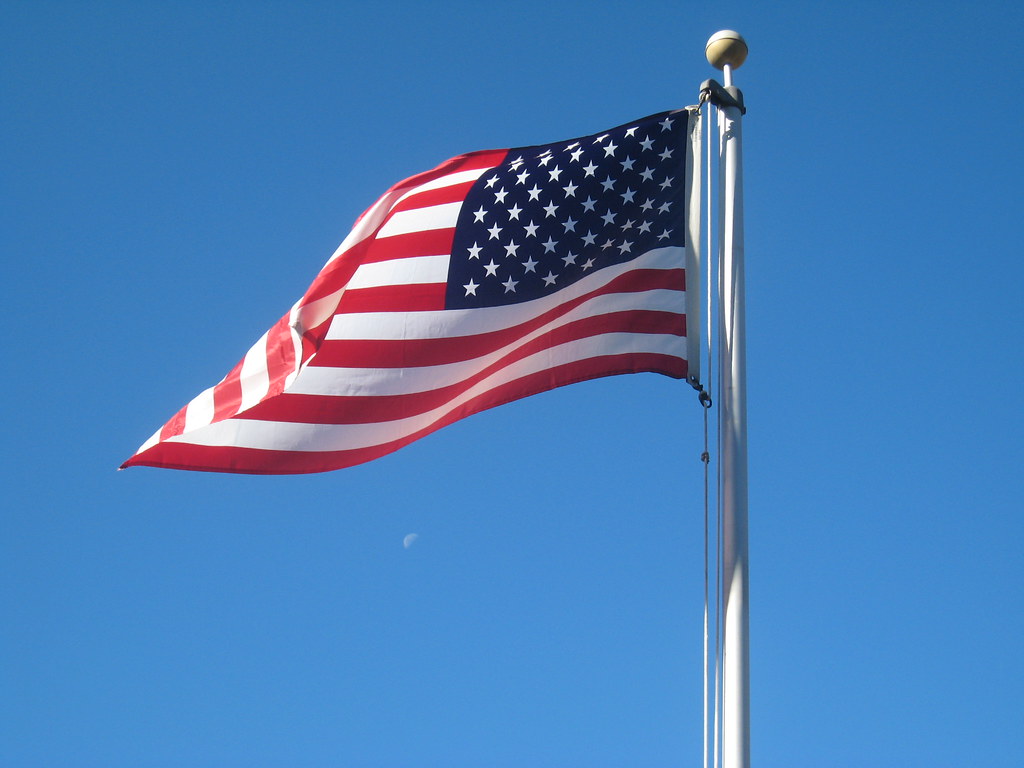
The 50 stars on the U.S. flag are arranged in a specific alternating pattern — five rows of six stars and four rows of five stars — that creates the optical impression of a neat grid even though no single row is uniform. This arrangement was standardized by executive order under President Eisenhower in 1960, after Hawaii became the 50th state, and it replaced a version with 49 stars that had existed for less than a year.
The flag has been officially redesigned 27 times. Most Americans couldn’t name a single version before the current one.
Portugal

Portugal’s flag splits into green and red, but the emblem at the center — an armillary sphere overlaid on a shield — is where the real history hides. The armillary sphere, a navigational instrument used during the Age of Discovery, was the personal symbol of King Manuel I, under whose reign Portuguese explorers reached India, Brazil, and the Far East.
It’s essentially a tribute to the country’s 15th-century maritime dominance, frozen in place on a modern flag. The seven castles on the shield represent Moorish castles conquered during the Reconquista.
Portugal isn’t shy about remembering its own story.
Canada
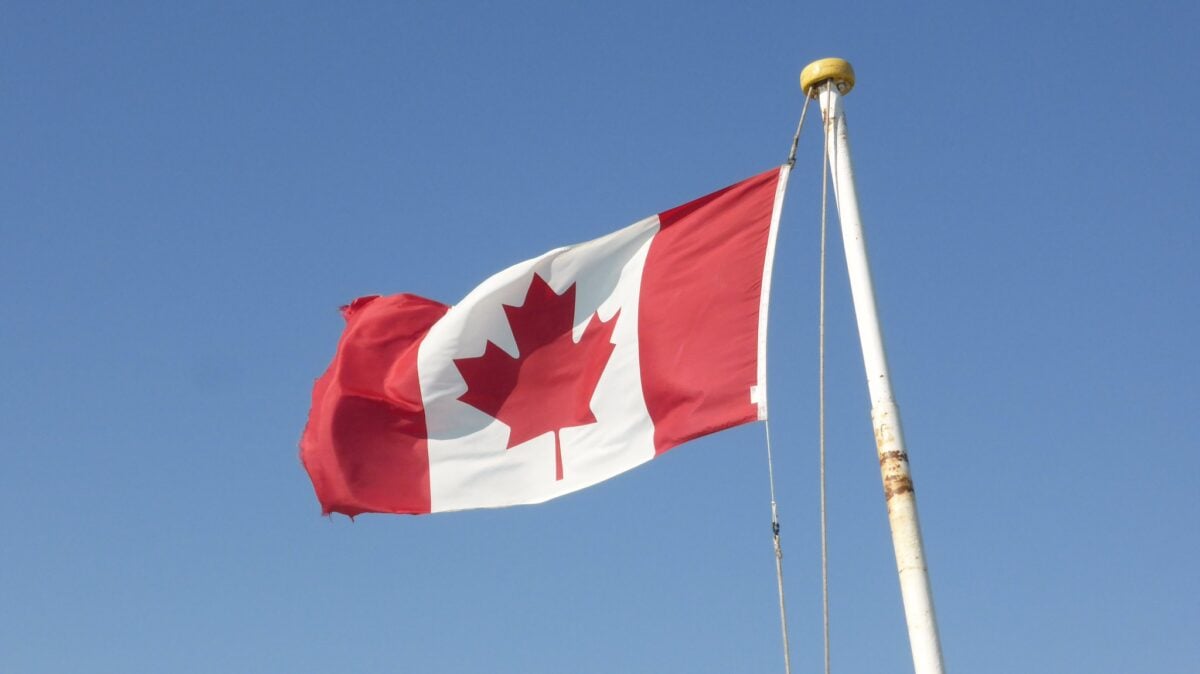
The maple leaf on Canada’s flag has 11 points, and there’s a persistent myth that this was accidental or compromised down from a more botanically accurate version. The truth is that wind-tunnel testing at the National Research Council showed that a more realistic leaf with more points blurred and distorted when the flag was in motion, while the 11-point version remained crisp and legible.
The design was chosen for aerodynamic clarity, not botanical accuracy — which is, honestly, a very Canadian way to solve a problem. The flag was adopted in 1965, replacing a design that included the Union Jack.
Brazil

Brazil’s flag looks like a night sky behind a golden diamond, and that’s almost literally what it is. The 27 stars on the blue sphere represent the night sky over Rio de Janeiro at exactly 8:30 a.m. on November 15, 1889 — the moment the republic was proclaimed.
Each star corresponds to a specific Brazilian state or the Federal District, and their positions match the actual celestial coordinates visible from Brazil at that precise moment. The white band across the sphere reads “Ordem e Progresso” — Order and Progress — but the star map is the detail that makes the flag a timestamp.
Switzerland

Switzerland’s flag is square. Not square-ish, not close to square — a perfect 1:1 ratio square, one of only two national flags in the world (Vatican City being the other) with that shape. The white cross inside it, despite being one of the most recognized symbols in the world, is actually a relatively recent standardization: the precise proportions of the cross arms weren’t formally codified until 1889.
Before that, variations existed. The flag’s square shape was simply never changed because Switzerland, as a country, is famously resistant to changing things that are already working.
Jamaica
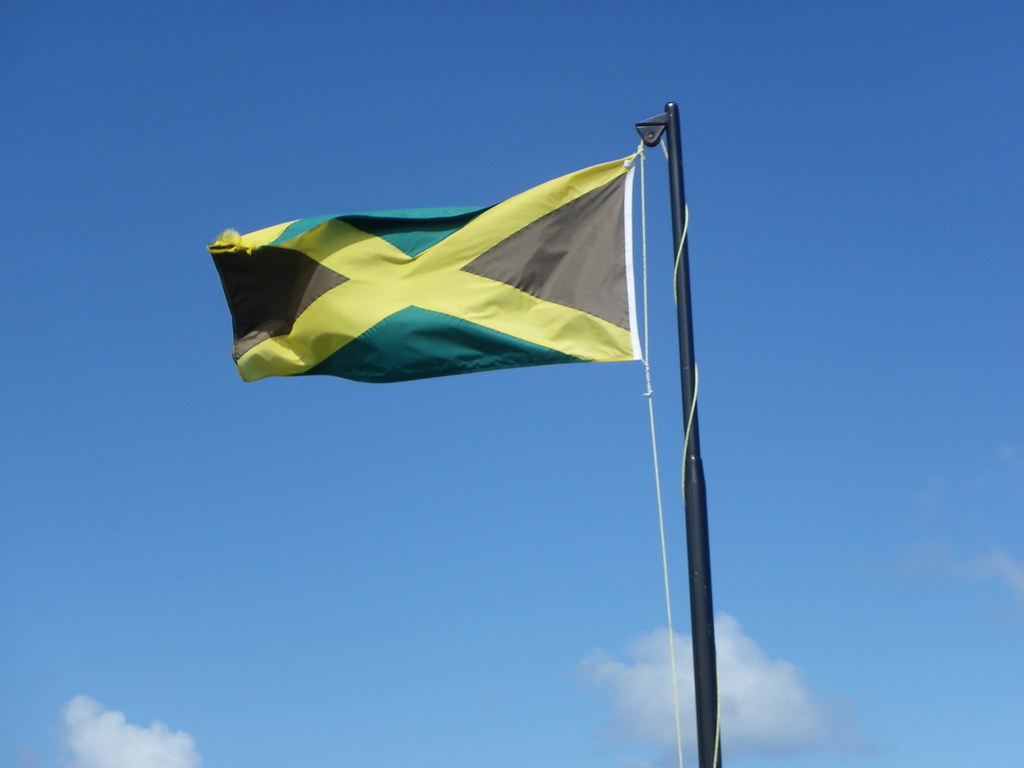
Jamaica’s flag is the only national flag that contains neither red, white, nor blue — a distinction that’s more significant than it sounds, given that the vast majority of the world’s flags lean on that same trio of colors. The black, gold, and green design uses color symbolically: black for the hardships faced and overcome, gold for the natural wealth of the island, and green for the land’s lush vegetation.
The gold diagonal cross (called a saltire) divides the flag into four triangles. It’s a flag built entirely on deliberate exclusion — and that choice makes it instantly recognizable.
Albania
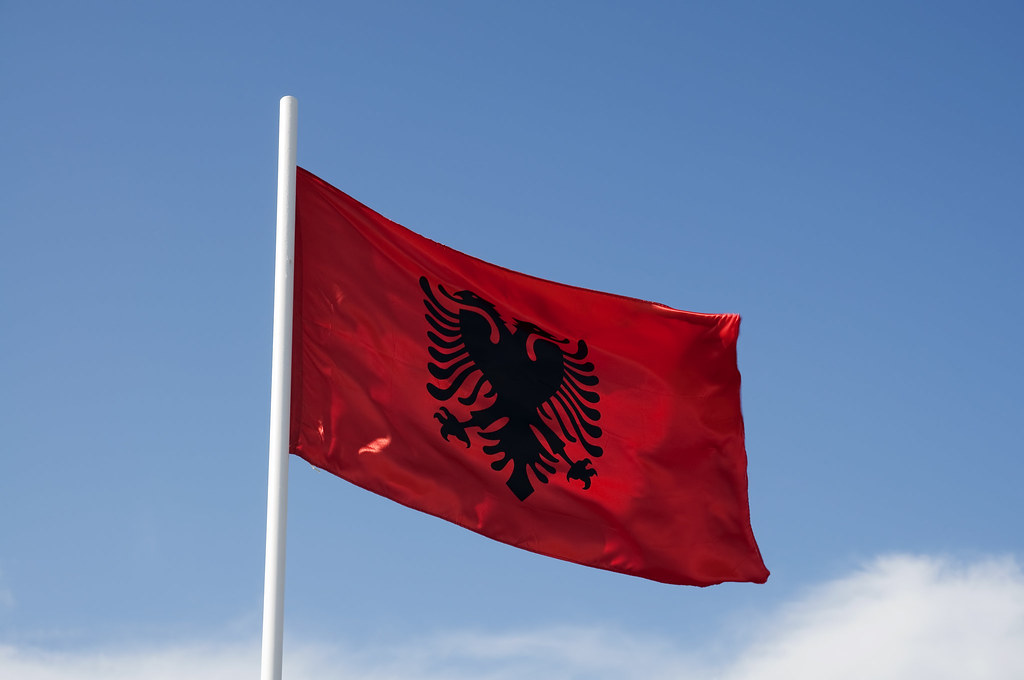
The double-headed eagle on Albania’s flag is older than Albania as a modern state by several centuries — it traces back to George Castriot, known as Skanderbeg, the 15th-century military commander who resisted Ottoman expansion and became the country’s national hero. The eagle was his personal seal.
Two heads facing opposite directions is a symbol borrowed from Byzantine heraldry, representing a ruler who governs both East and West. Albania adopted it as a national symbol during its 1912 independence, making the flag less a new design and more an act of historical reclamation.
New Zealand

New Zealand’s flag and Australia’s flag are frequently confused — even by people from those countries. Both feature the Southern Cross and the Union Jack, but New Zealand’s version uses only four stars (all with five points) and renders them in red outlined in white, while Australia’s uses white stars.
The Union Jack’s presence remains a point of genuine national debate in New Zealand; a 2016 referendum asked citizens whether to replace it, and 57 percent voted to keep the current design. The stars in the Southern Cross are rendered differently — New Zealand shows four stars with five points each in red outlined in white, while Australia depicts the same constellation with five stars of varying point counts in white — but both flags depict the same constellation, not different ones.
Dominican Republic
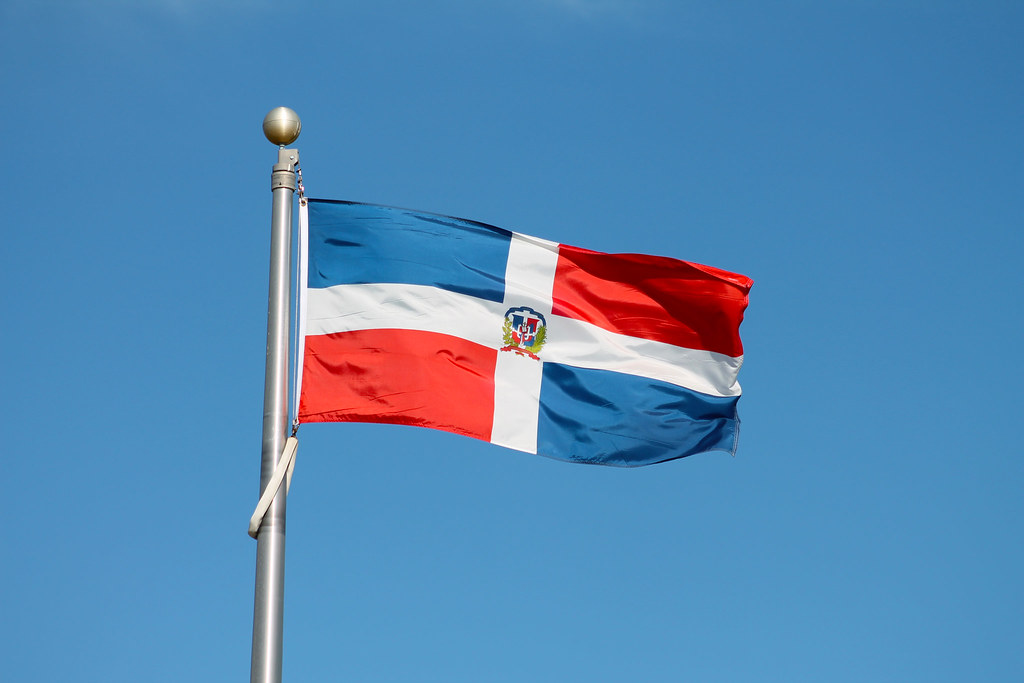
The Dominican Republic is one of only a handful of countries whose flag features a Bible. It sits at the center of the coat of arms, open to the Gospel of John, Chapter 8, verse 32: “And the truth shall set you free.”
The coat of arms also contains a cross, six Dominican flags, a shield, laurel and palm branches, and a blue ribbon with the national motto. The whole emblem is extraordinarily dense, and it appears on both the national and state versions of the flag — though the version flown by civilians omits the coat of arms entirely.
United Kingdom
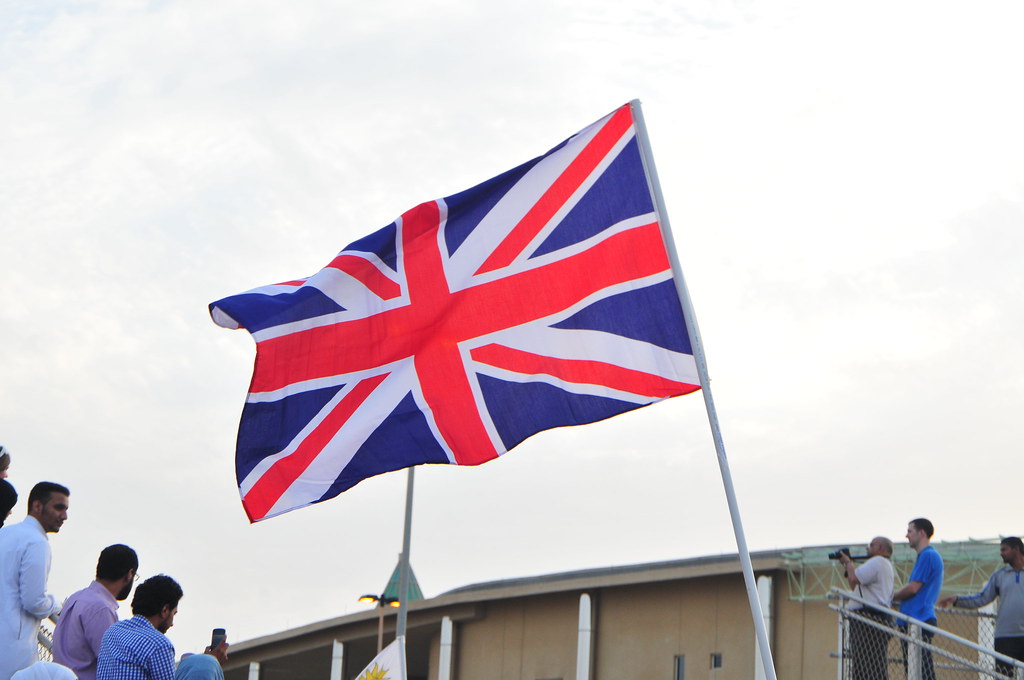
The Union Jack is actually three flags fused into one, and the seams are visible if you look at the diagonal stripes carefully. The red diagonal cross of Saint Patrick (Ireland) and the white diagonal cross of Saint Andrew (Scotland) overlap, but they don’t overlap symmetrically — the white lines are wider on the upper-left and lower-right sides of the red lines than on the other sides.
This counterchange is called “counterchanged,” and it was the deliberate solution to displaying both crosses simultaneously without one appearing to dominate the other. Wales, for the record, is entirely absent from the flag.
Mexico
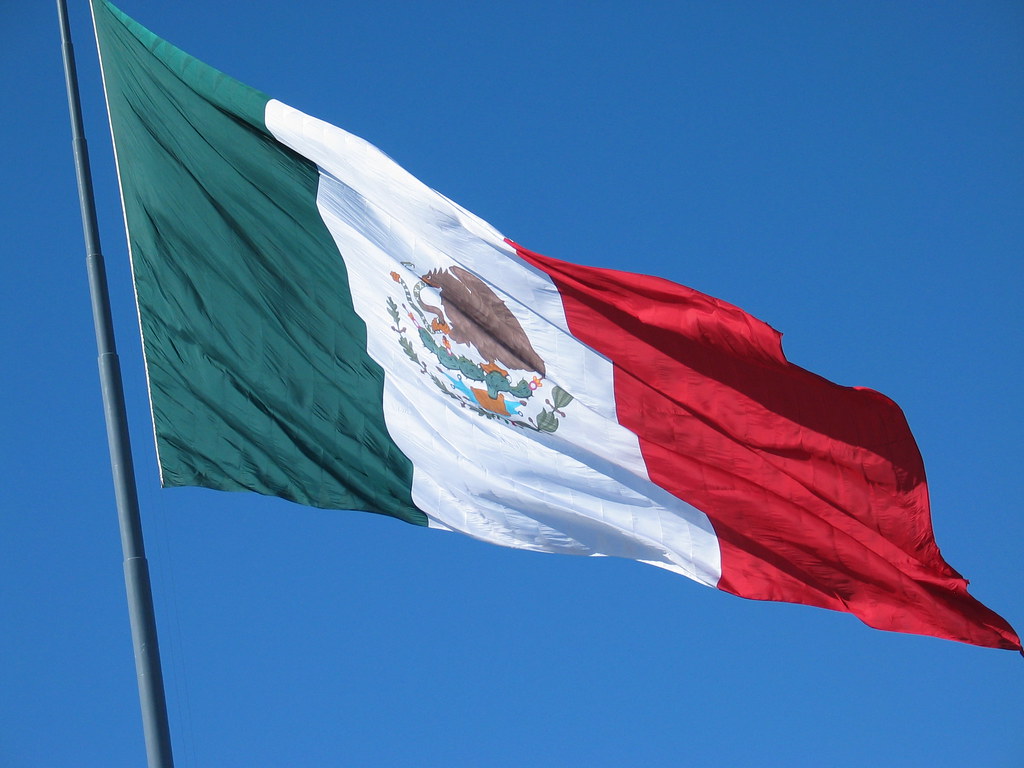
Mexico’s flag looks similar to Italy’s at a distance — both use vertical green, white, and red stripes — but Mexico’s coat of arms in the center makes it unmistakable up close. The emblem depicts an eagle perched on a cactus, devouring a snake, which comes directly from an Aztec legend about the founding of Tenochtitlan (modern-day Mexico City).
The legend says the Aztec people were told by their god Huitzilopochtli to build their city wherever they found this exact scene. They found it on an island in Lake Texcoco, and there they built one of the largest cities in the pre-Columbian world.
Bhutan
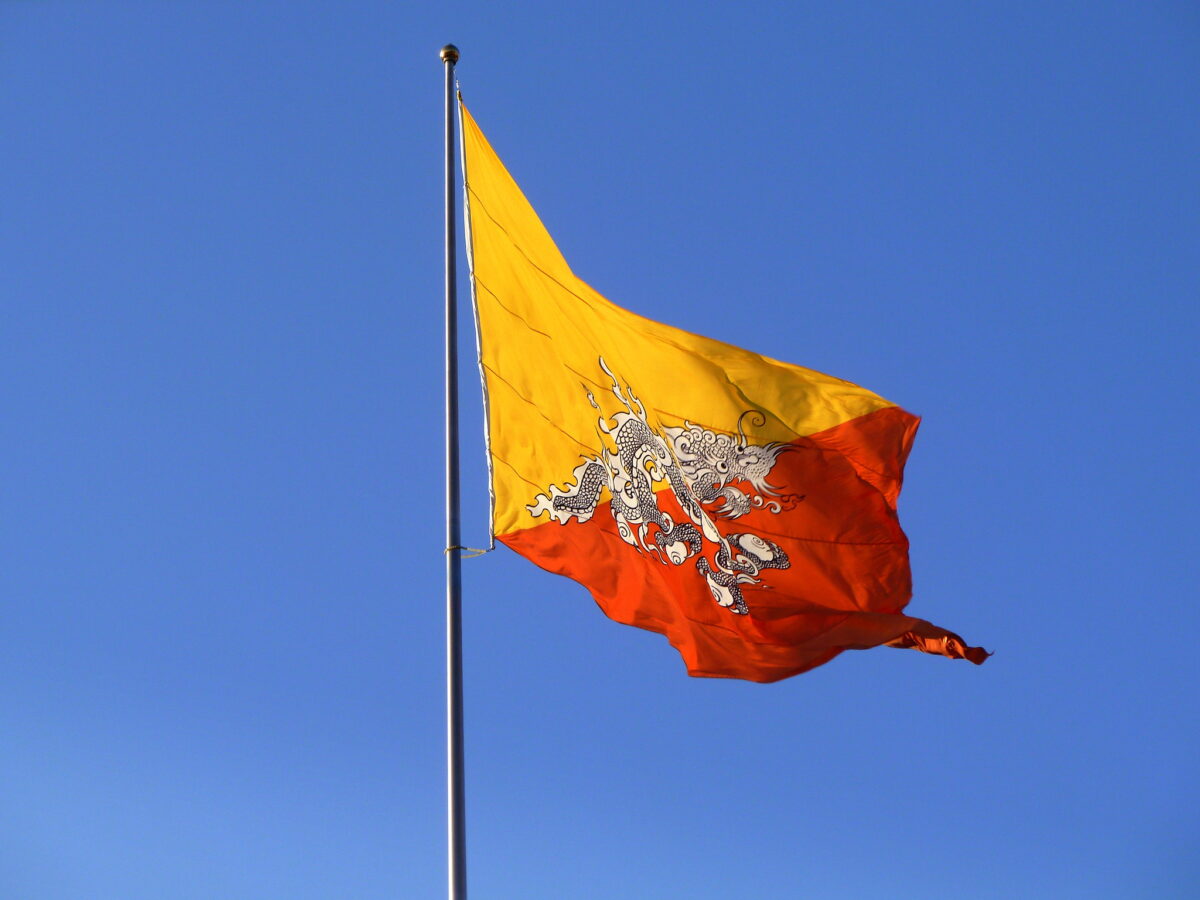
Bhutan’s flag is the only national flag in the world that features a dragon, and not a stylized or simplified one — a full, detailed Druk, the Thunder Dragon of Bhutanese mythology, clutching jewels in its claws. The dragon faces forward, mouth open, against a background divided diagonally between orange and yellow-gold.
The jewels it holds represent wealth and perfection. The dragon is not decorative; it’s the literal name of the country in Dzongkha, the national language — “Druk Yul” translates to “Land of the Thunder Dragon.”
The flag is the country’s name made visible.
Kenya
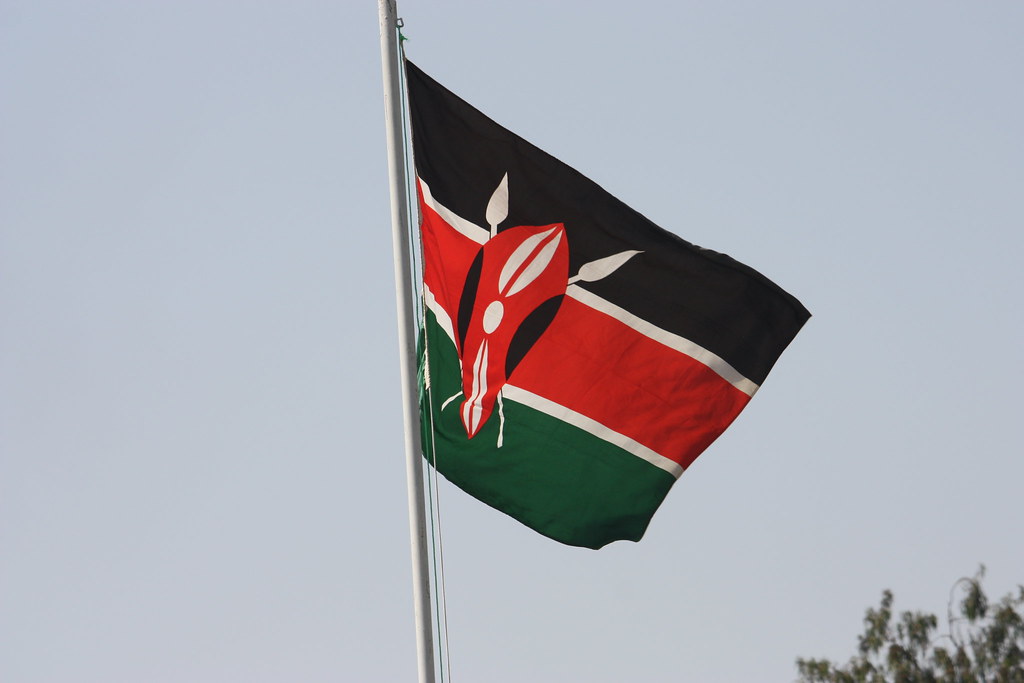
The Maasai shield and two crossed spears at the center of Kenya’s flag are easy enough to notice, but the specific color of the shield — red, black, and white — mirrors the three horizontal stripes of the flag itself, creating a kind of visual echo where the emblem and the background share the same palette. The shield represents the defense of all things mentioned in those colors: black for the people, red for the blood of martyrs, and green (the fourth stripe) for the land.
The white stripes that separate them represent peace. It’s a flag where every element is in conversation with every other element.
Cambodia
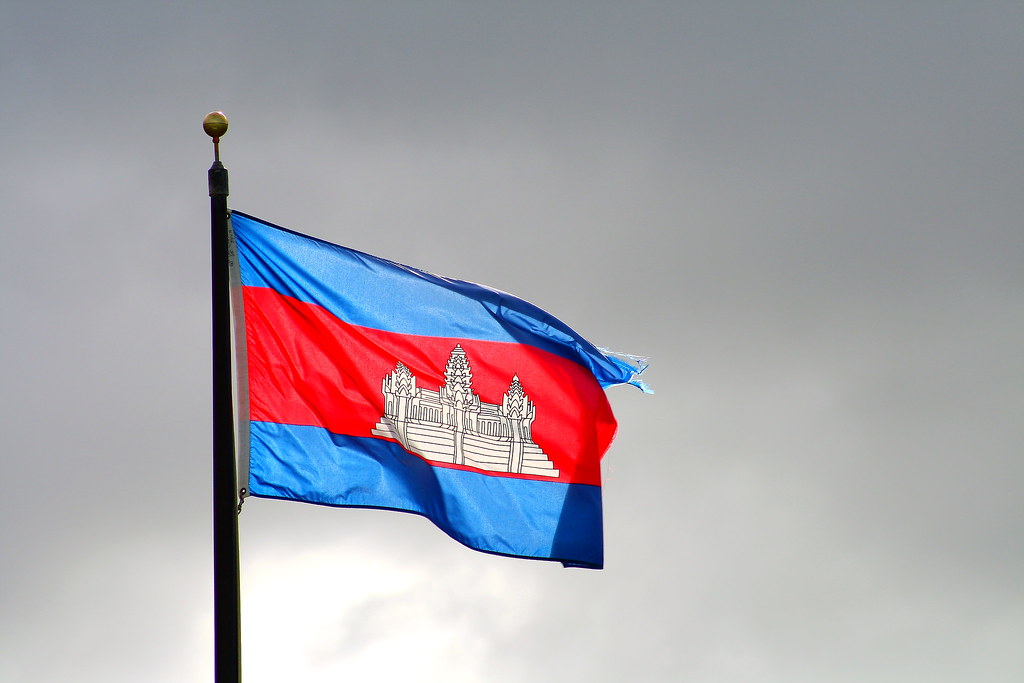
Cambodia’s flag is one of the very few in the world that features a building — specifically, Angkor Wat, the 12th-century temple complex that is the largest religious monument on Earth. The stylized depiction in white sits at the center of a red field flanked by blue stripes.
Angkor Wat has appeared on every version of Cambodia’s flag since 1863, through colonialism, independence, genocide, and reconstruction — which makes it one of the most stubborn symbols in vexillological history. The temple outlasted every political regime that tried to define the country around something else.
Fiji
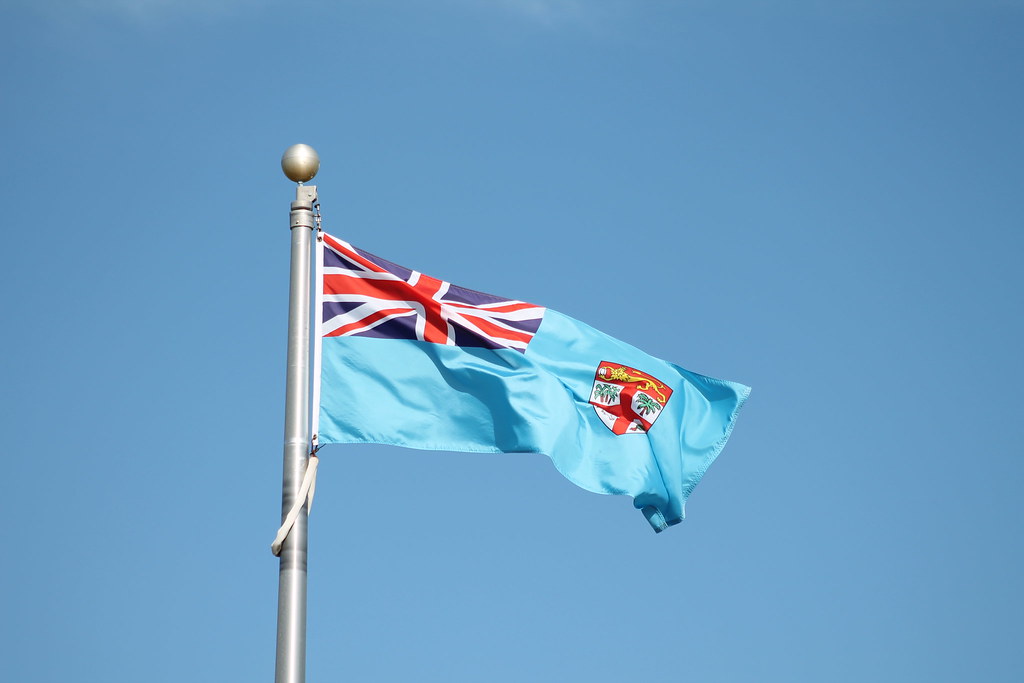
Fiji’s flag retains the Union Jack in the upper-left corner, signaling its historical ties to Britain, but the shield on the right side of the flag is where Fiji’s own identity lives. The shield is divided into quarters showing sugarcane, a coconut palm, a dove of peace, and a British lion holding a cocoa pod — which is, to put it plainly, an odd guest at a Fijian party.
The lion and cocoa pod are a colonial holdover from the original coat of arms, retained after independence in 1970. The flag is, in a sense, a negotiation between two histories that never quite resolved.
Wales
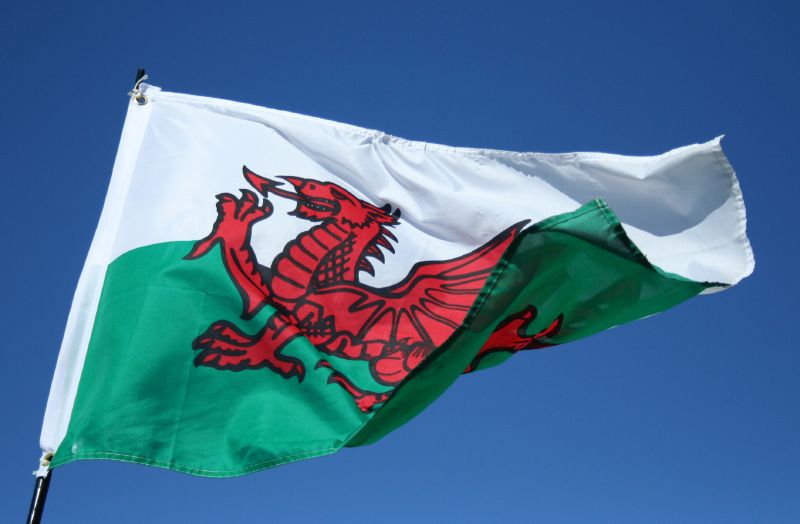
Wales is conspicuously absent from the Union Jack (as noted), but its own flag makes up for any lack of subtlety: a red dragon, Y Ddraig Goch, on a field of green and white. The dragon is one of the oldest national symbols in Europe, appearing in Welsh mythology as far back as the Mabinogion, and it was used as a battle standard by Welsh kings for centuries before it was formalized on the flag.
The green and white are said to represent the colors of the House of Tudor — itself a Welsh dynasty that produced Henry VII and, eventually, Henry VIII. The flag punches far above its geographical weight.
Seychelles

The Seychelles flag looks like a sunrise exploding outward from the lower-left corner — five rays of color (blue, yellow, red, white, and green) radiating diagonally across the flag in a fan pattern. Each color represents a political party that was part of the country’s government at the time the flag was adopted in 1996.
The radiating design itself represents the young nation moving into the future, with the origin point at the hoist suggesting momentum and direction. It’s one of the most visually distinctive flags in the world, and almost no one outside the Indian Ocean region could identify it without a label.
North Macedonia
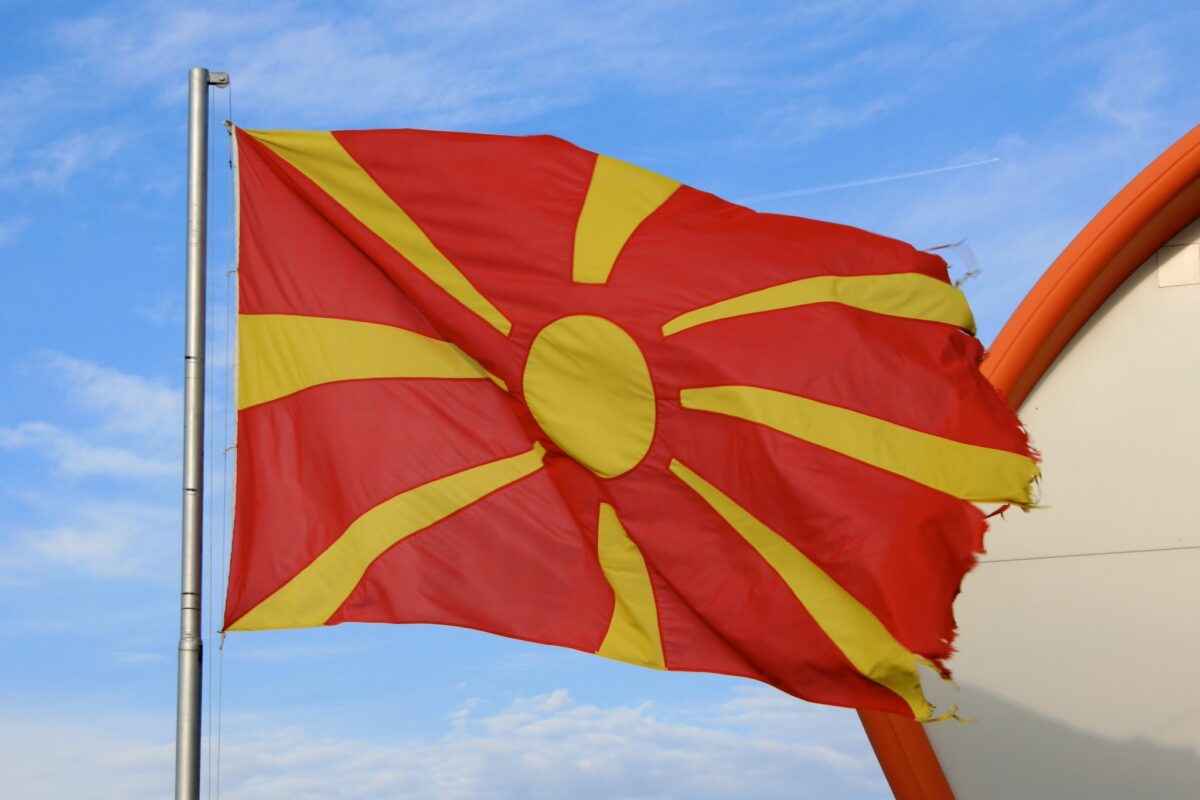
North Macedonia’s flag features a golden sun with eight rays extending to the edges of the red field — a design adopted in 1995 after a lengthy dispute with Greece over the previous flag, which displayed the 16-pointed Star of Vergina, a symbol Greece claimed as exclusively Hellenic. The compromise sun on the current flag still carries enormous symbolic weight within the country; the eight rays represent the light of liberty as described in national poetry.
The whole episode is a rare case where a flag design became the subject of international diplomacy, trade negotiations, and a formal United Nations-brokered agreement.
Iran

Iran’s flag has text on it — which is already unusual — but the placement of that text is where the hidden detail sits. The phrase “Allahu Akbar” (God is Greatest) appears 22 times along the borders where the green meets white and where the white meets red, the repetition itself forming a decorative border pattern that most viewers read as geometric trim rather than script.
The number 22 is deliberate: it marks the 22nd day of Bahman in the Iranian calendar, the date of the 1979 Islamic Revolution. The text is the border, the border is a calendar, and the calendar is a political statement.
Haiti
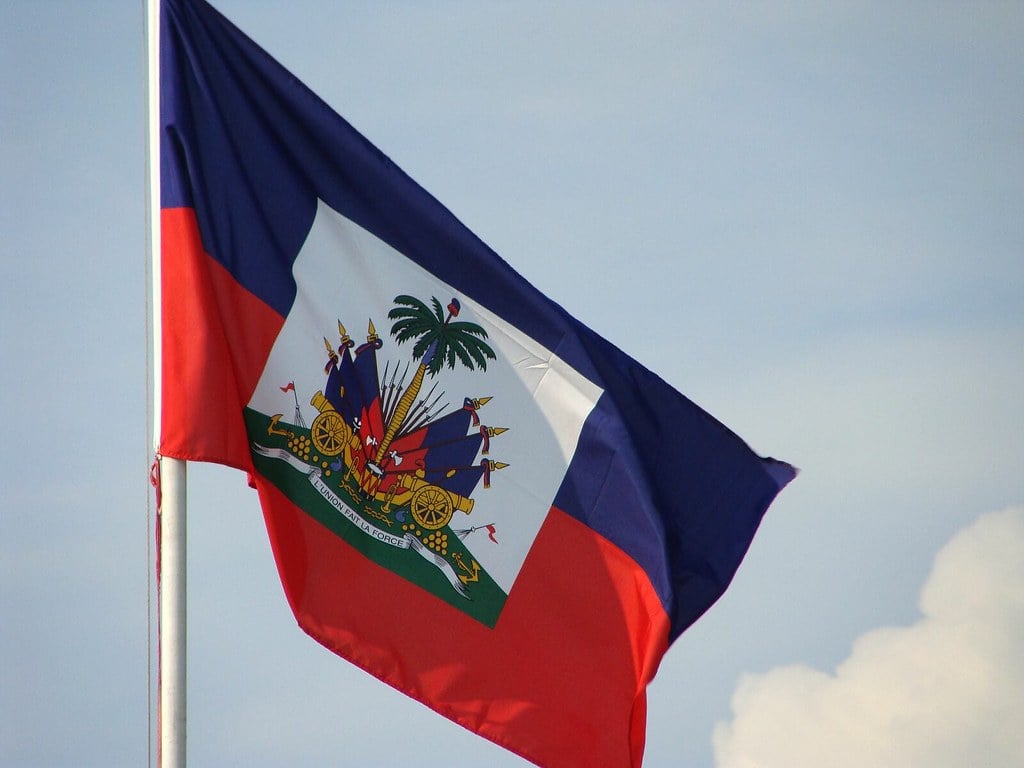
Haiti’s flag hides its most powerful symbol on the state version: a palm tree surrounded by cannons, cannonballs, and the phrase “L’Union Fait La Force” — Unity Makes Strength. The palm tree depicted is a Royal Palm, the national tree, but its position atop a green hill surrounded by weapons tells the story of a nation that achieved independence through armed revolution in 1804, becoming the first Black republic in history and the first nation in the Western Hemisphere to permanently abolish enslavement.
The palm doesn’t stand there peacefully. It stands there because people fought for the ground it grows in.
What Flags Are Really Saying
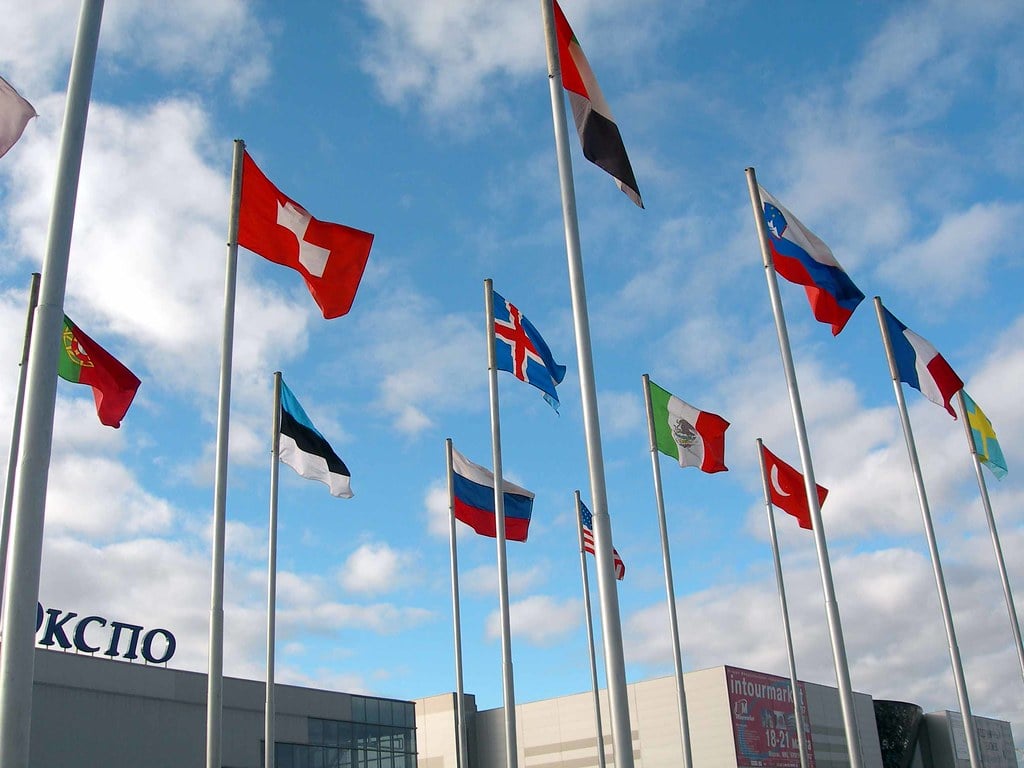
A flag is never just a flag. It’s a compressed argument about what a country believes it is — where it came from, what it survived, what it wants to become. The details that get overlooked aren’t accidental oversights; they’re the parts designers trusted future generations to eventually notice.
Some of these symbols are centuries old and still exact. Some are compromises stitched together in conference rooms during tense negotiations. All of them are carrying more than they appear to carry, which is maybe the most honest thing a flag can do.
Look at yours again. There’s probably something in there you haven’t seen yet.
More from Go2Tutors!

- The Romanov Crown Jewels and Their Tragic Fate
- 13 Historical Mysteries That Science Still Can’t Solve
- Famous Hoaxes That Fooled the World for Years
- 15 Child Stars with Tragic Adult Lives
- 16 Famous Jewelry Pieces in History
Like Go2Tutors’s content? Follow us on MSN.



