26 Forgotten Heroes of the Civil War
The Civil War produced a handful of names that every schoolchild learns and several million that almost nobody does. Battles tend to be remembered by the generals who signed the reports, which is a poor guide to who did the work.
The people below include an enslaved harbor pilot, a drummer not yet in his teens, a quartermaster, a priest and a surgeon who was arrested for her clothes. Each left a documented mark on the war, and most were thanked late, if at all.
Robert Smalls Sailed a Confederate Ship to Freedom
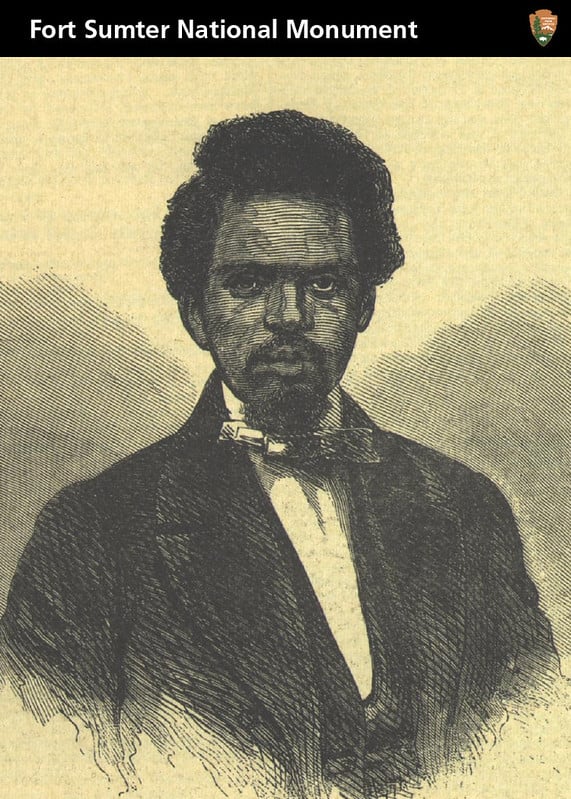
Before dawn on May 13, 1862, an enslaved pilot named Robert Smalls took the Confederate transport Planter out of Charleston while its white officers slept ashore. He stopped to collect his wife, his children and the families of the crew, then gave the correct whistle signals at each harbor fort, including Fort Sumter, wearing the captain’s straw hat.
Once out of range he raised a white sheet and surrendered the vessel to the Union blockade. Smalls later piloted ships for the Union, bought the Beaufort house where he had been enslaved, and served five terms in Congress representing South Carolina.
Mary Edwards Walker Earned a Medal She Refused to Return
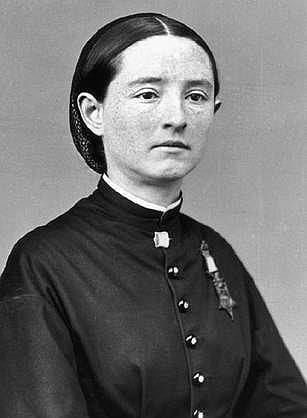
Mary Edwards Walker graduated from Syracuse Medical College in 1855 and spent the early war working as an unpaid volunteer because the Army would not commission a woman as a surgeon. She finally won a contract as an acting assistant surgeon with an Ohio regiment.
Confederate troops captured her in April 1864 and held her for about four months in Richmond’s Castle Thunder prison. President Andrew Johnson awarded her the Medal of Honor in 1865.
A review board struck her name from the rolls in 1917, she kept wearing the medal until her death in 1919, and the award was restored in 1977. She remains the only woman to receive it.
The Sergeant Who Kept the Flag Off the Ground

William Carney was born enslaved in Norfolk, Virginia, in 1840 and joined the 54th Massachusetts in 1863. During the assault on Fort Wagner, South Carolina, on July 18, 1863, he saw the color bearer fall, caught the national flag and carried it to the parapet.
Shot several times, he brought it back across the sand to Union lines. His reported remark that the old flag never touched the ground became famous among veterans.
The Medal of Honor did not reach him until May 1900, nearly 37 years later. His action is the earliest by a Black soldier to be recognized with the medal.
Harriet Tubman Guided Gunboats Up the Combahee
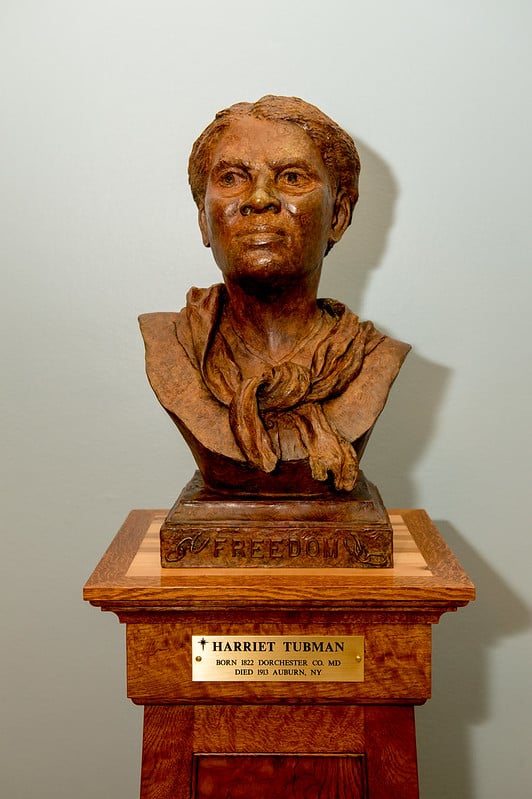
Most accounts of Harriet Tubman end with the Underground Railroad, which leaves out her war. Working as a scout for the Union Army in South Carolina, she gathered intelligence from enslaved people along the Combahee River about Confederate positions and mines in the water.
On the night of June 1, 1863, she accompanied Colonel James Montgomery and Black soldiers of the 2nd South Carolina Volunteers upriver on armed steamers. The raid destroyed plantations and supplies and carried more than 700 enslaved people to freedom.
Her claims for wartime pay went largely unmet, and it took an act of Congress in 1899 to raise her pension to 20 dollars a month.
A Richmond Socialite Ran a Spy Ring in the Confederate Capital
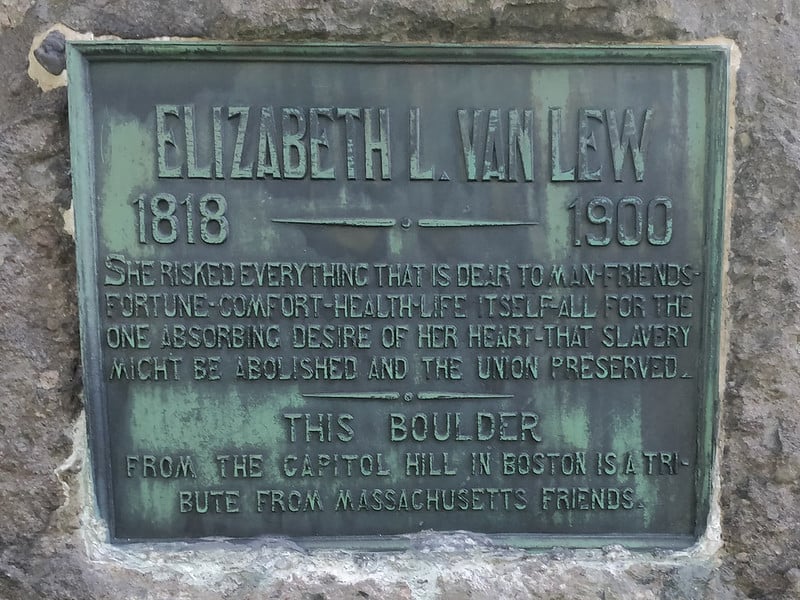
Elizabeth Van Lew lived in a mansion on Church Hill in Richmond and made little secret of her Unionist sympathies, which neighbors tended to dismiss as eccentricity. She used that reputation as cover.
Van Lew brought food and books to Union captives at Libby Prison, helped escapees hide, and built a network of clerks, farmers and servants who passed information through the lines in cipher. By 1864 her reports were reaching Union commanders outside the city.
Ulysses S. Grant, as president, appointed her postmaster of Richmond in 1869. She died in 1900, shunned by much of the city where she had spent her life.
Mother Bickerdyke Outranked the Generals

Mary Ann Bickerdyke, a widow from Galesburg, Illinois, went south in 1861 to deliver medical supplies to an army camp at Cairo and stayed with the troops for four years. She scrubbed filthy field hospitals, set up laundries and kitchens, and had no patience for officers who neglected the wounded.
Soldiers called her Mother Bickerdyke. She worked at Fort Donelson, Shiloh, Vicksburg and through the Atlanta campaign, serving on 19 battlefields by most counts.
When an officer complained about her, William T. Sherman is said to have replied that she outranked him. At his request she rode in the Grand Review in Washington in May 1865.
Private Franklin Thompson Was Sarah Emma Edmonds
Born in New Brunswick, Canada, Sarah Emma Edmonds was already living as a man named Franklin Thompson when she joined the 2nd Michigan Infantry in 1861. She served as a field nurse and mail carrier through the campaigns in Virginia.
In 1863, sick with malaria and afraid that a military hospital would expose her, she left the regiment and resumed life as a woman. Her wartime memoir sold well, though historians doubt some of its espionage stories.
In 1884 Congress granted her a veteran’s pension of 12 dollars a month after former comrades backed her claim, and the desertion charge on her record was later removed.
Albert Cashier Served Three Years Without Discovery

Jennie Hodgers was born in Ireland and came to Illinois, where in 1862 the young immigrant signed the rolls of the 95th Illinois Infantry as Albert D. J. Cashier. Cashier served a full three-year term, fought at Vicksburg and in roughly 40 engagements, and mustered out in 1865.
Afterward Cashier kept the name and lived as a man in the small town of Saunemin, Illinois, working at odd jobs. A doctor learned the secret after an automobile accident in 1910 and kept it quiet, and it reached the newspapers only in 1913.
A pension inquiry followed, former comrades vouched for the service, and the payments continued. Cashier died in 1915 and was buried in uniform with military honors.
Andre Cailloux Led the Charge at Port Hudson
Captain Andre Cailloux, born enslaved in Louisiana in 1825 and freed in 1846, was among the first Black officers in the Union Army. He raised a company for the 1st Louisiana Native Guard in New Orleans.
On May 27, 1863, he led it against Confederate earthworks at Port Hudson, Louisiana, reportedly calling orders in both French and English after a wound had shattered his arm. He was killed in front of the enemy line, and his body lay on the field until the garrison surrendered in July.
Thousands lined the streets of New Orleans for his funeral on July 29, which drew national press coverage.
Christian Fleetwood Picked Up the Colors at New Market Heights

Sergeant Major Christian Fleetwood was a free-born Baltimore man and a college graduate who joined the 4th U.S. Colored Infantry in 1863. At the Battle of Chaffin’s Farm outside Richmond on September 29, 1864, his regiment attacked the Confederate line at New Market Heights and took severe losses.
When two color bearers went down, Fleetwood seized the national flag and carried it through the rest of the fight. He received the Medal of Honor the following year. The officers of his regiment petitioned for him to be commissioned, and the War Department declined.
He later worked as a government clerk in Washington and helped organize Black militia units there.
Susie King Taylor Taught Soldiers to Read Between Battles
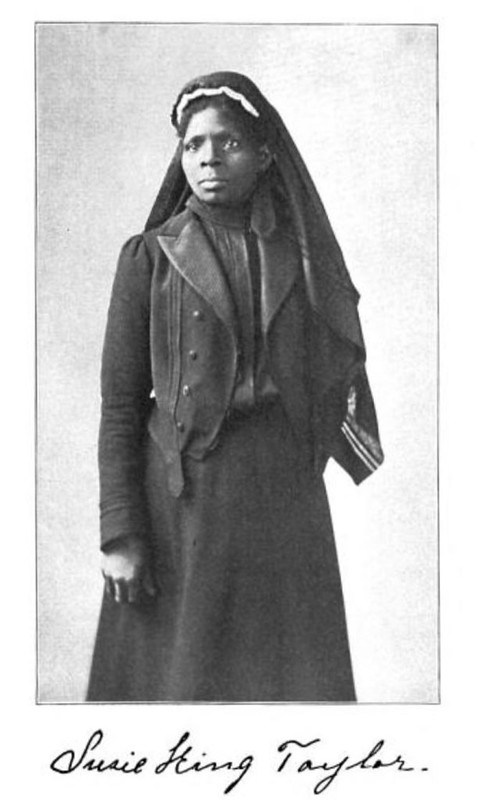
Susie King Taylor was born enslaved in Georgia in 1848 and learned to read at secret schools in Savannah. In April 1862, at 13, she escaped to Union-held St. Simons Island, where officers asked her to run a school for freed children.
She then attached herself to the regiment first raised as the 1st South Carolina Volunteers, later the 33rd U.S. Colored Troops, as laundress, nurse and teacher. She served for more than four years and was never paid for it.
In 1902 she published a memoir of camp life, generally described as the only such account written by a Black woman who served with the Union Army.
Jonathan Letterman Invented the Modern Ambulance System
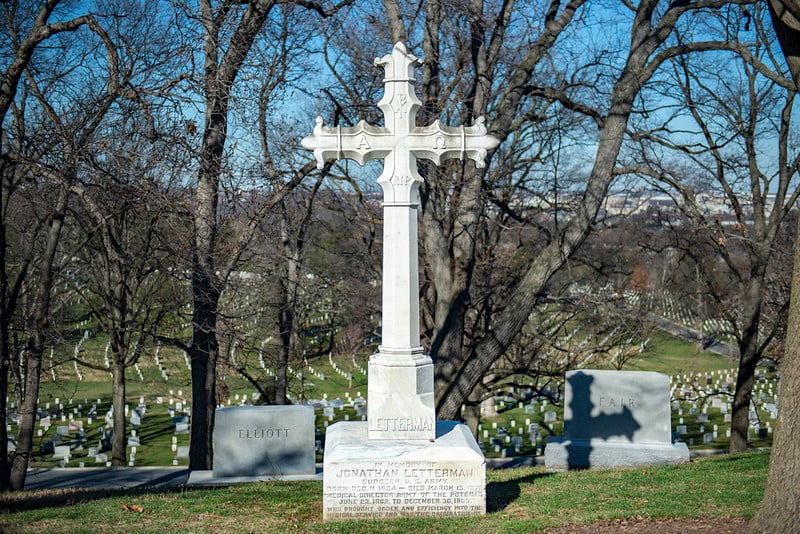
Before Major Jonathan Letterman, wounded soldiers could lie on a battlefield for days waiting for help. Named medical director of the Army of the Potomac in mid-1862, he created a dedicated ambulance corps with trained crews, set up aid stations and field hospitals in tiers, and sorted casualties by urgency.
At Antietam that September his crews cleared thousands of wounded from the field within about a day. The large tent hospital established after Gettysburg carried his name.
Congress extended his system to the entire Union Army in March 1864, and military evacuation has followed his basic pattern ever since.
Strong Vincent Chose Little Round Top Without Orders
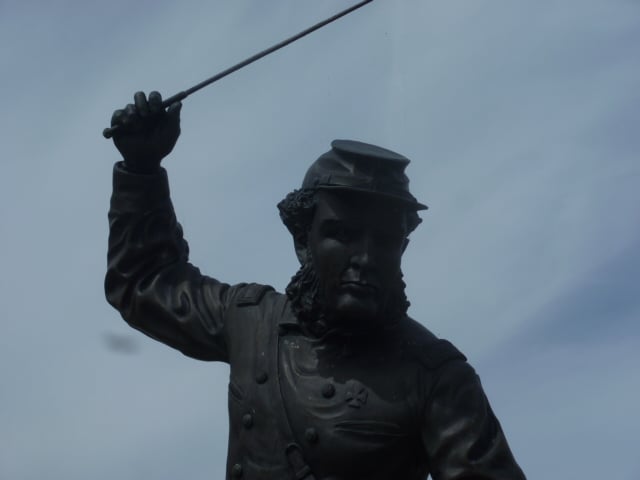
Colonel Strong Vincent was a 26-year-old Harvard-educated lawyer from Erie, Pennsylvania, commanding a brigade at Gettysburg. On July 2, 1863, he intercepted a courier looking for troops to occupy Little Round Top and took the responsibility on himself, marching his four regiments to the hill without waiting for his division commander.
He placed the 20th Maine on the far left and the others along the slope shortly before Confederate infantry arrived. Vincent was shot while rallying a wavering regiment and died five days later.
The hill held, and the fame went mostly to one of his subordinates.
The Engineer Who Saw the Empty Hill
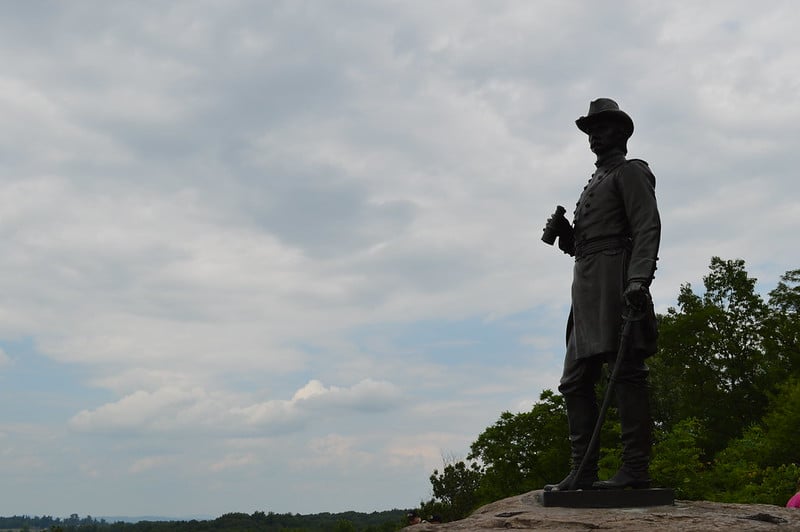
Gouverneur K. Warren, chief engineer of the Army of the Potomac, climbed Little Round Top on the afternoon of July 2, 1863, and found little more than a signal station there. Seeing Confederate troops beyond the Union flank, he sent aides racing for any brigade they could find.
His reward came slowly. In April 1865 Philip Sheridan relieved him of corps command at Five Forks, days before the fighting in Virginia ended.
Warren spent years demanding a court of inquiry, which eventually cleared him of most of the charges. He died in August 1882, a few months before the findings were published.
George Greene Held Culp’s Hill With One Brigade
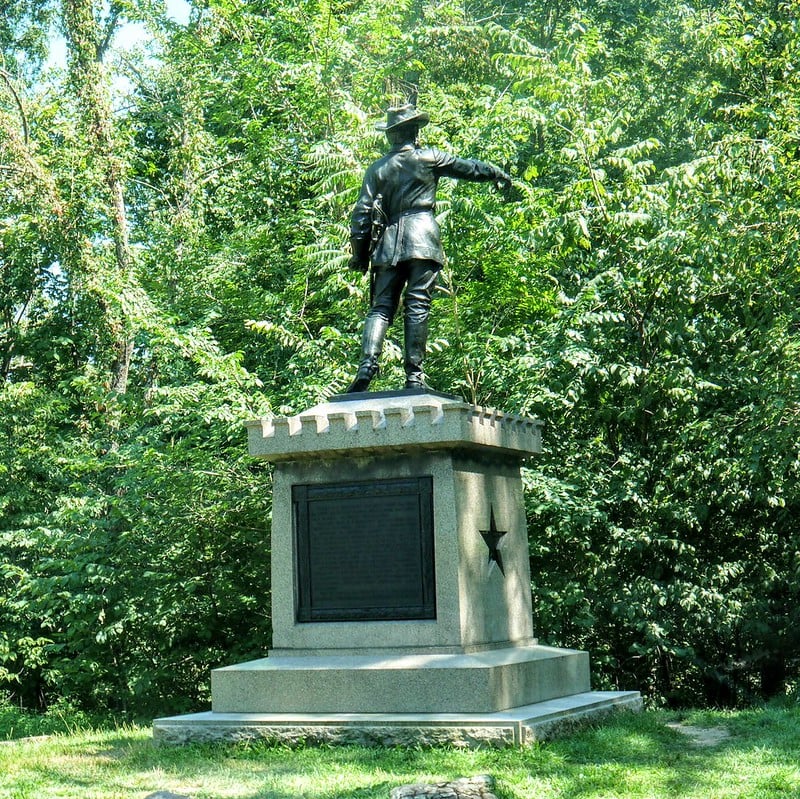
At 62, George Sears Greene was the oldest Union general on the field at Gettysburg, a West Point graduate of 1823 who had spent decades as a civil engineer. He insisted that his New York brigade build log and earth breastworks on Culp’s Hill, though not every fellow officer saw the need.
On the evening of July 2, 1863, most of his corps was pulled away to the other flank, leaving roughly 1,400 men to face a Confederate division. Greene’s line held through hours of assaults in the dark.
The hill anchored the Union right and protected the army’s main supply road.
John Buford Bought Time on the First Morning
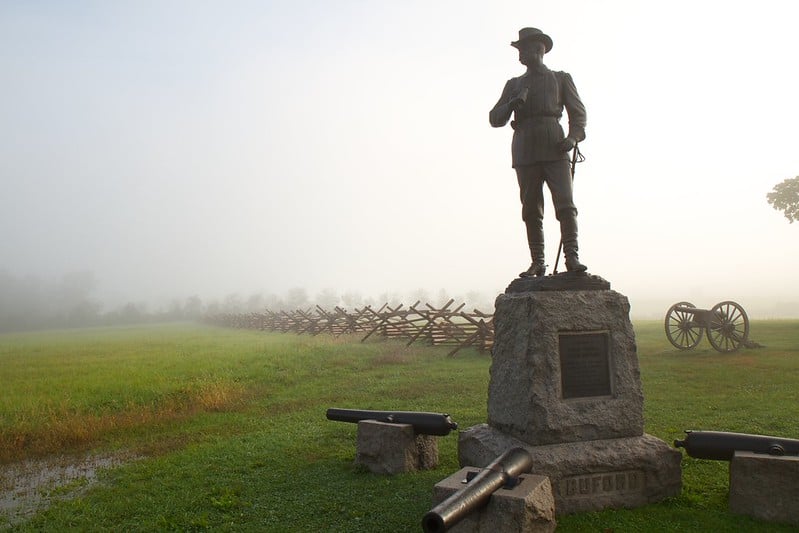
Brigadier General John Buford rode into Gettysburg on June 30, 1863, studied the ridges and roads, and concluded that the high ground south of town was worth a fight. The next morning his two cavalry brigades dismounted west of town and slowed an advancing Confederate division, firing breech-loading carbines from behind fences and trees.
They held long enough for Union infantry to arrive. That delay helped the army keep the hills it defended for the next two days.
Buford did not live to see the end of the year. He died of typhoid fever in Washington on December 16, 1863, promoted to major general on his deathbed.
Joseph Bailey Dammed a River to Save a Fleet
In the spring of 1864 the Red River in Louisiana dropped so low that a Union gunboat squadron was stranded above the rapids at Alexandria, with a retreating army about to leave it behind. Lieutenant Colonel Joseph Bailey, a Wisconsin engineer with experience in the lumber country, proposed raising the water with dams.
Naval officers were skeptical. Thousands of soldiers, including Maine lumbermen and regiments of Black troops, felled trees and sank stone-filled cribs for about ten days.
The river rose, and the vessels shot through the gap to safety. Bailey received the formal Thanks of Congress, a rare honor for an army officer of his rank.
Herman Haupt Rebuilt Bridges Faster Than They Burned
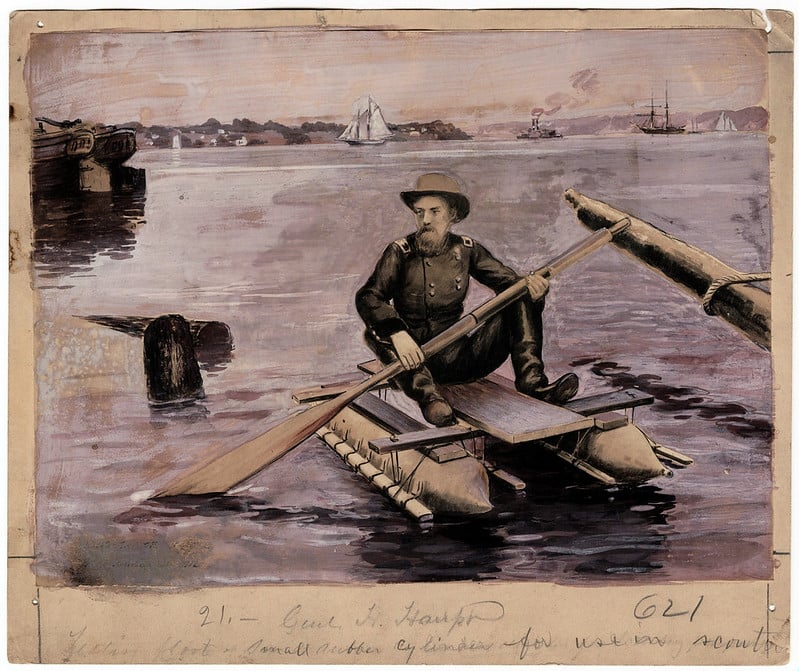
Herman Haupt graduated from West Point at 18 and became one of the country’s leading railroad engineers before the War Department called on him in 1862. As chief of construction and transportation for the military railroads in Virginia, he trained crews to rebuild wrecked track and bridges at speed.
His men replaced the bridge over Potomac Creek, about 400 feet long and close to 80 feet high, in nine working days using green timber cut nearby. Abraham Lincoln, visiting, remarked that it seemed to be made of beanpoles and cornstalks.
After Gettysburg, Haupt had the damaged rail lines serving the army running again within days.
Montgomery Meigs Supplied an Army of a Million
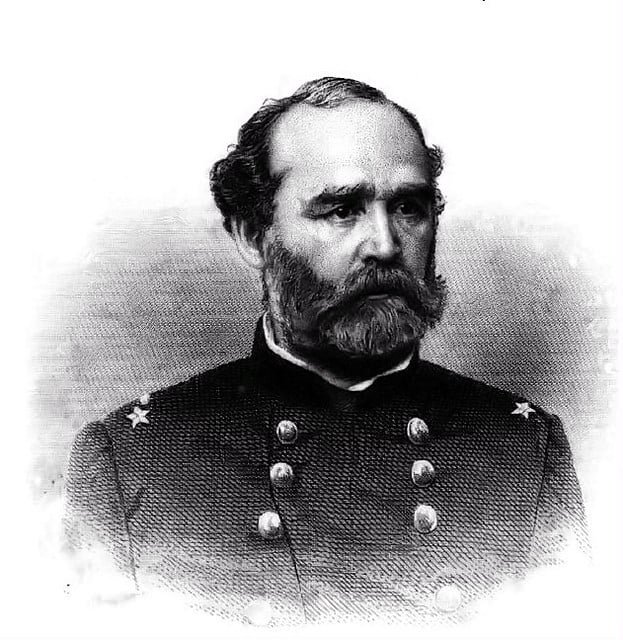
Quartermaster General Montgomery Meigs never led troops in a major battle, yet few officers did more to win the war. From 1861 he ran the department that bought and moved the Union Army’s uniforms, tents, wagons, horses, mules and transport ships, spending well over a billion dollars by common estimates and accounting for it closely.
Before the war he had overseen construction of the Washington Aqueduct and the new Capitol dome. In 1864 he recommended that the Arlington estate of Robert E. Lee’s family become a military cemetery.
His own son, killed in Virginia that October, was later buried there.
William Cushing Sank an Ironclad From a Launch
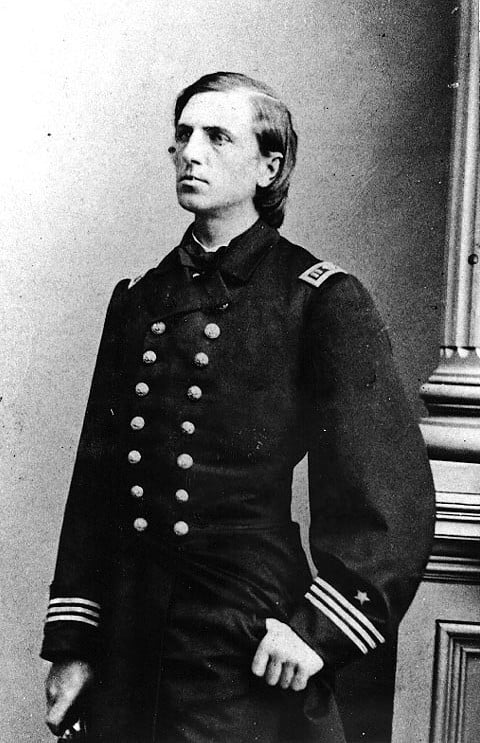
The Confederate ironclad Albemarle dominated the Roanoke River in 1864, and the Union Navy had no vessel in those shallow waters able to fight it. Lieutenant William Cushing, 21 years old, volunteered to attack it at its mooring in Plymouth, North Carolina.
On the night of October 27 he drove a small steam launch over a protective boom of logs and exploded a spar torpedo under the hull as the ironclad’s gun fired at close range. The Albemarle sank at the wharf.
The launch was lost and most of its crew were captured, while Cushing swam away and reached the Union fleet in a stolen skiff.
John Worden Fought the First Duel of Ironclads
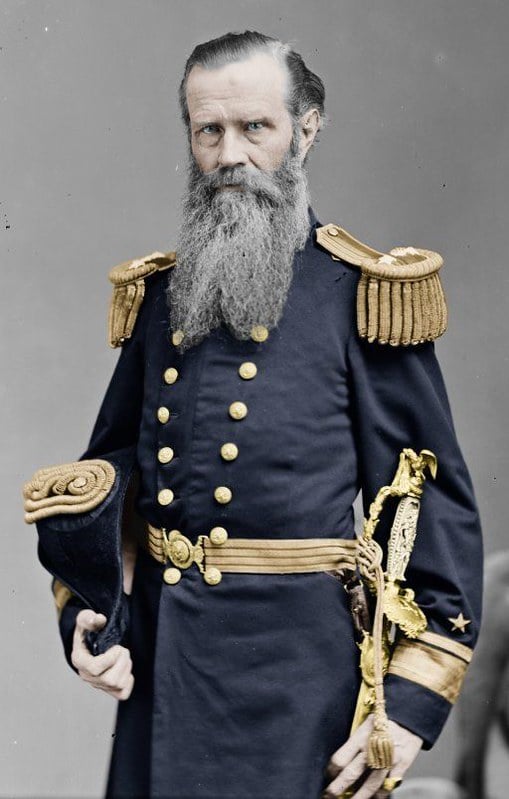
Lieutenant John L. Worden had already spent seven months as a Confederate prisoner when he took command of the untested ironclad Monitor in early 1862. The ship nearly foundered on the way south from New York.
On March 9 it met the Confederate ironclad Virginia at Hampton Roads, and the two pounded each other for hours without decisive damage. Late in the fight a shell burst against the Monitor’s pilothouse while Worden was looking through the viewing slit, driving powder and fragments into his face and eyes.
He recovered well enough to return to sea and later served as superintendent of the Naval Academy.
Ely Parker Wrote Out the Surrender at Appomattox
Ely S. Parker, a Seneca leader from the Tonawanda Reservation in New York, studied law and was refused admission to the bar because he was not considered a citizen. He became a civil engineer instead.
When war came, his early offers to serve were turned down before a friendship with Ulysses S. Grant, formed in Galena, Illinois, helped him obtain a commission in 1863. As Grant’s military secretary he wrote out the final copy of the surrender terms at Appomattox Court House on April 9, 1865.
In 1869 he became the first Native American to serve as commissioner of Indian affairs.
An Eleven-Year-Old Drummer Kept His Drum
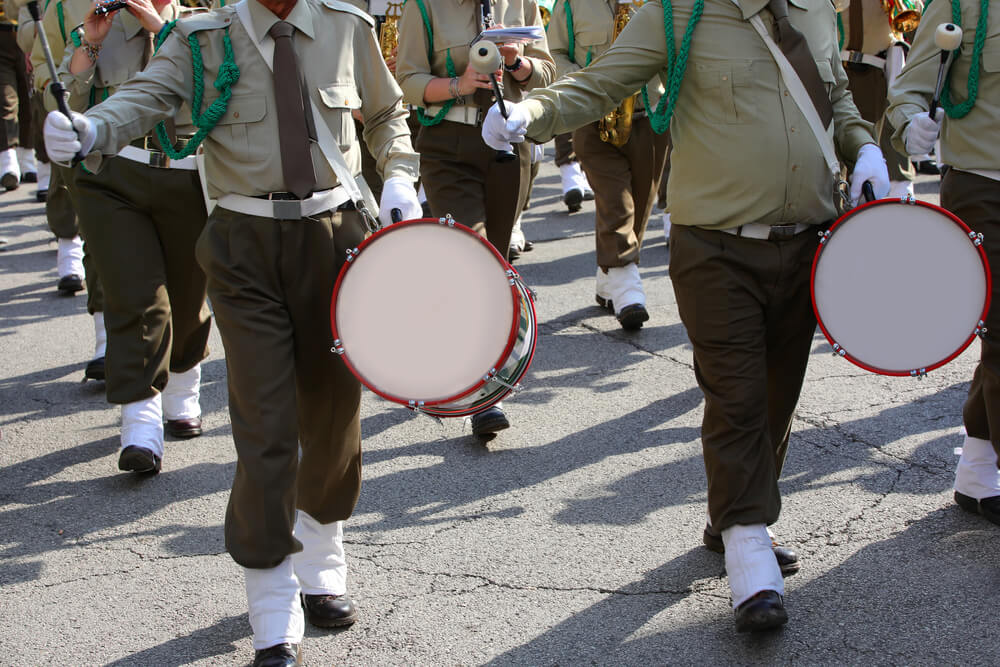
Willie Johnston of Vermont joined the 3rd Vermont Infantry as a drummer, serving in the same regiment as his father. During the Seven Days Battles in Virginia in mid-1862, the Army of the Potomac retreated to the James River, and exhausted men threw away rifles, packs and instruments along the road.
Johnston, 11 years old, carried his drum the entire way and was reportedly the only drummer in his division still able to play when the retreat ended. Word reached the War Department.
He received the Medal of Honor in September 1863 at age 13 and remains the youngest person ever awarded it.
Father Corby Blessed the Irish Brigade Under Fire
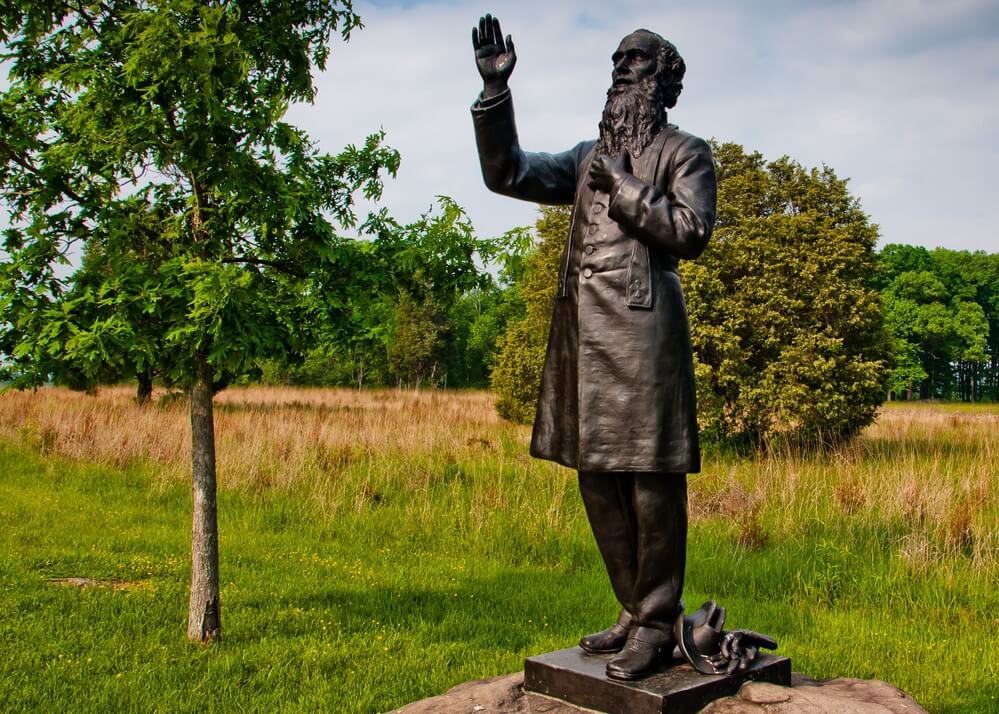
Chaplains rarely appear in battle narratives, but Father William Corby has a bronze statue at Gettysburg. A Holy Cross priest from the University of Notre Dame, he served as chaplain of the 88th New York in the Irish Brigade.
On the afternoon of July 2, 1863, as the brigade waited to go into the fighting near the Wheatfield, Corby climbed onto a boulder and gave general absolution to the assembled soldiers while the battle roared nearby. Many of them were dead or wounded within hours.
Corby survived the war and twice served as president of Notre Dame.
Alonzo Cushing Waited 151 Years for His Medal
First Lieutenant Alonzo Cushing, 22, commanded Battery A of the 4th U.S. Artillery near the stone wall on Cemetery Ridge on July 3, 1863. The bombardment before Pickett’s Charge wrecked most of his guns and wounded him in the shoulder and abdomen.
He refused to go to the rear, had his remaining guns pushed forward to the wall, and kept firing with a sergeant holding him upright and relaying his orders. A bullet killed him as the Confederate line closed in.
After a long campaign by Margaret Zerwekh, a Wisconsin woman who lived on his family’s former land, he was awarded the Medal of Honor in November 2014.
Amos Humiston Died Holding a Photograph
After the fighting at Gettysburg, a Union soldier was found dead in the town with no identification, only an ambrotype of three small children in his hand. A Philadelphia physician, John Francis Bourns, had the image described in newspapers across the North in the hope that someone would recognize it.
In Portville, New York, Philinda Humiston read the description and knew the children were hers. Her husband, Sergeant Amos Humiston of the 154th New York, had been killed on July 1, 1863.
Sales of copies of the picture helped fund a home for soldiers’ orphans that opened in Gettysburg in 1866.
Footnotes That Held the Line
Read enough of these stories and a pattern shows. Battles turned on a brigade commander acting without orders, an engineer with a load of green timber, a pilot who knew the whistle signals.
The famous decisions of the war rested on thousands of smaller ones made by people whose names never reached a headline.
Recognition, when it came, ran decades late. Medals arrived in 1900, 1977 and 2014, pensions required acts of Congress, and some of these figures were cleared or thanked only after they were dead.
The record was always there in muster rolls, pension files and regimental histories. It only needed someone to go back and read it.
More from Go2Tutors!

- The Romanov Crown Jewels and Their Tragic Fate
- 13 Historical Mysteries That Science Still Can’t Solve
- Famous Hoaxes That Fooled the World for Years
- 15 Child Stars with Tragic Adult Lives
- 16 Famous Jewelry Pieces in History
Like Go2Tutors’s content? Follow us on MSN.