26 Historic Objects Found in Unlikely Places
Treasure hunting rarely looks like the movies. Some of the most important objects in museums today were found by farmers looking for a lost hammer, workmen knocking down a wall, or a librarian clearing out a cabinet nobody had opened in decades.
Others turned up in bogs, riverbeds and flea markets. The common thread is chance, and a lot of it.
Dead Sea Scrolls in a Desert Cave
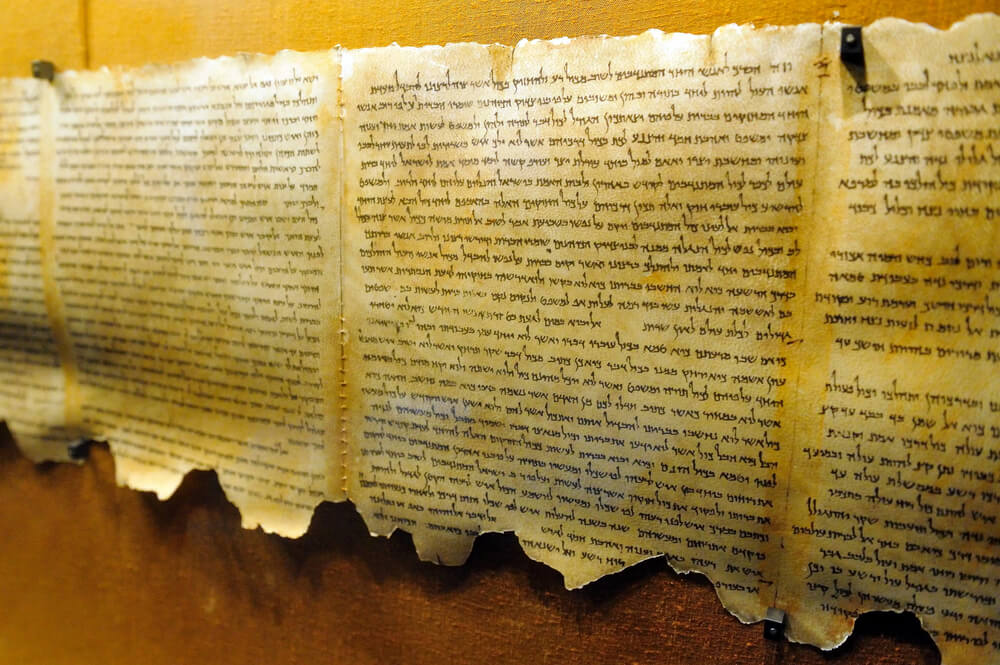
A Bedouin shepherd searching for a stray goat near Qumran in late 1946 or early 1947 tossed a stone into a cave and heard pottery shatter. Inside the jars were leather scrolls that turned out to be among the oldest surviving manuscripts of the Hebrew Bible, roughly a thousand years older than the copies scholars had relied on before.
Searches over the following decade turned up material in eleven caves, eventually amounting to fragments of around 900 separate texts. The dry desert air did preservation work that no archive could have managed.
Some surviving fragments are no larger than a fingernail.
Staffordshire Hoard Under a Farm Field
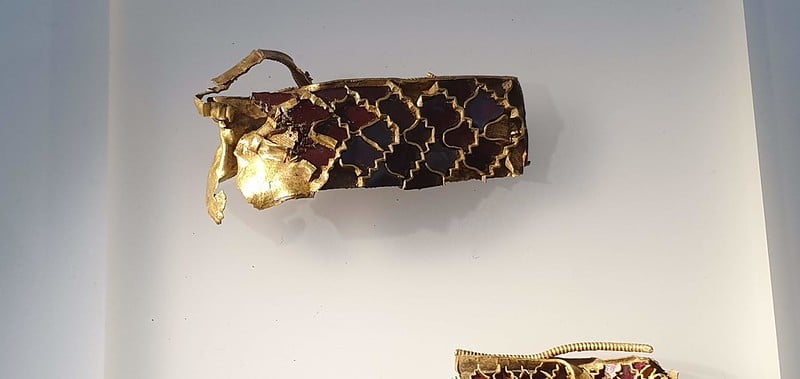
In July 2009, a metal detectorist named Terry Herbert walked a plowed field near Hammerwich in Staffordshire and got a signal that kept repeating. Over the following days and later excavations, the site produced more than 3,500 pieces, most of them gold and silver fittings stripped from swords, helmets and other war gear.
It remains the largest hoard of Anglo-Saxon gold ever found, with roughly 5 kilograms of the metal. Two museums jointly bought it for about 3.3 million pounds, money split between Herbert and the landowner.
Nobody knows why a fortune in battlefield trim ended up buried in farmland.
Hoxne Hoard and the Missing Hammer
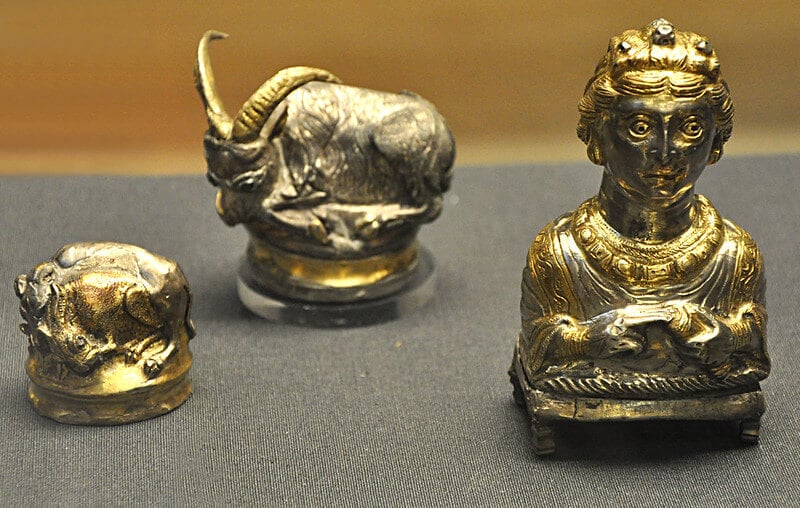
Peter Whatling, a Suffolk tenant farmer, lost a hammer in a field near the village of Hoxne in November 1992 and asked a friend with a metal detector to look for it. Eric Lawes found the hammer, and he also found a buried chest of late Roman treasure holding nearly 15,000 coins along with silver spoons, gold jewelry and a pepper pot shaped like an empress.
Lawes stopped digging and called the authorities, which let archaeologists record exactly how the objects had been packed. The hoard went to the British Museum.
The hammer eventually went on display with it.
Nebra Sky Disc Rescued in a Police Sting

Looters using metal detectors dug up a bronze disc inlaid with a gold sun, moon and stars on a hilltop near Nebra, Germany, in 1999 and sold it on the black market. The disc changed hands until 2002, when Swiss police and a state archaeologist posing as a buyer recovered it during an arranged meeting in Basel.
Dated to roughly 3,600 years ago, it is widely considered the oldest known concrete depiction of the night sky. UNESCO added it to its Memory of the World register in 2013.
Its route from hilltop to museum display ran straight through a criminal investigation.
Gundestrup Cauldron in a Danish Bog
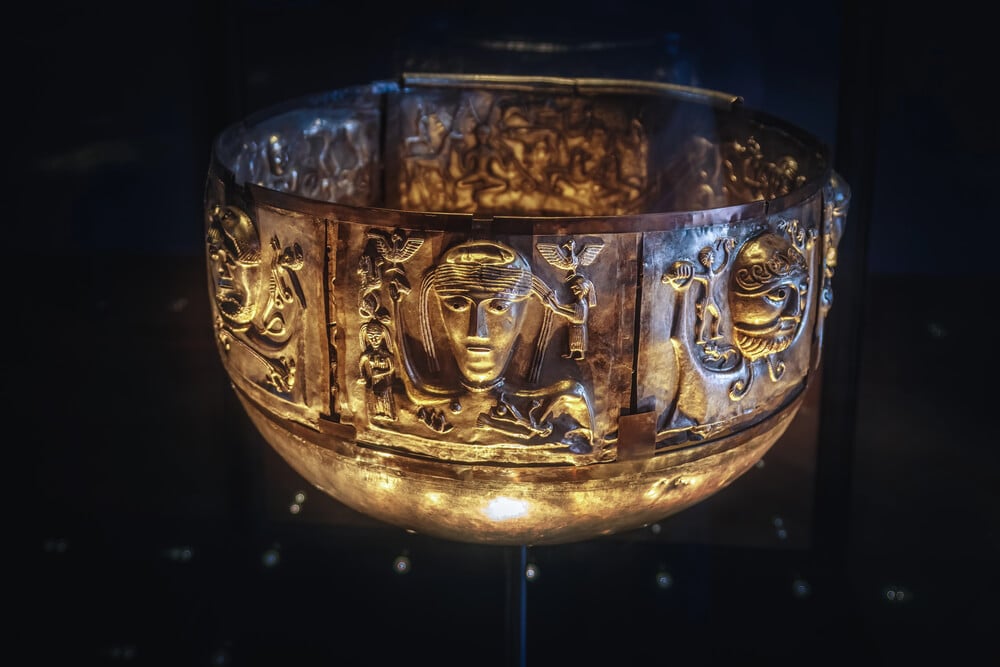
Peat cutters working a bog in the Himmerland region of northern Denmark in 1891 uncovered a silver vessel that had been taken apart and stacked inside its own base. Reassembled, the Gundestrup Cauldron weighs close to 9 kilograms and is covered with panels showing gods, warriors, a horned figure and an elaborate procession.
Its imagery looks Celtic, while the silverwork style points toward Thrace in southeastern Europe, which has kept scholars arguing about who made it. Most estimates place it in the second or first century BC.
It now sits in the National Museum of Denmark in Copenhagen.
Lewis Chessmen Near a Hebridean Bay
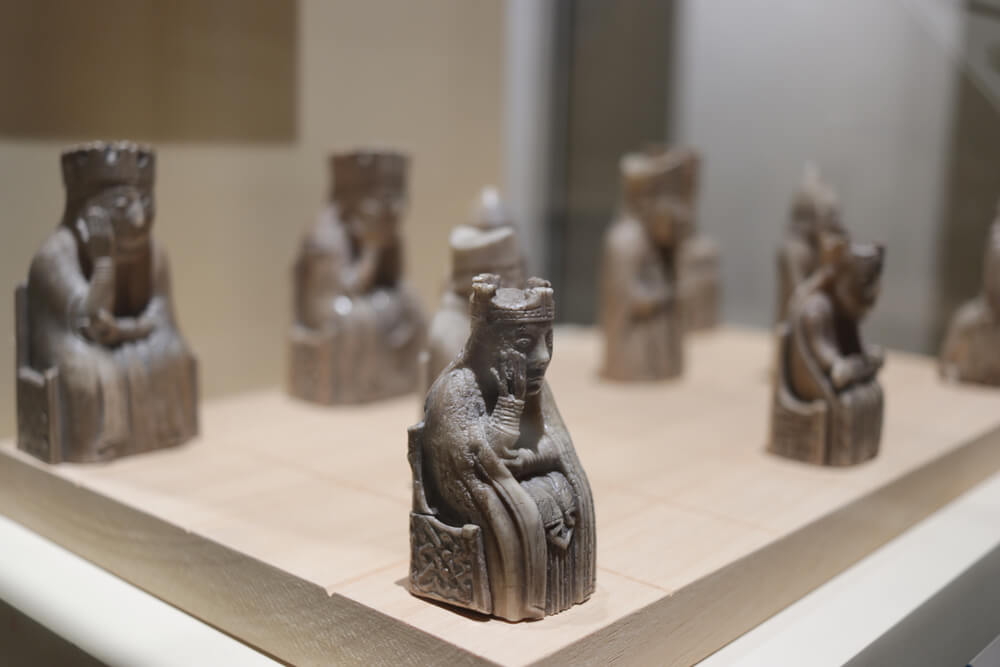
Sometime around 1831, a cache of small carved figures turned up near Uig Bay on the Isle of Lewis in Scotland’s Outer Hebrides. Most of the pieces are walrus ivory, some are whale tooth, and several of the warders bite the tops of their shields like berserkers.
They were probably made in Norway, possibly Trondheim, in the twelfth century. The British Museum holds 82 of the objects and National Museums Scotland holds 11.
In 2019, a missing warder bought by an Edinburgh dealer for 5 pounds in 1964 and kept in a family drawer sold at Sotheby’s for 735,000 pounds.
Rosetta Stone Inside a Fort Wall
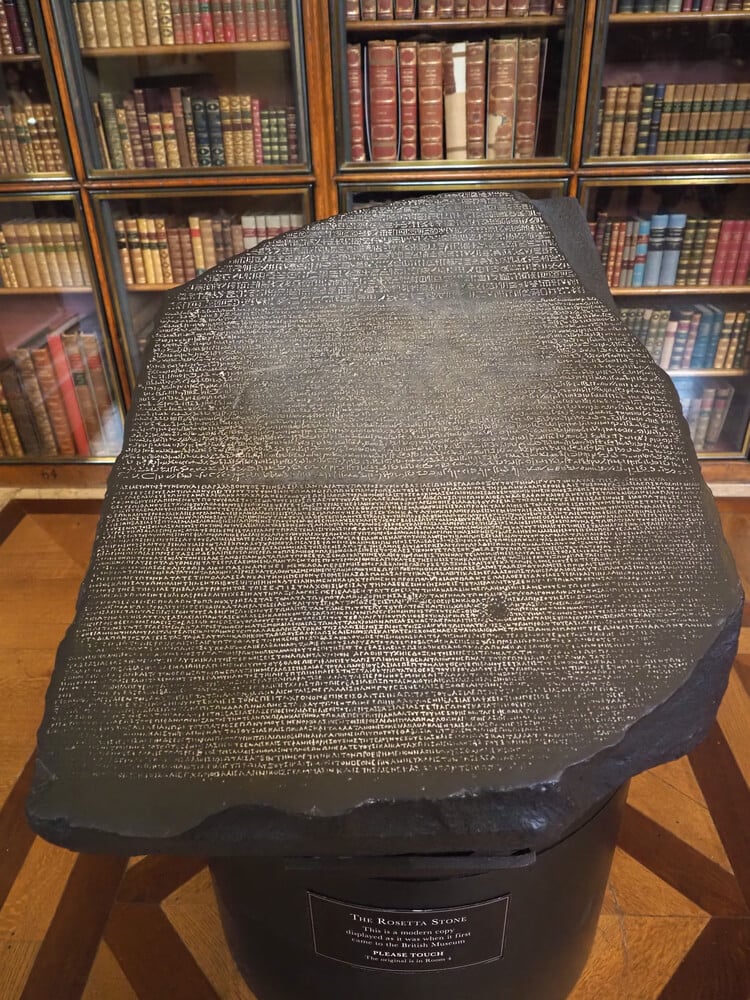
French soldiers rebuilding a fort near the Egyptian town of Rashid in July 1799 found a broken slab of granodiorite built into an old wall. The stone carried the same decree, issued in 196 BC on behalf of Ptolemy V, written in hieroglyphs, Demotic script and ancient Greek.
Because scholars could read the Greek, the slab became the key Jean-Francois Champollion used to decipher hieroglyphs in 1822. British forces took it under the terms of the 1801 capitulation, and it has been in the British Museum since 1802.
A piece of recycled masonry unlocked an entire writing system.
Nag Hammadi Codices in a Sealed Jar
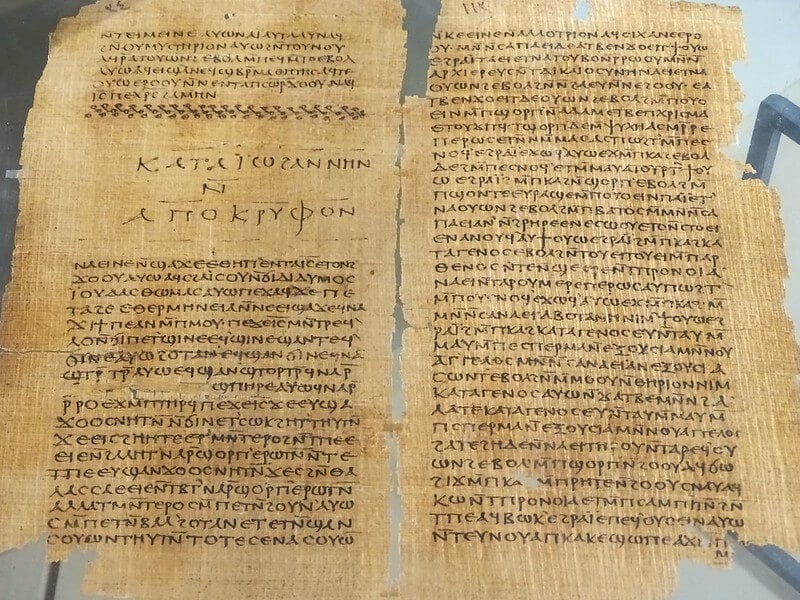
Farmers digging for nitrate-rich soil to use as fertilizer near Nag Hammadi in Upper Egypt in December 1945 struck a sealed clay jar. Inside were thirteen leather-bound papyrus books holding more than fifty texts, including the Gospel of Thomas, most of them early Christian writings lost for centuries.
According to the account of the man who found them, Muhammad Ali al-Samman, some loose pages were burned in his family’s oven as kindling. The surviving codices are held at the Coptic Museum in Cairo.
They transformed what scholars understood about the variety of beliefs among early Christians.
Galloway Hoard on Church Land
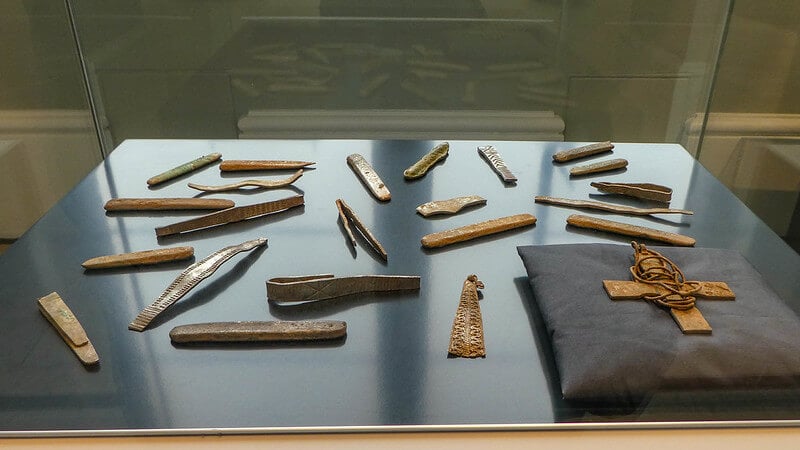
Derek McLennan, a metal detectorist, was searching land owned by the Church of Scotland in Dumfries and Galloway in September 2014 when he found a silver arm ring and a Christian cross. Further digging revealed a Viking Age deposit of more than 100 objects, some still wrapped in textiles and packed inside a rare lidded silver vessel.
National Museums Scotland acquired the hoard in 2017 for close to 2 million pounds after a public fundraising campaign. Conservation took years because the contents had to be removed layer by layer.
Scans revealed the vessel’s contents long before anyone lifted the lid.
Cheapside Hoard Beneath a London Cellar
Workmen demolishing old buildings on Cheapside in the City of London in 1912 broke through a cellar floor and found a mass of jewelry and gemstones. Many of the nearly 500 pieces reached a dealer named George Fabian Lawrence, known as Stony Jack, who passed them to what became the Museum of London.
The collection dates mainly to the late 1500s and early 1600s and includes a watch set inside a large Colombian emerald. Most historians think a goldsmith hid the stock around the time of the English Civil War and never returned for it.
The owner’s fate remains unknown.
Beethoven Manuscript in a Seminary Basement
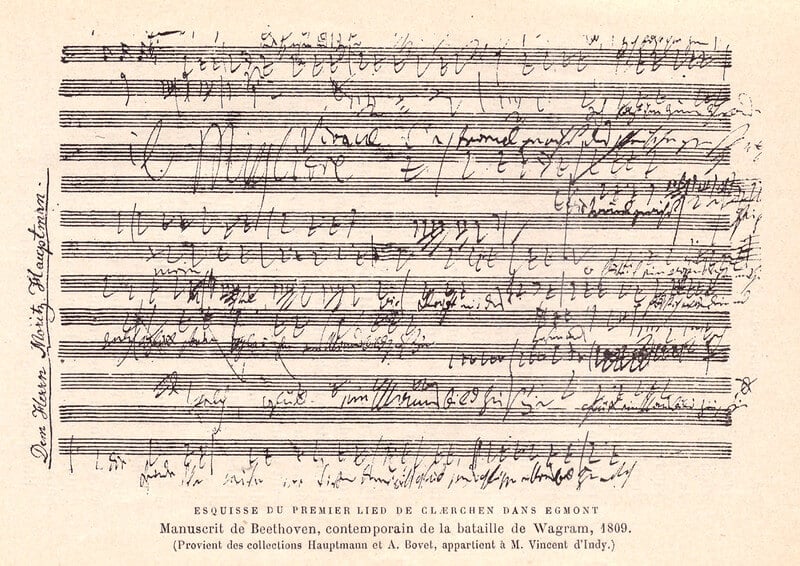
In July 2005, librarian Heather Carbo was clearing out a basement storage cabinet at Palmer Theological Seminary near Philadelphia when she came across an 80-page music manuscript. It was Beethoven’s own arrangement of his Grosse Fuge for piano four hands, written in his hand in 1826, the year before his death, and missing since an 1890 auction.
Nobody at the seminary knew how it had arrived there. Sotheby’s sold it later that year for about 1.1 million pounds.
A composer’s late working draft had spent more than a century filed away at a Pennsylvania school.
Magna Carta in a Victorian Scrapbook
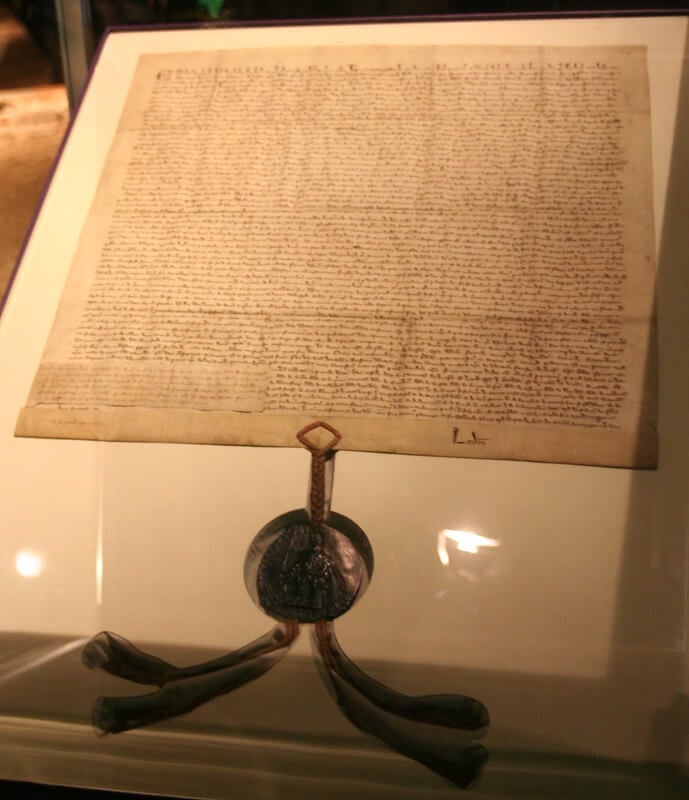
Archivist Mark Bateson was searching the Kent archives for a charter relating to the town of Sandwich in 2015 when he found a damaged copy of Magna Carta tucked into a Victorian scrapbook. Experts identified it as a 1300 issue sealed under Edward I, one of only a handful of that edition known to survive.
The document had lost roughly a third of its text to damage over the years. Its value was estimated at up to 10 million pounds.
It had been sitting in a local archive while scholars studied far better-known copies elsewhere, apparently unnoticed for generations.
Archimedes Palimpsest Under Medieval Prayers
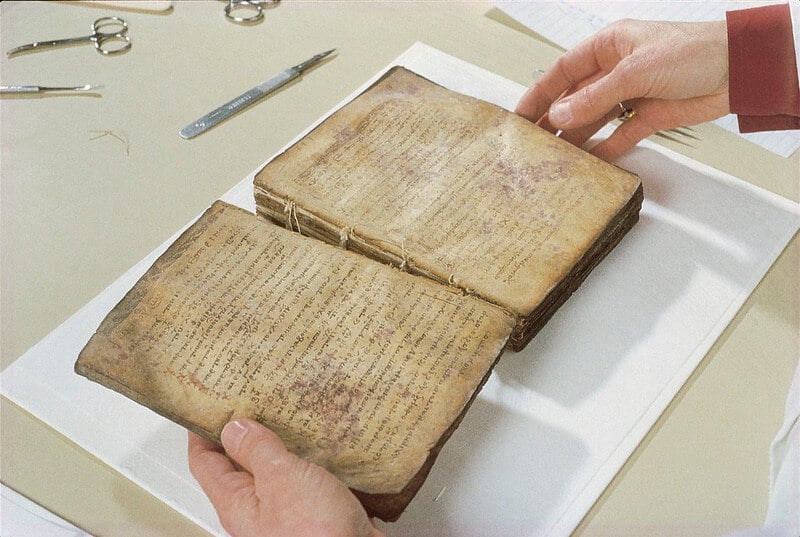
A tenth-century copy of works by Archimedes was scraped clean in the 1200s, cut down and reused as a prayer book, with new text written over the old. The faint mathematics underneath went largely unnoticed until Danish scholar Johan Ludvig Heiberg spotted it in Constantinople in 1906.
After decades of obscurity, the book sold at Christie’s in 1998 for 2 million dollars, and imaging teams working with the Walters Art Museum in Baltimore spent years recovering the hidden text. Among the contents is The Method, the only known source for that treatise.
Medieval recycling preserved what it tried to erase.
Vindolanda Tablets in Roman Rubbish
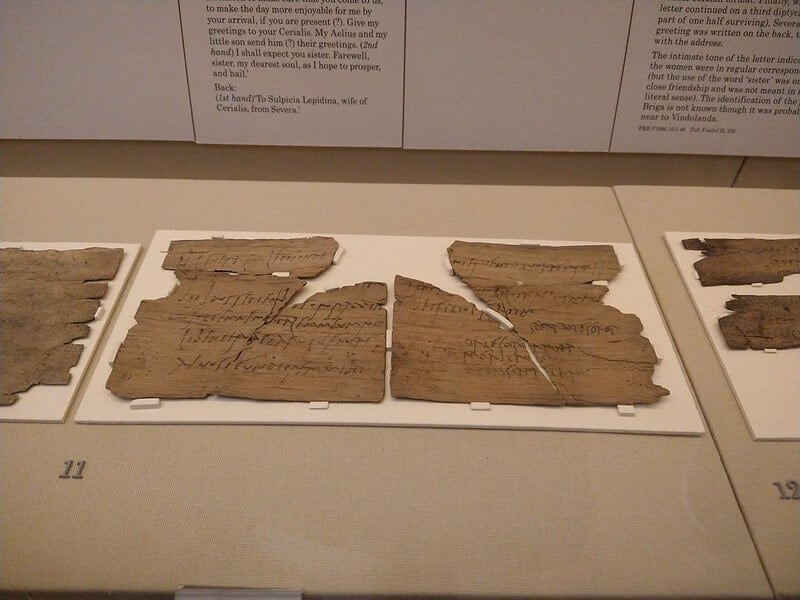
Archaeologist Robin Birley was digging at Vindolanda, a Roman fort just south of Hadrian’s Wall, in 1973 when he lifted thin slivers of wood covered in faint ink. They were letters and documents written nearly 2,000 years ago, preserved because the soggy, oxygen-poor ground slowed decay.
Among the hundreds found since is a birthday invitation from Claudia Severa to her friend Sulpicia Lepidina, thought to contain the earliest known handwriting by a woman in Latin. Another tablet mentions socks and underpants sent to a soldier.
Daily life survived precisely because people threw it away.
Crosby Garrett Helmet in Cumbria
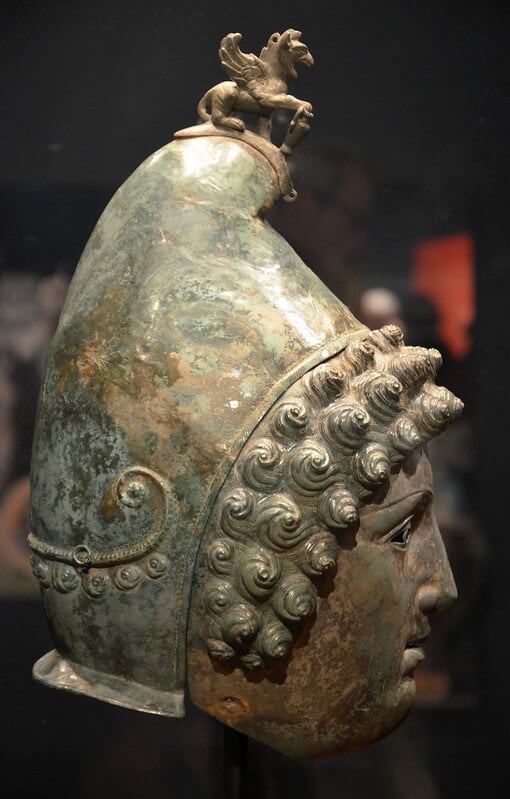
A metal detectorist working farmland near the village of Crosby Garrett in Cumbria in May 2010 found dozens of fragments of copper alloy. Restored, they formed a Roman cavalry helmet with a full face mask topped by a griffin, made for parades and sporting displays rather than combat.
The helmet sold at Christie’s in October 2010 for about 2.3 million pounds to an anonymous bidder, outpricing the Tullie House Museum in Carlisle, which had raised money to keep it local. It has rarely been seen in public since.
Private ownership can bury an object almost as effectively as soil.
Third Imperial Egg at a Flea Market
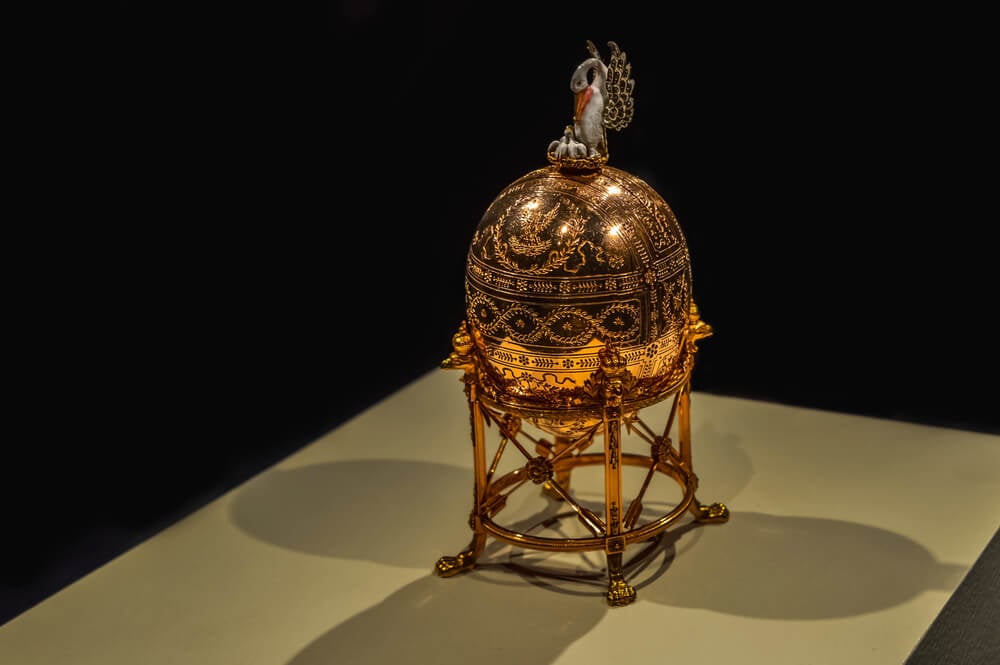
An American scrap metal dealer bought a small gold egg on a stand at a Midwest market in the early 2000s for about 14,000 dollars, planning to melt it down. Buyers kept telling him the gold was worth less than he paid.
Years later he searched online for the name engraved on the watch inside and found a newspaper article about a lost Faberge egg. Specialists at the London firm Wartski confirmed in 2014 that it was the Third Imperial Easter Egg, made in 1887 for the Russian imperial family.
It was later sold to a private collector, reportedly for many millions.
Declaration of Independence Behind a Painting
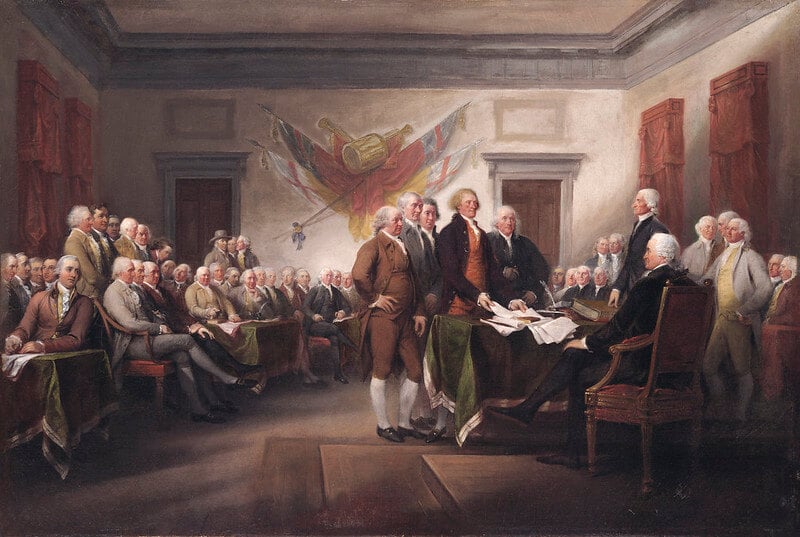
In 1989, a Philadelphia-area man paid 4 dollars at a flea market in Adamstown, Pennsylvania, for a painting he wanted mainly for its frame. When he took the frame apart, he found a folded copy of the Declaration of Independence tucked behind the canvas.
It turned out to be one of the first official printings, produced by John Dunlap in Philadelphia in July 1776. The copy sold at Sotheby’s in 1991 for about 2.4 million dollars.
In 2000 it sold again, for more than 8 million dollars, to television producer Norman Lear, who sent it on tour.
Shakespeare First Folio in a French Library
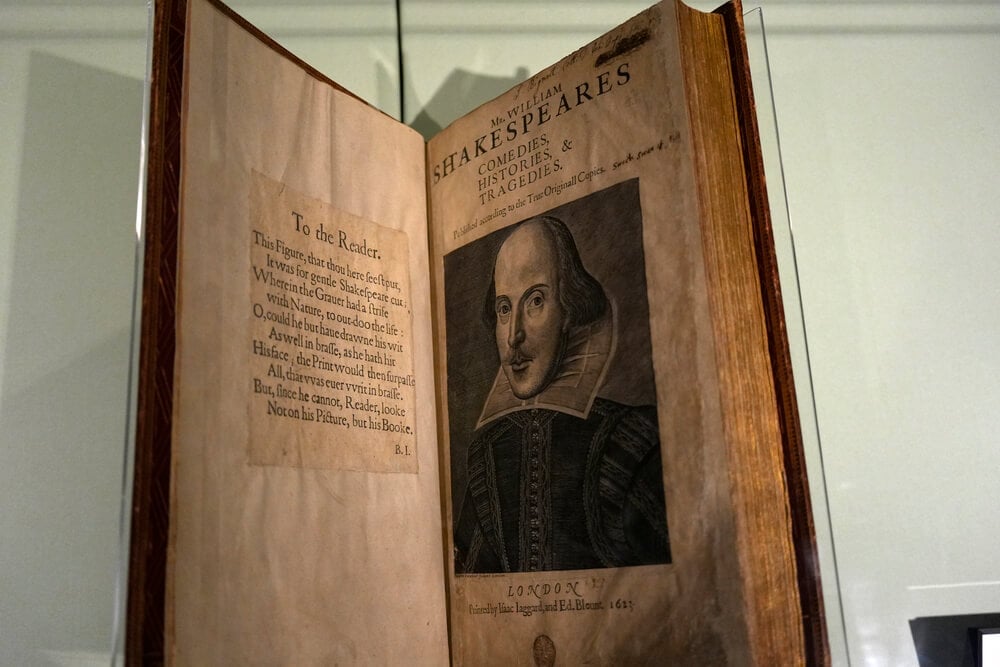
Remy Cordonnier, a librarian in the northern French town of Saint-Omer, was preparing an exhibition on English literature in 2014 when he took a second look at a battered volume cataloged as an early Shakespeare edition. The book was missing its title page and introductory material, which is why nobody had recognized it.
Shakespeare scholar Eric Rasmussen traveled from the United States and confirmed it was a First Folio from 1623. Fewer than 240 copies were known at the time.
Notes in the book suggest it may have belonged to a student at the town’s English Jesuit college.
Mold Gold Cape in a Welsh Burial Mound
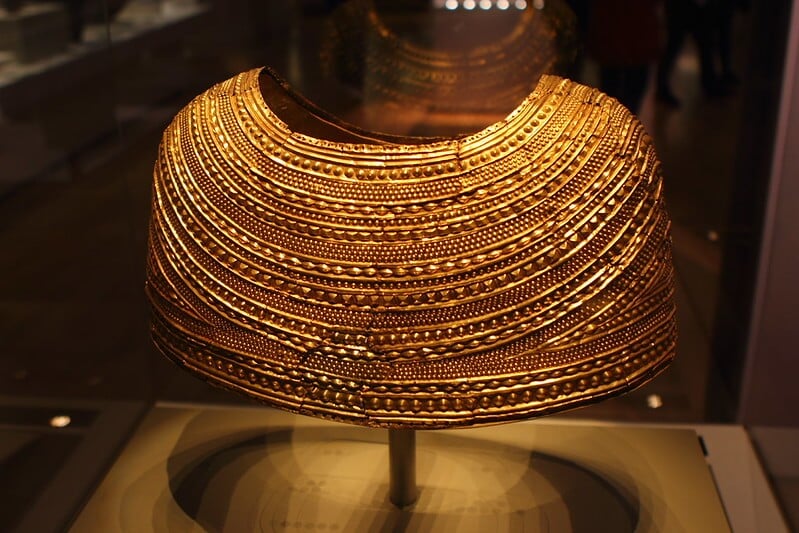
Workmen quarrying stone from a burial mound near Mold in north Wales in 1833 found a skeleton wrapped in a crushed sheet of gold. The object, now called the Mold Gold Cape, was beaten from a single gold ingot roughly 3,600 to 3,900 years ago and decorated with ribs and bosses mimicking folds of cloth.
The workers shared out pieces, and many fragments were later gathered back, though some are still missing. The cape fits only a slender person and would have pinned the wearer’s arms, so it was almost certainly ceremonial.
It is now in the British Museum.
Battersea Shield From the Thames Mud
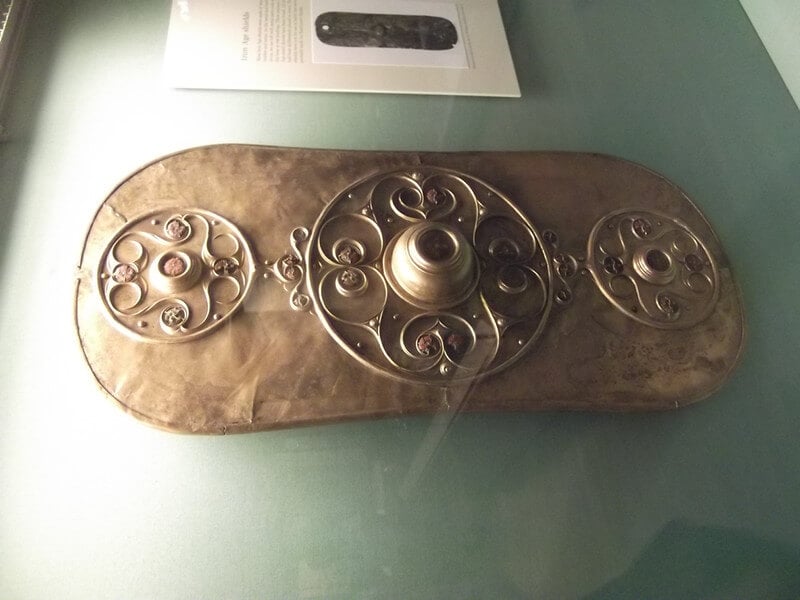
Dredgers working the River Thames near Battersea Bridge in London in 1857 pulled up a bronze shield cover decorated with swirling patterns and red glass studs. The Battersea Shield dates to the Iron Age, likely sometime between about 350 and 50 BC.
Its metal is too thin to have stopped a real blow, so archaeologists believe it was made for display and deliberately offered to the river. Prehistoric Britons appear to have placed many valuable objects in the Thames as offerings.
A routine dredging contract turned up one of the finest pieces of early Celtic art ever found in Britain.
Riace Bronzes Spotted by a Diver
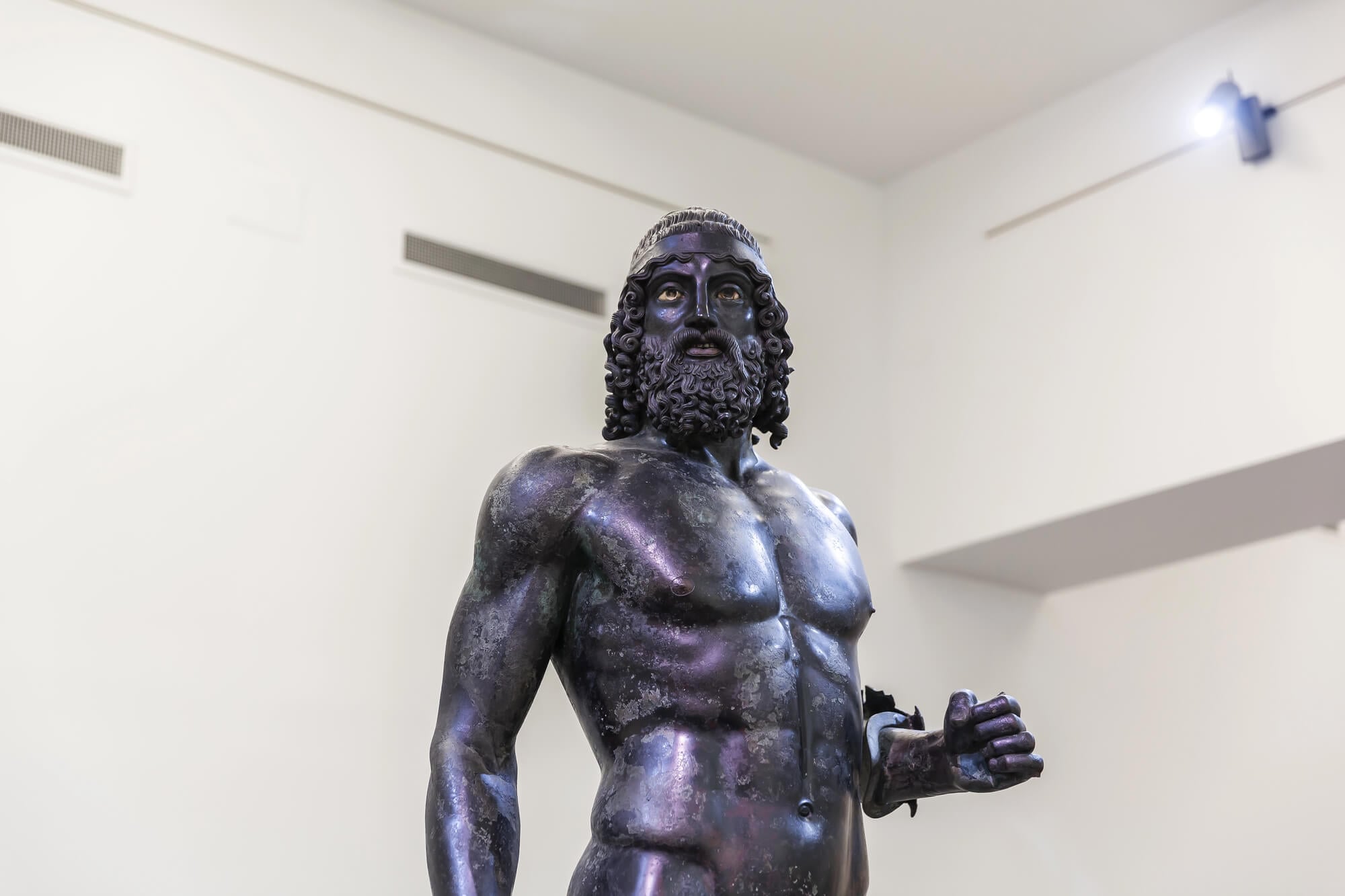
Stefano Mariottini, a chemist from Rome on a diving vacation, was swimming off Riace Marina in Calabria, southern Italy, in August 1972 when he saw what looked like a human arm reaching out of the seabed. It belonged to one of two life-size Greek bronze warriors, each about 2 meters tall, cast in the fifth century BC.
No ship remains were ever found with them. The statues spent years in conservation and now stand in the National Archaeological Museum of Reggio Calabria.
Original Greek bronzes of this quality are extraordinarily rare, because most were melted down for their metal long ago.
Copper Penny From 1943 in Pocket Change
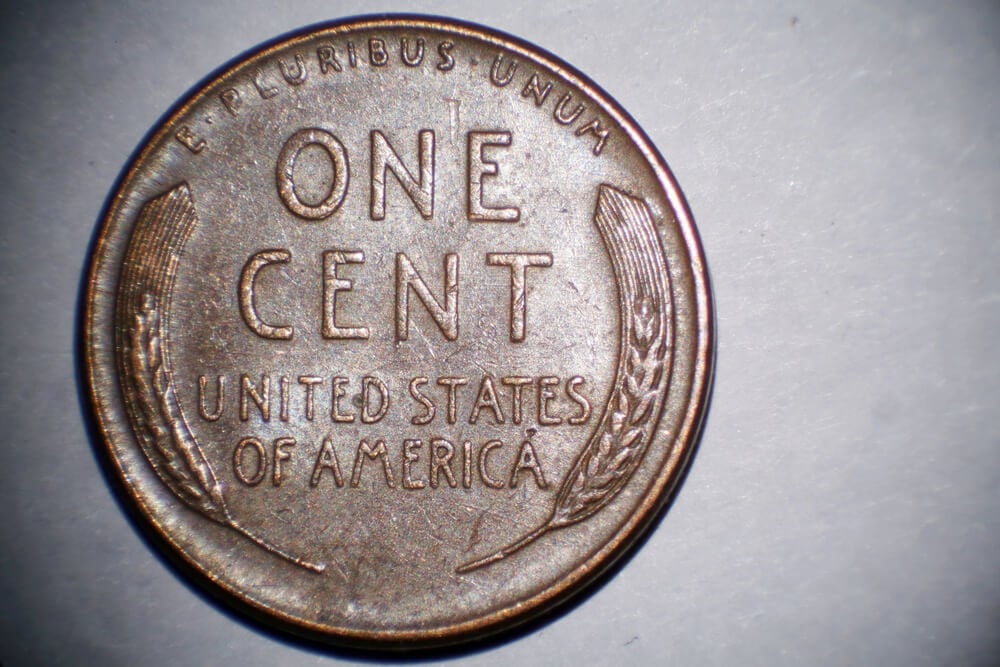
During World War II, the US Mint switched the 1943 cent to zinc-coated steel so copper could go to the war effort. A small number of pennies were accidentally struck that year on leftover bronze blanks, and only around twenty are known today.
In 1947, a 16-year-old named Don Lutes Jr. got one in change in his school cafeteria in Massachusetts and kept it for the rest of his life. After his death, it sold at auction in 2019 for about 204,000 dollars.
Other examples in better condition have sold for well over a million.
Childhood Find Pulled From a Swedish Lake
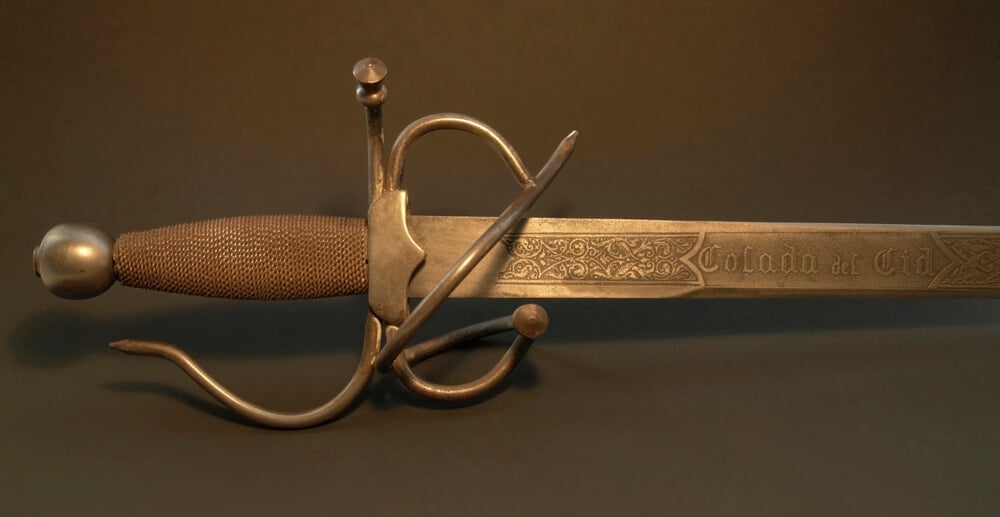
Eight-year-old Saga Vanecek was wading in Vidostern lake in southern Sweden in the summer of 2018 when she pulled a corroded sword from the shallow water. A drought had lowered the lake level, exposing objects that had sat underwater for centuries.
Early reports put the blade at roughly 1,500 years old, and local archaeologists later searched the site and recovered more artifacts. The story made headlines worldwide, partly because of the obvious Arthurian echo.
Some of the most important discoveries still come from people who were not looking for anything at all.
Merlin Fragments in Library Bookbindings
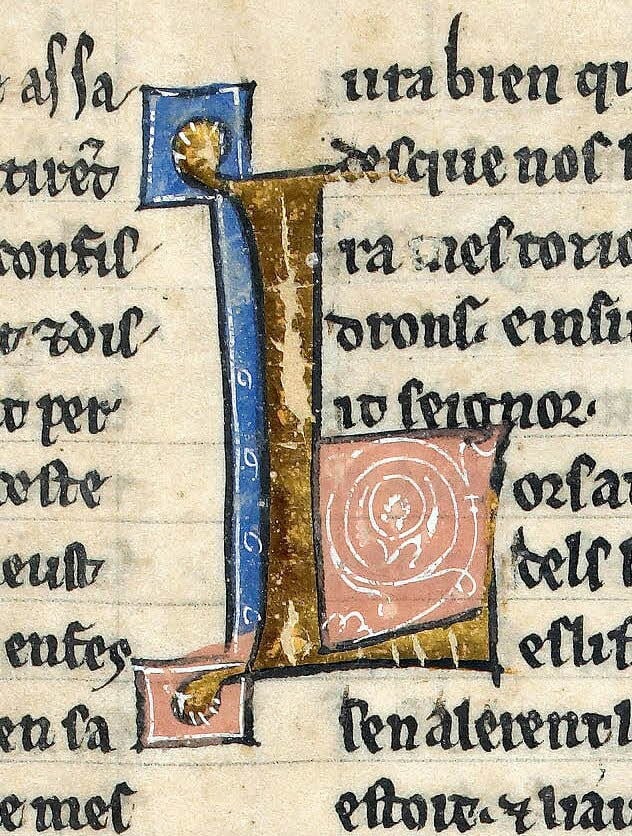
Michael Richardson, a special collections librarian at Bristol Central Library in England, noticed in 2019 that parchment scraps used to strengthen the bindings of a 15th-century book carried Old French text. Scholars identified them as pieces of the Estoire de Merlin, a 13th-century Arthurian romance, with small differences from the known versions of the story.
The surviving passages describe part of a battle scene featuring Merlin. Recycling old manuscripts as binding material was routine for medieval bookbinders, and researchers across Europe now examine bindings for hidden texts.
Damaged books were rarely thrown away entirely.
Dawson City Films Under a Swimming Pool

Construction crews digging the foundation for a new recreation center in Dawson City, Yukon, in 1978 hit reels of film buried in the permafrost. Dawson had been the end of the distribution line for films in the 1910s and 1920s, and nobody wanted to pay to ship old reels back south.
In 1929 they were used as fill for a disused swimming pool under the town’s hockey rink. More than 500 reels survived, including newsreels and features thought lost.
Bill Morrison’s 2016 documentary Dawson City: Frozen Time told the story of how frozen ground saved fragile nitrate film.
Otzi’s Copper Axe on an Alpine Glacier
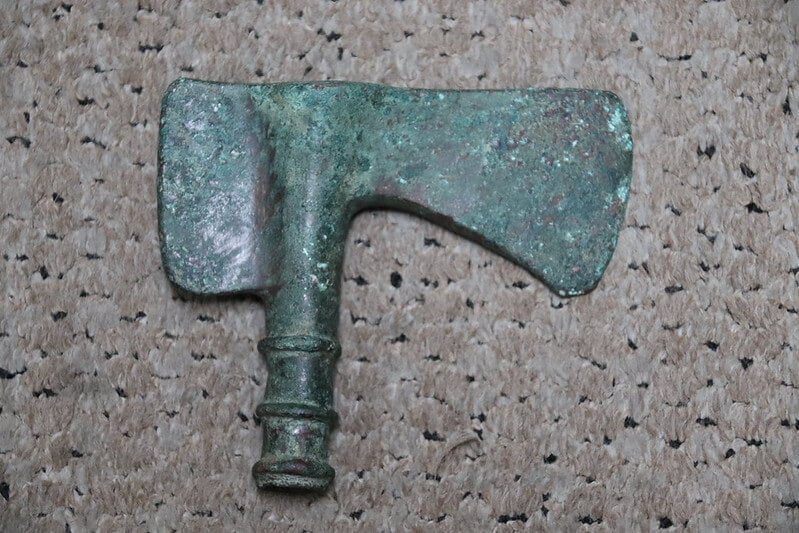
Two German hikers, Erika and Helmut Simon, spotted a body emerging from melting ice in the Otztal Alps on the Austrian-Italian border in September 1991. The man, nicknamed Otzi, had died about 5,300 years earlier, and among his gear was an axe with a yew handle and a blade of almost pure copper.
The axe pushed back assumptions about when copper working reached the region. His equipment also included a bow, arrows, a fire-lighting kit and grass-lined shoes.
Everything is displayed with his body at the South Tyrol Museum of Archaeology in Bolzano, Italy.
Luck, Patience and the Archaeology of Accidents
Planned excavations still produce most archaeological knowledge, but a surprising share of headline objects arrive by accident. A plow blade, a dredging bucket or a curious librarian often does what decades of searching could not.
What matters after that is the next decision, whether the finder calls an expert or a buyer.
Several of these objects nearly vanished again, melted for scrap, burned as kindling or sold into private hands. The ones that survived did so because someone paused long enough to wonder what they were holding.
Curiosity turns out to be one of the most underrated tools in archaeology.
More from Go2Tutors!

- The Romanov Crown Jewels and Their Tragic Fate
- 13 Historical Mysteries That Science Still Can’t Solve
- Famous Hoaxes That Fooled the World for Years
- 15 Child Stars with Tragic Adult Lives
- 16 Famous Jewelry Pieces in History
Like Go2Tutors’s content? Follow us on MSN.