26 Sports Cards Parents Threw Out Too Soon
Every collector has heard some version of the same family story: a shoebox full of cardboard from a childhood collection, cleared out during a move or a spring cleaning without a second thought, years before anyone understood what a rookie card from the right year could eventually be worth. Cards that cost a few cents apiece from a corner store rack decades ago now anchor entire auctions.
Condition drives value more than almost anything else in this hobby. A card with rounded corners, a crease, or even light surface wear from being handled and traded as a kid can be worth a small fraction of the same card in sharp, well-centered condition.
Mickey Mantle 1952 Topps
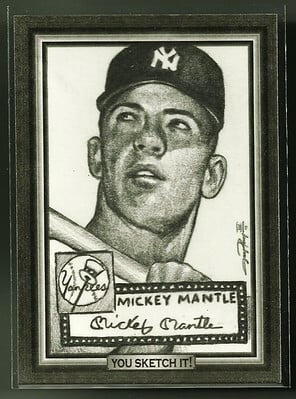
Widely regarded as the single most iconic card in the hobby, Mantle’s 1952 Topps issue gained mythic status partly because a large quantity of unsold cases were reportedly dumped into the ocean by Topps itself due to poor demand at the time. That accidental scarcity, combined with Mantle’s legendary career, has made even modestly graded copies worth a serious sum.
Honus Wagner T206
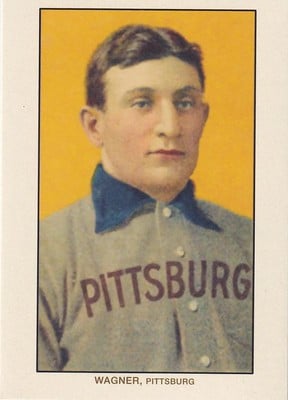
Produced around 1909 to 1911 as part of a period trading-card set, the Wagner card became legendary after the player himself reportedly asked to have his image pulled from production, resulting in one of the smallest print runs of any card from the era. It remains among the most expensive trading cards ever sold at auction.
Mickey Mantle 1951 Bowman
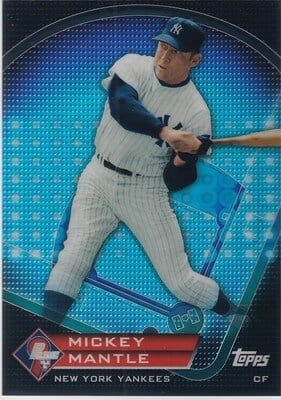
Predating his more famous Topps rookie card by a year, Mantle’s 1951 Bowman issue is considered by some collectors to be his true rookie card and carries serious value in its own right, particularly in high grade. Many families who kept a Topps Mantle from this era never realized an earlier Bowman version existed in the same collection.
Hank Aaron 1954 Topps
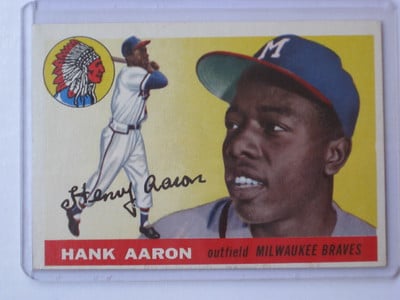
Aaron’s rookie card arrived the same year he broke into the majors, years before his pursuit of the career home run record made him a household name. Its status as a true rookie card from a foundational Topps set keeps demand consistently strong.
Nolan Ryan 1968 Topps
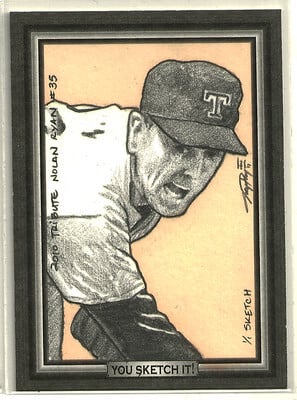
Ryan’s rookie card, shared on the same card with another young pitcher from his original team, predates the decades of strikeout records that made him one of the most recognizable arms in the sport’s history. Its status as a shared rookie card has never diminished demand for well-centered copies.
Willie Mays 1951 Bowman
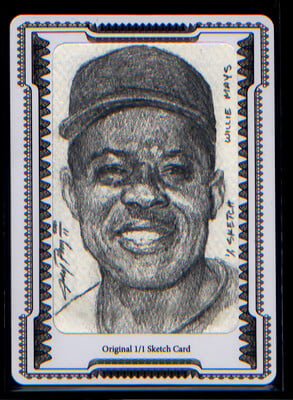
Mays’s rookie card arrived just as his career on the diamond was taking off, and the card has remained a cornerstone of vintage collecting ever since. Centering is a particular challenge with this issue, making a sharply centered example considerably scarcer than a typical surviving copy.
Roberto Clemente 1955 Topps
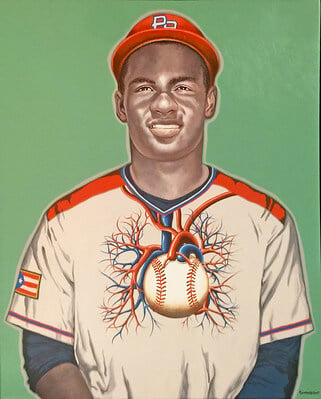
Clemente’s rookie card predates the humanitarian legacy that followed his death in a 1972 plane crash delivering aid supplies, a story that has only deepened collector interest in his early cardboard over the decades since. High-grade copies are notably difficult to find given how heavily this set was handled by young collectors at the time.
Pete Rose 1963 Topps
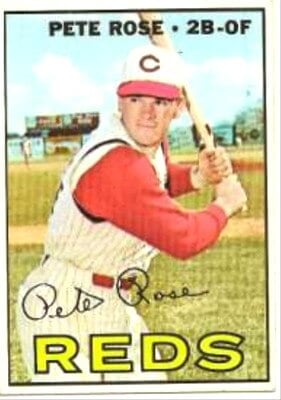
Rose’s rookie card, shared with several other young players on the same issue, arrived before his record-setting hit total made him one of the sport’s most discussed figures. The card remains a foundational piece for collectors focused on 1960s cardboard regardless of the controversies that later shaped Rose’s legacy off the field.
Sandy Koufax 1955 Topps
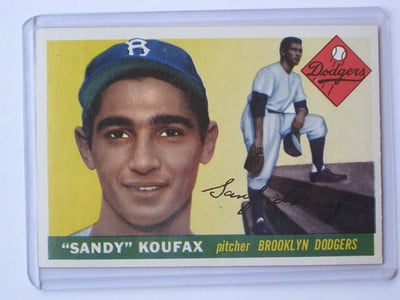
Koufax’s rookie card predates the dominant late-career stretch that eventually earned him a place among the sport’s most celebrated pitchers. As with many rookie cards from this era, well-centered examples free of the print defects common to 1950s Topps production are significantly scarcer than average surviving copies.
Jackie Robinson 1948 Leaf
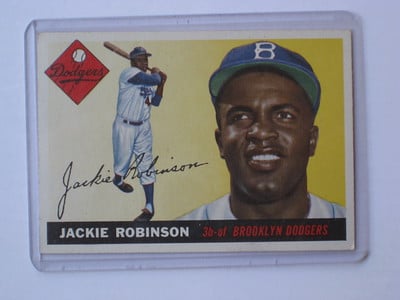
Robinson’s rookie card, issued the year after he broke the sport’s color line, is one of the most historically significant pieces of cardboard ever produced, tying a genuine athletic achievement to a pivotal moment in American history. The Leaf set is notorious for rough factory cutting and centering issues, making a clean example especially valuable.
Babe Ruth 1933 Goudey
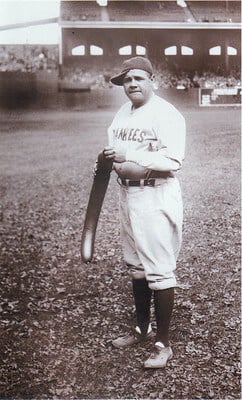
Issued years after Ruth’s playing peak but during a period when his fame had only grown, this Goudey card remains one of the most recognizable vintage issues in the entire hobby. Its age alone makes surviving high-grade examples exceptionally scarce, regardless of the player depicted.
Ernie Banks 1954 Topps
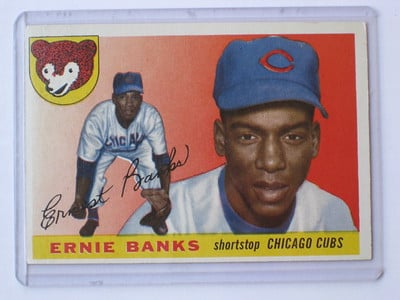
Banks’s rookie card arrived at the outset of a career that would eventually make him one of the most beloved players in his franchise’s history. Well-centered examples from this particular Topps set are considered a meaningful step up in scarcity from more common mid-1950s issues.
Reggie Jackson 1969 Topps
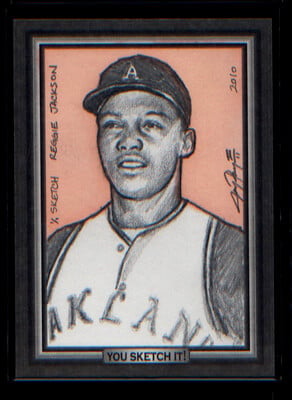
Jackson’s rookie card predates the postseason performances that would later earn him a nickname built around his clutch reputation. The card is well documented among collectors as a strong, accessible entry point into late-1960s rookie card collecting.
George Brett 1975 Topps

Brett’s rookie card, issued from a set known for its distinctive bright, colorful borders, predates the batting title and career achievements that eventually built his reputation as one of the sport’s most consistent hitters. Bright, unfaded borders are a particular condition concern for this specific set.
Wayne Gretzky 1979-80 Topps
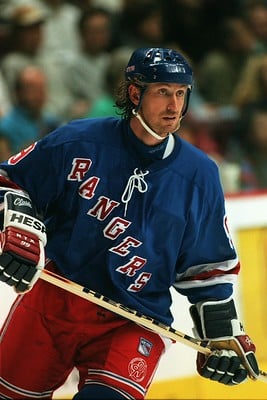
Gretzky’s rookie card arrived during his first professional season on ice and has become one of the most recognizable rookie cards across any sport, driven by his status as arguably the greatest player his sport has ever produced. Even lower-grade examples of this card routinely sell for meaningful sums given the sustained collector demand.
Gordie Howe 1951 Parkhurst
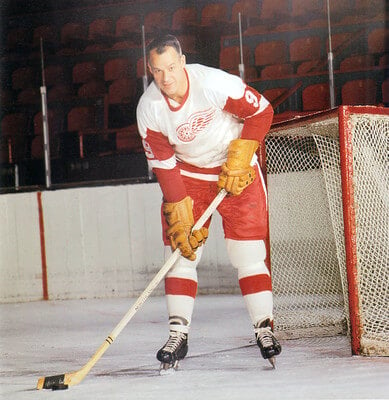
Predating Gretzky’s card by nearly three decades, Howe’s rookie issue represents one of the foundational hockey cards of the modern collecting era. Its age and the fragility of early 1950s cardboard make high-grade surviving examples a genuine rarity.
Michael Jordan 1986 Fleer
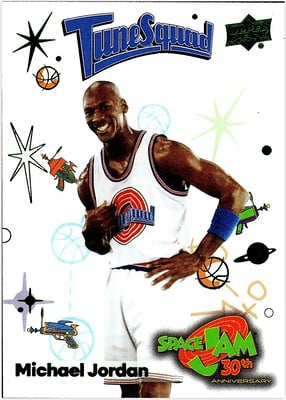
Jordan’s rookie card is widely considered one of the most significant cards in the entire hobby, issued during his first full season and years before he became one of the most recognized athletes in the world. Demand for this card has remained exceptionally strong across multiple generations of collectors.
Michael Jordan 1984-85 Star Co.

Predating the more famous Fleer issue, this earlier Star Company set is considered by some specialists to be Jordan’s true first licensed card, though it was originally sold only through a limited hobby distribution rather than in retail packs. That limited original distribution has made surviving examples considerably scarcer than the later, more widely known Fleer card.
Larry Bird, Magic Johnson, and Julius Erving 1980-81 Topps
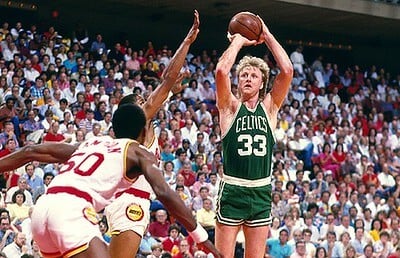
This shared card from 1980-81 Topps featured three hardcourt legends on a single issue, predating the rivalry between two of them that would help define the sport’s popularity through the following decade. Its combination of three major names on one card has made it a perennial favorite among collectors of that era.
Kobe Bryant 1996-97 Topps Chrome
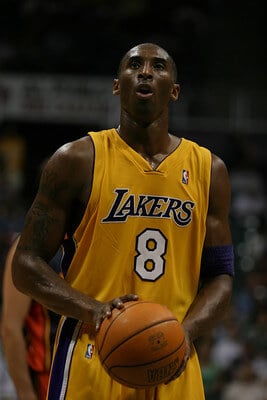
Bryant’s rookie card arrived as he entered the league directly after high school, a rare path at the time that added to the card’s early mystique. Demand for well-preserved examples grew steadily throughout his career and has remained exceptionally strong since his death in 2020.
Ken Griffey Jr. 1989 Upper Deck
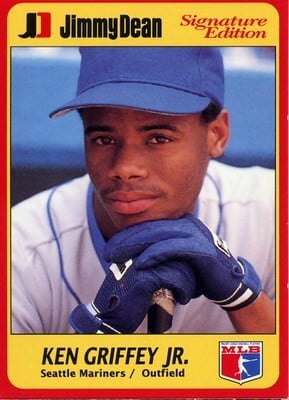
Griffey’s rookie card is widely credited with helping establish Upper Deck as a premium card brand upon its 1989 launch, thanks to its then-unusual photo quality and anti-counterfeiting features. The card remains one of the most recognized rookie issues of the modern era.
Joe Namath 1965 Topps
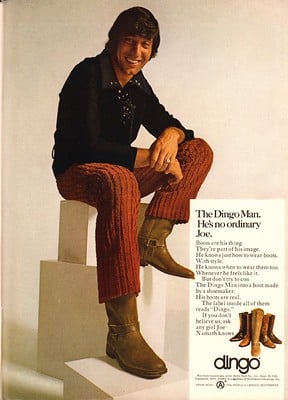
Namath’s rookie card predates the championship guarantee that made him a household name, issued during a period when the gridiron card market was considerably smaller than it would later become. Strong centering is particularly difficult to find in this issue given the set’s known production quirks.
Joe Montana 1981 Topps
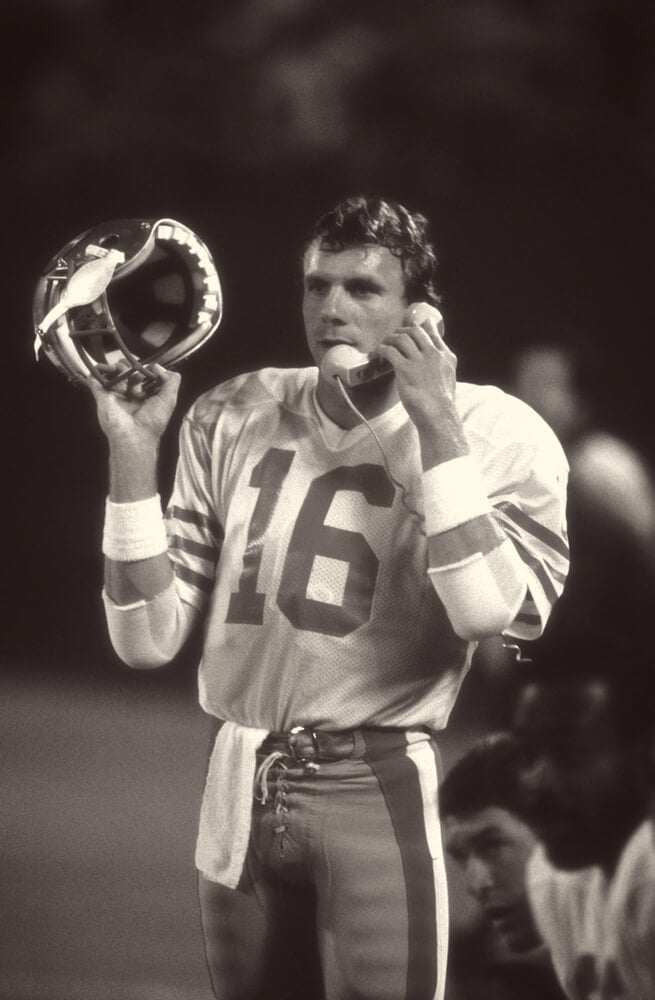
Issued during his rookie season, Montana arrived just before a run of championship seasons that established him as one of the position’s most celebrated players. As with many gridiron rookie cards from this era, sharp corners are especially hard to find given how frequently these cards were handled by young collectors at the time.
Peyton Manning 1998 Bowman Chrome
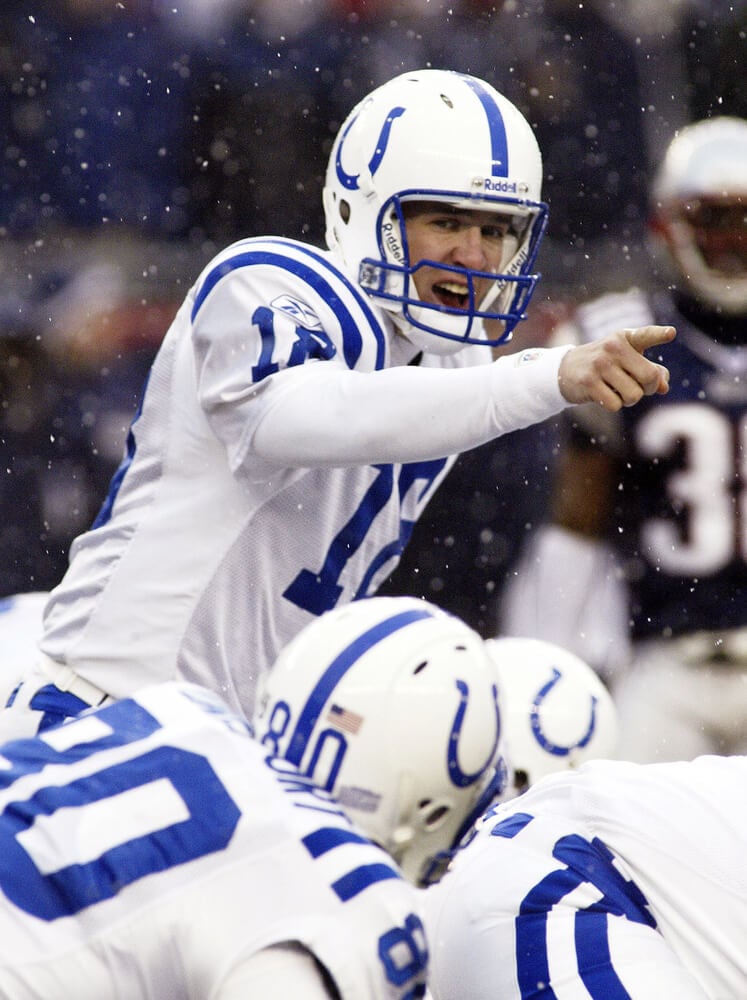
Manning’s rookie card arrived during the early years of the Chrome format’s growing popularity, a technology that gave cards a reflective finish prone to visible surface scratching if not stored carefully. High-grade examples are considerably scarcer than the raw card population might suggest for this reason alone.
Tom Brady 2000 Bowman Chrome

Issued during Brady’s rookie season, years before he became one of the most decorated players in the sport’s history, this card was originally an affordable, easy-to-find issue that dramatically outgrew its modest original print status. It has become one of the most valuable modern-era rookie cards in the entire hobby.
Ozzie Smith 1979 Topps
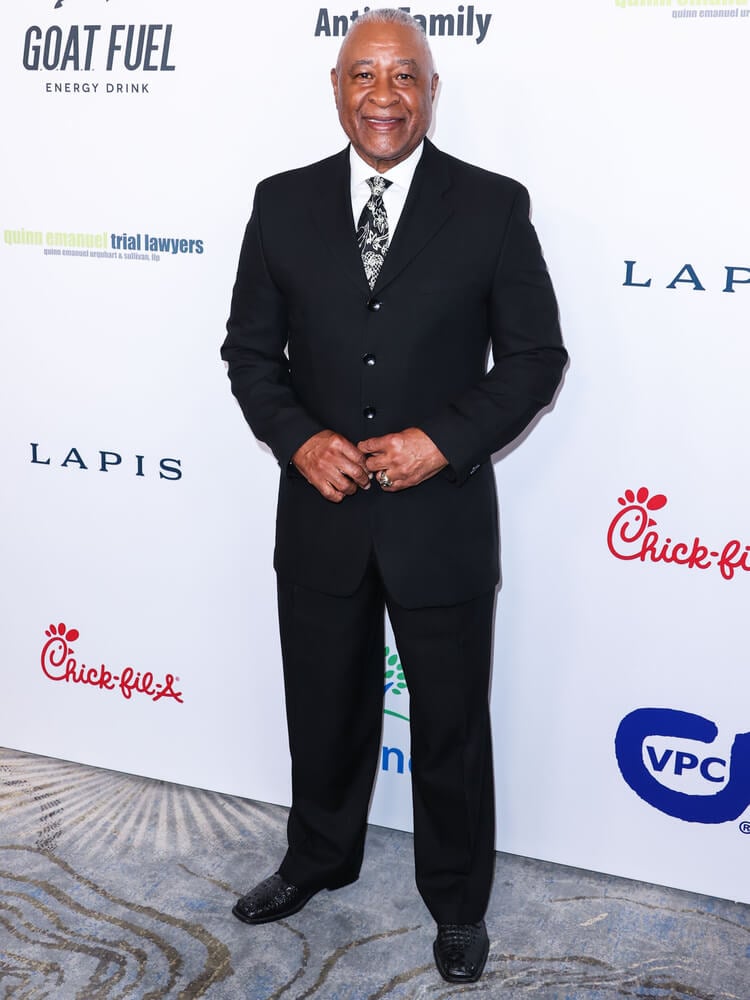
Smith’s rookie card predates the defensive highlight reels that eventually earned him a reputation as one of the most gifted fielders in the sport’s history. Collectors focused on defensive standouts rather than offensive statistics consider this an underappreciated key card from its era.
The Shoebox That Got Thrown Out Anyway

Almost nobody who cleared out a childhood card collection in the 1970s, 1980s, or 1990s was acting out of carelessness. They were following completely reasonable logic: the cards had cost pocket change, the collection took up space, and nothing about a stack of cardboard suggested it belonged in a safe deposit box instead of a donation pile.
The value that emerged decades later says less about the cards themselves and more about how unpredictable cultural memory turns out to be. A card only becomes worth chasing once enough people, years after the fact, decide collectively that a specific moment on cardboard mattered more than anyone realized when it first left the factory.
More from Go2Tutors!

- The Romanov Crown Jewels and Their Tragic Fate
- 13 Historical Mysteries That Science Still Can’t Solve
- Famous Hoaxes That Fooled the World for Years
- 15 Child Stars with Tragic Adult Lives
- 16 Famous Jewelry Pieces in History
Like Go2Tutors’s content? Follow us on MSN.



