27 School Office Objects Before Computer Records
Before a single student record lived on a screen, it lived in a drawer, a tray, or a pile of purple paper. The front office of a school once ran on cranks, levers, ink, and carbon, and every one of those devices left a mark on the people who used it.
Secretaries kept entire campuses moving with machines that jammed, smeared, and occasionally caught fire. Here are the objects that made it all work.
The Stencil Duplicator That Printed Every Permission Slip
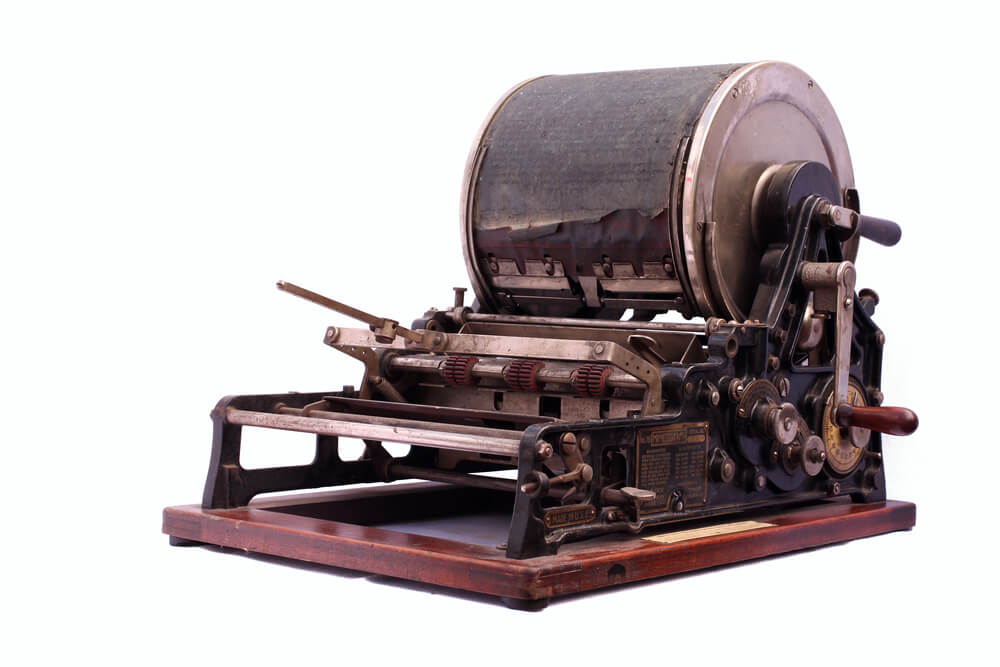
David Gestetner patented his cyclostyle in 1881, and the stencil duplicators that followed became a fixture of school offices for nearly a century. A secretary typed on a waxed stencil with the ribbon disengaged, so the keys cut letters straight through the coating.
Ink then pressed through those cuts onto each sheet as a drum turned. One stencil could run off hundreds of copies, which made it the default tool for newsletters, lunch menus, and permission slips.
The Spirit Duplicator and Its Purple Copies
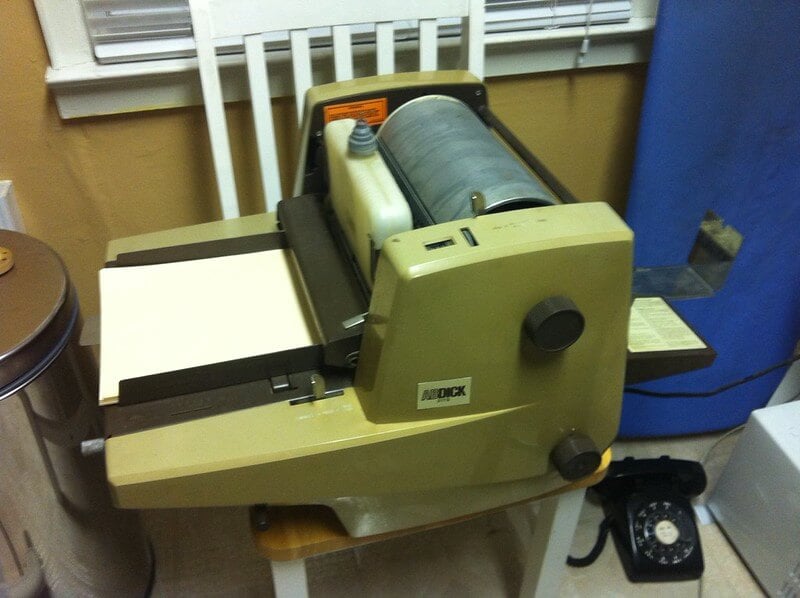
Spirit duplicators produced the unmistakable purple pages that students once pressed to their faces for a sniff. The master sheet carried a dye-based image that transferred to each page with a swipe of alcohol-based fluid, and the paper came out damp and faintly chemical.
Every copy used up a little of the dye, so the early sheets were dark and the late ones faded into pale lavender. Offices that needed fifty tests in a hurry often chose this machine over the stencil duplicator because the masters were quick to prepare.
The Hectograph Gelatin Pad
Long before the spirit duplicator, offices copied documents with a tray of firm gelatin. A clerk wrote on paper with strong dye-based ink, pressed it face down onto the gelatin, and lifted it away, leaving a mirror image in the pad.
Clean sheets laid on top picked up dozens of copies before the image grew faint. Afterward the pad needed time to absorb the leftover ink before it could be used again, which turned a simple notice into an afternoon project.
Carbon Paper in the Triplicate Forms
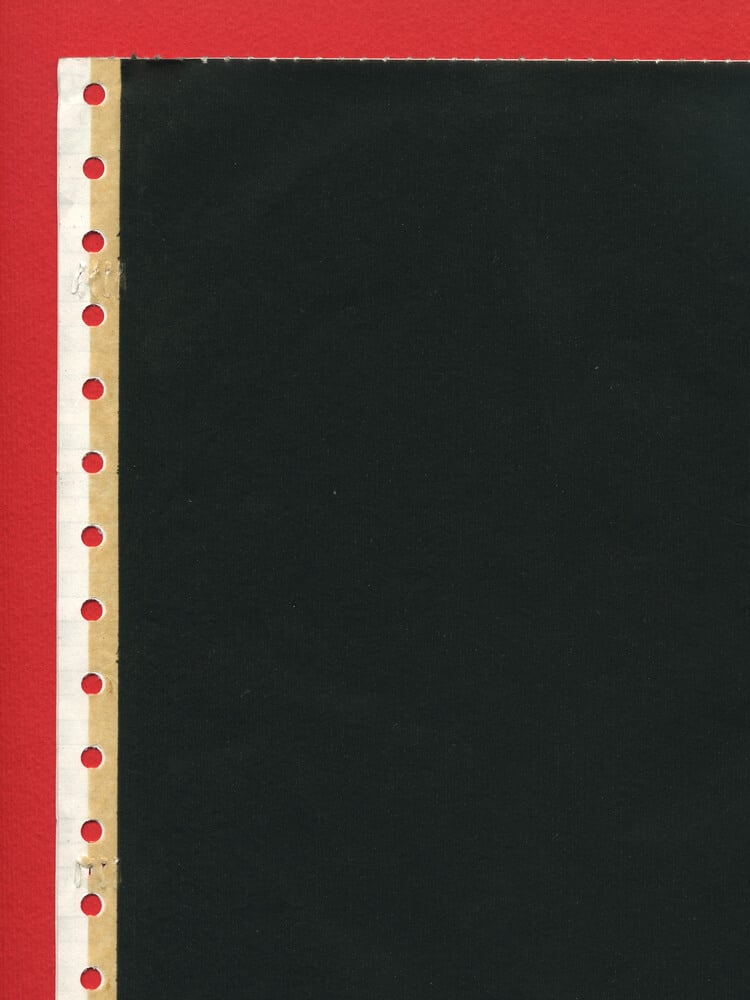
Ralph Wedgwood patented carbon paper in 1806, and it was still sliding between pages in school offices nearly two centuries later. A single typed absence notice could produce a copy for the teacher, a copy for the office, and a copy for the parent without anyone retyping a word.
Heavy pressure made the duplicates darker, so secretaries learned to type with a firm hand. Carbon copies also smudged fingers and shirt cuffs, which gave office workers a recognizable gray smear.
The Manual Typewriter That Hid Its Own Work
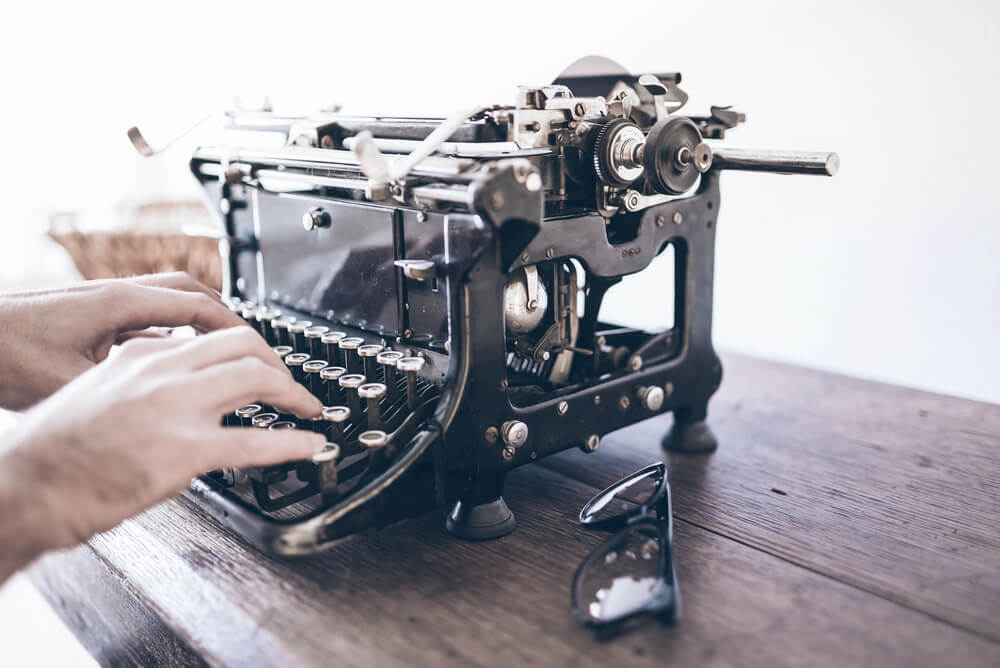
E. Remington and Sons began selling its first commercial typewriter in 1873, and the machine reshaped clerical work. In the earliest models the type bars struck the paper from underneath, so a typist could not see the line just written without lifting the carriage.
Later front-strike designs fixed that, but the heavy keys, the bell at the end of each line, and the shove of the carriage return stayed. School secretaries typed report card comments, transcripts, and letters home on these machines for decades.
The IBM Selectric and Its Spinning Element
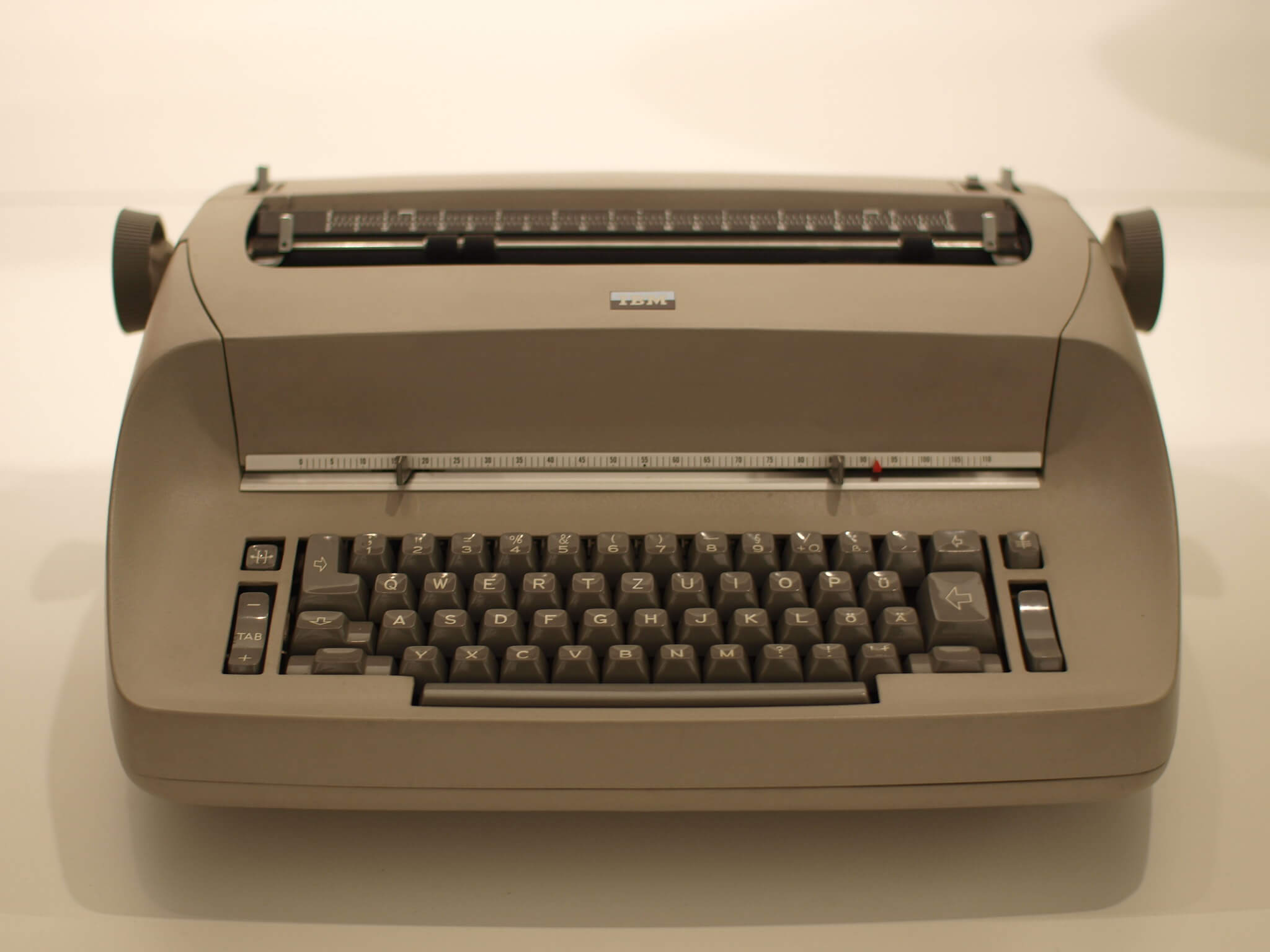
IBM introduced the Selectric in 1961 and replaced the moving carriage with a single rotating element that tilted and spun to strike each letter. The paper stayed in place while the element traveled across the page, which gave the machine a smooth, humming rhythm unlike earlier typewriters.
Elements could be swapped in seconds, so one office machine could produce several typefaces. Principals’ secretaries prized it for typed letters that looked polished enough to frame.
Liquid Paper in a Small Glass Bottle
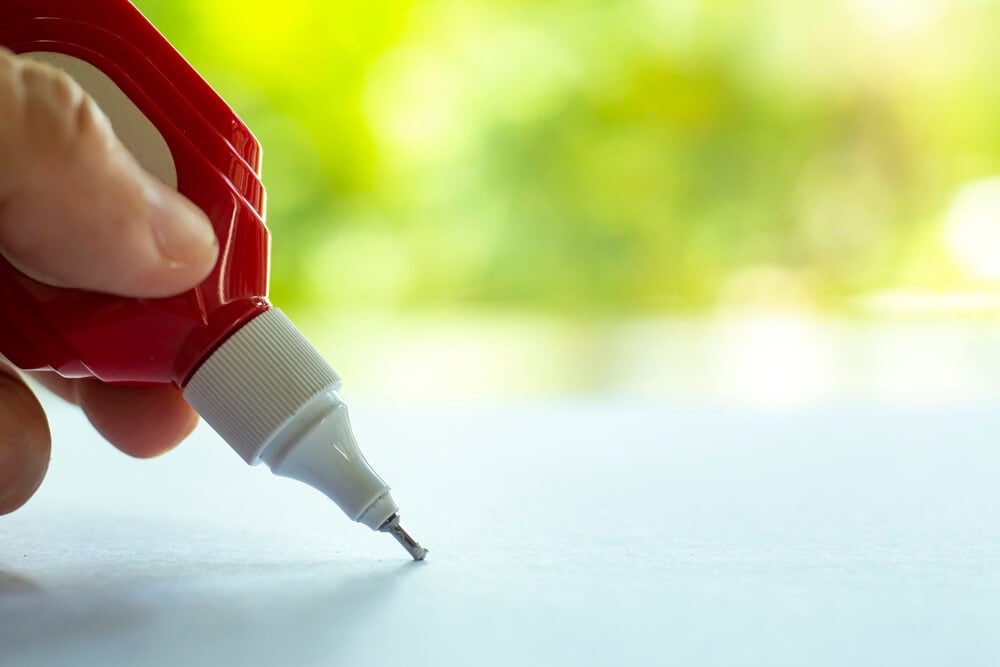
Bette Nesmith Graham, a bank secretary in Texas, mixed the first batches of her correction fluid in her kitchen in the 1950s and called it Mistake Out. She sold the company to Gillette in 1979 for 47.5 million dollars.
Before that, a typing error on a transcript meant retyping the page or scraping at it with an eraser. A single brushful of white paint let a secretary fix a misspelled name and keep going.
The Rolodex on the Secretary’s Desk
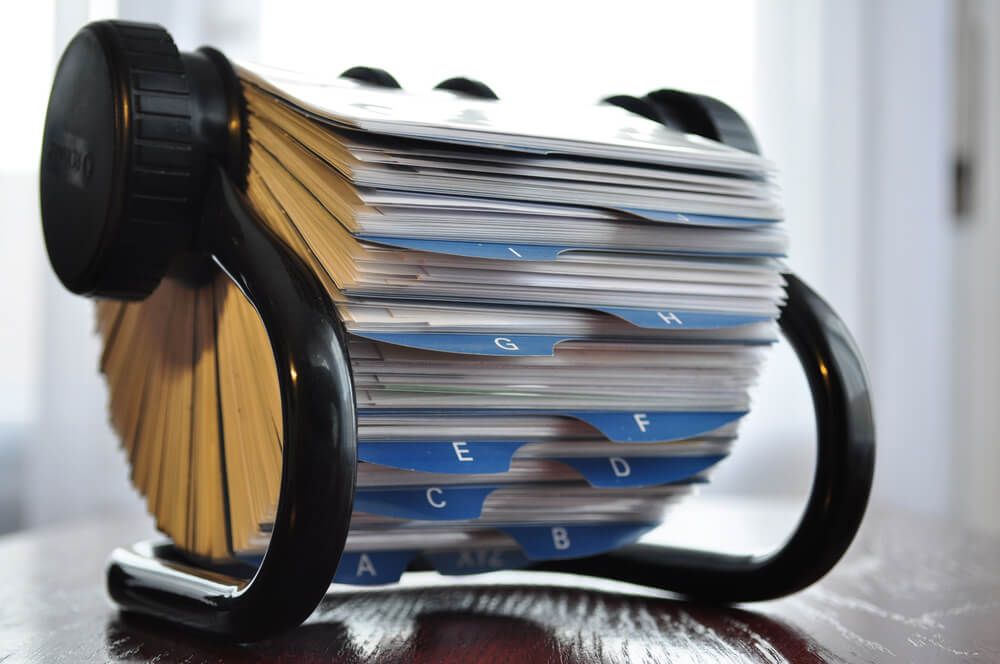
Arnold Neustadter introduced the Rolodex in 1956, with engineer Hildaur Neilsen helping to design the rotating card file. The name combined the words rolling and index, which described its function precisely.
Substitute-teacher numbers, bus company contacts, and the plumber who answered after midnight all lived on those small cards. In many offices the Rolodex was the true directory of how the school actually functioned, and no handbook came close.
The Comptometer Built From a Macaroni Box
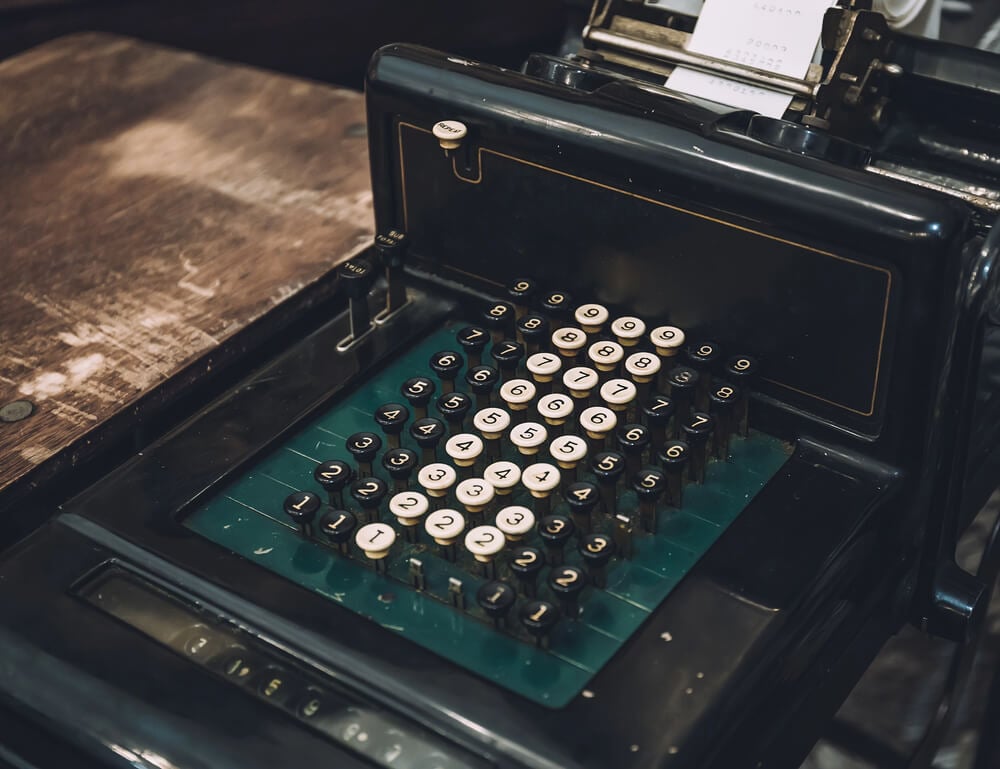
Dorr Felt built his first key-driven calculator in 1887 out of a wooden macaroni box, with staples for keys and skewers for the internal parts. The finished Comptometer needed no crank, so trained operators could add columns of figures at remarkable speed using only the fingers.
A business office or school district accounting department could run payroll sheets and fee totals through it without waiting on a handle. Operators took pride in speed, and the best could finish a page of figures before a colleague had located a pencil.
The Burroughs Adding Machine With Its Paper Tape
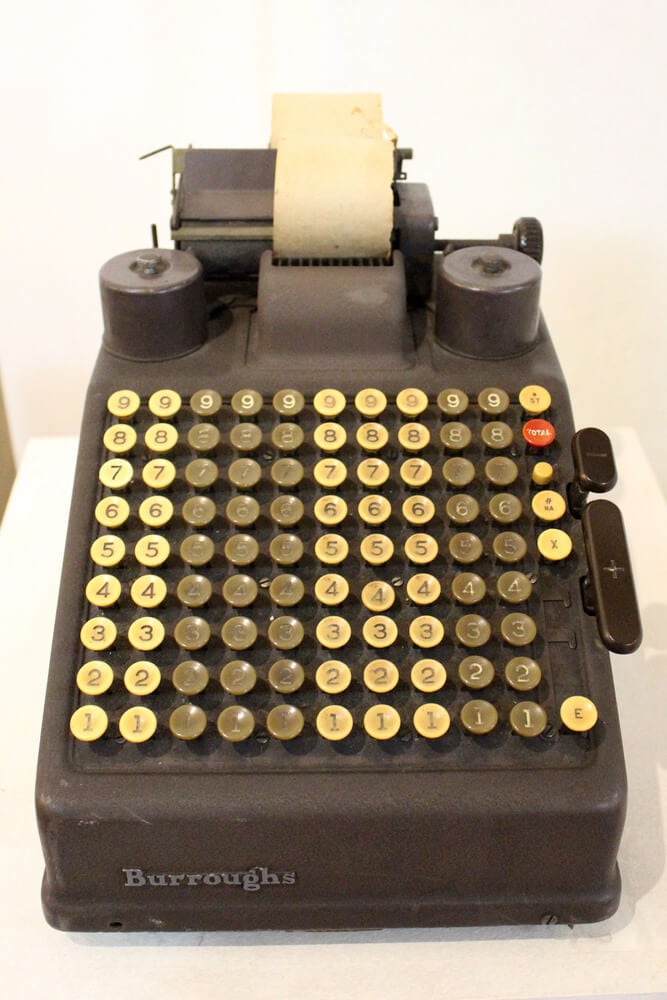
William Seward Burroughs patented his adding machine in 1888, and the design printed each entry on a paper tape so the work could be checked later. Pulling the lever on the side for every entry gave the school bookkeeper a rhythm of clack and ratchet.
The printed tape served as proof when lunch fees and activity funds did not add up. The inventor’s grandson, also named William S. Burroughs, grew up to become a famous author.
The Time Clock Beside the Custodian’s Closet
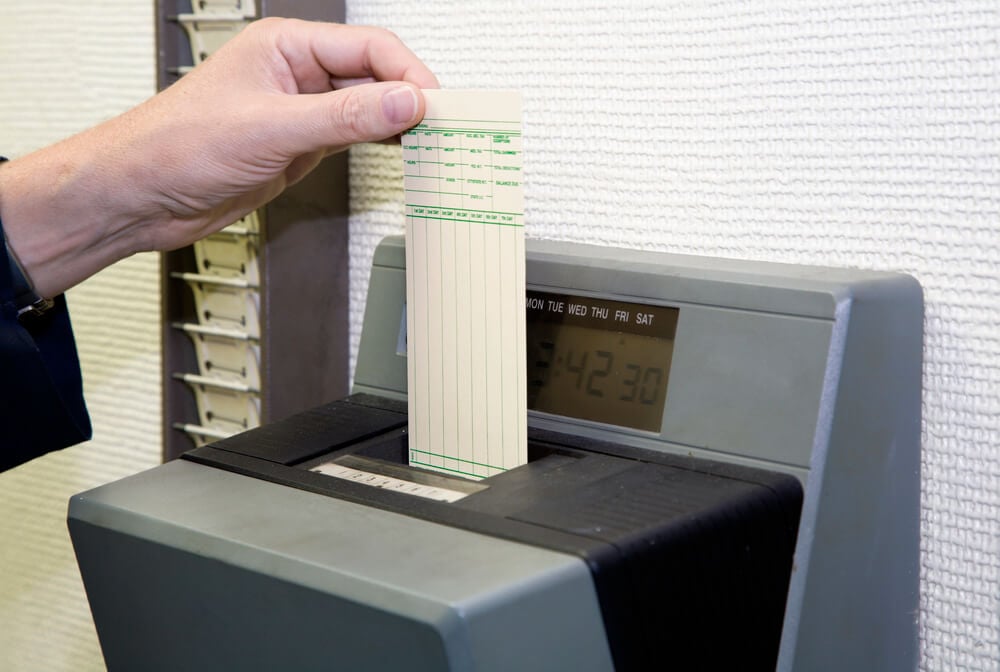
Willard Bundy built his key-operated time recorder in Auburn, New York, in 1888, and the business that grew from it eventually became part of the company that turned into IBM. Employees inserted a key and turned it, and the machine printed the time on a paper record.
Large districts used clocks like this for custodians, cafeteria staff, and bus drivers who needed accurate hours for payroll. The punched card, stamped with the minute a person arrived, was the first attendance system to take excuses out of the process.
The Postage Meter That Replaced the Stamp Drawer
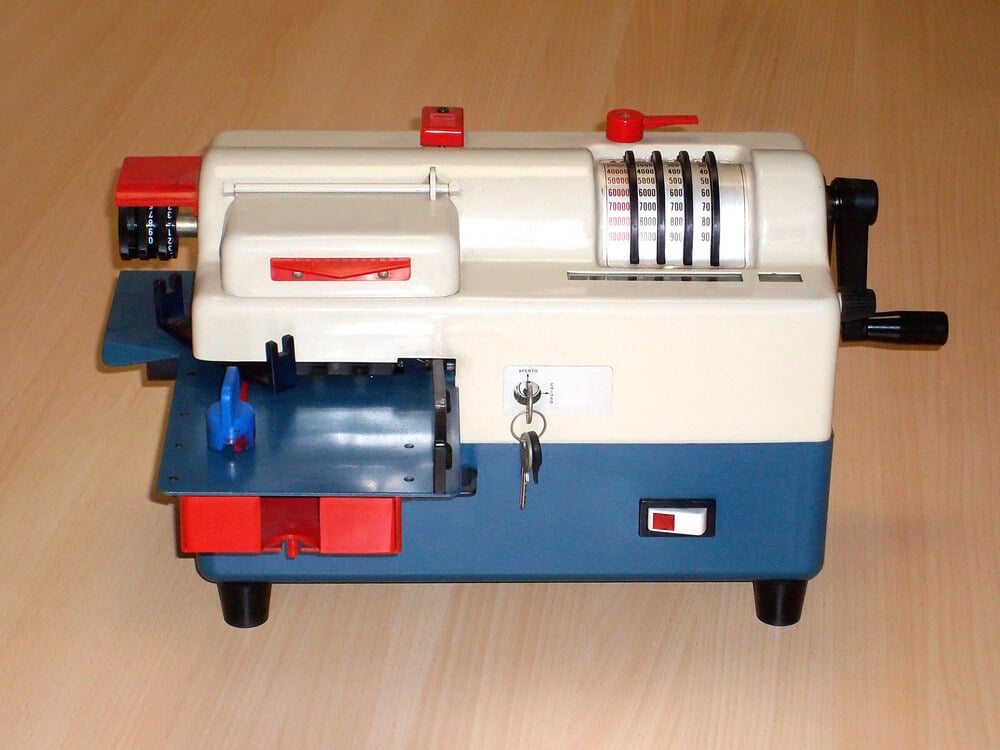
Arthur Pitney’s postage meter went into trial use in Stamford, Connecticut, in 1920, and it let an office print postage directly on an envelope. Before that, school secretaries kept sheets of stamps in a drawer and licked each one individually for report mailings.
The meter locked in a prepaid amount, which meant the person running it could not take stamps for personal use. For a school mailing out thousands of notices each term, the savings in time were considerable.
The Xerox 914 With Its Own Fire Extinguisher
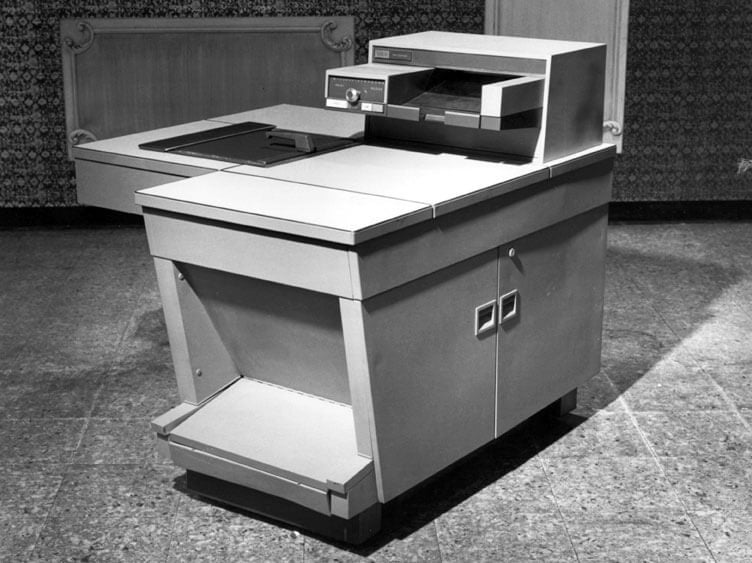
Xerox introduced the Model 914 in 1959 as the first automatic plain-paper copier, and the name came from the largest sheet it accepted, nine by fourteen inches. Early machines reportedly ran hot enough that the company supplied a fire extinguisher with the copier, and some offices kept a wastebasket nearby for the same reason.
A school secretary no longer had to cut a stencil or prepare a master before copying a page. The machine made the stencil duplicator look slow, though it cost far more to buy than any school office could easily justify.
The Thermo-Fax Copier That Cooked Its Pages
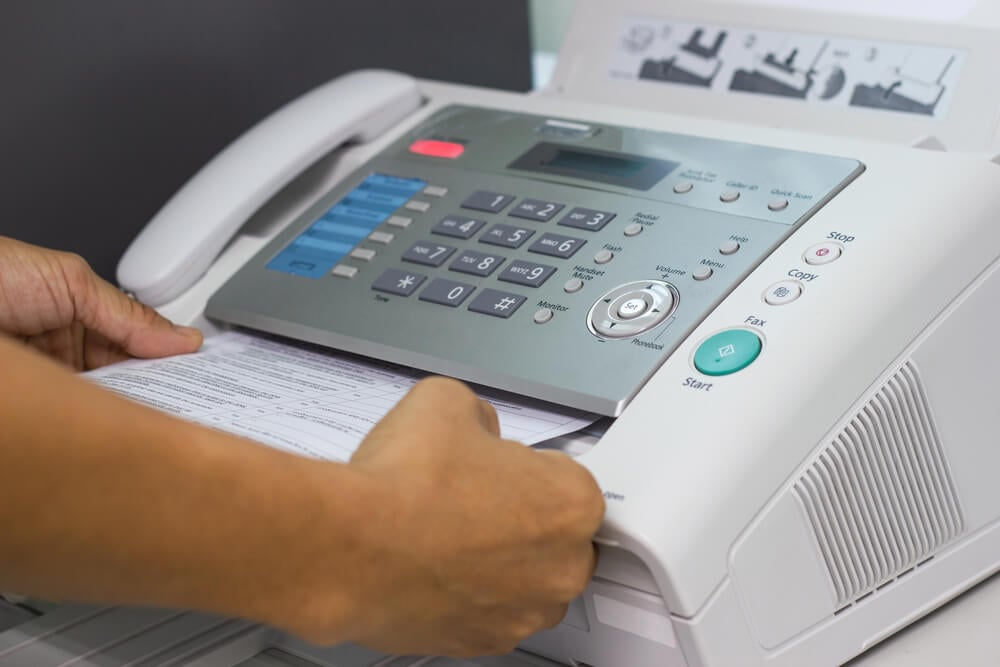
3M introduced the Thermo-Fax copier around 1950, and it made copies with heat rather than ink or liquid. A special sheet was laid over the original and passed under an infrared lamp, so the dark printing of the original absorbed heat and darkened the copy.
The results came out curled and brown, and they faded when stored in light for long periods. Teachers who needed an exact copy of a report in a hurry used it, since it took only seconds and needed no stencils.
The Addressograph and Its Trays of Metal Plates
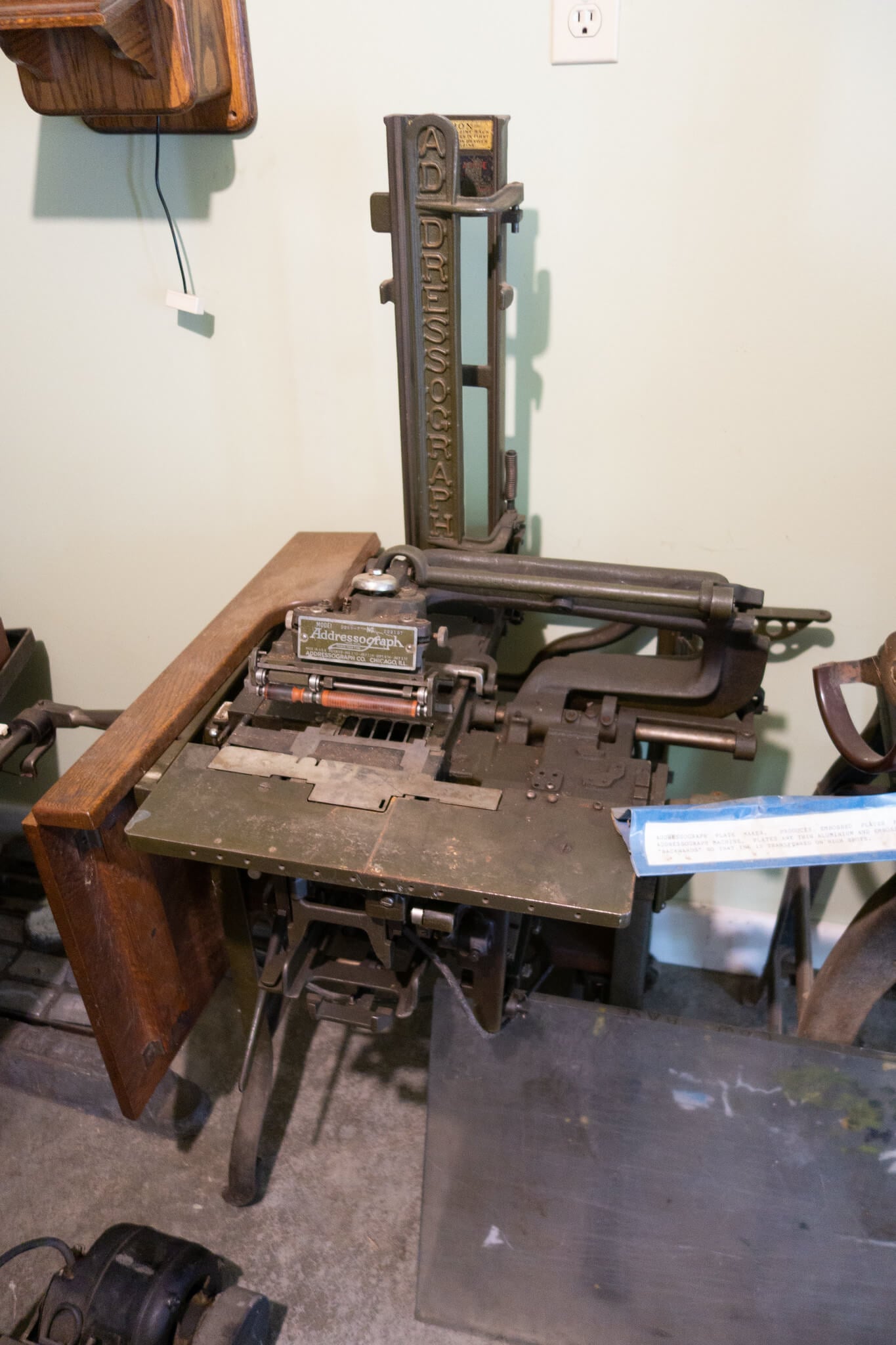
The Addressograph stored a mailing list as embossed metal plates, one plate per name, kept in long drawers. Pressed against an inked ribbon, each plate stamped an address onto an envelope or label with a thump of the handle.
A school used them for parent newsletters, alumni mailings, and fundraising appeals, and a family that moved meant a new plate had to be cut. Clerks could address envelopes at a speed that no handwritten method could match.
The Punched Card That Said Do Not Fold
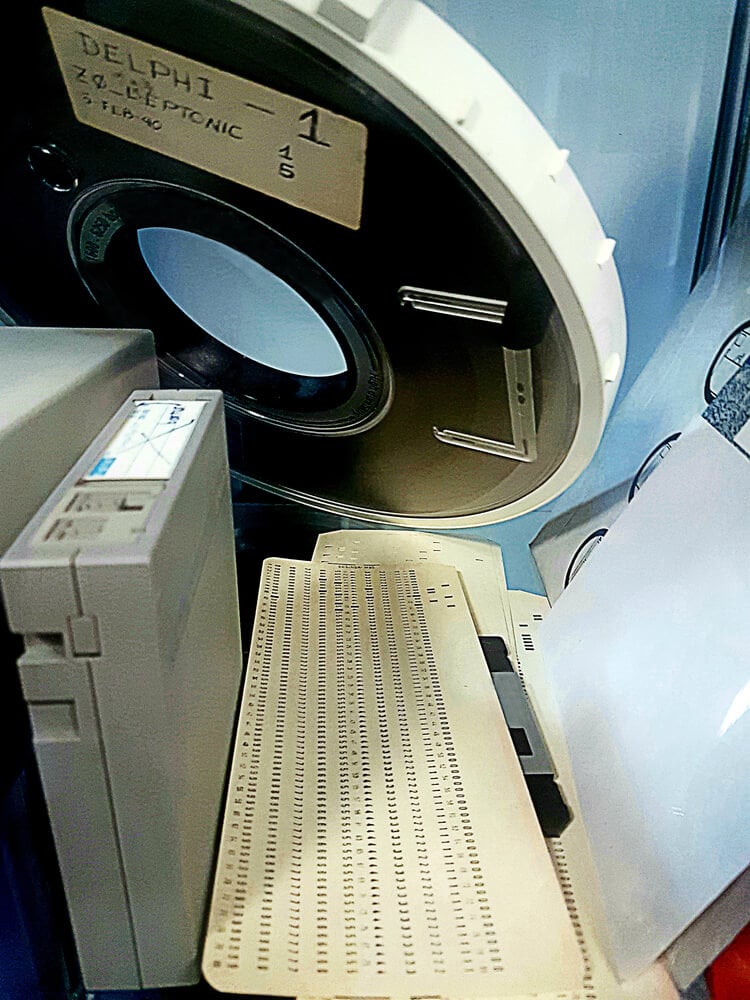
Herman Hollerith used punched cards to tabulate the 1890 census, and the standard IBM card adopted in 1928 held eighty columns of data. Some districts later used these cards for student schedules and grade records, feeding them through sorting machines that clattered like rain on a metal roof.
A famous warning printed on many cards said not to fold, spindle, or mutilate them, and the phrase outlived the cards themselves. A dropped box of cards could scramble an entire grade level’s data until someone put the stack back in order by hand.
The Pushpin on the Bulletin Board
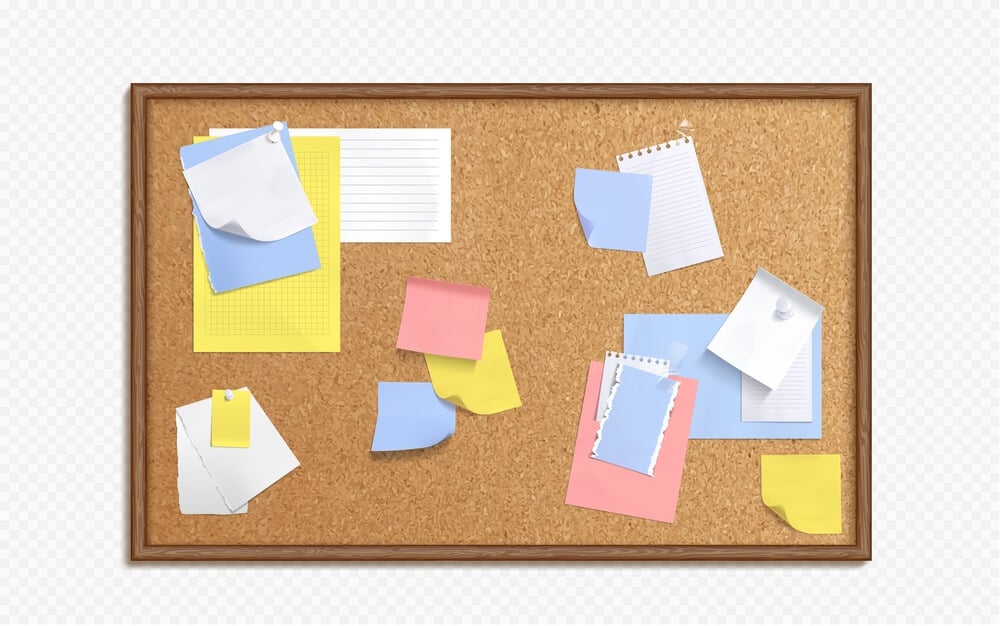
Edwin Moore of Philadelphia patented the push-pin in 1900, listing it in United States Patent 654,319. The device replaced tacks that needed a hammer or a bruised thumb.
School offices used pushpins to anchor bus routes, substitute lists, and fire drill schedules to corkboard walls. Each pin left a small puncture, so a heavily used board ended up with a record of every notice that had ever hung there.
The Waterman Fountain Pen at the Registrar’s Desk
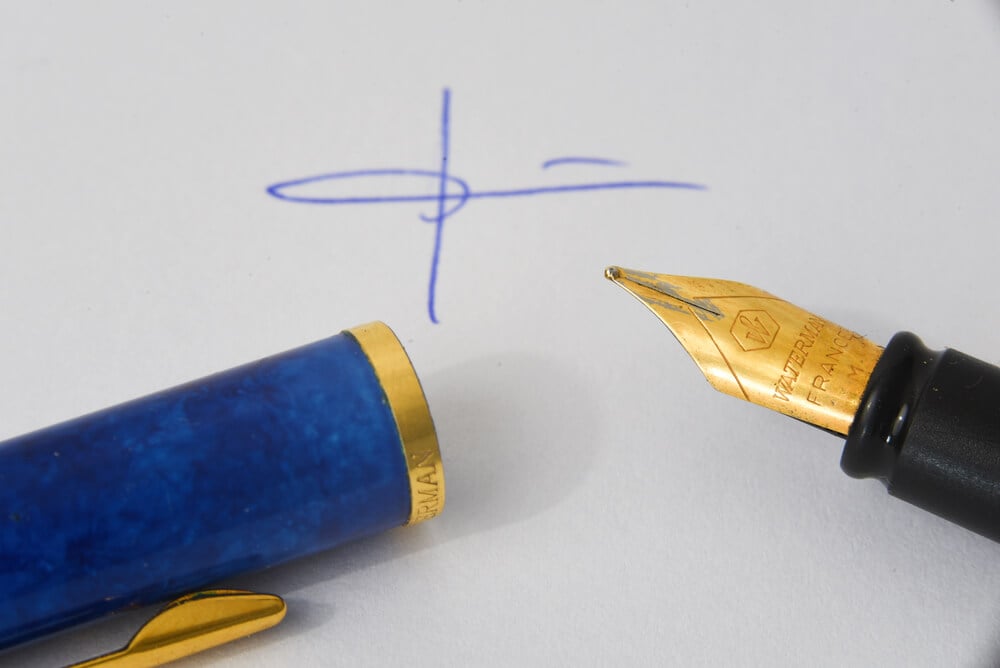
Lewis Waterman, an insurance broker, patented his improved fountain pen in 1884 with a feed that regulated ink flow through capillary action. Earlier pens often leaked or blotted, which is not ideal for official paperwork.
Registrars and principals used fountain pens to sign diplomas, enrollment papers, and teacher contracts. A well-kept pen made handwriting look permanent, and that was the point of the entire exercise.
The Cord Switchboard at the Front Desk
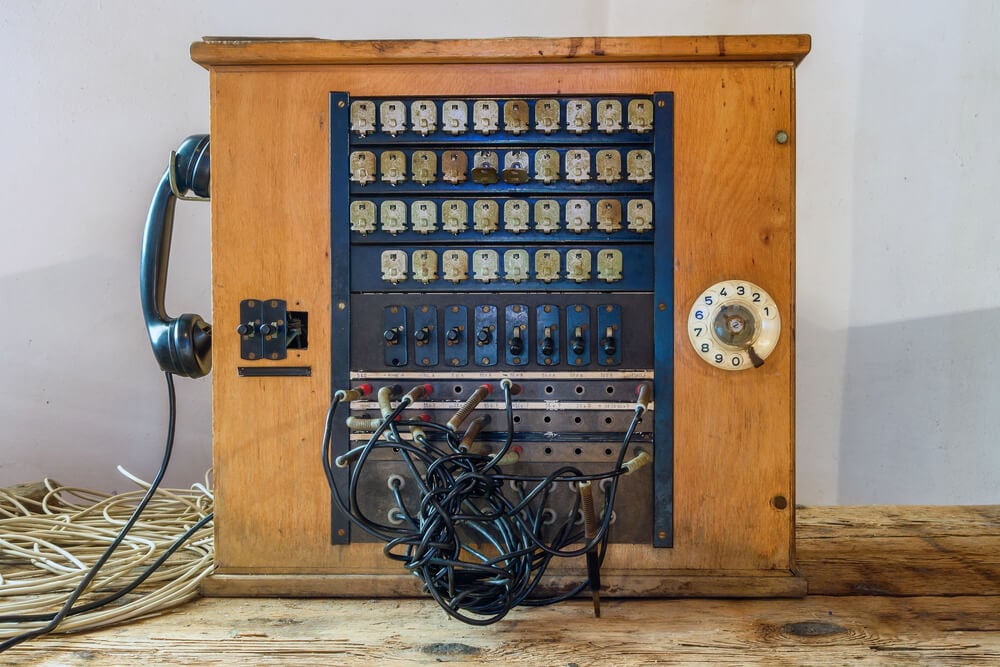
In January 1878, New Haven, Connecticut, opened a commercial telephone exchange with 21 subscribers, and the cord-and-plug switchboard soon spread. A large school or district office could install a small one, where a staff member pushed plugs into jacks to link a caller with an extension.
The operator had to know every extension by heart and recognize every voice. A parent who needed the nurse and a bus driver who needed dispatch both waited on one patient person with a headset.
The Strowger Dial Telephone That Cut Out the Operator
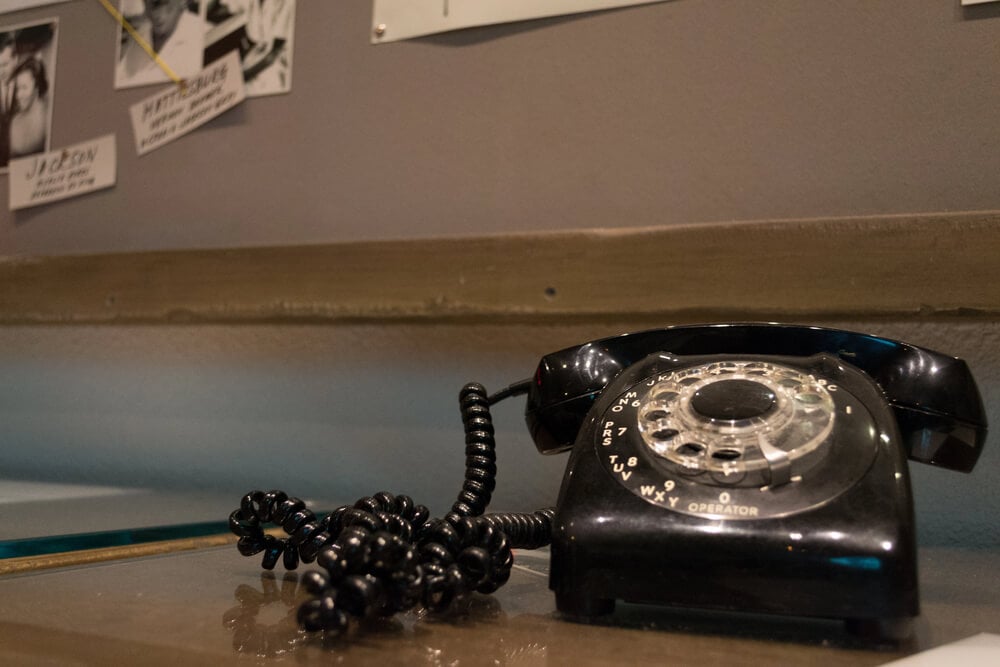
Almon Strowger, a Kansas City undertaker, patented an automatic telephone exchange in 1891 after suspecting that an operator was sending his business calls to a competitor. His system let a caller choose a number without human help, and the dial telephone followed.
School offices eventually replaced switchboard operators with direct-dial extensions, and the rotary dial became a familiar fixture on administrators’ desks. Dialing a long number took patience, since each digit had to spin back to its resting place before the next one could begin.
The Dictaphone and Its Wax Cylinders
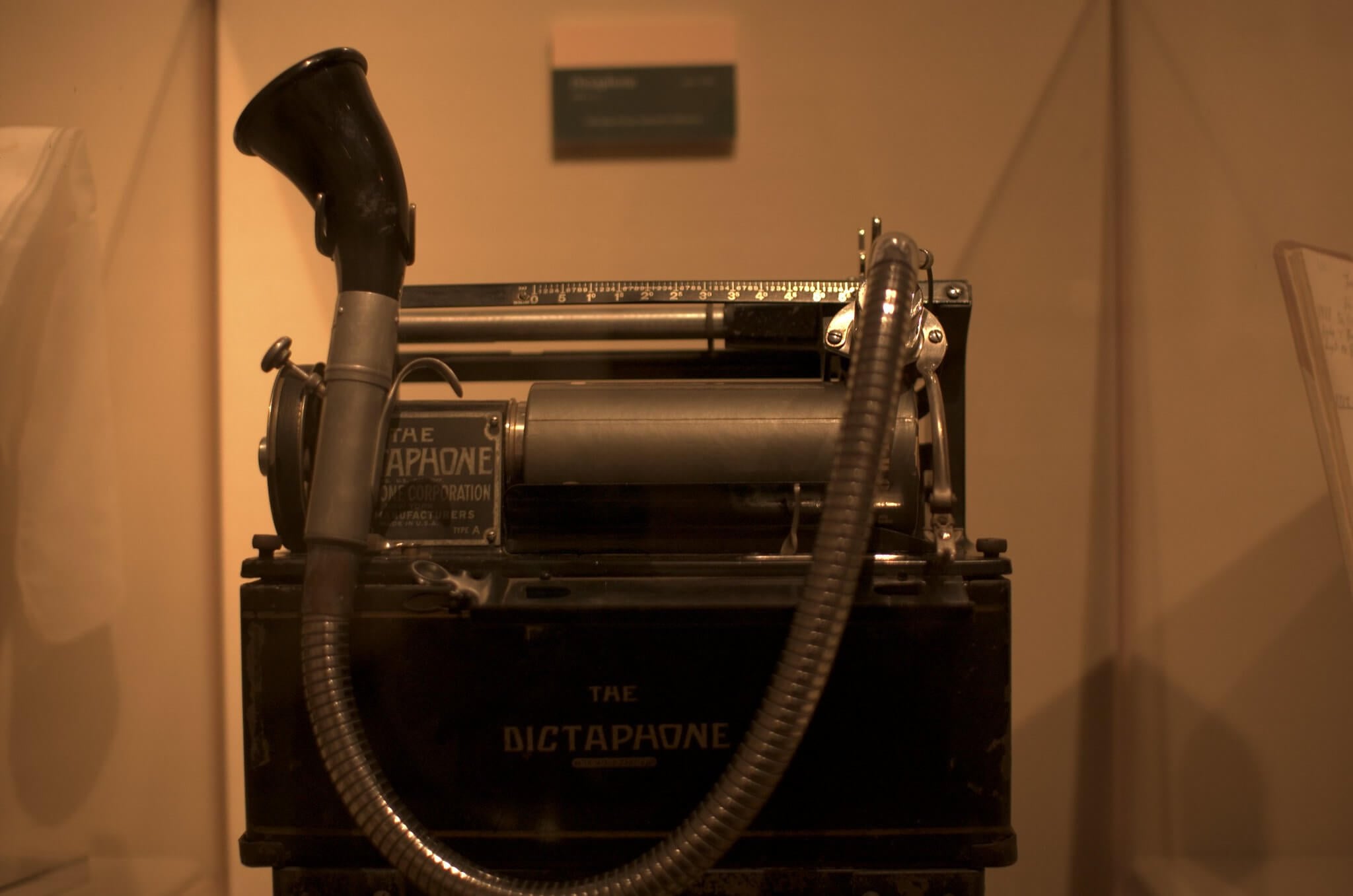
Columbia Graphophone trademarked the Dictaphone name in 1907, and early machines recorded dictation on wax cylinders that could be shaved smooth and reused. A principal could speak a letter to a parent into a microphone, and a secretary then typed it from the recording while wearing earphones.
Later models moved to belts and magnetic tape, though the task remained the same. The device spared busy administrators from waiting for a stenographer to appear.
The Microfilm Reader in the Records Room
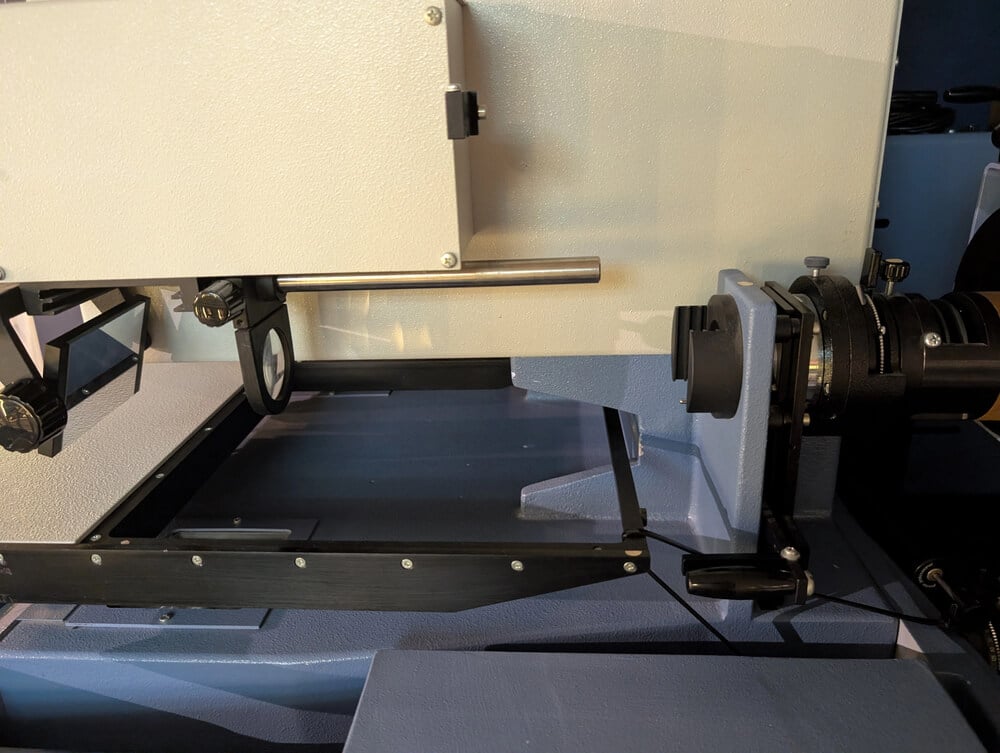
John Benjamin Dancer, an English instrument maker, made microphotographs as early as 1839, and the technique eventually produced the microfilm that filled office archives. A school district could photograph decades of transcripts onto small reels or fiche cards and discard the original paper.
A reader enlarged the tiny image on a screen, and a former student who needed an old transcript might wait while the clerk cranked through the reel. Records that once required an entire room of cabinets fit into a single drawer.
The Vertical File Cabinet
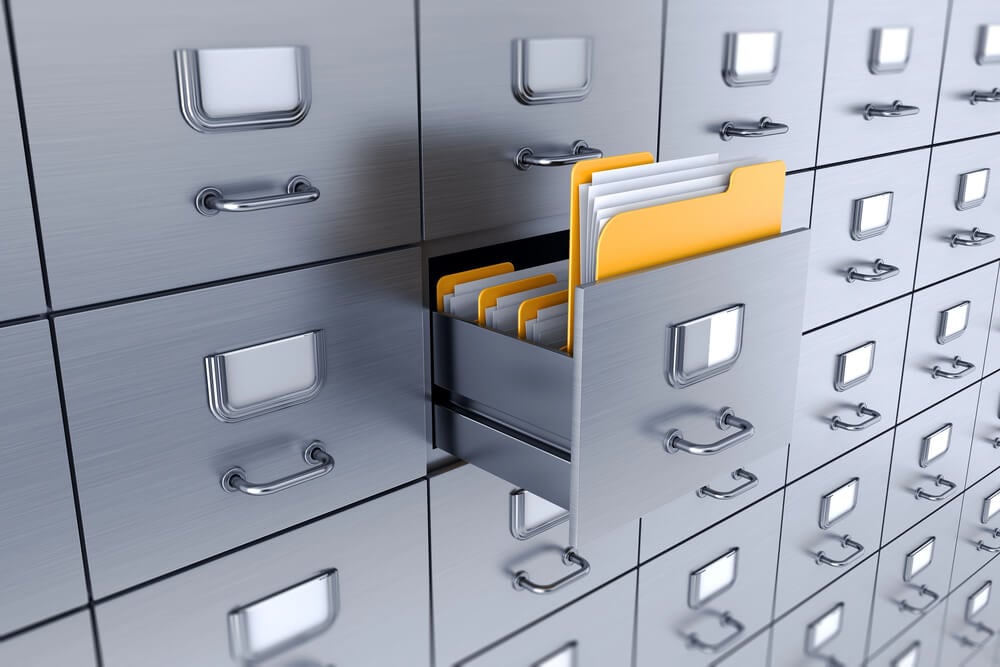
Melvil Dewey’s Library Bureau showed a vertical filing system at the 1893 World’s Columbian Exposition in Chicago, and offices began to move from flat bins to upright drawers. Folders stood on edge, labeled by tab, so a clerk could find a student’s file without unfolding sheets.
The heavy metal cabinets, often olive green or gray, lined school office walls for generations. A drawer left open too long was a hazard, and most school secretaries could point to a sprained shin as proof.
The Cash Register Collecting Lunch Money
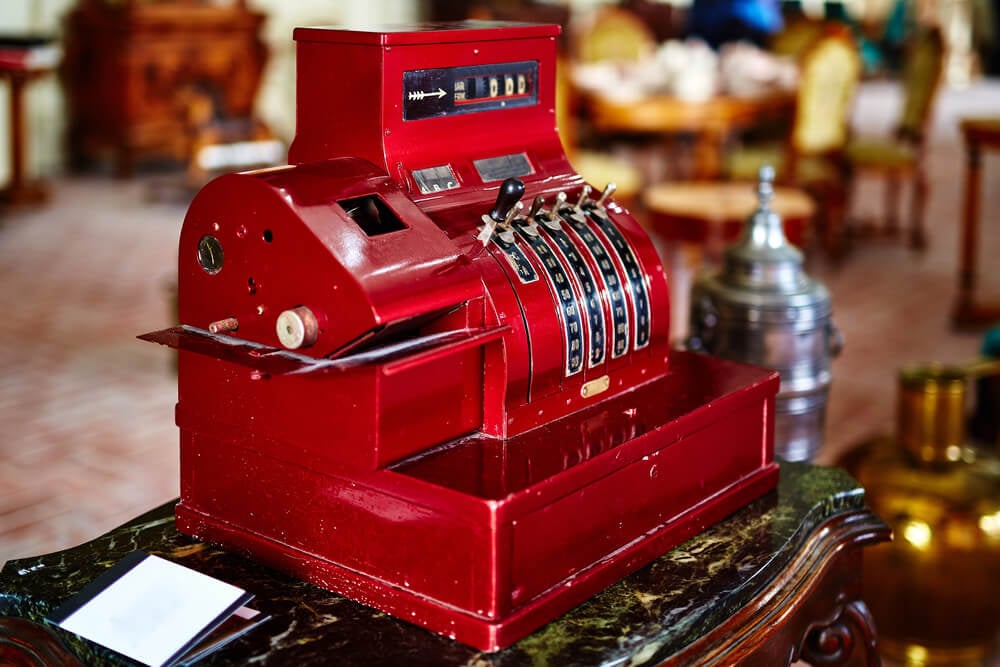
James Ritty, a saloon owner in Dayton, Ohio, built the first cash register in 1879 and named it Ritty’s Incorruptible Cashier, after he saw a device on a steamship that counted the turns of its propeller. The register recorded each sale and rang a bell, which made it harder for a clerk to pocket money unnoticed.
Schools adopted the same logic for cafeteria sales, yearbook payments, and school-store purchases. The sound of the drawer snapping open was the signal that the day’s fees were being tallied.
The Steno Pad and Gregg Shorthand

John Robert Gregg published his shorthand system in Liverpool in 1888, building his symbols from the curves of ordinary handwriting rather than from angular strokes. Secretaries took notes at the principal’s meetings and board discussions on spiral steno pads that flipped open from the top.
The narrow ruled page with a center line suited the quick vertical movement of shorthand. A trained writer could take down speech faster than most people could talk, then turn the curls into polished minutes.
The Wall-Mounted Pencil Sharpener
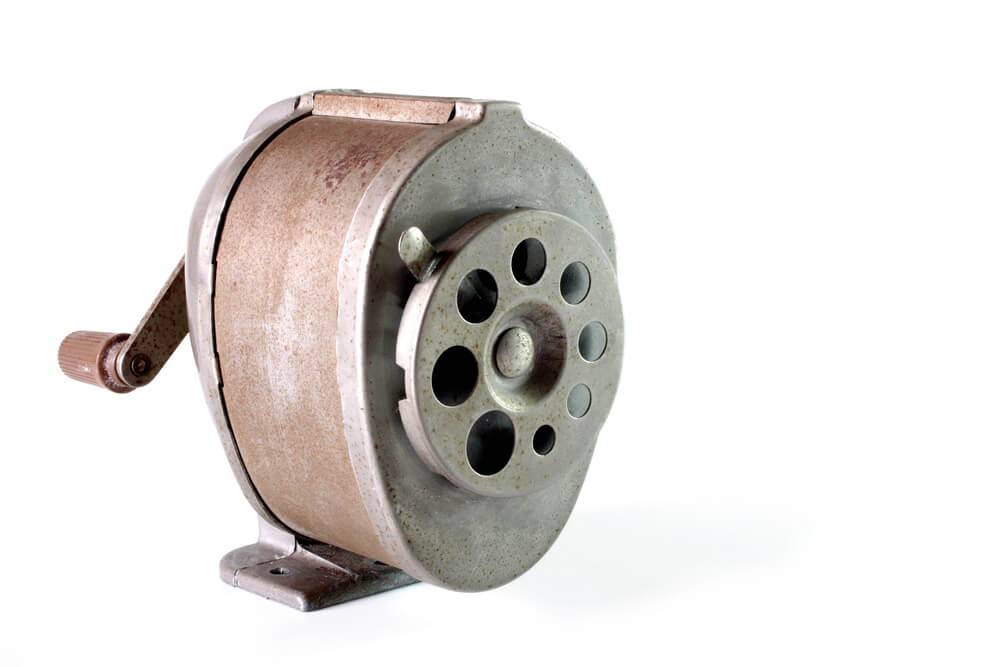
Bernard Lassimonne, a French mathematician, received a patent for a pencil sharpener in 1828, and cranking sharpeners eventually became standard equipment in schools. A pencil fed into the opening was cut by rotating cutters as the handle turned.
The office version usually bolted to a wall or a counter and handled a steady stream of pencils for forms and attendance sheets. Students lined up before the bell to grind their pencils into points, filling a tray that someone had to empty before it overflowed.
The Cumulative Record Folder in the Counselor’s Cabinet
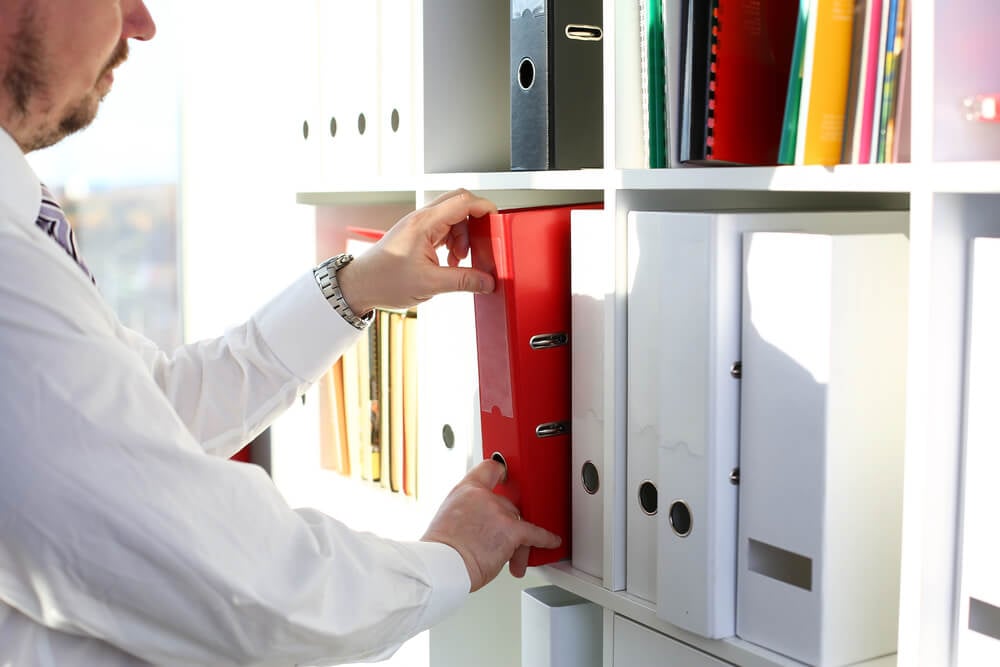
Students’ grades, attendance, test scores, health notes, and teacher comments were once collected in a manila folder that followed a child from grade to grade. The Family Educational Rights and Privacy Act of 1974 gave parents the right to inspect those folders, and offices that had treated them as private changed how they handled the contents.
Some teachers had written remarks in the margins that they now wished had been left unsaid. The folder was the single place where a child’s school history lived in full.
The Weight of Paper Memory
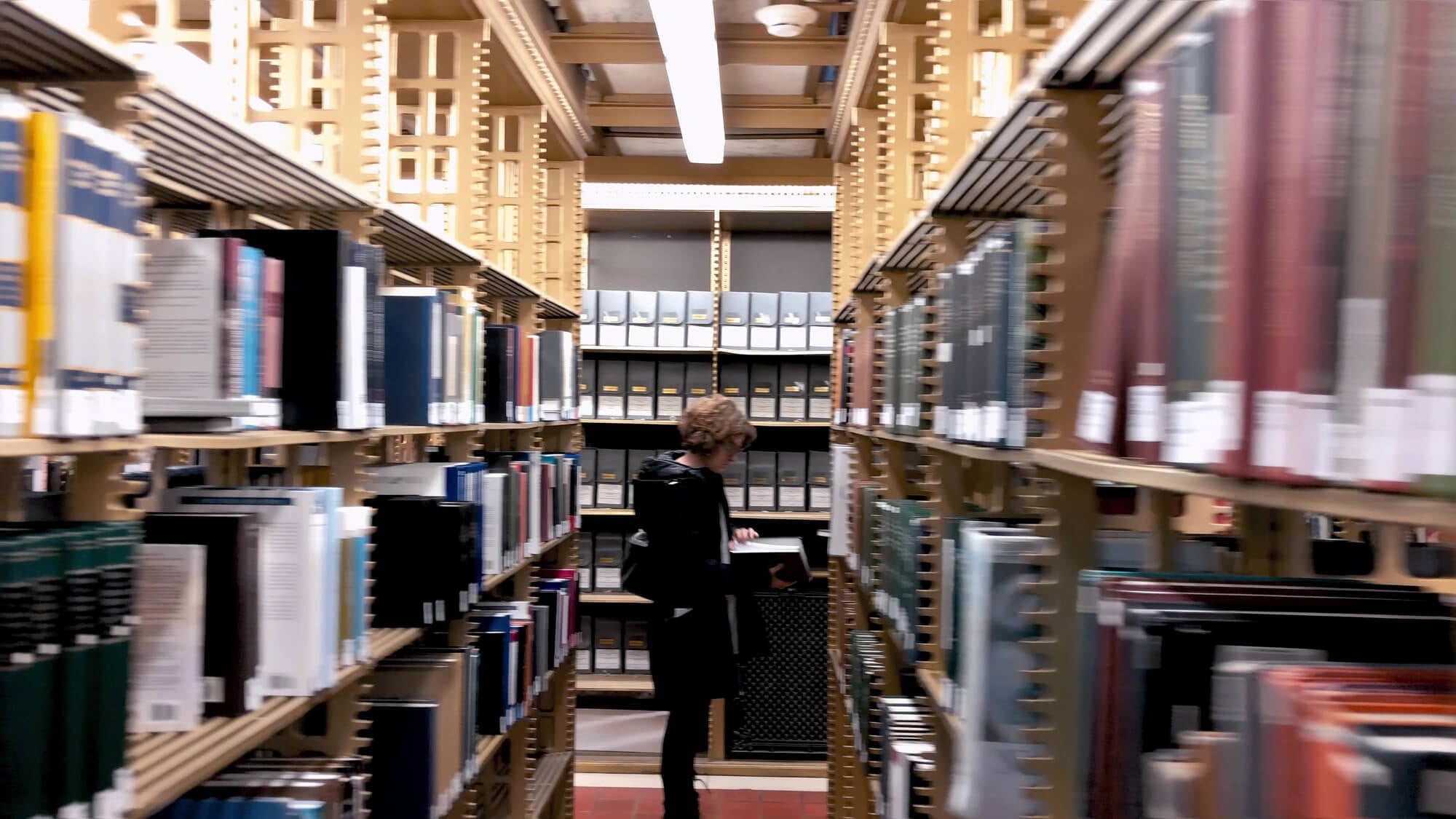
Every object on this list solved one problem and created another. Duplicators made copies but demanded patience, typewriters produced clean pages but could not take back a mistake, and file cabinets stored records but needed a person who knew where everything went.
School offices worked because someone learned the quirks of each machine and made them behave. Computers did not invent the idea of organizing a school’s information.
They removed the physical effort, the smell of the fluid, the carbon on the fingers, and the thump of the plate. What disappeared with them was a kind of craftsmanship, the quiet expertise of the person at the front desk who could find any record in a minute without a search bar.
More from Go2Tutors!

- 27 Silver Dollars and Half Dollars Worth Keeping
- 28 Restaurant Menu Items Nobody Orders Anymore
- 17 Places Built in Seemingly Impossible Spots
- 27 Vintage Rings Worth More Than They Look
- 25 Restricted Sites Tourists Can’t Enter
Like Go2Tutors’s content? Follow us on MSN.