28 Monuments Around the World Dedicated to Animals That Changed History
Throughout human history, certain animals have stepped beyond their biological roles to become symbols, heroes, and catalysts for profound change. Some led armies to victory, others sparked scientific breakthroughs that reshaped how we understand the world, and many simply touched hearts in ways that rippled across generations.
What strikes you most about these stories isn’t just the extraordinary nature of what these creatures accomplished, but how humans chose to remember them — not with fleeting headlines or temporary fame, but with permanent monuments built from stone, bronze, and something that looks a great deal like gratitude.
These memorials stand as testaments to moments when the boundary between human and animal blurred, revealing bonds that transcended species and, in some cases, altered the course of history. From a pigeon who saved lives during the bloodiest offensive of the First World War to a sheep who changed medicine forever, each monument tells a story worth preserving in marble and memory.
Greyfriars Bobby
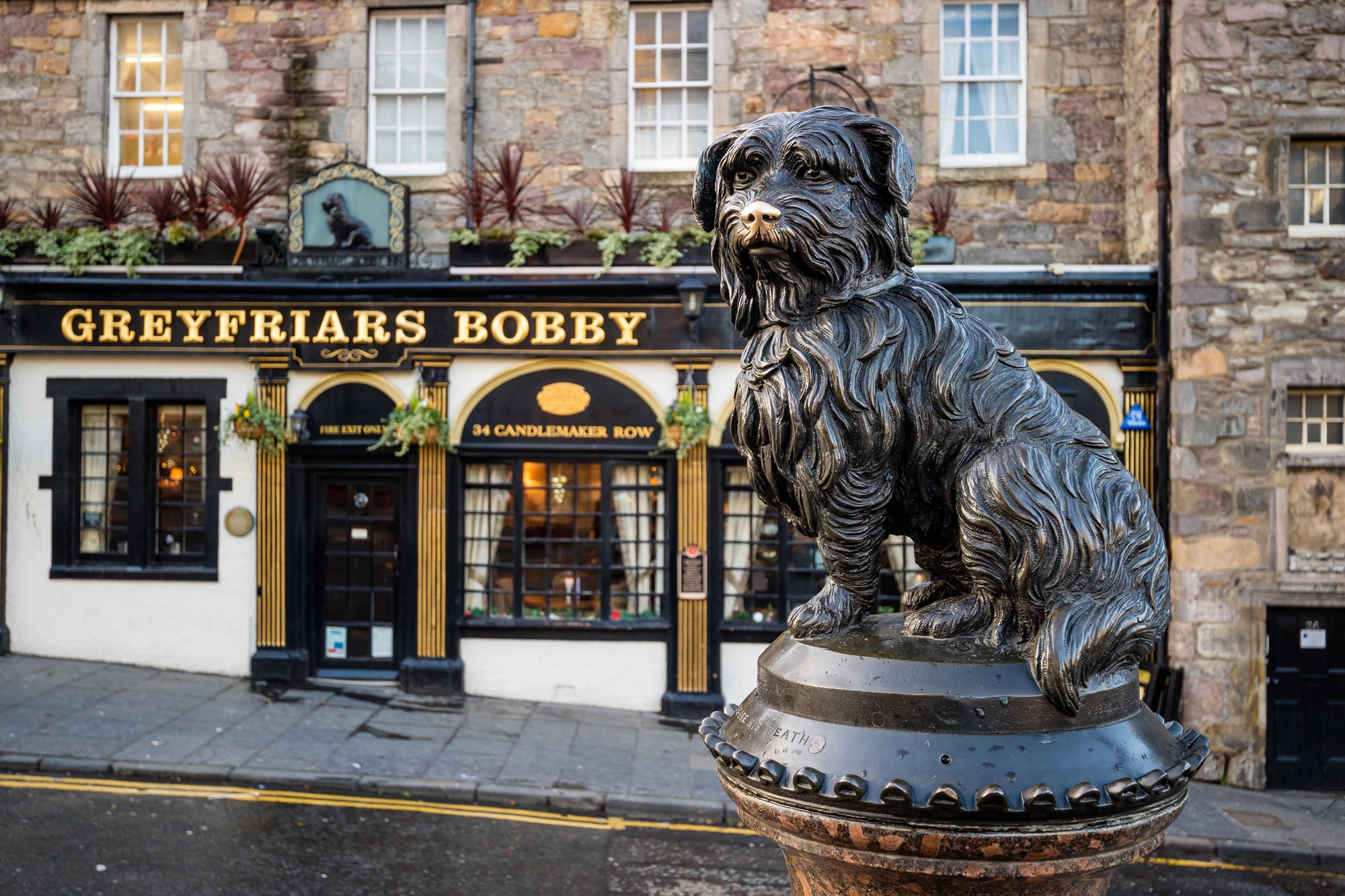
A small Skye Terrier in Edinburgh refused to accept that death meant goodbye. Bobby spent fourteen years guarding his master’s grave in Greyfriars Kirkyard, leaving only briefly each day for food.
The city fed him. Strangers brought him shelter.
His devotion became legend.
The bronze statue near the kirkyard captures something unmistakable about loyalty — the kind that doesn’t calculate cost or question purpose. Bobby’s story spread far beyond Scotland because it revealed something people needed to believe: that love, even from a small dog, can be absolute.
Balto
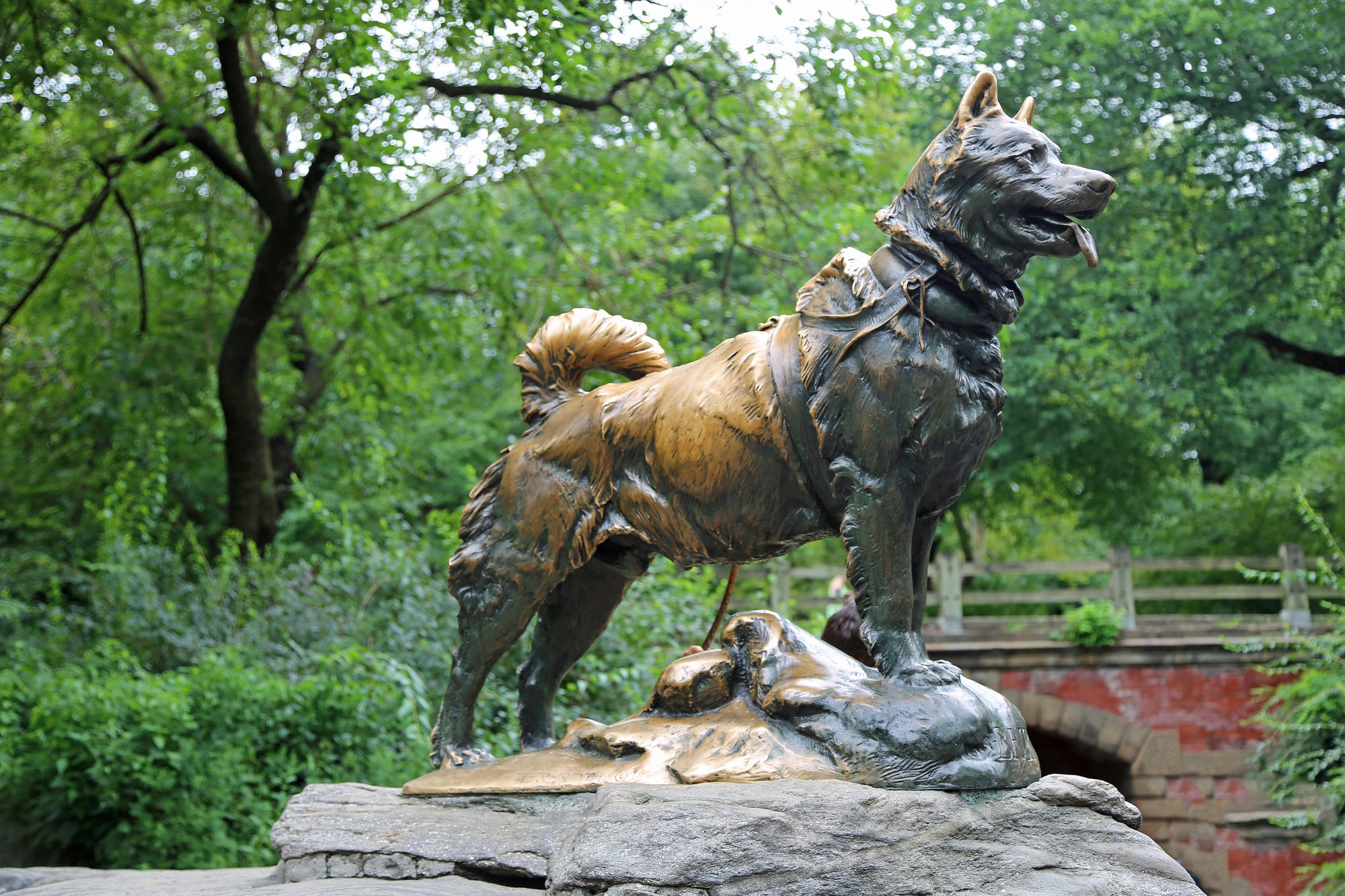
The 1925 diphtheria outbreak in Nome, Alaska, required a medicine run that no human could complete alone. Balto, a black Siberian Husky, led the final leg of a relay that covered over 600 miles of brutal Arctic terrain to deliver the antitoxin in time.
Children’s lives hung in the balance. Balto delivered.
His bronze statue in New York’s Central Park bears the inscription “Endurance, Fidelity, Intelligence.” These aren’t just words carved in metal — they’re the qualities that turned a working dog into a symbol of what’s possible when courage meets necessity.
The statue’s placement in Manhattan, so far from the Alaskan wilderness where the heroism actually happened, suggests something else: that some stories demand to be told wherever people gather, regardless of geography.
Hachiko
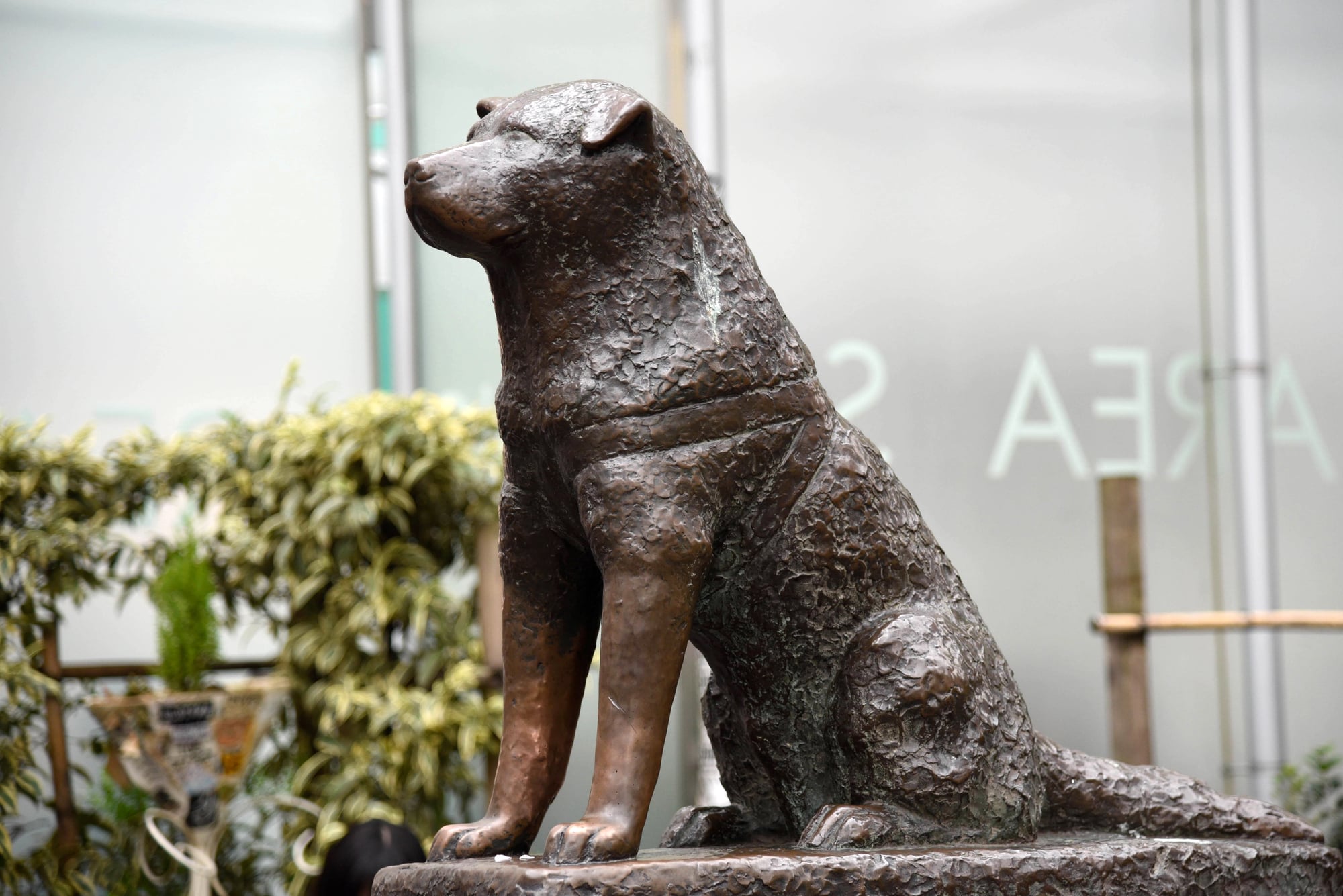
Train schedules meant everything to Hachiko. Every day, the Akita waited at Shibuya Station for Professor Hidesaburo Ueno’s return from the University of Tokyo.
When the professor died suddenly at work in 1925, Hachiko kept his appointment anyway. For nearly ten years, he maintained his vigil at the station, becoming a living symbol of faithfulness that Japan held onto during turbulent times.
The bronze statue at Shibuya Station isn’t just a memorial — it’s a meeting point where millions arrange to find each other. So Hachiko still brings people together.
Still serves his purpose.
The irony is almost too perfect to be accidental.
Cher Ami
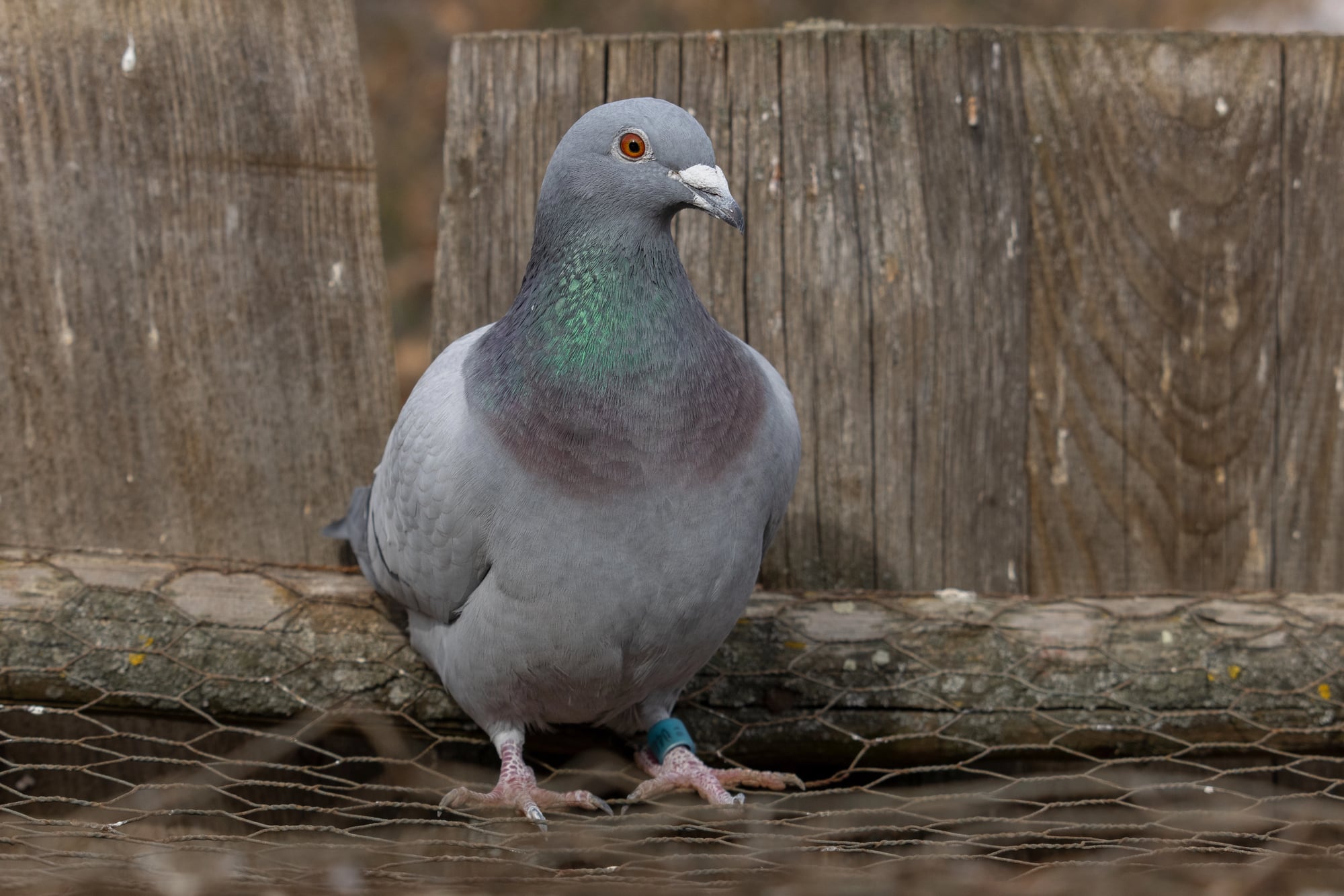
Carrier pigeons saved more lives in World War I than most generals ever acknowledged, but Cher Ami earned special recognition for refusing to quit when quitting would have been understandable. Shot through the chest with a leg nearly severed, the pigeon still delivered the message that stopped friendly artillery fire from killing the survivors of the Lost Battalion — roughly 194 American soldiers trapped in the Argonne Forest in October 1918.
The mounted bird at the Smithsonian Institution represents something specific about wartime heroism: it’s often small, overlooked, and more determined than circumstances suggest it should be. Cher Ami proved that courage doesn’t require understanding the big picture, just completing the mission at hand.
Laika
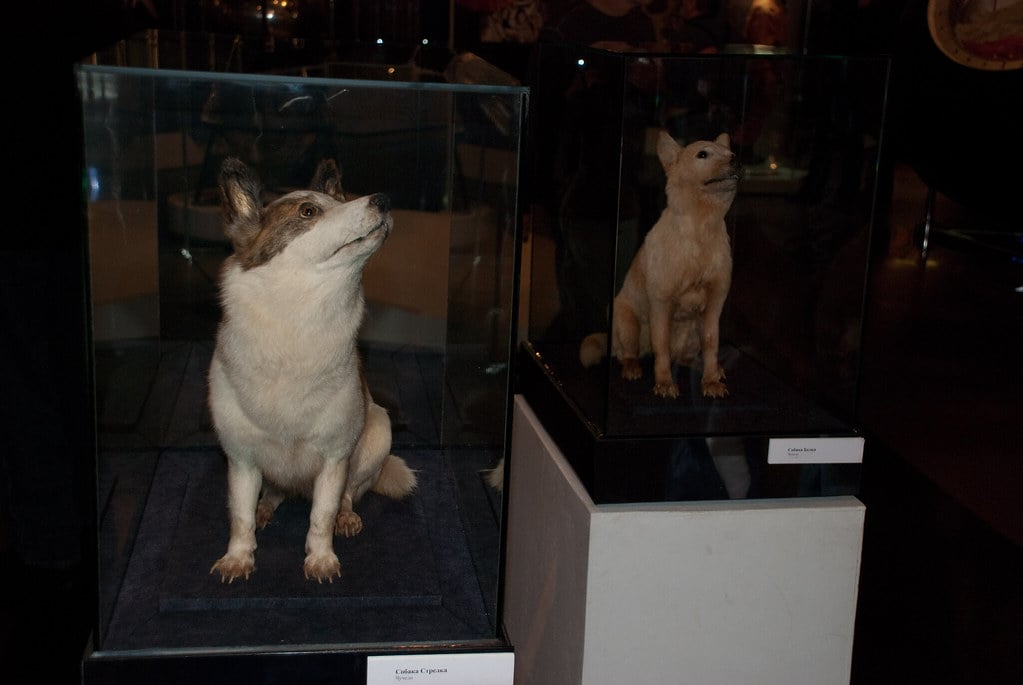
Space exploration required a test pilot, and the Soviet Union chose a stray dog from Moscow’s streets. Laika became the first animal to orbit Earth aboard Sputnik 2 in November 1957, though the mission was always intended to be one-way.
Her flight provided crucial data about whether living organisms could survive the conditions of spaceflight, opening the path that eventually led to human missions.
Monuments to Laika exist in Moscow and beyond — some celebrating her contribution to science, others mourning the loss of an innocent life in the service of human ambition. The bronze statue near the military research facility where she trained shows her looking upward, as if still watching the sky she helped humans reach.
Whether that expression reads as hope or accusation probably depends on how you think about the choices that put her there.
Wojtek
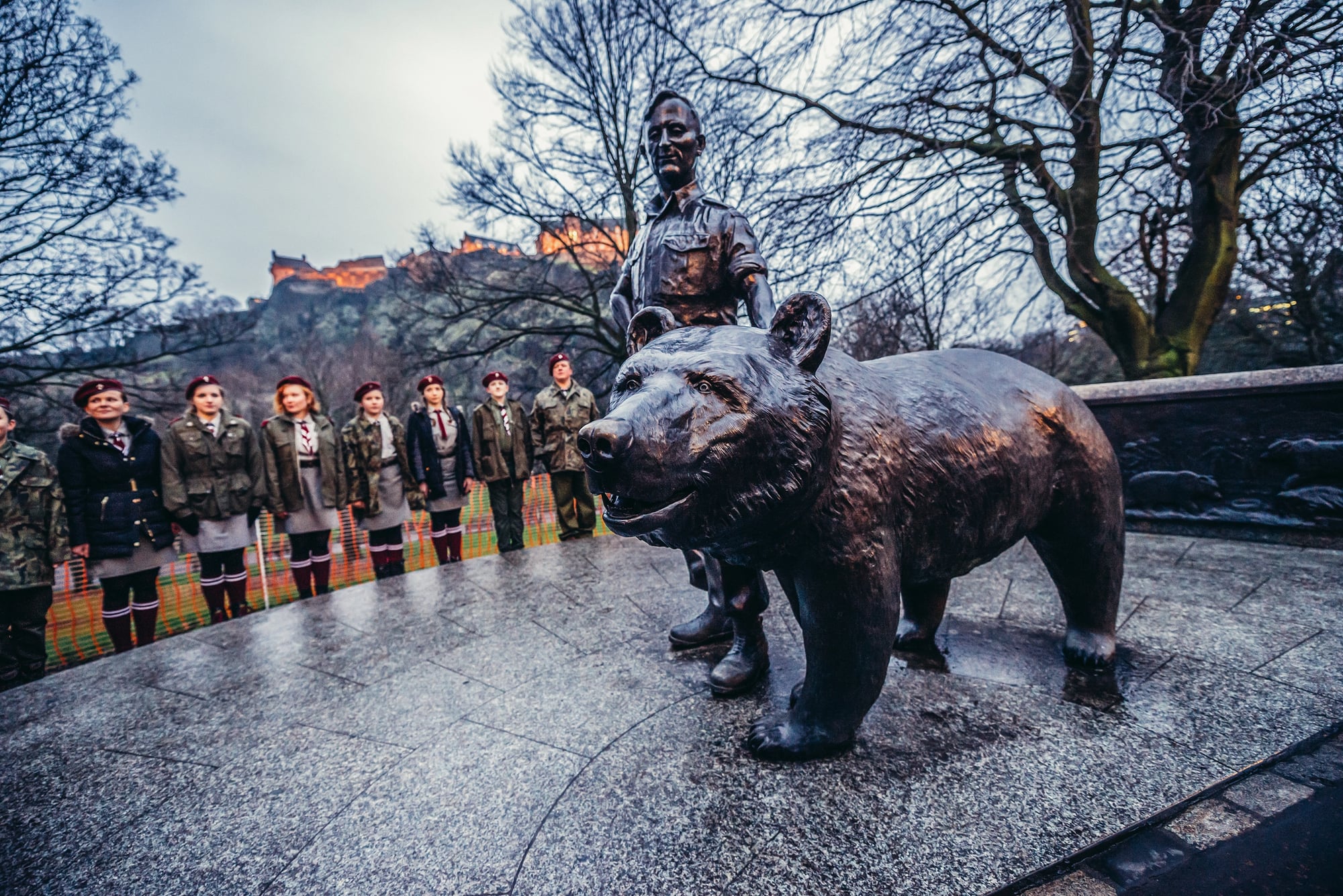
World War II created unlikely soldiers, but none stranger than Wojtek, a Syrian brown bear who served with the Polish 22nd Artillery Supply Company. Adopted as a cub in Iran in 1943, Wojtek learned to carry artillery shells during the Battle of Monte Cassino in 1944.
His military service was official — the bear received a rank, serial number, and paybook as a private in the Polish Army.
The statue in Edinburgh’s Princes Street Gardens shows Wojtek carrying a shell, but there’s something almost gentle in his posture that suggests the monument-makers understood the contradiction at the heart of his story. Here was a creature built for wilderness, trained for war, remembered for the humanity he somehow retained despite both.
The memorial doesn’t try to resolve that contradiction — just acknowledges it.
Dolly The Sheep
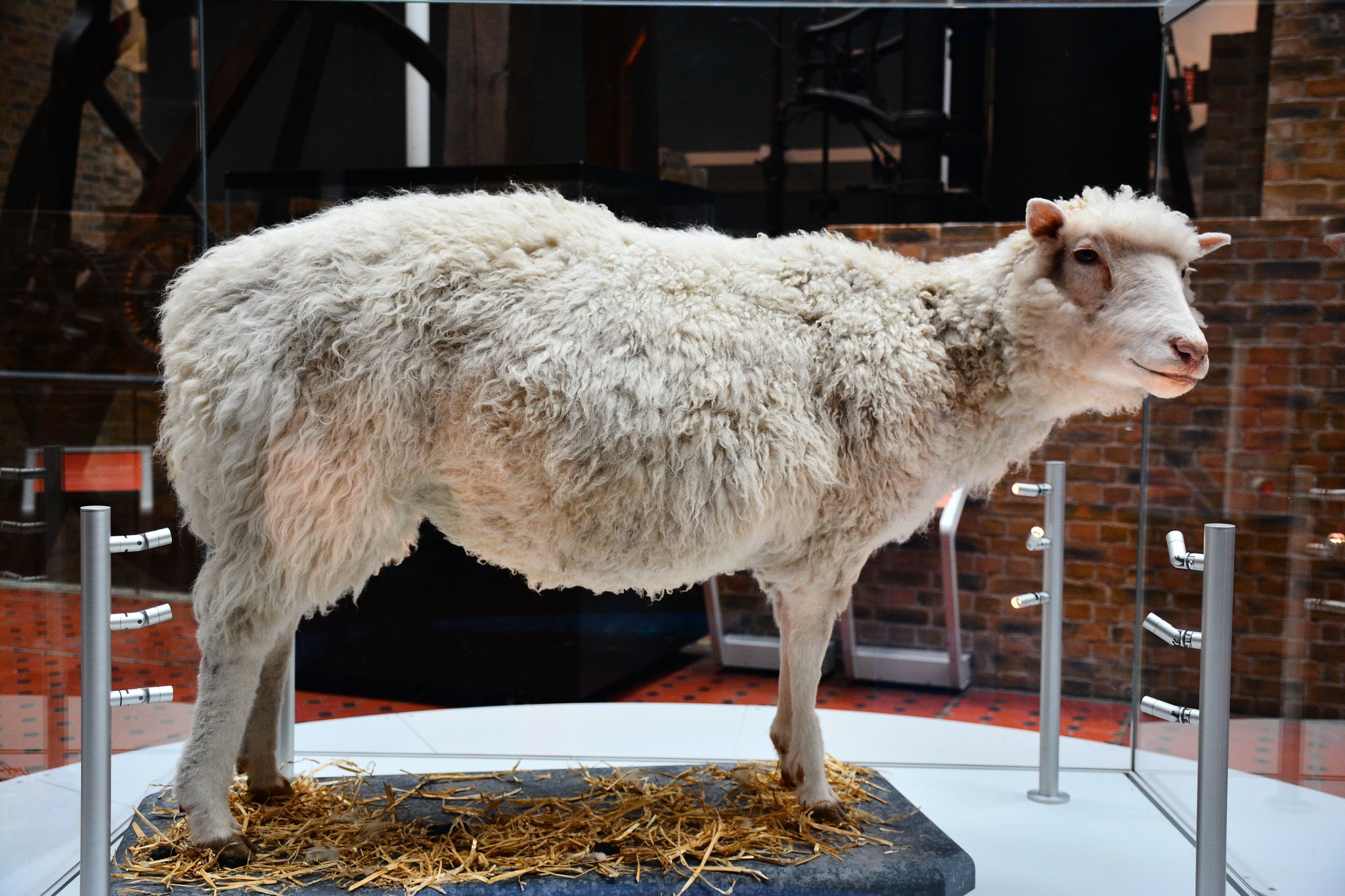
Scientific breakthroughs often happen in laboratories far from public view, but Dolly’s birth at the Roslin Institute near Edinburgh in 1996 changed how the world thought about life itself. As the first mammal successfully cloned from an adult somatic cell, she proved that the genetic blueprint of a fully developed animal could be used to create a new one — upending assumptions that had stood for decades.
Her taxidermied form on display at the National Museum of Scotland captures Dolly in a pose that seems deceptively ordinary — just a sheep. But there’s something quietly revolutionary about immortalising the animal that made biological replication seem possible.
She lived only six years, developing arthritis and lung disease that may or may not have been related to her origins. The ethics of cloning she ignited are still being argued today.
Barry
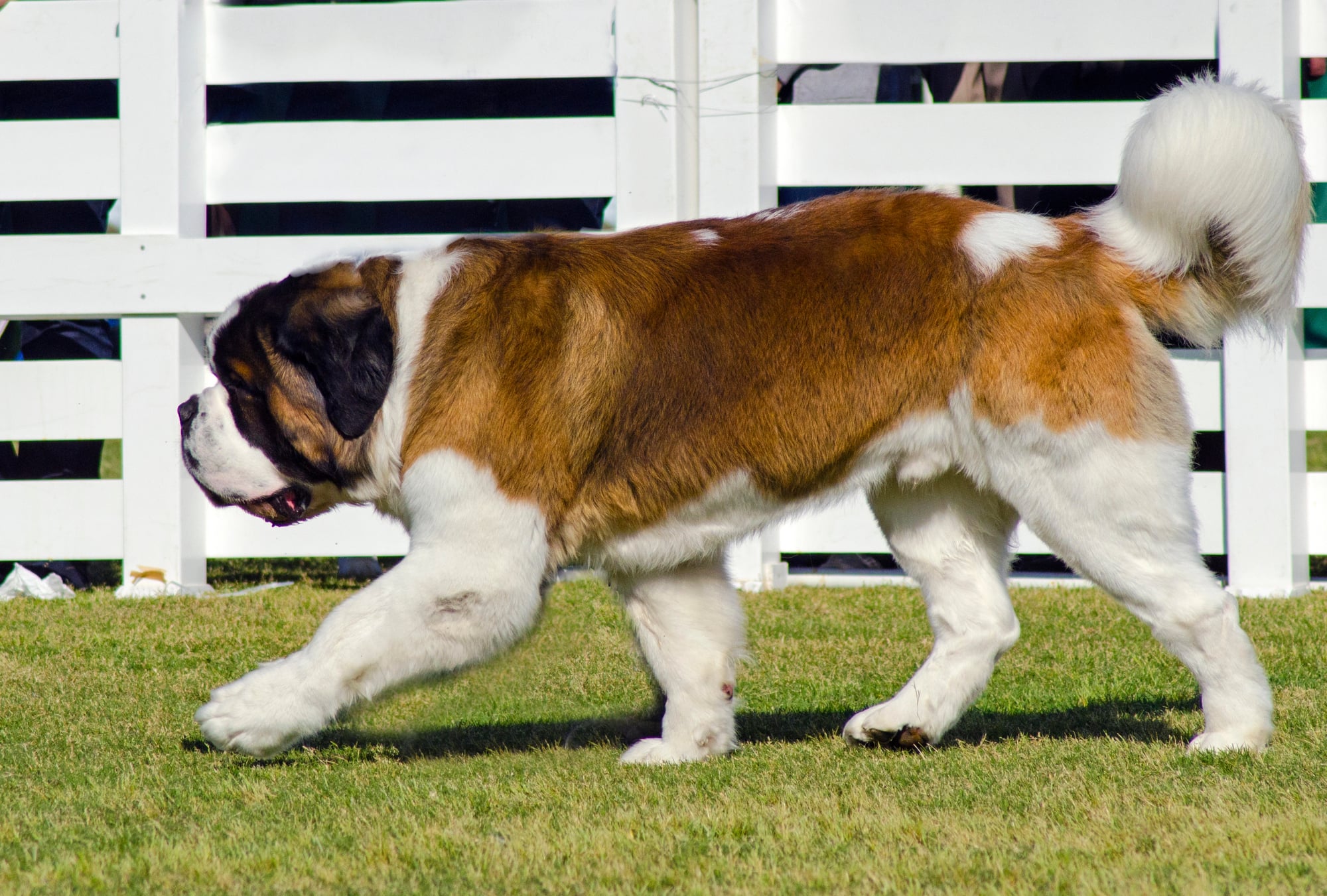
Alpine rescue requires strength, intelligence, and a particular intuition that few animals possess. Barry, a Saint Bernard working at the Great Saint Bernard Hospice in Switzerland between approximately 1800 and 1812, is credited with saving more than 40 lives in the mountain passes, locating travellers buried in avalanches and lying beside them for warmth until help arrived.
His mounted form at the Natural History Museum in Bern shows Barry alert and powerful, carrying the small barrel that became synonymous with Saint Bernard rescue dogs — though historians note the barrel is largely a later embellishment to the legend rather than standard working equipment. What the display captures isn’t just a working dog but the moment when human survival in harsh mountain terrain depended entirely on animal partnership.
Stubby
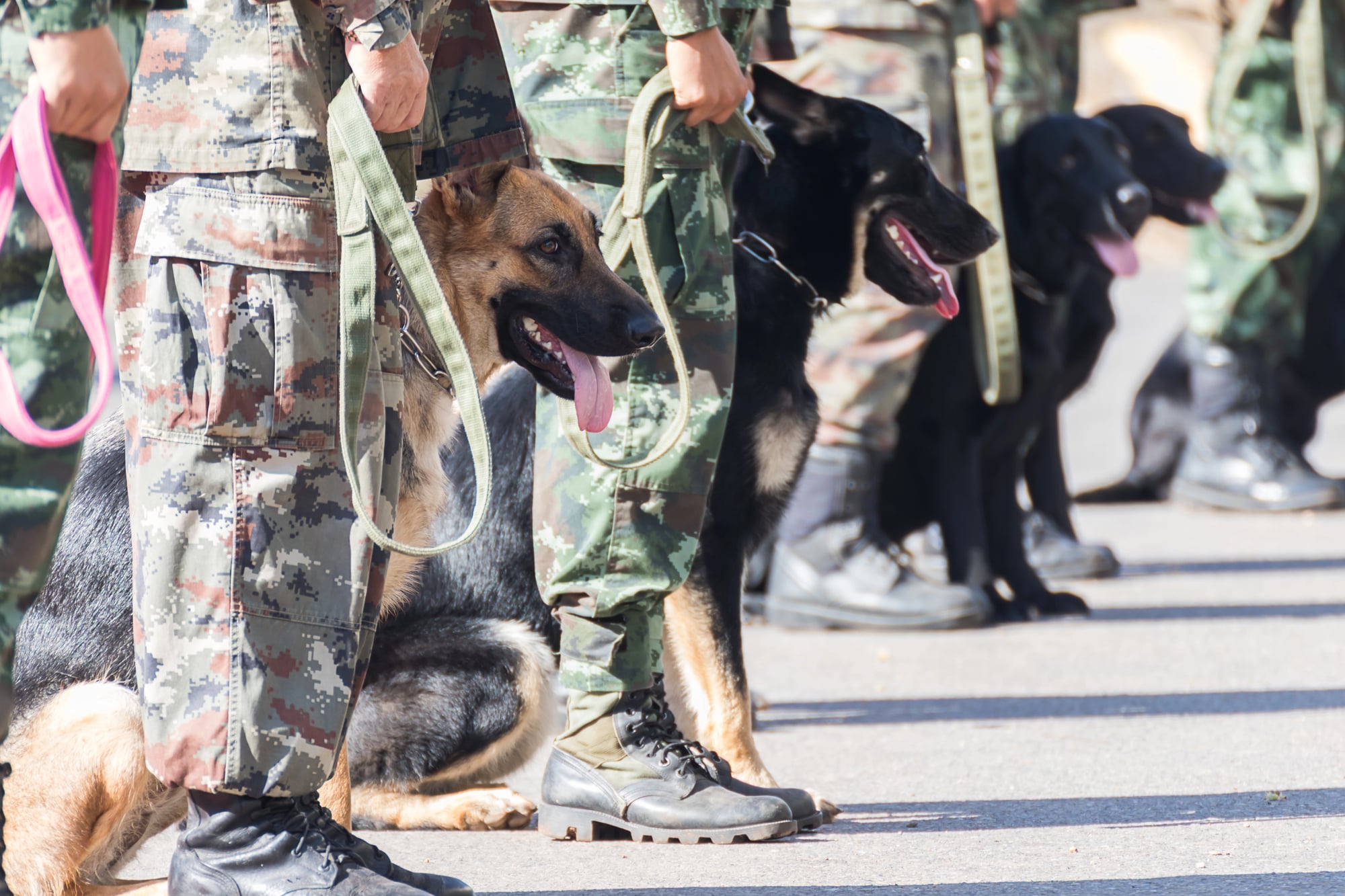
Military decorations usually go to human soldiers, but Sergeant Stubby earned his rank through battlefield performance that impressed hardened veterans. The bull terrier mix served with the 102nd Infantry Regiment in 17 engagements during World War I, detecting gas attacks before humans could smell them, locating wounded soldiers in no-man’s-land, and reportedly holding a German spy by the seat of his trousers until American troops arrived.
His display at the National Museum of American History presents Stubby wearing his decorated coat, covered with medals that tell the story of his service. The exhibit treats his military career with the same seriousness accorded to human veterans — no sentimentality, no patronising framing, just recognition that courage in combat doesn’t always come in human form.
Secretariat
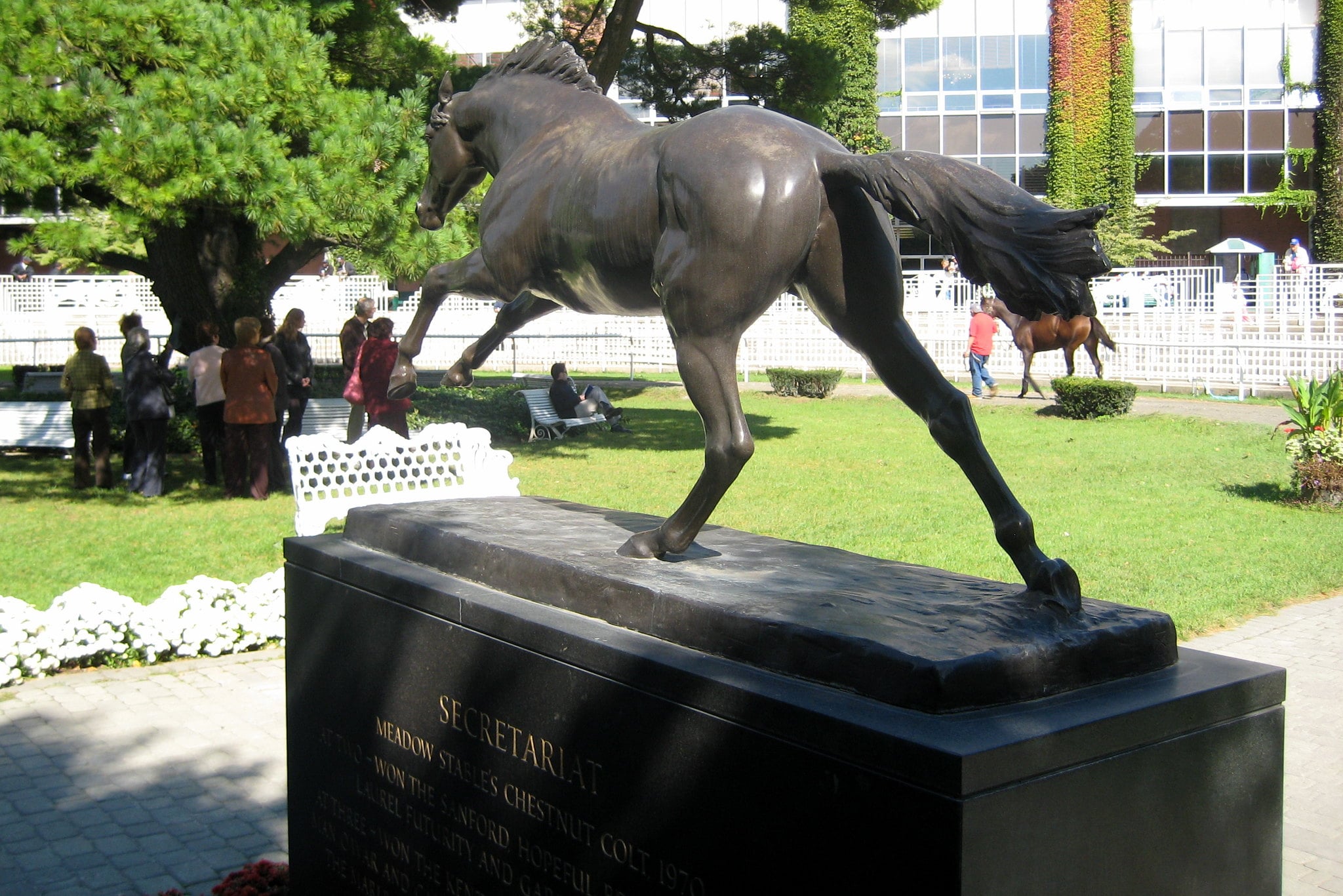
Horse racing had seen great champions before Secretariat, but none that redefined what seemed physically possible for the species. His 1973 Triple Crown victory, capped by a 31-length win at the Belmont Stakes in a track-record time that still stands, didn’t just dominate a race — it obliterated the field so completely that observers struggled to find comparisons.
The statue at Belmont Park captures him in full stride, muscles extended, hooves barely touching the ground. It’s a monument to speed itself, but also to the kind of athletic transcendence that happens maybe once in a generation.
For those few months in 1973, horse racing captivated people who had never cared about it before, simply because they wanted to witness what perfect looked like.
Alex The African Grey Parrot
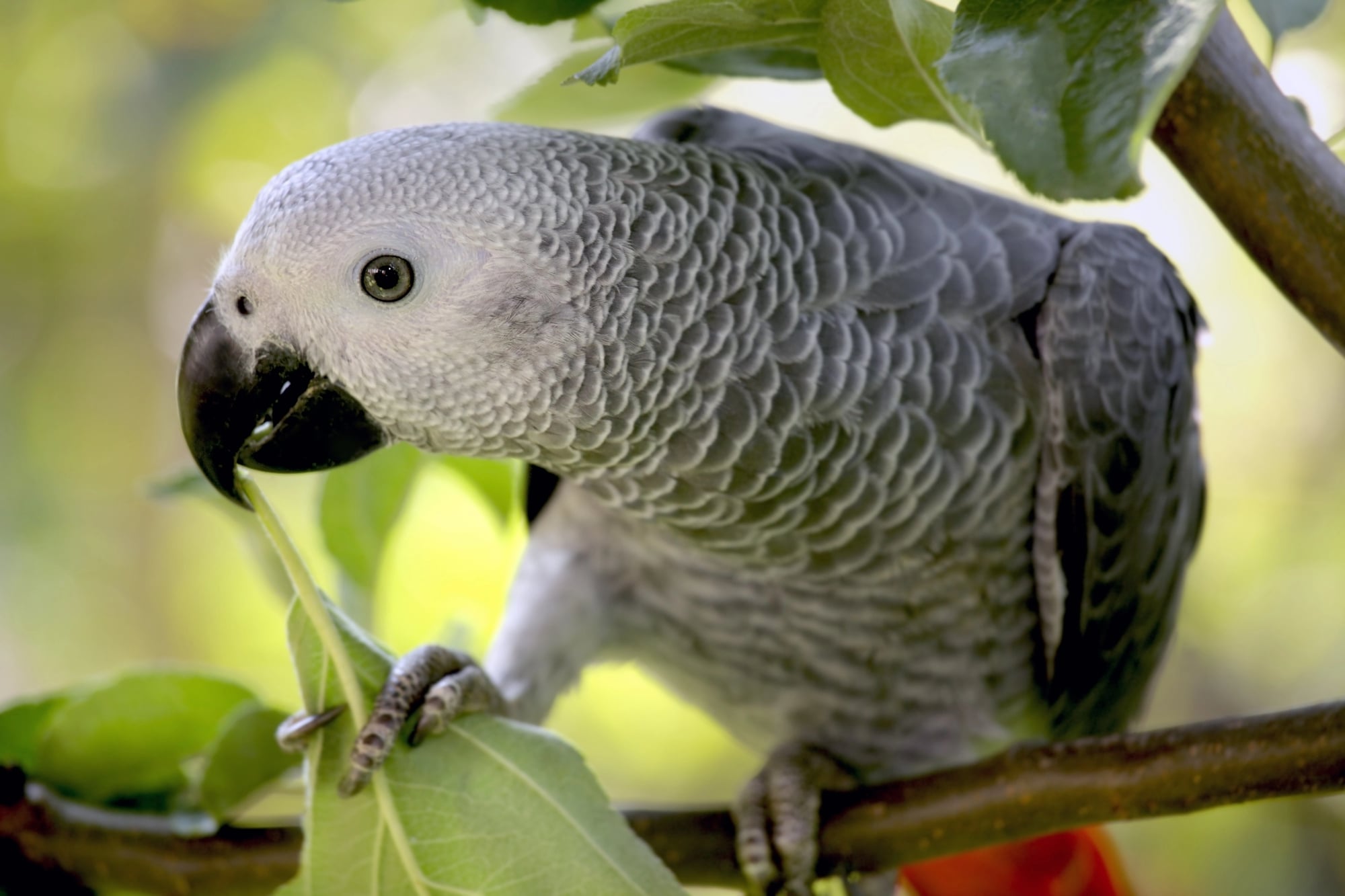
Intelligence research had long focused on mammals, but Alex revolutionised animal cognition science by demonstrating that an African grey parrot could master abstract concepts, count objects up to six, understand the concept of zero, and communicate meaningfully about colour and shape. Working with scientist Irene Pepperberg at various institutions over 30 years, Alex pushed the boundaries of what scientists believed non-human minds could do.
When he died unexpectedly in 2007, his last words to Pepperberg were reportedly “You be good. I love you.” A memorial at Brandeis University, one of the institutions where he worked, acknowledges his contribution to cognitive science.
Alex didn’t save lives or win wars. He changed what humans understood about the nature of intelligence itself.
Seabiscuit
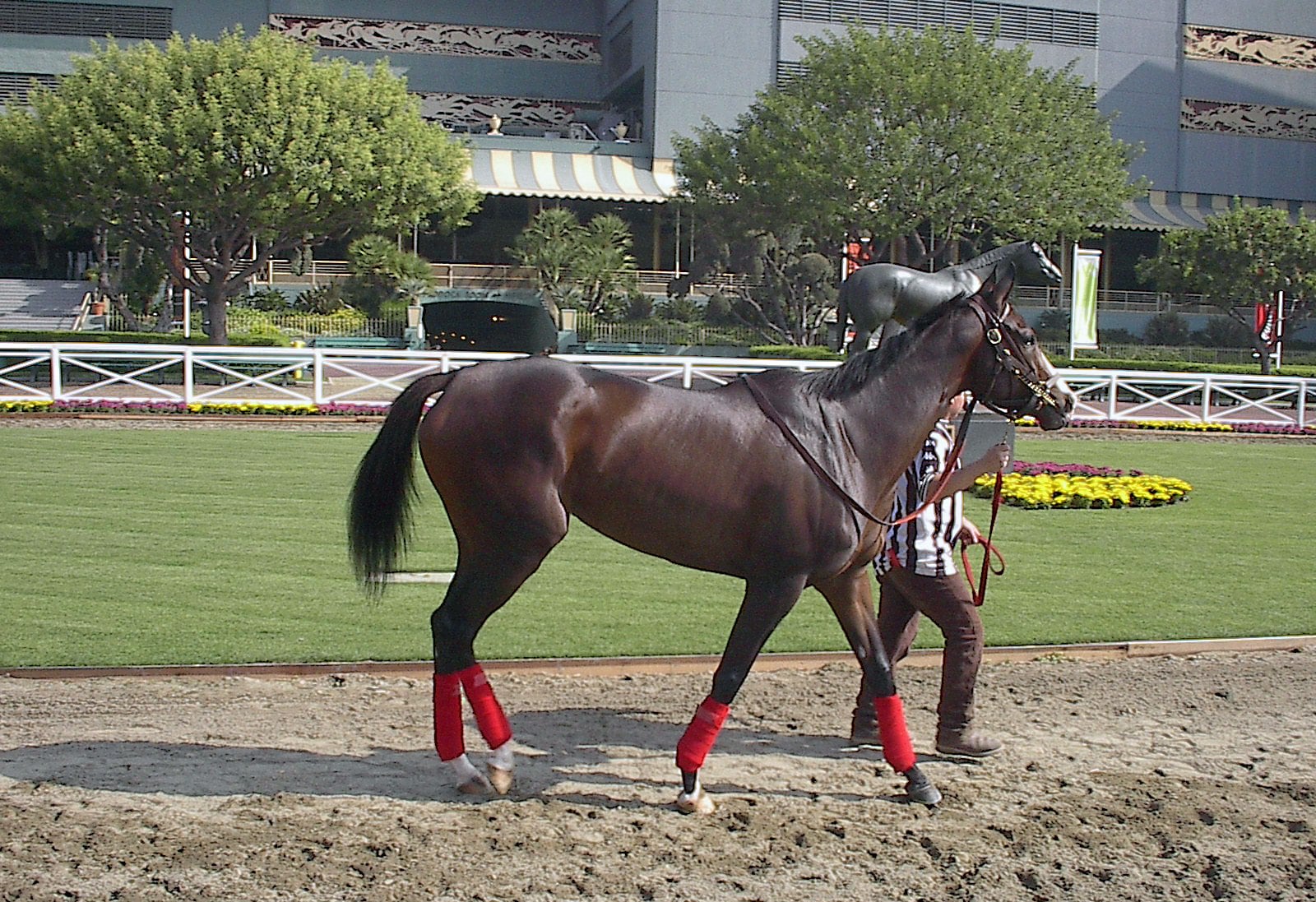
The 1930s needed heroes, and America found one in an undersized racehorse with crooked legs and an awkward gait. Seabiscuit’s victories during the Great Depression culminated in a 1938 match race against the reigning Triple Crown champion War Admiral, a contest that drew the largest radio audience of any sporting event in American history to that point.
The statue at Santa Anita Park shows him at full gallop, but what it really captures is the idea of overcoming limitations through sheer determination. Here was a horse dismissed by experts who became great anyway.
The monument works because it embodies the Depression-era belief that underdogs could still triumph — that success wasn’t reserved for those born to it.
Jumbo The Elephant
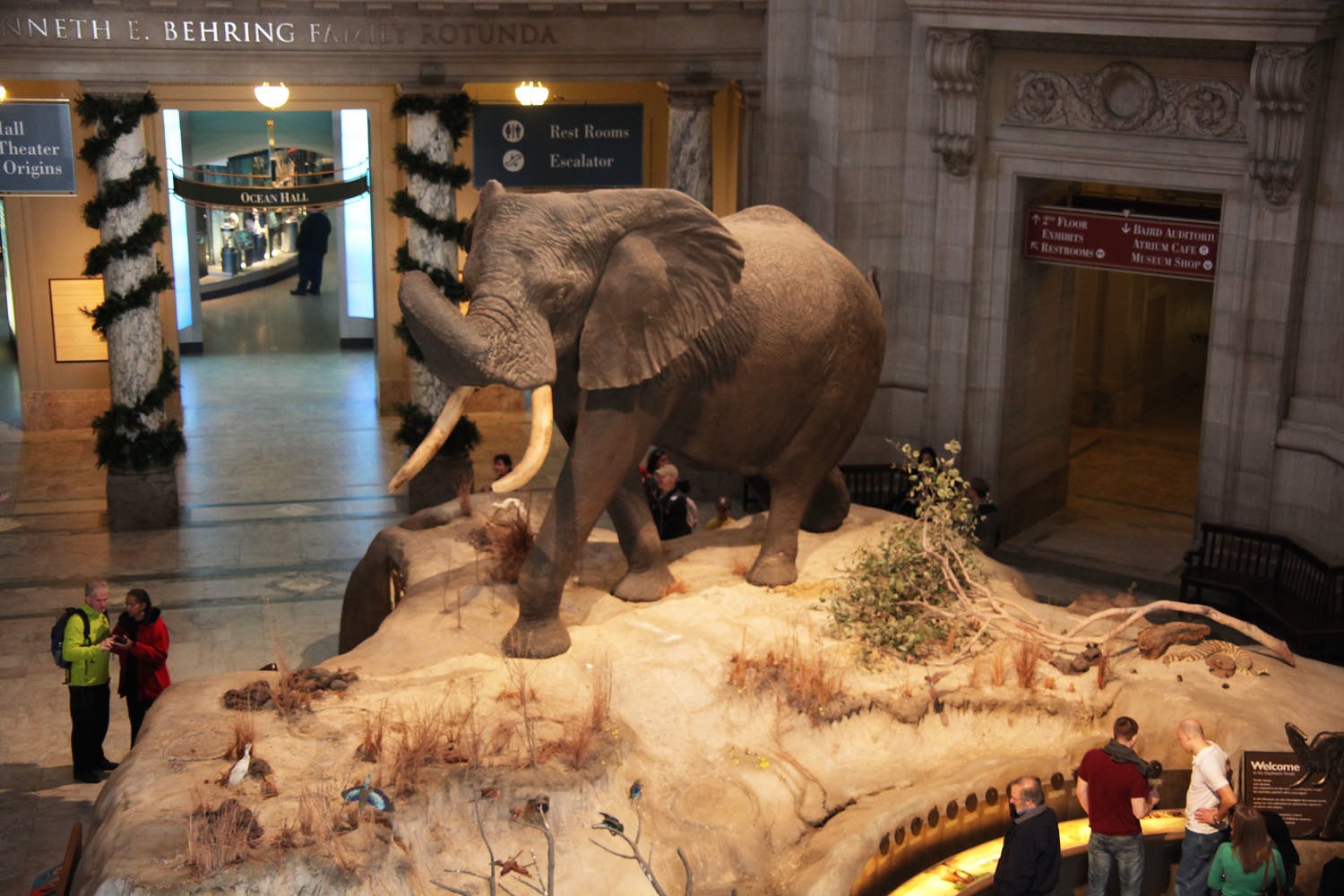
P.T. Barnum understood spectacle, but even he was surprised by the public’s response to Jumbo, a large African bush elephant who became the star attraction of Barnum’s circus in the 1880s. Jumbo’s name became so synonymous with great size that it entered the English language as an adjective and has never left.
The statue at Tufts University, where Jumbo became the unofficial mascot after Barnum donated his mounted hide following the elephant’s death in 1885, memorialises both the animal and an era when exotic creatures first became part of American popular culture. There’s something melancholic about it too — this was wonder built on captivity.
The memorial doesn’t celebrate that, but it doesn’t pretend otherwise.
Pelorus Jack
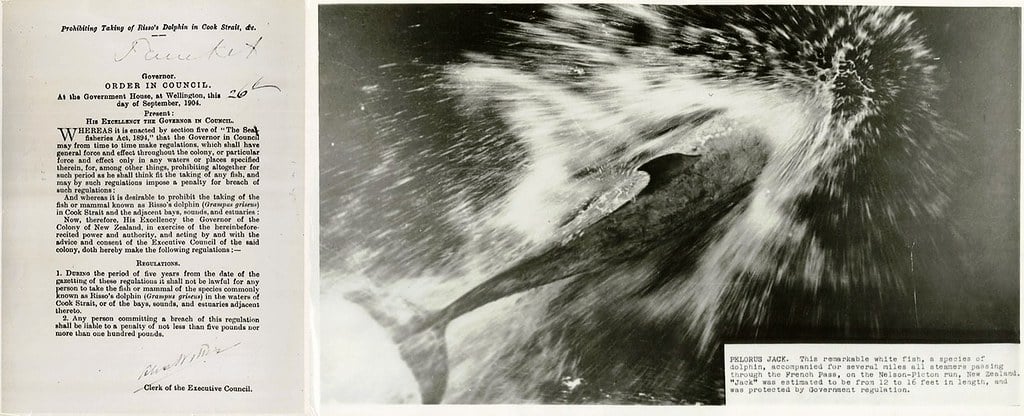
Maritime navigation in the early 1900s was a dangerous business, and in New Zealand’s Cook Strait, ships approaching the treacherous French Pass came to rely on an unexpected guide: a Risso’s dolphin who would appear when vessels approached and swim ahead to show the safe passage through the rocks. Pelorus Jack guided ships through this stretch for over 20 years, from approximately 1888 to 1912.
Sailors came to trust him so completely that ships would wait for Jack to appear before attempting the passage. His presence became so valued that the New Zealand government passed special legislation in 1904 to protect him — one of the earliest laws anywhere designed to protect an individual wild animal.
A memorial in the Marlborough region honours his service to generations of seafarers.
Smokey Bear
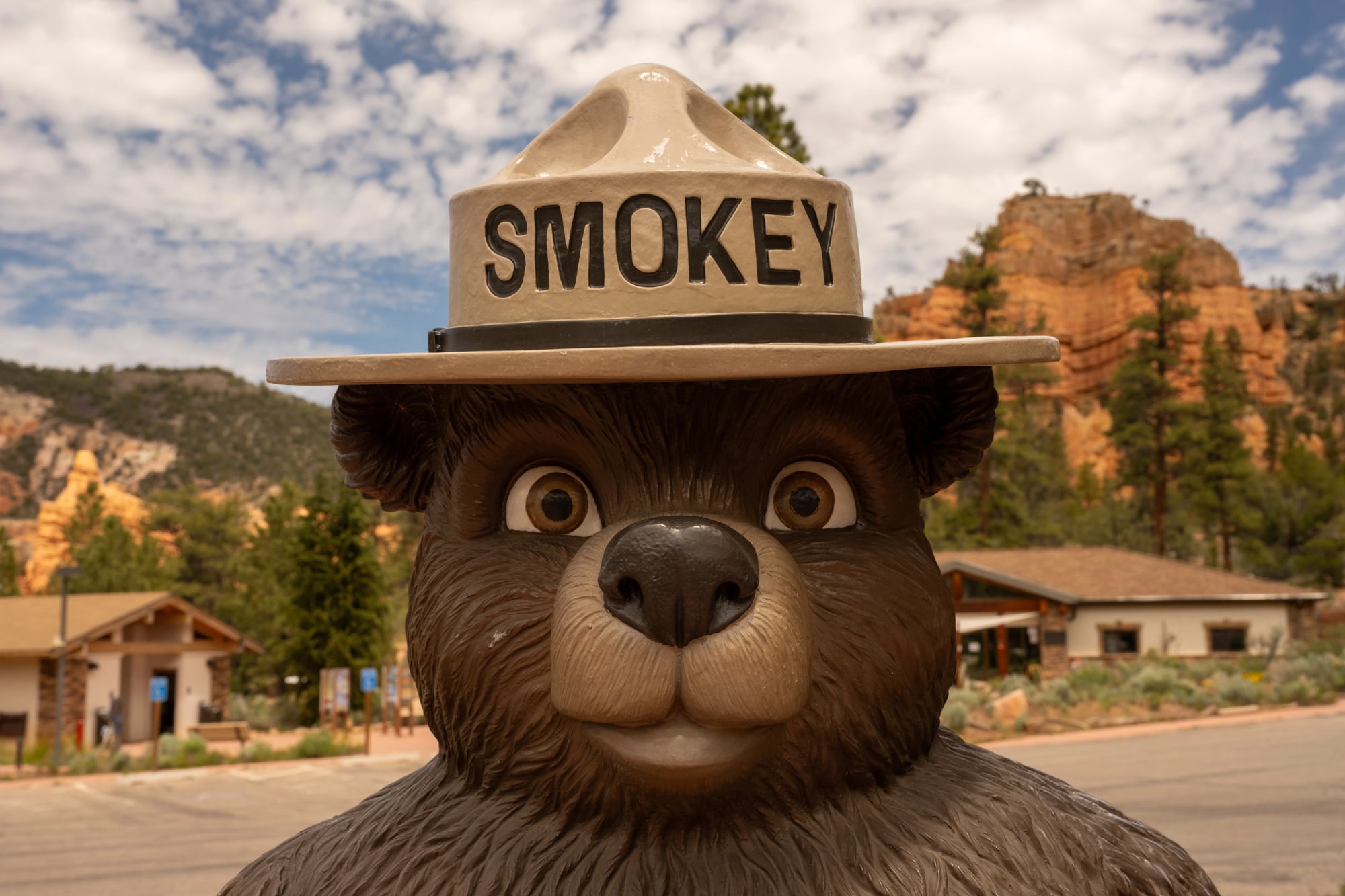
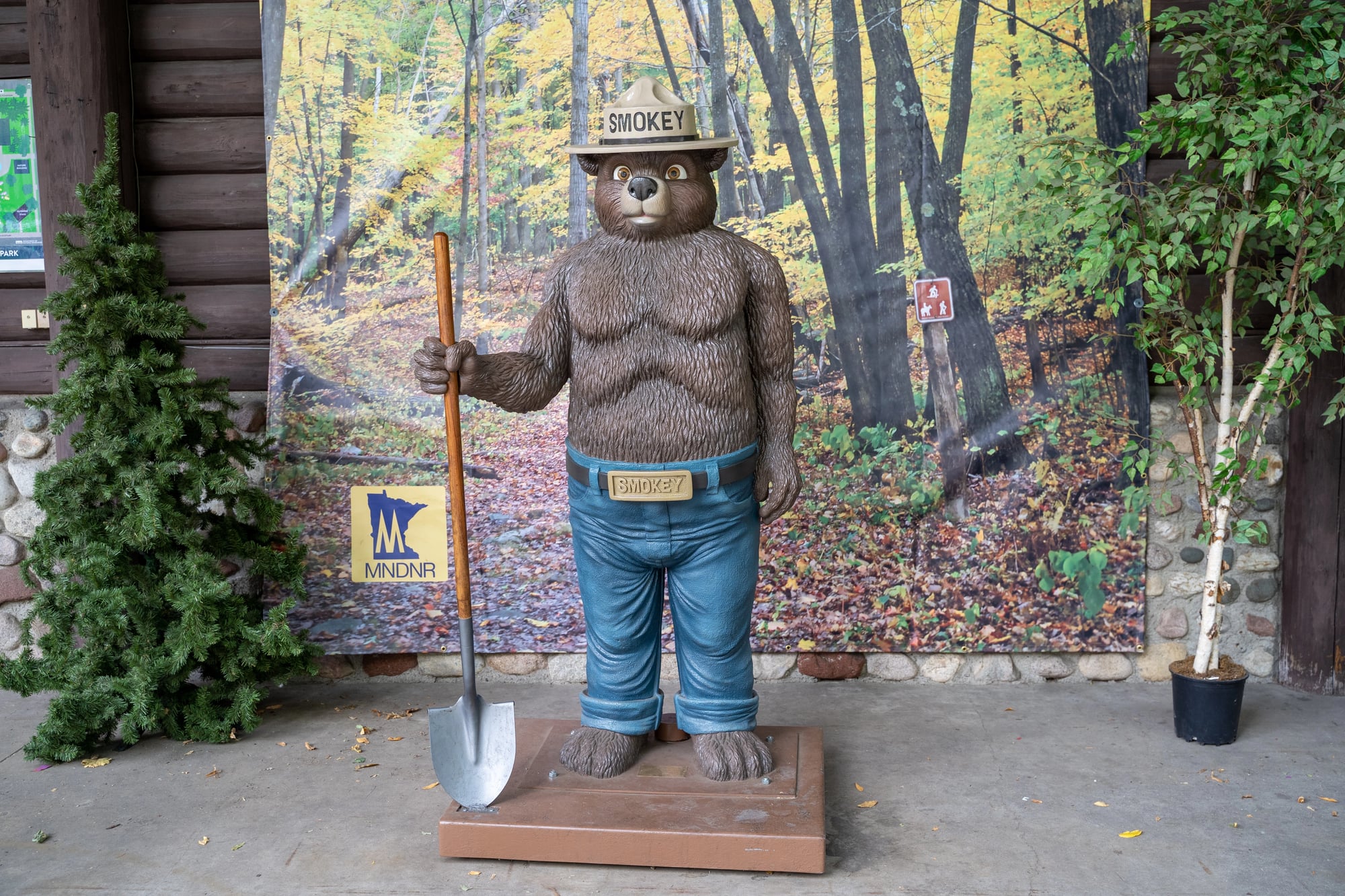
Forest fire prevention needed a spokesperson, and the U.S. Forest Service in 1944 created one who became more recognisable than most human celebrities. The character drew additional power in 1950 when a bear cub was found clinging to a burned tree after a wildfire in New Mexico’s Capitan Mountains, was nursed back to health, and became the living embodiment of the Smokey campaign.
The “real” Smokey lived at the National Zoo in Washington until his death in 1976 and is buried at Smokey Bear Historical Park in Capitan. Multiple statues of the character exist across the country, embodying the gentle authority that made the campaign last for eight decades and counting.
Some public service messages outlive everyone who created them.
Rin Tin Tin
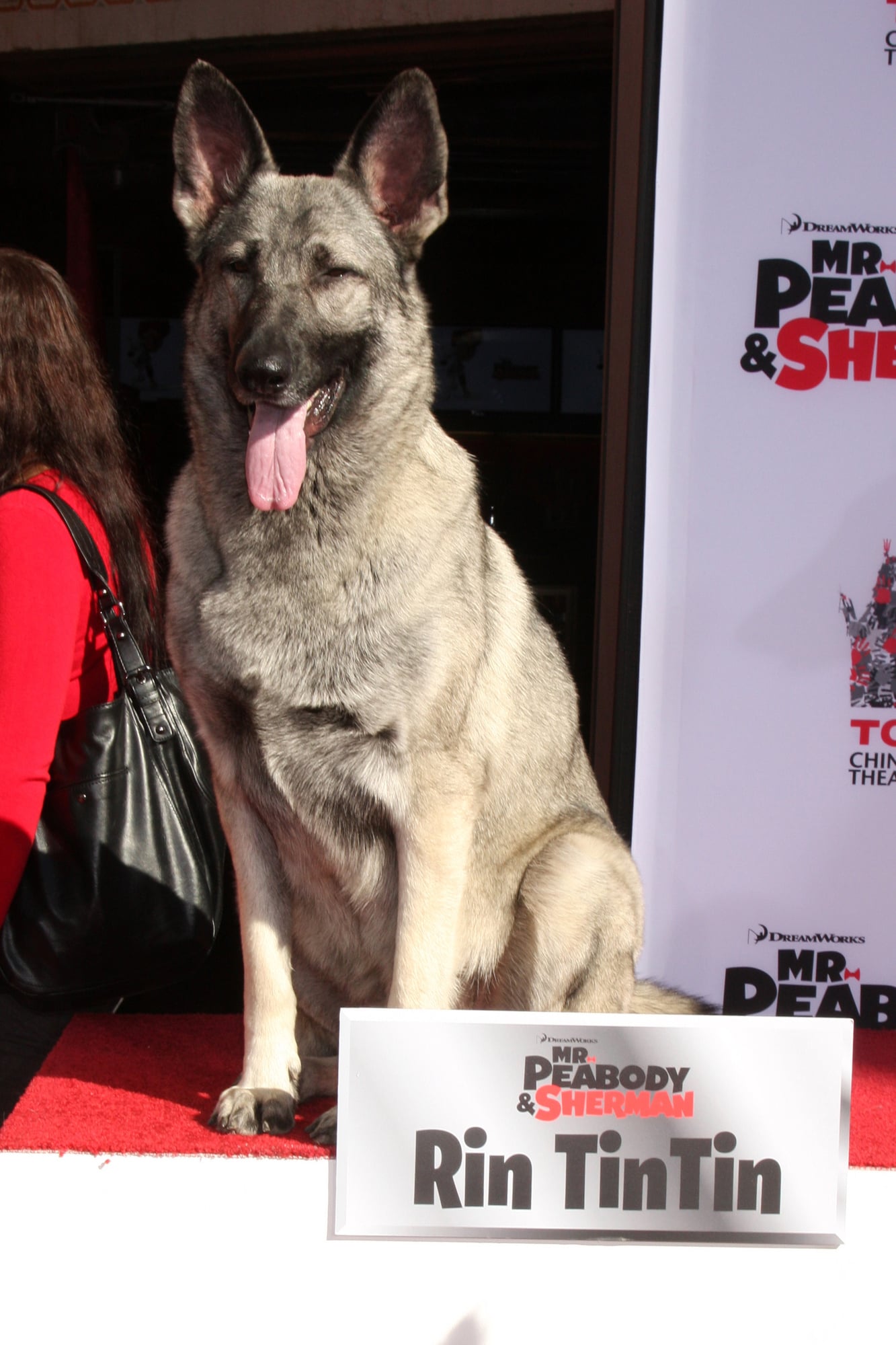
Hollywood needed stars in the 1920s, and one of the biggest was a German Shepherd puppy found on a World War I battlefield in France by American soldier Lee Duncan. Rin Tin Tin appeared in 27 Warner Bros. films, proved that audiences would accept a dog as a dramatic lead, and is credited by some film historians with helping to save the studio from financial collapse in its early years.
A star on the Hollywood Walk of Fame recognises his contribution to entertainment history. His impact went beyond box office receipts — Rin Tin Tin demonstrated on screen that dogs possessed intelligence and loyalty complex enough to carry dramatic narratives, changing how Americans thought about their relationship with the species.
Punxsutawney Phil
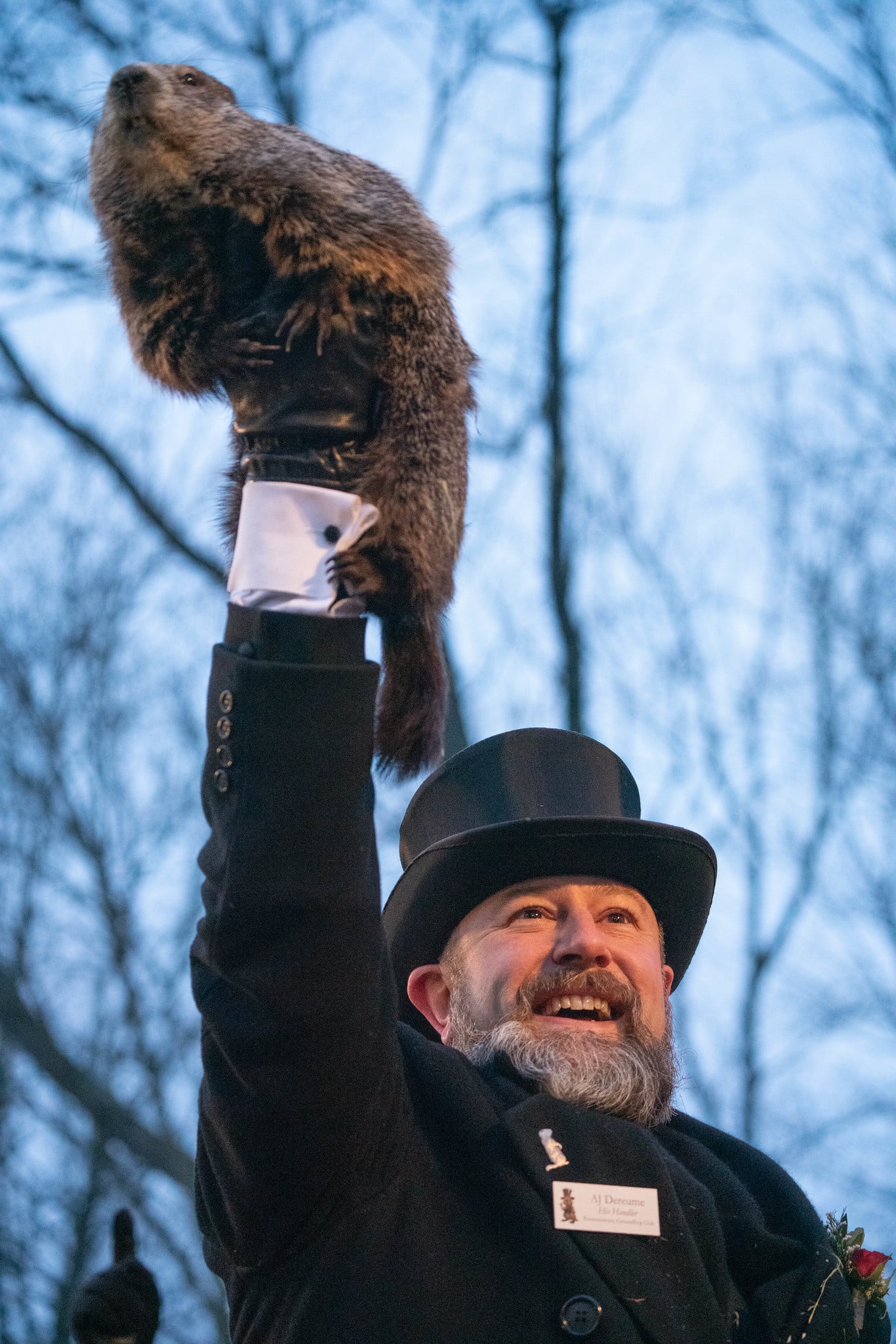
Weather prediction has never been groundhogs’ strong suit — Phil’s accuracy rate hovers around 40%, which is worse than random chance — but he has maintained his meteorological duties in Pennsylvania since 1887, emerging from his burrow each February 2nd to deliver his verdict on winter’s length. His predictions are unreliable.
That has never been the point.
The statues around Punxsutawney are really monuments to the human need for ritual, for midwinter communal celebration, for something cheerfully absurd to gather around when January has gone on too long. Phil provides all of that, regardless of what the groundhog sees.
Some traditions earn their permanence through joy alone.
Flipper
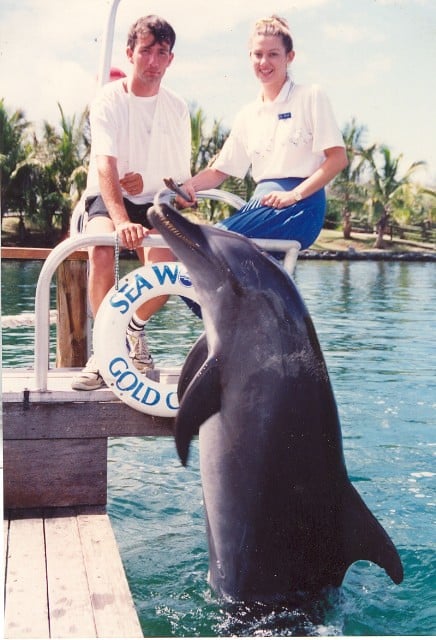
Television needed an aquatic star in the 1960s, and the dolphin known as Flipper became one of the most beloved animal characters of the decade. The show, which ran from 1964 to 1967, was actually played by several Atlantic bottlenose dolphins, primarily a female named Mitzi, though this detail rarely made the credits.
The show’s real legacy was environmental. It introduced millions of children to marine biology and ocean conservation at precisely the moment when environmental awareness was beginning to enter mainstream culture.
The statue at the former Miami Seaquarium recognises both the entertainment and its downstream effect on how Americans came to think about ocean life and the creatures in it.
Misty Of Chincoteague
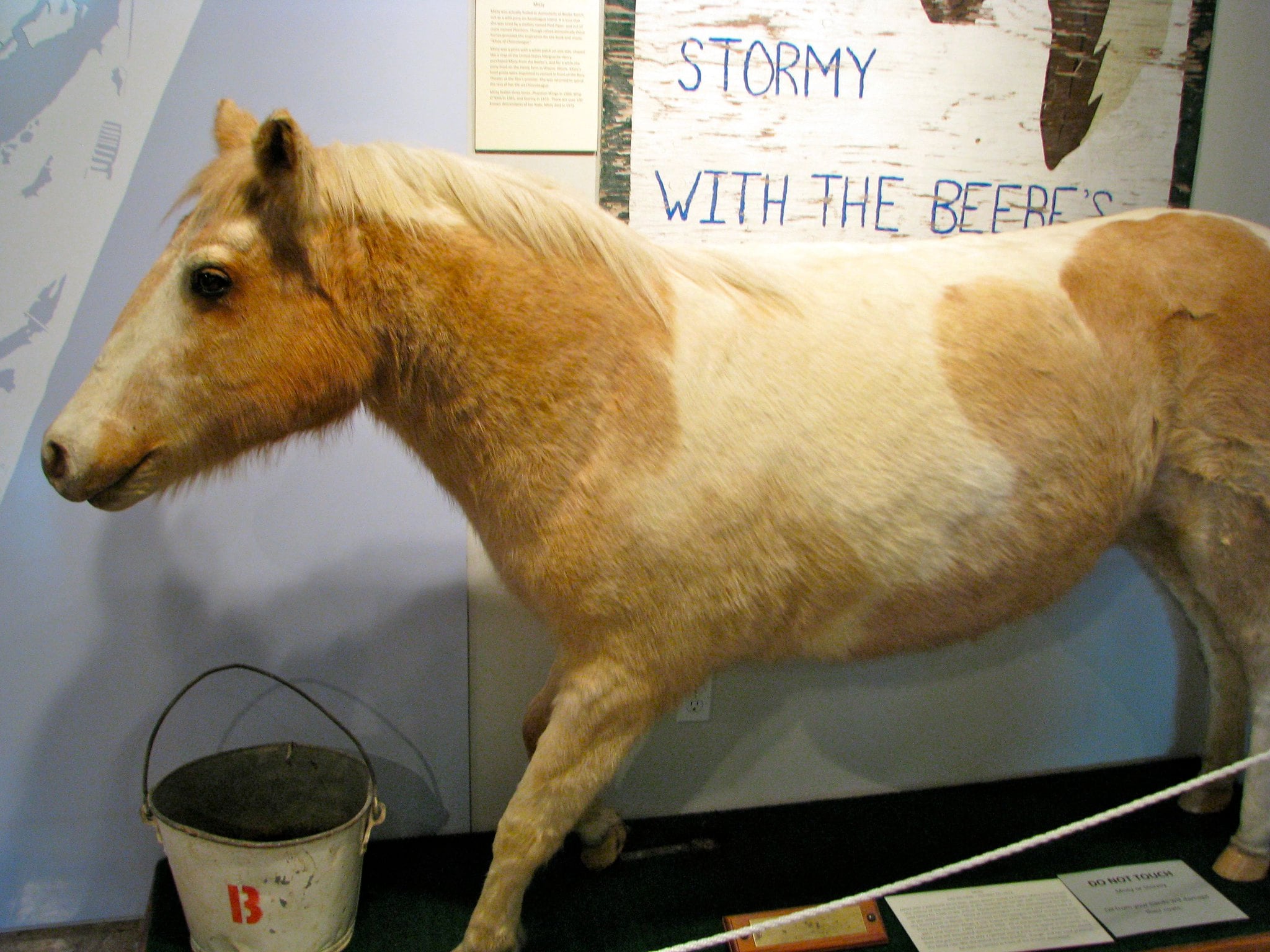
Wild ponies on Assateague Island off the Virginia coast became literary celebrities through Marguerite Henry’s 1947 novel, but the real Misty earned her own chapter in 1962 when she survived the Ash Wednesday Storm, one of the most destructive nor’easters in American history, and became a symbol of resilience for the battered Virginia coast.
The statue in Chincoteague captures her in a pose that honours both her wild heritage and the gentleness that made her famous. What makes her story durable is how it bridges literature and reality — here was an actual pony whose life became as dramatic as any novel about her.
Elsa The Lioness
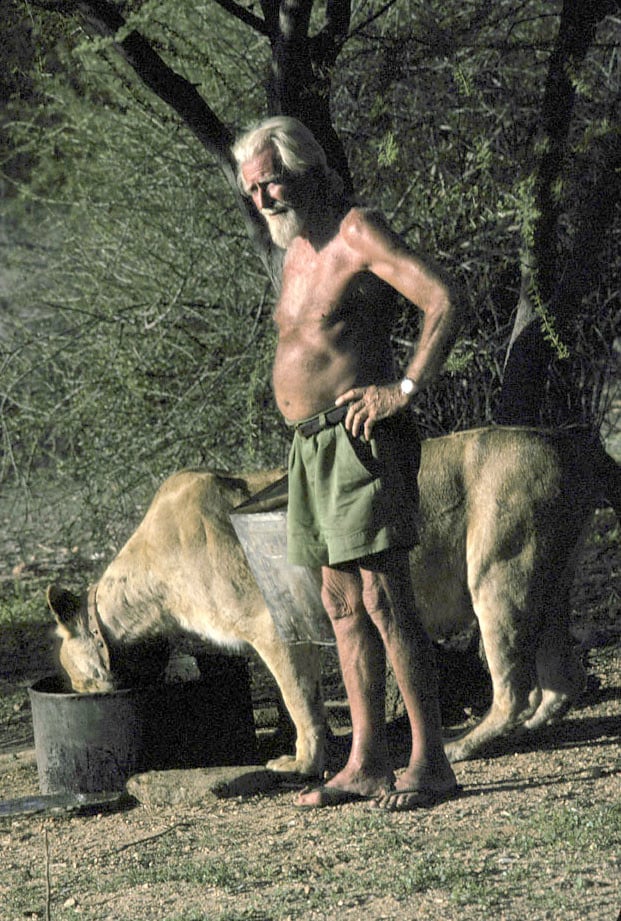
Wildlife conservation needed a personal story, and Joy Adamson provided one through her relationship with Elsa, a lioness raised from a cub after her mother was shot and successfully returned to the wild in Kenya in the late 1950s. The 1960 book and 1966 film “Born Free” introduced millions to the possibility that wild animals could be respected, rehabilitated, and released rather than simply controlled or displayed.
The memorial at Elsamere Conservation Centre on Lake Naivasha, where Adamson lived, shows Elsa in a relaxed pose that captures the trust she developed with humans without suggesting domestication. Her story changed conservation philosophy in ways still felt today — Elsa was not a pet, and “Born Free” was insistent about the distinction.
Ham The Astrochimp
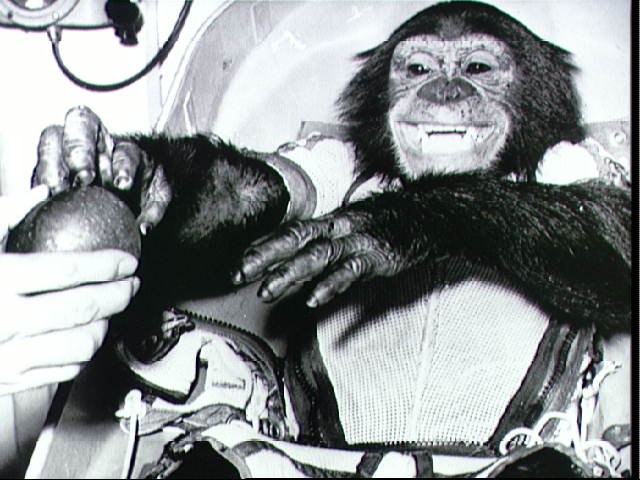
Space exploration required test data that only living subjects could provide, and Ham became the first hominid to travel into space and return alive when his Mercury capsule completed a suborbital flight on January 31, 1961. The 16-minute mission provided crucial information about the physiological effects of spaceflight and helped clear the path for Alan Shepard’s flight just three months later.
The memorial at the International Space Hall of Fame in Alamogordo, New Mexico, presents Ham in his space suit — one of the most significant living test subjects in aerospace history. Ham survived his mission and lived another 22 years, dying at the National Zoo in 1983.
His story raises questions about consent and sacrifice that space exploration agencies have never fully put to rest.
Togo
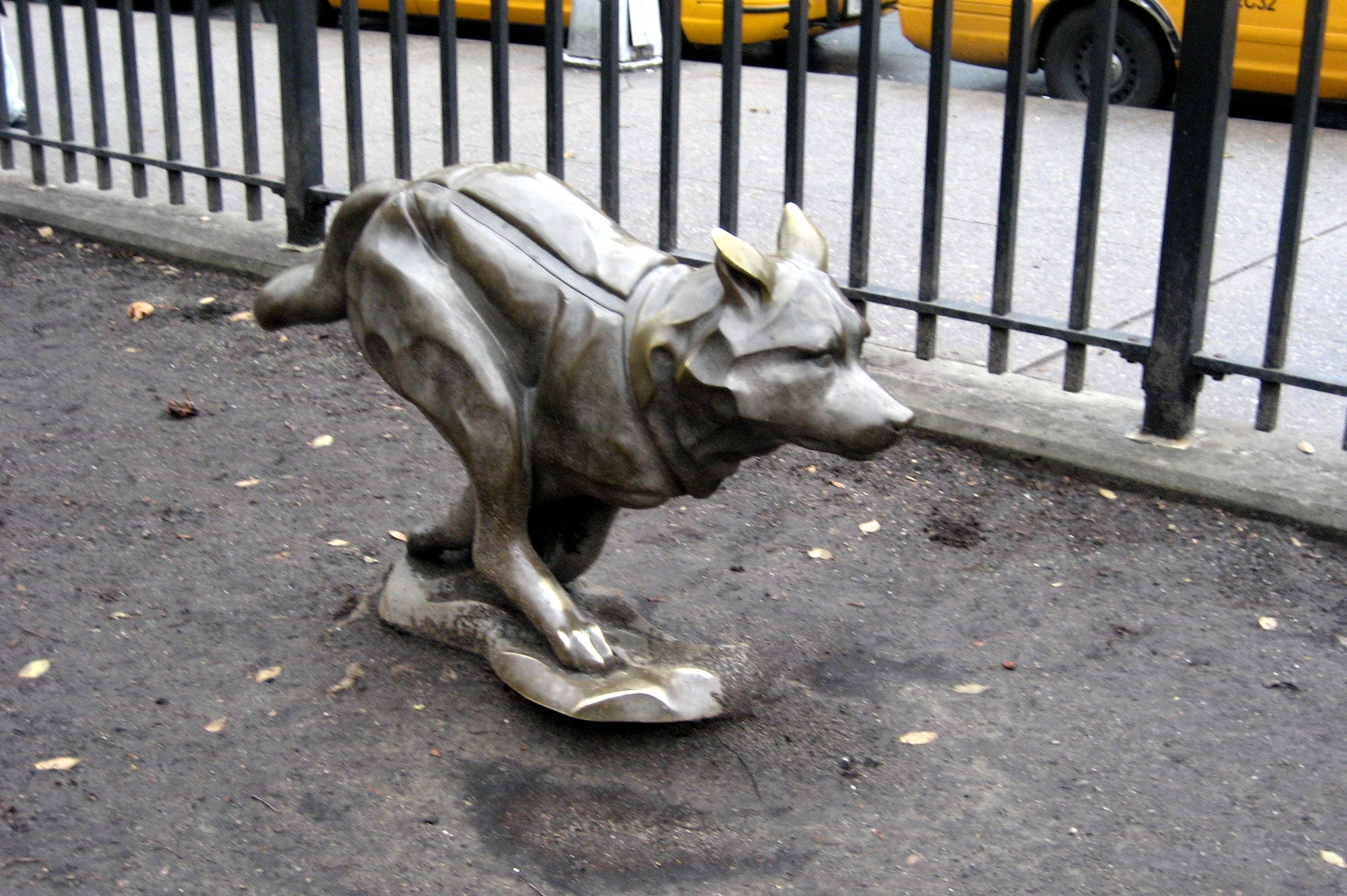
The 1925 serum run to Nome involved multiple sled dog teams across a 674-mile relay, but Togo, led by musher Leonhard Seppala, covered the longest single stretch — 264 miles through some of the most dangerous terrain on the route, including a crossing of Norton Sound over unstable sea ice in a blizzard. While Balto received most of the initial public recognition for leading the final 55-mile leg into Nome, Seppala and many historians have consistently argued that Togo’s contribution was the most extraordinary of the entire relay.
A statue of Togo in New York’s Seward Park — added long after Balto’s more famous memorial in Central Park — acknowledges what the initial coverage overlooked. Togo lived to 16 and is now preserved and on display at the Iditarod Trail Sled Dog Race headquarters in Wasilla, Alaska.
His story is a reminder that history sometimes leads with the final chapter while the hardest work happens in the middle.
Shep
Railroad stations in the 1930s saw countless arrivals and departures, but Shep, a sheepdog in Fort Benton, Montana, watched only for one passenger who would never return. After his owner died and was shipped away by train in 1936, Shep waited at the station for more than five years, meeting every incoming train until his death in 1942.
The statue at the Fort Benton station captures Shep in a pose of patient expectation. His story became national news during the Great Depression, touching people who understood what it meant to wait for better circumstances that might never arrive.
The memorial acknowledges that the most profound loyalty is sometimes also the most heartbreaking — love that doesn’t know when to let go.
Lassie
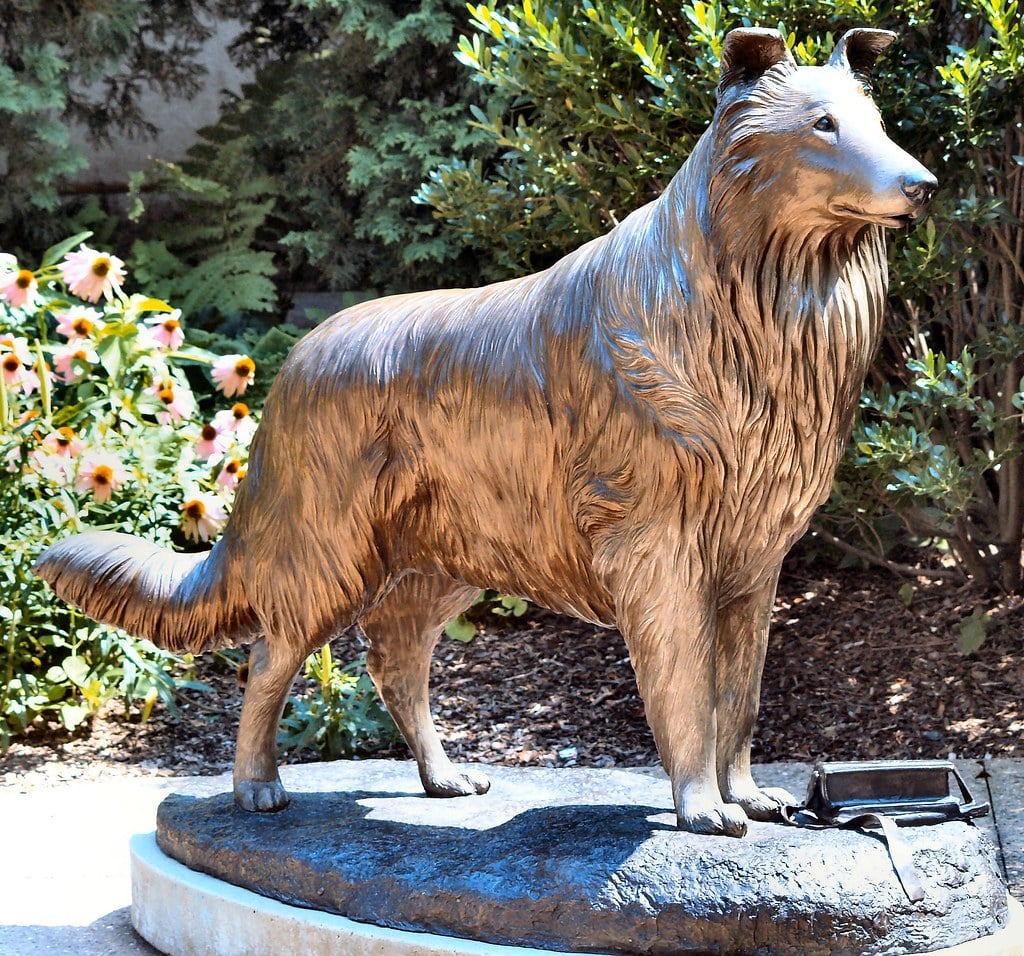
Television created many fictional heroes in the 20th century, but Lassie became something more — a symbol of canine intelligence and loyalty that shaped how Americans thought about dogs across generations. The original show ran from 1954 to 1973, and all the Lassies were played by descendants of a single male rough collie named Pal, who originated the role in the 1943 film.
The star on the Hollywood Walk of Fame and the statue in Burbank recognise a cultural impact that outlasted the show itself. What made Lassie distinctive wasn’t simple obedience but something closer to moral agency — a dog who identified problems, sought help, and made decisions that moved the plot forward.
The character elevated public expectations of what dogs were capable of, which turned out to be a lasting gift.
Binti Jua
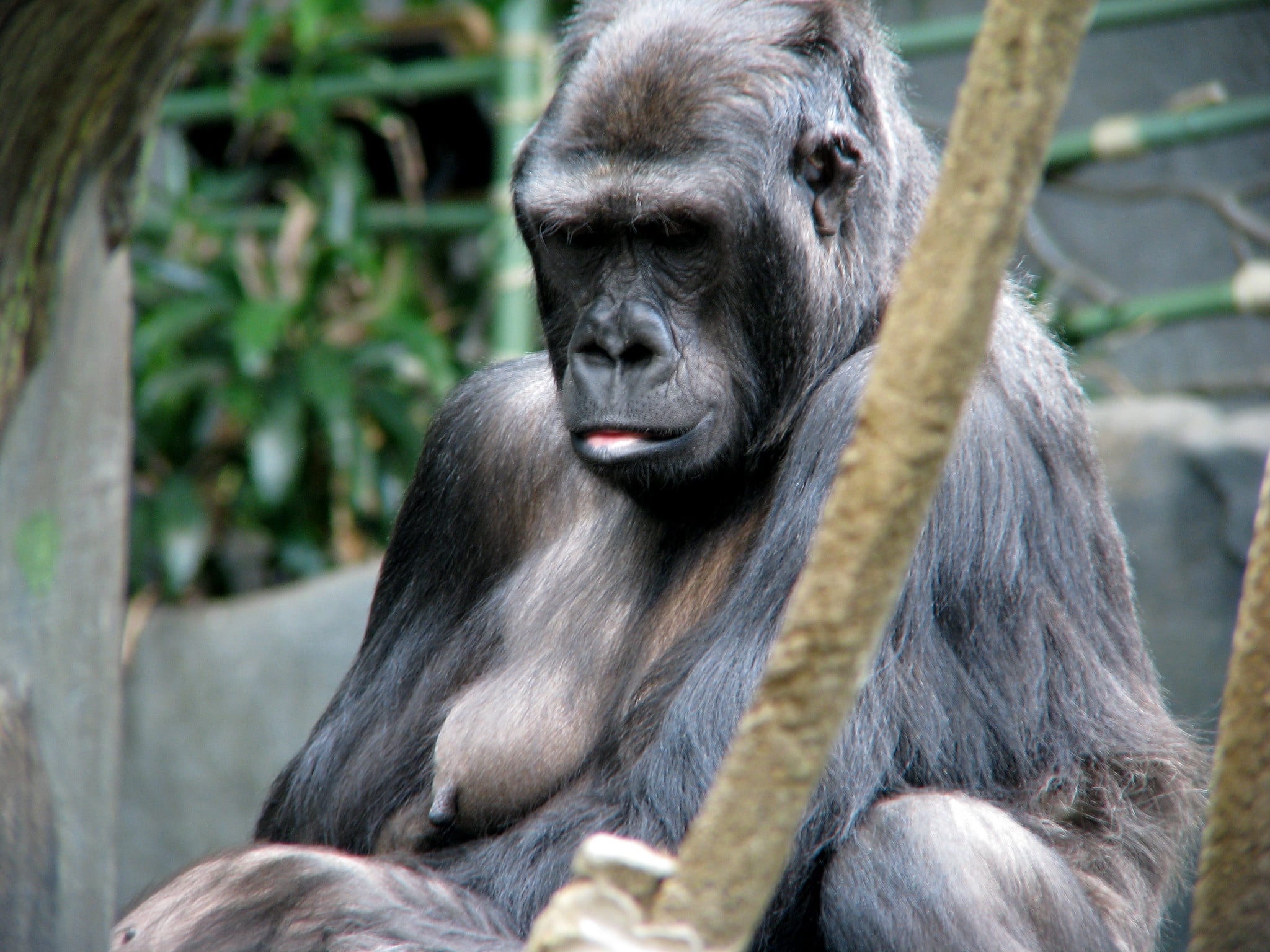
In 1996 at the Brookfield Zoo in Illinois, a three-year-old boy fell into the gorilla enclosure and lay unconscious on the concrete floor. Before zookeepers could intervene, a female western lowland gorilla named Binti Jua picked up the child, cradled him gently, and carried him to the enclosure door where zoo staff could reach him.
She had her own infant on her back throughout.
No permanent outdoor monument to Binti Jua exists in the way that statues mark some animals on this list, but her story generated international news coverage and is commemorated in zoo archives, animal cognition literature, and public memory. She became the subject of scientific papers on primate empathy and cross-species compassion.
What she did that afternoon resisted every convenient explanation about the separation between animal instinct and something that looked, from the outside, remarkably like care.
Christian The Lion
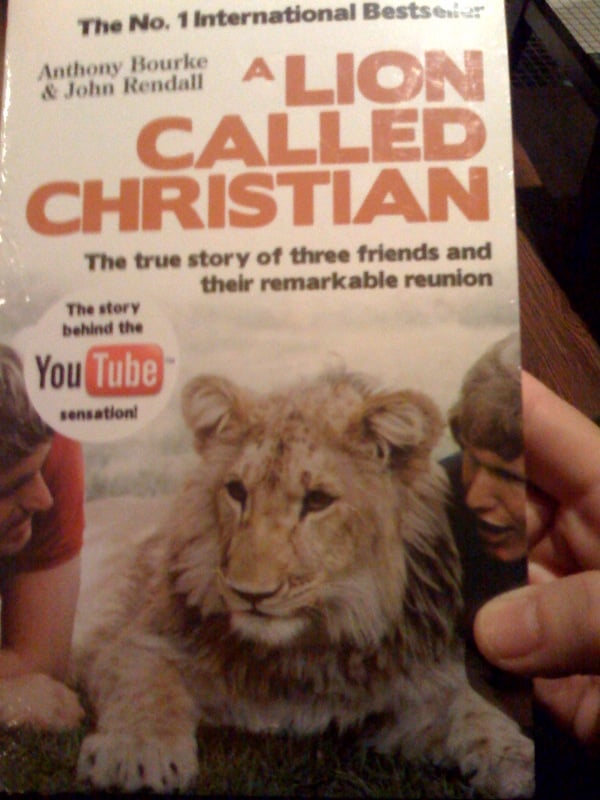
In 1969, two young Australians named John Rendall and Ace Berg bought a lion cub from Harrods department store in London — an era when this was legal and somehow considered ordinary — and raised him in their Chelsea flat before eventually working with conservationist George Adamson to return him to the wild in Kenya.
A year later they returned to visit. Their reunion, filmed and later set to music, became one of the most watched clips on early YouTube, accumulating tens of millions of views because it showed a fully wild lion recognising and embracing the humans who had raised him.
A memorial at Kora National Reserve in Kenya, where Christian lived and died, honours both the lion and the conservation work Adamson dedicated his life to. The video endures because it suggests something people want to believe — that the bonds formed across species don’t dissolve when circumstances change.
The Bonds Cast In Bronze
Look across these 28 monuments and something quietly consistent emerges. These memorials were not built to celebrate animal performance the way a trophy celebrates athletic achievement.
They were built because humans felt a debt — to a pigeon who flew through fire, to a dog who waited at a train station for five years, to a sheep who made science rethink its own assumptions.
The monuments acknowledge what the relationships actually were: not ownership, not utility, but something more reciprocal and harder to name. The animals on these pedestals did not understand what was being asked of them, which makes what they gave all the more striking.
They simply did what they did, with whatever they had, and humans — grateful and a little humbled — cast it in bronze and made sure it would last.
More from Go2Tutors!

- The Romanov Crown Jewels and Their Tragic Fate
- 13 Historical Mysteries That Science Still Can’t Solve
- Famous Hoaxes That Fooled the World for Years
- 15 Child Stars with Tragic Adult Lives
- 16 Famous Jewelry Pieces in History
Like Go2Tutors’s content? Follow us on MSN.