29 Laws From History That Are Hard to Believe Existed
Legal codes tend to reflect the anxieties of the era that wrote them, and history has produced no shortage of anxieties that look strange, cruel, or simply baffling in hindsight. Many of these laws stayed on the books for decades after the concerns that produced them had faded.
Each entry below was a real, enforceable statute or ordinance at some point in its jurisdiction’s history, not an internet myth. Some remain technically unrepealed even today, existing as legal curiosities rather than active concerns.
Sumptuary Laws of Medieval Europe

Across medieval England, France, and Italy, sumptuary laws regulated exactly what clothing, fabrics, and colors people of different social classes were legally permitted to wear, with violations punishable by fines or confiscation. England’s 1363 statute, for example, dictated specific fabric restrictions based on income level, aiming to prevent commoners from dressing above their station.
These laws were enforced sporadically for centuries before falling out of use as commercial fashion became harder to regulate.
The Bathing Costume Laws of the 1920s

Numerous American beach towns during the 1920s enforced strict regulations on the length and coverage of women’s swimwear, with some jurisdictions employing officers to measure the distance between a hemline and a woman’s knee. Violators faced fines or removal from public beaches.
The laws were part of a broader wave of morality legislation common across the decade before public swimwear norms shifted decisively in subsequent years.
England’s Mince Pie Ban

Under Oliver Cromwell’s Puritan government in the 1640s and 1650s, England restricted or banned the celebration of Christmas entirely, including the eating of foods associated with the holiday such as mince pies, which were viewed as symbols of excess and Catholic tradition. Enforcement included fines and, in some documented cases, the seizure of festive food.
The restrictions were lifted following the restoration of the monarchy in 1660.
The Stamp Act’s Colonial Paper Tax

Britain’s 1765 Stamp Act required that virtually all printed materials in its American colonies, including legal documents, newspapers, and even playing cards, bear an official stamp purchased from the government. The law applied to an unusually broad range of everyday paper goods and was enforced through colonial courts.
Widespread colonial resistance led to its repeal within a year, though it remained a significant grievance cited in the lead-up to the American Revolution.
Connecticut’s Blue Laws

Colonial Connecticut enforced an extensive set of regulations known as “blue laws” restricting activities on Sundays, with some historical accounts, though disputed by modern historians for accuracy, describing prohibitions on kissing one’s spouse in public on the Sabbath. Verified provisions restricted travel, work, and commerce on Sundays under penalty of fine or public punishment.
Versions of Sunday commerce restrictions persisted in various American states well into the twentieth century.
The Window Tax of Britain

Introduced in 1696, Britain’s window tax charged property owners based on the number of windows in their home, leading many to permanently brick up windows to reduce their tax burden. The practice left a visible architectural legacy still seen in older British buildings today.
The tax remained in effect for over a century and a half before its repeal in 1851.
Prohibition-Era Wine for Medicinal Use

During the United States’ nationwide alcohol prohibition from 1920 to 1933, a specific legal exception permitted licensed physicians to prescribe alcohol, including wine, for medicinal purposes, resulting in a documented surge in prescriptions written for common ailments. Pharmacies were legally permitted to dispense the prescribed alcohol under this loophole.
The provision became one of the most widely used workarounds to an otherwise nationwide ban.
The Corset-Related Insanity Defense

Some nineteenth-century American and British legal and medical discourse entertained the argument that excessively tight corset lacing could contribute to a woman’s diminished mental capacity, occasionally cited in legal proceedings of the era as a mitigating factor. The claim reflected the broader medical misconceptions of the period rather than an official statute, though it appeared in documented court arguments.
The theory fell out of legal use as medical understanding advanced in the following decades.
Milan’s Anti-Frowning Ordinance

A regulation attributed to medieval Milan reportedly required citizens to smile in public except during funerals or hospital visits, with violators subject to fines under the city’s public order rules. Historical documentation of the ordinance’s precise enforcement is limited, but it is consistently cited in municipal legal histories of the period.
Whatever its practical enforcement, it reflects the era’s broader tendency to regulate public demeanor through law.
The Salt Tax of France

France’s gabelle, a tax on salt first formalized in the fourteenth century, required households to purchase a legally mandated minimum quantity of salt from state-controlled sources at fixed, often inflated prices. The tax was deeply unpopular and is widely cited by historians as one of the grievances that fueled the French Revolution in 1789.
It was formally abolished during the revolutionary period after centuries of enforcement.
The Real ID of Witch Trials: Spectral Evidence

During the Salem witch trials of 1692 in colonial Massachusetts, courts formally permitted “spectral evidence,” meaning testimony that a person’s spirit or apparition had appeared to and harmed a witness, to be admitted as legally valid proof in criminal proceedings. This evidentiary standard directly contributed to numerous wrongful convictions and executions before colonial authorities banned its use in court the following year.
The episode remains a frequently cited historical example of how a legal evidentiary standard can enable mass injustice.
Byzantine Chariot Team Registration Laws
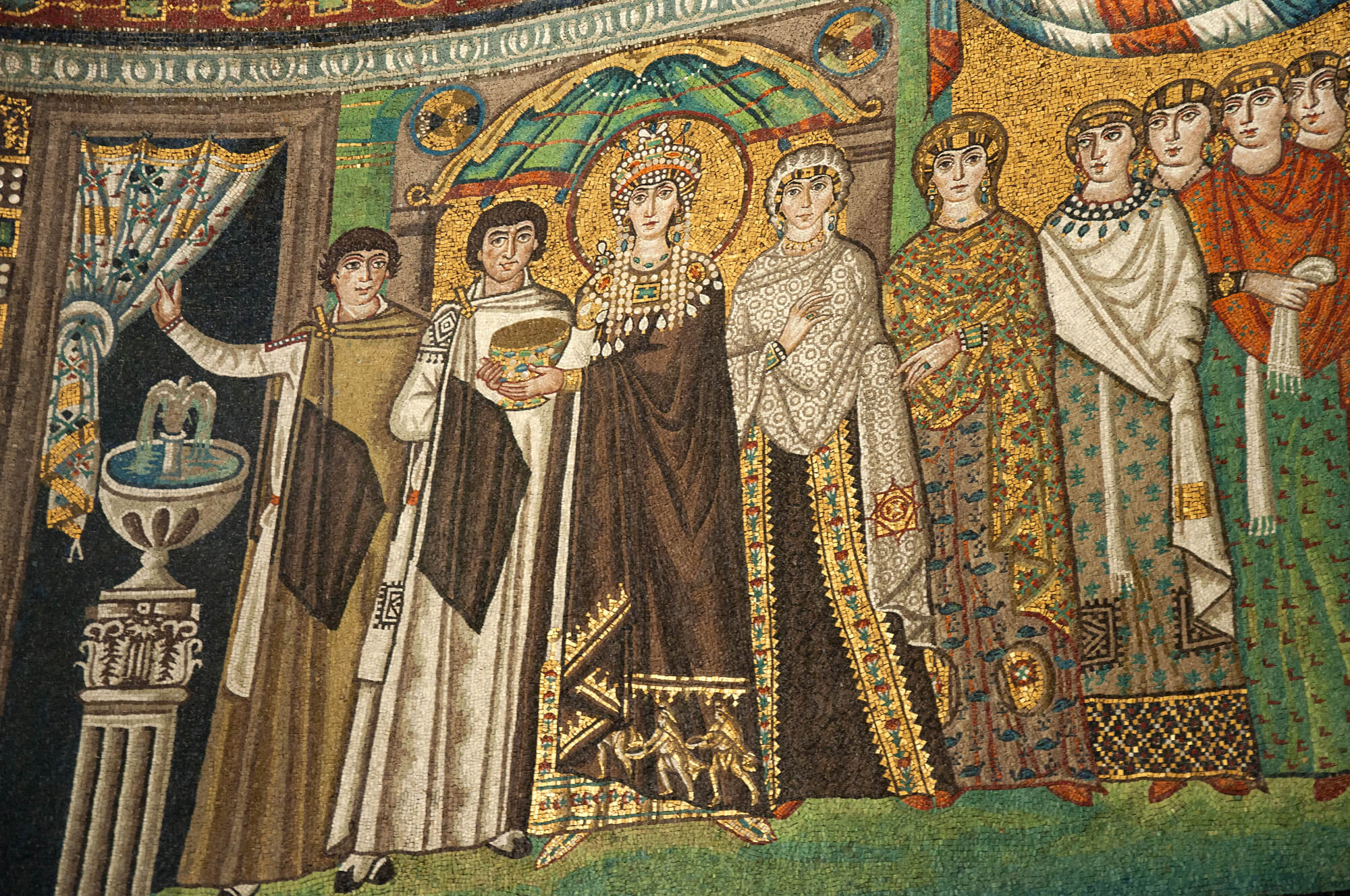
The Byzantine Empire maintained formal legal regulations governing the registration, conduct, and rivalries of its chariot-racing factions, treating team affiliation as a matter significant enough to warrant direct imperial oversight. These regulations existed alongside broader laws restricting public assembly tied to the factions after periods of civil unrest.
The most severe unrest tied to these rivalries culminated in the Nika riots of 532 CE, which nearly toppled the imperial government.
The Ottoman Empire’s Coffee Ban

Sultan Murad IV enforced a strict ban on coffee and coffeehouses across the Ottoman Empire in the seventeenth century, driven partly by concerns that coffeehouses had become centers of political dissent and organized criticism of the government. Enforcement was notably severe during his reign, with historical accounts describing harsh penalties for violators.
The ban did not survive long after his death, and coffeehouses returned to widespread legal operation.
The Poll Tax on Beards

Russia’s Peter the Great imposed a formal tax on beards in 1698 as part of a broader campaign to modernize Russian society along Western European lines, requiring men who wished to keep their facial hair to pay an annual fee and carry a physical token proving payment. Those unable or unwilling to pay were subject to having their beards forcibly removed by government agents.
The tax remained in effect for decades before gradually falling out of enforcement.
The German Purity Law for Beer

Bavaria’s Reinheitsgebot, enacted in 1516, legally restricted the ingredients permitted in beer production to water, barley, and hops, a regulation that remains among the oldest continuously referenced food-safety laws in the world. Later versions of German law expanded the permitted ingredient list, though the original regulation’s influence on German brewing culture persists today.
Its long duration is frequently cited as an unusually enduring example of food-content legislation.
England’s Law Against Playing Football on Sundays

Multiple English monarchs, including Edward III in the fourteenth century, issued formal decrees restricting or banning the playing of football, largely because the sport was seen as distracting young men from mandatory archery practice needed for national defense. Violators were subject to fines under royal decree.
These restrictions were enforced intermittently for centuries before the sport’s modern legal status stabilized.
The Roman Law Against Purple Togas

Ancient Rome restricted the wearing of togas dyed with Tyrian purple, an extremely expensive dye, to senators and specific high officials, with unauthorized use subject to legal penalty under sumptuary regulations. The color’s association with elite status was legally enforced rather than merely a social convention.
Violations of these status-based clothing laws could result in fines or public disgrace.
Britain’s Witchcraft Act of 1735

Britain’s Witchcraft Act of 1735 shifted the legal framework away from prosecuting people for practicing witchcraft itself and instead criminalized claiming to have magical powers or predicting the future for money, treating the earlier belief in witchcraft as fraudulent pretense rather than genuine supernatural threat. The law remained in force for over two centuries, and one of its final prosecutions, of a spiritualist medium, occurred during World War II in 1944.
It was not formally repealed in Britain until 1951.
The Netherlands’ Tulip Speculation Regulations

Following the collapse of the speculative tulip bulb market in 1637, Dutch authorities implemented specific contract and trading regulations aimed at addressing the chaos that had resulted from unregulated futures trading in bulbs. Courts across Dutch provinces issued rulings converting many outstanding contracts into more limited settlement obligations.
The episode remains a frequently cited early case study in financial market regulation.
The Georgia Law Restricting Ice Cream Sales

Some early twentieth-century American local ordinances, including reported restrictions in specific Georgia municipalities, regulated the sale of certain foods, including ice cream, on Sundays as part of broader Sunday commerce laws common across the American South and Midwest during that era. These blue-law provisions were enforced through local fines.
Most such Sunday commerce restrictions were gradually repealed over the following decades as retail norms changed.
The Vagrancy Acts of Britain

Britain’s Vagrancy Act of 1824 criminalized homelessness and begging, granting police broad authority to arrest individuals deemed to be “idle and disorderly persons” without permanent residence. The law remained formally in force for nearly two centuries, with portions still technically applicable in England and Wales until a 2022 legislative repeal took effect.
Its extraordinarily long duration made it one of the oldest continuously enforced criminal statutes in British law.
Rome’s Law Against Bachelors

The Roman emperor Augustus enacted legislation in 18 BCE, including the Lex Papia Poppaea, that imposed financial and social penalties on unmarried citizens of a certain age, part of a broader state effort to encourage marriage and childbearing among the Roman elite. Those who remained unmarried past specified ages faced restrictions on inheritance rights.
The laws reflected specific demographic anxieties among Rome’s ruling class during that period.
The Massachusetts Law Against Uncomfortable Corsets in Schools

Some early twentieth-century American school districts, citing health concerns, enacted local restrictions on tightly laced corsets for female students, part of a broader public health movement questioning the garment’s physical effects. Enforcement varied significantly by district and was tied to contemporary medical opinion about the era’s restrictive fashion.
These restrictions largely became moot as fashion trends shifted away from corsetry in subsequent decades.
The Icelandic Ban on Certain Dog Breeds

Reykjavik, Iceland’s capital, enforced an outright ban on keeping dogs within city limits from 1924 until the restriction was formally lifted in 1984, originally driven by public health concerns related to canine-transmitted parasites. Enforcement during the ban’s decades in effect included fines for violators.
The sixty-year duration of the restriction is notably long for a modern urban ordinance.
The French Revolutionary Calendar’s Mandatory Rest Day Law

Revolutionary France’s government legally replaced the traditional seven-day week with a ten-day cycle in 1793, restructuring the calendar to reduce the frequency of rest days and, according to many historians, weaken the influence of the Christian Sabbath. Businesses and workers were legally required to follow the new calendar under the revolutionary government.
The system proved unpopular and was formally abandoned in 1805.
Britain’s Licensing Act Restricting Pub Hours

Britain’s Defence of the Realm Act, passed during World War I in 1914, imposed strict legal limits on pub opening hours, originally intended to keep munitions workers sober and productive during wartime production. The restrictions, far stricter than prewar norms, remained largely in place for decades after the war ended.
Comprehensive reform of licensing hours did not occur in England and Wales until legislation passed in 2003.
The Chinese Imperial Law on Foot Binding

Various Chinese imperial governments issued edicts over the centuries both promoting and, at different points, attempting to restrict the practice of foot binding, with the Qing dynasty issuing formal bans that proved largely unenforceable given the practice’s deep cultural entrenchment. Effective legal prohibition did not occur until the early twentieth century, following the fall of the imperial system and a sustained reform campaign.
The gap between formal legal prohibition and actual practice illustrates how difficult deeply embedded customs can be to regulate through law alone.
The Soviet Union’s Internal Passport System

The Soviet government legally required internal passports that restricted where citizens could live and work, with rural collective farm workers notably excluded from receiving passports for decades, effectively binding them to their place of origin. This system remained in force from the 1930s until reforms gradually loosened restrictions decades later.
The policy is frequently cited by historians as a significant legal mechanism of state control over population movement.
The English Law Requiring Church Attendance

England’s Act of Uniformity, passed in 1559 and reinforced by subsequent legislation, legally required citizens to attend official Church of England services, with fines imposed on those who did not comply. Enforcement varied over time and was tied closely to the shifting religious politics of successive monarchs.
Various forms of these attendance requirements remained on the books, though rarely enforced in later centuries, for a remarkably long period before formal repeal.
What Old Laws Reveal About New Ones

Reading through statutes like these tends to produce the same reaction: a mix of amusement and unease, because the underlying impulse behind most of them, some anxiety about morality, status, or control, rarely disappears entirely. It simply gets rewritten in language that sounds more reasonable to the era that inherits it.
That is the real value of collecting laws this specific and this strange. They are not just historical curiosities; they are evidence that legal systems have always struggled to distinguish between genuine public interest and the temporary panic of whoever happens to be writing the rules.
More from Go2Tutors!

- The Romanov Crown Jewels and Their Tragic Fate
- 13 Historical Mysteries That Science Still Can’t Solve
- Famous Hoaxes That Fooled the World for Years
- 15 Child Stars with Tragic Adult Lives
- 16 Famous Jewelry Pieces in History
Like Go2Tutors’s content? Follow us on MSN.



