Legendary Outlaws and True Tales
There’s something irresistible about a good outlaw story. Maybe it’s the defiant streak they represent, or the way they thumb their noses at authority when the rest of us only dream of it. These figures — some real, some mythical, most somewhere in between — have captured imaginations for centuries. Their tales get passed down, embellished, romanticized until the truth becomes as elusive as the outlaws themselves.
The line between legend and reality blurs when it comes to these characters. What starts as courthouse records and newspaper clippings transforms into folklore, then into something larger than life. Each retelling adds another layer, another flourish, until the person underneath disappears entirely behind the myth they’ve become.
Jesse James

Born in Clay County, Missouri in 1847, Jesse James grew up as part of a Confederacy-supporting, slave-owning family. As a teen in 1864, James and his brother Frank joined a guerrilla unit responsible for murdering dozens of Union soldiers. The Civil War shaped him in ways that would echo through his entire criminal career — though whether that’s an excuse or explanation depends on your perspective.
For some historians, James never stopped fighting the Civil War, translating his fury over the defeat of the secessionist cause into a career sticking up banks, trains and stagecoaches. The transition from Confederate guerrilla to gentleman bandit wasn’t much of a leap, really. Same violence, different flag.
“He was audacious, planning and robbing banks in the middle of the day and stopping the most powerful machines of the time—railroad engines—to rob their trains and successfully get away,” noted one historian. The James legend grew with the help of newspaper editor John Newman Edwards, a Confederate sympathizer who perpetuated James’s Robin Hood mythology. “We are not thieves, we are bold robbers,” James wrote in a letter Edwards published.
But the Robin Hood comparison falls apart under scrutiny. While he did steal from the rich, there’s no evidence James gave to the poor. The myth was more useful than the reality, and Edwards knew a good copy when he saw it.
On April 3, 1882, at the age of 34, James was shot and killed by one of his accomplices, Robert Ford, who was found guilty of murder but pardoned by the governor. Even in death, politics and pragmatism trumped justice.
Billy the Kid

Henry McCarty — though he went by several names, as outlaws do — packed more violence into his brief existence than most people see in a lifetime. Billy the Kid was only 21 years old when he was killed by Sheriff Pat Garrett in 1881. Age alone should give pause, but the Old West didn’t much care about youth when it came to dispensing frontier justice.
McCarty packed a lot into his short and violent life. He was orphaned at 15, committed his first crime shortly after, joined a band of rustlers, and quickly became involved in the brutal Lincoln County War. That conflict — more business dispute than war — pulled in various factions and turned personal grievances into something approaching organized violence.
However, the resourceful outlaw escaped from jail just days before his scheduled execution, killing two guards in the process. This daring escape cemented his legendary status as a wily and skilled gunslinger. The Kid had a talent for slipping out of impossible situations, which only added to his mystique.
But his luck expired that July night in 1881. Billy the Kid’s luck ultimately ran out on July 14, 1881, when Sheriff Garrett tracked him down and fatally shot him in the chest. The circumstances remain debated — some say Garrett ambushed him in a darkened room, others claim it was a fair confrontation. History tends to favor the version told by whoever survives.
Butch Cassidy

Robert LeRoy Parker adopted a more famous name and became something of an anomaly in the outlaw world. Robert Leroy Parker, better known as “Butch Cassidy,” was an American outlaw famed for his lifetime of crime — particularly bank and train robberies and the formation of his gang, the “Wild Bunch.” What set him apart wasn’t his criminal resume but his apparent reluctance to kill.
For all his notoriety, it’s possible that Butch Cassidy never killed a soul. He was known as something of a gentleman who abstained from actually using his gun, and he tried to keep his gang, the Wild Bunch, from unnecessary violence during robberies. This restraint was practically unique among outlaw leaders of his era (though his gang members weren’t quite so squeamish).
Together, Butch Cassidy and the Sundance Kid formed the Wild Bunch, a gang of outlaws that carried out a series of daring bank and train robberies across the American West. Their most famous robbery was the holdup of the Union Pacific Overland Flyer train in 1900, which netted them over $50,000 in cash and valuables.
When the heat became unbearable, they took the logical step for wanted men. In 1901, Butch Cassidy, the Sundance Kid, and their companion Etta Place fled to South America, where they continued their life of crime. With more than a decade of criminal activity in the west, Parker fled to Bolivia, where he is believed to be shot and killed, either by the Bolivian Army or by turning the gun on himself. Though some romantic souls prefer to believe he escaped that fate too.
The Sundance Kid

Harry Alonzo Longabaugh earned his famous moniker from a relatively mundane source. Harry Alonzo Longabaugh was arrested only once during his lifetime, but the arrest gave rise to one of the most famous names in the history of the Wild West: the Sundance Kid. Sometimes the most memorable brands come from the smallest incidents.
At the turn of the century, the Sundance Kid joined with Butch Cassidy and a girlfriend, Etta Place, and in 1901 drifted to New York City and then South America. The trio’s journey from the American West to sophisticated urban centers and then to foreign soil reads like something from a novel — which is probably why it’s been adapted into so many.
In 1906 he and Cassidy returned to outlawry, robbing banks, trains, and mining interests in Argentina, Bolivia, Chile, and Peru. He supposedly was shot and killed alongside Butch Cassidy in Bolivia in 1908 — although this has been challenged by historians. The uncertainty around their deaths only adds to the mythology, allowing people to imagine whatever ending suits their romantic sensibilities.
Belle Starr

Myra Maybelle Shirley Reed Starr lived a life that defied easy categorization. Known as the infamous Belle Starr, her name echoed through the Wild West as one of its most legendary and enigmatic female criminals. Born in 1848 in Missouri, she came from a well-to-do family and was well-educated. Her background makes her criminal turn all the more striking — this wasn’t desperation driving her choices.
However, her life took a dark turn when her brother was killed by Union soldiers during the Civil War. Afterward, Belle took up with outlaw gangs, even marrying a member of the infamous James-Younger Gang, Jim Reed. The pattern with many outlaws holds true here: personal tragedy creating the conditions for a life outside the law.
It’s also true that she was a crack shot, rode sidesaddle while dressed in a black velvet riding habit, carried two pistols, and had cartridge belts strung across her hips. The image is undeniably striking — part Southern belle, part gunfighter, wholly uncompromising.
But her reputation may have been more fiction than fact. It is highly unlikely, however, that Starr was the criminal mastermind of a gang that preyed on travelers, ranchers, and cowboys, as the myth surrounding her might suggest. It was only a few months after her death in 1889 that a purported biography, Bella Starr, the Bandit Queen; or, The Female Jesse James, was published by the king of dime novels, Richard K. Knox. Supposedly written by Starr, it was most likely a fabrication.
John Wesley Hardin

Some outlaws are killed out of necessity or circumstance. John Wesley Hardin seemed to kill because he could. “I never killed anyone who didn’t need killing,” he famously said. The casual arrogance in that statement tells you everything about the man — he appointed himself judge, jury, and executioner with apparently no second thoughts.
Born in 1853 in Bonham, Texas to a Methodist preacher, Hardin displayed his outlaw nature early: He stabbed a classmate as a schoolboy, killed a Black man during an argument at 15 and, as a supporter of the Confederacy, claimed to take the lives of multiple Union soldiers soon after. The progression from schoolyard violence to murder suggests someone fundamentally different from most people — or someone shaped by circumstances so harsh they broke something essential.
Pursued by lawmen for most of his life, he was sentenced in 1877 at age 23 to 24 years in prison for murder. When he was sentenced, Hardin claimed to have killed 42 men but contemporary newspaper accounts attributed only 27 deaths to him. Even his body count became a matter of self-promotion (though 27 murders is hardly something to minimize).
While in prison, Hardin studied law and wrote an autobiography. He was well known for wildly exaggerating or completely making up stories about his life. Within a year of his release in 1894, Hardin was killed by John Selman in an El Paso saloon. The irony of a mass murderer studying law while incarcerated isn’t lost on anyone, but the Old West was full of such contradictions.
Bonnie and Clyde

The Great Depression produced many desperate people, but few as romanticized as Bonnie Parker and Clyde Barrow. Bonnie Elizabeth Parker (October 1, 1910 – May 23, 1934) and Clyde Chestnut “Champion” Barrow (March 24, 1909 – May 23, 1934) were American outlaws who traveled the Central United States with their gang during the Great Depression, committing a series of criminal acts such as bank robberies, kidnappings, and murders between 1932 and 1934.
The reality of their criminal enterprise was far less glamorous than Hollywood would have you believe. Although often depicted as Depression-era Robin Hoods who stole from rich and powerful financial institutions, Bonnie and Clyde staged far more robberies of mom-and-pop gas stations and grocery stores than bank heists. Oftentimes, their loot amounted to only $5 or $10. They weren’t redistributing wealth from corrupt institutions — they were robbing corner stores and lunch counters.
Despite common popular culture depictions of Bonnie and Clyde, the reality of their life on the run was far from glamorous. They often ate sardines from the can, bathed in rivers, and drove through the night, taking shifts sleeping and driving, all in order to evade capture. The romance evaporates when you consider the actual conditions: dirty, exhausted, constantly looking over their shoulders, living like animals.
In reality, Bonnie never smoked, and she only shot a gun twice, once by accident and once during a botched holdup when she deliberately fired to miss because she didn’t want to hurt anyone. “It’s possible she killed a pig in the road.” Yet the photographs of her with a gun and that infamous (fake) stick created an image that persisted long after the facts were known.
Their crime spree ended as violently as it had proceeded. On May 23, 1934, they were ambushed and killed on Louisiana Highway 154 in Bienville Parish, Louisiana by a law enforcement posse led by retired Texas Ranger Frank Hamer. They are believed to have murdered at least nine police officers and three civilians.
Black Bart

Charles Earl Bowles created a theatrical persona that elevated simple robbery into performance art. Black Bart, whose real name was Charles Earl Bowles, was a notorious American outlaw who operated in California and Oregon during the late 19th century. He earned the nickname “Black Bart” for his preference for wearing black clothing and his dark, bushy beard. Born in Norfolk, England in 1829, Bowles immigrated to the United States as a child with his family.
What distinguished Black Bart from common highwaymen was his peculiar sense of style and apparent literary aspirations. He robbed stagecoaches with a certain flair, sometimes leaving behind poetry at the scene. The combination of criminality and creativity made him a media sensation of sorts — the kind of outlaw newspapers loved to write about because he provided such rich material.
His career as a road agent was remarkably successful for a time, but even the most theatrical criminals eventually face the curtain call. The details of his capture and subsequent fate vary depending on the source, but his legend as the “gentleman bandit” persisted long after his criminal career ended.
Sam Bass

Born in Mitchell, Indiana, on 21 July 1851, Sam Bass became an iconic 19th century American Old West train robber and outlaw. He left his home at age 18 and drifted to Texas, where in 1874 he befriended Joel Collins. The pattern holds true for many outlaws — young men leaving home, falling in with the wrong crowd, discovering that crime offers quicker rewards than honest work.
In 1876, Bass and Collins went north on a cattle drive but turned to robbing stagecoaches. In 1877, they robbed a Union Pacific train of $65,000 in gold coins. The score was substantial enough to make them wealthy men, but wealth attracted attention from law enforcement with the resources to mount serious pursuit.
Bass was able to elude the Texas Rangers until a member of his gang turned informant. Whilst planning to rob Williamson County Bank in 1878, they were noticed by the County Deputy Sheriff A. W. Grimes. When Grimes approached the men to request that they surrender their sidearms, he was shot and killed. A gunfight ensued and as Bass attempted to flee, he was shot by Texas Rangers. He would die later in custody. Betrayal by associates was a common end for outlaws — loyalty only stretched so far when bounties and pardons were on the table.
Etta Place

Mystery surrounds one of the few women in the Wild Bunch. Etta Place was a member of the Butch Cassidy’s ‘Wild Bunch’ and became involved with Harry Alonzo Longabaugh, the “Sundance Kid”. She was a woman of mystery – historians are unsure of her real name or time or birth, which adds to her enigmatic status in outlaw lore.
Her association with two of the most famous outlaws of the era guaranteed her place in history, but the details of her life remain frustratingly vague. She accompanied Butch and Sundance to South America, which speaks to either remarkable loyalty or a taste for adventure that matched theirs. Whether she participated directly in criminal activities or simply provided companionship and support isn’t entirely clear from the historical record.
The lack of concrete information about Etta Place allows for endless speculation and romanticization. She becomes whatever each generation of storytellers needs her to be — devoted lover, criminal mastermind, or innocent caught up in circumstances beyond her control.
Apache Kid

Born into the complex world of 19th-century Arizona, the Apache Kid’s story reflects the broader tragedy of Native American experiences during westward expansion. His early life showed promise — he served as an Army scout, working alongside the very forces that would later hunt him. But circumstances and choices would transform him from ally to outlaw.
However, the Apache Kid’s life took a dark turn when he was involved in a drunken altercation that led to the deaths of an Army officer and other fellow Apache scouts. After narrowly escaping a lynching, he was sentenced to prison, only to escape with other convicts in 1887. The transformation from scout to fugitive illustrates how quickly someone could shift from one side of the law to the other.
Despite his crimes, some saw the Apache Kid as a victim of prejudice and injustice. His ability to evade capture by both military forces and Apache police became legendary, and his story has been immortalized in books, films, and even comic books. His case became symbolic of larger conflicts between indigenous peoples and encroaching civilization — a man caught between worlds who found a home in neither.
Tom Horn
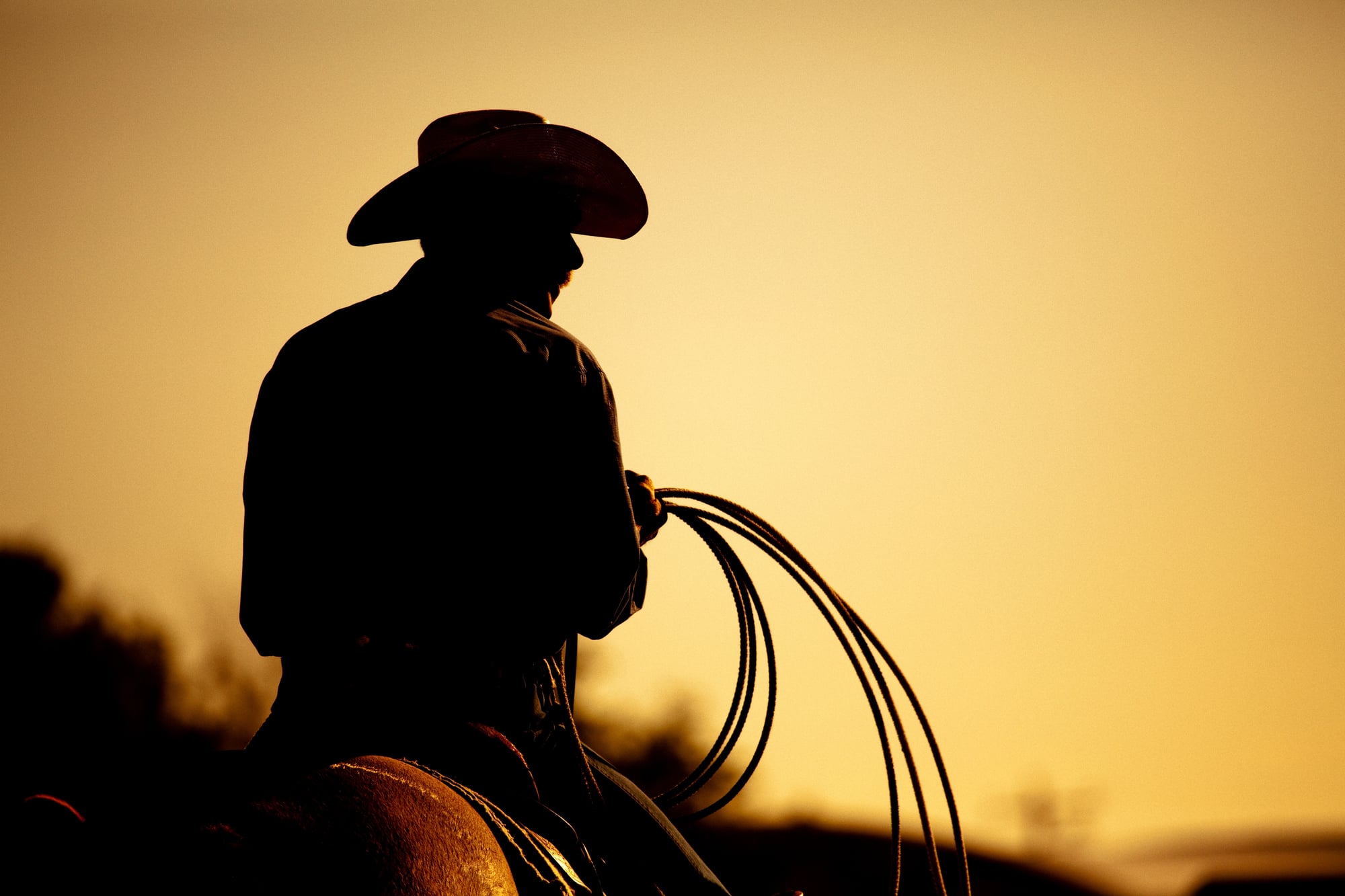
Thomas Horn Jr. occupied a gray area between law enforcement and criminality that characterized many figures of the Old West. Thomas Horn Jr. (November 21, 1860 – November 20, 1903) was an American scout, cowboy, soldier, range detective, and Pinkerton agent in the 19th-century American Old West. Believed to have committed 17 killings as a hired gunman throughout the West.
The distinction between detective and assassin blurred in Horn’s case. He worked for cattle barons and mining interests, eliminating problems that couldn’t be solved through conventional legal channels. His methods were effective but morally questionable, representing the kind of private justice that flourished in territories where official law enforcement was weak or corrupt.
Horn was convicted in 1902 of the murder of 14-year-old Willie Nickell near Iron Mountain, Wyoming. Willie was the son of sheep rancher Kels Nickell, who had been involved in a range feud with neighbor and cattle rancher Jim Miller. On the day before his 43rd birthday, Horn was executed by hanging in Cheyenne, Wyoming. While in jail he wrote his autobiography. His execution for killing a child marked the end of an era when hired guns could operate with relative impunity.
Robin Hood

The most enduring outlaw legend comes wrapped in so much mythology that separating fact from fiction becomes nearly impossible. However, the first known literary reference to Robin Hood and his men was in 1377, and the Sloane manuscripts in the British Museum have an account of Robin’s life which states that he was born around 1160 in Lockersley (most likely modern-day Loxley) in South Yorkshire.
The early ballads link Robin Hood to identifiable real places. In popular culture, Robin Hood and his band of Merry Men are portrayed as living in Sherwood Forest, in Nottinghamshire. Notably, the Lincoln Cathedral Manuscript, which is the first officially recorded Robin Hood song (dating from approximately 1420), makes an explicit reference to the outlaw that states that “Robyn hode in scherewode stod.”
Certainly, the legend as we know it today is largely fiction. But there still may have been real outlaws that inspired the tales. One popular candidate is Robert Hod, who appears in the court records of Yorkshire in the 1220s. The historical Robin Hood, if he existed, was likely far different from the noble-hearted champion of justice we remember.
Robin became a popular folk hero because of his generosity to the poor and down-trodden peasants, and his hatred of the Sheriff and his verderers who enforced the oppressive forest laws made him their champion. This appeal explains his persistence across centuries — every generation finds something to identify with in the story of someone standing up to corrupt authority.
The Sheriff of Nottingham

Every outlaw legend needs an antagonist, and few have been as enduring as Robin Hood’s nemesis. One real-life 14th-century sheriff of Nottinghamshire and Leicestershire was an actual ally to outlaw gangs – Sir Robert Ingram. R.B. Dobson and J. Taylor suggested that Ingram might be the inspiration for the legendary villain. The irony that the sheriff might have been based on someone who actually helped outlaws adds another layer to the legend’s complexity.
However, various writers have given the sheriff a proper name. Robin Hood’s treacherous steward Warman becomes the sheriff in Anthony Munday’s 1599 play The Downfall of Robert, Earle of Huntington. The sheriff is named Robert de Rainault in E. Charles Vivian’s Robin Hood children’s novel and this name was later used in the 1980s TV series Robin of Sherwood. Each adaptation creates its own version of the character, reflecting the needs and biases of its particular era.
The Sheriff represents authority run amok — corrupt, self-serving, oppressive. He becomes whatever people need him to be in order to make Robin Hood’s rebellion seem justified and necessary. Without a proper villain, after all, heroes lose much of their appeal.
Pancho Villa

Francisco “Pancho” Villa straddled the line between revolutionary and bandit, depending on your political perspective and which side of the border you happened to be standing on. For example, Pancho Villa was a bandit from Durango, Mexico who also conducted cross-border raids into New Mexico and Texas. His activities in American territory made him a wanted man north of the Rio Grande, but south of it, many saw him as a folk hero fighting against injustice.
Villa’s story illustrates how context shapes perception. What one government calls banditry, another might call legitimate resistance to oppression. His raids into American territory brought military response and made him an international figure, but they also represented broader conflicts over land, resources, and political control that couldn’t be resolved through conventional diplomatic channels.
The complexity of Villa’s legacy — hero to some, terrorist to others — reflects the messy reality of border regions where different legal systems, cultures, and economic interests collide. He remains a controversial figure whose true motivations and methods continue to be debated by historians and politicians alike.
Where Legends Meet Truth

The distance between historical fact and popular memory creates space for these figures to become whatever we need them to be. They represent different things to different people: freedom fighters or criminals, romantic figures or cold-blooded killers, symbols of resistance or cautionary tales about the price of lawlessness.
The legendary exploits of famous western outlaws and their larger-than-life personas have captivated the world, leaving behind a remarkable legacy. From the Wild West’s infamous gunslingers to legendary pirates, these daring individuals have made their mark on history. It’s time to saddle up and explore the lives, misdeeds, and lasting impact of some of the most famous outlaws to have ever walked the earth.
What persists isn’t necessarily accuracy but appeal. These stories endure because they speak to something fundamental in human nature — the desire to rebel against unfairness, to live outside conventional boundaries, to matter in ways that ordinary life doesn’t allow. Whether the people behind the legends actually embodied these ideals matters less than the fact that we want to believe they did.
The truth about most of these figures is probably messier, more complicated, and less heroic than their legends suggest. But legends serve different purposes than history. They give us permission to imagine different ways of living, different responses to injustice, different relationships with authority and power. In a world that often feels constrained by rules and systems beyond our control, outlaw legends offer the intoxicating possibility of saying no — and getting away with it, at least for a while.
More from Go2Tutors!

- The Romanov Crown Jewels and Their Tragic Fate
- 13 Historical Mysteries That Science Still Can’t Solve
- Famous Hoaxes That Fooled the World for Years
- 15 Child Stars with Tragic Adult Lives
- 16 Famous Jewelry Pieces in History
Like Go2Tutors’s content? Follow us on MSN.



