29 Old Binoculars With Distinctive Design Features
Pick up a pair of old binoculars and the first thing you notice is the weight. The second is how much thought went into the shape: where the prisms sit, how the focus works, what the maker chose to engrave on the top plate.
Behind each pair is a design decision that someone argued over in a drawing office. Some solved a military problem, some solved a pocket problem, and a few mostly solved the problem of looking good in a theater box.
The 1894 Zeiss Porro-Prism Breakthrough
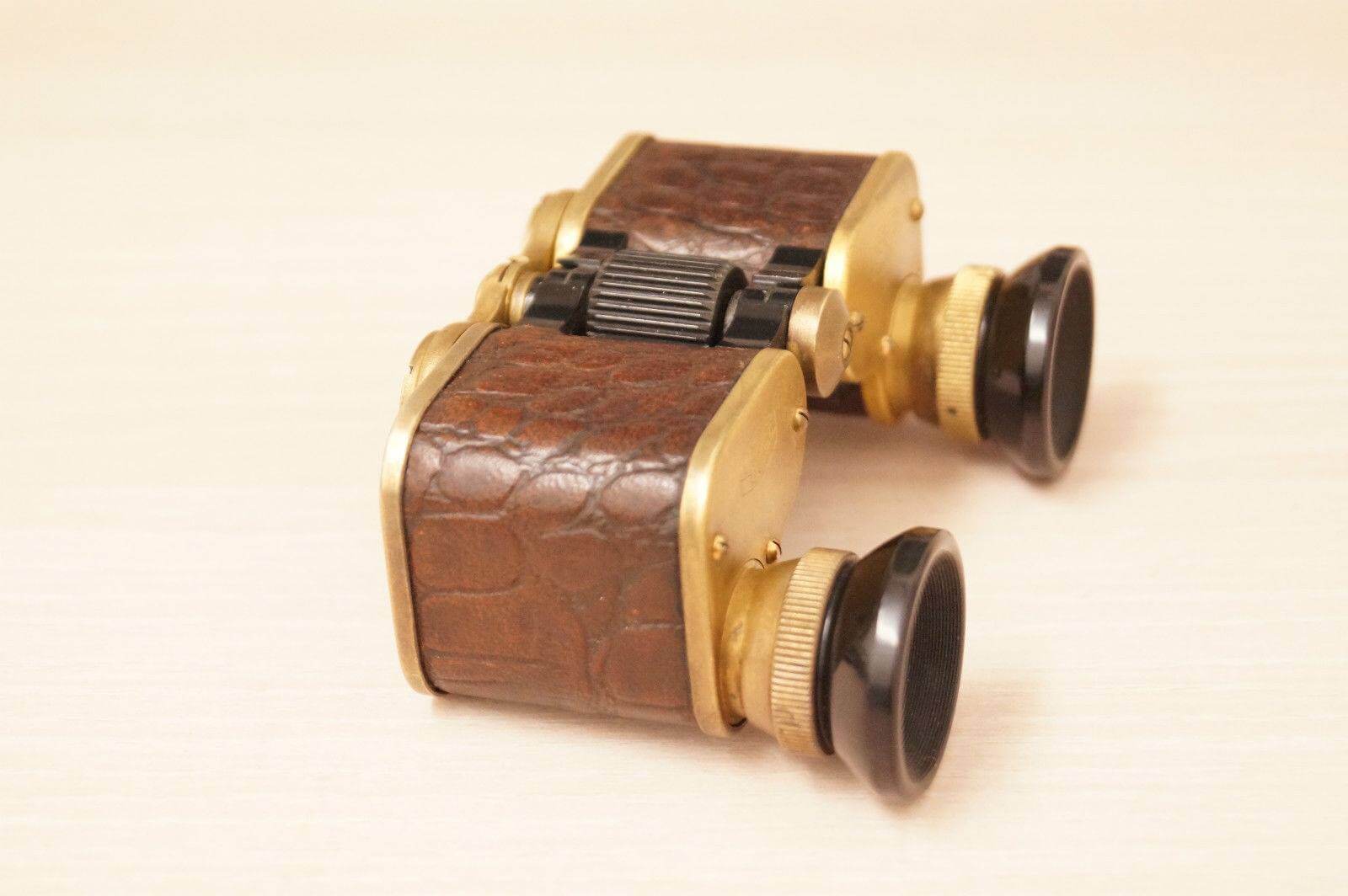
Carl Zeiss introduced prism binoculars in 1894, building on the work of Ernst Abbe and using a prism layout named for the Italian inventor Ignazio Porro. The layout flips the image upright by sending light through two right-angle prisms, which also shifts the objective lenses wider than the eyepieces.
That wide, stepped-out silhouette is still the quickest way to recognize a Porro binocular across a room. Early examples are scarce, and their value swings sharply with the condition of the prisms, the coatings, and the original finish.
Zeiss Jena Deltrintem 8×30
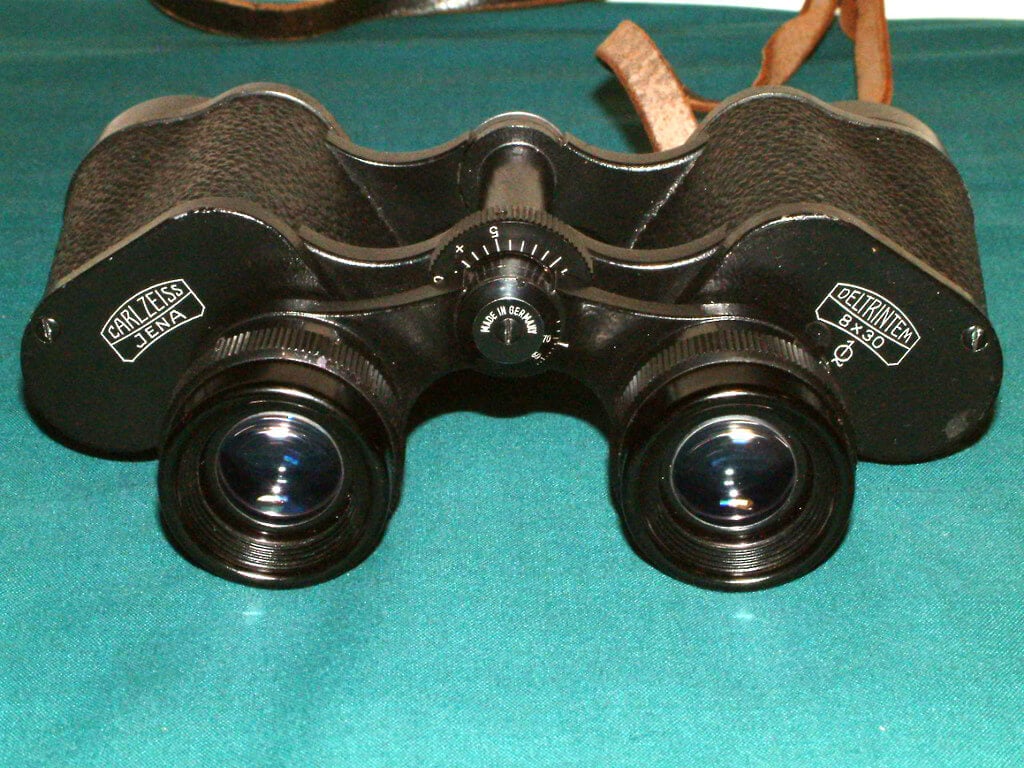
The Deltrintem was a compact 8×30 Porro-prism glass made by Carl Zeiss in Jena, and it is regarded as one of the maker’s classic models. Its slim 30 millimeter barrels keep the body compact for a glass of that magnification.
Collectors look for clean, unscratched optics, an intact leather covering, and a smooth center focus wheel. Because so many were used hard, a pair that has escaped serious wear commands far more interest than a typical survivor.
Hensoldt Dialyt Roof-Prism Glass
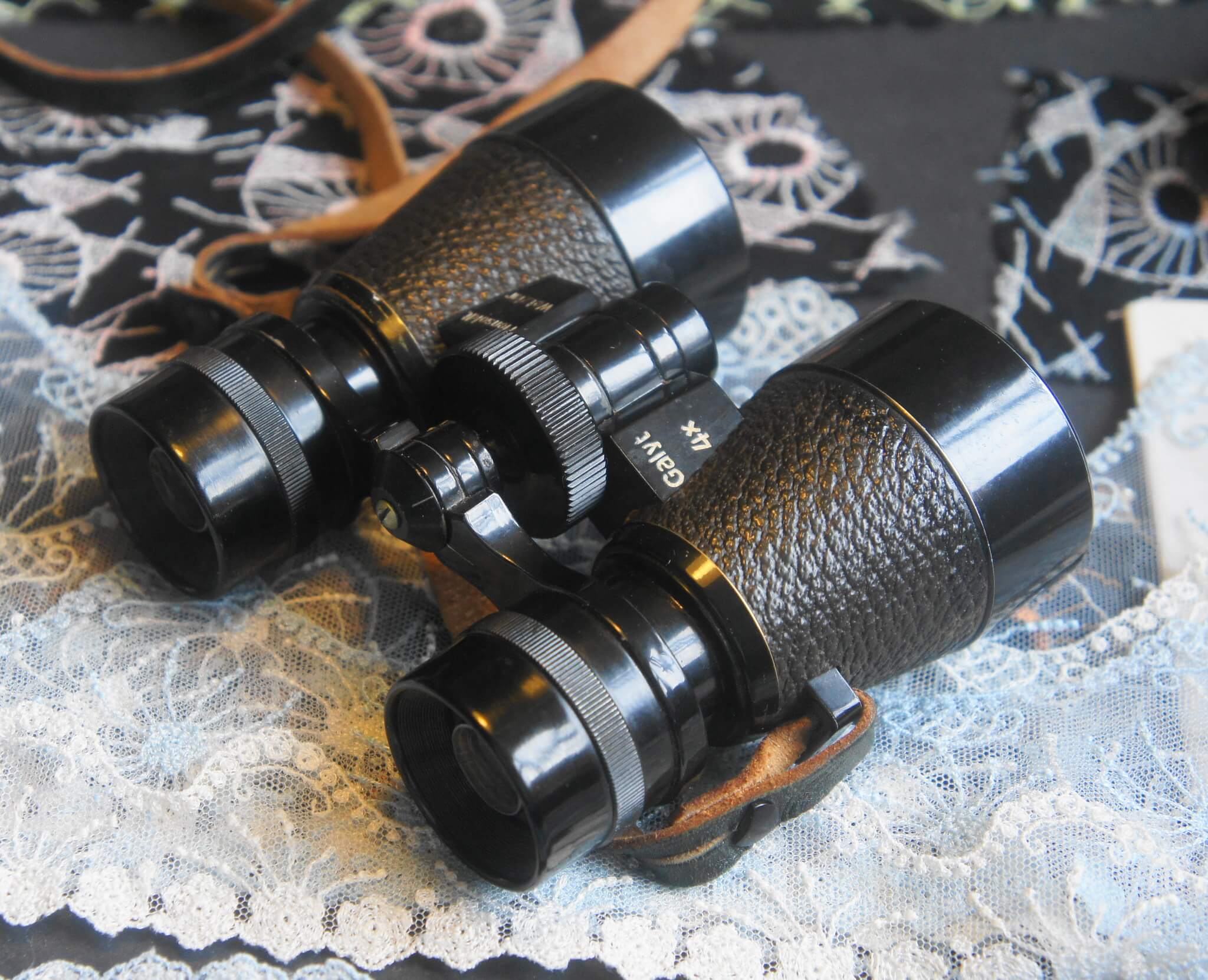
M. Hensoldt and Sons of Wetzlar built the Dialyt around roof prisms, which let the barrels run straight rather than stepping outward like a Porro design. The name refers to a dialytic lens arrangement, in which lens elements are separated rather than cemented together.
Carl Zeiss took over the Hensoldt firm in 1928, and the Dialyt line outlived that change of ownership. Models such as the 5×35 and 10×50 turn up with their original leather cases, and their collector value leans heavily on the alignment and condition of the optics.
Barr & Stroud CF41 Admiralty 7×50
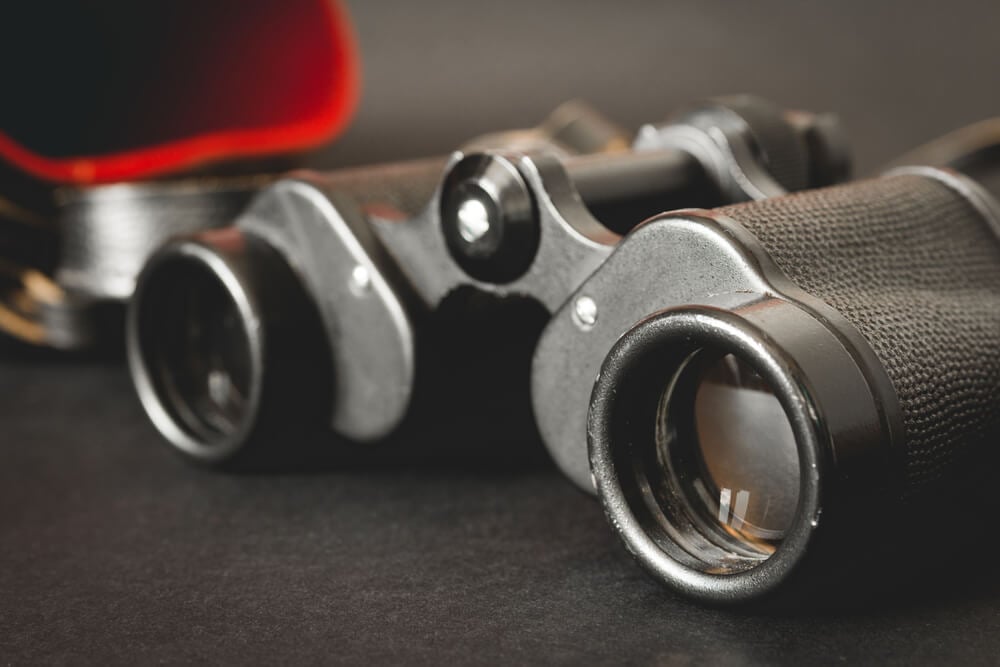
The CF41 was a 7×50 binocular made in Glasgow by Barr & Stroud for the Royal Navy, and examples dated around 1944 and 1945 are well documented. Barr & Stroud was better known for naval rangefinders, so the firm came to binoculars with a gunnery mindset.
The 7×50 formula gives a large exit pupil, which is why night watch officers favored it. A pair with intact Admiralty markings and clear prisms is far more desirable than one that has been repainted or had its markings ground off.
Bausch & Lomb Mark 28 Navy 7×50
The Mark 28 Mod 0 was a 7×50 binocular built by Bausch & Lomb for the U.S. Navy Bureau of Ships, and dated examples from 1943 are common among collectors. The Mark designation sat on the top plate alongside the maker and the year, a labeling habit that makes wartime U.S. Navy glasses easy to sort.
Like other naval 7x50s, it used individual eyepiece focusing so the user could set each eye once and leave it. Original lens coatings and a matching case make a large difference to what collectors will pay.
Mark 32 Mod 2 From a Camera Company
The Mark 32 Mod 2 is a 7×50 Navy binocular that was built in 1943 by Universal Camera Corporation, a company better known for cameras than for naval optics. Wartime demand pulled many unlikely manufacturers into binocular production, and the Mark system let the Navy standardize a design across several of them.
These glasses were often supplied with an M24 carrying case, and pairs with the original case attract more interest. As with all military optics, value depends heavily on condition, especially the state of the prisms.
Anchor Optical Mark 32 Mod 7
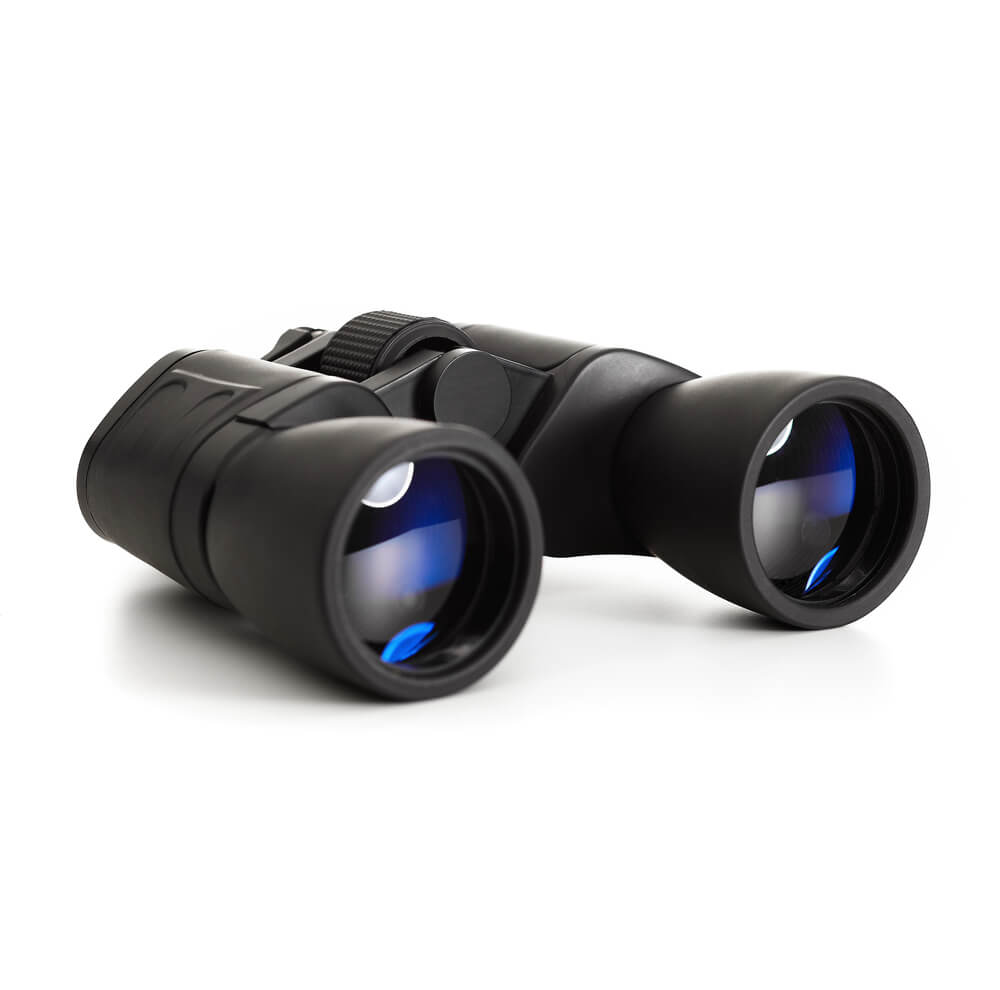
An Anchor Optical Corporation Mark 32 Mod 7 dated 1945 shows how long the Navy’s 7×50 pattern stayed in service as new makers joined the program. The Mod number tells collectors which revision of the design they are holding, and small differences between Mods are a favorite topic among specialists.
Some surviving pairs turn up in cases carrying the Bausch & Lomb name. Clean optics and intact markings matter more to value than the case does.
Mark 37 9×63 Naval Gun Factory Glass
The Mark 37 was a big 9×63 binocular produced by Bausch & Lomb in 1943 and 1944 under the Naval Gun Factory designation. The 63 millimeter objectives gather considerably more light than a standard 7×50, which suited low-light lookout work.
The size alone makes it a heavy lift, and it was never a casual carry. Condition drives its value, with clean prisms and sound mounting hardware being the biggest factors.
Bausch & Lomb Zephyr 7×35
The Zephyr 7×35 is remembered as a light, handy glass from the era when 7×35 was a popular class for general use. Many were covered in leather or a textured skin.
The 35 millimeter objectives keep the weight well below that of a 7×50 while still giving a bright image. Cosmetic wear is common, so the optical condition is what separates a collectible from a drawer find.
Nikon 20×120 Naval Bridge Big Eyes
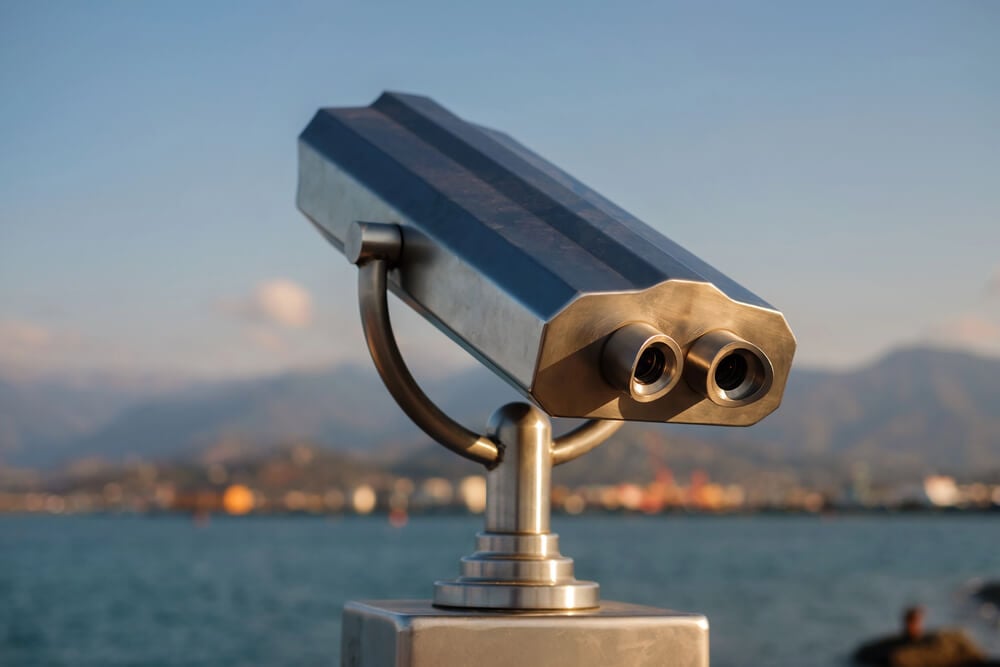
Nippon Kogaku, the company that later became Nikon, built 20×120 naval bridge binoculars in the 1940s that dealers still describe as big eye glasses. The 120 millimeter objectives are enormous, and the glasses sat on a pedestal rather than hanging from a strap.
At 20x, they were meant for spotting ships and aircraft at long range, not for casual scanning. Their size and rarity mean value depends on the integrity of the stand and the clarity of the optics as much as on the name.
Fuji Meibo 15×80 Marine Big Eyes
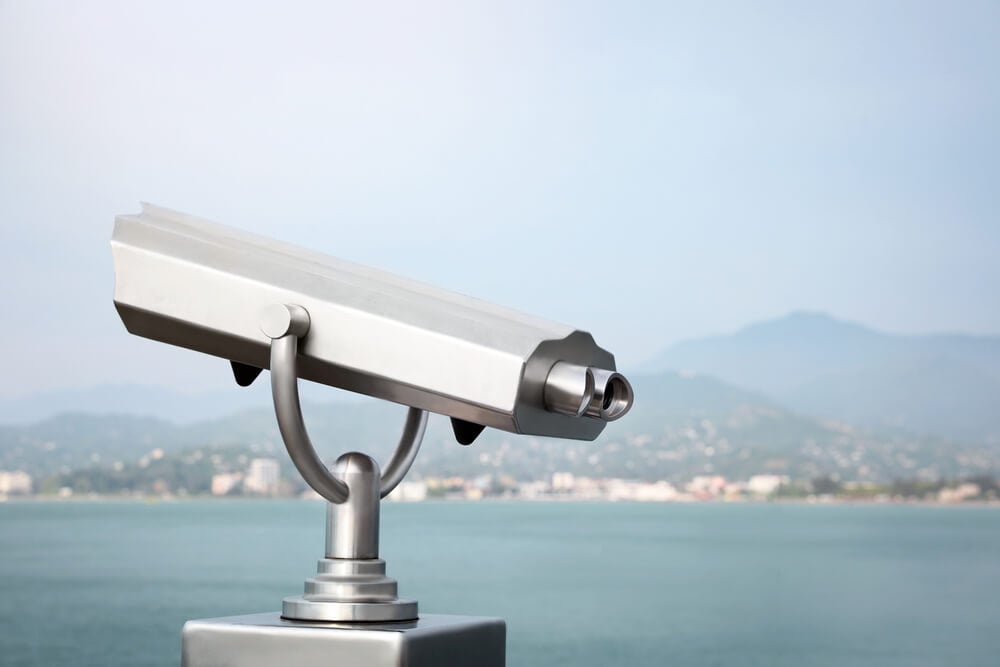
Fuji’s Meibo 15×80 marine binoculars are another example of the Japanese big eye type, with huge 80 millimeter objectives and a pedestal mount. The Fuji name appears on a long list of Japanese military optics from the 1940s.
Surviving pairs are prized for their sheer scale, and they dominate any shelf they sit on. Collectors pay close attention to condition, particularly the prisms and the smoothness of the mount.
Fuji Army 6x With a Graticule

A Japanese Army binocular made by Fuji Shashin Koki K.K. carried 6x magnification and a 9.3 degree field, with a graticule etched into the optics for estimating range and angle. The reticle turns an ordinary spotting glass into a measuring tool, because a known target size against the marks yields a distance.
Binoculars with reticles were standard for artillery observers. Intact graticules and unclouded glass make these far more desirable than ones with fogged optics.
Tokyo Optical 7x With a 7.1 Degree Field
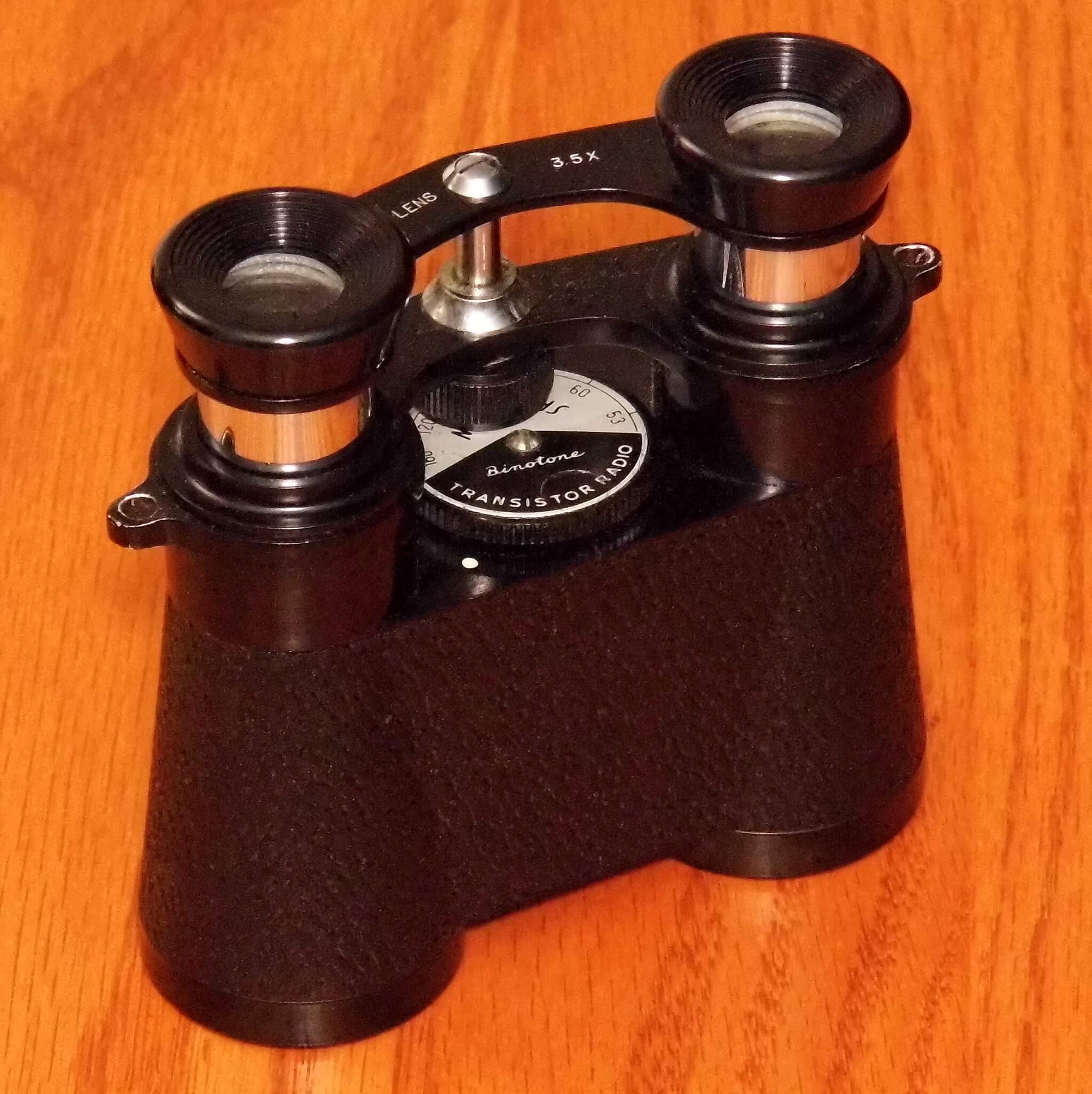
Tokyo Optical, known by the shorthand Toko, produced Imperial Japanese Army binoculars marked as 7x with a 7.1 degree field. Printing the field angle on the glass was a practical military habit, telling the user how much sky or terrain a view covers.
These binoculars often came with a canvas case. Value depends on the condition of the optics and on whether the markings remain legible.
Goerz Trieder and Heli-Trieder
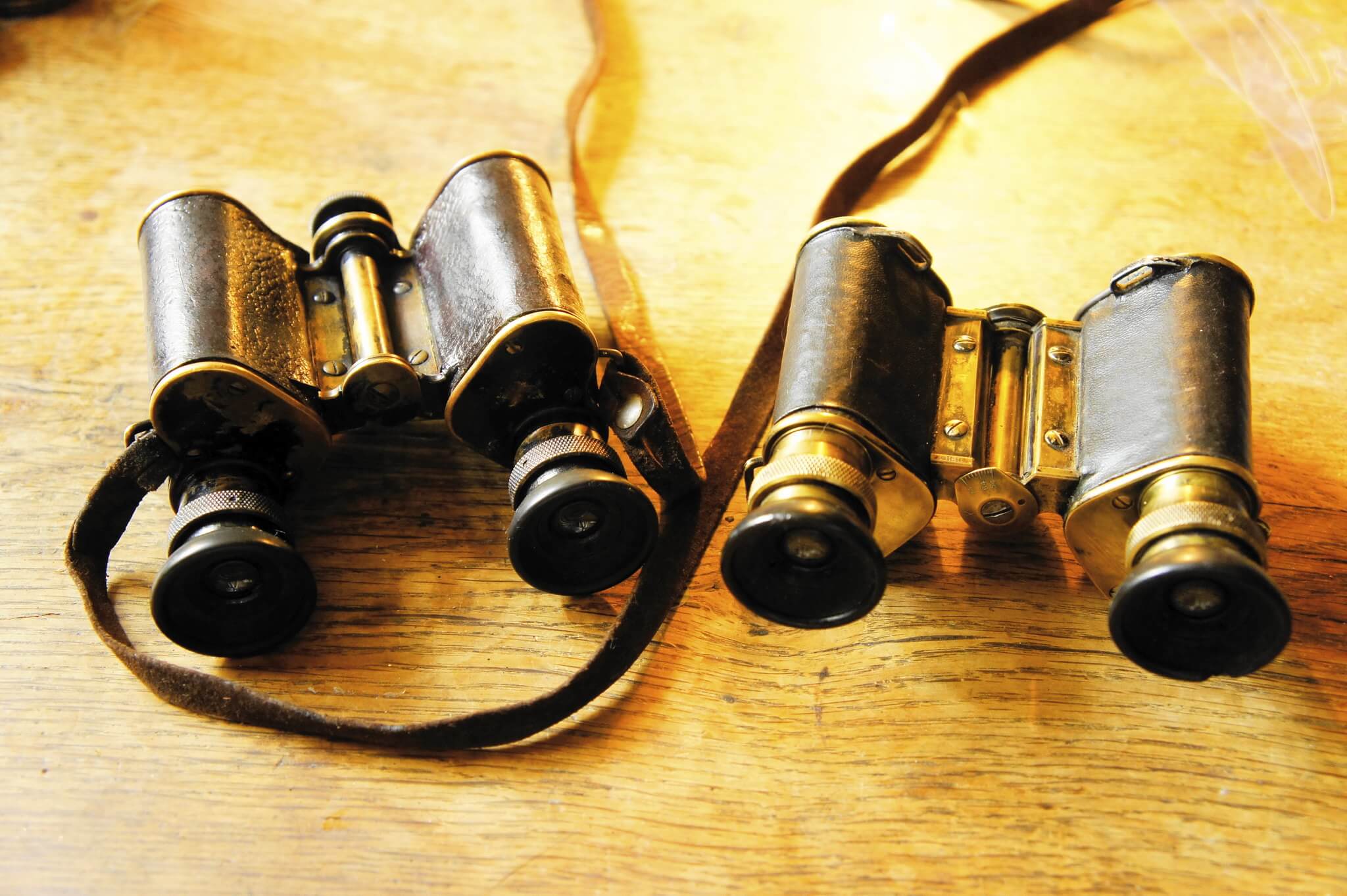
C. P. Goerz of Berlin sold its prism binoculars under the Trieder name, and a model called the Heli-Trieder from 1911 is documented in collections. The Science Museum in London holds a tiny Trieder Porro-type opera glass with 3x power and 12 millimeter objectives, proof that the Porro layout could be shrunk well below field-glass size.
Goerz Trieders turn up in their original leather cases from the early 1900s. Value depends on the condition of the barrels and prisms.
Zeiss Turita 8×24
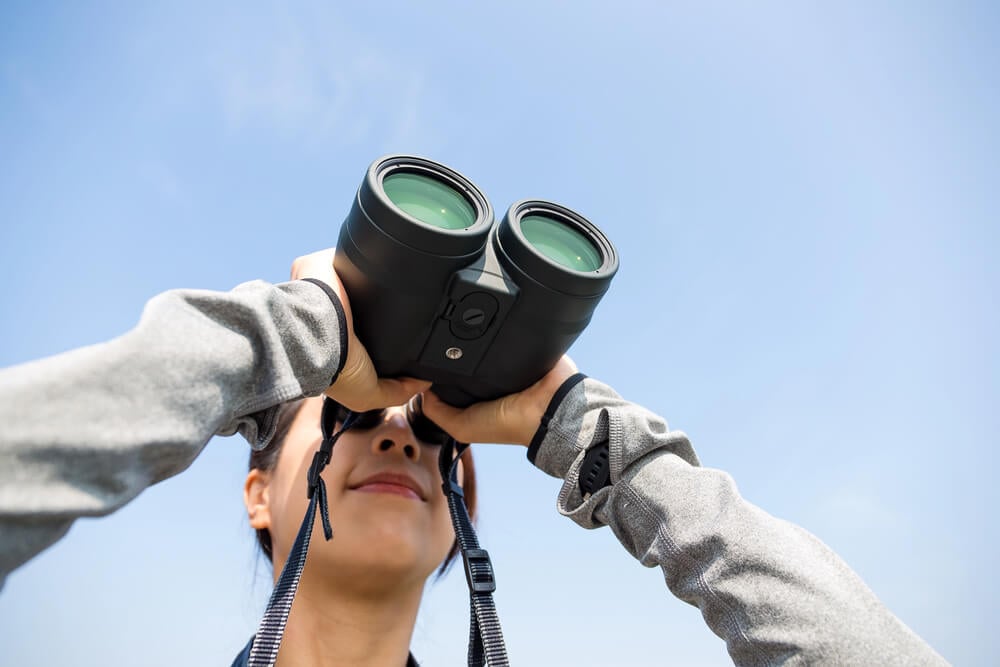
The Turita 8×24 was a small Zeiss binocular, and one pair is documented as having belonged to Ernest Hemingway. Its small body made it a travel glass for people who wanted real magnification without a field glass dangling from the neck.
Compact Zeiss glasses of this kind are valued for the sharpness of their optics relative to their size. A pair in good condition with a clean leather case attracts attention, while one with damaged prisms or a bent hinge does not.
Zeiss Telita 6×18 Pocket Glass
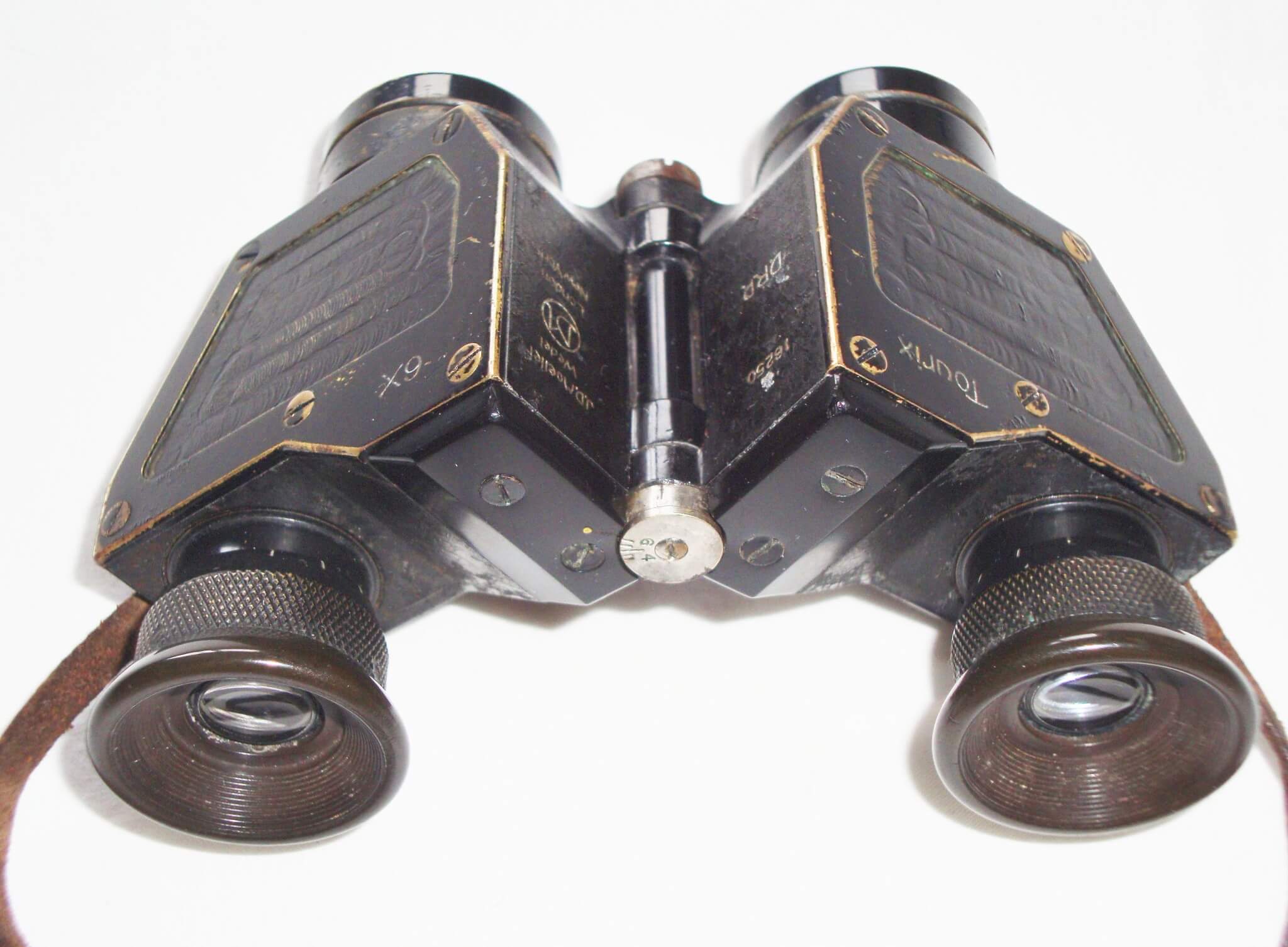
The Telita was a 6×18 pocket binocular from Zeiss, small enough to slip into a vest. It sits in the family of compact Zeiss glasses alongside the Turita, built for people who wanted a discreet viewing aid.
Its tiny 18 millimeter objectives limit light gathering, so it works best in daylight. Surviving examples with their cases are the ones collectors favor, and optical condition decides the rest of the value.
Zeiss Dienstglas 10×50 With Maker Codes
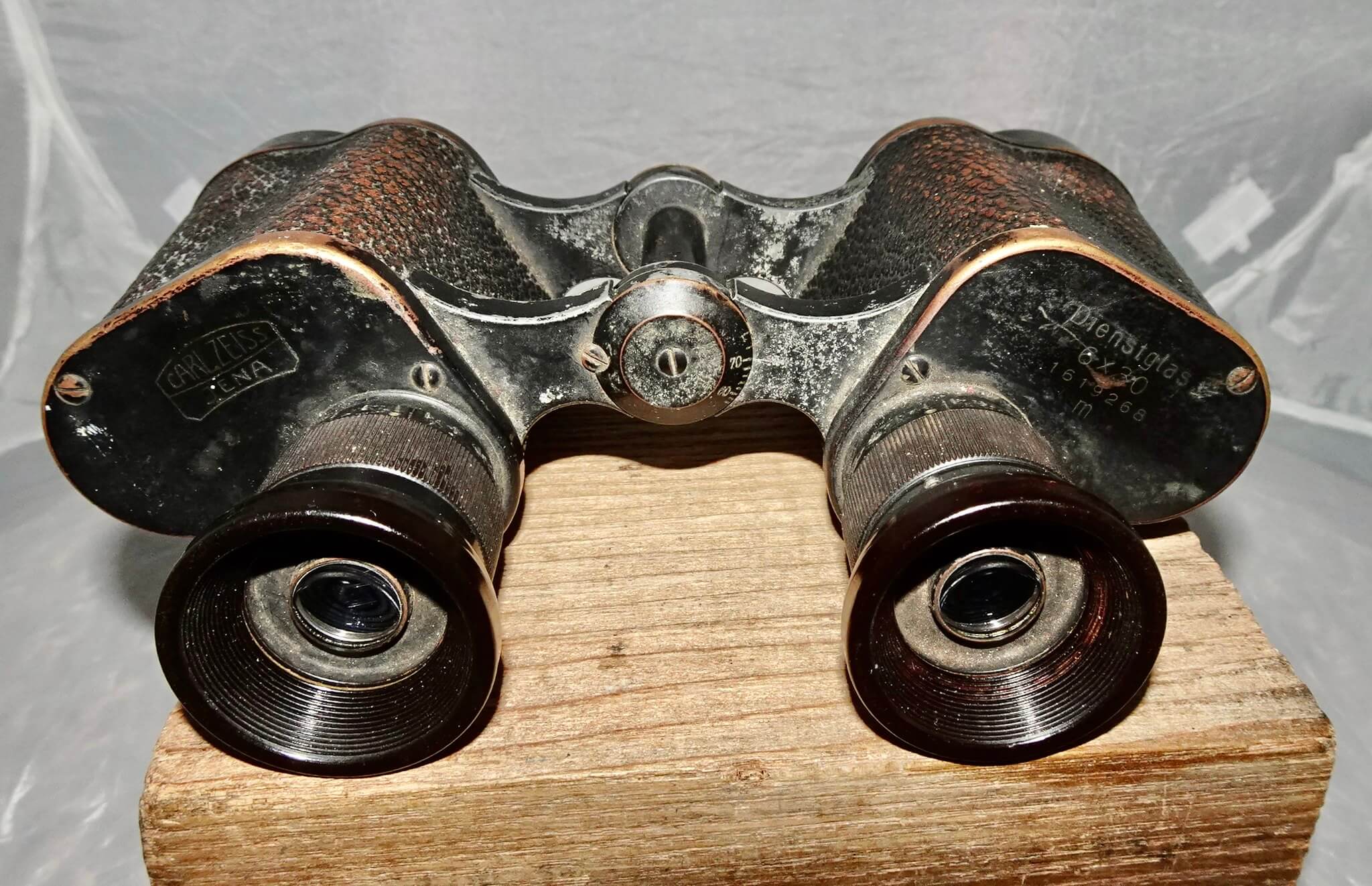
The German 10×50 Dienstglas of the Second World War is stamped with a three-letter code, such as blc, in place of the maker’s full name. Zeiss made these glasses in both Jena and, in the wartime period, under code marks that collectors now decode.
The 10×50 pattern was a service standard, and surviving pairs are often dated to the years from 1939 to 1944. Original coatings, a clear view, and a matching leather case drive the value.
Soviet BPC Series
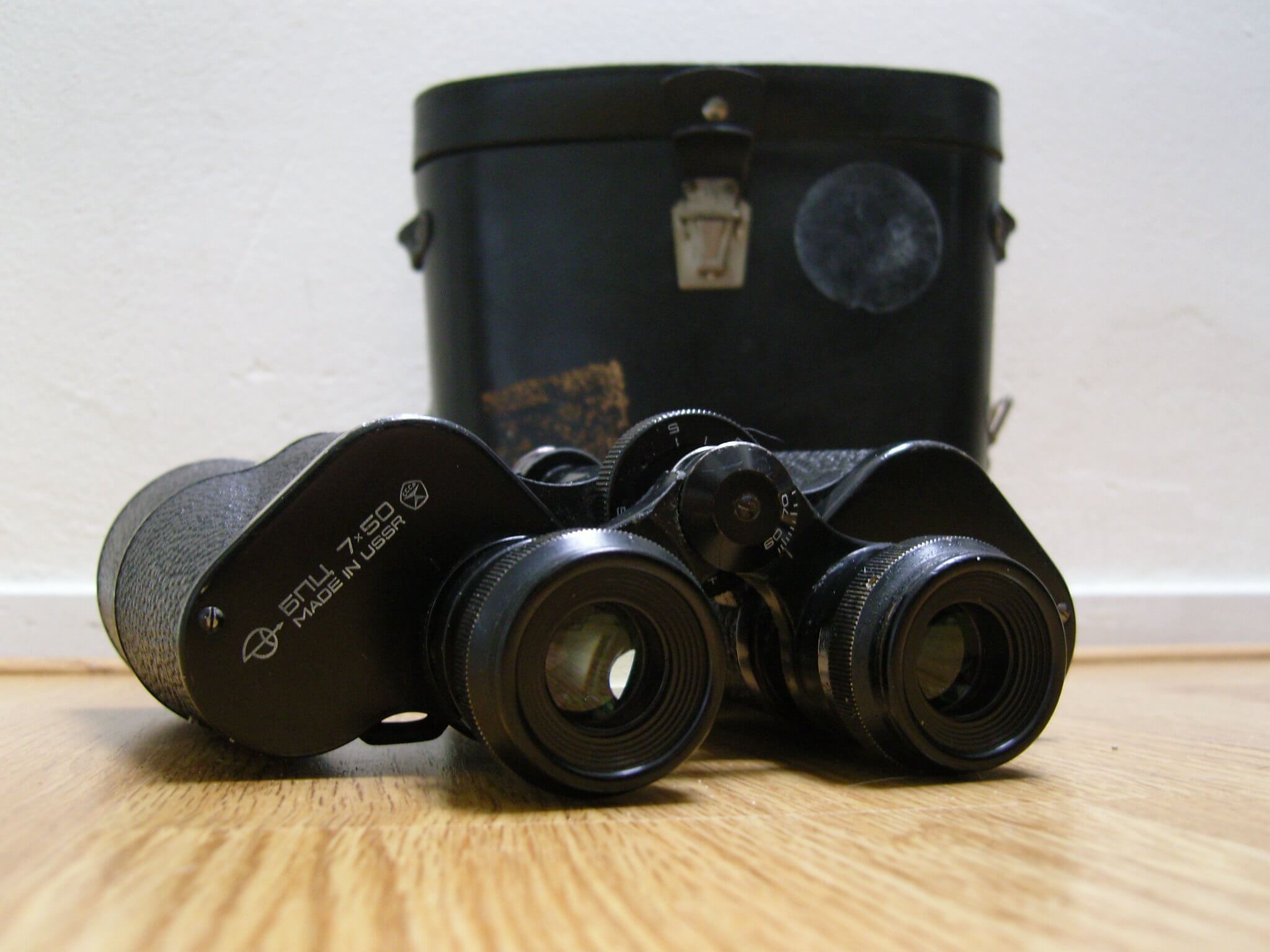
The Soviet BPC family of Porro-prism binoculars covers models such as the BPC2 and the BPC4 8×30, and many were made in Leningrad. The State Optical-Mechanical Factory in Leningrad is listed among the early makers.
Military surplus pairs were sold off in large numbers, and some turn up with Romanian army surplus provenance. Condition is the main separator in this crowded field, with clear prisms and sound focus mechanisms being the buying priority.
Kershaw Prism No. 2 Mk II

Kershaw of Leeds, a firm that goes back to 1888 in the Science Museum’s records, produced a prism binocular labeled Prism No. 2 Mk II. The name follows the British habit of numbering and marking military patterns, which makes such glasses easy to trace.
Kershaw sold prismatic field glasses by catalog, and the Royal Museums Greenwich holds a Kershaw retail catalogue. Pairs with legible markings and sound prisms are the most sought after.
British Army 6x Binoculars Dated 1916

Army-issue 6x binoculars dated 1916 are among the most direct links to the First World War that a collector can hold. The low magnification kept the image steady and the field wide, which suited trench observation and general officer use.
Dated markings, War Department arrows, and maker names help establish provenance. Value depends heavily on condition, since many were damaged in service.
Wray RAF Binoculars
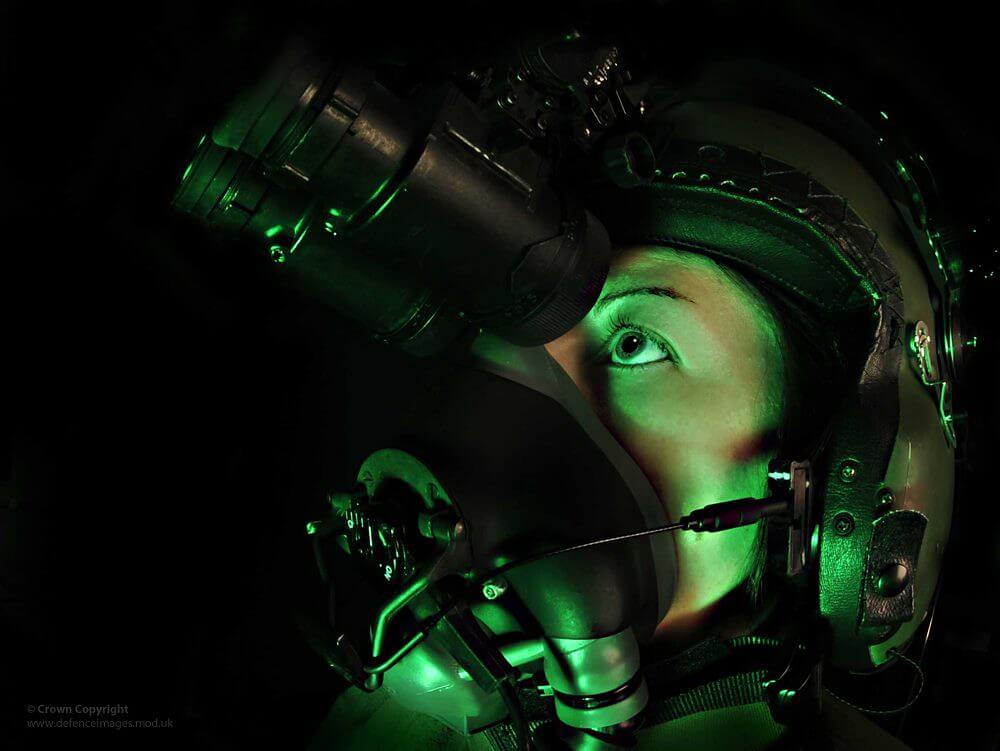
Wray of London supplied binoculars to the Royal Air Force, and auction records show pairs marked for RAF use. The firm had a long history as an optical maker, and the military markings are what set these pairs apart.
RAF issue glasses are often found with their leather cases and broad arrow marks. Value depends on the condition of the optics and the legibility of the markings.
Ross Stepmur 10×50
The Ross Stepmur is a 10×50 binocular from the British firm Ross, and it has been compared with Zeiss and Hensoldt glasses of the same size by modern reviewers. A 10×50 puts high magnification behind a large objective, so the glass is heavy and best used with a steady hold.
Ross is among the most respected names in British optics. Collectors weigh the condition of the coatings and the alignment heavily when pricing.
Leitz Trinovid
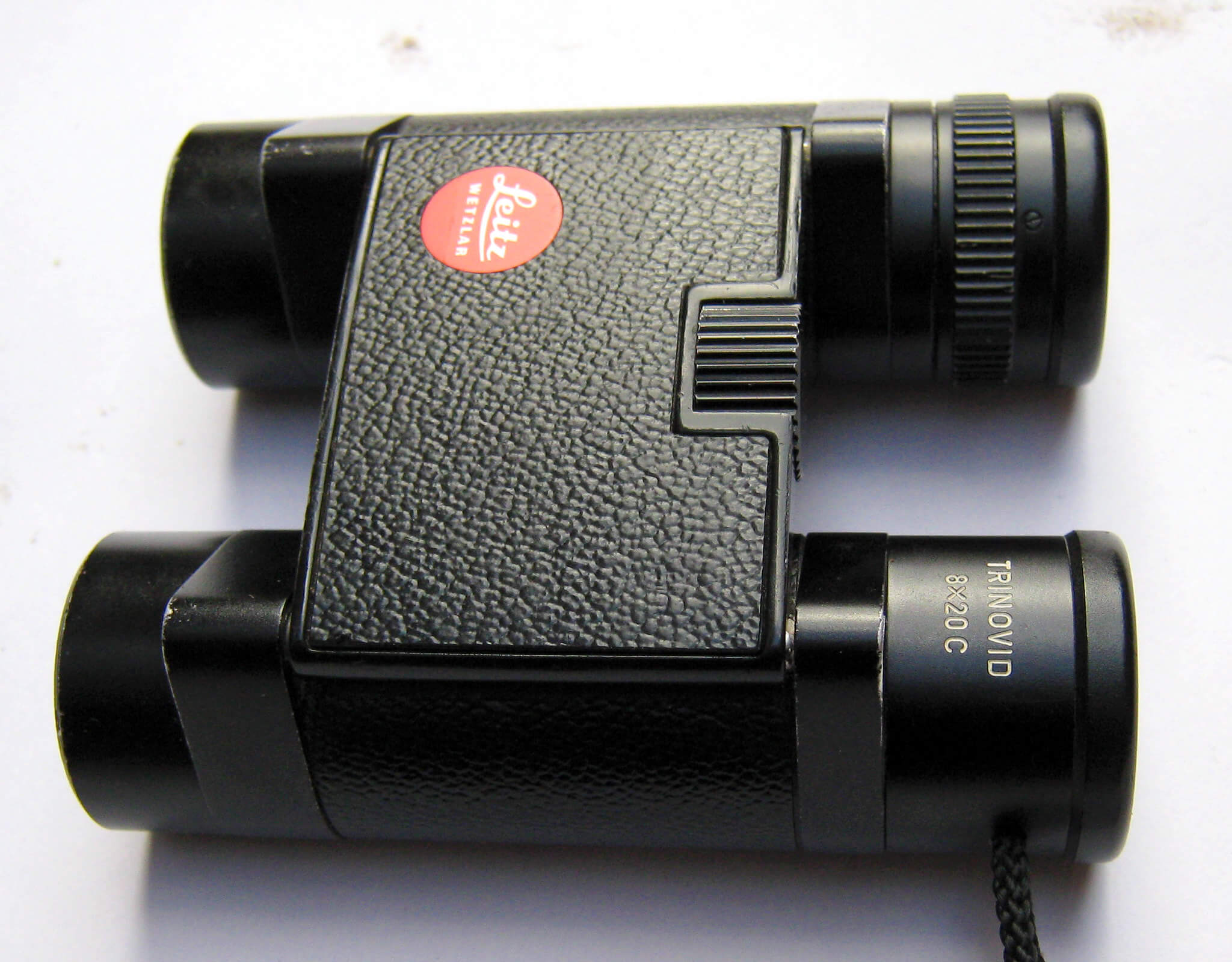
Leitz introduced the Trinovid in 1958, a roof-prism binocular that put straight, slender barrels into the hands of ordinary buyers. Its slim body stood apart from the broad Porro shape most buyers knew.
The name stuck around for decades and still appears on Leica binoculars today. Early examples are collected for their feel and finish, with value tied to condition.
Swarovski Habicht
The Habicht was the first product of Swarovski Optik, introduced in 1949 in Absam, Austria. Habicht is the German word for goshawk, a fitting name for a hunter’s binocular.
The early 7×42 model is the one collectors look for. A clean pair from the early years is worth more than a worn one, and original coatings play a large part.
Bushnell Banner Insta Focus 7×35

Bushnell Banner Insta Focus 7×35 binoculars were made in Japan and are marked with a field of 578 feet at 1000 yards. The Insta Focus name promised quick focusing for casual users such as sports fans and hunters.
They are plentiful, so condition and cleanliness are what decide collector interest. A pair with the original case and bright optics will sit well above a scuffed one.
Lemaire Mother-of-Pearl Opera Glasses

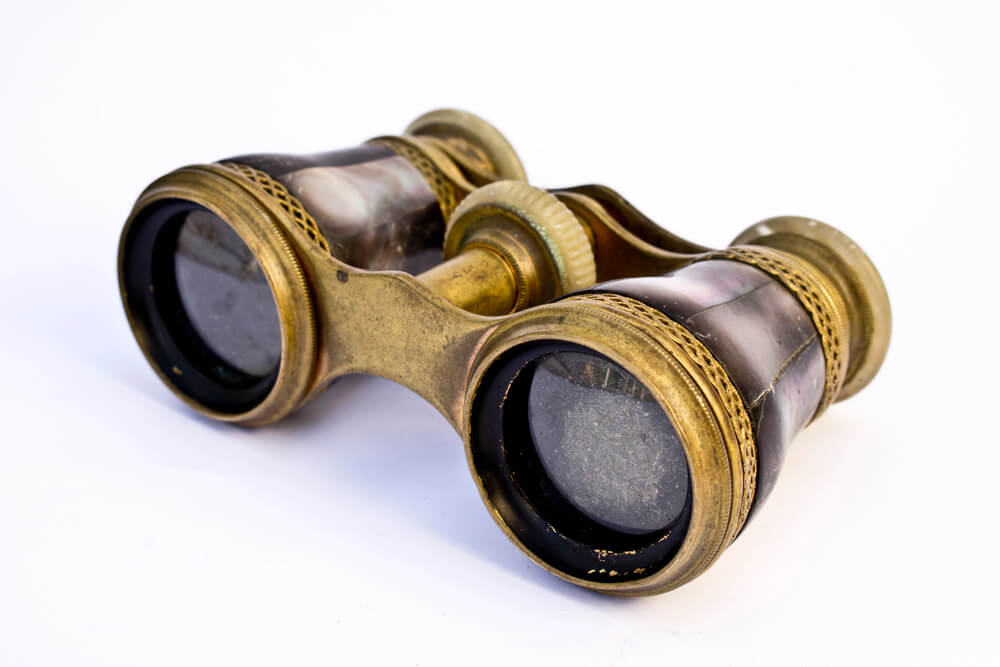
Lemaire of Paris made Galilean opera glasses with barrels covered in mother-of-pearl, a look that has become a shorthand for nineteenth-century theater. A Galilean design uses simple lenses with no prisms, so the glasses are slim and light.
Auction records attribute some to circa 1890, and many carry the Lemaire signature and brass fittings. Chips in the pearl, worn gilding, and clouded lenses all lower value.
Busch Fernglas 08
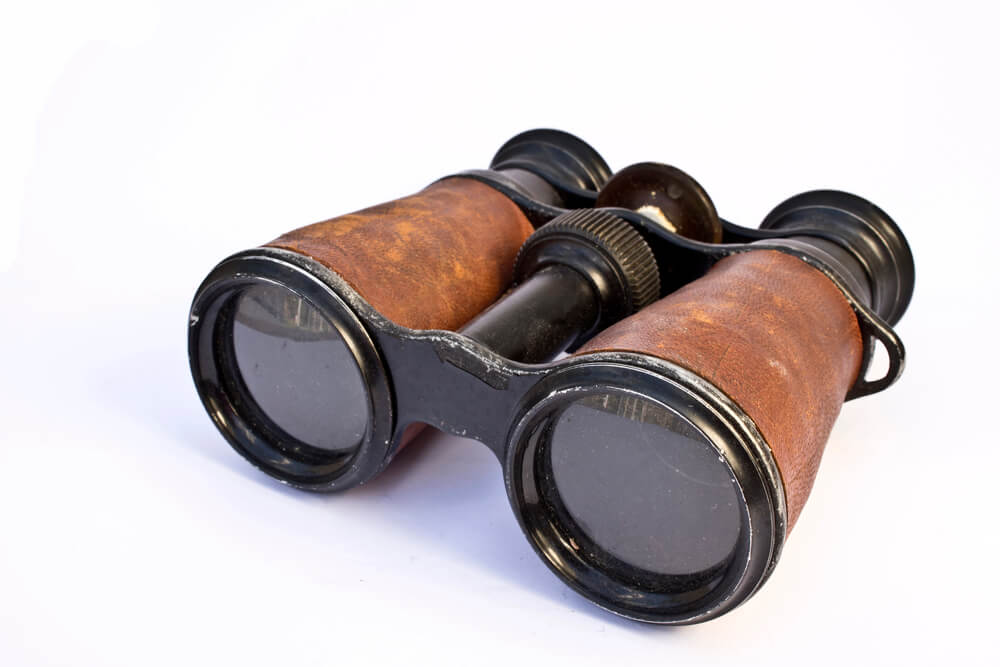
The Fernglas 08 was the German army’s field glass, and Emil Busch of Rathenow was among the firms that made it. The 08 in the name refers to the 1908 pattern.
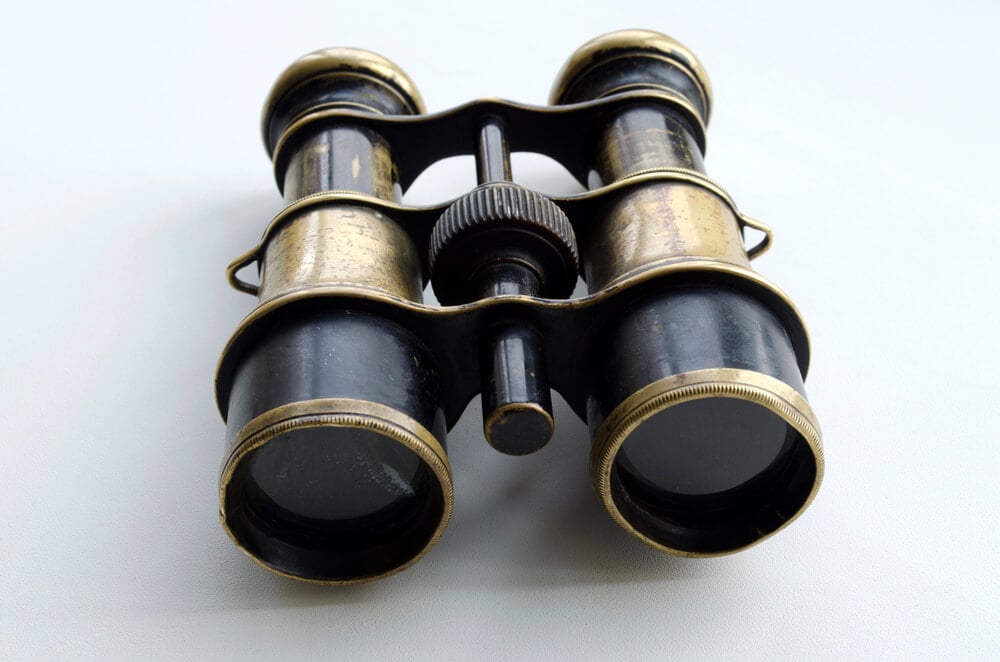
The glass was a rugged Porro design used across Imperial German units. Busch dated back to 1845, and surviving pairs with their leather cases are of keen interest, with value depending on condition.
Busch 10×80 on Stand
Busch built large 10×80 binoculars, and examples on a stand from around 1940 turn up on the market. The 80 millimeter objectives provide a wide light path, which suited observation posts and night work.
These glasses are far too large to carry by hand, so a tripod or pedestal is essential. A complete set with its stand and a clear view commands far more interest than a bare binocular.
Swift Audubon 8.5×44
Swift Instruments of Boston sold the Audubon with an unusual 8.5x magnification and 44 millimeter objectives, a combination that stood out in birding circles. The Audubon name tied it to bird watching.
Collectors of vintage birding glasses prize it for its optical character and build. As ever, clean prisms and good collimation matter more than cosmetic wear.
What Makes an Old Pair Worth Keeping

Taken together, these glasses show that binocular design has always been a series of trade-offs. Roof prisms trade complexity for slimness, Porro prisms trade bulk for brightness, and large objectives trade portability for light.
Military patterns added markings, reticles, and standard cases, while opera glasses added pearl and gilt.
That is why condition tells the real story when it comes to value. Prisms can cloud, coatings can wear, and mounts can drift out of alignment, and each fault changes what a pair can do.
A binocular that still lines up and still shows a clean image is the rare thing, whatever name is on the top plate.
More from Go2Tutors!

- 27 Silver Dollars and Half Dollars Worth Keeping
- 28 Restaurant Menu Items Nobody Orders Anymore
- 17 Places Built in Seemingly Impossible Spots
- 27 Vintage Rings Worth More Than They Look
- 25 Restricted Sites Tourists Can’t Enter
Like Go2Tutors’s content? Follow us on MSN.