29 Vinyl Records That Sound Wrong Because of a Factory Defect — and Sell for More
29 Vinyl Records That Sound Wrong Because of a Factory Defect — and Sell for More There’s something deeply counterintuitive about a broken thing being worth more than a perfect one. In most corners of the world, a flaw means a discount — a chip in the rim, a scratch on the surface, a stitch that ran crooked.
But vinyl collecting operates by a different logic entirely, one where the mistake becomes the artifact, where the factory’s bad day becomes the collector’s windfall. These are records that left the pressing plant wrong — wrong speed, wrong label, wrong groove, wrong everything — and sold for prices that would make the quality control manager quietly retire.
The Beatles’ “Please Please Me” Mispress

The Beatles’ “Please Please Me” Mispress The earliest UK pressings of the debut Beatles album occasionally turned up with severe groove mistracking on “I Saw Her Standing There,” caused by a mastering miscalculation at EMI’s Hayes plant. The record plays, technically — but it sounds like the needle is fighting the vinyl rather than following it.
Collectors pay a premium for documented copies of this variant precisely because the defect anchors the pressing to a specific chaotic moment in early 1963 production.
Elvis Presley’s “That’s All Right” on Sun 209
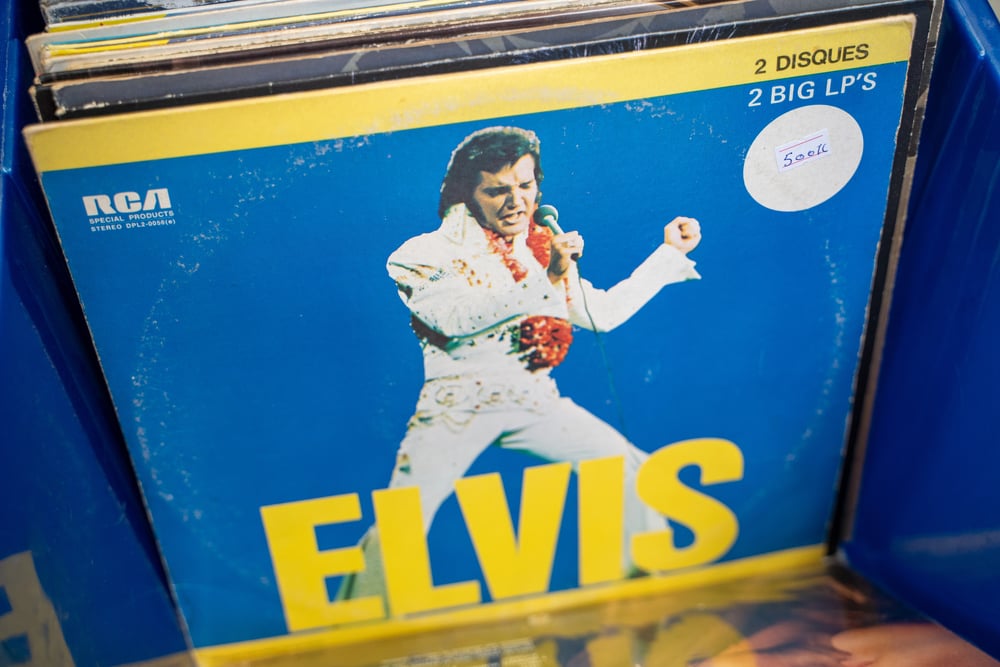
Elvis Presley’s “That’s All Right” on Sun 209 Sun Records in Memphis wasn’t exactly running a spotless factory operation in 1954, and early pressings of Elvis’s debut single sometimes came off the press with uneven groove depth — quieter in some passages, distorted in others, as if the lacquer master itself had been cut inconsistently. The sonic imperfection doesn’t diminish the record; it makes it more real, a physical document of a tiny studio operating at the absolute edge of its capability.
Authenticated Sun 209 originals with pressing anomalies routinely clear five figures at auction.
The Rolling Stones’ “Street Fighting Man” Promo
The Rolling Stones’ “Street Fighting Man” Promo Certain promo copies of this 1968 single were pressed with the wrong version of the track — a slightly different mix with a more prominent acoustic guitar — before the error was caught and corrected for the standard release. Radio stations received both versions during the same distribution window, which means some of those promo copies played on American airwaves sounding slightly different from what record buyers eventually brought home.
That discrepancy is now the whole point.
Bob Dylan’s “The Freewheelin’ Bob Dylan” Recalled Pressing
Bob Dylan’s “The Freewheelin’ Bob Dylan” Recalled Pressing This is arguably the most famous pressing defect in American rock history — an early stereo version of the album contained four tracks that were yanked before the official release, replaced with different songs. A handful of copies escaped the recall, and those copies (distinguishable partly by their sonic profile and pressing weight) represent one of the most aggressively chased variants in the entire Dylan catalog.
The defect here wasn’t a groove error or a speed issue: it was the wrong record, pressed right.
The Velvet Underground and Nico’s Peelable Banana
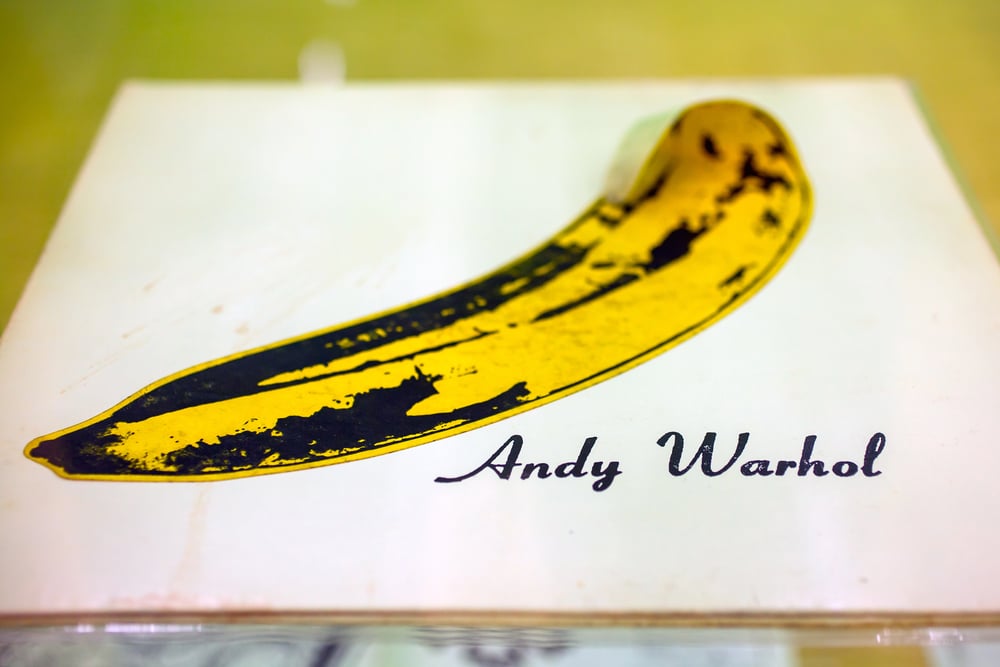
The Velvet Underground and Nico’s Peelable Banana Andy Warhol’s famous banana cover was designed so collectors could peel the yellow sticker to reveal a flesh-colored banana beneath — but early pressing runs show inconsistency in the adhesive used, with some copies adhering permanently and others peeling too easily and taking the cover art with them. The pressing defect isn’t in the vinyl itself but in the physical object as a whole, and copies where the banana behaved exactly as intended (peel cleanly, stay intact) command prices that reflect the fragility of the mechanism.
A banana that never quite worked costs you a conversation. A banana that worked perfectly costs you a car payment.
Led Zeppelin’s “Led Zeppelin IV” on Atlantic
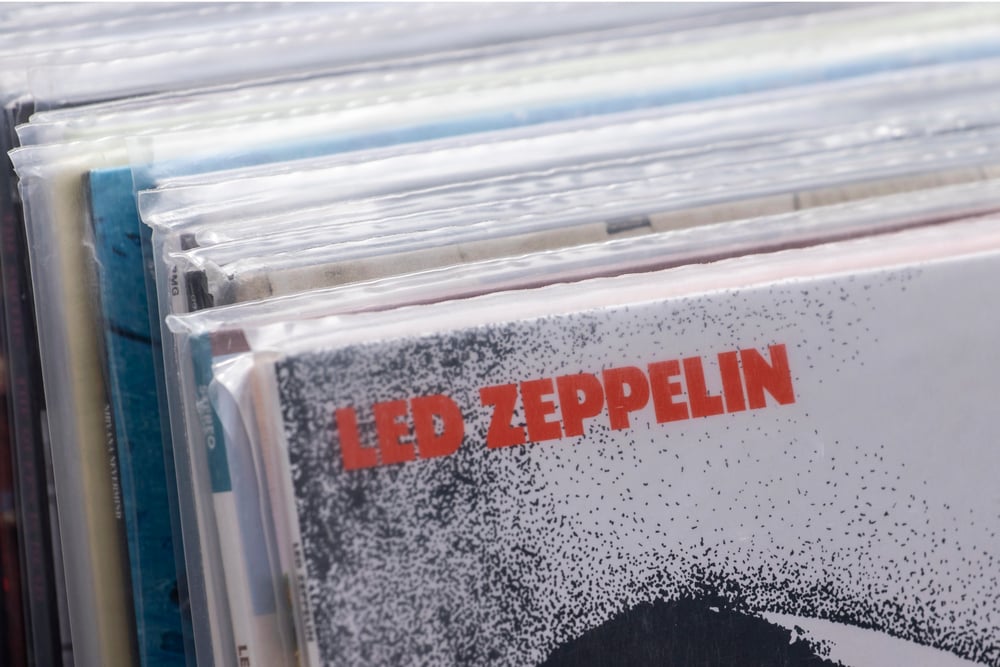
Led Zeppelin’s “Led Zeppelin IV” on Atlantic Some original Atlantic pressings from 1971 show a well-documented mastering defect in “When the Levee Breaks” — specifically a low-end resonance that causes cheaper turntable styli to skip entirely during John Bonham’s opening drum pattern. The irony is that the defect reveals itself only on inferior equipment, meaning the record that sounds wrong is also the record that sorts out who owns a real turntable.
Pressing plant workers at Atlantic’s contracted facility apparently ran the lacquers too hot on certain batches, compressing the groove walls unevenly.
The Clash’s “White Riot” on CBS
The Clash’s “White Riot” on CBS Early UK pressings of the debut Clash single came off the press with inconsistent groove spacing — tight enough in places that adjacent grooves risked cross-talk, that faint ghost of the next track leaking into the one playing. Punk’s own sonic violence made the defect easy to miss on a first listen, which is part of why these pressings circulated widely before anyone noticed.
The pressing problem survived in the marketplace because the music was chaotic enough to absorb it.
Jimi Hendrix’s “Are You Experienced” on Track Records

Jimi Hendrix’s “Are You Experienced” on Track Records The UK Track Records pressing from 1967 had a small number of copies leave the plant with the stereo channels reversed — left became right, right became left — a wiring error somewhere in the mastering chain that nobody caught before those specific copies shipped. Reversed-channel Hendrix pressings are real, verifiable with a mono comparison, and genuinely strange to listen to: the panning on “Third Stone from the Sun” feels wrong in a way you can’t immediately name.
Collectors call it the mirror pressing.
Nirvana’s “Nevermind” on DGC

Nirvana’s “Nevermind” on DGC The original 1991 DGC pressing of Nevermind contains a hidden track — “Endless, Nameless” — after approximately ten minutes of silence following “Something in the Way.” On a subset of early pressings, a mastering inconsistency caused the silence to be shorter than intended, with the hidden track beginning too abruptly.
Those copies play differently from later corrected pressings in a way that’s immediately audible, and since the album went on to sell thirty million copies, the original chaotic pressings are now something of a holy grail for collectors who care about the precise artifact of that specific cultural moment.
Prince’s “The Black Album”

Prince’s “The Black Album” Prince withdrew this album from release in 1987 — days before it was due to ship — claiming a spiritual experience changed his mind, though the real story is murkier. A small number of copies had already been pressed and distributed to distributors and reviewers before the recall went out.
Those escaped copies, pressed on standard black vinyl, circulate at prices that reflect their contraband status as much as any sonic variance — but the pressing defect is existential rather than acoustic: the record was never supposed to exist in a listener’s hands at all.
The Beatles’ “Yesterday and Today” Original Cover

The Beatles’ “Yesterday and Today” Original Cover The original cover version of this Capitol LP — showing the Beatles in butcher’s coats surrounded by raw meat and dismembered doll parts — was recalled immediately after distribution began in 1966 and replaced with a tamer image. Capitol pasted the new cover over the old one on many copies, and for decades collectors have been steaming off the paste-over to reveal the original image beneath, with varying degrees of success.
Copies where the original cover survives unmolested under a still-intact paste-over are now among the most valuable American pressings of any Beatles record.
Pink Floyd’s “The Dark Side of the Moon” on Harvest
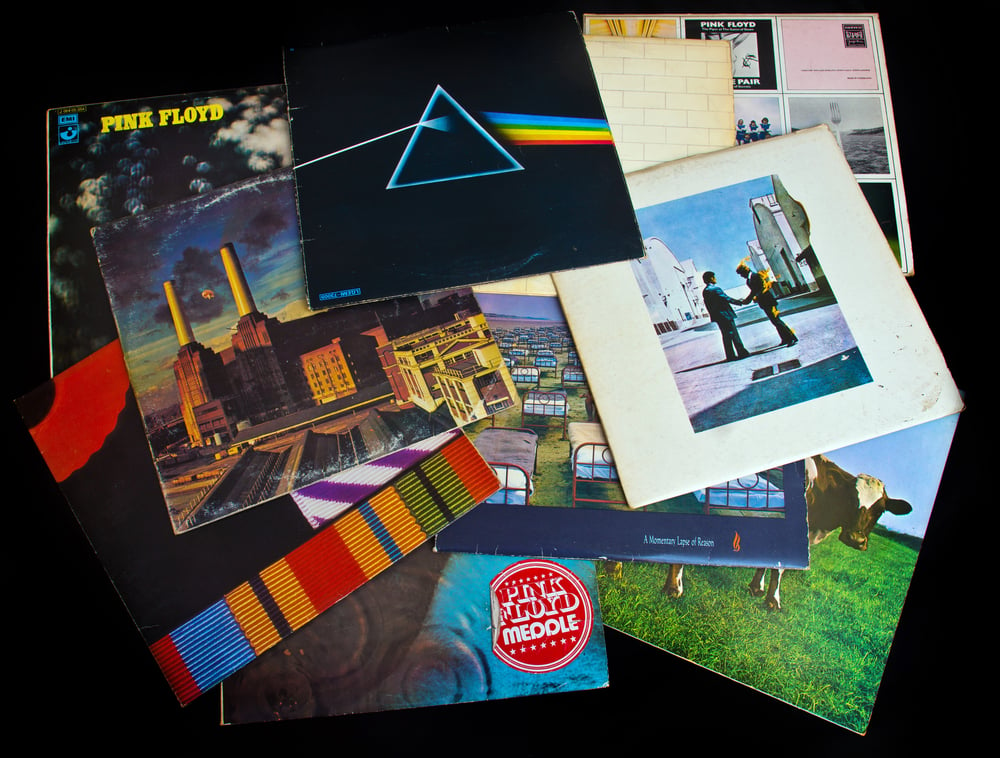
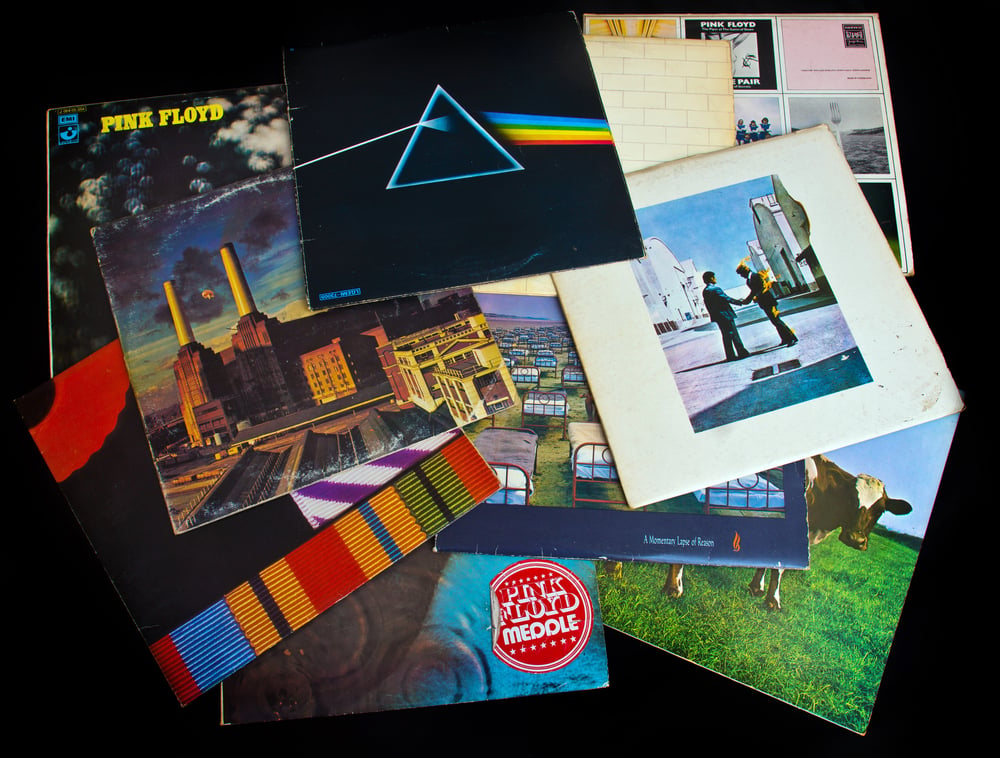
Pink Floyd’s “The Dark Side of the Moon” on Harvest A specific batch of early UK Harvest pressings from 1973 shows a well-documented groove alignment issue on “Money” — the seven-beat rhythmic pattern, unusual enough in rock music to begin with, develops an audible flutter in certain copies due to uneven groove spacing across the side change. The flutter is subtle, not catastrophic, but it’s verifiable on a calibrated turntable.
And since “Money” is one of the most scrutinized recordings in classic rock, the variant has been documented thoroughly enough that authenticated copies carry a meaningful premium.
The Pistols’ “God Save the Queen” on A&M

The Pistols’ “God Save the Queen” on A&M The band was signed and then dropped by A&M Records within days of the contract being signed in 1977 — the label got cold feet after complaints from other A&M artists. A&M had already pressed several hundred copies of “God Save the Queen” before the deal collapsed, and those copies were supposed to be destroyed.
Some weren’t. The ones that survived destruction are among the most expensive British punk singles in existence, pressed correctly but released into a world that wasn’t supposed to have them.
Radiohead’s “OK Computer” Early Pressings

Radiohead’s “OK Computer” Early Pressings Certain early Parlophone pressings of OK Computer from 1997 exhibit a cutting-level inconsistency on “Exit Music (For a Film)” — the opening vocal feels compressed relative to the rest of the side in a way that isn’t present on later pressings or on the CD master. The album was mastered quickly under deadline pressure, and the variation appears to reflect a mid-session adjustment at the mastering stage that didn’t get applied uniformly across all lacquers cut.
Some collectors consider it the warmer version; others consider it the broken one. The price suggests they’re the same thing.
David Bowie’s “Diamond Dogs” on RCA

David Bowie’s “Diamond Dogs” on RCA The original cover art for Diamond Dogs featured a painting by Guy Peellaert showing Bowie as a half-human, half-dog figure — with explicit anatomical detail visible in the original image that RCA considered unsuitable for retail. The label had the image altered for commercial release, but early copies that shipped before the correction instruction reached all pressing plants retained the unaltered artwork.
Those copies, distinguishable from the corrected version by the cover rather than any sonic difference, sell at a steep premium for the simple reason that they document a moment of institutional panic.
The Smiths’ “The Queen Is Dead” on Rough Trade

The Smiths’ “The Queen Is Dead” on Rough Trade The UK Rough Trade pressing of this 1986 album shows audible distortion on “Bigmouth Strikes Again” in certain copies — specifically in the upper register of Morrissey’s voice, where the mastering engineer appears to have pushed the levels too hard on specific lacquers before the issue was caught. Those affected copies circulate among Smiths collectors who have learned to treat the defect as a kind of authentication marker: if it distorts on “Bigmouth,” it’s an early pressing.
The logic is circular but the prices are real.
Bruce Springsteen’s “Born to Run” on Columbia

Bruce Springsteen’s “Born to Run” on Columbia The original Columbia pressing of Born to Run from 1975 is notorious among audiophiles for a mastering decision — or possibly a mastering error, depending on whom you ask — that compressed the dynamic range so severely on “Jungleland” that the piano introduction sounds almost flat compared to later remasters. Some collectors specifically seek out this version because it represents the record as Springsteen’s audience first heard it, compression and all.
The defect is the historical document. That’s not a rationalization; it’s genuinely what they’re buying.
Joy Division’s “Unknown Pleasures” on Factory

Joy Division’s “Unknown Pleasures” on Factory Factory Records’ pressing quality in 1979 was, charitably, uneven — the Manchester label was operating with limited resources and pressing contracts that didn’t always deliver consistent results. Some copies of Unknown Pleasures exhibit a channel imbalance across the entire album, with the left channel running slightly hotter than the right in a way that wasn’t intentional.
The imbalance is subtle enough to survive decades of casual listening without being noticed, which may explain why authenticated unbalanced pressings circulate without the collectors necessarily knowing what they have.
Neil Young’s “Tonight’s the Night” on Reprise

Neil Young’s “Tonight’s the Night” on Reprise Young reportedly wanted this 1975 album to sound rough, unfinished, and slightly wrong — it was recorded as an elegy for two friends who had died, and sonic polish felt dishonest. But certain Reprise pressings pushed that logic further than Young intended, with groove noise and inner-groove distortion on side two that exceeds even Young’s deliberately lo-fi standard.
Whether it’s a defect or an extension of the aesthetic is a question collectors have been arguing about for forty years, but the early pressings — messy, distorted, corrected in later runs — sell for more regardless.
Fleetwood Mac’s “Tusk” on Warner Bros.

Fleetwood Mac’s “Tusk” on Warner Bros. The double album configuration of Tusk created genuine manufacturing headaches at the Warner Bros. pressing plant — the sequencing across four sides required precise matrix coordination, and a subset of early pressings shipped with sides two and three transposed, meaning the narrative arc of the album plays in the wrong order. Listeners who weren’t following the printed track listing wouldn’t necessarily notice until they were well into what should have been side three and realized the outro of one song fed into the wrong intro.
Documented transposed copies are rare. Rare is expensive.
The Clash’s “London Calling” on CBS

The Clash’s “London Calling” on CBS The iconic cover photo — Paul Simonon smashing his bass guitar — almost didn’t make it to the UK pressing intact. A small number of early UK copies show color registration errors on the cover printing, with the pink and green text misaligned enough to read as blurred on close inspection.
The misprinted cover copies are sought not because they sound different but because the defect affects the object as a whole, and London Calling as an object — that cover, that weight, that era — is what serious collectors are really chasing.
Tom Waits’ “Swordfishtrombones” on Island

Tom Waits’ “Swordfishtrombones” on Island Island Records pressed Swordfishtrombones in 1983 with what appears to have been an overly aggressive noise reduction process on certain UK copies — a sonic artifact of the era’s mastering technology that introduces a faint pumping effect on quieter passages like “Soldier’s Things.” The effect is the opposite of what noise reduction is supposed to achieve: it makes the quiet parts feel less natural, not more.
Collectors who have compared multiple copies can identify affected pressings by ear, and those pressings — paradoxically wrong-sounding but authentically early — sell above corrected copies.
Miles Davis’ “Kind of Blue” on Columbia

Miles Davis’ “Kind of Blue” on Columbia The original 1959 Columbia pressing of Kind of Blue was cut at the wrong tape speed — a slightly fast mastering speed that raised the pitch of the entire album by approximately a quarter tone. Miles Davis and the musicians played in certain keys; the record played in slightly different ones.
Columbia corrected the error in subsequent pressings, but the original wrong-speed version circulated for years before the pitch issue was widely known, and many early buyers — including critics who reviewed the album — heard the slightly sharp version and called it perfect. Authenticated first pressings of the wrong-speed Kind of Blue now sell for thousands.
The Stooges’ “Fun House” on Elektra
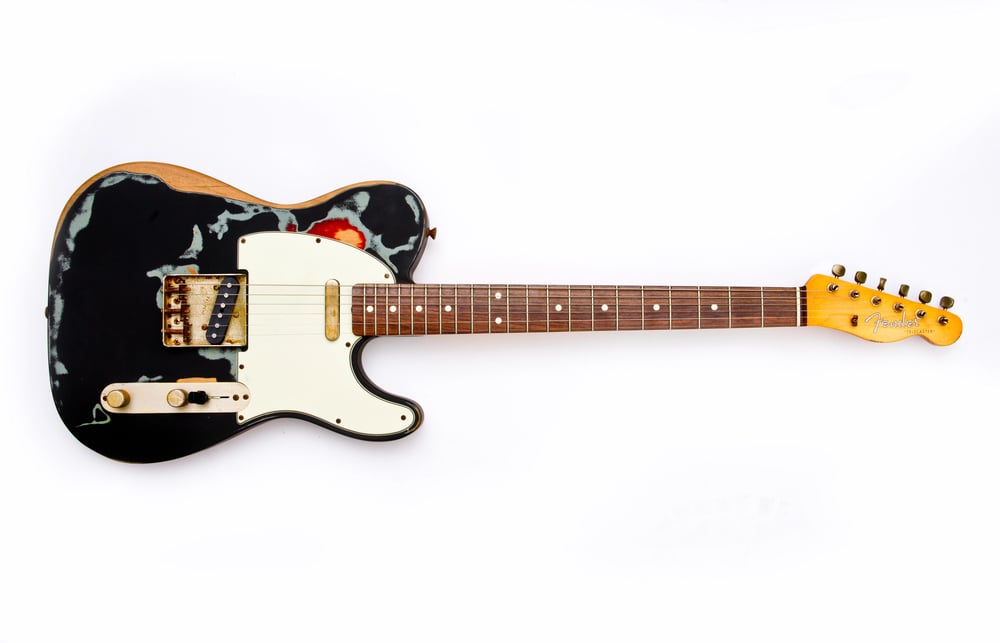
The Stooges’ “Fun House” on Elektra Elektra’s 1970 pressing of Fun House presents a specific production anomaly on “L.A. Blues” — the final track, which was intended to be a chaotic noise collage, shows evidence in certain copies of a groove overcut: the cutter head went so deep that adjacent grooves nearly merged, creating a feedback-like resonance that wasn’t in the original tape. On a well-calibrated turntable it sounds like the record itself is screaming.
On a cheap turntable it skips entirely. The defect suits the music so precisely that some listeners assumed it was deliberate for years.
Joni Mitchell’s “Blue” on Reprise

Joni Mitchell’s “Blue” on Reprise The 1971 Reprise pressing of Blue shows a mastering artifact on “River” — a faint echo of the piano’s decay that bleeds into the initial silence before the next note, caused by a slight timing error in the lacquer cutting process. It’s invisible in casual listening, audible only on a system with genuine low-frequency resolution, and completely absent on later pressings and all digital versions.
The defect is almost poetic given the album’s subject matter — a ghost of a note, persisting past where it was supposed to end.
The Who’s “Live at Leeds” on Track Records
The Who’s “Live at Leeds” on Track Records Live at Leeds was pressed under circumstances that prioritized speed over perfection — Track Records wanted it in stores fast — and several copies from the first UK run show pressing bubbles on side one, tiny air inclusions in the vinyl that create a repeating tick at specific points in “Substitute.” The tick doesn’t ruin the track; on a live album recorded with intentional rawness, a pressing imperfection almost fits.
But authenticated first-pressing copies with documented bubble ticks are more valuable than corrected copies, which is exactly as strange as it sounds.
Marvin Gaye’s “What’s Going On” on Tamla
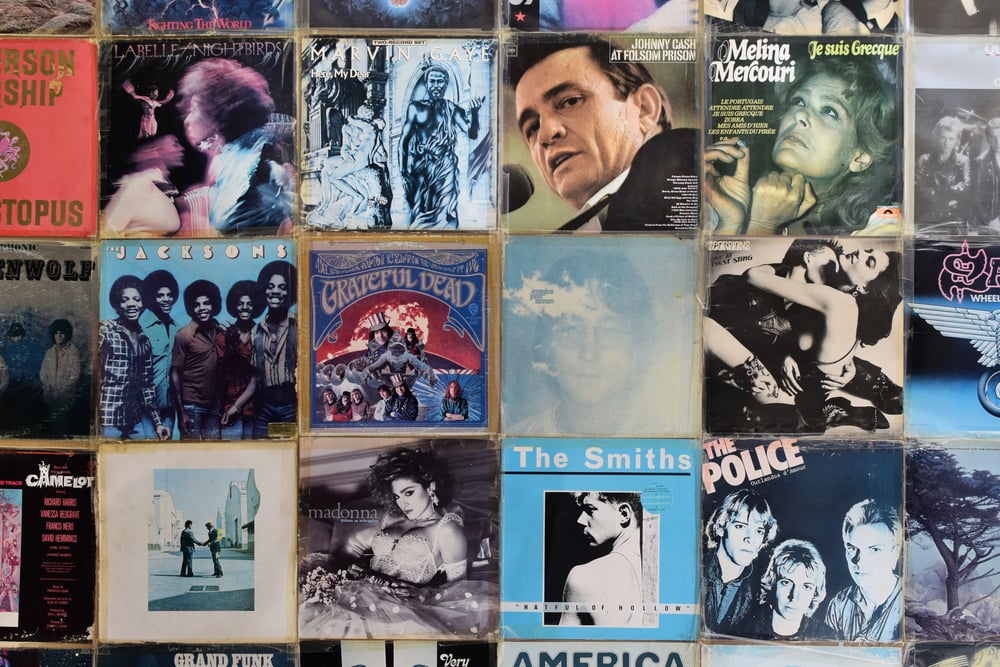
Marvin Gaye’s “What’s Going On” on Tamla Motown’s Tamla pressing of this 1971 album shows an inconsistency in the fade-out of the title track on some early copies — the fade runs slightly longer than on corrected pressings, creating a few extra seconds of room tone and studio ambience before the groove falls silent. It’s a small difference, but on an album this carefully constructed, those extra seconds of air feel intentional even though they weren’t.
Collectors who have heard both versions almost universally prefer the defective one.
Talking Heads’ “Remain in Light” on Sire
Talking Heads’ “Remain in Light” on Sire The 1980 Sire pressing of Remain in Light carries a well-documented inter-groove distortion issue on “The Great Curve” — a track whose dense polyrhythmic layering pushed the mastering chain hard enough that the grooves on certain lacquers show compression artifacts in the high frequencies. The guitars on those copies sound slightly harsher than on later pressings, slightly more abraded, which some listeners argue suits the album’s aesthetic more honestly than the cleaned-up version.
Pressed wrong, sounds right. Original copies sell accordingly.
The Cure’s “Pornography” on Fiction

The Cure’s “Pornography” on Fiction Fiction Records pressed this 1982 album with a specific matrix cut that introduced a very faint low-frequency hum into “One Hundred Years” — audible at the beginning of the track before the drums arrive, and nowhere else on the album. Whether it originated in the pressing plant or crept in during mastering is still debated, but the hum is consistent across enough early copies that it reads as a pressing variant rather than random damage.
And since “One Hundred Years” opens the album, the hum is the first thing you hear — a low, unintended note welcoming you in.
Where the Defect Becomes the Record

Where the Defect Becomes the Record There’s a version of collecting that’s about preservation — keeping things in the condition they left the factory, protecting them from the damage time inflicts. And then there’s this version, where the damage is the factory, where the error happened before the record ever reached a shelf.
What these pressings share is that the mistake became inseparable from the artifact. You can’t own a first-pressing Kind of Blue at the correct pitch.
You can’t own a Bob Dylan Freewheelin’ with the right tracks. The defect isn’t something that happened to the record.
For these copies, it is the record. That’s what collectors are really paying for — not the flaw itself but the specificity of it, the fact that this particular copy of this particular record left the plant on a specific day when something went wrong in a way that can’t be undone or corrected or improved.
Every remaster and repress since has been trying to fix something. The defective originals are the only ones that don’t need to.
More from Go2Tutors!

- The Romanov Crown Jewels and Their Tragic Fate
- 13 Historical Mysteries That Science Still Can’t Solve
- Famous Hoaxes That Fooled the World for Years
- 15 Child Stars with Tragic Adult Lives
- 16 Famous Jewelry Pieces in History
Like Go2Tutors’s content? Follow us on MSN.



