30 Famous Sculptures Removed From Public Display
A sculpture installed in a public square is usually assumed to be permanent, but history has a way of changing that assumption. Statues have been taken down after protests, after regime changes, after official votes, and in at least one case after a court-style public hearing about a piece of abstract steel. Each removal says as much about the moment it happened as about the object itself.
The thirty works below left public view for a wide range of reasons, from political upheaval to contested commemoration to simple unpopularity. Some were pulled down by crowds, others were lifted away by city crews, and a few ended up in museums or storage yards where they remain today.
Tilted Arc
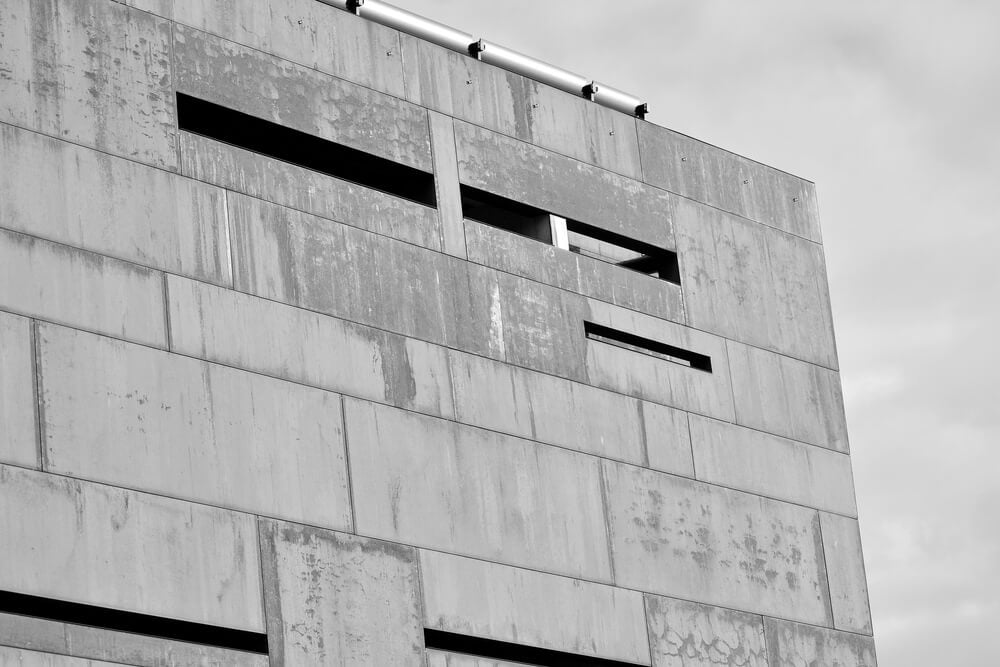
Richard Serra’s Tilted Arc, a 120-foot-long curved wall of weathered steel, was installed in Federal Plaza in Manhattan in 1981. Office workers in the surrounding buildings complained that it blocked the plaza and attracted graffiti, and a public hearing in 1985 produced a recommendation to move it. It was dismantled and removed on March 15, 1989, after years of legal fights. Serra argued that the work was site-specific and could not be relocated without being destroyed, and the sculpture has never been reassembled.
Edward Colston, Bristol
— Photo by keithramsey
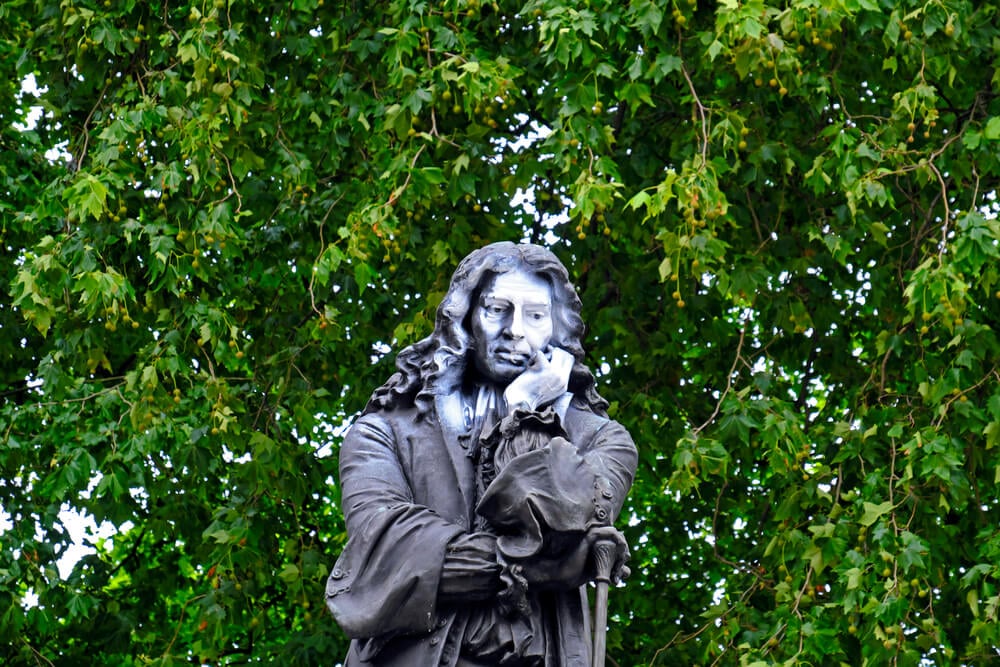
On June 7, 2020, protesters pulled down the bronze statue of the seventeenth-century merchant Edward Colston in Bristol, England, and rolled it into the harbor. Colston had been a leading figure in the Royal African Company, which transported enslaved people. City authorities recovered the statue from the water, and in 2021 it went on display lying on its back in the M Shed museum, with placards describing its history. The statue is now an exhibit about its own removal.
Robert Milligan, London

The statue of the slave-owning merchant Robert Milligan stood outside the Museum of London Docklands at West India Quay. Local authorities removed it on June 9, 2020, after petitions and protests. Milligan had helped promote the construction of the docks. The statue was placed in storage, and the museum later said it would address its legacy in future displays.
Lenin in Berlin
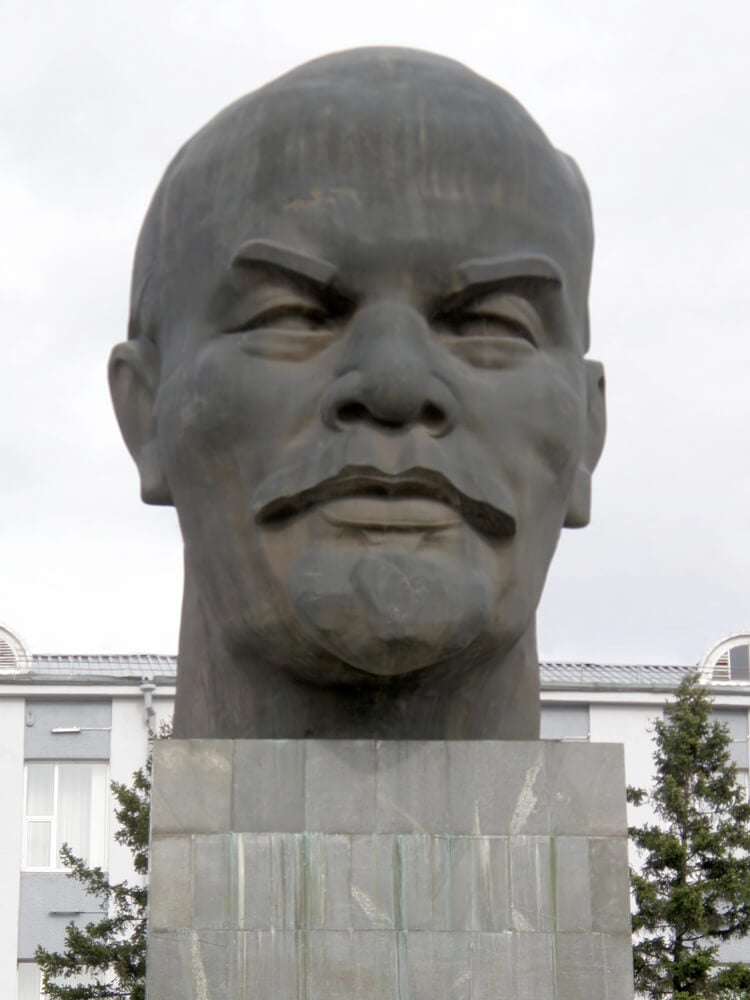
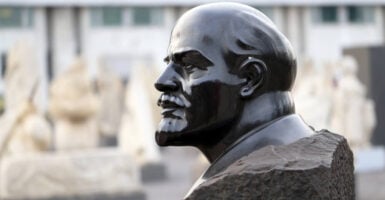
A huge granite statue of Lenin stood on Leninplatz in East Berlin from 1970. After German reunification, authorities removed it in 1991, cutting it into pieces and burying them in a forest on the city’s outskirts. The head was later exhumed and shown in an exhibition about Berlin’s monuments at the Spandau Citadel. The sculpture shows how a state monument can turn into a historical artifact.
Saddam Hussein in Firdos Square
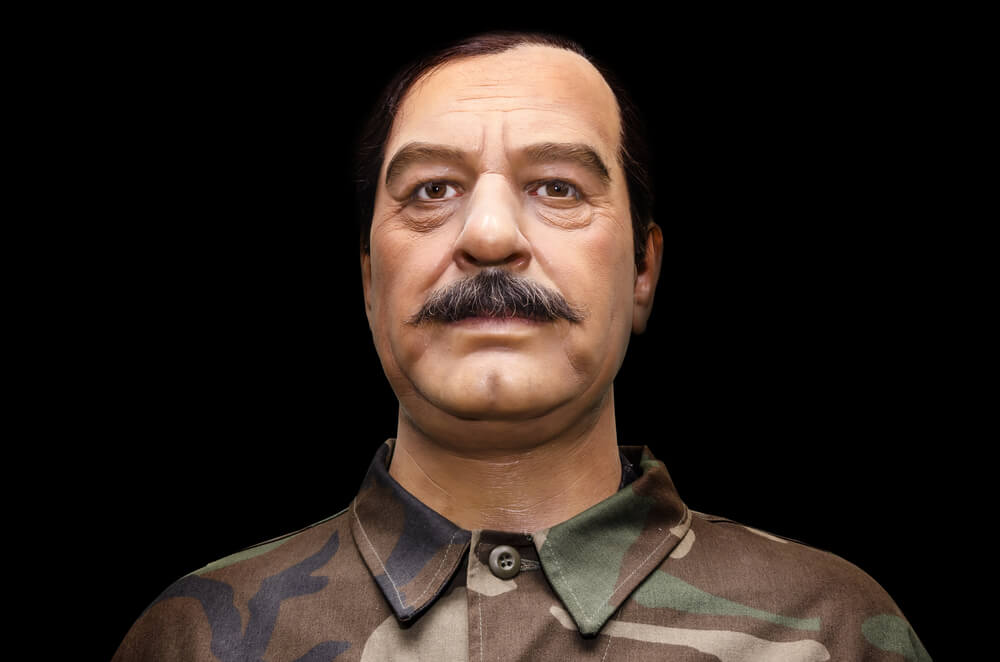
— Photo by believeinme
On April 9, 2003, a large bronze statue of Saddam Hussein in Firdos Square in Baghdad was pulled down with the help of a U.S. Marine recovery vehicle, as crowds and international journalists looked on. The moment was broadcast around the world as a symbol of the fall of the regime. The empty plinth was later removed, and the square was redesigned. Other statues of the leader across the country came down in the following days.
Felix Dzerzhinsky at Lubyanka
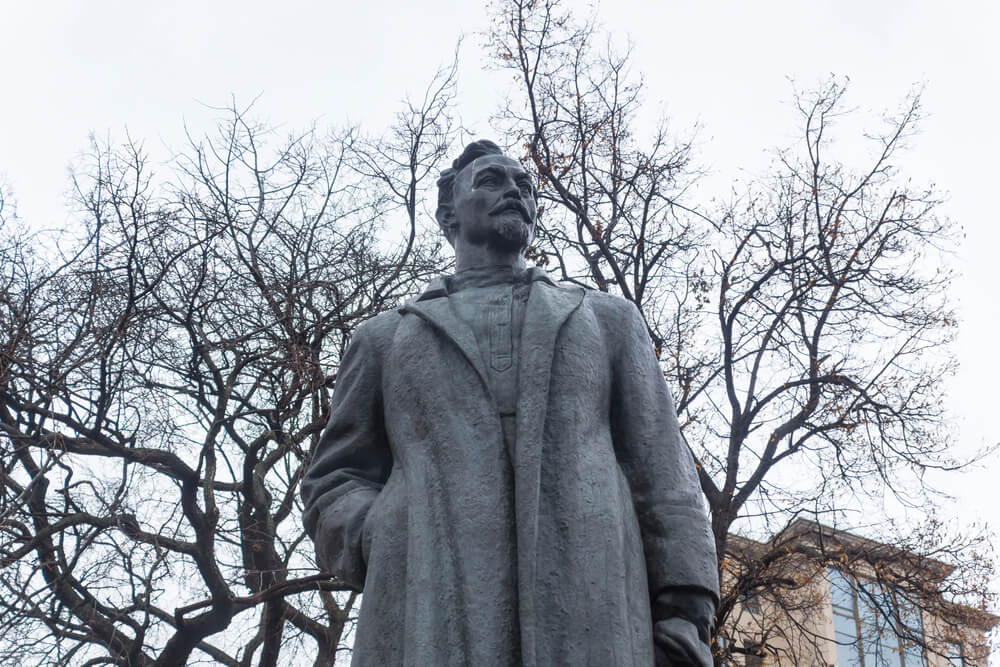
A statue of Felix Dzerzhinsky, founder of the Soviet secret police, stood in front of the KGB headquarters in Moscow’s Lubyanka Square. Crowds gathered after the failed coup of August 1991, and the city removed it on August 22 of that year. The statue was later placed in a park of fallen monuments beside the Moskva River. The empty plinth in the middle of the square marked a turning point in the Soviet collapse.
The Stalin Monument in Prague
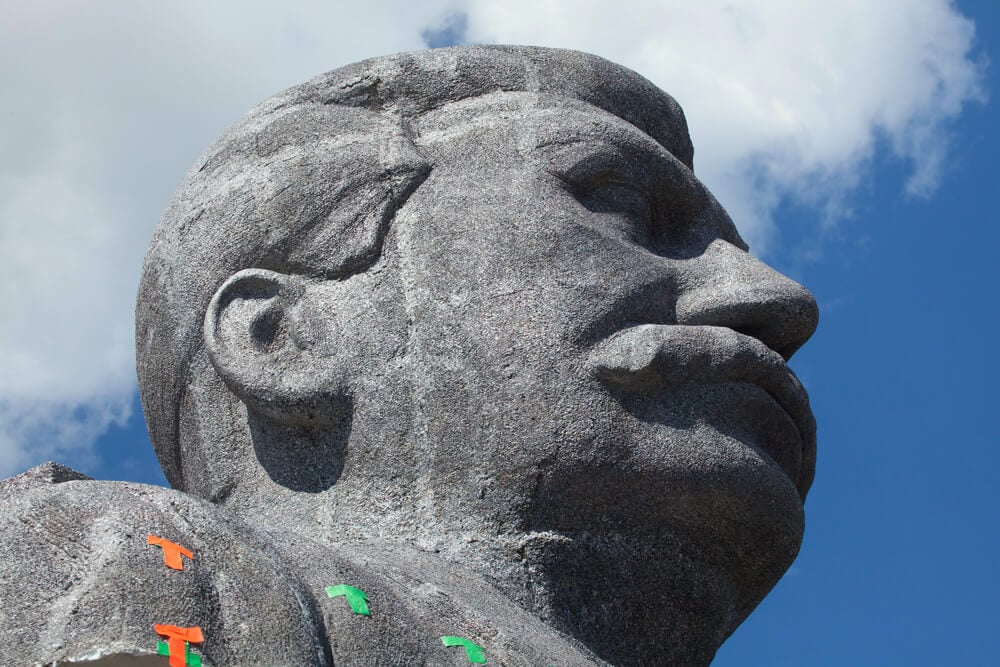
— Photo by wrangel
A giant granite group of Stalin leading a line of workers and soldiers was unveiled on Letna Hill above Prague in 1955. Its sculptor, Otakar Svec, died before the unveiling. Authorities demolished the monument with explosives in 1962, after Khrushchev’s criticism of Stalin. A giant metronome now stands on the site.
Stalin in Budapest
— Photo by Andrei Antipov
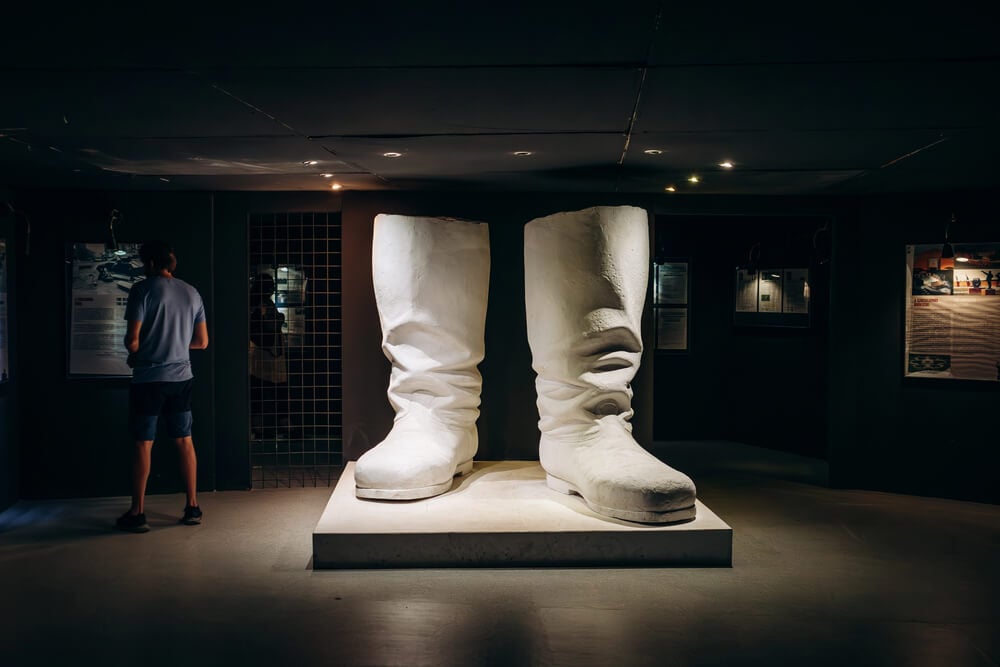
On October 23, 1956, during the Hungarian uprising, crowds pulled down a huge bronze statue of Stalin in Budapest, leaving only the boots on the pedestal. The statue had been erected in 1951 on a street renamed in his honor. Protesters dragged the toppled figure through the streets. A replica of the boots later became a centerpiece of Memento Park, a collection of communist-era monuments outside the city.
Franco in Melilla
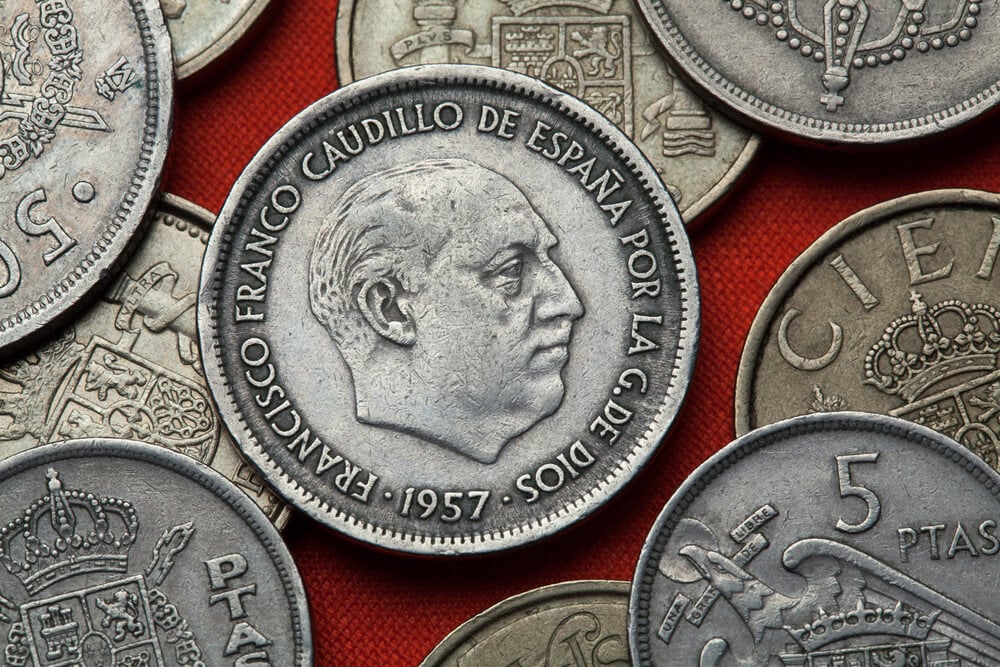
Spain’s last public statue of Francisco Franco, in the North African enclave of Melilla, was removed in February 2021. It came down under the country’s Historical Memory law, after the city council had voted to remove it. Statues of the dictator had been taken down across Spain for years before. Its removal ended the era of public monuments to him on Spanish soil.
Cecil Rhodes at the University of Cape Town
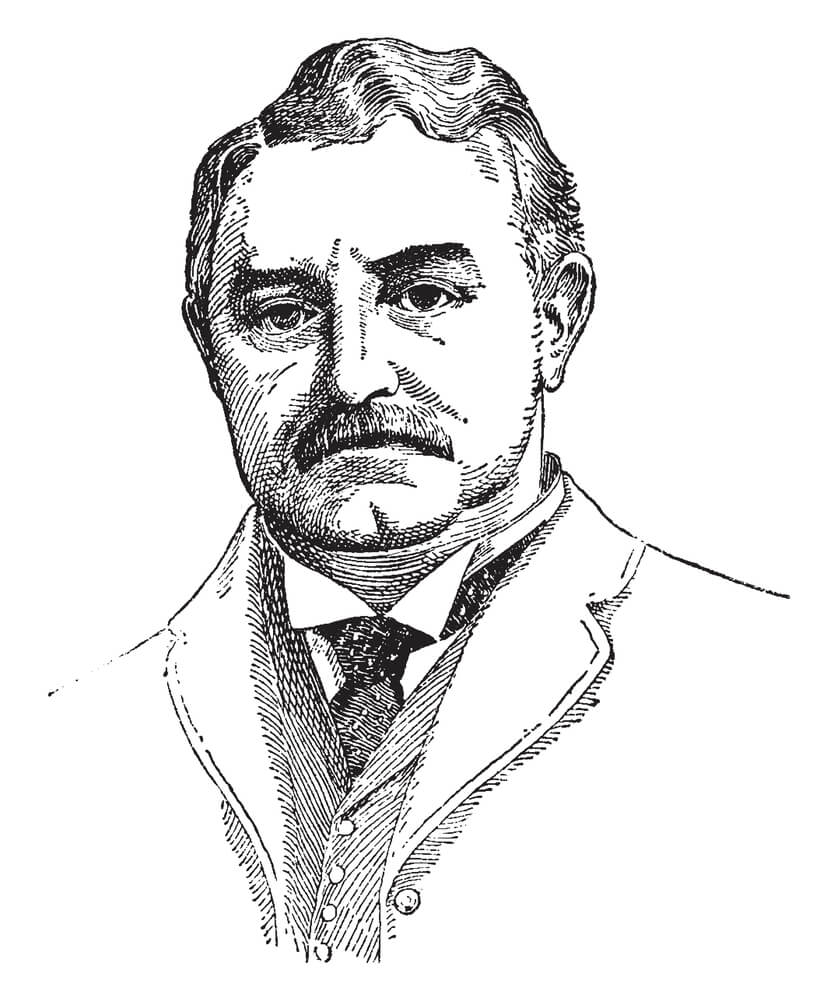
A statue of the colonial-era magnate Cecil Rhodes stood on the campus of the University of Cape Town, which sits on land he once owned. After weeks of student protests, the university removed it on April 9, 2015. The removal inspired similar campaigns around the world. Rhodes had left land to the university, and his image had stood above the campus for decades.
Queen Victoria in Dublin
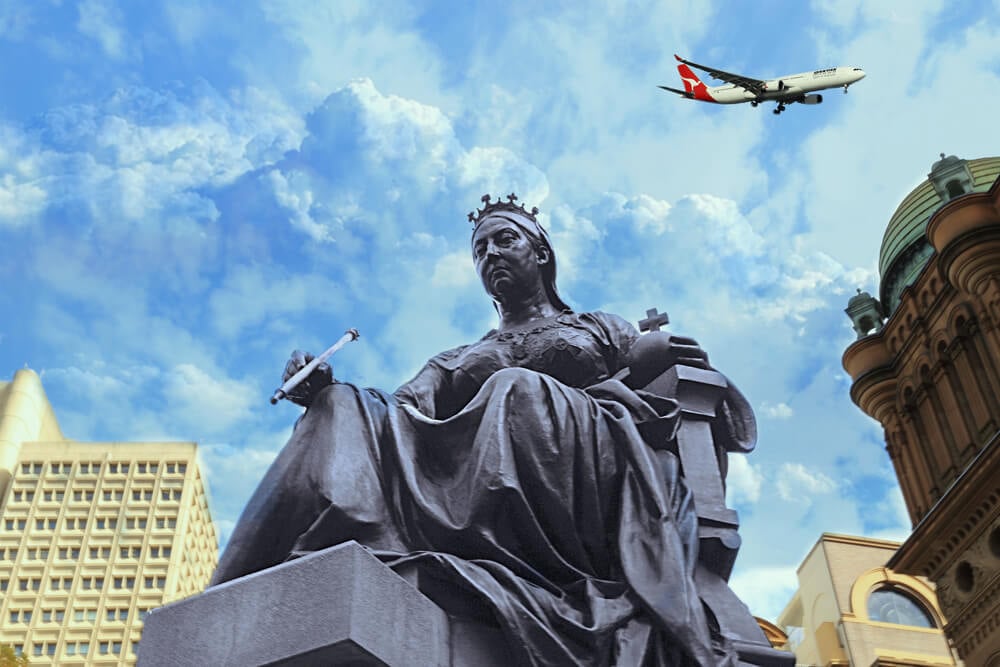
A statue of Queen Victoria stood in front of Leinster House in Dublin until it was removed in 1947, shortly before Ireland became a republic. It was later shipped to Sydney, where it was installed outside the Queen Victoria Building in 1987. The statue sits there today, thousands of miles from the city that first displayed it. It is an unusual example of a monument that went into exile rather than storage.
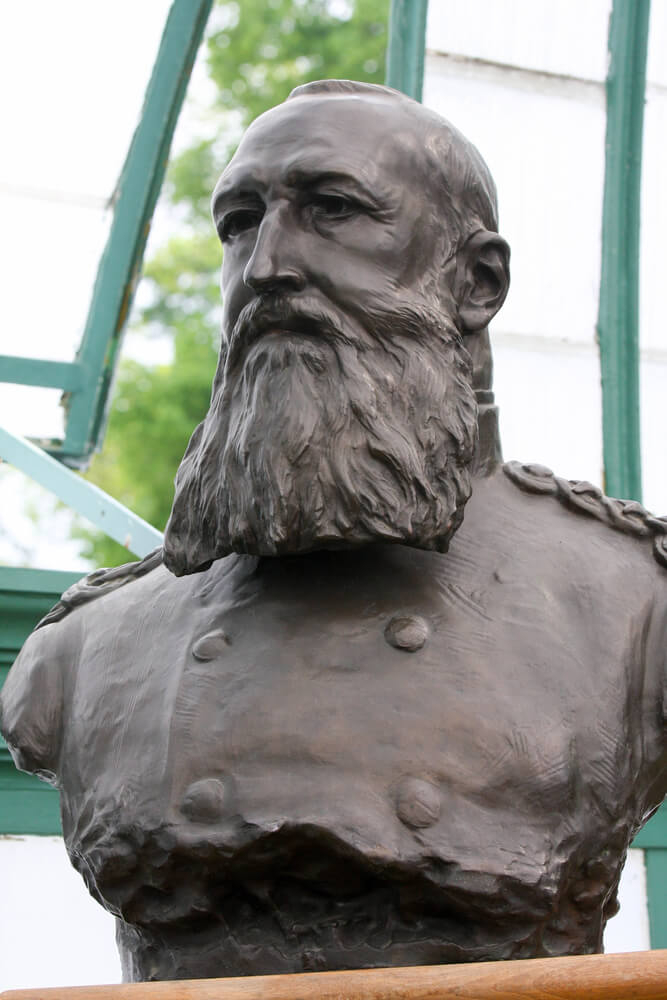
Leopold II in Antwerp
— Photo by jorisvo
Antwerp removed a bust of King Leopold II in June 2020 after it was damaged by protesters, who objected to his rule over the Congo Free State. The monarch’s colonial regime was responsible for large-scale violence and forced labor in central Africa. The bust was placed in a museum depot. Several other statues of Leopold in Belgium were also removed or reconsidered that year.
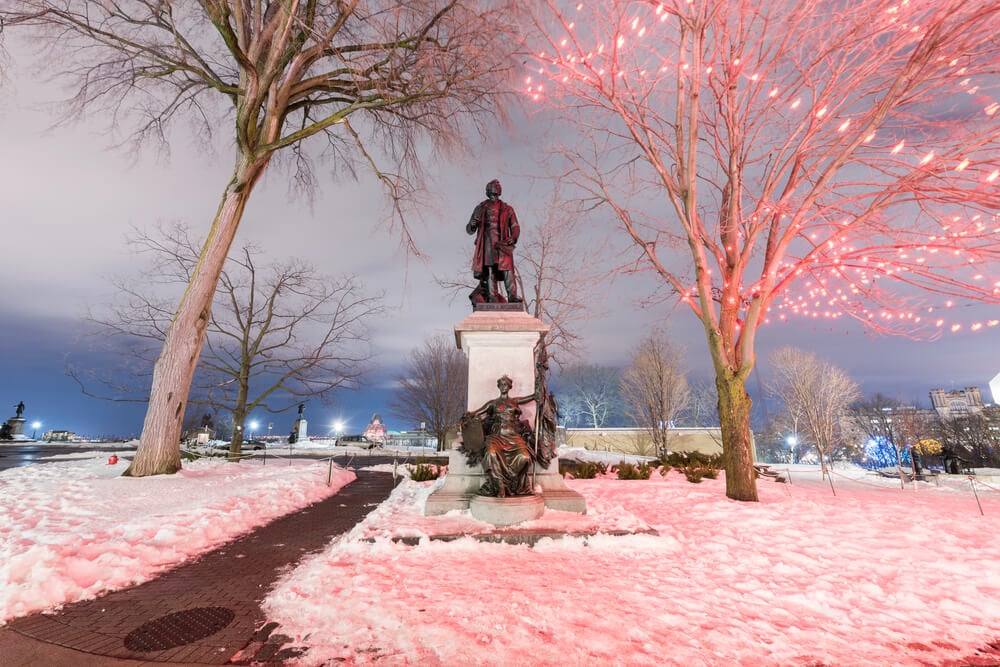
Sir John A. Macdonald, Victoria and Montreal
— Photo by demerzel21
Canada’s first prime minister was honored with statues across the country. The city of Victoria removed one from its City Hall in August 2018 after consultation with Indigenous leaders about his role in residential school policy. In Montreal, protesters pulled one down on August 29, 2020. Other statues of Macdonald have also been relocated or put in storage.
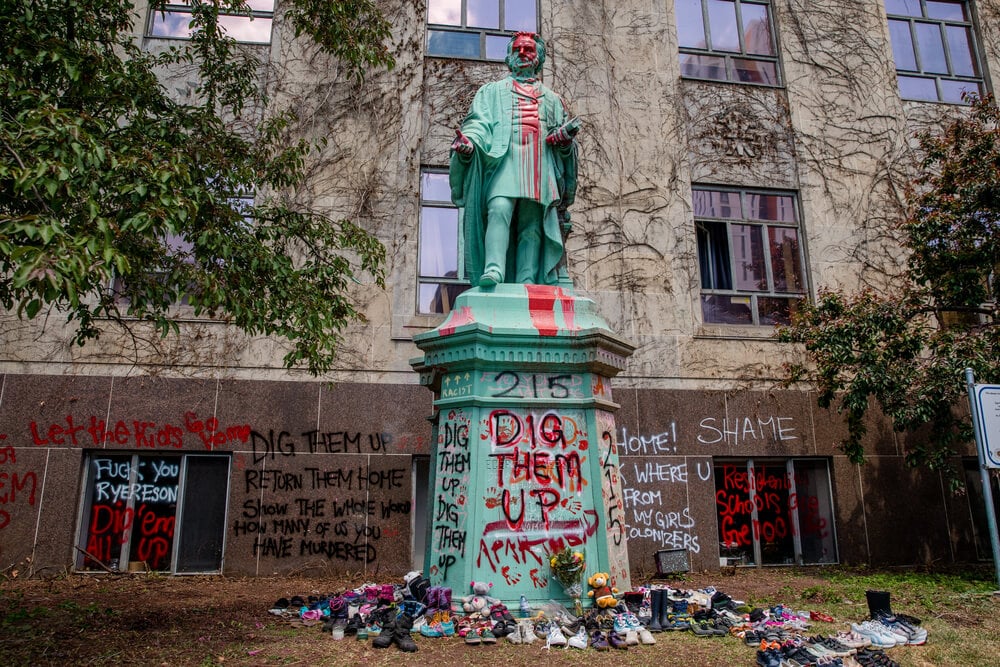
Egerton Ryerson in Toronto
— Photo by ShawnGoldberg
The statue of Egerton Ryerson, an architect of Ontario’s public school system who also influenced residential school policy, stood on the campus of Toronto Metropolitan University. Protesters pulled it down on June 6, 2021, after the discovery of unmarked graves at a former residential school site in British Columbia. The university later moved the statue to a storage location. The campus has since discussed how the space should be used.
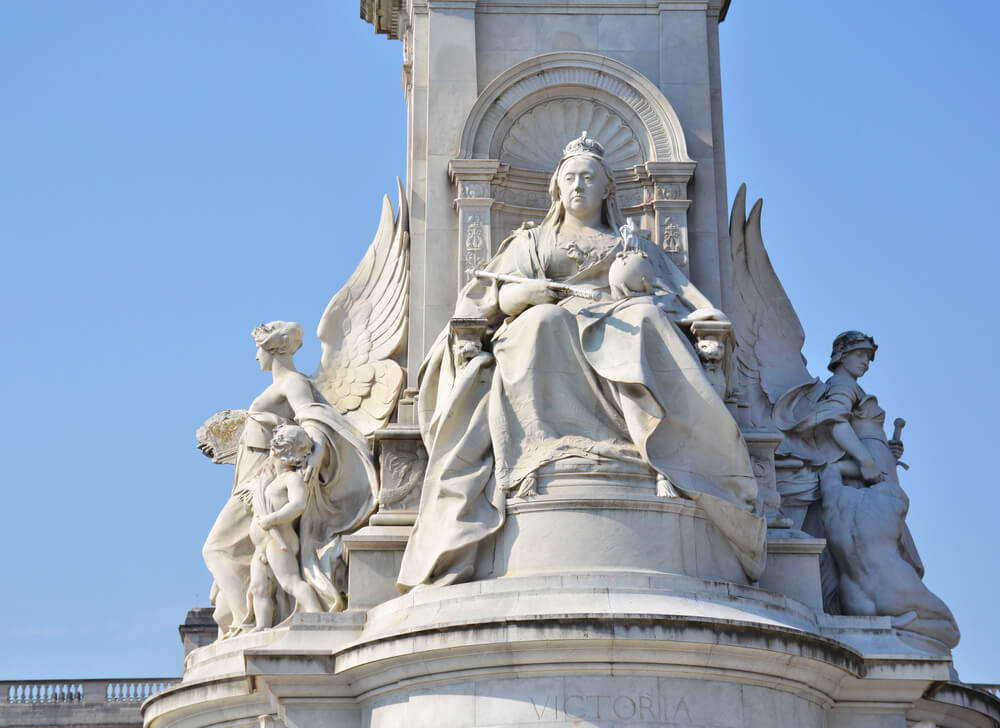
Queen Victoria and Elizabeth II in Winnipeg
— Photo by arevhamb
On Canada Day, July 1, 2021, protesters pulled down statues of Queen Victoria and Queen Elizabeth II on the grounds of the Manitoba Legislature in Winnipeg. The action followed the discovery of unmarked graves at former residential school sites. The two monuments were later placed in storage. Their removal prompted a public discussion about how to remember the Crown’s role in Canadian history.
Robert E. Lee in Richmond
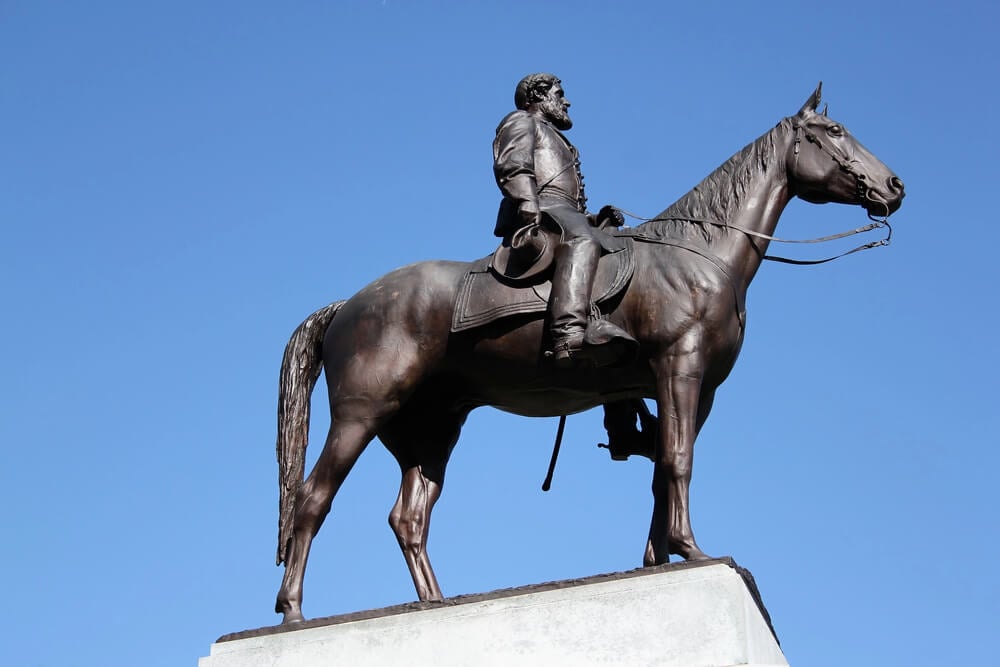
The bronze equestrian statue of Confederate general Robert E. Lee, which stood on Richmond’s Monument Avenue, was removed on September 8, 2021, by order of Virginia’s governor after a court case. It had been erected in 1890 and was by far the largest of the monuments on the avenue. After removal, the state gave it to a Black history museum in Richmond. The empty plinth had been covered with graffiti during the 2020 protests.
Christopher Columbus in Baltimore
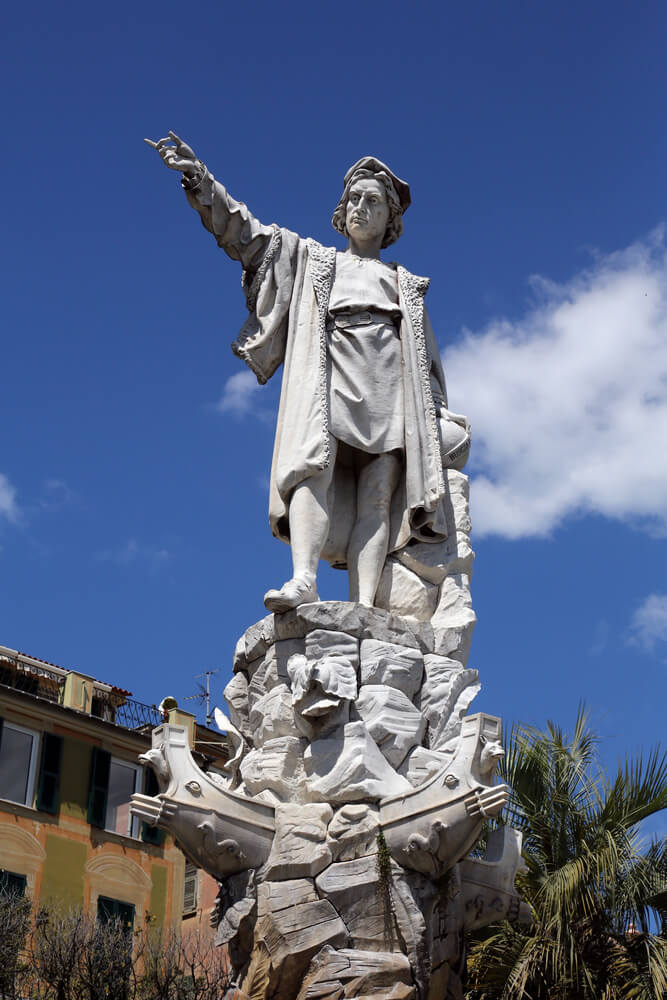
On July 4, 2020, protesters pulled down a statue of Christopher Columbus in Baltimore’s Little Italy and rolled it into the Inner Harbor. The monument was a gift from the Italian community, erected in 1984. It was later recovered from the water in pieces and has been the subject of discussion about how to handle its repair. Statues of Columbus in several other American cities were removed or damaged that summer.
Christopher Columbus in Richmond
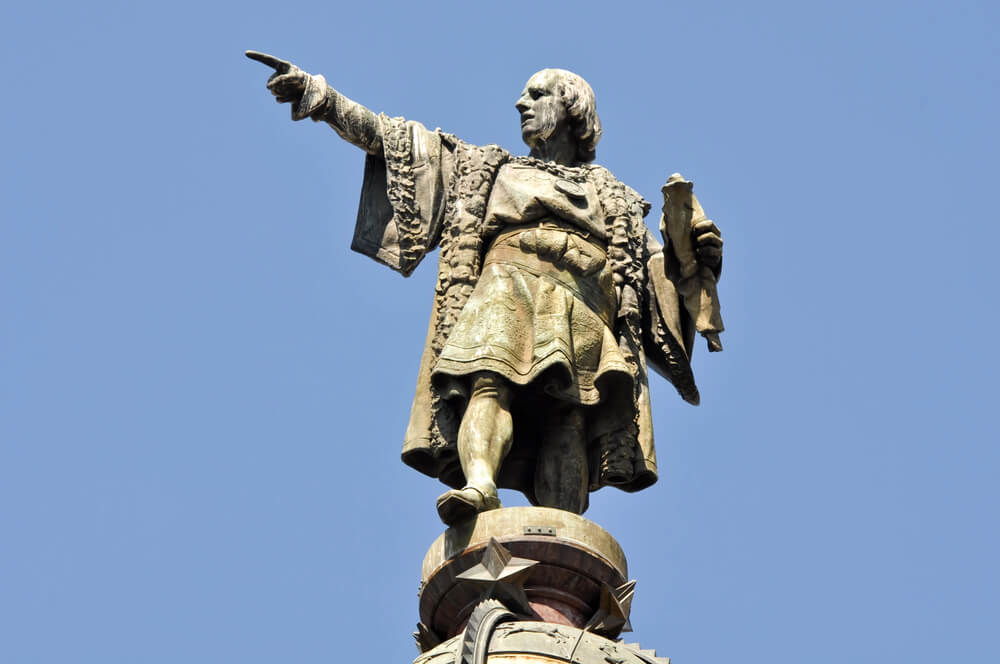
Protesters pulled down a statue of Columbus in Byrd Park in Richmond, Virginia, on June 9, 2020, set it on fire, and threw it into Fountain Lake. The city later removed the damaged statue. Another statue of the explorer was removed in the same period in several American cities. The monument had been installed in 1927.
Christopher Columbus in Boston
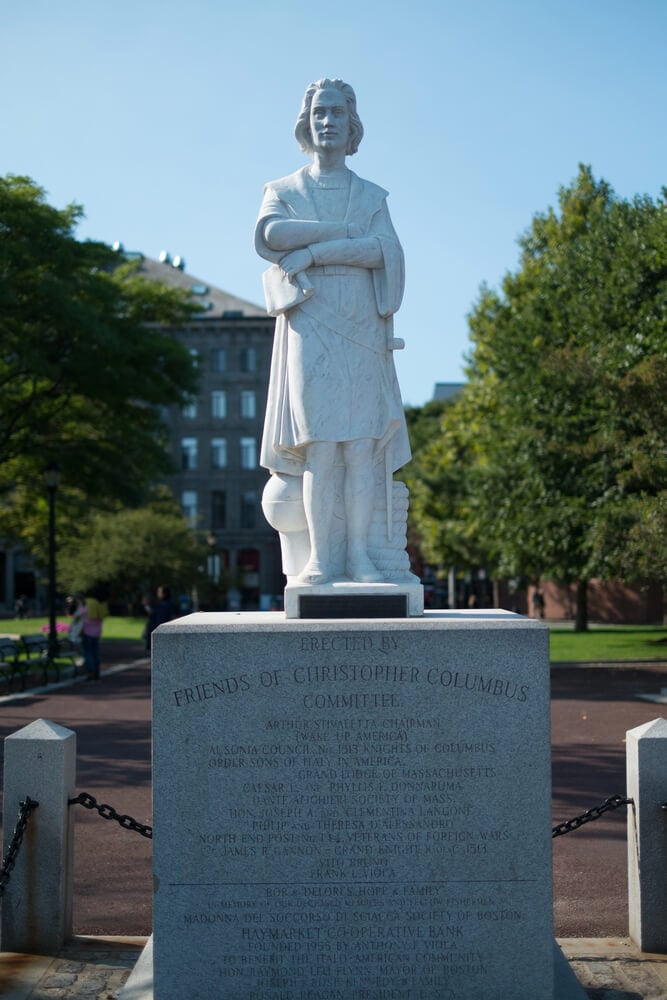
A statue of Columbus in Boston’s North End was beheaded by protesters on June 10, 2020, and the city then removed it. It was located in a waterfront park in the neighborhood’s historically Italian American community. Mayor Marty Walsh said it would be stored while the city decided what to do. The removal was part of a wave of actions against Columbus monuments in the United States.
Christopher Columbus in Chicago
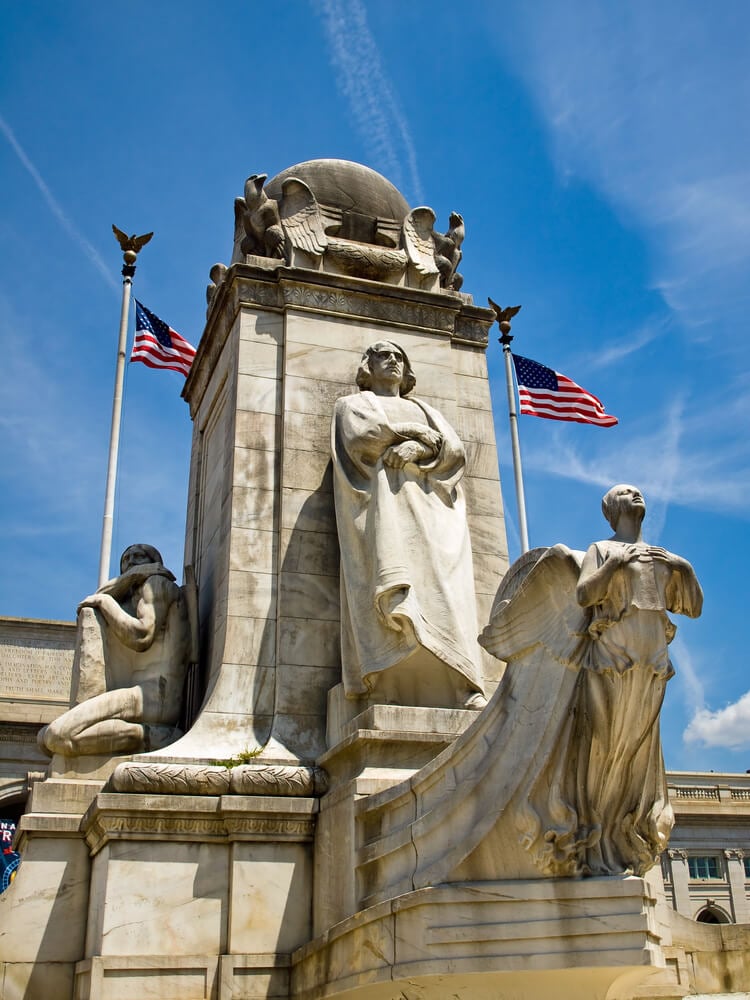
On July 24, 2020, Chicago city crews removed two statues of Christopher Columbus, one from Grant Park and one from Arrigo Park, after protests the previous week. The mayor said the removal was meant to prevent further violence. The statues were placed in storage. The decision generated disagreement among Chicago’s Italian American community.
Albert Pike in Washington, D.C.
— Photo by WAMorgan
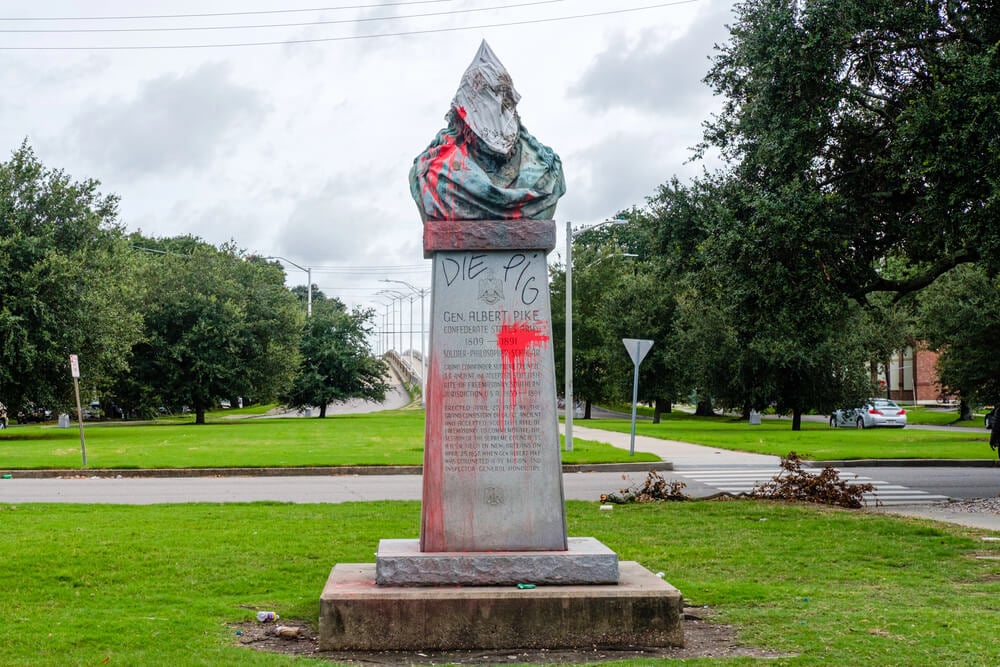
A statue of Confederate general Albert Pike stood in Judiciary Square in Washington, D.C., until protesters pulled it down on June 19, 2020. It had been erected in 1901 and was the only outdoor statue of a Confederate figure in the capital’s public space. The protesters set the statue on fire. It was later placed in storage by the city.
Theodore Roosevelt at the American Museum of Natural History
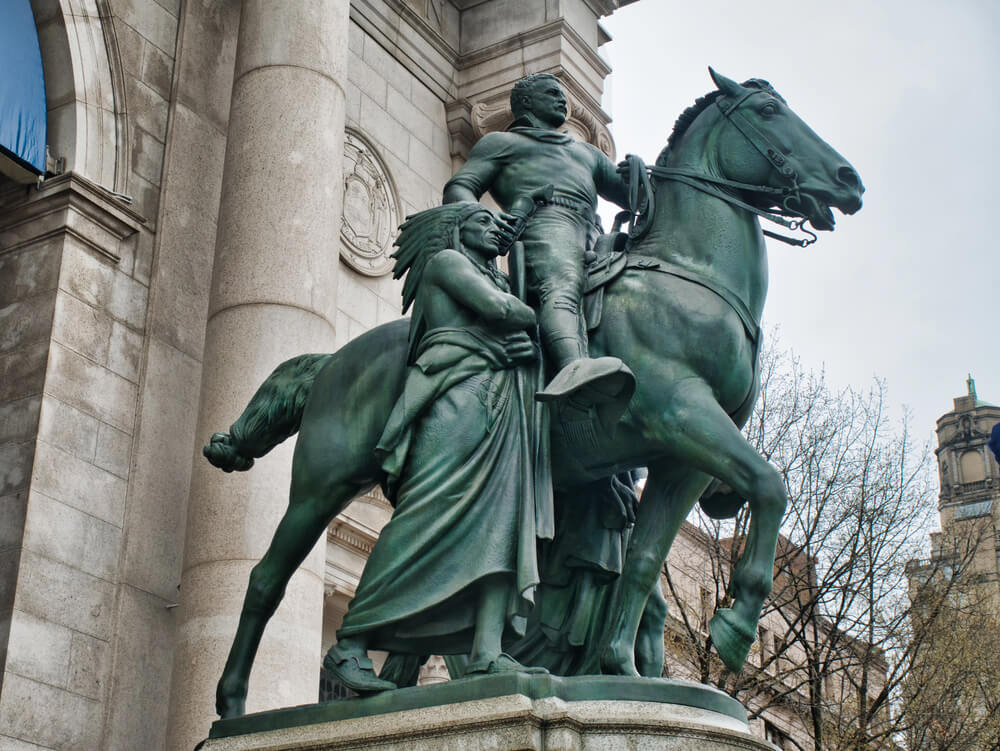
An equestrian statue of Theodore Roosevelt stood at the entrance to the American Museum of Natural History in New York from 1940. The figure of Roosevelt on horseback was flanked by an African man and a Native American man on foot, a composition that critics said reflected a racial hierarchy. The city’s Public Design Commission voted to remove it in 2021, and the statue was taken down in January 2022. It was set to be loaned to the Theodore Roosevelt Presidential Library in North Dakota.
Thomas Jefferson in New York’s City Hall
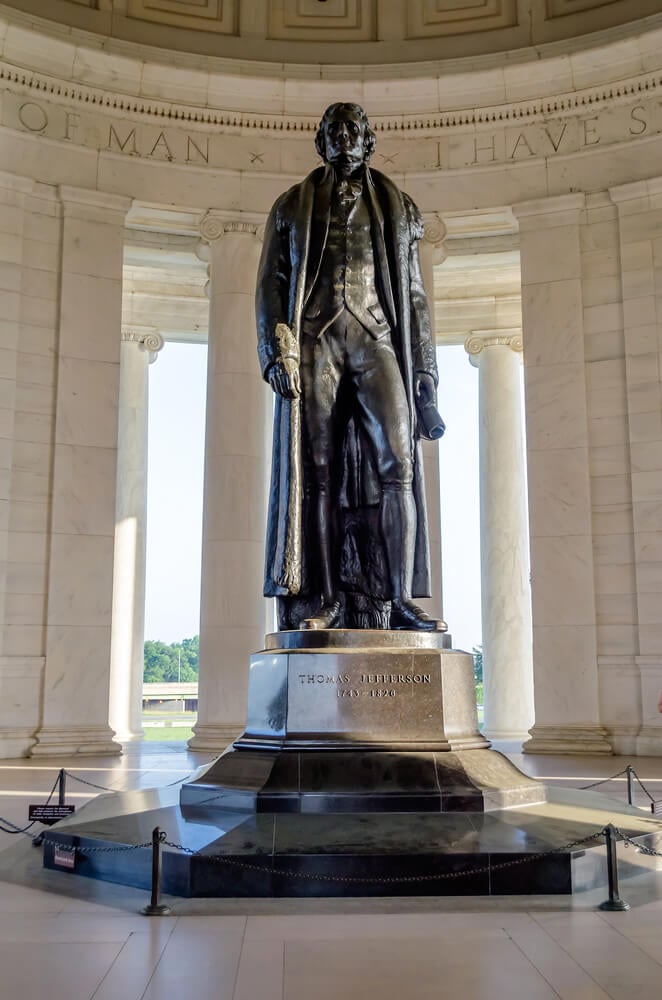
A statue of Thomas Jefferson stood in the City Council chamber in New York for more than a century. After a vote by the city’s Public Design Commission in 2021, it was removed because of Jefferson’s ownership of enslaved people. The statue was placed on loan at the New-York Historical Society. It had been in City Hall since 1834.
Lenin in Kyiv
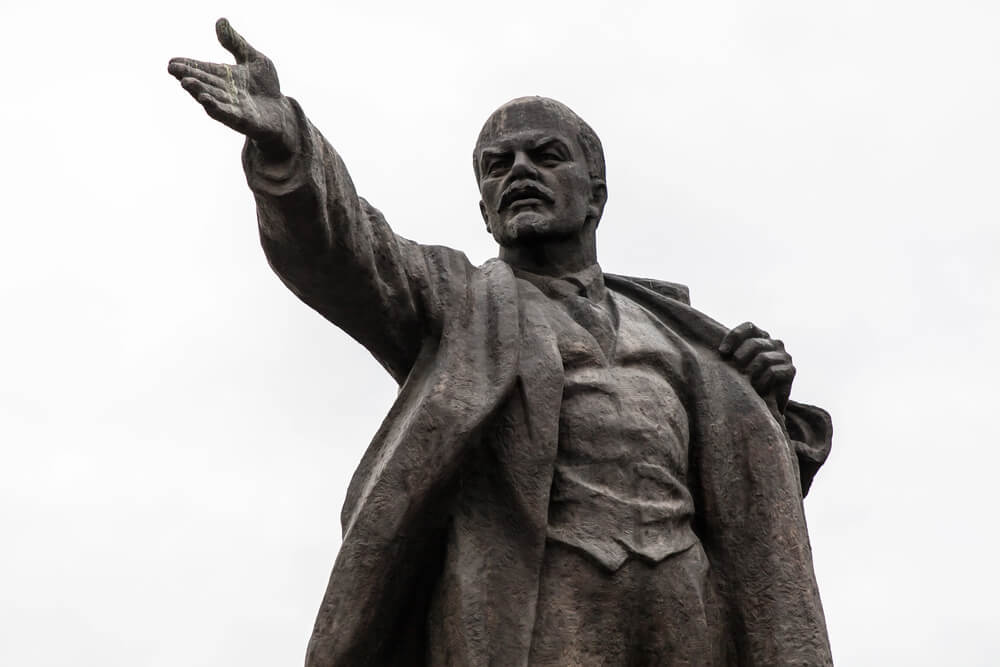
On December 8, 2013, during the Euromaidan protests, crowds pulled down the statue of Lenin on Taras Shevchenko Boulevard in Kyiv. Pieces of the monument were carried off as souvenirs. The event helped spark a wave of removals of Soviet monuments across Ukraine. The empty pedestal remained as a reminder of the day.
Lenin in Kharkiv
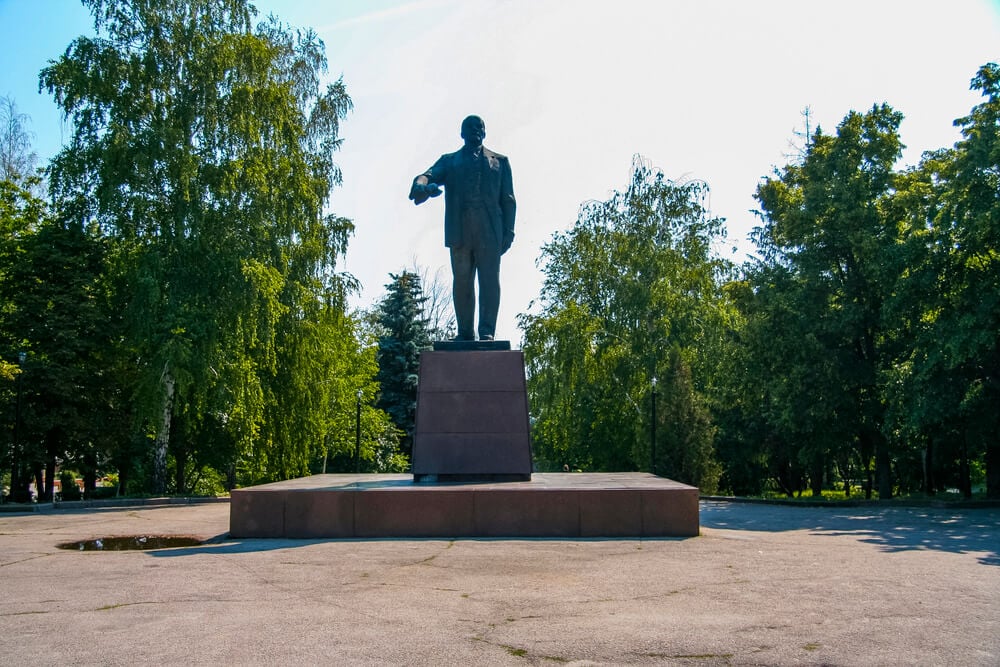
— Photo by wmalahit53.gmail.com
On September 28, 2014, protesters pulled down the large statue of Lenin in Kharkiv, Ukraine’s second-largest city. It was one of the biggest Lenin monuments in the country. The removal was part of a wave of such actions in Ukraine in 2013 and 2014. Several of the statues were later replaced with other monuments or left as empty plinths.
Marshal Konev in Prague
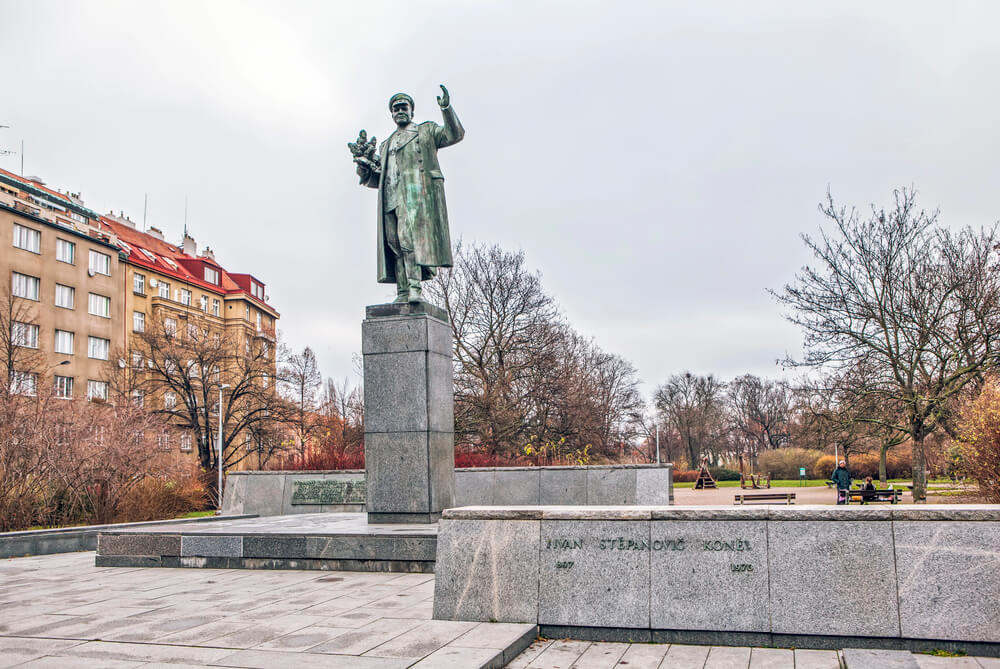
— Photo by APHONUA
A statue of Soviet Marshal Ivan Konev stood in the Prague 6 district until it was removed on April 3, 2020. Konev had commanded troops that entered Prague in 1945, but he also took part in the Soviet crackdown on Hungary in 1956 and the planning of the building of the Berlin Wall. The district government said the statue would be moved to a museum. Russia protested the move.
Lenin in Bucharest
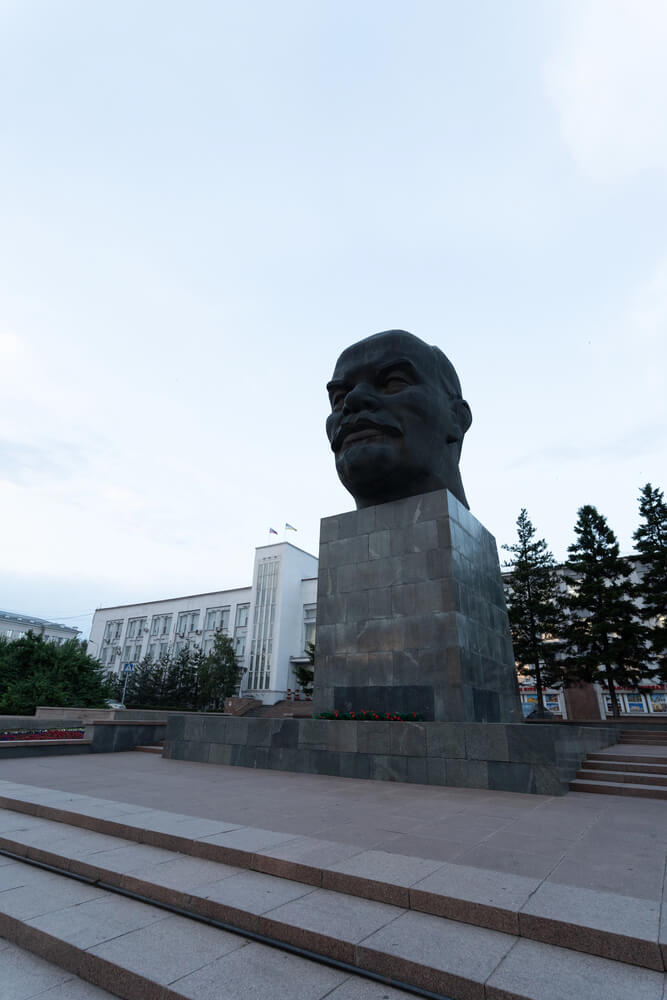
A tall statue of Lenin stood in front of the House of the Free Press in Bucharest until it was removed in March 1990, soon after the fall of Nicolae Ceausescu. The monument was moved to the grounds of Mogosoaia Palace outside the city. It was one of many Soviet-style monuments to leave public squares in Eastern Europe after 1989. Its new location is quiet and rarely visited.
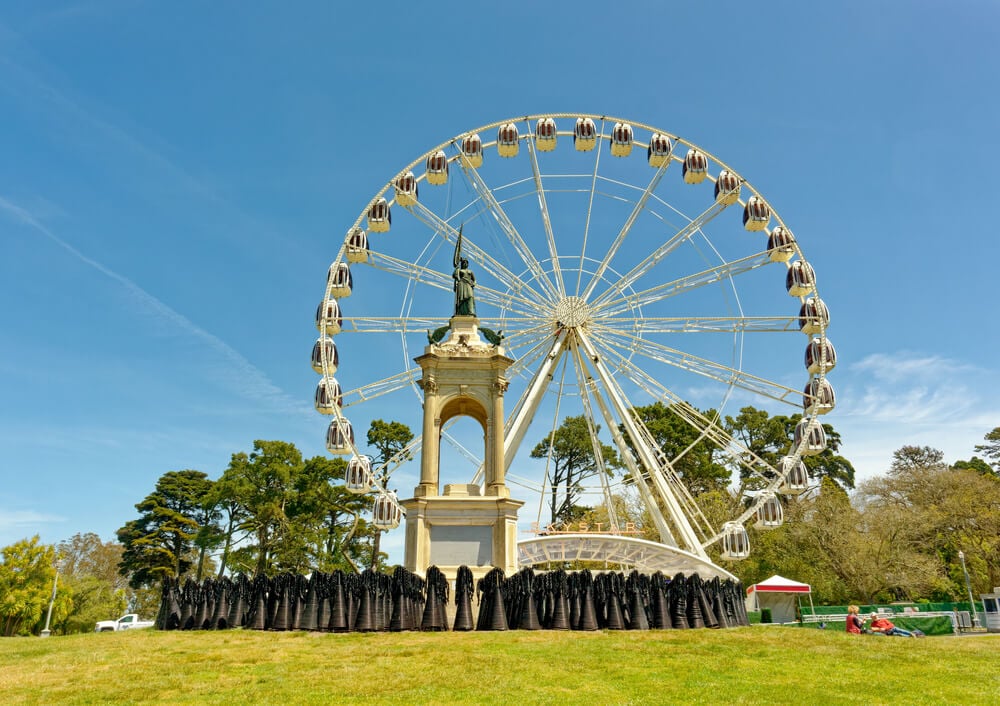
Francis Scott Key in San Francisco
— Photo by dbvirago
A monument to Francis Scott Key, author of the lyrics to the American national anthem, stood in Golden Gate Park in San Francisco from 1888. Protesters pulled it down on June 19, 2020, and park officials took away the pieces. Key had owned enslaved people, which prompted the protests. The remains were later placed in storage.
Junipero Serra in San Francisco
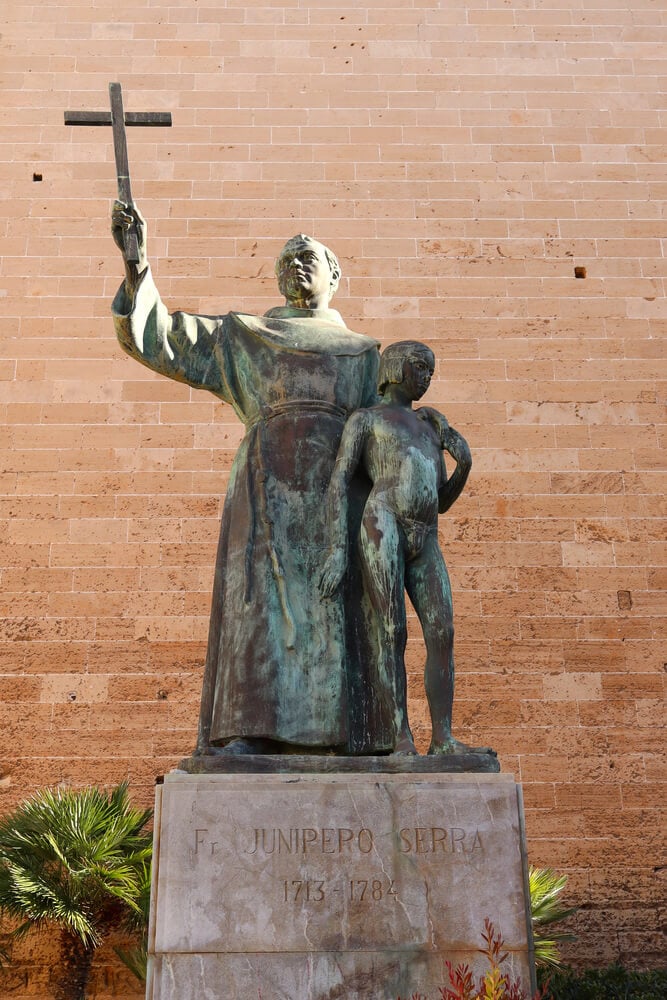
On the same day, June 19, 2020, protesters also pulled down a statue of the Spanish missionary Junipero Serra in Golden Gate Park. Serra was the founder of many of California’s missions, and his legacy is contested because of the treatment of Native Californians. Statues of him in other California locations have also been removed. The park’s other monuments were examined in the aftermath.
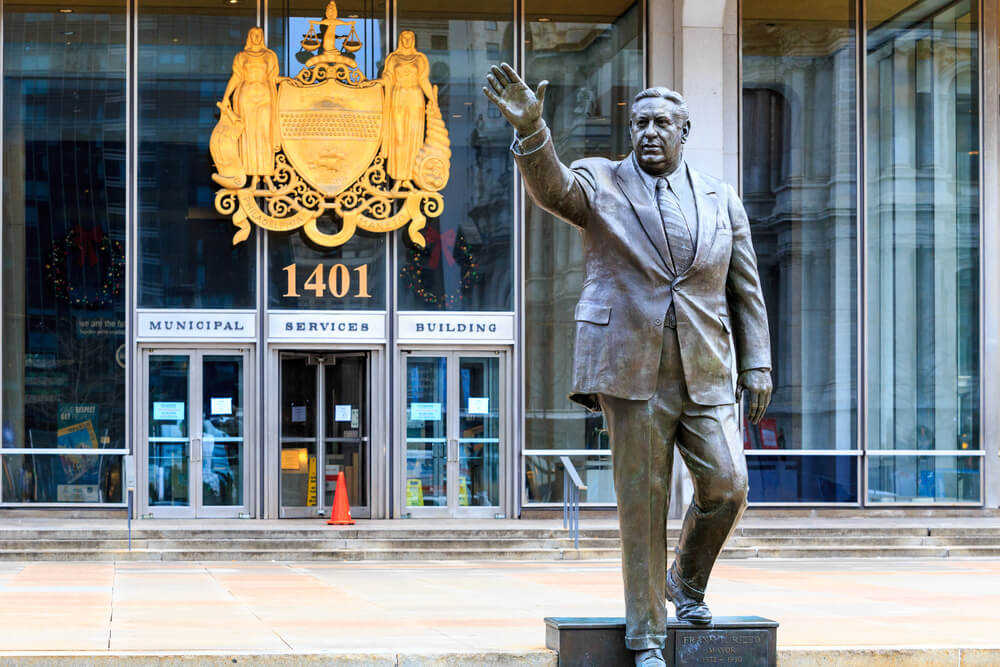
Frank Rizzo in Philadelphia
— Photo by georgesheldon
A bronze statue of Frank Rizzo, the former police commissioner and mayor, stood in front of Philadelphia’s Municipal Services Building from 1998. Critics pointed to his record on race and policing, and the city removed it on June 3, 2020. Mayor Jim Kenney said that the statue was a symbol of bigotry. The monument was placed in storage by the city.
What Stays Up and Why
A statue stays in public space only as long as the community agrees that it belongs there. That agreement can break because of a political revolution, a change in historical understanding, or a dispute over how a public space should be used. The removals above show that the break can be sudden or can build over years of argument.
What happens next varies widely. Some of these works are now in museums, where they are interpreted rather than celebrated. Others sit in storage yards, are melted down, or have been moved to new homes. Whatever the destination, each has become a different kind of public object from the one it was designed to be.
More from Go2Tutors!

- 27 Silver Dollars and Half Dollars Worth Keeping
- 28 Restaurant Menu Items Nobody Orders Anymore
- 17 Places Built in Seemingly Impossible Spots
- 27 Vintage Rings Worth More Than They Look
- 25 Restricted Sites Tourists Can’t Enter
Like Go2Tutors’s content? Follow us on MSN.