17 Fastest Birds of Prey Hunting in the Wild
There’s something breathtaking about watching a peregrine falcon dive from thousands of feet above, or seeing a goshawk weave through dense forest at breakneck speed.
These aerial predators have evolved into some of nature’s most efficient killing machines, each species perfecting their own approach to the hunt. Speed isn’t just about showing off—it’s survival. The fastest hunters get the meal, defend their territory, and pass on their genes. Some rely on explosive bursts of acceleration, others on sustained pursuit, and a select few can reach velocities that would make a sports car jealous.
Peregrine Falcon

The peregrine falcon holds the undisputed title. During a hunting dive, it reaches speeds exceeding 240 mph.
Nothing else in the animal kingdom comes close. These birds don’t mess around with fancy maneuvers.
They spot prey from above, fold their wings, and drop like a missile. The impact alone often kills the target before the talons even make contact.
Golden Eagle

When you think about Golden Eagle (and if you’ve ever watched one hunt, you probably think about them more than you’d admit), there’s this moment where the bird seems to hang in the air, completely motionless, wings spread wide against an updraft—and then everything changes. The wings fold back, the body tilts forward, and what was moments before a picture of serene patience becomes something else entirely: a seven-pound projectile moving at 150 mph, closing the distance to an unsuspecting rabbit or marmot with the kind of inevitability that makes your chest tighten just watching it.
And the strangest part is how the eagle makes it look effortless, as if dropping out of the sky at highway speeds is just another Tuesday afternoon activity—which, for a golden eagle, it pretty much is.
Gyrfalcon

Gyrfalcon are the most stubborn hunters on the list. They don’t rely on surprise attacks or diving speeds.
Instead, they chase prey in sustained flight, maintaining speeds of 130 mph for miles if necessary. This approach works because most birds can’t maintain top speed for long.
The gyrfalcon doesn’t need to be the fastest initially—it just needs to outlast everything else. Which it does, with the kind of relentless efficiency that makes other raptors look like quitters.
Prairie Falcon

Imagine a bird that treats rocky cliffs and open grasslands like a Formula One track, and you start to get a sense of what Prairie Falcon bring to the hunt. These raptors don’t just fly fast—they navigate fast, threading between obstacles at 100 mph with the kind of precision that suggests they’ve memorized every boulder, every dip in the terrain, every potential hiding spot within a fifty-mile radius.
There’s something almost mechanical about the way they adjust their flight path, banking left around a stone outcrop, dropping ten feet to follow the contour of a hillside, then snapping back up to intercept a ground squirrel that thought it was safe. The prairie falcon corrects for wind, terrain, and prey movement simultaneously, making split-second calculations that would overwhelm a fighter pilot—and it does all of this while maintaining speeds that most birds can only dream of reaching in a straight line.
Saker Falcon

The Saker Falcon represents everything that works about aggressive hunting. It flies straight at prey at 95 mph, no fancy diving tricks, no extended chases.
Just raw speed applied directly to the problem. This approach sounds simple until you watch it happen.
Most birds have escape routes, evasive maneuvers, places to hide. The saker falcon moves fast enough that none of those options matter.
By the time the prey realizes what’s happening, it’s already over.
Lanner Falcon
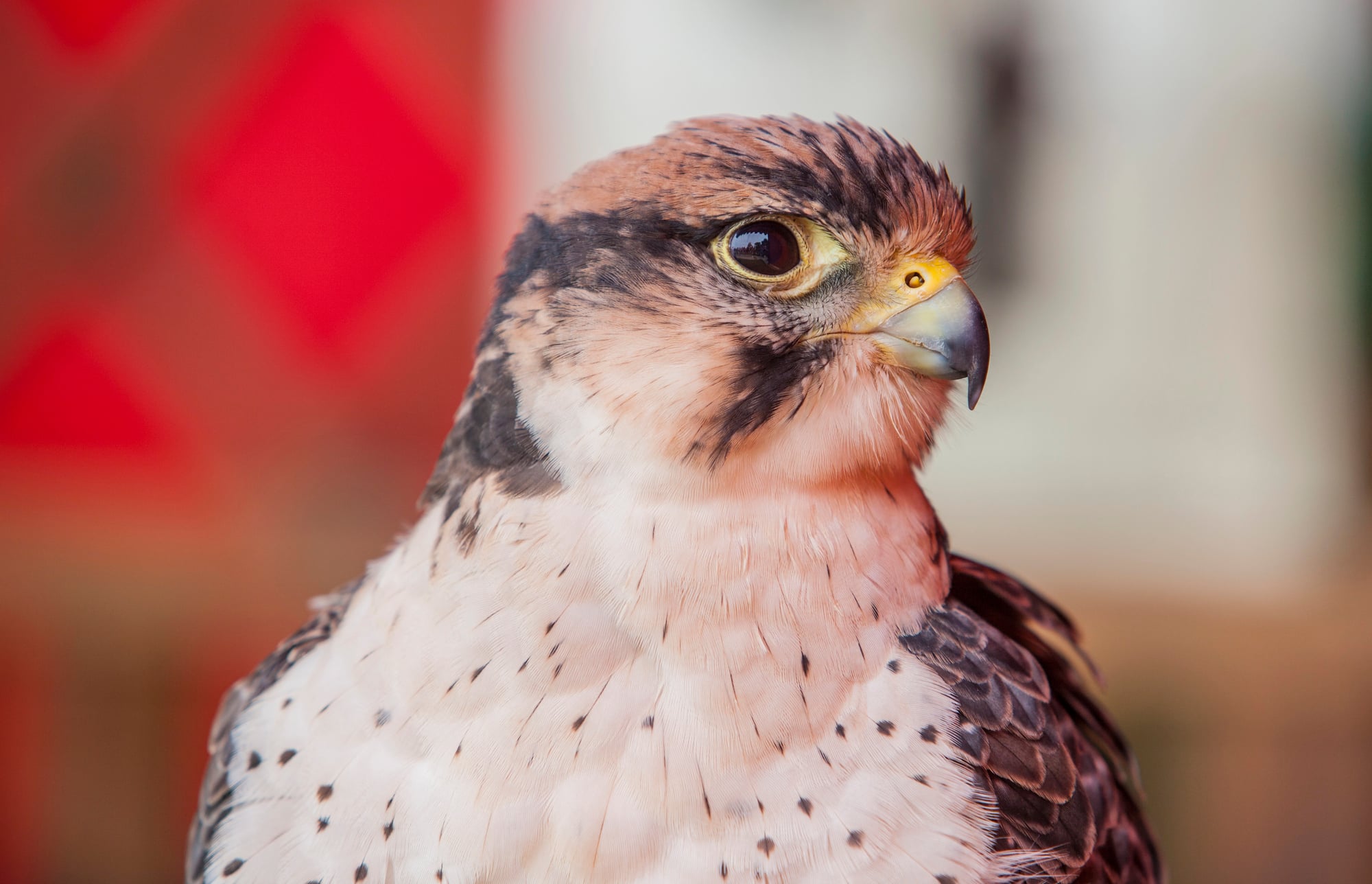
Picture a hunter that’s figured out the exact sweet spot between speed and agility, and you’re looking at a Lanner Falcon in action (though if you’re actually looking at one in action, you’re probably squinting because it’s moving at 90 mph and your eyes aren’t quite keeping up). These birds have this peculiar talent for making tight turns without losing momentum, which sounds straightforward until you consider the physics involved—most things moving that fast tend to keep moving in the same direction, regardless of what they’d prefer to be doing.
But lanner falcons seem to have negotiated some sort of private deal with inertia. They’ll be racing toward a flock of small birds, then suddenly veer left to follow a single target that broke away from the group, maintaining nearly the same speed through the turn as if the laws of motion were more like gentle suggestions.
And the prey knows this, somehow—you can see it in the way other birds react when a lanner falcon appears, the immediate scattering, the desperate individual escape attempts that rarely work because the falcon has already calculated which bird it wants and how it’s going to get there.
Aplomado Falcon
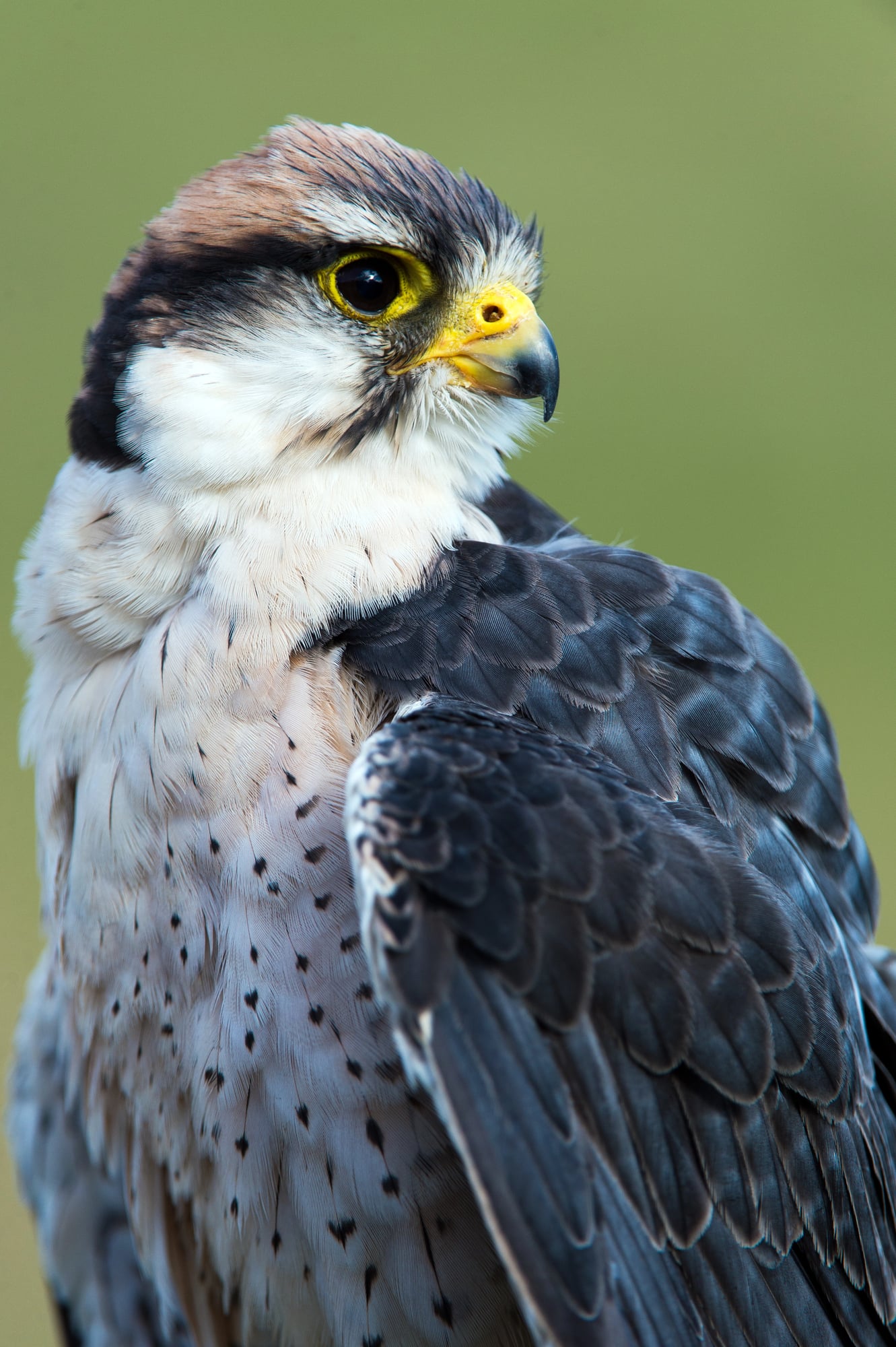
Aplomado Falcon hunt in pairs. While one bird drives prey toward the ground at 85 mph, its partner positions itself to cut off escape routes.
The coordination is flawless. This tag-team approach eliminates most of the variables that allow prey to survive single-predator attacks.
One falcon creates the problem, the other falcon solves it. Simple math with a very predictable outcome.
Merlin

If you’ve ever wondered what happens when you take a small bird and give it the temperament of something three times its size, spend some time watching Merlin hunt. These compact falcons approach their work with an intensity that seems disproportionate to their ten-inch frame—they fly at 80 mph through dense cover, chasing prey that’s often nearly as large as they are, with the kind of single-minded determination usually reserved for much bigger predators.
There’s something almost comical about a merlin pursuing a mourning dove, right up until you realize the merlin is going to win. And it’s not just the speed that makes them effective; it’s the way they use that speed in tight spaces where larger falcons would struggle.
They’ll follow prey through tree branches, under low overhangs, around obstacles that would force other raptors to break off the chase. A merlin doesn’t break off the chase.
It adjusts its approach and keeps coming, making course corrections that look impossible at that velocity, closing the gap with the kind of persistence that makes you wonder if they take these hunts personally.
Goshawk

Northern goshawks are the most intimidating hunters in dense forest. They fly at 75 mph through trees, making split-second turns around branches that would stop other raptors cold.
The key is their short, broad wings and long tail—built specifically for high-speed maneuvering in tight spaces. They don’t avoid obstacles; they use them.
Prey thinks it’s safe behind a tree trunk. The goshawk disagrees and proves its point decisively.
Cooper’s Hawk

Think of Cooper’s Hawk as the suburban specialists of the raptor world—birds that have looked at backyard bird feeders, dense neighborhood plantings, and maze-like residential areas and decided this is exactly the kind of hunting ground they were designed for. These medium-sized hawks move through residential landscapes at 70 mph, treating fence lines, garden structures, and ornamental trees not as obstacles but as tactical advantages in what amounts to an elaborate chase scene played out in someone’s backyard (usually while the homeowner is completely unaware that a high-speed pursuit is happening twenty feet from their kitchen window).
And Cooper’s hawks have this particular gift for making their prey feel safe right up until the moment they’re not—a house finch will be feeding peacefully at a feeder, surrounded by the apparent safety of suburban infrastructure, when suddenly there’s a hawk-shaped blur cutting between the deck railing and the bird bath, moving with the kind of precision that suggests it’s done this exact maneuver in this exact location before. Which it probably has, because Cooper’s hawks are creatures of habit, and good hunting spots don’t stay secret for long.
Sharp-shinned Hawk

Sharp-shinned Hawk specialize in hunting small songbirds at 65 mph. They’re built like tiny guided missiles—compact, fast, and absolutely relentless once they’ve locked onto a target.
These birds make their living in the narrow spaces where speed and agility intersect. They’re too small to take large prey, too fast for small prey to escape.
The math works out perfectly in their favor, which explains why backyard bird feeders attract sharp-shinned hawks like magnets.
Red-tailed Hawk
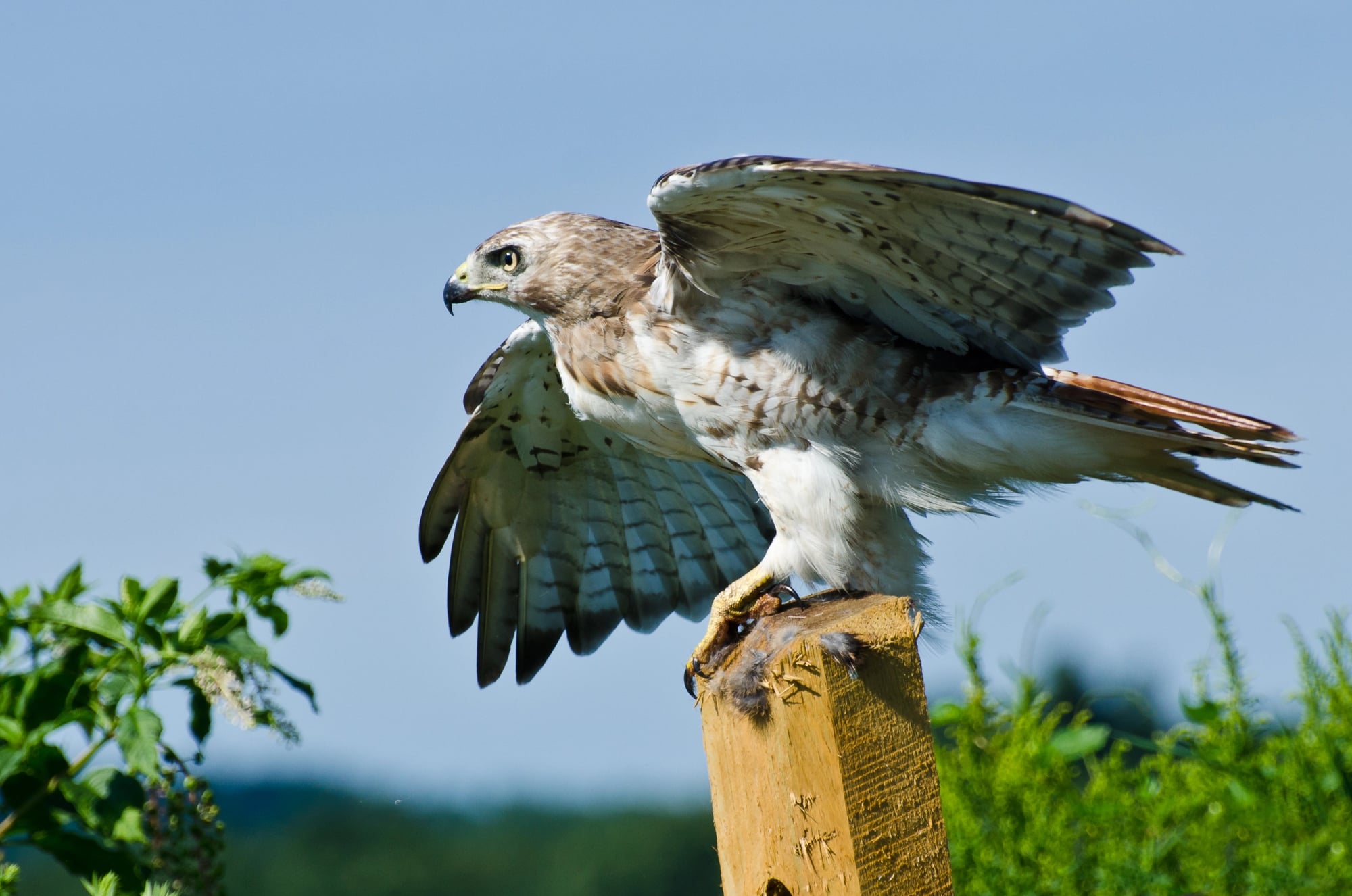
Here’s the thing about Red-tailed Hawk that most people miss: they’re not trying to impress anyone with flashy speed records or aerial acrobatics. These birds cruise at a steady 60 mph and treat hunting like a job that needs to get done efficiently, without unnecessary drama.
There’s something refreshingly straightforward about their approach—they find a good perch, wait for suitable prey to appear, then fly directly to the target with the kind of workmanlike competence that suggests they’ve been doing this for years and have figured out all the shortcuts. And maybe that’s what makes them so successful across such a wide range of habitats; they’re not specialists obsessed with perfecting one particular hunting technique, they’re generalists who adapt their 60-mph cruising speed to whatever situation presents itself.
A red-tailed hawk hunting in open farmland looks essentially the same as one hunting in suburban areas or light forest—steady, methodical, effective. No wasted motion, no unnecessary risks, just the right amount of speed applied at the right moment to solve the immediate problem of finding lunch.
Rough-legged Hawk

Rough-legged Hawk hunt the kind of open, windswept terrain where other raptors struggle to maintain control. They hover at 55 mph in conditions that would ground smaller birds, using the wind as a tool rather than fighting it.
Their feathered legs and feet are adaptations to Arctic hunting, but the real advantage is their ability to maintain hunting speed in weather that forces other birds to seek shelter. When conditions get rough, rough-legged hawks get to work.
Ferruginous Hawk

The largest hawk in North America deserves respect for more than just its size. Ferruginous Hawk combine their impressive bulk with sustained flight speeds of 50 mph, creating a hunting presence that dominates open grassland ecosystems.
These birds don’t need to be the fastest—when you’re built like a small eagle and willing to take on prey as large as jackrabbits, speed becomes just one tool among many. And watching a ferruginous hawk hunt is like seeing power applied with surgical precision; they’ll spend long minutes soaring in wide circles, using their exceptional eyesight to scan enormous territories, then commit to a hunting dive that covers half a mile of prairie in what feels like seconds (though still at a relatively measured 50 mph, because when you weigh four pounds and have talons designed for large prey, there’s no need to rush the inevitable).
The prey—usually ground squirrels, prairie dogs, or small mammals that thought the open grassland provided safety through visibility—quickly discovers that being able to see the predator coming doesn’t help much when the predator is that large, that determined, and closing distance at highway speeds.
Harris’s Hawk

Harris’s hawks hunt in coordinated groups at 45 mph.
Multiple birds attack from different directions, creating a scenario prey cannot mathematically escape. Their cooperative strategy amplifies the effectiveness of modest speed.
Broad-winged Hawk

Broad-winged Hawk are migration specialists who apply their long-distance flight efficiency to hunting. They maintain 40 mph while covering large territories, combining endurance with enough speed to surprise prey that assumes the circling hawk overhead is just passing through.
The strategy works because most animals don’t expect an attack from a bird that’s been soaring peacefully for the past twenty minutes. The broad-winged hawk’s patience becomes a weapon when it finally decides to hunt.
Red-shouldered Hawk

There’s something almost leisurely about the way Red-shouldered Hawk approach hunting, as if they’ve figured out that 35 mph is exactly fast enough to get the job done without expending unnecessary energy. These woodland hunters have mastered the art of efficient predation—they’ll perch quietly in dense forest, scanning the ground below with the kind of focused attention that suggests they’re not just looking for any prey, they’re looking for the right prey.
And when they spot a suitable target—usually a frog, small mammal, or snake—the attack unfolds with measured precision rather than desperate urgency. The hawk drops from its perch, accelerates to its cruising speed of 35 mph, and intercepts the prey with movements that look almost casual until you realize how perfectly timed every aspect of the hunt has been.
It’s the difference between a sprinter and a craftsman; red-shouldered hawks aren’t trying to break speed records, they’re trying to make a living in dense habitat where flashier techniques would be counterproductive.
When Speed Becomes Art

Watching these seventeen hunters reveals something fundamental about survival: speed without strategy is just motion, but speed applied with precision becomes something approaching artistry. Each species has found its own answer to the same basic problem—how to catch prey that doesn’t want to be caught—and the solutions range from the peregrine falcon’s overwhelming velocity to the Harris’s hawk’s coordinated teamwork.
The fastest isn’t always the most successful, just as the most successful isn’t always the most obvious. Sometimes the bird that figures out how to use 45 mph most effectively outlasts the one chasing speed records.
Sometimes patience matters more than power, strategy more than raw acceleration. But when everything comes together—the right speed, the right moment, the right prey in the right place—these birds remind us why humans have always looked up at hunting raptors with something close to awe.
More from Go2Tutors!

- The Romanov Crown Jewels and Their Tragic Fate
- 13 Historical Mysteries That Science Still Can’t Solve
- Famous Hoaxes That Fooled the World for Years
- 15 Child Stars with Tragic Adult Lives
- 16 Famous Jewelry Pieces in History
Like Go2Tutors’s content? Follow us on MSN.