31 Playground Structures From Childhood That Would Never Pass Safety Standards Now
The playgrounds of the mid-twentieth century operated on a simple philosophy: if a child could climb it, spin on it, or fall off it, build it as high and as fast as possible and see what happened. What happened, often, was a broken arm.
The U.S. Consumer Product Safety Commission published its first Handbook for Public Playground Safety in 1981, and since then, the list of things that used to be considered normal equipment has grown longer with each revision. What follows is an honest accounting of the structures that entire generations survived — and that no licensed playground installer would touch today.
The Towering Metal Slide
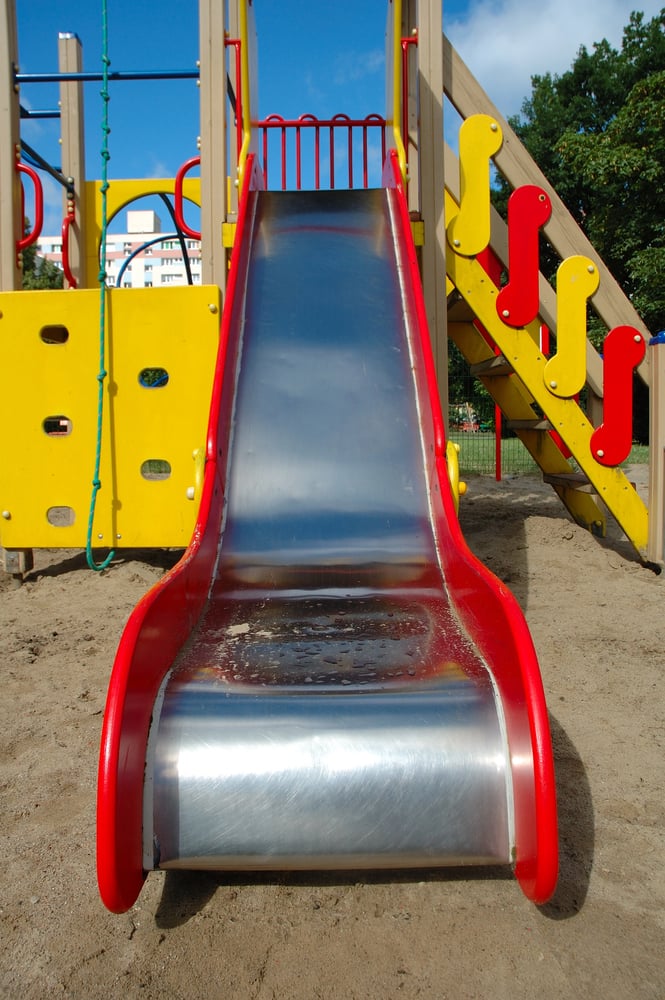
Before plastic arrived and before anyone measured surface temperatures, playground slides were made from unshaded stainless steel, often reaching heights of twelve feet or more. In direct summer sunlight, the surface could exceed 150 degrees Fahrenheit — hot enough to cause genuine contact burns through clothing, which it did, regularly.
Children compensated by sliding down on sheets of wax paper for extra speed, which removed the last marginal friction protecting them from the hard ground at the bottom. There were no side rails. There was no soft landing surface. There was, often, a substantial crowd of children waiting at the base.
The Classic Merry-Go-Round
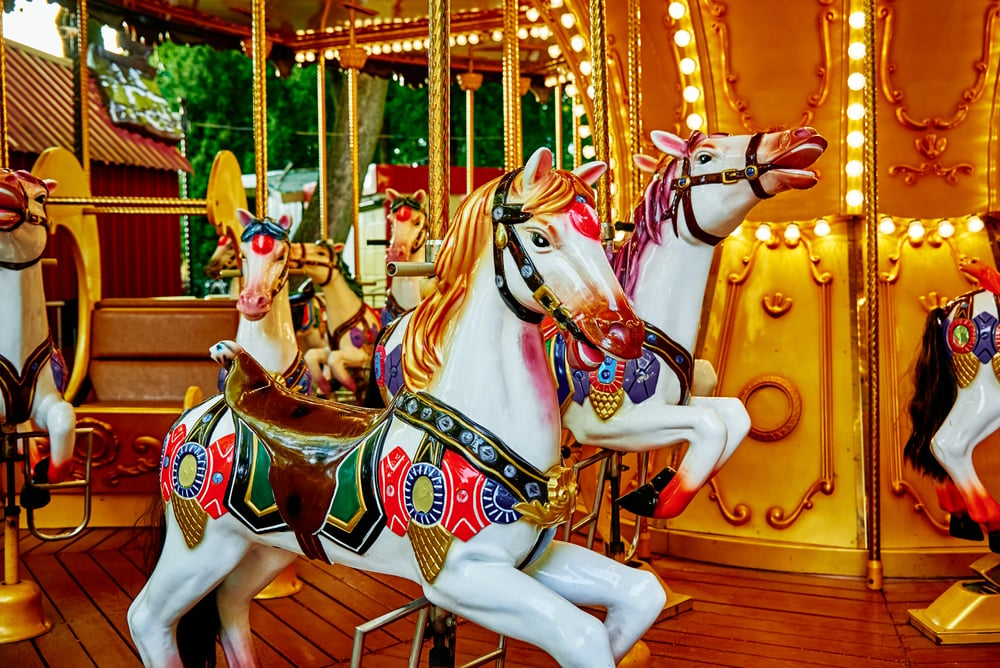
A heavy iron disc mounted on a central bearing, the traditional playground merry-go-round could be pushed to speeds that modern recreation engineers would describe as alarming. Older children would run alongside it, accelerating the platform while smaller riders held on for their survival.
The floor of many models was made from expanded metal mesh that functioned like a cheese grater against any skin that made contact with it during a spill. In 1995, the Consumer Product Safety Commission identified merry-go-rounds as responsible for 104 documented injuries in the 1980s alone. McDonald’s had to fund a five-million-dollar child safety campaign partly because of the ones they had installed at their restaurants.
The Giant Stride
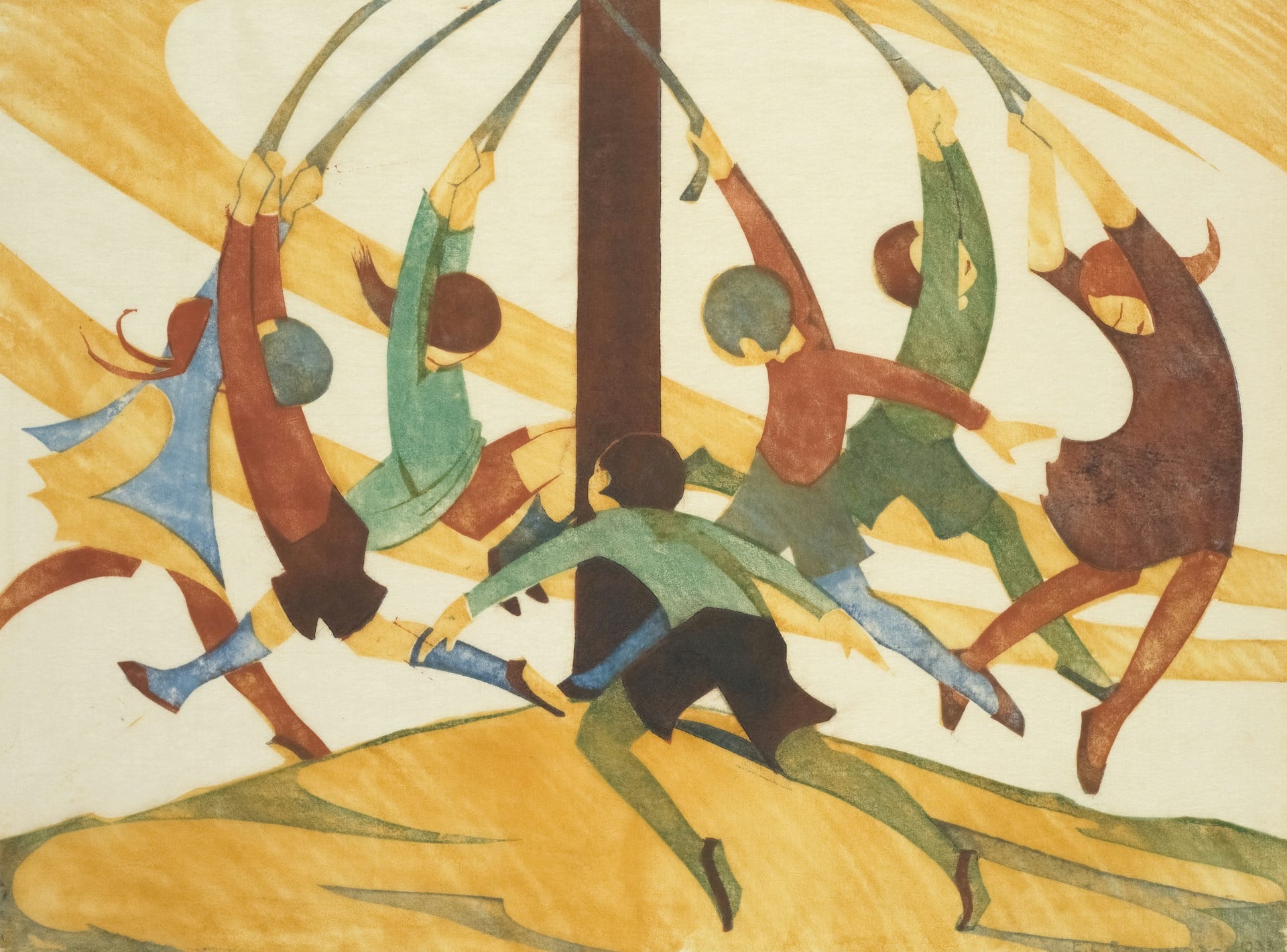
The Giant Stride was a vertical pole with chains or ropes attached to a spinning mechanism at the top. Children would grab the ropes and run in a circle until centrifugal force lifted them off the ground, swinging outward in the air around the central pole.
It was wildly popular from the late 1800s through the early 1900s. A 1908 playground guide specified that it “must have a very hard surface” beneath it, meaning concrete or asphalt.
A 2009 U.S. government report on playground safety noted that injured children had nicknamed the device the “Giant Strike.” The Giant Stride was largely gone from schoolyards before World War II, making it one of the earlier casualties of playground reform.
The Wooden Seesaw
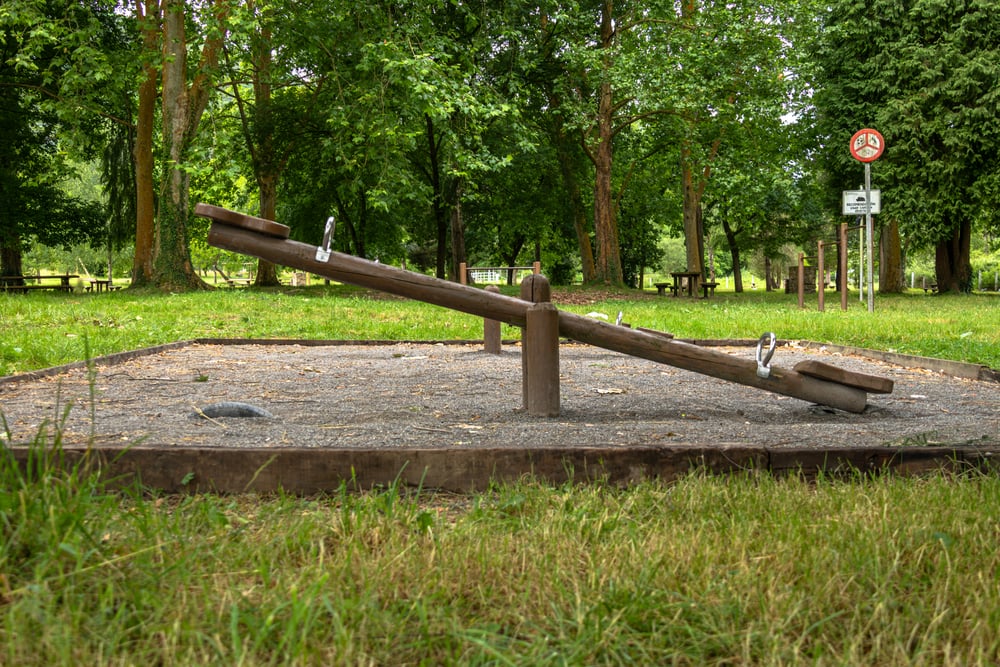
The basic flaw in the wooden seesaw’s design was structural: it worked correctly only when the two riders were roughly the same weight, a condition that childhood provides no guarantee of. The heavier rider controlled the dynamic entirely and could hold the lighter rider aloft indefinitely or jump off at speed, dropping the other child to the ground from several feet up.
Wooden seesaws also delivered spectacular splinters. New York City had more than 600 wooden seesaws in its parks at the activity’s peak.
By 2016, one remained. Updated federal guidelines now specify that seesaws represent an elevated risk for young children, and modern versions require mechanisms that slow the descent rather than allowing a hard drop.
The Witch’s Hat
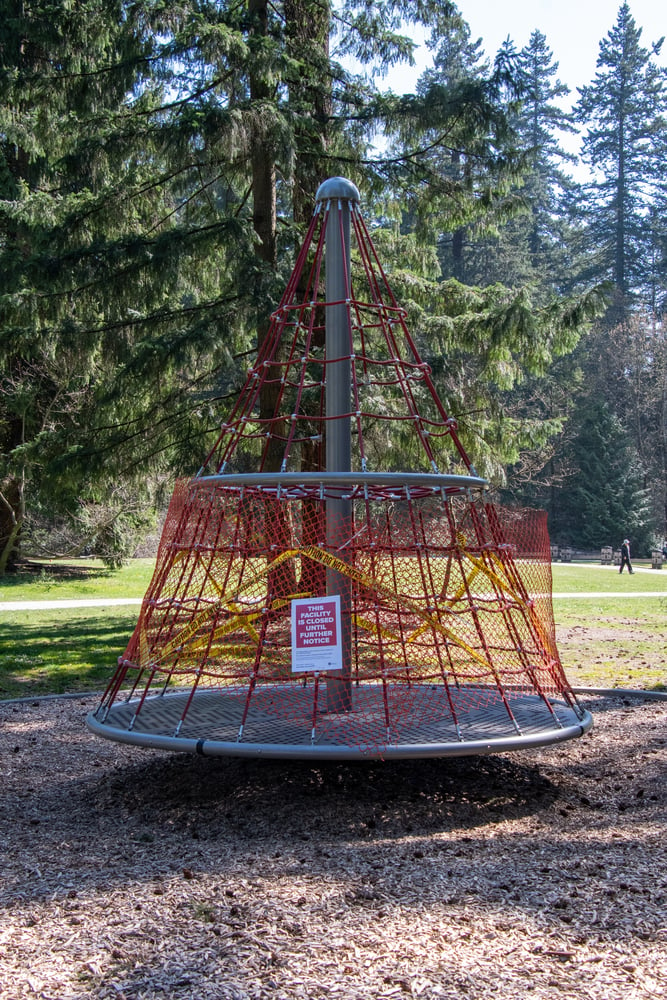
Inventor Charles Wicksteed created the Witch’s Hat — also called the Ocean Wave — for a British park in the early twentieth century. It was a conical metal frame, about twelve feet tall, balanced on a central pole, from which children would hang and swing in unpredictable oscillating patterns.
The cone could spin and sway simultaneously, which made it near-impossible to anticipate where it would move next. The Children’s Play Advisory Service, in a 2011 report, described the original design as having “a high risk of inflicting lethal injury” — specifically, crushing children against the central pole.
The last functioning original in Britain was removed from playgrounds in the mid-1980s. Wicksteed Park later developed a redesigned version with modern safety mechanisms.
The Barrel-of-Fun
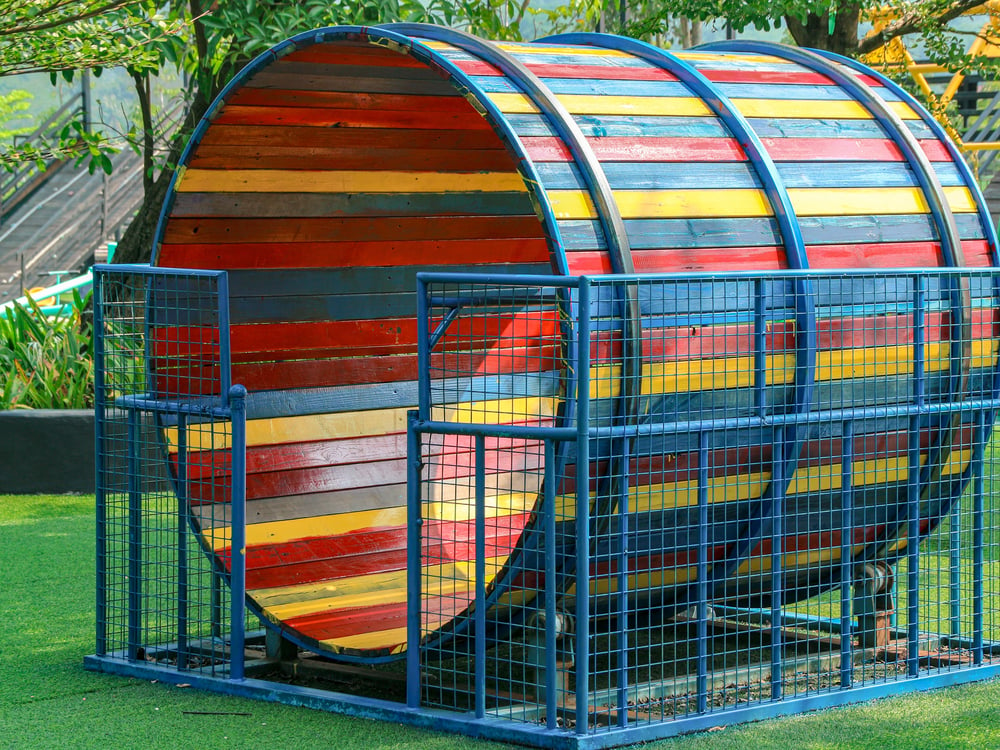
Introduced in the 1920s, the Barrel-of-Fun was a 140-pound steel barrel rotating around a horizontal axis mounted two feet above a concrete base. Children were encouraged to roll somersaults over it, log-roll along its top surface, or simply try to cling to it as it spun.
One manufacturer described it in 1922 as “a mechanical greased pig,” which was meant as a compliment. The smooth surface guaranteed that clinging was difficult at speed, the concrete base below was at standard floor level, and there were no handles.
Balance barrel variations still exist on modern playgrounds but are now set lower, filled with soft material beneath, and equipped with handholds.
The Jungle Gym — Original Steel Version
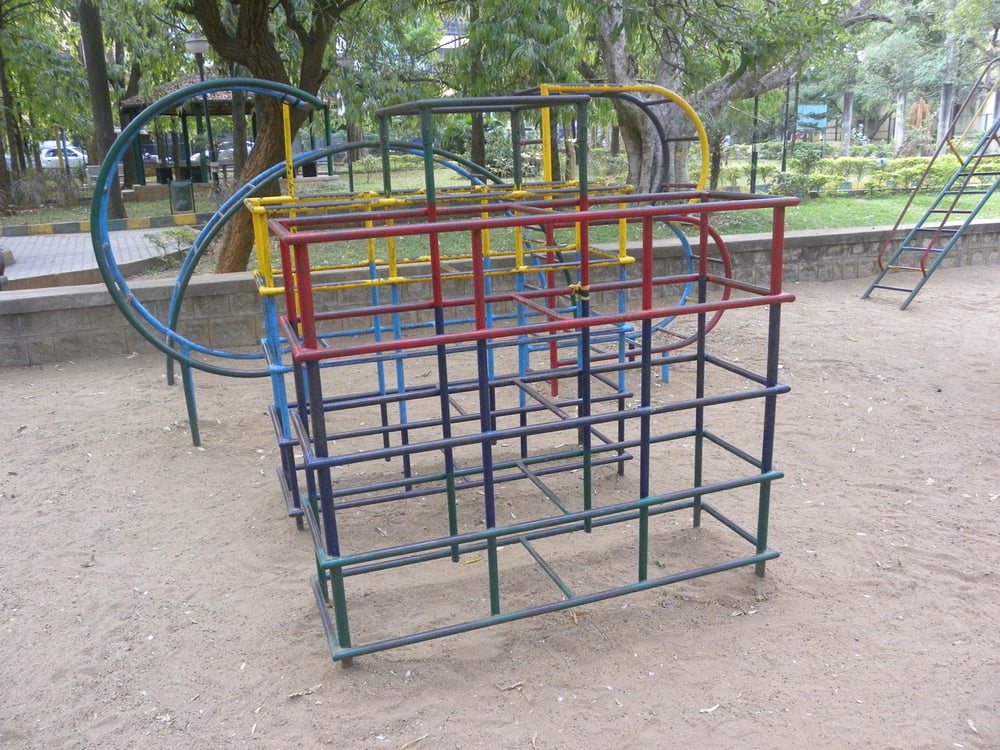
The original jungle gyms of the mid-twentieth century were constructed from steel pipe, reached heights of fifteen feet or more, and were installed on packed earth, asphalt, or gravel with no cushioning beneath. There was no design limit on how high a child could climb.
Falls from the upper sections of these structures onto hard surfaces caused the most serious injuries on record in pre-modern playgrounds. Current safety guidelines mandate a maximum fall height of six feet for equipment intended for children under five, and require appropriate impact-absorbing material beneath the entire fall zone.
The Log Swing

Photographs from the 1950s and 1960s show log swings loaded with fourteen or more children swinging simultaneously from what was essentially a heavy wooden beam suspended by chains. The log could swing forward and backward in a controlled fashion, but it could also sway laterally with unpredictable momentum.
The sheer mass of a loaded log swing made any collision with a bystander catastrophic. Modern regulations restrict multi-rider swings entirely and specify that swings cannot pose an impact hazard to children on the ground nearby.
The Flying Rings
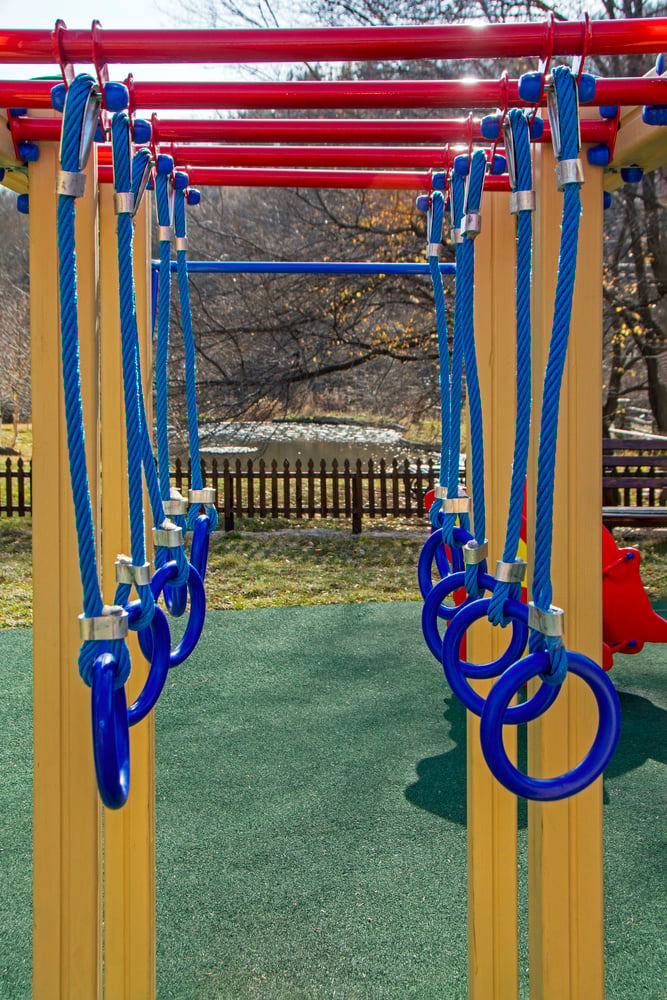
Horizontal steel rings suspended from chains, spaced at intervals across a frame, allowed children to swing from one to the next — the original monkey ring design. The problem was the ground clearance combined with the momentum required to make the transfers.
Children who lost their grip mid-swing dropped from a meaningful height and often landed on the child behind them. The Consumer Product Safety Commission has specific guidance against this design and has recommended against it for public playgrounds since the 1980s.
The Spinning Gate
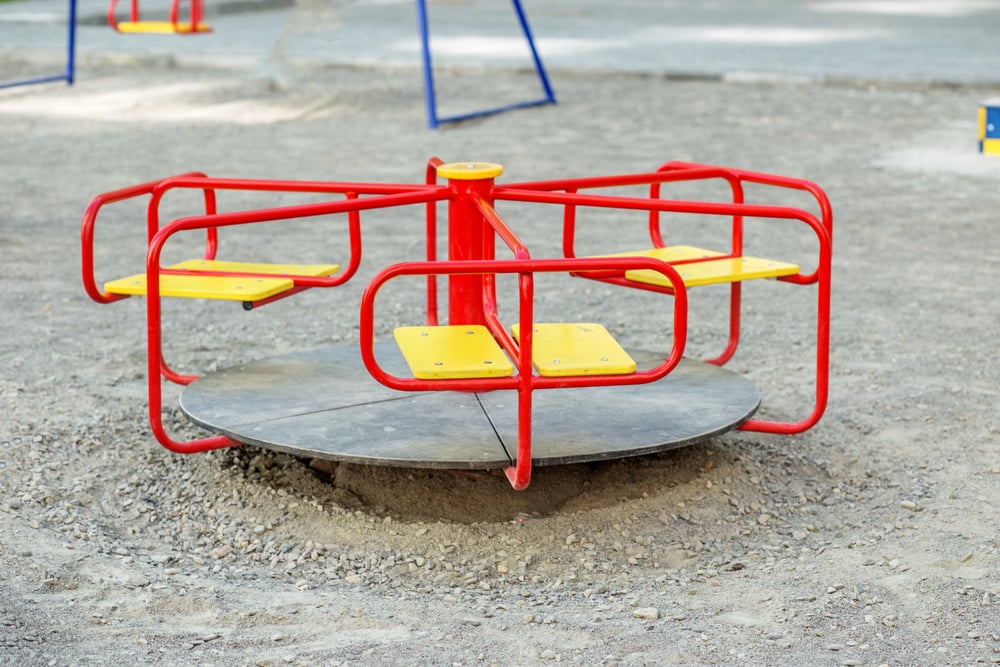
Swinging metal gates mounted on a central pivot allowed children to grab hold and swing themselves around the pole. Sometimes a board to stand on was attached; often it wasn’t, requiring children to wedge their feet into the gate’s slats.
The abrupt and non-uniform motion made staying on genuinely difficult, and any bystander who misjudged the arc of the gate risked being struck by a substantial piece of swinging metal. These were often located in schoolyard areas with no fall zone marking and no safety surfacing beneath.
The High Dive Swing

The swing sets of earlier decades were taller than current standards permit, used wooden or metal seats instead of rubber, and had chains rather than soft-coated cables. The greatest hazard was the organized game of jumping from the swing at the apex of its arc — a practice common enough that most people who were children in the 1960s or 70s attempted it at least once.
The impact on landing from a fifteen-foot apex jump is not trivial. Current standards specify maximum seat heights, chain coatings, and fall zone dimensions that make this particular sport considerably harder to execute.
The Asphalt Surface
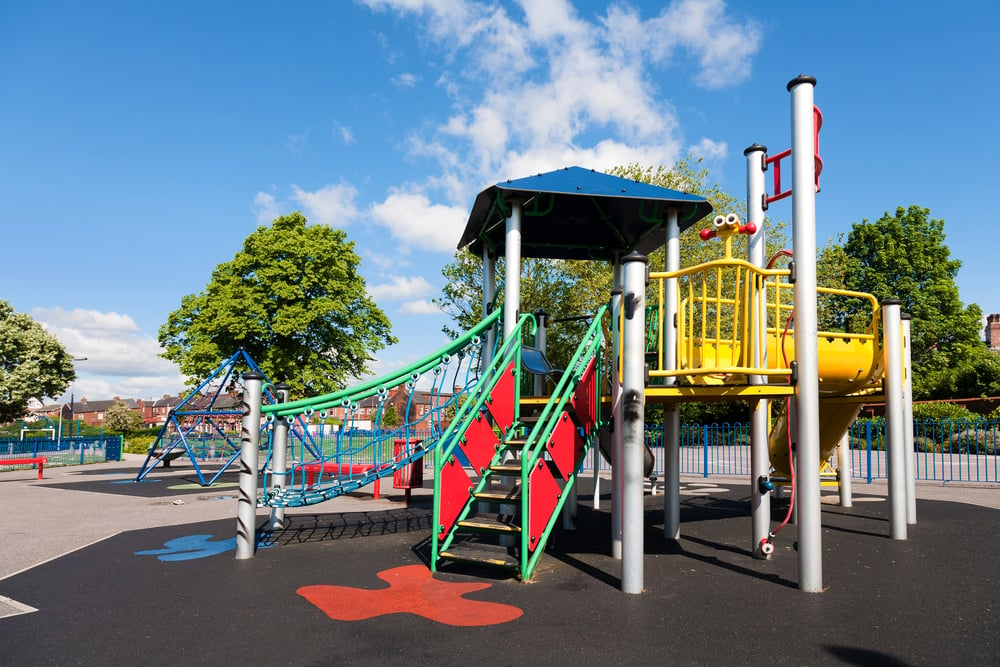
It is not a piece of equipment, but it was the defining feature of mid-twentieth-century playground design, and its legacy is stamped permanently into the medical records of millions of adults. Asphalt was standard beneath every climbing structure, swing set, and slide in countless schoolyards and parks for decades.
Falls that would now produce a soft landing on wood chips or rubberized matting produced instead road rash, head trauma, and fractures. The CPSC began specifying safety surfacing requirements in the early 1980s, and the shift from hard surfaces to impact-absorbing materials has been credited with a significant reduction in severe playground injuries.
The Rocket Ship Climber
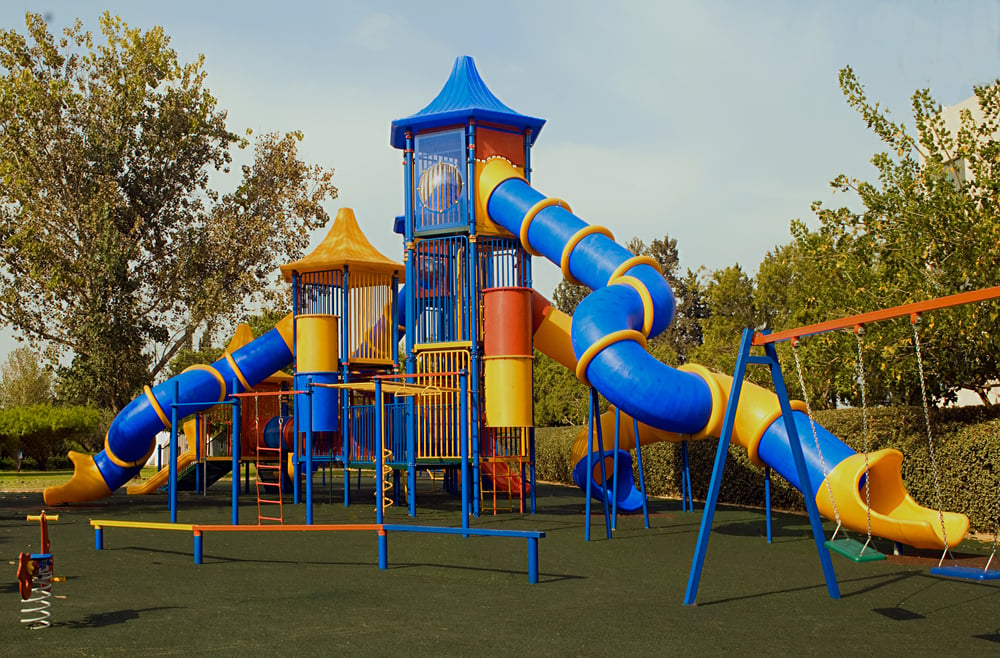
The space race of the late 1950s and 1960s inspired a specific generation of playground equipment: steel structures shaped like rocket ships, often reaching twelve to fifteen feet high, with narrow ladders and small portholes that children climbed through. They captured the cultural moment perfectly — in 1960, nearly every piece of new playground equipment reflected what was happening in the news.
What they didn’t capture was the importance of fall zone design. Rocket ships were typically placed on asphalt, their design offered no gripping surface for small hands, and the portholes were precisely sized to trap a child’s head.
The Springed Animal Rider — Original Version
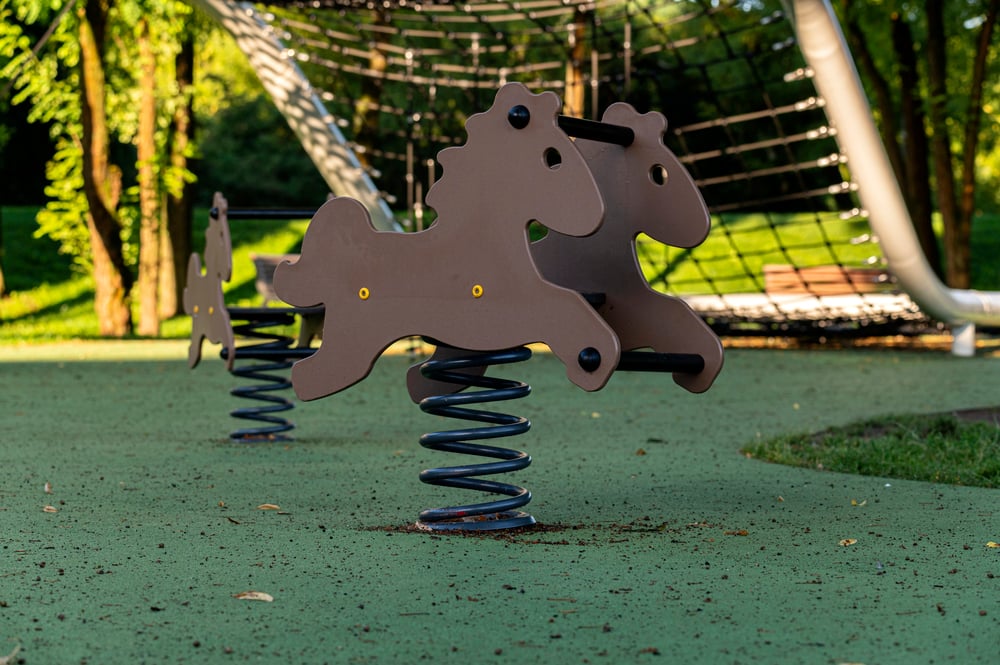
Springed animal riders — the horse or duck or motorcycle bolted to a heavy coil spring sunk into the ground — still exist in modified form. The original versions sat higher, used harder materials, and were installed over hard surfaces.
The spring mechanism on early models could trap fingers or, with sufficient enthusiasm from the rider, unseat them entirely from a meaningful height. Modern versions are shorter, use softer materials, have enclosed spring mechanisms to prevent finger injuries, and require appropriate safety surfacing.
The Tire Swing — Original Heavy Version
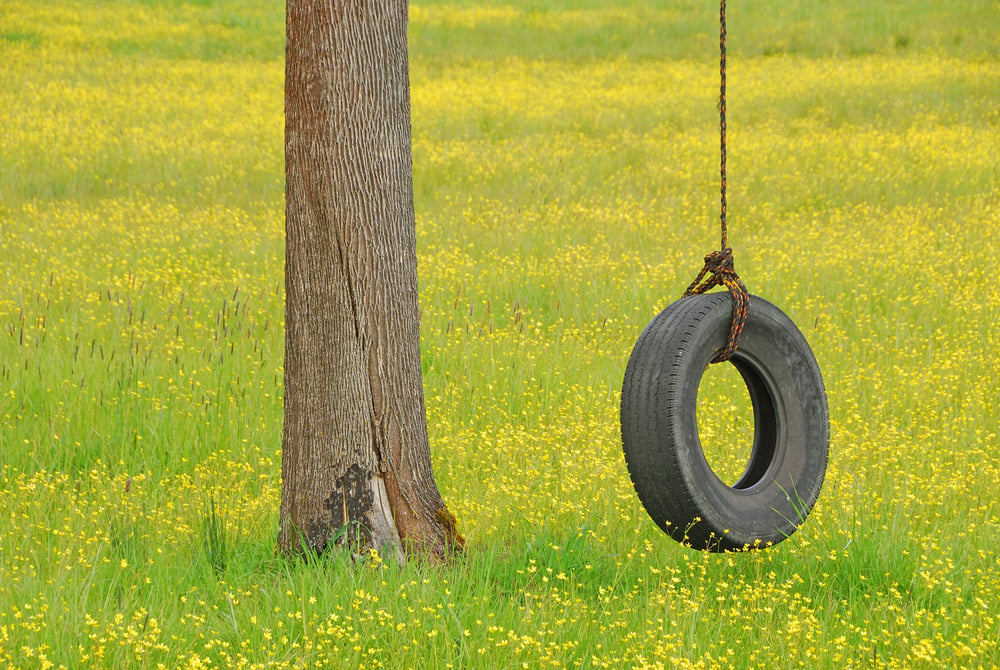
The tire swings most common in 1970s playgrounds used full-size tractor tires, which weighed considerably more than the passenger and were suspended from a single heavy-duty chain by three attachment points. The mass of a loaded tractor tire in motion made it an effective projectile for any bystander who walked into its arc.
The center of the tire collected standing water after rain, creating a reliably unpleasant seat. Current standards specify the weight limits and suspension design for tire swings, and full agricultural tires no longer appear on public playgrounds.
The Six-Foot Horizontal Ladder
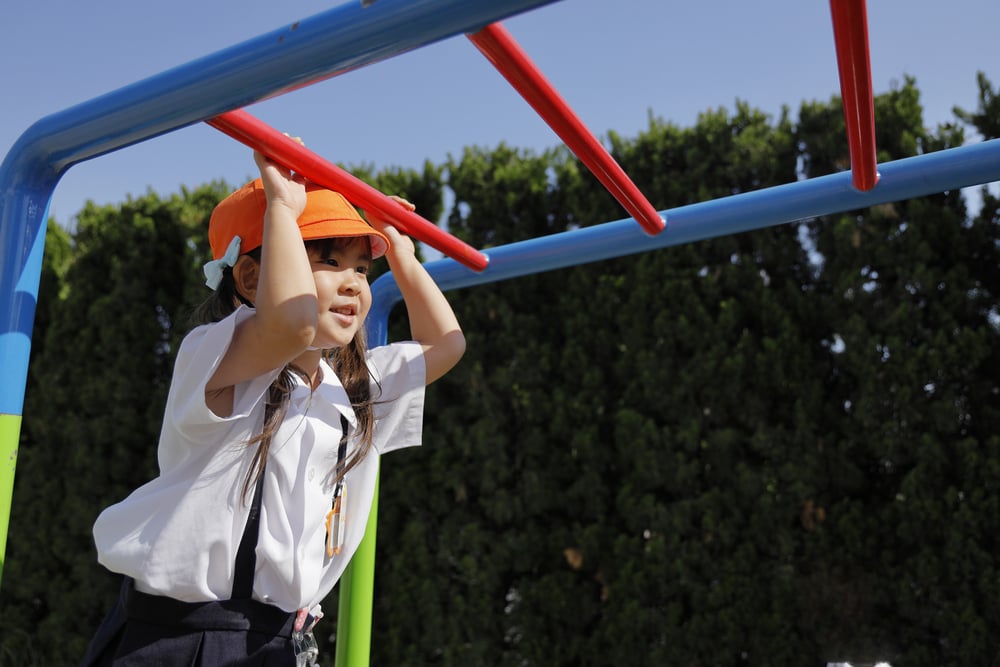
The overhead horizontal ladder — a classic upper-body strength exercise — existed in versions that were set too high, used metal rungs that got both slippery in rain and burningly hot in sun, and were positioned over packed earth or asphalt. They were usually popular enough that multiple children were on them simultaneously, meaning a child falling from one end landed on or near children waiting below.
Safety standards now specify maximum height, rung diameter, rung spacing, and required fall zone dimensions that the original designs did not approach.
The Ocean Wave (Variant)
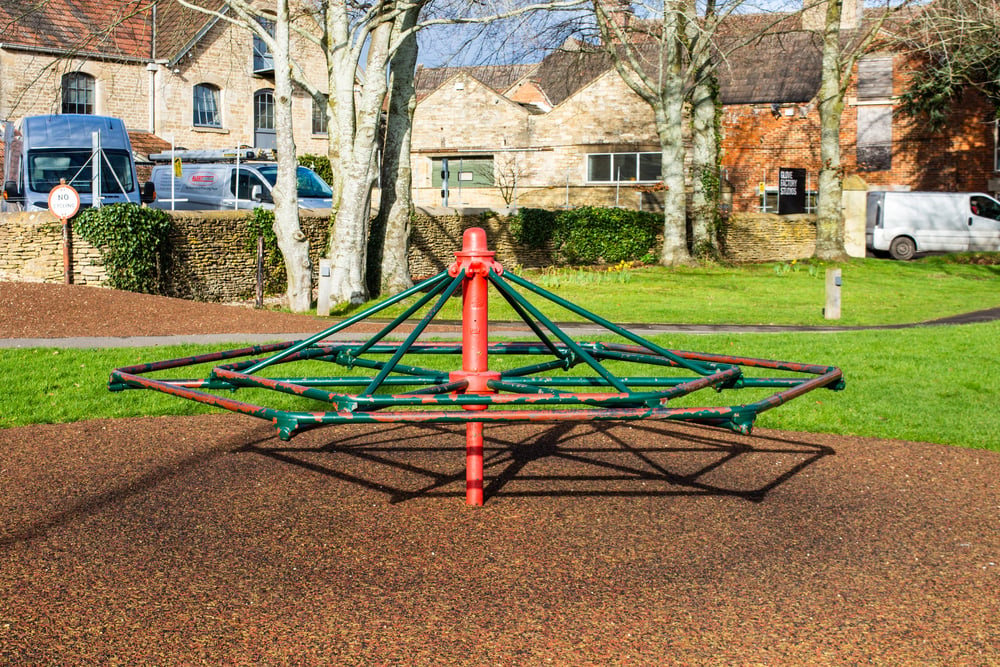
A variant of the Witch’s Hat common in American parks from the 1930s onward, the Ocean Wave was a circular platform suspended from a central pole that could swing, sway, and rotate simultaneously, producing motion that one 1940 catalog described as “undulating and wavelike.” Children stood or sat on the platform while it moved.
The unpredictability of the motion was the entire point, which is also why falls from it were difficult to anticipate or brace for. The Consumer Product Safety Commission’s position on this equipment has been consistently negative since the early 1980s.
The Climbing Pole Without Grips
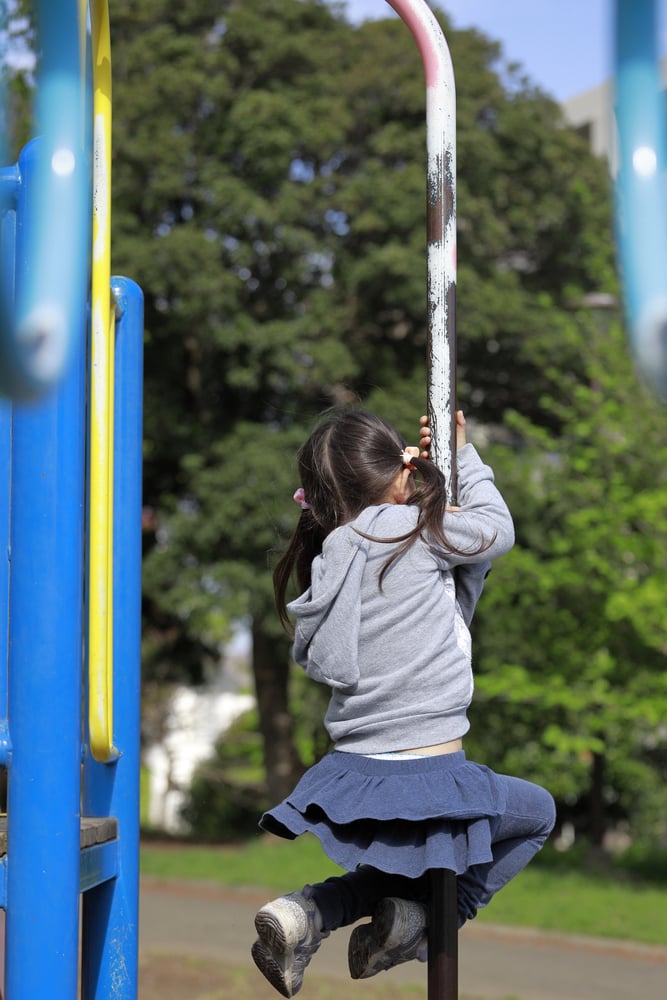
Simple vertical metal poles, sunk into the ground and rising to heights of fifteen or twenty feet, appeared on playgrounds as pure climbing challenges. There were no rungs, no grip aids, no safety surfaces.
The challenge was to reach the top using only friction. The descend was either slow and controlled or fast and not.
Children who lost their grip above a certain height arrived at the ground with enough velocity to cause serious injury, and the hard surfaces typically beneath them did the rest. Current equipment standards require safe means of ascent and descent and enforce height limits for this reason.
The Maypole — Original Version
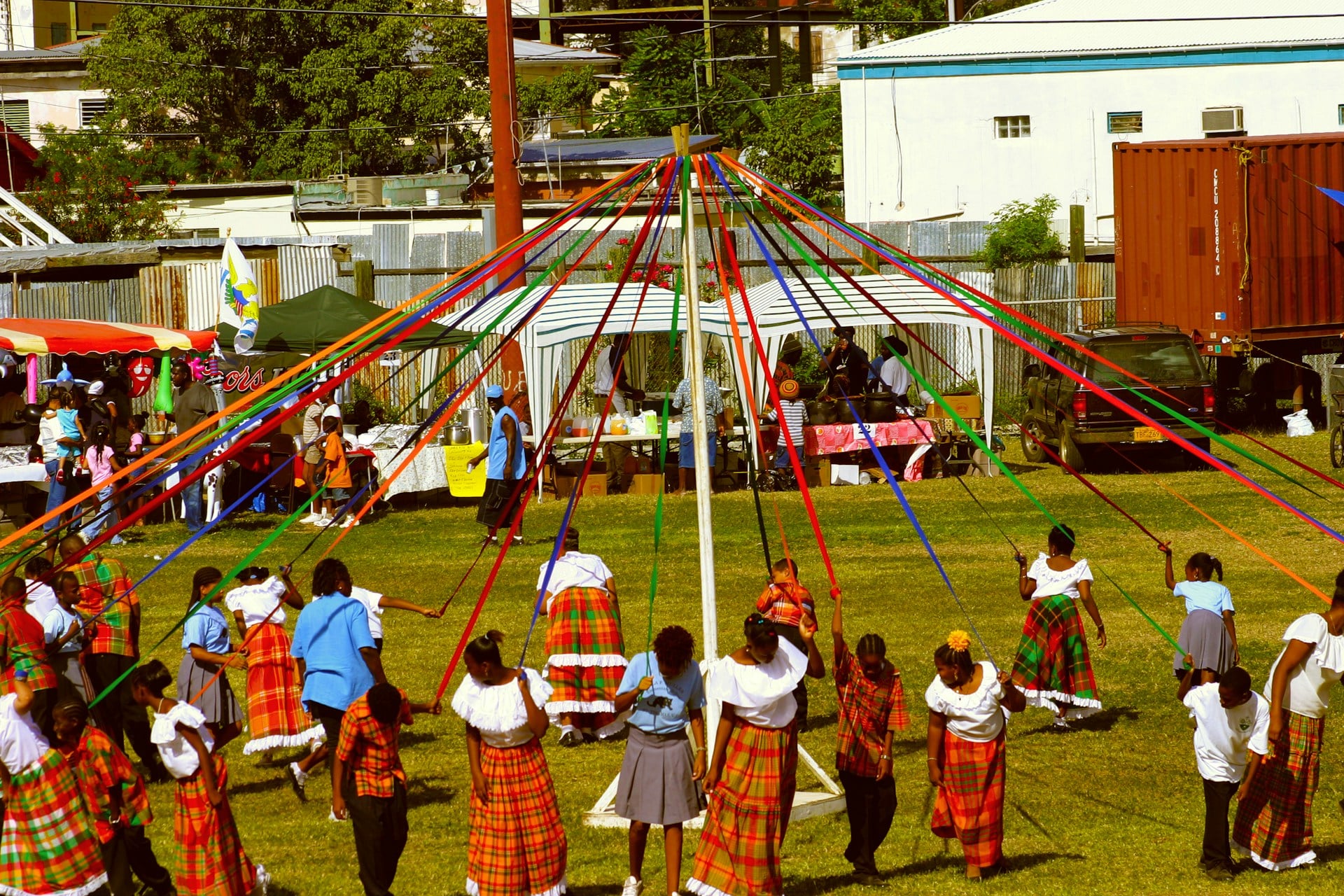
Maypole structures on playgrounds consisted of a tall central post with chains or ribbons attached at the top, which children grabbed and ran around at speed until centrifugal force lifted them into the air. This is not entirely different from the Giant Stride in principle.
The critical variable was the height of the attachment point and the length of the chain, which determined how high children would swing and at what angle they would hit the central pole if they lost their grip going in the wrong direction. Modern rotating equipment of this type requires barriers or design elements preventing contact with the central structure.
The Steel See-Saw Without Bumpers
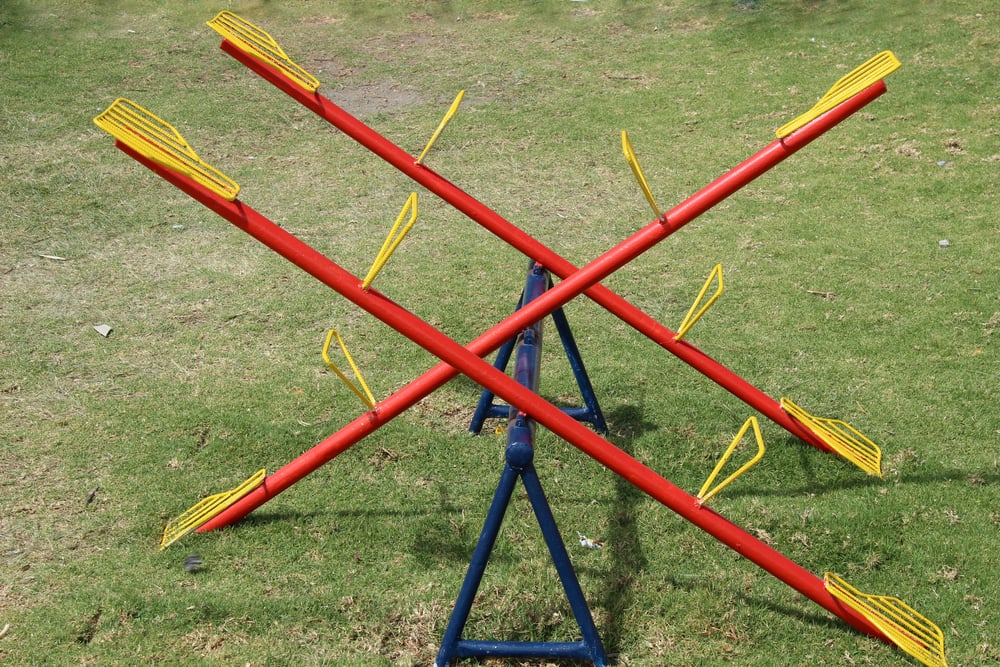
The unpredictability of the wooden seesaw was partly about weight. The steel versions had an additional issue: the handles were often absent or poorly positioned, the ends could descend at significant speed, and there was no mechanism to limit the impact at the bottom of the arc.
A child falling from the high end had no way to break their fall against the handle. The modern “spring rider” seesaw concept was developed specifically to limit descent speed and prevent the full hard-landing drop that characterized the original.
The Trapeze Bar Set
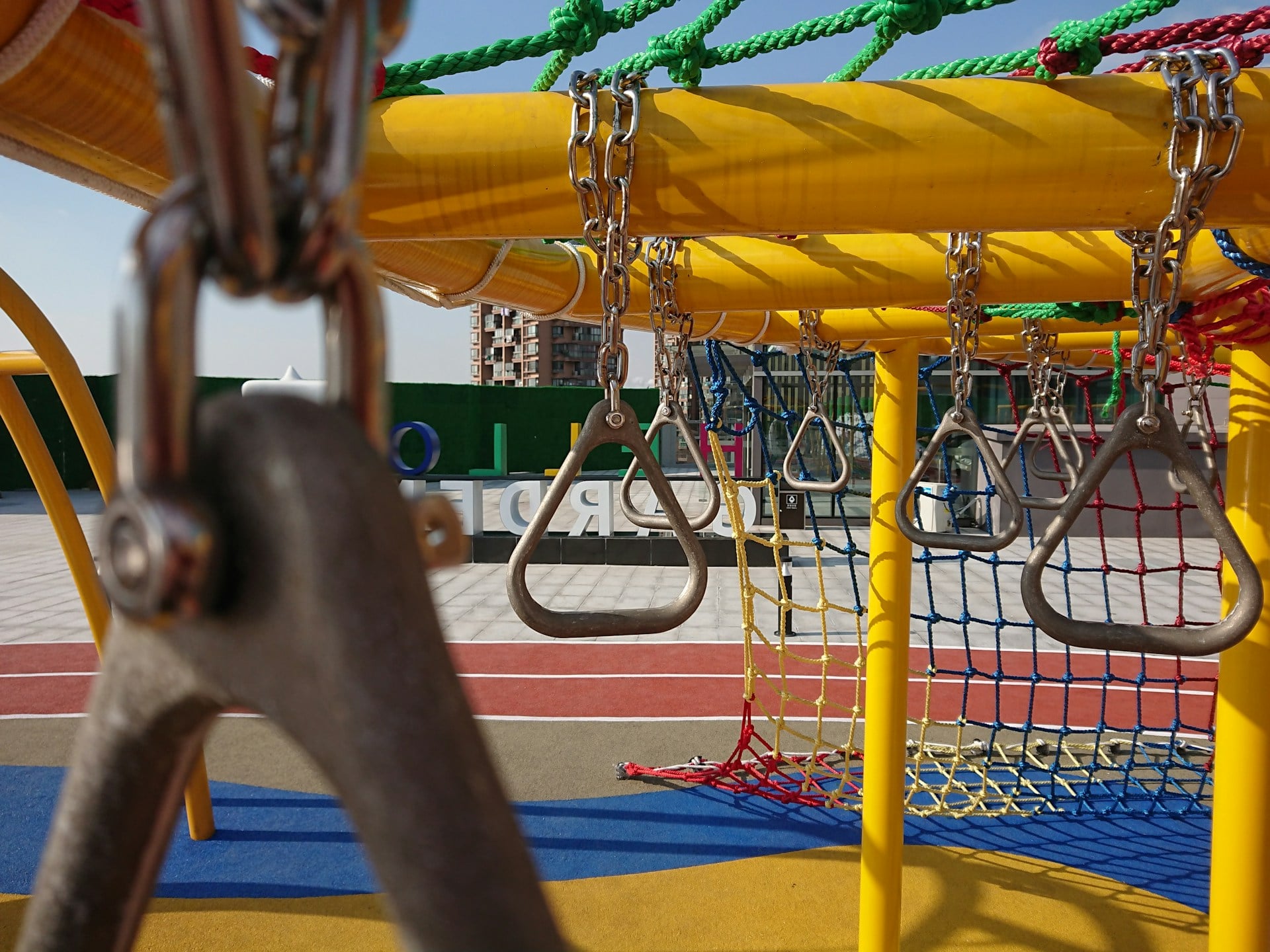
Sets of trapeze-style bars suspended from overhead beams by chains were a common addition to 1960s and 70s playgrounds. Children would swing from bar to bar or attempt more ambitious gymnastics, often without instruction.
The height of the equipment, the metal construction of the bars, and the absence of safety matting beneath made falls consequential. Equipment of this type now requires gymnasium-style safety mats or equivalent surfacing when approved for installation at all.
The Concrete Tunnel
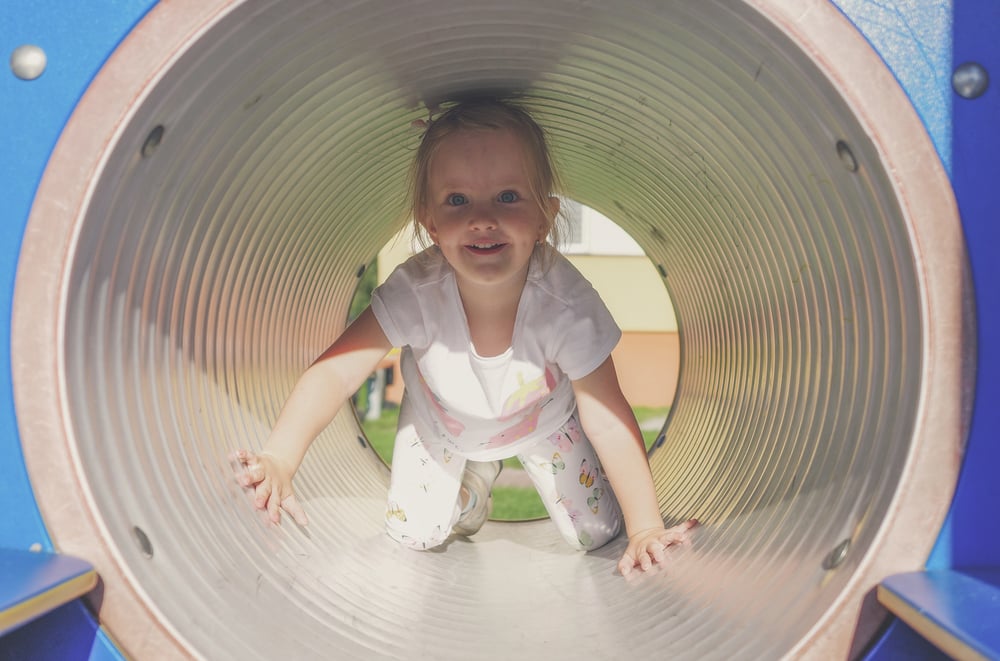
Buried concrete culverts — the kind used for drainage — appeared on many older playgrounds as crawl-through tunnels. They were cheap, durable, and perfectly sized to get a child thoroughly stuck.
They offered no visibility from the outside, no ventilation in summer heat, and edges that were not designed for children’s comfort. Modern playground tunnels are required to have open ends that allow adult supervision from outside, adequate air circulation, and smooth, non-cutting entry edges.
The Rocking Boat — Heavy Iron Version
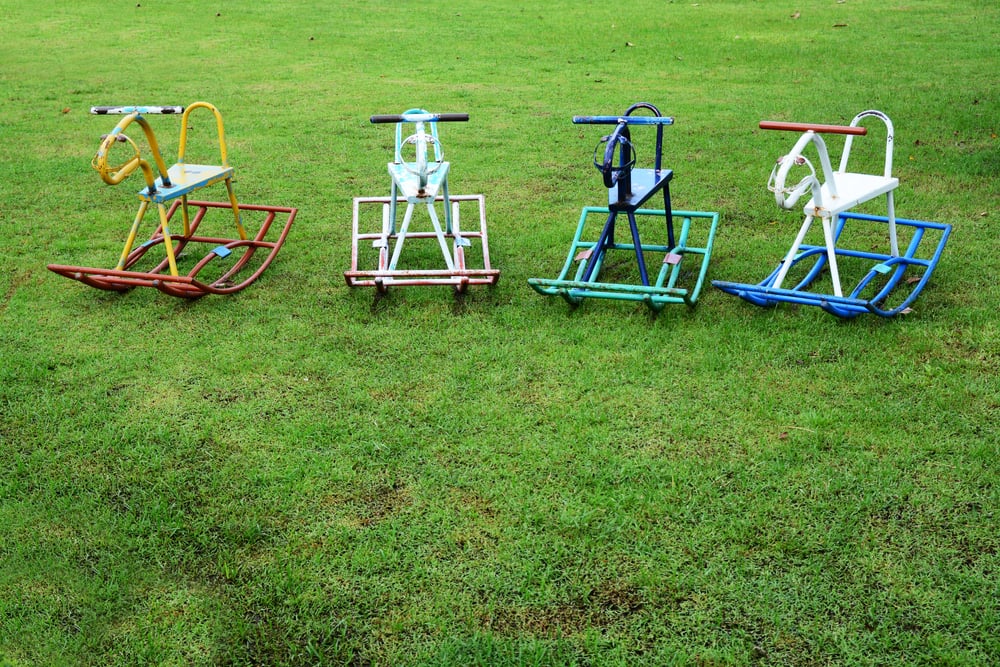
Iron rocking boats from the 1940s through 1960s allowed multiple children to rock the structure back and forth. The mass of the iron platform, combined with the rocking motion, meant that a child who fell off one side while the boat was in motion risked being struck by the returning edge of a structure weighing several hundred pounds.
Modern versions are lighter, lower to the ground, have enclosed rider positions, and are required to be positioned over safety surfacing.
The Fire Pole — Unguarded Drop
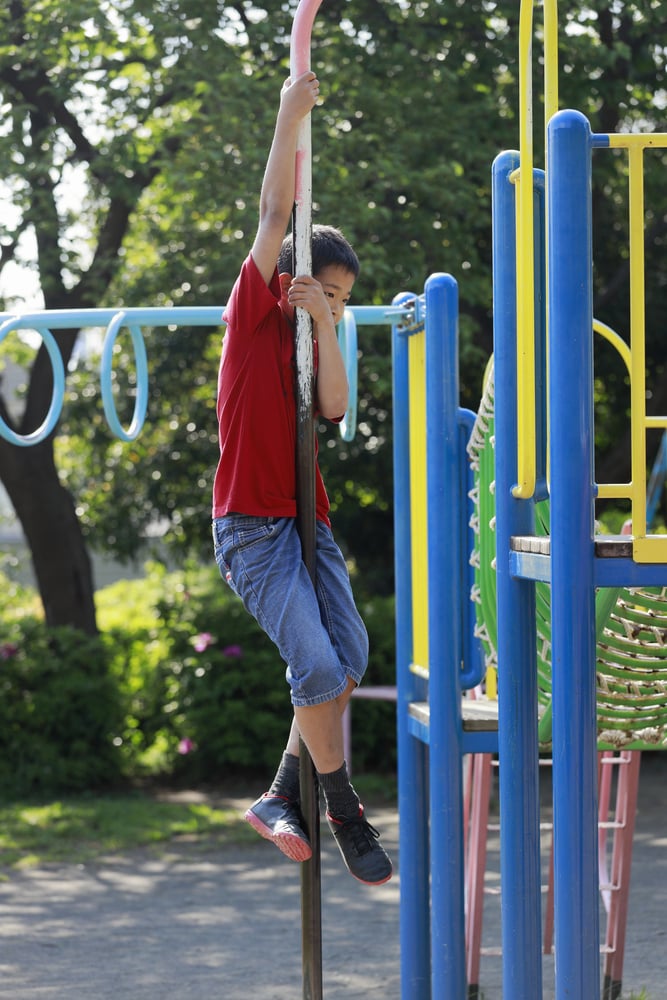
Fire poles — vertical poles connecting a platform to the ground — became playground features because they were fast and children loved them. The problem was that original designs often placed the top of the pole at the same level as a platform with no barrier between the platform edge and the pole opening, meaning a child approaching the pole could fall through the gap before gripping it.
Falls from height onto a pole grip are also non-trivial injury events. Current standards require a guardrail around the pole opening and specify the diameter of the pole based on the age range of intended users.
The Balance Beam — Original Versions
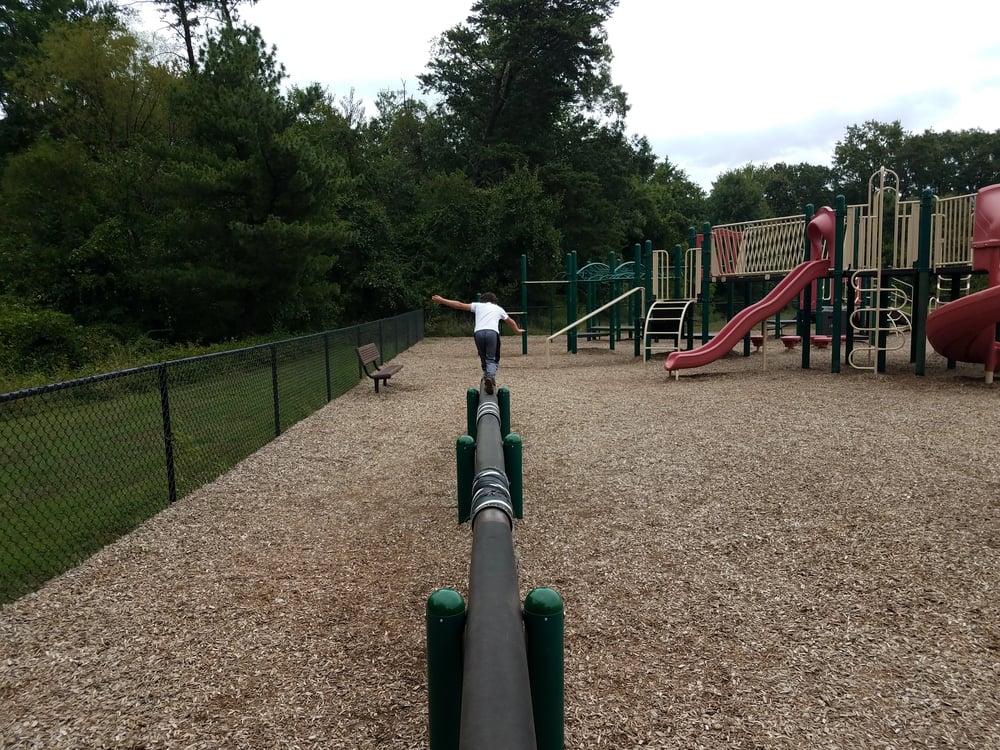
Early playground balance beams were set at heights that made falls genuinely dangerous, on surfaces that made the falls worse. A beam at four or five feet above asphalt, with no side supports and no safety surface, represented a straightforward injury mechanism for children who misjudged their step.
Current guidance keeps beams close to ground level and requires safety surfacing beneath the entire length.
The Overhead Track Ride
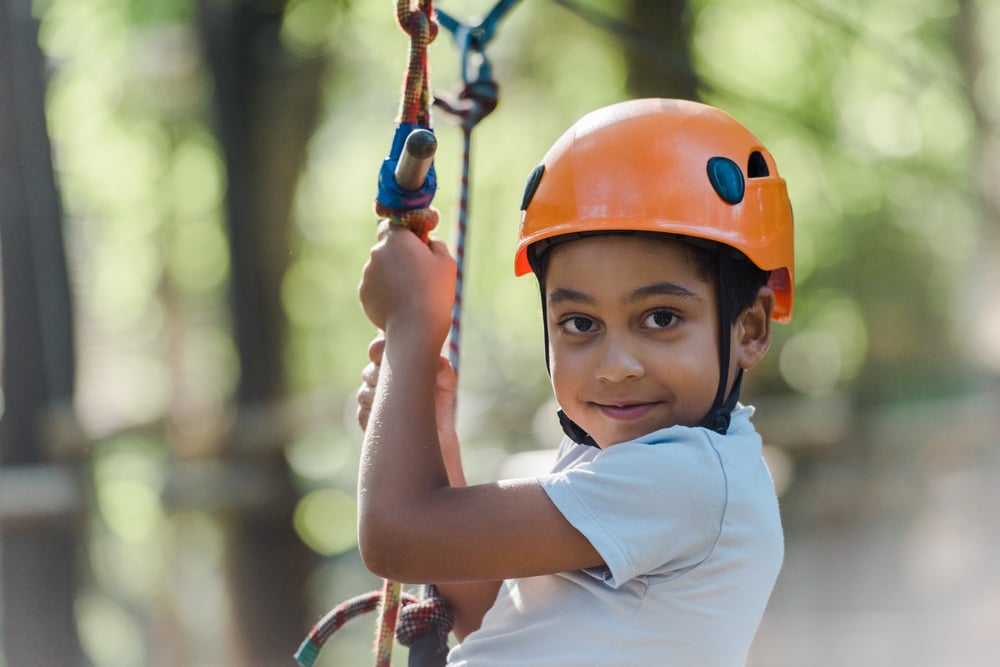
Overhead track rides — sometimes called sky rides — allowed children to grab a trolley handle and slide along an elevated metal track, gaining speed toward a hard stop at the far end. The stop was the issue: early versions simply ended, sometimes with a bumper, sometimes without one.
Children who failed to release the handle at the end of the track were stopped abruptly mid-air. Modern versions require a gradual deceleration mechanism and a safety buffer at the terminus.
The Giant Slide — Tower Version
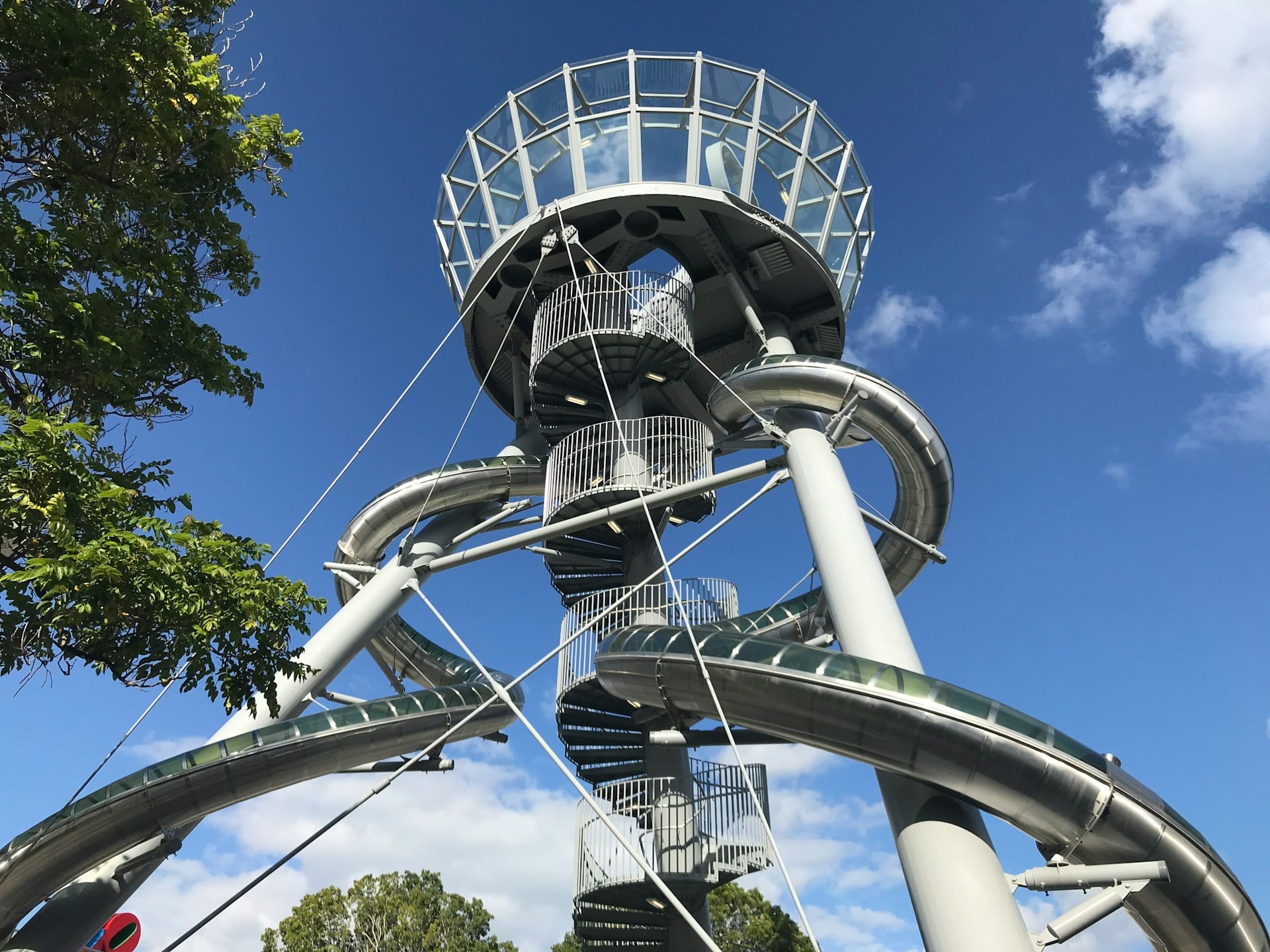
Tower slides — free-standing metal structures five or six stories high with a slide running from the top to the ground — were the showpieces of 1940s and 50s American parks. They required climbing an open metal staircase with no guard rails, and the slide surface was metal in full sun.
They were not subtle about the risk involved. Several were well-known local landmarks before being dismantled.
The height alone — without reference to the metal surface, the open staircase, or the lack of landing protection — would eliminate them from modern approval.
The Swinging Rings on a Frame

Fixed metal rings at the ends of chains hanging from a shared overhead frame allowed multiple children to swing simultaneously, often in overlapping arcs. The geometry of the thing meant collisions between children were more or less built into the design.
Safety guidelines for adjacent swing positions now specify minimum clearance distances between elements precisely because of the documented collision injury history of this equipment type.
The Wooden Climbing Frame With Splinters
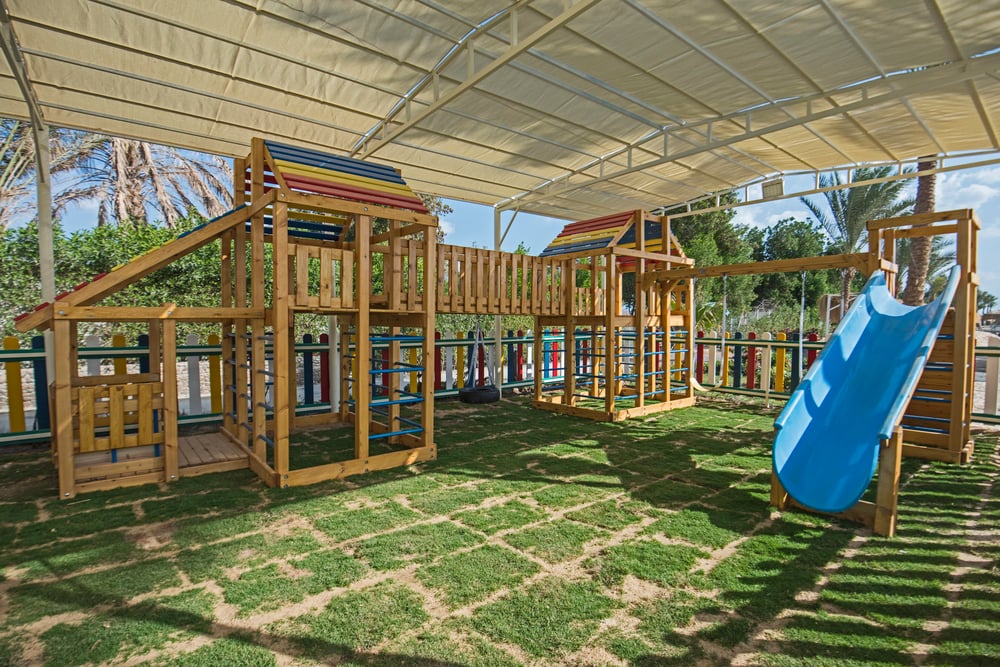
Untreated timber climbing structures were common from the 1950s through the 1980s. The appeal was natural materials and affordability; the problem was that untreated wood splinters as it ages, and playground equipment ages.
Children routinely extracted splinters after play. Current standards specify that any wood used in playground equipment must be either naturally rot-resistant or treated, and must be free of sharp edges and splinters at installation — with inspection protocols to catch degradation before it causes injury.
The Metal Seesaw Without Cushioning
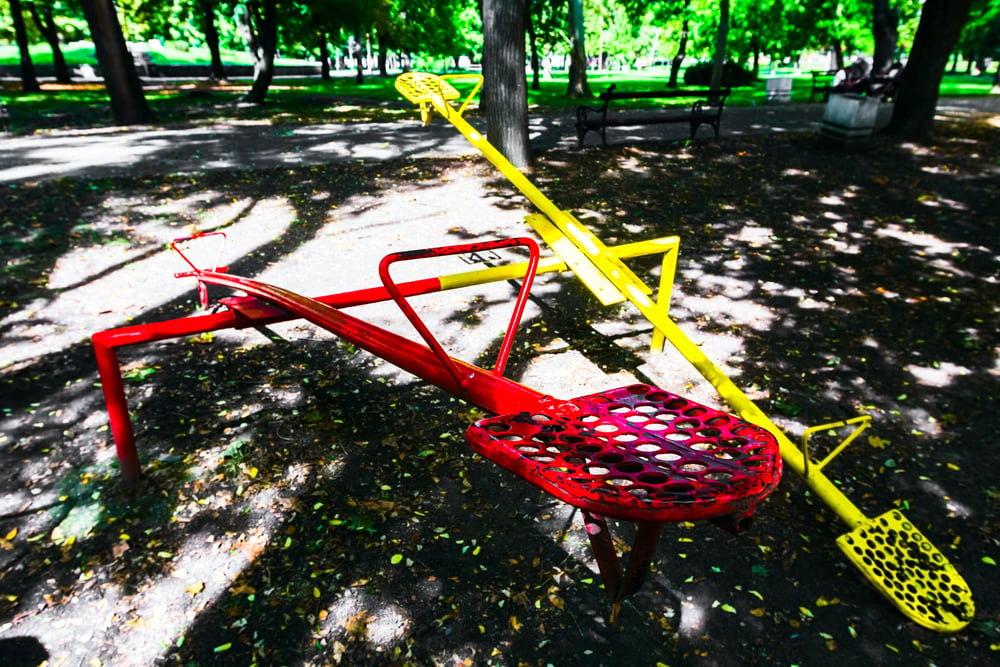
The specific hazard that haunts the metal seesaw’s safety record — beyond the drop at the end of the arc — is what happened when the riders were mismatched in weight and the seesaw was used aggressively. A rapid descent from a height of four feet, terminated by contact with asphalt, produced the kind of injury that parents in the 1960s simply accepted as an occupational hazard of having children who played outside.
The threshold for acceptable risk has changed significantly since then, which is the central reason so many pieces of equipment from that era are now banned.
The Monkey Bars — Original Configuration
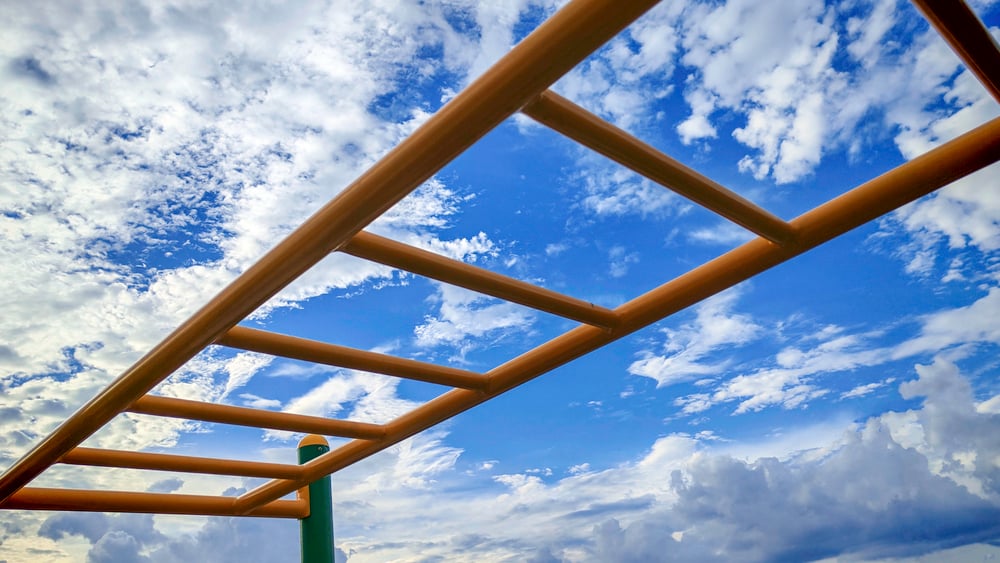
The original monkey bar design featured horizontal bars at height, set over hard surfaces, with no upper limit on how many children could use them simultaneously. Collisions, falls, and children dropping from the middle of a crossing onto children below were not unusual.
Current monkey bar designs specify maximum height, required fall zone dimensions, and in some configurations, falling zones that must remain clear of other equipment. The concept survives; the original configuration does not.
The Philosophy Behind the Equipment
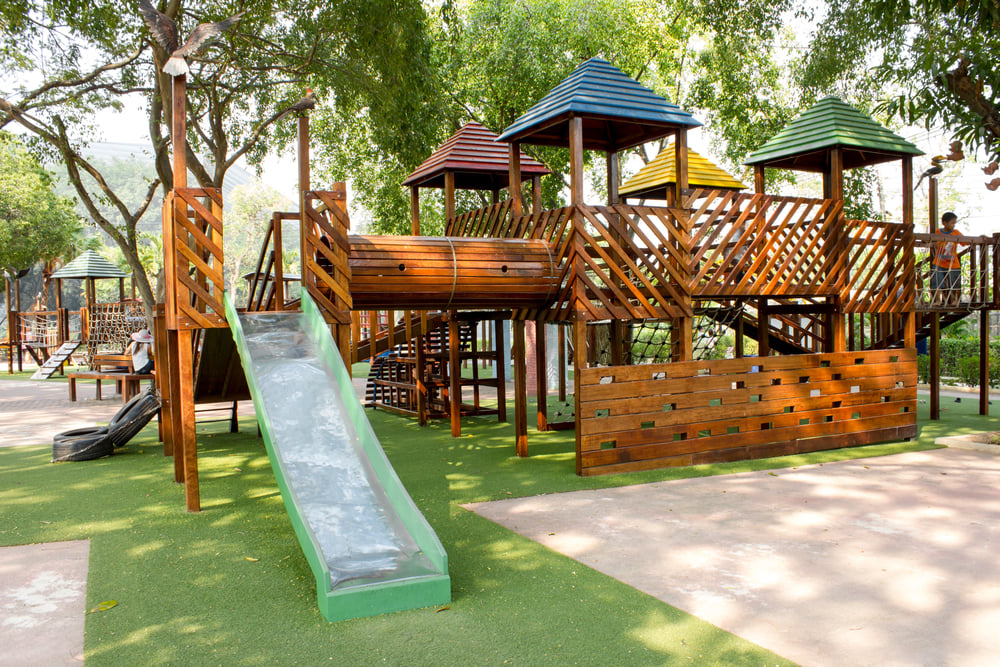
Modern playground safety standards did not arrive because adults became timid or children became fragile. They arrived after researchers began systematically counting what was actually happening on playgrounds, and the numbers were not ambiguous.
The shift in design philosophy — from “challenge and risk” to “challenge and managed risk” — was driven by injury data, not by sentiment. The equipment that’s gone wasn’t eliminated because it wasn’t fun.
Most of it was tremendously fun, which is why children used it until they were removed. It was removed because the specific risks it created were not proportional to any developmental benefit that required them.
There is a version of the nostalgia for old playgrounds that misremembers what was happening on them. The merry-go-round spun people off.
The Giant Stride crushed children against its pole. The metal slide burned.
None of that made the equipment less fun at the time, and none of it makes the equipment appropriate now. The things children loved most about those old structures — the speed, the height, the centrifugal force, the genuine sensation of being out of control — still exist on well-designed modern playgrounds.
They’re just not delivered anymore by a 140-pound steel barrel over a concrete pad.
More from Go2Tutors!

- The Romanov Crown Jewels and Their Tragic Fate
- 13 Historical Mysteries That Science Still Can’t Solve
- Famous Hoaxes That Fooled the World for Years
- 15 Child Stars with Tragic Adult Lives
- 16 Famous Jewelry Pieces in History
Like Go2Tutors’s content? Follow us on MSN.



