33 Pieces of Propaganda So Effective They Fooled Entire Generations
There’s something unsettling about the moment you realize a belief you held — maybe for years, maybe your whole life — was planted there deliberately. Not by accident, not through honest persuasion, but through a calculated campaign designed to make you feel, think, or do exactly what someone else needed you to feel, think, or do.
Propaganda isn’t always posters and wartime broadcasts. Sometimes it’s a catchy slogan, a school textbook, a lovable cartoon character.
The most effective propaganda doesn’t announce itself. It arrives quietly, dressed as common sense, and stays long after the people who designed it are gone.
These 33 examples did exactly that — and some of them are still working on you right now.
Diamonds Are Forever

De Beers invented the modern engagement ring. Not the sentiment — the expectation, the price point, the social pressure, all of it.
Their 1947 “A Diamond is Forever” campaign, created by ad agency N.W. Ayer, didn’t just sell rings; it rewired what love was supposed to look like in a market that barely existed before they built it.
Rosie the Riveter

The “We Can Do It!” poster wasn’t originally a feminist icon — it was internal factory morale material, seen by almost nobody outside Westinghouse Electric during World War II. The image got reappropriated decades later and became one of the most recognizable symbols of women’s empowerment, which is a strange kind of second life for a piece of wartime corporate management art.
Uncle Sam Wants You

The image of Uncle Sam pointing directly at the viewer — finger extended, eyes locked — was designed to make personal something that was entirely institutional. James Montgomery Flagg’s 1917 poster borrowed the technique from a British Kitchener recruitment poster, stripped it of its foreign origin, wrapped it in American iconography, and produced something that felt like a direct conversation with the state.
It still does.
Fluoride Hysteria

During the Cold War, a significant portion of the American public became convinced that water fluoridation was a Communist plot to weaken the population — a belief that required no evidence because the fear of Communist infiltration was already doing the heavy lifting. The propaganda wasn’t specifically about fluoride; fluoride just fell into a pre-existing ideological trap that had been baited and set years before.
Go figure.
The Happy Homemaker

Post-WWII America ran an extraordinary quiet campaign — through magazines, television, advertising, and domestic science curricula — to redirect women who had worked in factories and offices back into domestic roles. It wasn’t a single coordinated effort so much as a cultural pressure system, the kind that doesn’t leave fingerprints because it’s distributed across a thousand cheerful magazine spreads and casserole recipes.
Reefer Madness

The 1936 film Reefer Madness — originally funded by a church group and later picked up by exploitation film distributor Dwain Esper — depicted marijuana as a substance that caused murder, attempted assault, and instant addiction after a single use. It’s funny now, in the way that a miscalibrated instrument is funny once you know it was never measuring what it claimed to measure.
The Four Food Groups

The USDA’s Four Food Groups chart, introduced in 1956 and taught as nutritional gospel in American schools for decades, was shaped significantly by meat and dairy industry lobbying. The specific portion recommendations — particularly the emphasis on meat and dairy as daily necessities rather than occasional foods — reflected industry interests as much as nutritional science, and generations of school children learned it as pure fact.
Communism Under Every Bed
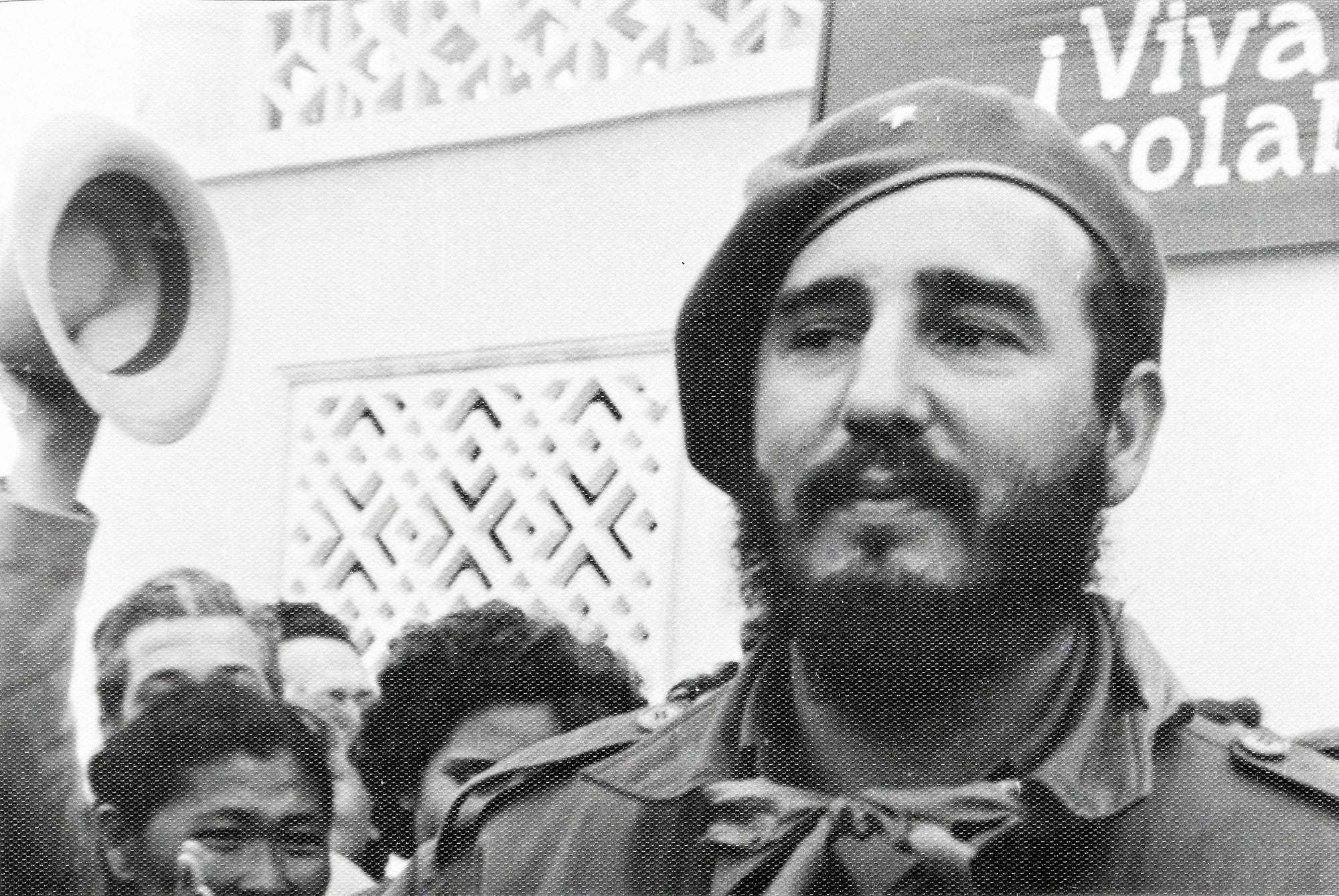
McCarthyism is the obvious entry point, but the deeper propaganda success of the early Cold War era was making suspicion feel patriotic — making it feel responsible, even kind, to report your neighbors, question your coworkers, and read dissent as disloyalty. Senator Joseph McCarthy didn’t invent anti-Communist sentiment; he inherited an atmosphere that had been carefully pressurized for years and simply turned the valve.
Columbus the Hero

For generations, American schoolchildren were taught that Christopher Columbus sailed west in 1492 with heroic conviction, proved the earth was round against the protests of ignorant flat-earthers, and discovered a continent. Educated Europeans already knew the earth was spherical — that wasn’t the debate.
And the “discovery” required the convenient disappearance, from the narrative, of tens of millions of people already living in the Americas.
The Lost Cause

The Lost Cause narrative — which recast the Confederacy as a noble, principled struggle for states’ rights rather than a war fought to preserve enslavement — was not just a historical misreading; it was a sustained, organized campaign mounted by Confederate veterans’ organizations, Southern state education boards, and monument committees across the late 19th and early 20th centuries. Confederate monuments went up in Southern courthouses and state capitals well into the 1960s, many of them during periods of civil rights activism, which tells you something about their actual purpose.
The narrative required an enormous amount of deliberate forgetting — and American institutions helped it forget.
Loose Lips Sink Ships
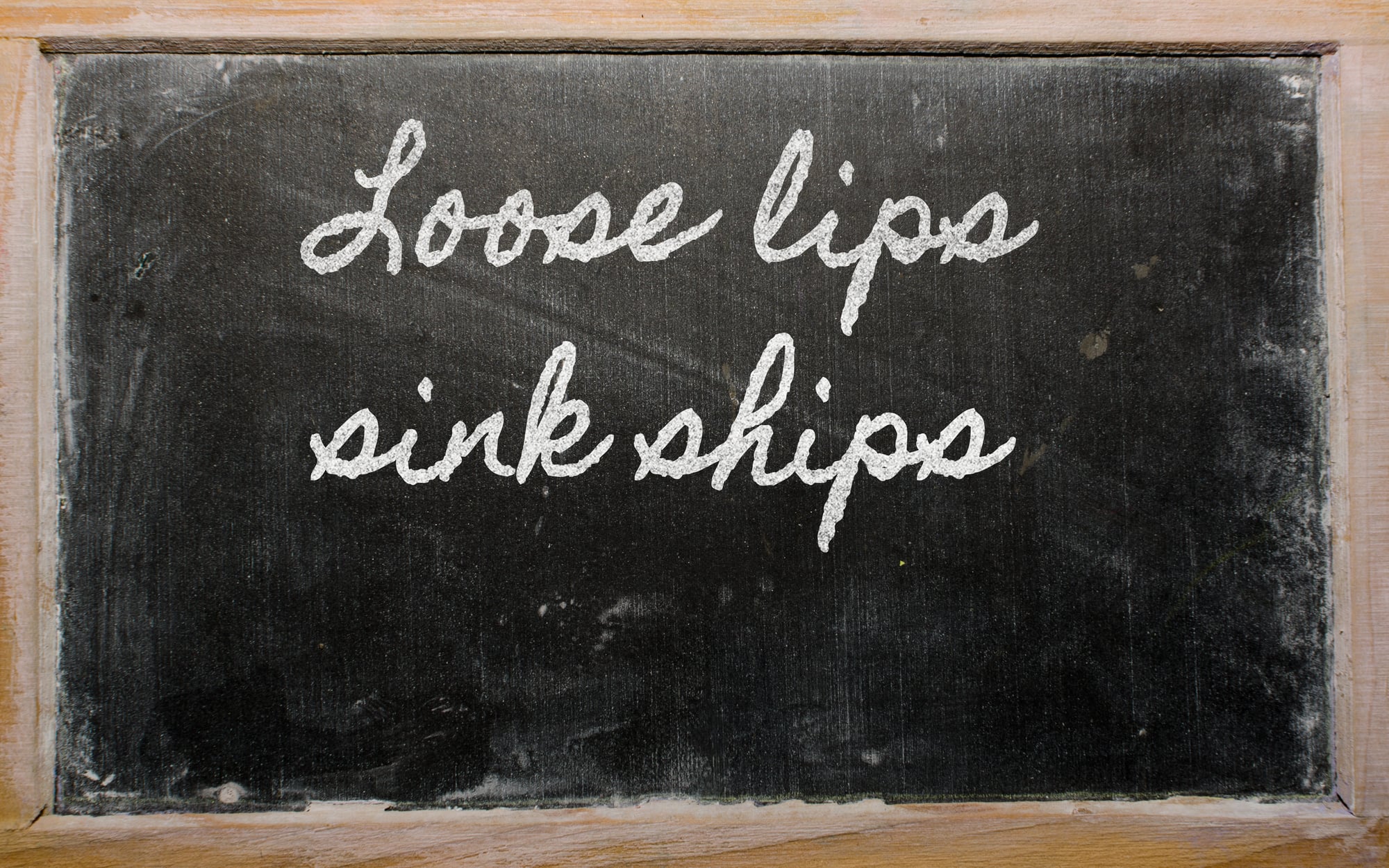
Wartime America ran on slogans, and “Loose Lips Sink Ships” was among the most successful — not because it prevented any documented cases of civilian information leaks leading to naval disasters, but because it created a culture of silence and suspicion that made the general population feel personally responsible for wartime security. The Office of War Information knew exactly what it was doing: fear of consequence plus personal responsibility equals compliance without enforcement.
Subliminal Advertising

In 1957, James Vicary claimed he had embedded the phrases “Eat Popcorn” and “Drink Coca-Cola” into film frames at a New Jersey movie theater, increasing sales significantly. He later admitted he fabricated the data — but the idea of subliminal messaging embedded itself into public consciousness so completely that it became a lasting cultural anxiety, a piece of propaganda about propaganda that outlived the original lie by decades.
Antiseptic Advertising

Before Listerine started marketing mouthwash in the 1920s, halitosis — a term Listerine’s own advertising helped popularize — was not a major social concern. The campaign invented a problem, named it, gave it consequences (lost friendships, failed romances, professional rejection), and then sold the solution in the same breath.
It remains one of the most studied examples of demand creation in advertising history.
The Nuclear Family as Default

The post-war American ideal of the nuclear family — father at work, mother at home, two children, suburban house — was not a natural social evolution. It was actively promoted through government housing policy, tax structure, advertising, television programming, and school curricula in ways that made any variation from it feel deviant or failed.
The myth of its universality was, itself, the propaganda.
Smoke and Doubt

When the scientific consensus on the health effects of smoke became impossible to ignore, the cigarette industry didn’t argue that cigarettes were safe. Instead, it funded research designed not to prove safety but to manufacture doubt — to keep the question “open” in the public mind long enough to protect sales.
The strategy was later adopted by other industries facing inconvenient science, which is one of the more grim examples of a propaganda technique scaling into a template.
Yellow Journalism and the Spanish-American War

William Randolph Hearst’s newspapers — particularly the New York Journal — ran sensationalized, often fabricated accounts of Spanish atrocities in Cuba in the late 1890s, building American public appetite for intervention before the political machinery was ready to move. Whether or not Hearst actually sent the famous telegram promising to “furnish the war” is disputed, but the documented record of deliberate inflammatory reporting is not.
A newspaper reader in 1898 had essentially no way to know they were being worked.
The Thin Ideal

The specific body type promoted as universally desirable in Western media — thin, tall, particular features — is not a neutral aesthetic preference; it was constructed and sustained through fashion industry economics, advertising decisions, and editorial choices made overwhelmingly by a very small group of people in a very small number of cities. The propaganda of beauty standards is unusual in that it convinces people their dissatisfaction is personal rather than manufactured.
Red Scares and Immigration

The first Red Scare of 1919 and 1920 fused radical political ideology with immigrant identity in ways that were deliberate and effective — casting Eastern European immigrants, Jewish communities, and labor organizers as interchangeable threats to American society. Attorney General A. Mitchell Palmer’s Justice Department used this fusion to justify mass arrests, deportations, and raids that would be unrecognizable as legal procedure today, all marketed as protective patriotism.
The Crying Indian

The 1971 “Keep America Beautiful” public service announcement — featuring a Native American man shedding a tear at the sight of a littered highway — is a masterwork of redirected responsibility. The ad was co-founded by beverage and packaging companies facing legislative pressure to regulate disposable packaging.
By making littering a personal moral failure, it successfully shifted the frame from industrial production of waste to individual citizen behavior. The man in the ad was actually an Italian-American actor named Iron Eyes Cody.
Soviet Realism and Stalin’s Photography

Stalin’s Soviet government didn’t just control the present — it controlled the past, systematically removing purged officials from photographs, paintings, and official records so that the historical record itself reflected the current political reality. People who had been central figures in the Revolution became unpersons, edited out of images in which they had literally stood next to Lenin.
The propaganda was aimed not at the future but at history itself.
Wartime Japanese-American Portraiture

Following Executive Order 9066 in 1942, government and media framing of Japanese Americans shifted rapidly — decades of documented community life, American citizenship, and cultural contribution were buried under a wave of suspicion-driven coverage that treated an entire ethnic group as a monolithic security threat. The propaganda required Americans to unsee their neighbors, and for the most part, it worked.
America’s Cowboy Mythology

The American West — as most people picture it — is a 20th-century invention, constructed largely by Hollywood studios, pulp fiction publishers, and Buffalo Bill’s Wild West shows, which ran for decades before cinema existed. The actual frontier was multiracial, economically precarious, often unglamorous, and frequently brutal in ways the mythology systematically scrubbed.
The Green Revolution as Pure Progress

The Green Revolution of the mid-20th century — the suite of agricultural technologies, high-yield crop varieties, and chemical inputs that dramatically increased food production in developing nations — was sold almost exclusively as humanitarian progress. The geopolitical dimensions, the displacement of traditional farming communities, the long-term soil and water consequences, and the role of U.S. foreign policy objectives in directing where and how the technology was distributed were largely absent from the public narrative for decades.
Bioterrorism Fear After 9/11

The anthrax letter attacks of late 2001 — which killed five people and infected 17 others — were instrumentalized in public messaging in ways that inflated the perceived likelihood of large-scale bioterrorism to a degree that shaped policy, public health funding, and civilian anxiety far beyond what the actual threat profile justified. This is not to minimize the genuine danger; it’s to note that the gap between the actual risk and the communicated risk was enormous, and that gap was not accidental.
Wartime Atrocity Fabrications

During World War I, British propaganda disseminated stories of German soldiers bayoneting Belgian babies — stories that were largely or entirely fabricated but proved extraordinarily effective at hardening British public opinion and drawing American sympathy. When some of these stories were exposed as inventions after the war, the resulting skepticism made the public and media slower to believe reports of genuine Nazi atrocities two decades later.
The lie had consequences that outlasted the truth.
More from Go2Tutors!

- The Romanov Crown Jewels and Their Tragic Fate
- 13 Historical Mysteries That Science Still Can’t Solve
- Famous Hoaxes That Fooled the World for Years
- 15 Child Stars with Tragic Adult Lives
- 16 Famous Jewelry Pieces in History
Like Go2Tutors’s content? Follow us on MSN.