Rare Book Heists That Surprised Everyone
Most people don’t think about book thieves. Art heists make headlines. Bank robberies get movie deals.
But rare books disappear from libraries and collections all the time, often without anyone noticing for years. The people who steal them aren’t masked gunmen.
They’re scholars, librarians, and collectors who know exactly what they’re looking for and how much it’s worth. These are the heists that shocked institutions, fooled experts, and revealed how vulnerable even the most secure collections really are.
The Librarian Who Stole a Fortune

Stephen Blumberg seemed like an eccentric but harmless book collector. He lived modestly in Ottumwa, Iowa, surrounded by stacks of old volumes.
What nobody knew was that he had stolen more than 23,600 rare books and manuscripts from 268 libraries across North America. His collection included a 15th-century Bible, first editions of major works, and manuscripts worth millions.
Blumberg didn’t sell anything. He just wanted to own them.
He believed libraries weren’t taking proper care of these treasures and that he was rescuing them. Authorities caught him in 1990 when an antiques dealer tipped off the FBI.
The discovery shocked the library world. Blumberg had been stealing for 20 years. He walked into libraries during business hours, found materials he wanted, and simply took them.
Many institutions had such poor security and cataloging systems that they never noticed items were missing. The recovery process took years.
Many books lacked proper markings to prove which library owned them. Blumberg’s arrest led to major security overhauls at libraries nationwide.
Inside Man at the Vatican
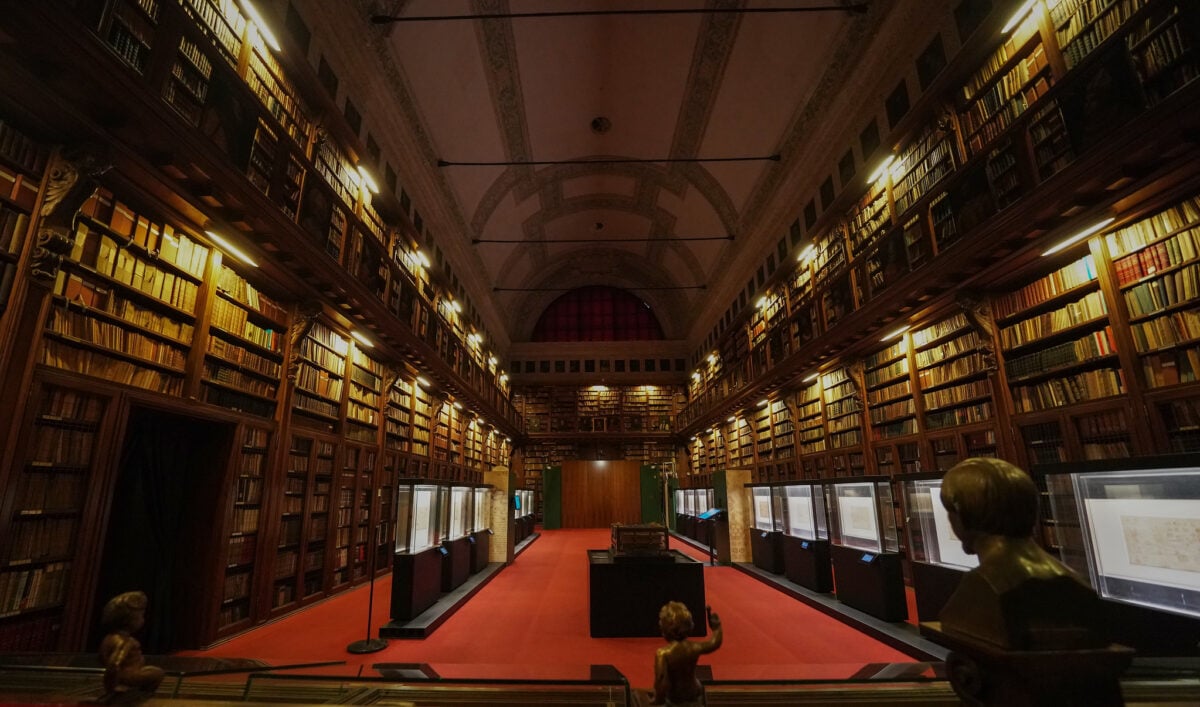
In the late 1990s, someone was stealing rare manuscripts from the Vatican Library. The thief had access to restricted areas and knew exactly which items to target.
Security footage showed nothing suspicious. Guards noticed nothing unusual.
Anthony Melnikas, an American scholar who had been granted access to the archives, was eventually caught trying to sell stolen Vatican manuscripts in the United States. He had spent years building a reputation as a legitimate medieval art scholar.
That credibility gave him access to materials most people could never see. Melnikas hid manuscripts in his clothing and walked out past guards who trusted him completely.
He stole medieval illuminated manuscripts worth hundreds of thousands of dollars. The Vatican only discovered the thefts when dealers recognized the library’s markings on items Melnikas tried to sell.
The case embarrassed the Vatican and exposed weaknesses in their security. Even one of the world’s most famous archives was vulnerable to an insider with patience and knowledge.
The Map Thief

E. Forbes Smiley III was a respected rare map dealer. Collectors and institutions trusted him. He had a good eye and deep knowledge of cartographic history.
Libraries welcomed him into their reading rooms. Between 1995 and 2005, Smiley stole maps from Yale, Harvard, the New York Public Library, and other institutions.
He used an X-Acto knife to carefully cut maps from bound atlases. The cuts were so neat that libraries didn’t notice for years. Some still haven’t identified everything he took.
Smiley stole to fund his own collecting habit and cover business debts. The maps he took included works by important cartographers that were irreplaceable.
He sold them to unsuspecting collectors who had no idea they were buying stolen items. A librarian at Yale finally caught him in 2005 when she noticed a small piece of a map on the floor near where Smiley had been sitting.
That single fragment led to his arrest and confession. He went to prison, but many maps remain missing.
The Swedish Job

In 2004, three men pulled off one of the most brazen book heists in history. They entered the National Library of Sweden in Stockholm just before closing time.
Armed with a stun gun and mace, they subdued staff and grabbed what they came for. The thieves knew exactly what they wanted.
They took the Codex Aureus, a 750-year-old illuminated manuscript, and several other priceless medieval texts. The entire robbery took less than ten minutes.
They escaped in a boat waiting on the adjacent waterway. The planning was meticulous.
The thieves had studied the library’s layout and security systems. They knew which manuscripts were most valuable.
They timed the heist to minimize confrontation. It was professional and efficient.
Swedish police eventually recovered the books and arrested the thieves, but the incident shocked Sweden. The National Library had been considered secure.
The robbery showed that determined criminals could defeat almost any security system if they planned carefully enough.
The Spider at the British Library

William Jacques was an unassuming man who spent years researching at the British Library. Librarians saw him as a dedicated scholar.
He always followed the rules, filled out his forms properly, and handled materials carefully. Between 1998 and 2002, Jacques stole more than 150 rare books and maps worth over £1 million.
He smuggled them out in his briefcase or tucked into his clothing. Some items he stole were so rare that the library had considered them secure simply because nobody knew they existed.
Jacques sold his stolen goods through online auctions and to dealers who didn’t ask questions. His technique was patient and methodical.
He never took too much at once. He never acted suspicious.
He was stealing from one of the world’s most famous libraries right under everyone’s noses. Authorities caught him only after a dealer noticed that a map Jacques was selling matched one reported stolen from the library.
By then, Jacques had dispersed items across dozens of collections. Some have never been recovered.
The Student Who Couldn’t Stop

At the time, it seemed like an isolated incident. A university student at the University of Wisconsin-Madison stole rare books from the library’s special collections.
Security caught him, he returned the books, and everyone moved on. Except the thief—whose name was never publicly released—continued stealing.
He moved to different libraries. He refined his techniques.
He stole from Yale, Cornell, and other institutions. Each time he got away with it, he grew bolder.
The pattern emerged only years later when investigators started comparing theft reports across institutions. The same person appeared to be responsible for thefts at multiple universities.
But tracking him proved difficult because he moved frequently and libraries often didn’t realize items were missing until long after the theft. This case highlighted a major problem in the rare book world.
Libraries don’t communicate well about thefts. A person banned from one institution can walk into another without raising any flags.
There’s no central database of book thieves like there is for art thieves.
Prayers Worth Millions

In 2007, three Hasidic men from Brooklyn stole rare Jewish manuscripts and religious texts from libraries and museums across Europe and Israel. They specifically targeted materials related to their community’s history.
The thefts were ideologically motivated. The men believed these texts belonged in their community, not in secular institutions.
They planned each theft carefully, studying security systems and smuggling techniques. They moved stolen items through networks of dealers who asked a few questions.
Israeli authorities eventually tracked them down after receiving tips from European investigators. The case created tension between religious communities and cultural institutions.
Some people sympathized with the thieves’ desire to preserve their heritage. Others saw them as common criminals who damaged priceless artifacts.
The recovery process was complicated because some items had been sold to collectors who had purchased them in good faith. Legal battles over ownership continue years later.
The Inside Job at the Bavarian State Library

Nobody expects librarians to be thieves. That assumption makes them the most dangerous thieves of all.
A staff member at the Bavarian State Library in Munich stole rare books and manuscripts over several years. He had unrestricted access to the stacks. He knew which items were valuable.
He understood the cataloging system well enough to obscure his thefts. He even helped conduct the inventory checks that might have exposed him.
The librarian sold stolen items gradually through intermediaries. He never rushed.
He never got greedy. He stole only items that wouldn’t be immediately missed. His colleagues considered him trustworthy and knowledgeable.
That reputation protected him for years. His undoing came when a dealer who had purchased stolen items became suspicious about their provenance and contacted authorities.
By then, the librarian had stolen materials worth hundreds of thousands of euros. The library had to audit its entire collection to determine what else was missing.
Stealing Shakespeare

In 2008, Cuban-born Raymond Scott traveled to Britain specifically to steal rare books. His target was Durham Cathedral’s library, which held a collection of works dating back centuries.
Scott entered the library during public hours with a bag equipped with a foil lining to defeat security sensors. He grabbed a first folio of Shakespeare—one of only about 230 known to exist—along with several other rare volumes.
The books were worth millions. Scott walked out without triggering any alarms.
He planned to smuggle the books to the United States and sell them there. But he made a crucial mistake.
He posted photos of himself holding the stolen Shakespeare folio on social media. Investigators traced the photos back to him within months.
Scott received an eight-year prison sentence. The books were recovered undamaged.
The case demonstrated both the vulnerability of historic collections and the foolishness of criminals who can’t resist bragging about their exploits.
The Polite Thief

Farhad Hakimzadeh didn’t look like a book thief. He was educated, well-dressed, and charming.
He presented himself as a wealthy collector interested in rare manuscripts. Institutions welcomed him. Between 2002 and 2007, Hakimzadeh visited special collections across Europe and America.
At the British Library, the Royal Danish Library, and other institutions, he examined rare Islamic manuscripts. Then he secretly replaced authentic pages with forgeries, smuggling the originals out of the reading rooms.
His forgeries were good enough to fool librarians on first inspection. Many institutions didn’t realize they had been victimized until years later when researchers noticed inconsistencies.
Hakimzadeh had stolen individual pages from priceless manuscripts, knowing that dealers would pay significant sums even for fragments. Investigators finally connected the thefts when they noticed similarities in the forgeries across multiple institutions. Hakimzadeh was arrested in Denmark.
His apartment contained both stolen pages and forging equipment. He had been systematically looting some of the world’s most important Islamic manuscript collections.
The Manuscript Surgeon

Daniel Spiegelman worked as a researcher at Columbia University. His position gave him access to rare materials in the library’s special collections.
Librarians trusted him completely. In 1994, library staff noticed that pages had been removed from a valuable 15th-century Hebrew manuscript.
Security footage revealed that Spiegelman had used a razor blade to remove leaves from the manuscript during his research visits. He had cut them so carefully that casual observers wouldn’t notice the book had been damaged.
Spiegelman sold pages to collectors and dealers over several years. Some buyers knew the pages were stolen.
Others purchased them without asking difficult questions. The art and antiquities market has always operated partly in shadows where provenance questions don’t get asked.
Authorities arrested Spiegelman after a dealer became suspicious and contacted investigators. He received a prison sentence, but only a fraction of the stolen pages were recovered.
The manuscript he damaged will never be complete again.
When Respect Becomes Access

The rare book world operates on trust. Researchers need access to materials to study them. But that access creates opportunities for theft.
Institutions must balance preservation with scholarship. Every reading room decision represents a compromise between security and accessibility.
Most book thieves aren’t career criminals. They’re insiders who understand what they’re stealing and why it matters.
Many convince themselves they’re rescuing materials or that they have a better claim to ownership than the institutions holding them. Some steal to fund collecting habits.
Others are driven by ideology or obsession. The thefts that surprise everyone share common elements.
The thieves build reputations as legitimate scholars. They show patience. They study security systems.
They take only what won’t be immediately missed. They exploit the trust that libraries must extend to function.
And when they’re finally caught, institutions discover they’ve been systematically plundered for years by people they considered friends.
The Value of What Can’t Be Replaced

Something priceless slips away when a one-of-a-kind item vanishes. Millions may tag a painting, yet others like it exist somewhere. Rare books carry weight different from art – some have no twins anywhere.
That 1400s Bible lifted by Stephen Blumberg wasn’t merely costly – it was singular. Remove such things, and replacement isn’t possible.
Suppose Smiley’s vanished maps burn or rot. Then whole glimpses into old lands fade beyond recall.
What sets book heists apart is how little it matters what they’re worth. Not money, anyway. Each stolen piece holds stories older than most nations.
Think of them as scraps of thought – passed hand to hand, century after century. When one vanishes, so does a voice that spoke only once.
Gone quiet for good. What catches people off guard about these thefts begins with a simple truth. Important pieces of culture seem like they would be safe.
Safeguarding the past feels like a promise made by museums and archives. Yet when the very people within those places take what belongs to everyone, the illusion cracks open.
Before anyone sees, the books have already vanished. Lasting harm stays behind.
Off somewhere, a person who knew just what they carried walks off, human history folded into their arms.
More from Go2Tutors!

- 16 Historical Figures Who Were Nothing Like You Think
- 12 Things Sold in the 80s That Are Now Illegal
- 15 VHS Tapes That Could Be Worth Thousands
- 17 Historical “What Ifs” That Would Have Changed Everything
- 18 TV Shows That Vanished Without a Finale
Like Go2Tutors’s content? Follow us on MSN.



