Origins of Famous Travel Destinations
Wanderlust seems new, yet humans have roamed far lands since ancient times. Today’s hotspots usually had a past life – nothing like their current vibe.
A few kicked off as sacred journeys. Some emerged by chance through tech blunders or power moves.
Knowing their roots shifts your perspective once you step foot there.
The Pyramids at Giza

Ancient Egyptians built these massive structures as tombs for pharaohs around 2500 BCE. But even in ancient times, people visited them as tourists.
Greek and Roman travelers made the journey to see the pyramids thousands of years ago, carving graffiti into the stone to prove they’d been there.
The tourism industry around the pyramids is older than most countries. Ancient tour guides showed visitors around, and local merchants sold souvenirs.
The practice never really stopped. The pyramids have been a must-see destination for over 4,000 years straight.
Rome’s Colosseum

Romans built this amphitheater between 70 and 80 CE for public entertainment. Gladiators fought here, and crowds gathered for spectacles that seem brutal by today’s standards.
After the Roman Empire fell, the Colosseum became a quarry where people stripped stone for other buildings.
Tourists started visiting the ruins during the Renaissance. Europeans on the Grand Tour included Rome as an essential stop, and the Colosseum represented the power of ancient civilization.
By the 18th century, preservationists began protecting what remained of the structure. Today it draws millions annually, all coming to stand where Romans once cheered.
The Eiffel Tower

This iron lattice tower was supposed to be temporary. Gustave Eiffel designed it for the 1889 World’s Fair in Paris, celebrating the centennial of the French Revolution.
Over 100 designs competed, but Eiffel’s won despite fierce criticism from Parisian artists and intellectuals who called it an eyesore.
The tower took just over two years to build, with 250 workers assembling it from January 1887 to March 1889. It was scheduled for demolition after 20 years.
But Eiffel cleverly promoted its scientific uses, particularly for radio transmission, which saved it. The tower became a tourist magnet almost immediately, attracting nearly 2 million visitors during the 1889 exposition alone.
Attendance dropped after the fair ended, staying low until the 1960s when international tourism exploded. Now about 7 million people visit annually, making it one of the most-visited paid monuments globally.
Niagara Falls
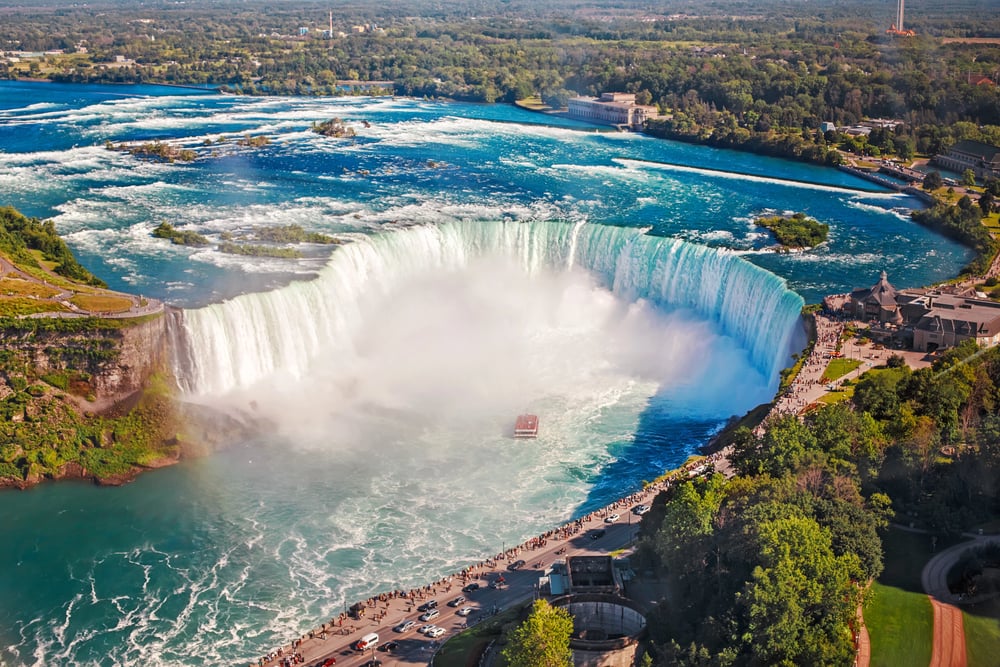
This natural wonder straddled the border between what would become the United States and Canada. Native Americans knew about the falls for centuries before European settlers arrived.
By the early 1800s, word spread about the spectacular waterfalls, and tourists began making the difficult journey to see them.
The falls became one of America’s first major tourist destinations. Hotels and observation points sprouted up throughout the 19th century.
By the 1860s, so many souvenir sellers and aggressive tour guides crowded the area that visitors complained the commercialization had ruined the natural beauty.
Honeymoon tourism at Niagara Falls started in the early 1800s and became a cultural phenomenon. The tradition stuck so firmly that generations still associate the falls with newlyweds, even though most honeymooners now choose different destinations.
Athens and the Acropolis

Ancient Athens drew travelers from across the Mediterranean who came to see its temples, theaters, and monuments. The Acropolis, crowned by the Parthenon, served as both a religious center and a symbol of Athenian power.
Even in antiquity, Athens was famous for its architecture and culture.
Romans visited Athens to study philosophy and admire Greek achievements. The city became an educational destination for wealthy Romans, much like universities today.
This pattern continued through centuries, with each generation of Europeans making pilgrimages to see the birthplace of Western civilization.
The Parthenon itself has been through remarkable changes. It served as a temple, a Christian church, and a mosque before being partially destroyed in 1687.
Despite the damage, or perhaps because of it, the Acropolis remains one of the world’s most significant archaeological sites.
Angkor Wat

Buddhist and Hindu pilgrims visited this temple complex in Cambodia starting in the 12th century when it was built. The Khmer Empire constructed it as a Hindu temple dedicated to Vishnu, though it later became a Buddhist site.
The complex sprawls across 400 acres, making it the largest religious monument in the world.
After the Khmer Empire declined, the jungle began reclaiming Angkor Wat. French explorers rediscovered it in the 1860s, though local people had never really forgotten about it.
The temple became an international sensation when photographs and descriptions reached Europe.
Tourism grew slowly at first because of Cambodia’s remote location and political instability. In recent decades, visitor numbers have exploded as the site became more accessible.
The Cambodian government now struggles to balance tourism revenue with preservation needs.
The Grand Tour Routes Through Europe

Wealthy European aristocrats didn’t visit specific destinations as much as they followed an established route. Starting in the 16th century, young nobles from England and other northern European countries traveled through France, Germany, Italy, and sometimes Greece.
The journey could last months or even years.
These tours served as education. Young men visited art galleries, ancient ruins, and cultural centers to round out their upbringing.
Italy was the crown jewel of the Grand Tour, with Rome, Venice, and Florence as essential stops. Travelers collected art, learned languages, and made social connections that would benefit them throughout their lives.
The Grand Tour created the first real tourism infrastructure in Europe. Hotels, guides, and transport services developed specifically to serve these wealthy travelers.
This network laid the groundwork for modern tourism as middle-class people gained the means to travel in the 19th and 20th centuries.
Bath, England

Romans discovered hot springs in this English town and built elaborate baths around them in the 1st century CE. The complex included heated pools, exercise yards, and temples.
After the Roman Empire collapsed, the baths fell into disrepair and were eventually forgotten.
Bath became fashionable again in the 18th century when taking the waters was considered medically beneficial. The wealthy flocked to Bath to drink and bathe in the mineral-rich spring water, believing it cured various ailments.
The city became a social hub where the elite mingled, gossiped, and made marriages.
Georgian architecture transformed Bath into an elegant spa town. The Royal Crescent and other landmarks from this period still define the city’s character.
Bath transitioned from health resort to heritage tourism destination, with visitors now coming to see the historic buildings and the remarkably preserved Roman baths.
Venice’s Canals
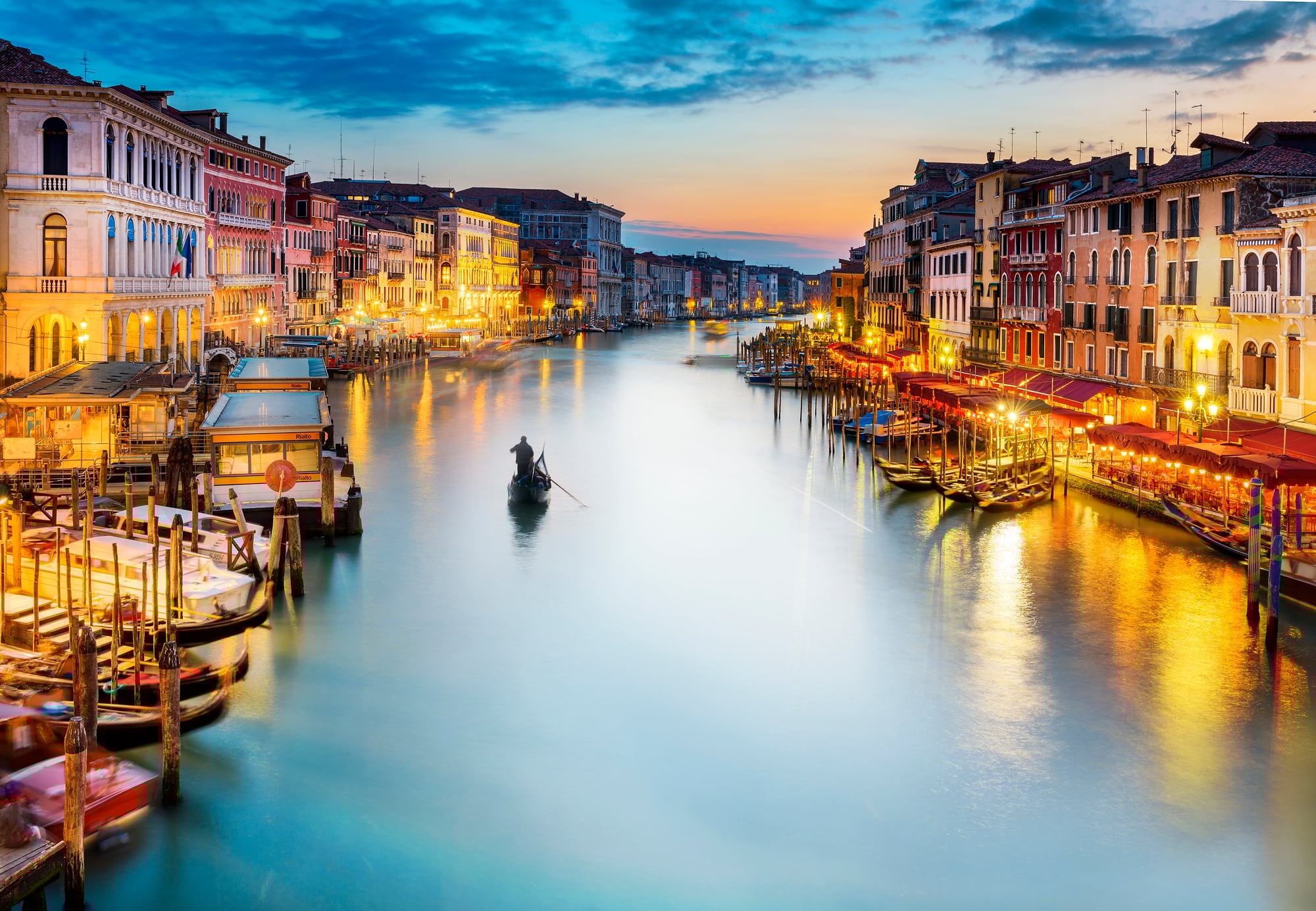
Venice built itself on wooden pilings driven into marshy islands in a lagoon. The city-state became a powerful maritime republic, controlling trade routes between Europe and Asia.
Its unique location on the water made it prosperous but also unusual enough to attract curious visitors.
By the 17th and 18th centuries, Venice was already famous throughout Europe. Travelers on the Grand Tour made it a priority stop.
Artists painted Venetian scenes, which further spread its fame. The city’s carnival, with its elaborate masks and celebrations, drew crowds from across the continent.
Venice’s tourism industry has deep roots in its trading past. The infrastructure that once moved goods now moves people.
The gondolas that served as taxis for locals became romantic attractions for tourists. The city struggles today with overtourism, as millions visit annually to experience the canals and architecture.
Pompeii
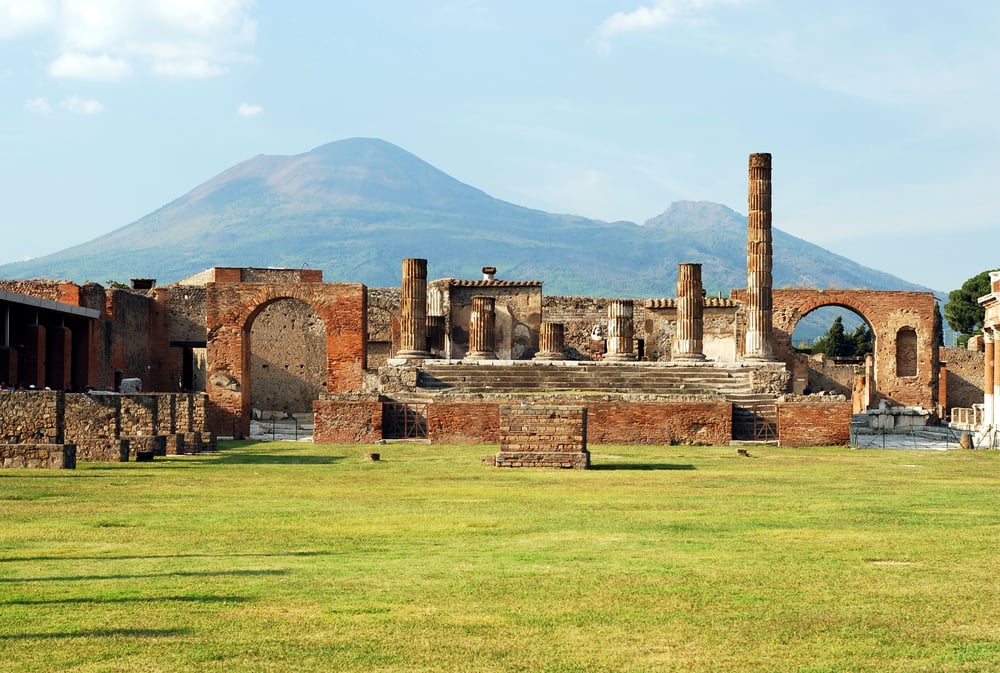
Nobody visited Pompeii as a tourist destination until after it was destroyed. Mount Vesuvius erupted in 79 CE, burying the Roman city under volcanic ash and preserving it almost perfectly.
The site remained hidden until excavations began in the 18th century.
Once archaeologists uncovered the remarkably intact Roman city, tourists rushed to see it. Pompeii offered an unparalleled glimpse into daily life during the Roman Empire.
The preserved buildings, frescoes, and even the casts of people caught by the eruption made it compelling in ways other archaeological sites weren’t.
Tourism at Pompeii started almost as soon as the first excavations revealed what lay beneath. European aristocrats visiting Naples included Pompeii in their itineraries.
The site continues to yield new discoveries, keeping it relevant for both archaeologists and visitors.
Santiago de Compostela

Medieval pilgrims walked hundreds of miles across Spain to reach this cathedral, believed to hold the remains of Saint James the Apostle. The Camino de Santiago became one of Christianity’s most important pilgrimage routes, rivaling Jerusalem and Rome in significance.
Hostels, hospitals, and monasteries sprang up along the route to serve pilgrims. The infrastructure supported not just religious travelers but also merchants, students, and others who needed to move across Europe.
This created a thriving economy around the pilgrimage route.
Modern hikers now walk the Camino for spiritual, cultural, and athletic reasons. Many aren’t particularly religious but are drawn to the historic route and the challenge of the journey.
The pilgrimage path that once carried medieval Christians now hosts international travelers seeking their own meanings in the walk.
Yellowstone National Park

Native American tribes considered Yellowstone sacred long before white settlers arrived. Trappers and explorers brought back stories of geysers and hot springs that many people dismissed as exaggerated tales.
When official expeditions confirmed these wonders in the 1870s, people recognized the area needed protection.
Yellowstone became the world’s first national park in 1872. The decision created a new concept in land management and tourism.
Instead of allowing private development, the government preserved the area for public enjoyment. Other countries copied this model, establishing their own national parks.
Early Yellowstone tourism required serious effort. Visitors arrived by train and then traveled through the park by stagecoach.
Hotels and services developed slowly. The introduction of automobile access in 1915 transformed Yellowstone into a destination accessible to middle-class families, not just wealthy travelers willing to rough it.
The Changing Nature of Discovery

Travel places aren’t born as hotspots overnight. Over time, they shift – shaped by what came before.
Holy spots turn into must-see landmarks. Big builds gain fame on postcards.
Wild nature jumps from hidden gems to global draws.
The change usually kicks in once travel gets better. Because of trains, people started exploring mountain areas and seaside spots more easily.
Thanks to ships, crossing oceans turned from a daring feat into something regular folks did without much fuss. With planes showing up, distances shrank so fast that faraway places could now fit into a two-day getaway.
Every leap in how we move around carved out fresh spots to visit – turning what seemed unattainable into just tricky, while turning tough journeys into quick ones.
People’s reasons for visiting certain spots shift through the years. Back then, Romans headed to Baiae looking for wild gatherings along with hot spring soaks.
During medieval times, folks in Europe walked miles on end just to find spiritual relief. In the Victorian era, tourists chased healing vibes from natural mineral waters instead.
Nowadays folks snap pics of just about anything, gathering moments rather than treats or fixes. Structures and scenery barely change, yet why we go there shifts every few years.
More from Go2Tutors!

- The Romanov Crown Jewels and Their Tragic Fate
- 13 Historical Mysteries That Science Still Can’t Solve
- Famous Hoaxes That Fooled the World for Years
- 15 Child Stars with Tragic Adult Lives
- 16 Famous Jewelry Pieces in History
Like Go2Tutors’s content? Follow us on M



