33 Psychology Experiments That Rewrote What Scientists Thought About the Brain
For most of human history, the brain was treated as a mystery too deep to touch. Then scientists started running experiments — and what they found shattered nearly every assumption that came before.
Some of these studies were elegant. Some were deeply troubling.
A few crossed ethical lines that can never be uncrossed. But all of them changed what researchers believed was possible, predictable, or even real about the human mind.
What’s striking isn’t just how much these experiments revealed, but how much they overturned. Time and again, the results said: you are not who you think you are, your memory is not what you trust it to be, and the gap between what you would do and what you actually do is wider than anyone expected.
Pavlov’s Classical Conditioning (1897)
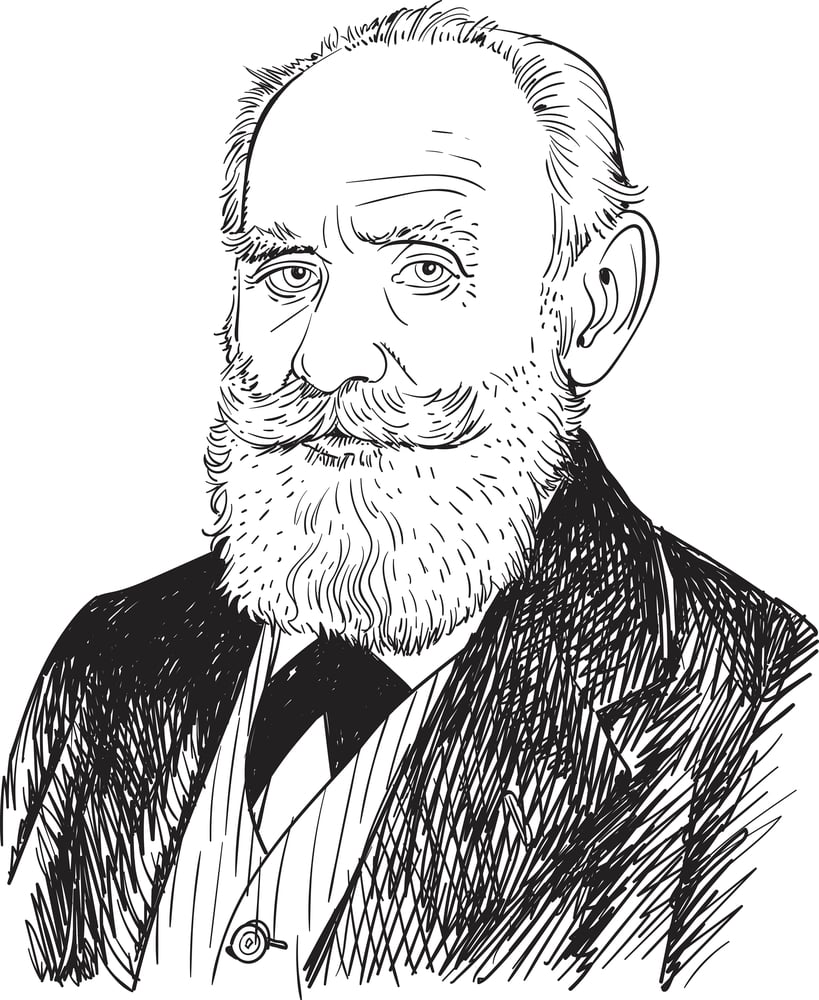
Ivan Pavlov was studying digestion in dogs when he noticed something strange: the animals began salivating before food arrived, simply in anticipation. He turned the observation into a rigorous experiment, pairing a neutral stimulus — a bell — with feeding, until the bell alone triggered the salivation response.
The discovery that behavior could be wired through repeated association became the foundation of behaviorism and changed how psychologists thought about learning for decades.
Little Albert (1920)
John B. Watson and his graduate student Rosalie Rayner wanted to prove that fear could be learned. They chose an infant — referred to as Albert B. — who showed no fear of white rats, and conditioned him to fear them by pairing the animal with a loud, startling noise.
Albert’s fear generalized to other furry objects, including a Santa Claus mask. Watson proved emotional responses could be manufactured, but never reversed Albert’s conditioning — a detail that haunted the experiment’s legacy long after Watson left academia.
The Hawthorne Effect (1924–1932)

Researchers at Western Electric’s Hawthorne Works factory set out to study whether lighting conditions affected worker productivity. What they found was something more unsettling: productivity improved simply because workers knew they were being observed.
The phenomenon — that people change their behavior under scrutiny — forced psychologists to rethink how any study involving human subjects could claim objectivity. Every experiment that came after had to account for the presence of the observer.
The Robbers Cave Experiment (1954)
Muzafer Sherif took twenty-two boys to a summer camp in Oklahoma and divided them into two groups who initially didn’t know the other existed. Once introduced, the groups developed intense rivalry, name-calling, and conflict almost immediately.
Sherif then introduced shared goals that required cooperation, and hostility faded. The study suggested that intergroup conflict isn’t about deep-seated hatred — it’s about competition for resources — and that cooperation toward common aims can dissolve it.
Harlow’s Wire Mothers (1950s)

Harry Harlow placed infant rhesus monkeys in cages with two surrogate “mothers” — one made of wire that provided milk, one made of cloth that provided nothing but physical warmth. The monkeys spent nearly all their time clinging to the cloth mother, turning to the wire one only when hungry.
The finding wrecked the dominant theory that attachment was purely about feeding. Comfort, warmth, and physical contact turned out to be the scaffolding of emotional bonds.
The Milgram Obedience Study (1961)

Stanley Milgram recruited ordinary people off the street and told them they were participating in a memory study. When a “learner” (an actor) gave wrong answers, participants were instructed by a man in a lab coat to administer electric shocks of increasing voltage.
There were no real shocks — but the participants didn’t know that. Sixty-five percent of them went all the way to 450 volts, the maximum, even as the learner screamed and eventually went silent.
Milgram’s question — could the Holocaust be explained by ordinary obedience to authority? — got a deeply uncomfortable answer.
The Asch Conformity Experiments (1951–1956)

Solomon Asch showed participants a line and asked them which of three other lines matched it in length. The answer was obvious.
But when surrounded by confederates who all gave the wrong answer, roughly 75 percent of subjects conformed at least once, giving the clearly incorrect response to avoid standing out. The experiment demonstrated that social pressure can override direct sensory evidence — that what people see is shaped, in part, by what those around them claim to see.
The Stanford Prison Experiment (1971)

Philip Zimbardo converted a Stanford University basement into a mock prison, randomly assigning student volunteers to roles as guards or prisoners. Within days, guards became abusive and authoritarian, while prisoners grew passive and distressed.
Several broke down entirely. Zimbardo himself became so absorbed in his role as prison superintendent that a colleague had to demand he end the experiment on day six of a planned two weeks.
The study raised serious questions about the power of institutional roles — and about the ethics of the researcher who ran it.
Bandura’s Bobo Doll Experiment (1961)
Albert Bandura showed groups of children a video of an adult aggressively attacking an inflatable Bobo doll — punching it, kicking it, hitting it with a mallet. When the children were later left alone with the same doll, they reproduced the behavior almost exactly, including specific phrases the adult had used.
Bandura had cracked open social learning theory: children learn by watching, not just by doing, and they learn violence just as readily as anything else.
The Bystander Effect Studies (1968)

After Kitty Genovese was attacked in New York City in 1964 — with witnesses reportedly doing nothing — John Darley and Bibb Latané brought the phenomenon into the laboratory. They staged emergencies and found that the more bystanders were present, the less likely any individual was to help.
People assumed someone else would act. The “diffusion of responsibility” model that emerged from these experiments changed how psychologists — and eventually urban planners and public policy designers — thought about collective action.
Rosenhan’s “On Being Sane in Insane Places” (1973)

David Rosenhan sent eight mentally healthy people — including himself — to different psychiatric hospitals, instructing them to report only a single symptom: hearing a voice that said words like “empty,” “hollow,” and “thud.” All were admitted, most diagnosed with schizophrenia.
Once inside, they behaved normally, but their normality was reinterpreted as symptoms. Rosenhan’s study didn’t just question psychiatric diagnosis — it asked whether institutions can ever reliably distinguish the sane from the unwell.
The False Memory Experiments — Loftus and Palmer (1974)
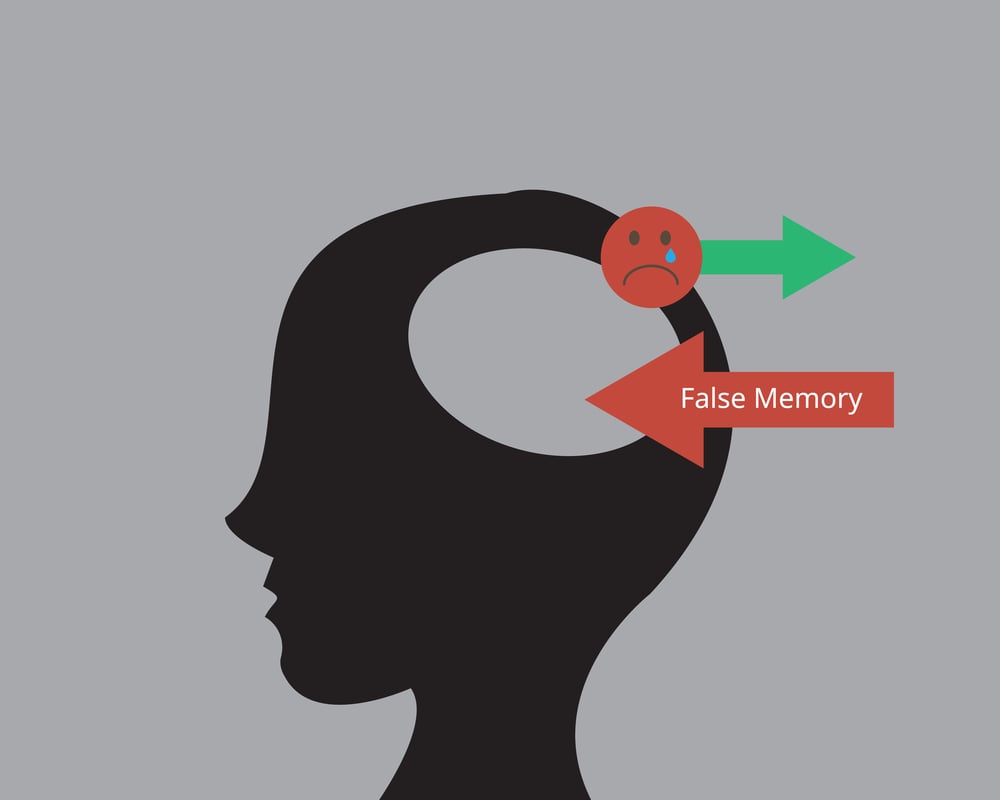
Elizabeth Loftus and John Palmer showed participants a film of a car crash and then asked how fast the cars were going when they “smashed,” “hit,” or “contacted” each other. The word alone altered memory: “smashed” produced dramatically higher speed estimates and more false memories of broken glass that wasn’t in the film.
Memory, the experiment proved, is not a recording. It is reconstructed every time it is recalled — and language shapes what gets rebuilt.
Seligman’s Learned Helplessness (1967)

Martin Seligman exposed dogs to electric shocks they could not escape. When later placed in a box where escape was possible, the dogs simply lay down and endured the shocks rather than jumping out.
They had learned, from prior experience, that nothing they did made any difference. Seligman’s model of learned helplessness became a foundational framework for understanding depression — explaining why people in persistent bad situations often stop trying, even when an exit exists.
The Invisible Gorilla (1999)

Daniel Simons and Christopher Chabris asked participants to watch a video and count basketball passes among players in white shirts. In the middle of the clip, someone in a gorilla suit walked through the scene, stopped, and thumped their chest.
About half of all viewers never noticed. The experiment provided the clearest demonstration of inattentional blindness in the literature — our attention, it turns out, is a spotlight, not a floodlight, and what falls outside its beam is effectively invisible.
Roger Sperry’s Split-Brain Studies (1960s)
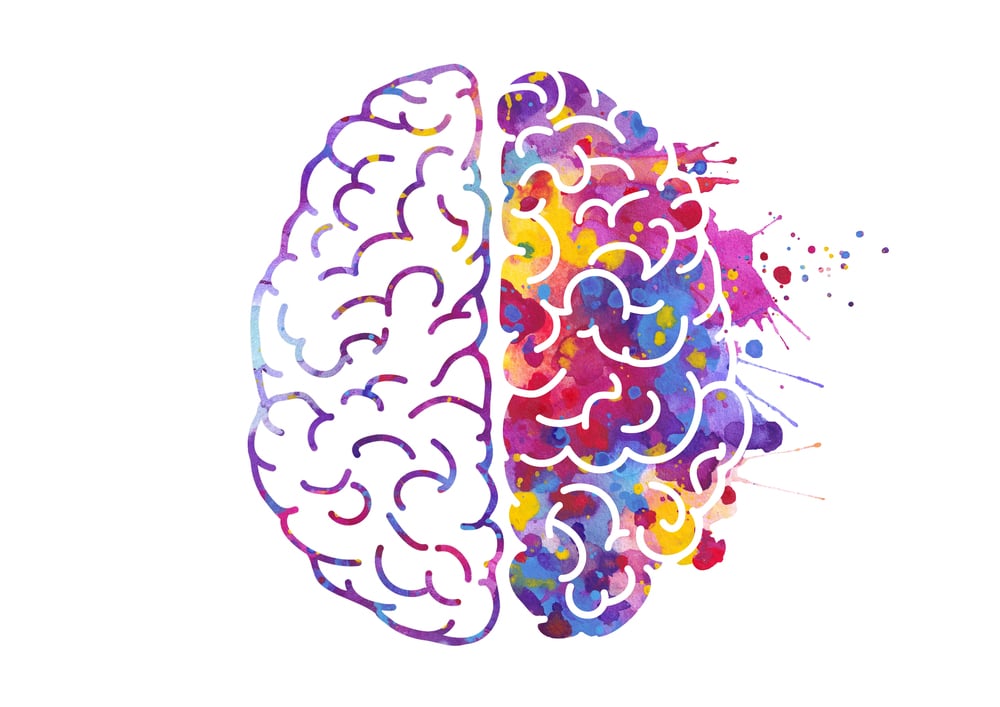
After working with patients whose corpus callosum — the bundle of fibers connecting the brain’s two hemispheres — had been severed to treat severe epilepsy, Roger Sperry discovered that the two halves of the brain operated as distinct processing systems. The left hemisphere handled language; the right handled spatial tasks.
The experiments earned Sperry the 1981 Nobel Prize and gave rise to a more nuanced understanding of hemispheric specialization than any prior model had offered.
Hubel and Wiesel’s Visual Cortex Mapping (1958–1968)
David Hubel and Torsten Wiesel inserted microelectrodes into the visual cortex of cats and discovered that individual neurons fired in response to very specific stimuli — lines at particular angles, edges moving in particular directions. The brain, they demonstrated, is organized not as a general-purpose receiver but as a hierarchy of feature detectors.
Their work earned the Nobel Prize in 1981 and became the blueprint for understanding how the visual system — and ultimately perception itself — is constructed.
The Rat Park Experiment (1978)

Bruce Alexander challenged the standard model of addiction, which used isolated rats in bare cages that reliably chose morphine-laced water over plain water. Alexander built “Rat Park” — an enriched environment with space, companions, and stimulation — and gave the same rats the same choice.
They overwhelmingly preferred the plain water. The study suggested that addiction is not simply a property of the drug but a response to the conditions of the life around it.
The Clark Doll Tests (1940s)

Kenneth and Mamie Clark gave Black children aged three to seven two dolls — one white, one brown — and asked them which was nice, which was bad, and which they preferred. Most preferred the white doll and attributed negative characteristics to the brown one.
The Clarks argued the results showed internalized racial prejudice as a product of segregation. Their research was cited directly in the Supreme Court’s 1954 ruling in Brown v. Board of Education, making it one of the few psychology experiments to shape constitutional law.
The Marshmallow Test (1960s–1970s)

Walter Mischel gave preschoolers at Stanford a single marshmallow and told them they could eat it now or wait fifteen minutes and receive two. Follow-up studies in the years that followed appeared to show that children who waited performed better academically, had better social skills, and scored higher on SAT tests.
Later research complicated the story — family income and background predicted waiting behavior better than willpower did — but the experiment permanently embedded the concept of delayed gratification in both psychology and popular culture.
The Small World Experiment (1967)
Stanley Milgram handed letters to random people in Nebraska and Kansas, asking them to forward them to a target in Boston using only personal acquaintances. The letters that arrived took an average of about six steps.
Milgram’s experiment gave rise to the phrase “six degrees of separation” and launched an entire field of research into social network structure — research that, decades later, would inform how algorithms model human connection online.
The Halo Effect Studies — Thorndike (1920)

Edward Thorndike asked military officers to rate their soldiers on intelligence, physical appearance, leadership, and character. He found that ratings in one category correlated suspiciously highly with all the others — officers who found a soldier physically appealing rated him smarter, more dependable, and more capable, regardless of evidence.
The “halo effect” Thorndike named remains one of the most documented cognitive biases in social psychology and affects everything from job interviews to criminal sentencing.
Festinger’s Cognitive Dissonance (1957–1959)
Leon Festinger paid participants either one dollar or twenty dollars to tell the next participant that a boring task was actually interesting. When later asked how they really felt about the task, the one-dollar group rated it as significantly more enjoyable.
Festinger’s explanation: people paid twenty dollars had a clear external reason for lying. People paid one dollar had to justify it internally — by convincing themselves the task really wasn’t that bad.
The mind, the study suggested, edits its own experiences to maintain internal consistency.
Ekman’s Universal Emotions (1960s–1970s)

Paul Ekman traveled to Papua New Guinea and showed photographs of facial expressions to people who had had no prior contact with Western culture. They identified expressions of happiness, fear, anger, disgust, sadness, and surprise with the same consistency as Western subjects.
The finding supported the idea that at least six basic emotions are biologically hardwired and universal — not culturally learned — fundamentally shifting how emotion was theorized.
The Stroop Effect (1935)
John Ridley Stroop asked participants to name the ink color of words printed in mismatched colors — the word “RED” written in blue ink, for instance. People were dramatically slower when the word and color conflicted.
The experiment revealed automatic processing: reading had become so ingrained that it couldn’t be shut off even when it actively interfered with the task at hand. The Stroop test remains one of the most replicated experiments in cognitive psychology and is still used in clinical neurological assessment.
Capgras Delusion Research (1923–present)
Joseph Capgras first described a syndrome in which patients believe that a close relative has been replaced by an identical impostor. Neuroscientists studying the condition later discovered it arises when the brain’s facial recognition system works correctly but the emotional response to familiar faces is severed.
The face registers as known, but feels wrong. Capgras research revealed that recognition and emotional resonance are separate systems — and that without the latter, the familiar becomes uncanny.
The Pit of Despair — Harlow (1960s)
Harry Harlow’s later work grew darker. He placed young monkeys alone in stainless steel chambers, shaped like vertical cones, for periods of up to one year.
The isolated animals emerged profoundly disturbed, unable to interact socially, rocking compulsively. Harlow’s stated aim was to create an animal model of depression.
He succeeded — at significant cost. The experiments were widely condemned and became a turning point in the development of ethical standards for animal research.
The Mere Exposure Effect — Zajonc (1968)
Robert Zajonc showed participants nonsense words, Chinese characters, or photographs repeatedly — without telling them what the study was about. When later asked to rate their feelings about each stimulus, people consistently preferred items they had seen more often, even when they couldn’t consciously remember having seen them at all.
Familiarity, Zajonc demonstrated, breeds liking. Mere repeated exposure to something generates preference, independent of any reasoning or evaluation.
Godden and Baddeley’s Diving Memory Study (1975)
Duncan Godden and Alan Baddeley asked deep-sea divers to memorize word lists either underwater or on land, then tested recall in both environments. Words learned underwater were remembered better underwater, and words learned on land were remembered better on land.
The context in which a memory is formed, it turned out, becomes part of the memory itself — a finding with direct implications for study habits, courtroom testimony, and therapy.
The Fundamental Attribution Error — Jones and Harris (1967)

Edward Jones and Victor Harris showed participants essays either defending or criticizing Fidel Castro and told them the essays were assigned positions — the writers had no choice in what they argued. Participants still rated essay writers as genuinely holding the views they expressed.
People could not stop attributing behavior to inner character even when they were explicitly told the behavior was situationally compelled. The study gave cognitive psychology one of its most durable concepts: the fundamental attribution error.
Seligman’s Positive Psychology Interventions (2005)

Martin Seligman, whose earlier work had focused on helplessness and depression, turned in later years to what makes life go well. He tested a simple exercise: writing down three good things that happened each day and their causes.
Participants who maintained the practice for one week showed measurable increases in happiness that persisted for six months. The finding — that attention, not circumstance, determines much of wellbeing — became the cornerstone of the positive psychology movement.
The McGurk Effect (1976)
Harry McGurk and John MacDonald discovered that people watching a video of a mouth silently forming “ga” while simultaneously hearing the audio “ba” perceived a third sound entirely: “da.” The brain, rather than choosing one sense over the other, blended them into something that corresponded to neither.
The effect is extraordinarily difficult to override even when you know it’s happening, demonstrating that perception is not passive receipt but active, multi-sensory synthesis.
The Planning Fallacy — Kahneman and Tversky (1979)

Daniel Kahneman and Amos Tversky documented that people systematically underestimate how long their own projects will take while accurately predicting that similar projects by others will run over time and budget. The asymmetry wasn’t explained by optimism alone — it reflected a fundamental cognitive habit of focusing on the specific plan rather than on comparable past cases.
The planning fallacy research became central to behavioral economics and influenced how governments and organizations now model project costs.
The Still Face Experiment (1975)

Edward Tronick asked mothers to interact normally with their infants, then suddenly adopt a completely blank, still expression and refuse to respond. Infants immediately tried to reengage their mothers through smiling, pointing, and vocalizing.
When that failed, they grew visibly distressed — turning away, slumping, and crying. The experiment demonstrated that even very young infants are active participants in social exchange, not passive recipients, and that the withdrawal of social response registers as something genuinely alarming to the developing brain.
What the Lab Couldn’t Contain

Psychology’s most important experiments were rarely comfortable, and some of them were wrong — or at least more complicated than their original findings suggested. The Stanford Prison Experiment has since been questioned on methodological grounds.
The marshmallow test’s predictive power looks weaker once socioeconomic variables are controlled for. Elizabeth Loftus’s memory research, once controversial, is now so well-established it has freed wrongfully convicted people from prison.
What holds across all thirty-three is the same uncomfortable truth: the human mind is not the rational, stable, self-aware system most people assume they have. It is shaped by context, fooled by authority, and perpetually editing its own past.
That may be the most important finding psychology ever produced — not from any single experiment, but from all of them, accumulating into a portrait of a brain that is far stranger, and far more interesting, than the one people imagine themselves to have.
More from Go2Tutors!

- The Romanov Crown Jewels and Their Tragic Fate
- 13 Historical Mysteries That Science Still Can’t Solve
- Famous Hoaxes That Fooled the World for Years
- 15 Child Stars with Tragic Adult Lives
- 16 Famous Jewelry Pieces in History
Like Go2Tutors’s content? Follow us on MSN.