34 Optical Illusions That Still Fool Scientists Despite Years of Study
Here is something that should bother you more than it does: you cannot fully trust your own eyes. Not because your vision is poor, but because your brain is doing something far more complicated than simply receiving light — it is constructing a version of reality from incomplete information, filling in gaps, making assumptions, and running predictions so rapidly that you experience the result as perception.
Optical illusions are the places where those predictions go wrong in a consistent, repeatable, deeply revealing way. What makes these particular illusions interesting is not just that they fool ordinary people.
Many of them continue to fool vision researchers, neuroscientists, and perceptual psychologists even after decades of study — even after you know exactly what the illusion is doing and why. The fact that you can explain an illusion completely and still see it is, itself, one of the most significant things neuroscience has discovered about human perception.
Here are 34 illusions that illustrate this in ways that range from elegant to genuinely unsettling.
The Müller-Lyer Illusion
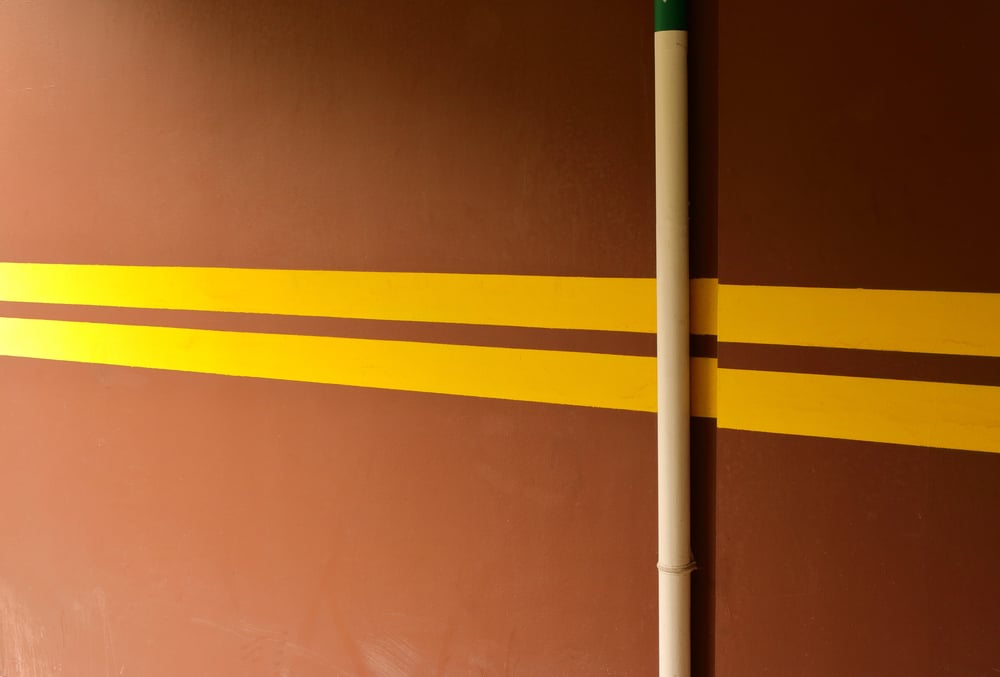
First described in 1889 by German sociologist Franz Carl Müller-Lyer, this is probably the most studied visual illusion in history. Two lines of identical length are presented, one with arrowheads pointing inward, one with arrowheads pointing outward.
The line with outward fins consistently appears longer. What makes it particularly significant: knowing the lines are equal does not stop you seeing them as unequal.
Scientists have proposed several explanations — the most widely accepted is connecting the arrow directions to depth cues learned from environments with right angles, like buildings and rooms. The inward arrows resemble the inside corner of a room; the outward arrows resemble the outside edge of a building.
The brain interprets these unconsciously and adjusts perceived distance accordingly. The debate about which explanation is correct continues, and none has fully resolved the question.
The Ponzo Illusion
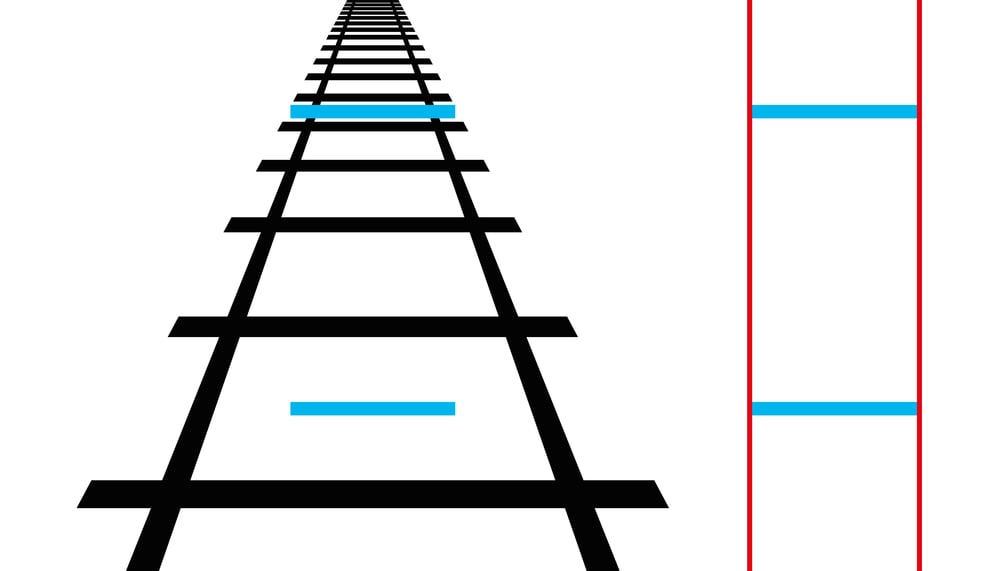
Two horizontal lines of identical length are placed between converging lines — like railway tracks receding into the distance. The upper line looks longer.
The explanation most researchers accept is that the converging lines trigger linear perspective processing: the brain assumes the upper line is farther away and adjusts its perceived size upward to compensate (size constancy). But this explanation has been challenged by studies that found the illusion persists even in contexts where linear perspective is explicitly removed, which means there is something else going on that the dominant theory doesn’t capture.
The Ames Room
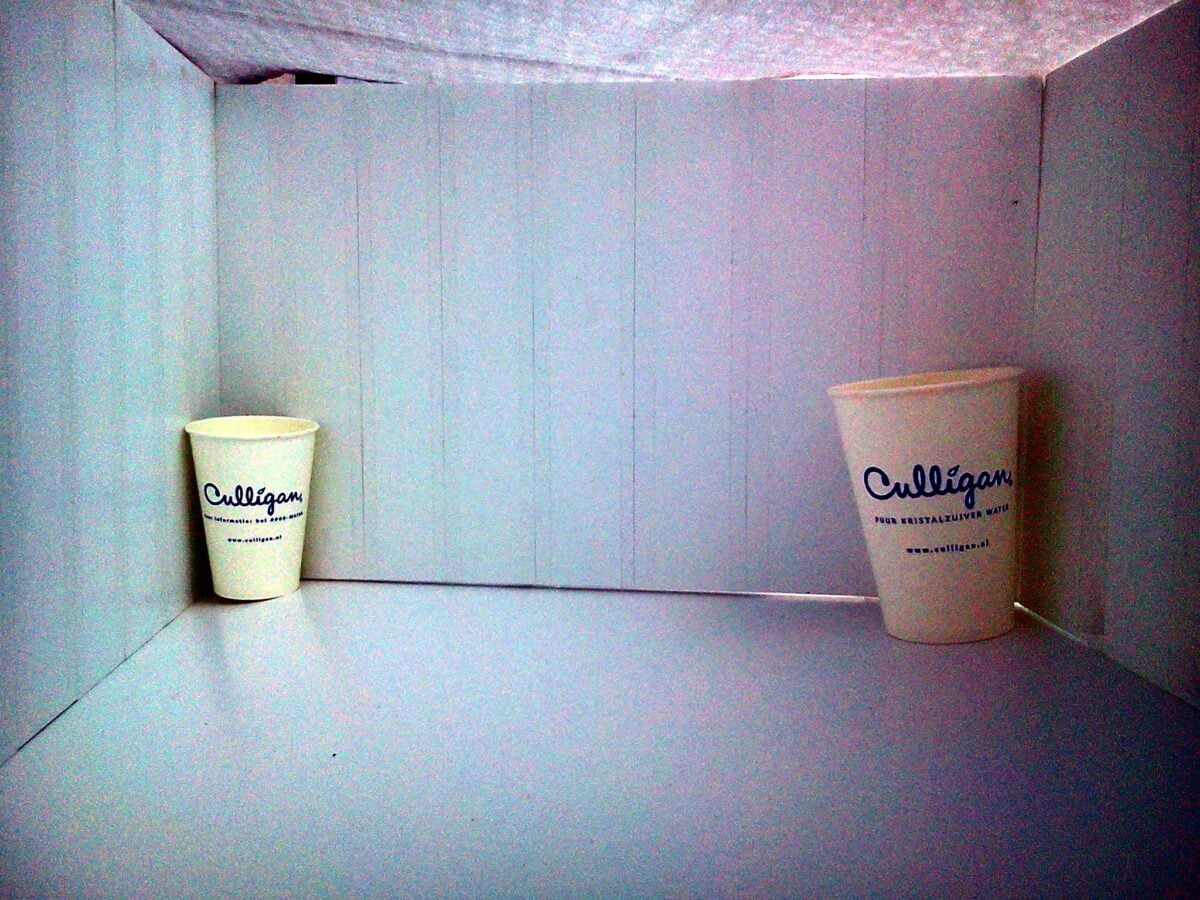
Invented by American ophthalmologist Adelbert Ames Jr. in the 1940s, the Ames Room looks like a normal rectangular room but is actually shaped like a trapezoid, with one corner much farther from the viewer than the other. Because the room appears rectangular — and the brain refuses to accept otherwise — two people standing in opposite corners appear to be vastly different sizes.
The person in the far corner looks tiny; the person in the near corner looks enormous. The illusion is so powerful that even when both people are the same size, the brain insists on the size differential.
The Ames Room has been used in film production — most famously in The Lord of the Rings to make Gandalf appear much larger than the hobbits — precisely because the illusion resists conscious correction.
Rubin’s Vase

Danish psychologist Edgar Rubin designed this figure-ground illusion in 1915: an image that can be seen either as a white vase against a black background or as two black silhouetted faces in profile against a white background. The brain cannot sustain both interpretations simultaneously — it switches between them.
A 2021 study in Frontiers in Psychology found that this isn’t simply a perceptual error but a genuine ambiguity in the image itself, with no single correct interpretation. The brain’s inability to commit to both readings at once reveals something about how visual processing allocates foreground and background — and why it can only maintain one assignment at a time.
The Necker Cube
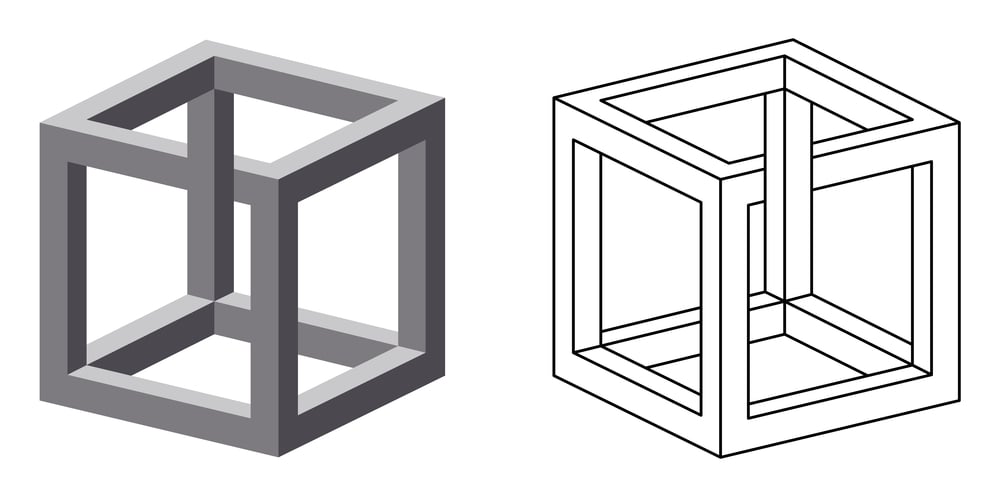
A wireframe line drawing of a cube that can be interpreted as a cube oriented one of two ways — with either the lower-left or upper-right face in front. Like Rubin’s Vase, the brain alternates between interpretations rather than settling.
First described by Swiss crystallographer Louis Albert Necker in 1832, the cube has been used for over a century to study the mechanism of perceptual switching. Researchers still debate what triggers the switch — whether it is driven by fatigue in the neural circuits holding one interpretation, or by a more active mechanism in higher cognitive processes.
The Kanizsa Triangle
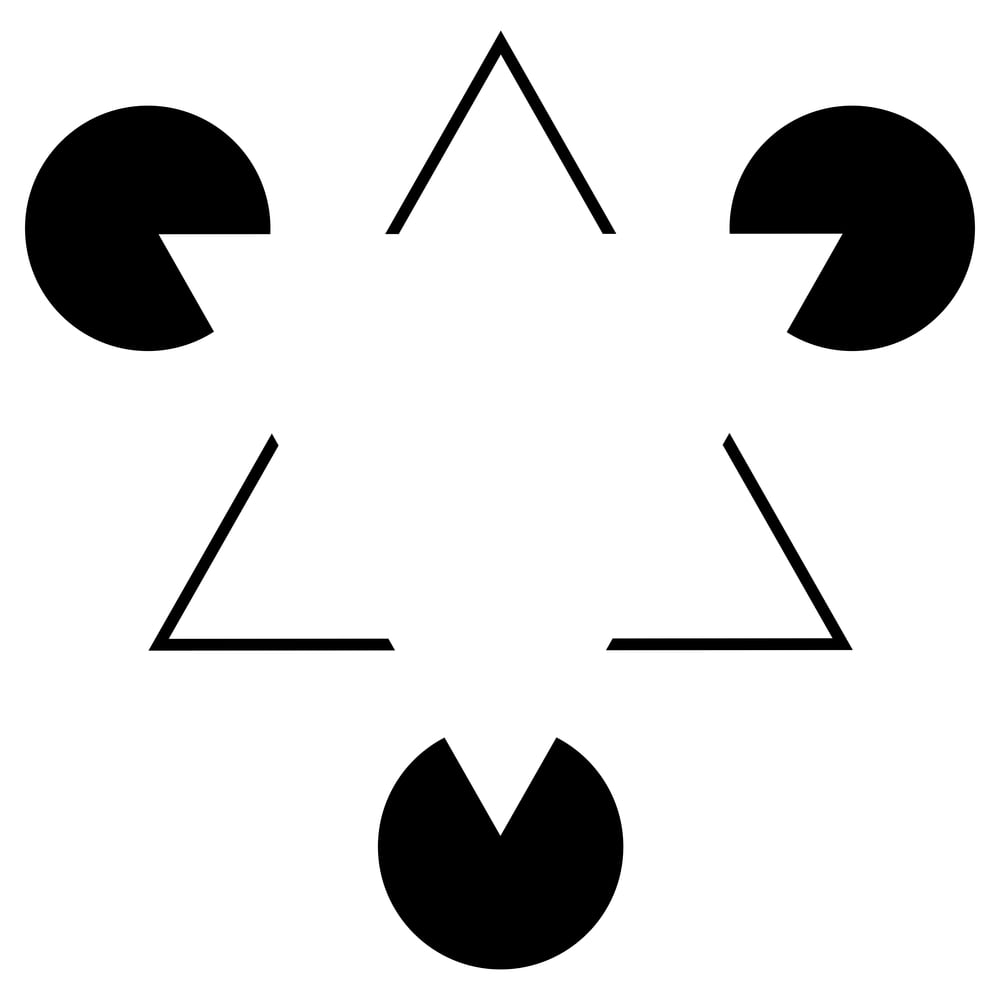
An arrangement of three Pac-Man-shaped figures, pointing inward, produces a vivid perception of a white triangle that is not actually drawn on the page. The brain constructs the edges of the triangle from the gaps between the pac-man shapes, a process called illusory contour completion.
Studies using brain imaging have found that the neurons responsible for edge detection in the early visual cortex respond to these imaginary edges as though they were real. The brain is not simply interpreting the missing lines — it is actively creating them at a physiological level, which is why the triangle appears so compellingly solid.
The Café Wall Illusion
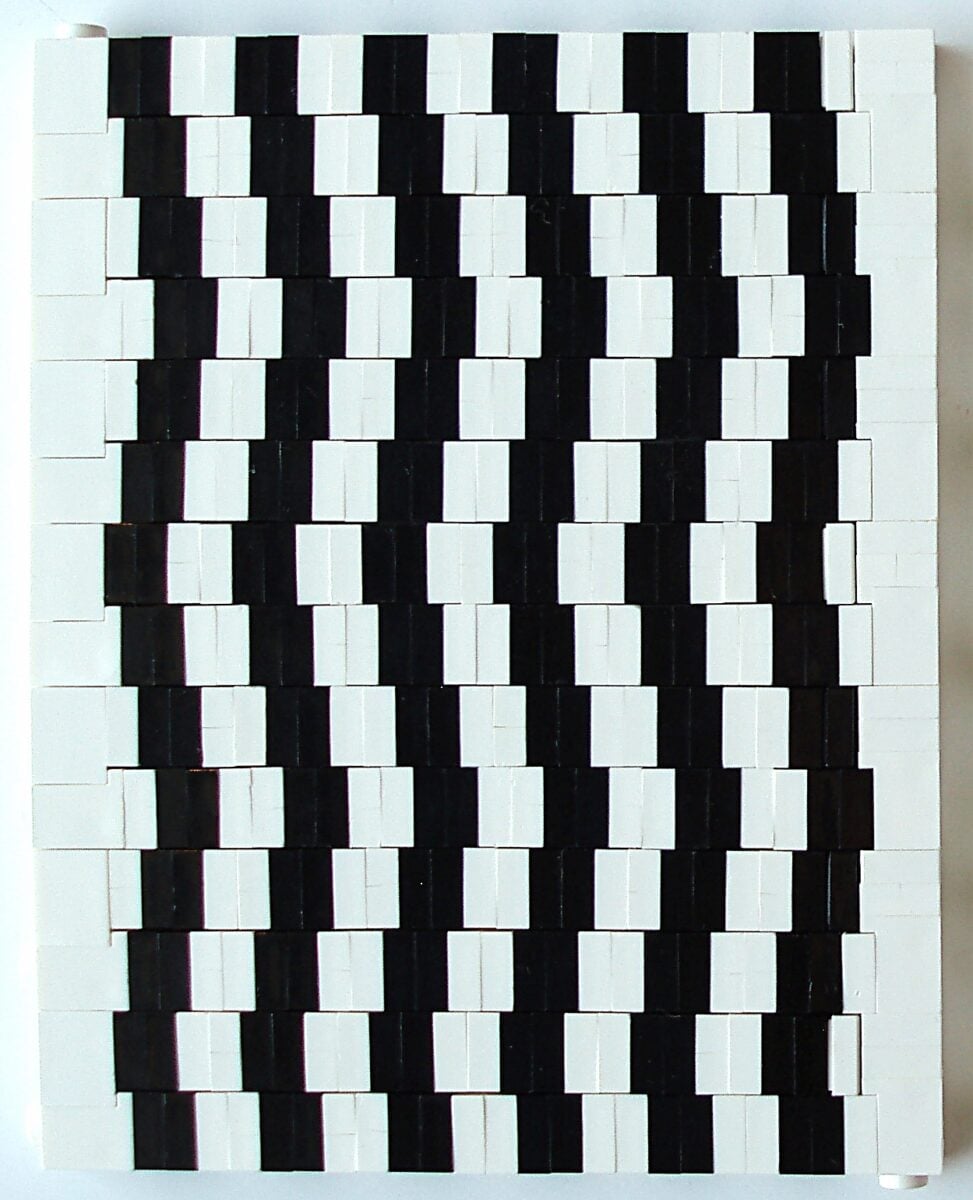
Named after the tiled wall of a café in Bristol, England, where psychologist Richard Gregory noticed the effect in 1973, this illusion presents rows of alternating black and white tiles, offset row by row. The horizontal lines between rows appear to tilt significantly, despite being perfectly straight and parallel.
The explanation involves how the visual system processes luminance contrast at the edges of tiles — the offset creates false gradient signals that the brain interprets as evidence of slant. Even when a ruler is held against the printed image confirming the lines are straight, the slant remains visible.
The Spinning Dancer
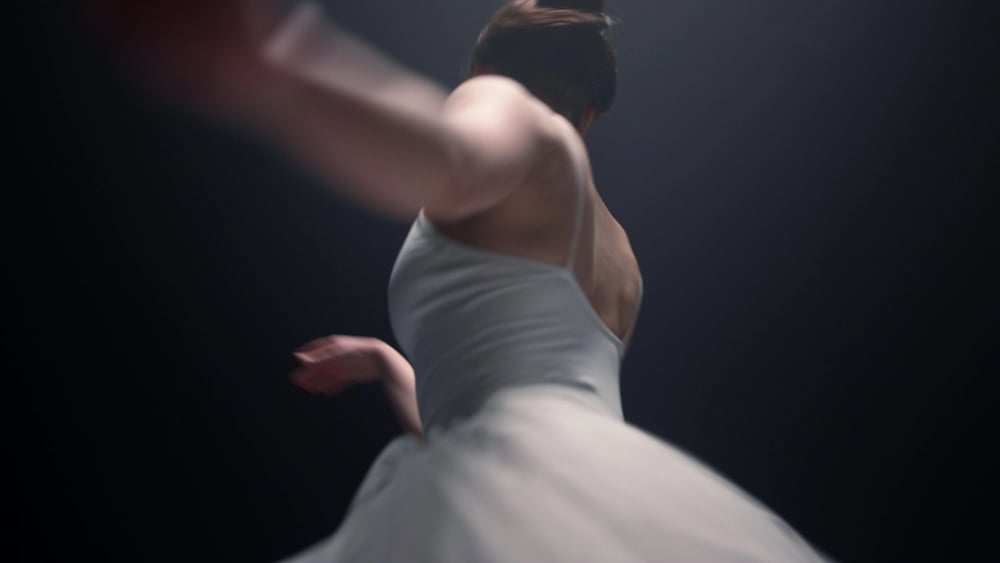
Created by designer Nobuyuki Kayahara, this silhouette of a pirouetting figure can be seen spinning either clockwise or counterclockwise — and the direction can appear to switch as you watch. The figure is a genuine optical ambiguity: a silhouette without depth cues, which means the brain has no information to determine which leg is in front and which is behind.
Both interpretations are equally valid, and the brain cannot settle. The illusion is frequently misused as evidence for left-brain/right-brain dominance, which the research does not support — the direction you initially see is influenced by context and by which visual processing pathways happen to fire first, not by personality type.
The Moon Illusion

The moon appears dramatically larger when it sits near the horizon than when it sits high in the sky, despite subtending almost exactly the same angle on the retina in both positions. This is one of the oldest documented optical illusions — it was discussed by Aristotle — and it remains genuinely contested among vision scientists today.
The most widely cited explanation involves depth perception: the horizon provides distance cues that cause size constancy scaling to be applied, making the moon seem larger than its retinal image would suggest. But several competing explanations have been proposed and the exact mechanism is not settled.
A full scientific consensus does not yet exist.
The Penrose Triangle

British psychiatrist Lionel Penrose and his son Roger Penrose published this impossible figure in 1958: a triangle in which each of the three corners is geometrically plausible, but the whole cannot exist in three-dimensional space. The visual system processes each corner as valid while failing to integrate them into a coherent three-dimensional object. M.C. Escher used the principle extensively, most famously in Waterfall, in which water appears to flow perpetually downhill in a loop.
The triangle exposes the fact that the brain processes geometry locally before globally — and by the time the contradiction becomes apparent, the brain has already committed to each part individually.
The Penrose Stairs
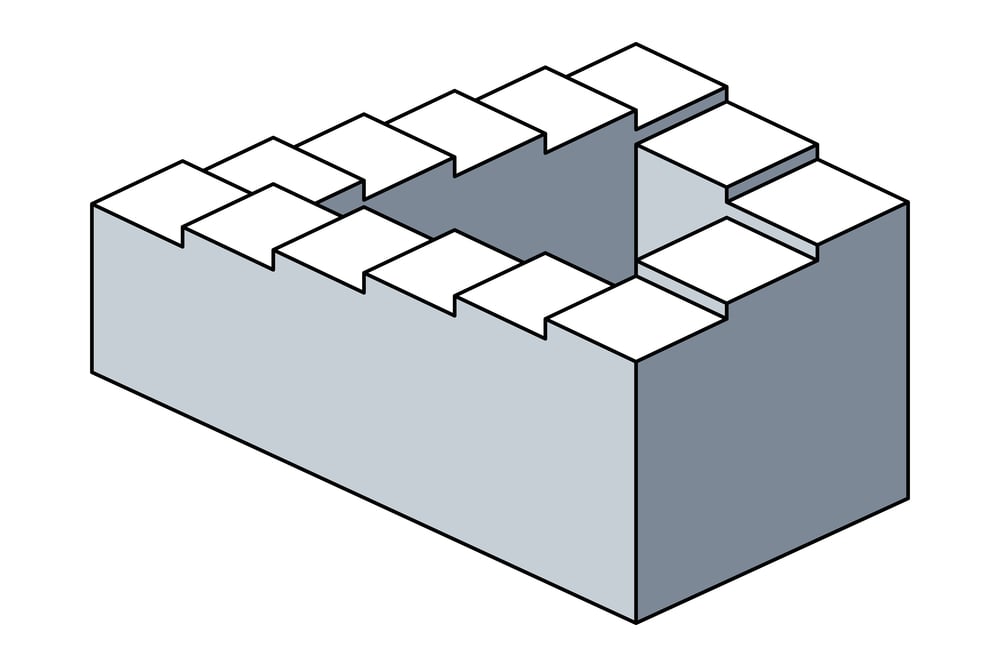
Also produced by the Penroses, the impossible staircase appears to ascend or descend endlessly, looping back to its own beginning. Escher rendered it in Ascending and Descending, where rows of figures march perpetually upward and downward without ever getting higher or lower.
The illusion exploits the same global-versus-local processing gap as the triangle: each section of the staircase seems plausible, and the contradiction only becomes apparent when the whole circuit is followed. The eyes keep finding individual sections “correct” even when the impossibility is fully understood.
The Thatcher Effect

Developed by Peter Thompson in 1980, this illusion inverts the eyes and mouth in a photograph of a face while keeping the rest of the face upright. When the whole image is inverted, the modification is barely visible. When the image is turned right-side up, the distortion becomes grotesque and immediately disturbing. The illusion demonstrates that the brain has a highly specialised module for processing upright human faces, which runs independently of general object recognition.
Inverted faces bypass this module, and the specific features that make expressions readable are processed much less precisely. Margaret Thatcher’s photograph was used in the original paper — hence the name — but the effect has been replicated with hundreds of different faces.
The Ebbinghaus Illusion
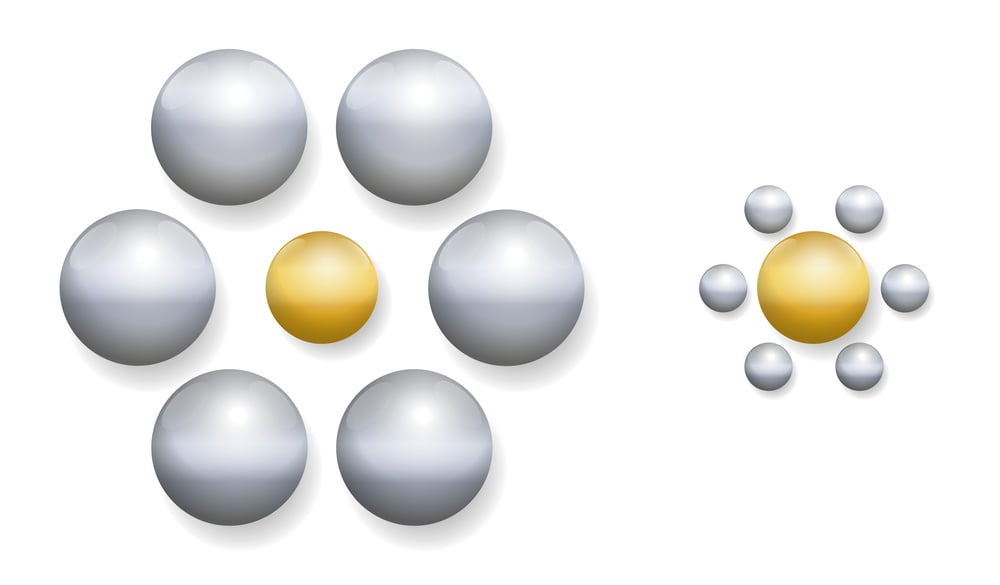
Two circles of identical size are shown — one surrounded by larger circles, one surrounded by smaller ones. The circle surrounded by smaller circles appears larger.
What is particularly revealing about this illusion is that it does not affect everyone equally, and the degree to which it affects a person changes over time. A 2010 study found that children under ten are less susceptible to it than adults, suggesting that the tendency to judge size relative to context rather than absolutely is something that develops with experience, not something that is innate.
The Troxler Effect
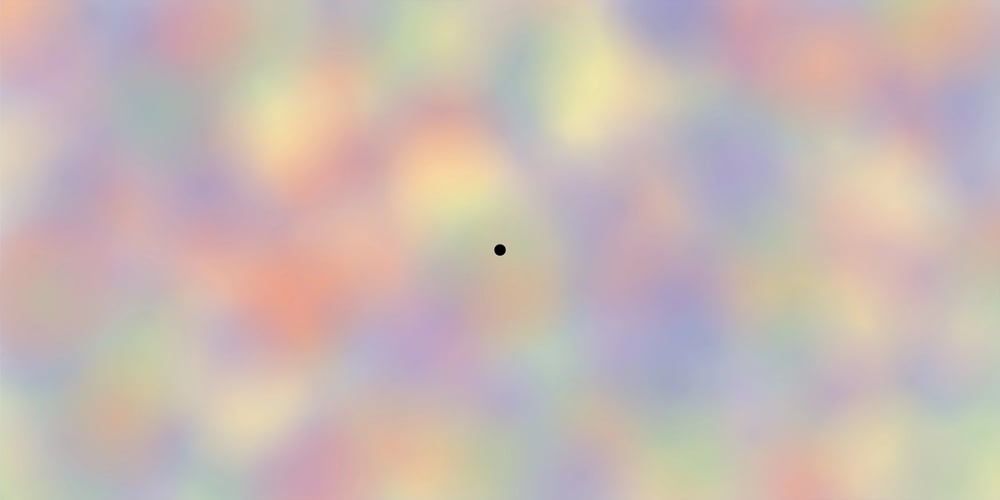
If you fix your gaze on a central point and hold it there for about twenty seconds, objects in your peripheral vision will begin to fade and disappear. They are still visible in the periphery, but the brain stops processing them because they are not changing.
The visual system prioritises change and motion; stable, unchanging peripheral stimuli are gradually suppressed to reduce cognitive load. The effect explains why drivers need to actively scan rather than focus on a fixed point, and why some roadside hazards that are technically visible are missed entirely.
The Waterfall Illusion (Motion Aftereffect)

After staring at a waterfall for a sustained period and then looking at a static surface, the surface appears to flow upward. Motion-sensitive neurons adapt to the sustained downward flow and become temporarily less responsive, while neurons tuned to upward motion remain at full sensitivity.
The result is a phantom of upward movement in a scene that is not moving at all. This is one of the clearest demonstrations that motion perception involves dedicated neural circuits with their own adaptive states — the brain is not simply measuring motion but maintaining populations of neurons in ongoing readiness that can be temporarily depleted.
The Dress
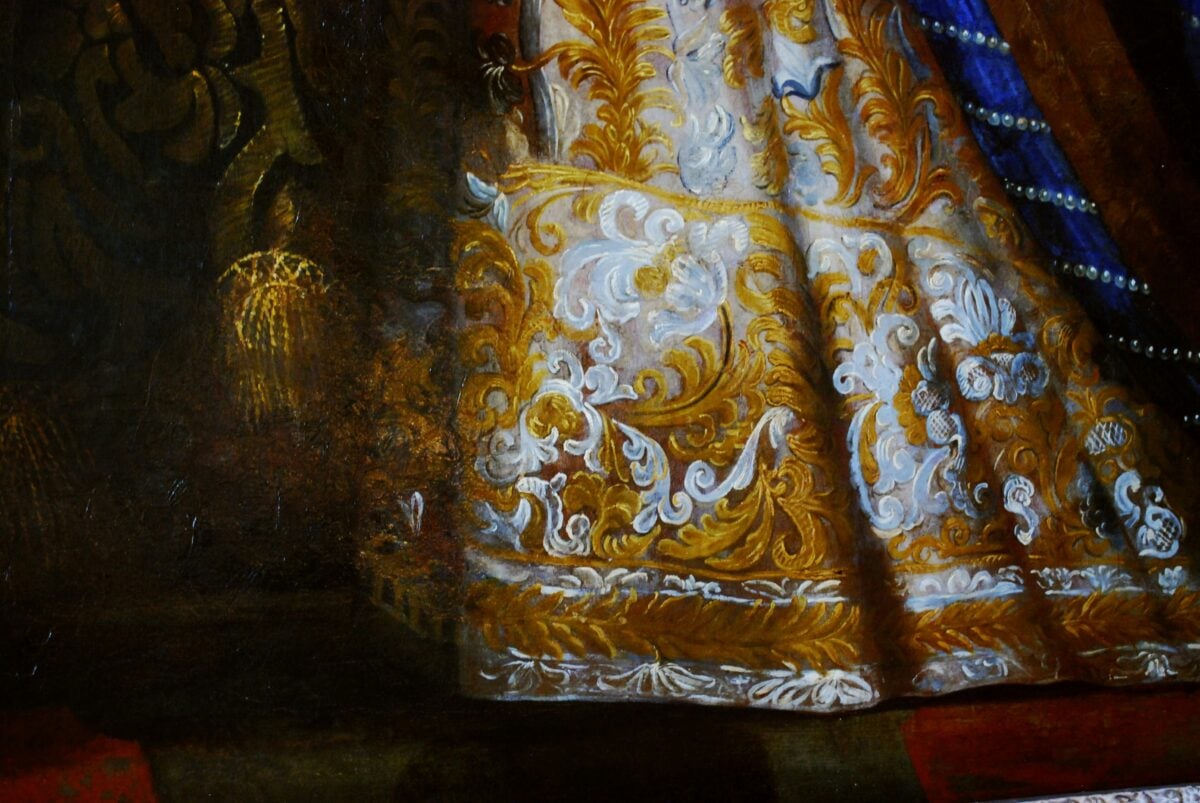
In February 2015, a photograph of a striped dress went viral because different people saw it as either white and gold or black and blue. The actual dress was black and blue.
The disagreement was driven by different unconscious assumptions about the lighting conditions in the photograph: people who assumed daylight (blue sky) discounted the blue cast and saw white and gold; people who assumed artificial light (warm incandescent) discounted the orange cast and saw blue and black. Five years after the photograph prompted a surge of research, vision scientists acknowledged that a full explanatory consensus had still not been reached.
The variability between individual observers remains an active research topic.
The Rotating Snakes Illusion
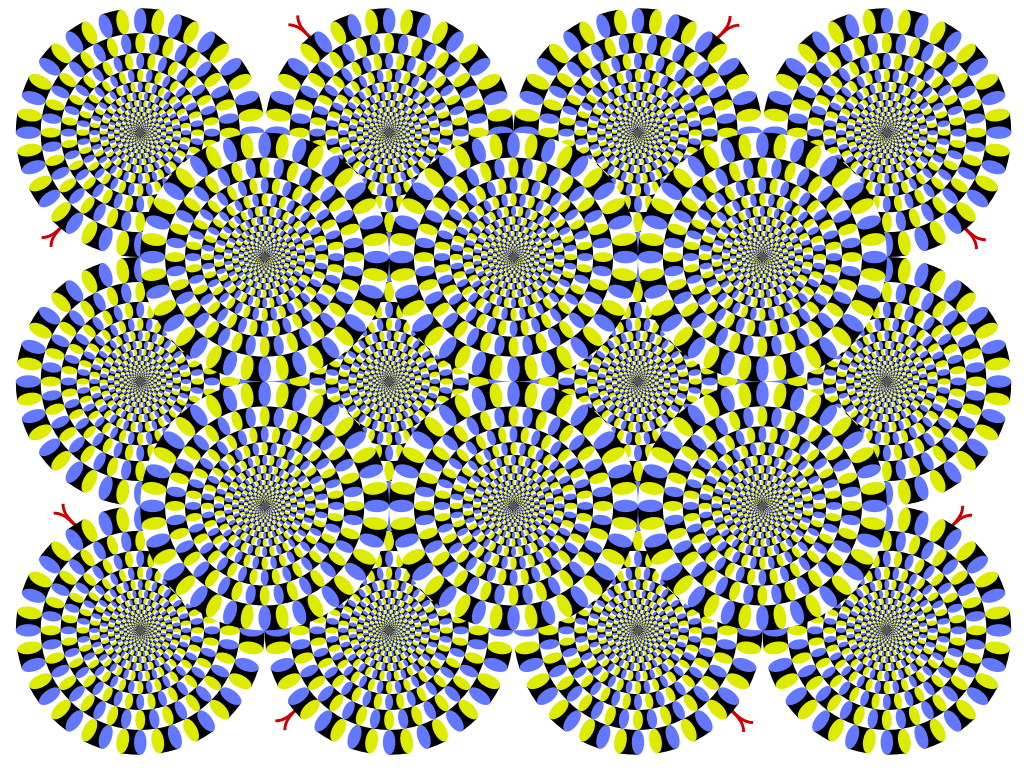
A static image of circular snake-like patterns appears to rotate when viewed peripherally. Created by Japanese psychologist Akiyoshi Kitaoka, the illusion is produced by the deliberate arrangement of luminance gradients within the pattern.
The peripheral visual system is highly motion-sensitive, and the gradient arrangement exploits this to produce a strong rotation signal in neurons that respond to motion but not to the actual static nature of the image. Even knowing the image is static, the rotation does not stop.
The Grid Illusions (Hermann Grid and Scintillating Grid)
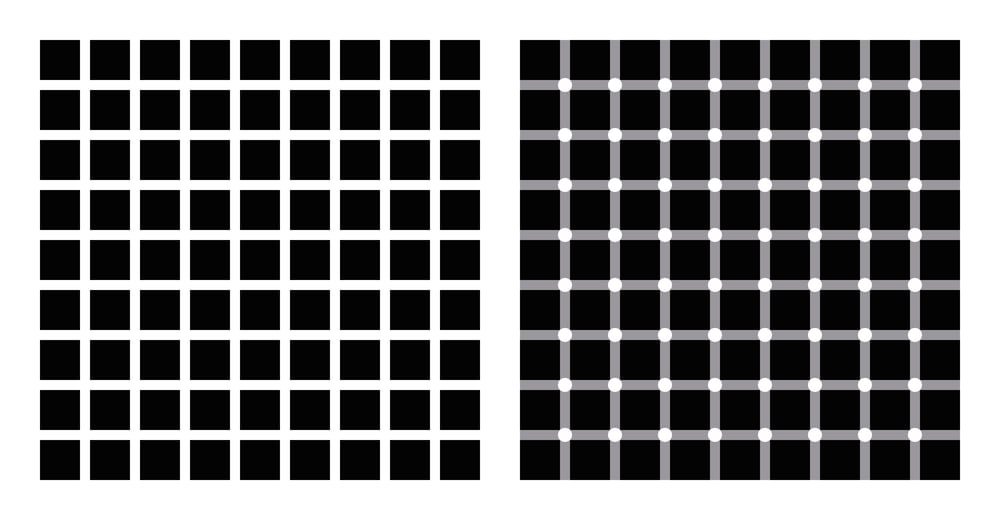
In the Hermann Grid, a grid of black squares on a white background produces phantom grey dots at the intersections of the white corridors — but only in the periphery, where the dot vanishes when you look directly at it. The Scintillating Grid version makes the grey dots appear to flash on and off.
Both effects were thought to be explained by lateral inhibition in retinal ganglion cells, but a 2000 paper challenged this explanation with evidence that the illusion persists in configurations where lateral inhibition cannot account for it. The original explanation, widely taught in textbooks for decades, is now considered incomplete.
The Hollow Mask Illusion
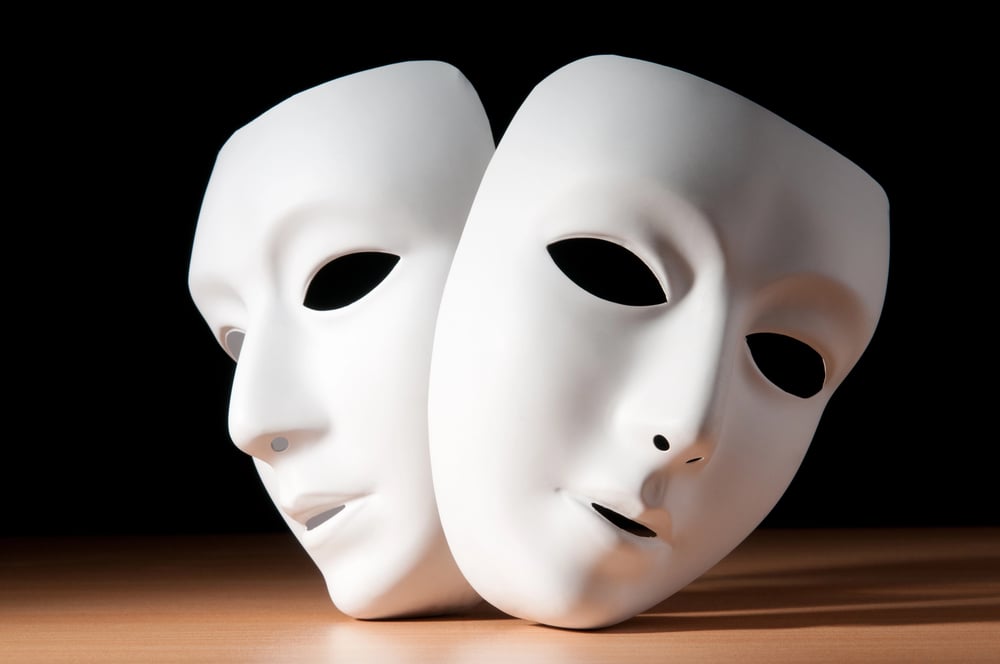
A mask of a human face, seen from inside (the concave side), appears to the viewer as a normal convex face — and will appear to rotate and follow you as you walk past it. The brain’s assumption that faces are convex is so strong that it overrides the actual geometry of what is being seen.
The illusion persists even when the viewer knows it is a hollow mask and even when the mask is clearly seen from multiple angles. This is one of the most studied illusions in schizophrenia research: people with schizophrenia are significantly less susceptible to it, apparently because the top-down biases that normal perception relies on are less powerful in their visual processing.
The Colour Constancy Illusion (Checker Shadow)
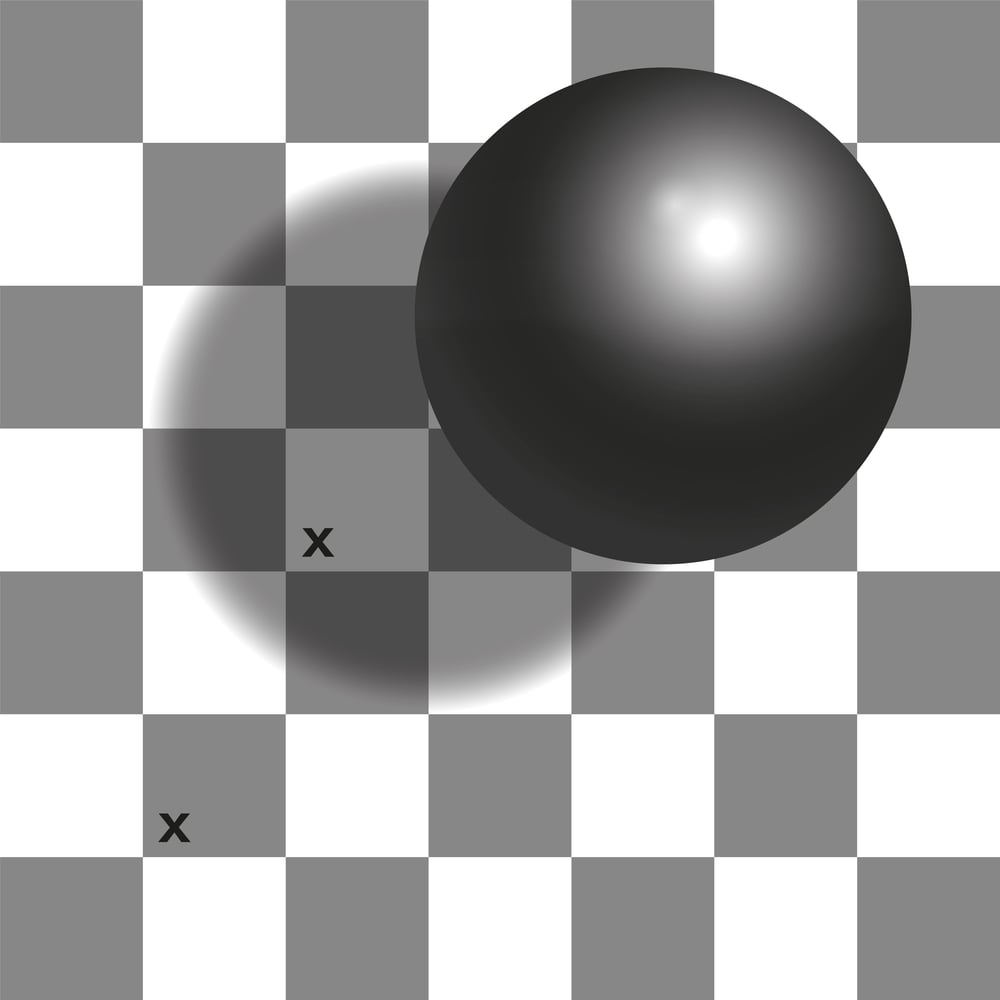
Created by Edward Adelson at MIT, this illusion presents a checkered board with a shadow cast across part of it. Square A (outside the shadow, appearing dark) and Square B (inside the shadow, appearing light) are physically identical shades of grey.
The brain applies shadow correction to compensate for the perceived dimness of the shadowed region, making B look much lighter than A. Even when a connecting grey bar is added between A and B (making the identical shade obvious), A and B still look different. The illusion cannot be suppressed by understanding it.
The Jastrow Illusion
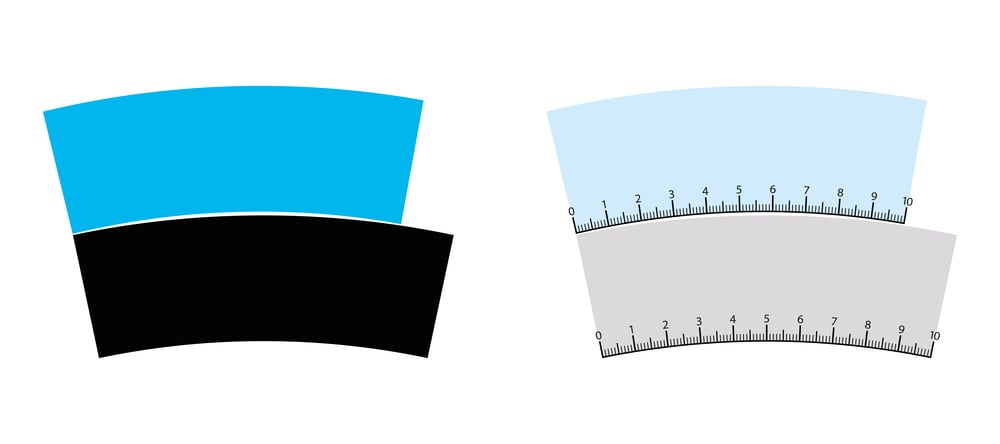
Two curved shapes of identical size are placed adjacent to each other, one on top of the other. The lower shape consistently looks larger.
The illusion was first described by psychologist Joseph Jastrow in 1891 and is produced by the way the concave edge of the upper shape lines up with the convex edge of the lower, creating a false impression of a size difference. The effect persists even when the shapes are measured and their equality confirmed.
The White’s Illusion
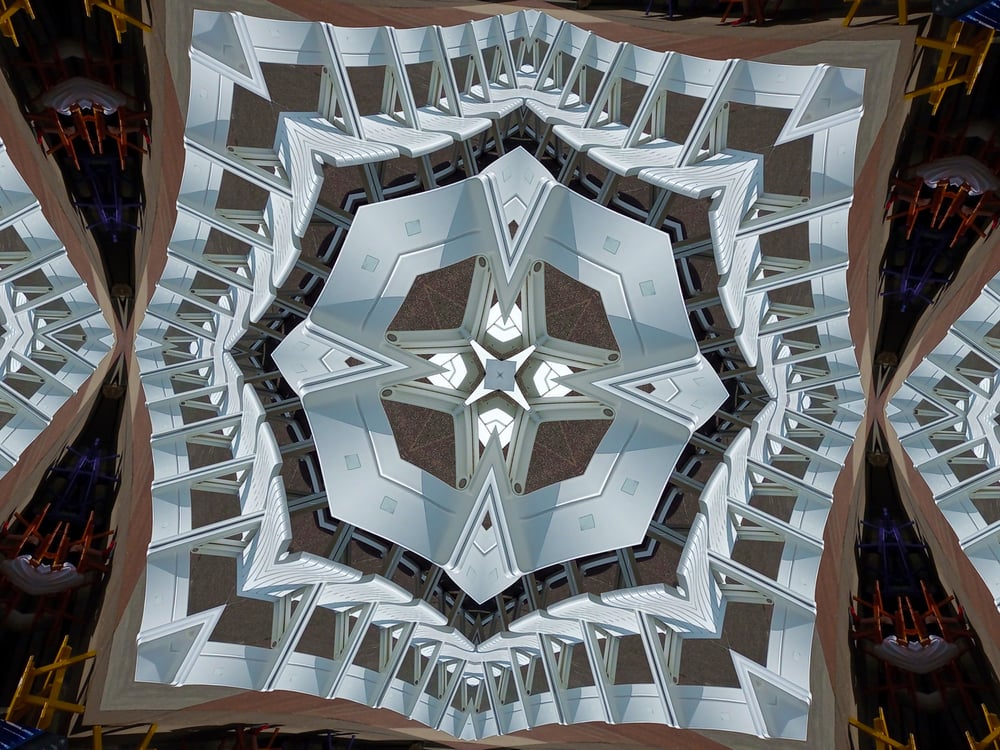
Two grey rectangles of the same shade are shown, one on a black-and-white striped background. Although the rectangles are physically identical, one appears lighter and one appears darker.
Unlike most contrast illusions, the White’s Illusion cannot be explained by lateral inhibition or local contrast effects — the borders of the grey rectangles are in contact with both colours. The illusion is thought to involve higher-level grouping processes, where the brain assigns brightness based on which pattern the rectangle appears to “belong” to rather than on the luminance of adjacent regions.
The exact mechanism remains debated.
The Phi Phenomenon
When two or more separate lights are switched on and off in rapid sequence, the viewer sees a single light moving between the positions rather than two separate flashes. Film and animation depend on this effect: what you experience as smooth motion in a cinema is a rapid succession of still frames that your brain fuses into continuous movement.
Max Wertheimer described it in 1912, and it launched Gestalt psychology’s investigation of how the brain organises visual perception into coherent objects and events. The brain insists on continuity even when there is none.
The Zöllner Illusion
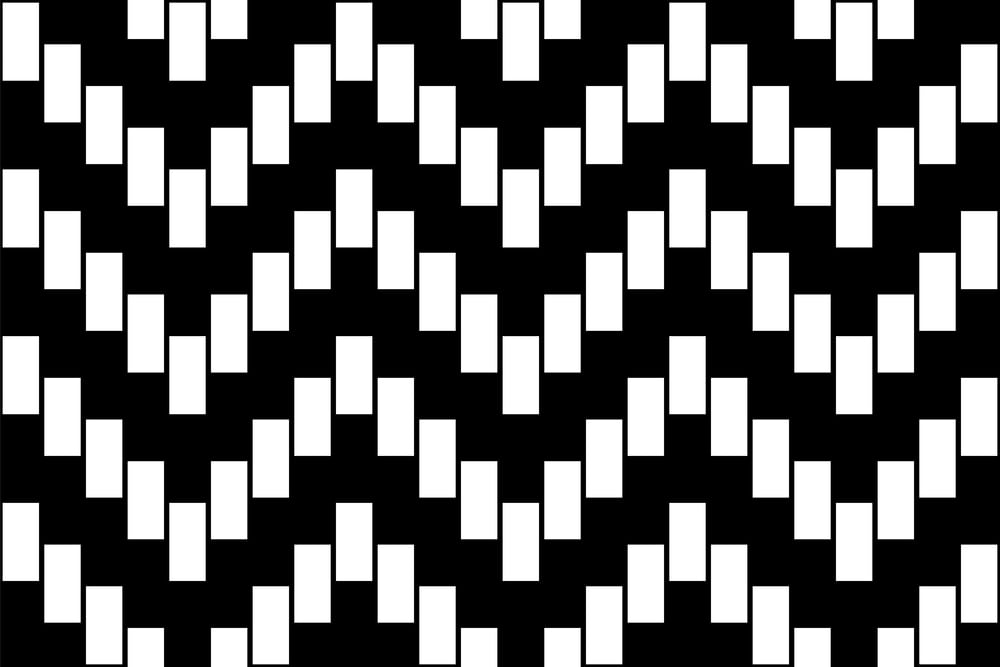
Parallel diagonal lines crossed by short hatching strokes appear to converge and diverge, creating the impression that they are not parallel. The illusion was first described by German astrophysicist Johann Karl Friedrich Zöllner in 1860, who noticed it on a printed fabric pattern.
Despite over 160 years of study, the precise neural mechanism responsible has not been definitively identified — several competing accounts exist, all partial.
The Delboeuf Illusion
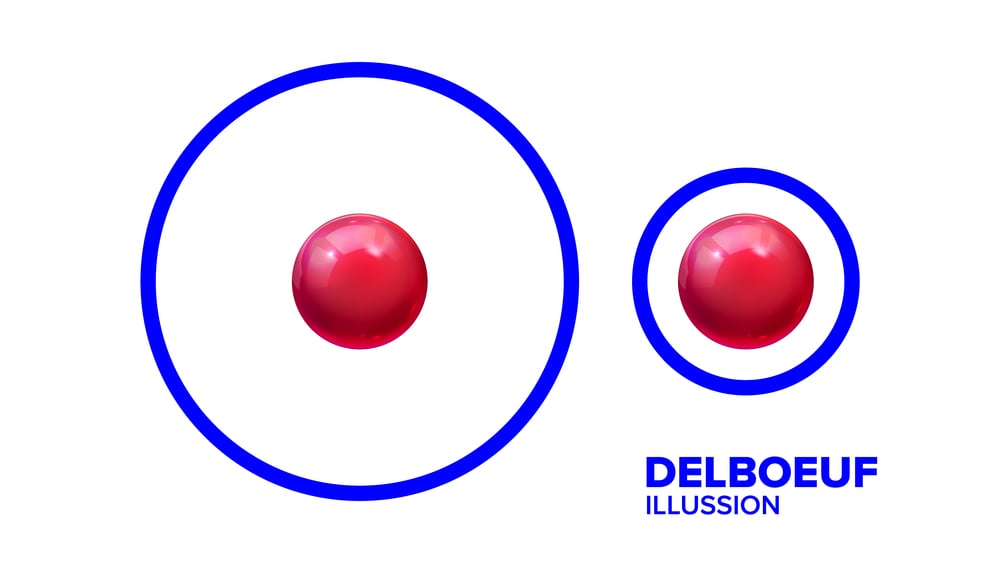
Two identical circles appear different in size when one is surrounded by a larger ring and one by a smaller one. The circle surrounded by the larger ring appears smaller; the one surrounded by the smaller ring appears larger.
What makes this practically significant: studies have found that this illusion directly influences how much food people serve themselves. The same portion of food appears larger on a smaller plate.
The research on portion size and plate diameter that has influenced dietary guidelines and restaurant design is a real-world application of a 19th-century perceptual illusion.
The Lilac Chaser
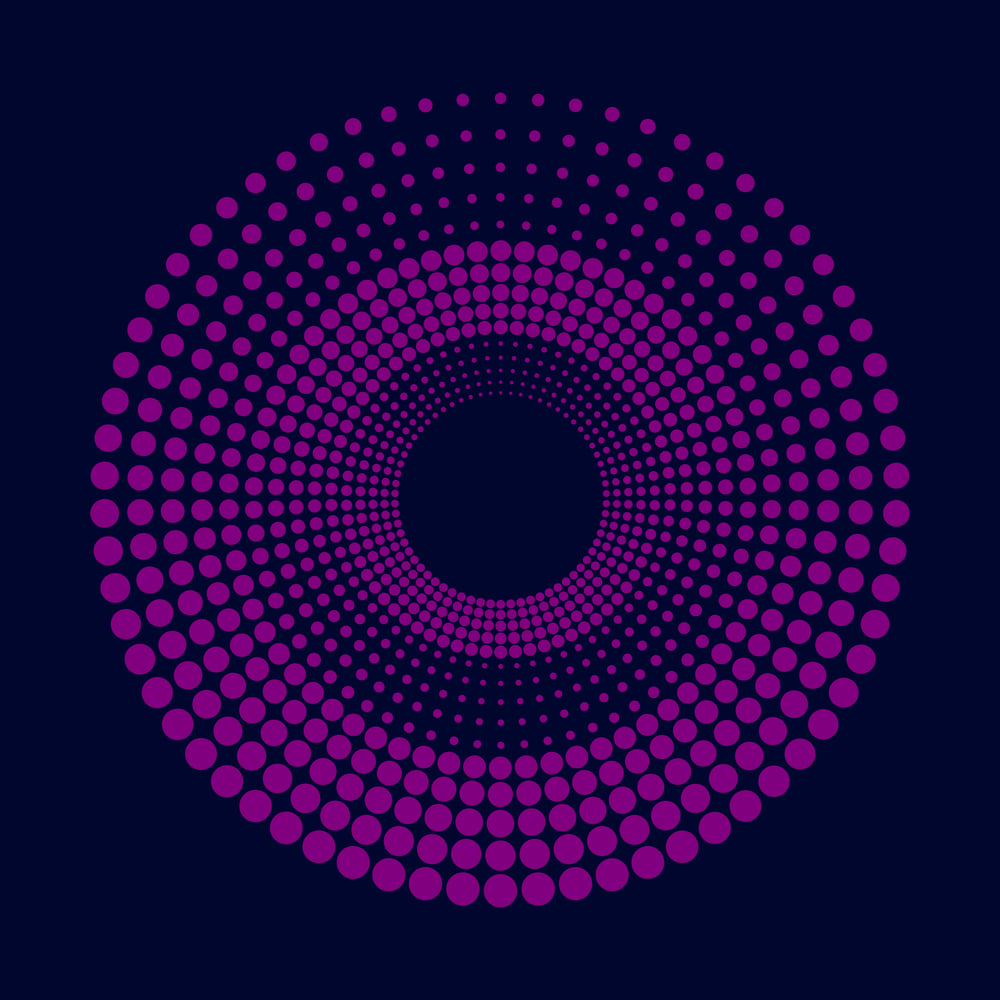
Twelve lilac-coloured dots are arranged in a circle, with one blinking away in sequence. If you stare at the centre, several things happen: the remaining dots appear to turn green (a complementary colour afterimage), and eventually the green dot seems to chase around the circle while the lilac ones disappear entirely.
Both the complementary afterimage and the Troxler fading of the peripheral dots contribute to an experience that bears almost no relationship to what the image actually contains.
The Fraser Spiral
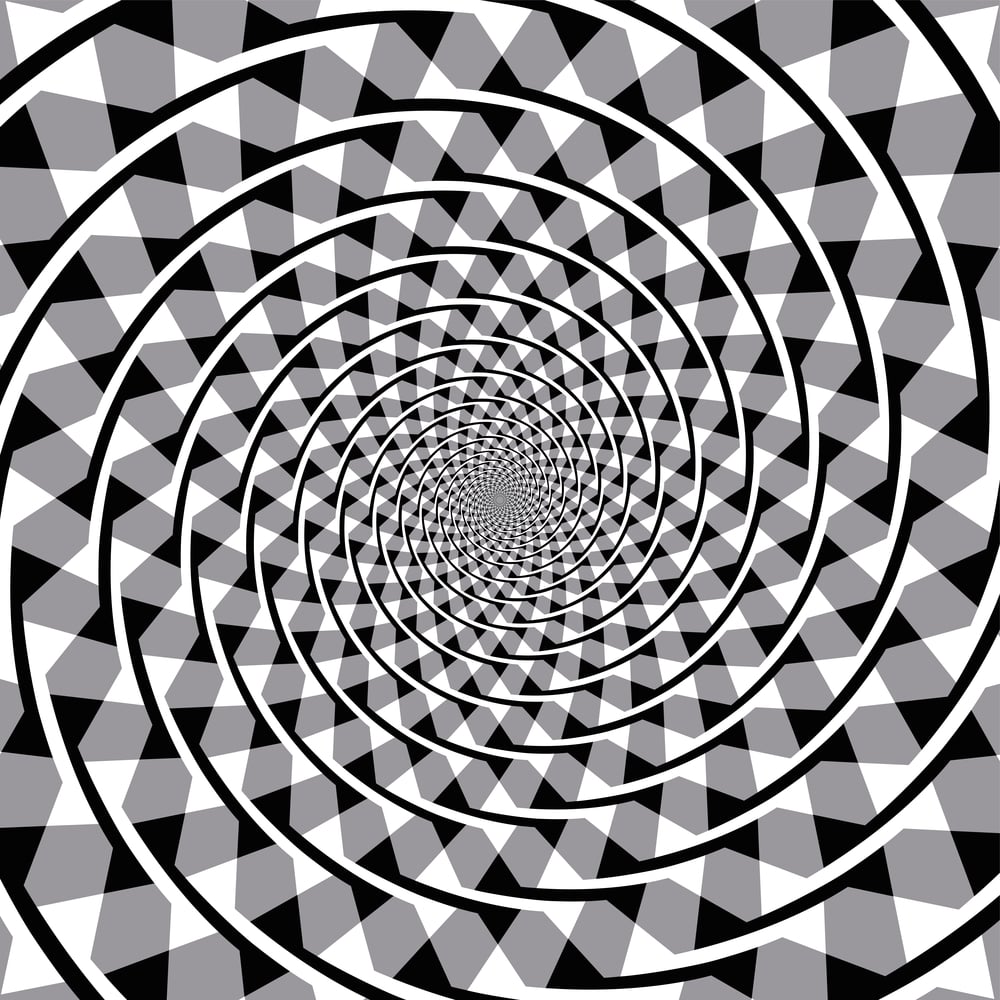
A series of concentric arcs made of twisted rope patterns appears to form a spiralling helix, but is actually composed of perfect concentric circles. The illusion is extraordinarily resistant to correction: even knowing the circles are circles, they continue to appear as a spiral.
A ruler applied to the image confirms the circles, but the eyes revert to the spiral the moment the ruler is removed.
Size Constancy (The Hallway Illusion)
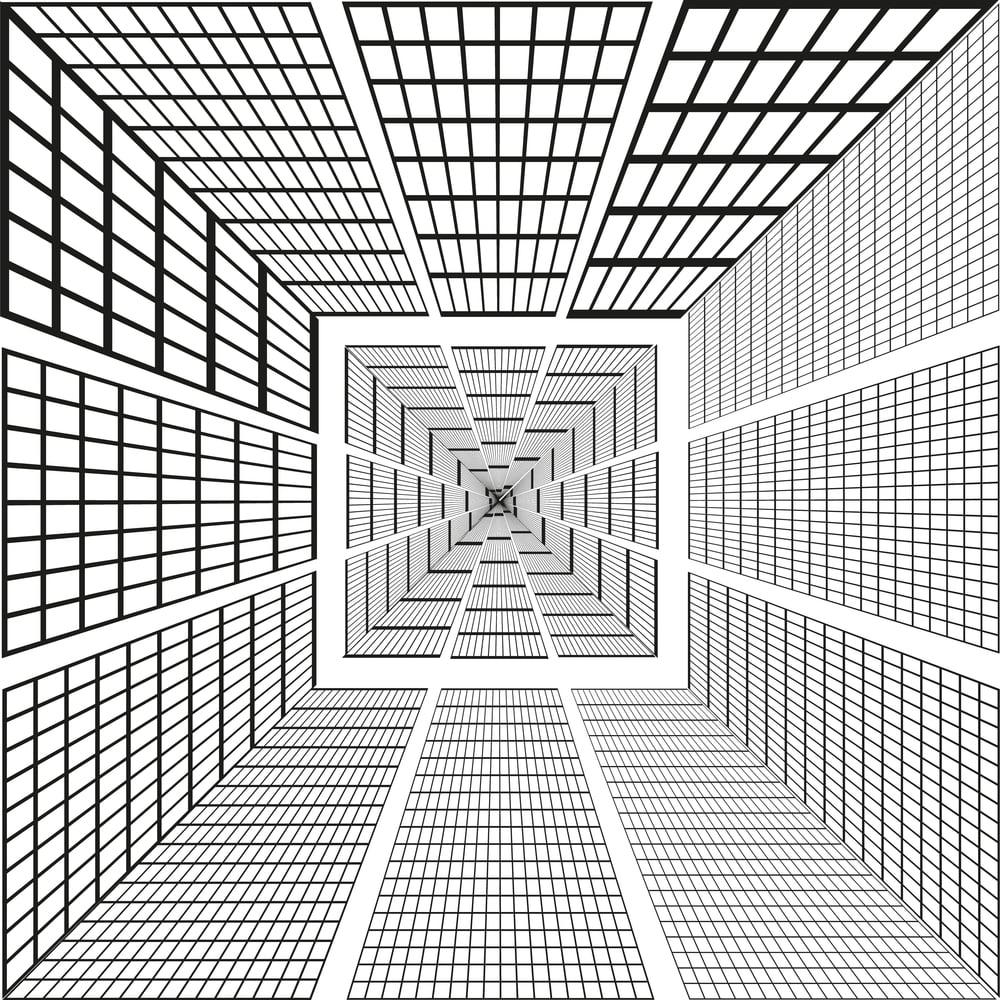
Two identically sized figures placed at different points down a corridor that recedes in perspective appear vastly different in size — the one farther away in the picture appears much larger to compensate for its position. This is not really an “error” but an expression of size constancy working in an unusual context: the brain is correcting for perceived distance appropriately, but the correction is applied to a flat image where the distance is not real.
The same mechanism that allows you to correctly judge the size of a person walking away from you causes you to dramatically misjudge the relative sizes of figures in a perspective drawing.
The Mach Bands Illusion
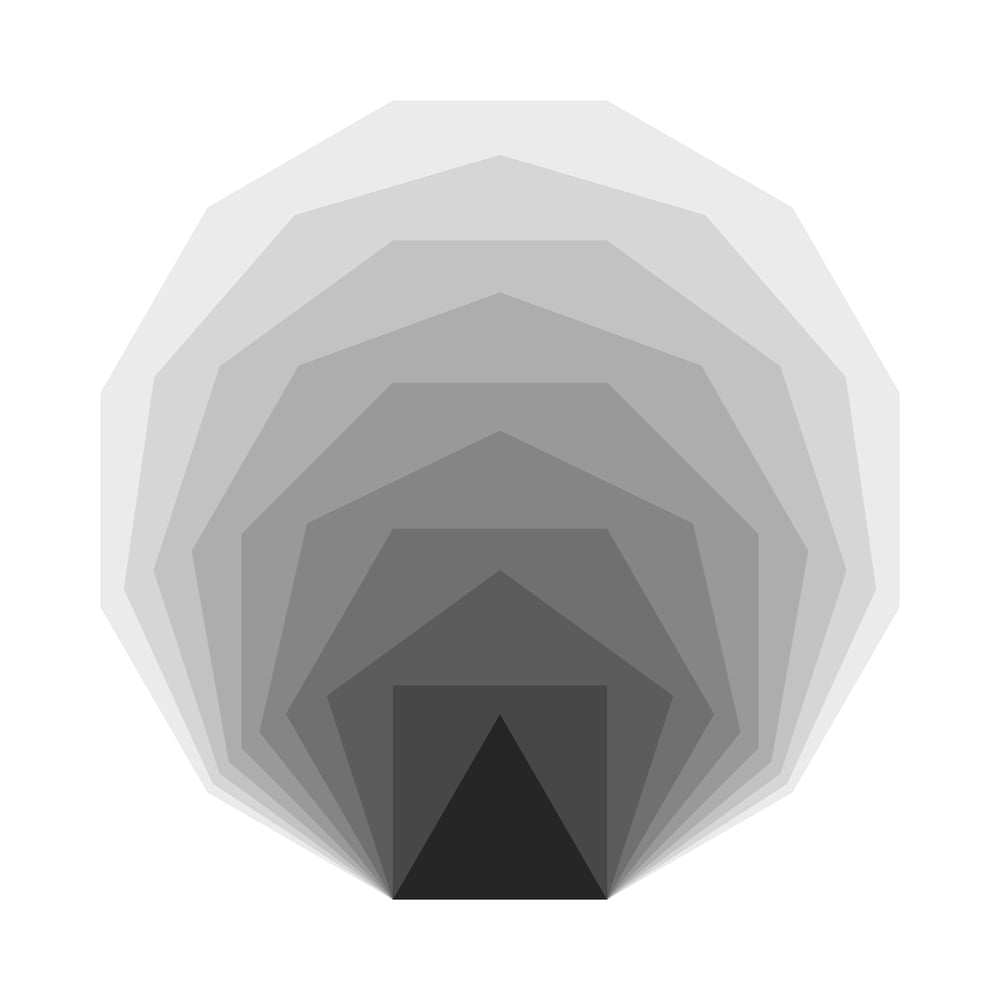
When a smooth gradient transitions between light and dark, the human visual system perceives an exaggerated bright band near the light edge and a dark band near the dark edge — bands that are not present in the physical stimulus. The effect is caused by lateral inhibition: each neural unit is inhibited by its neighbours, amplifying contrast at edges. Ernst Mach described it in 1865.
The effect is so fundamental to edge detection that it influences the appearance of shadows on the moon, causing craters to appear more sharply defined than they actually are in photographs.
The Simultaneous Contrast Illusion
A grey square on a black background appears lighter than the same grey square on a white background. The effect is immediate, strong, and completely resistant to correction by knowledge.
The brain adjusts perceived brightness based on local contrast, which is generally useful in real lighting conditions where the overall illumination level is variable. The illusion appears when the contrast mechanism is applied to a context where the luminance conditions are uniform — the brain is using a shortcut designed for a variable world in a situation where the world is not variable.
The Wundt Illusion
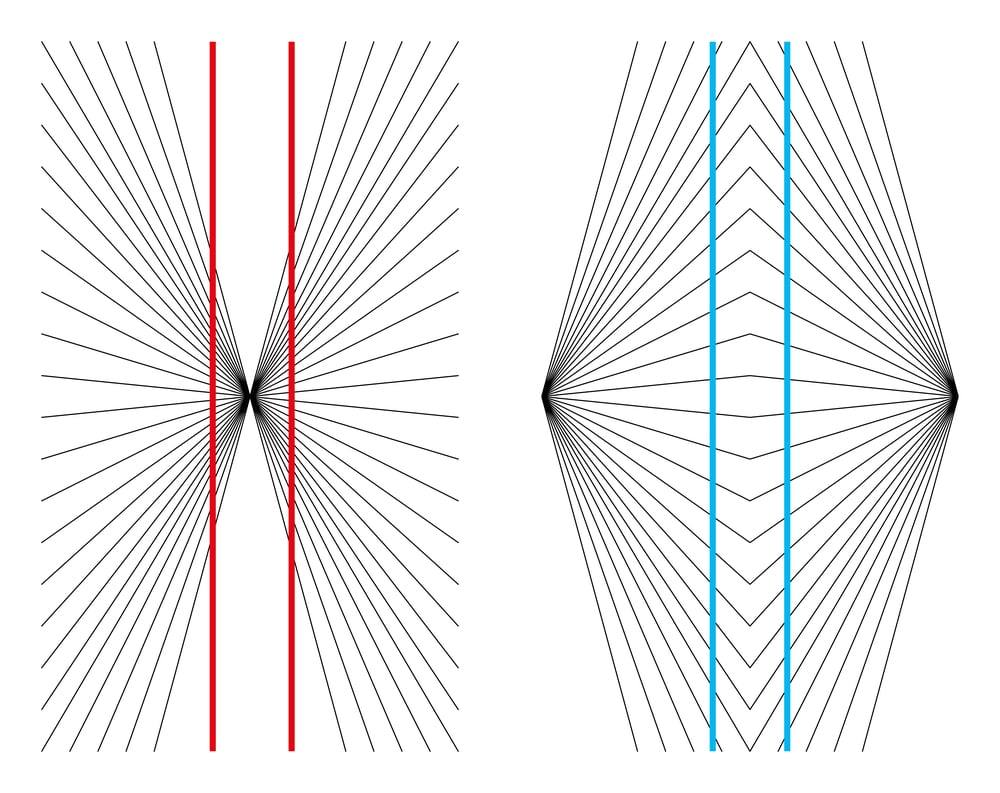
Two lines that are actually parallel appear to bow outward in the middle when placed on top of a star-burst pattern of radiating lines. Wilhelm Wundt described it in the 19th century. The radiating lines induce a false curvature signal that overrides the veridical perception of the parallel lines.
Several later illusions — including the Hering Illusion, in which straight lines appear bowed in the opposite direction on a similar pattern — were found to produce opposite distortions with only minor changes to the inducing pattern, suggesting that the visual system’s response to radiating lines is highly sensitive to precise configuration.
The Expanding Great Abyss

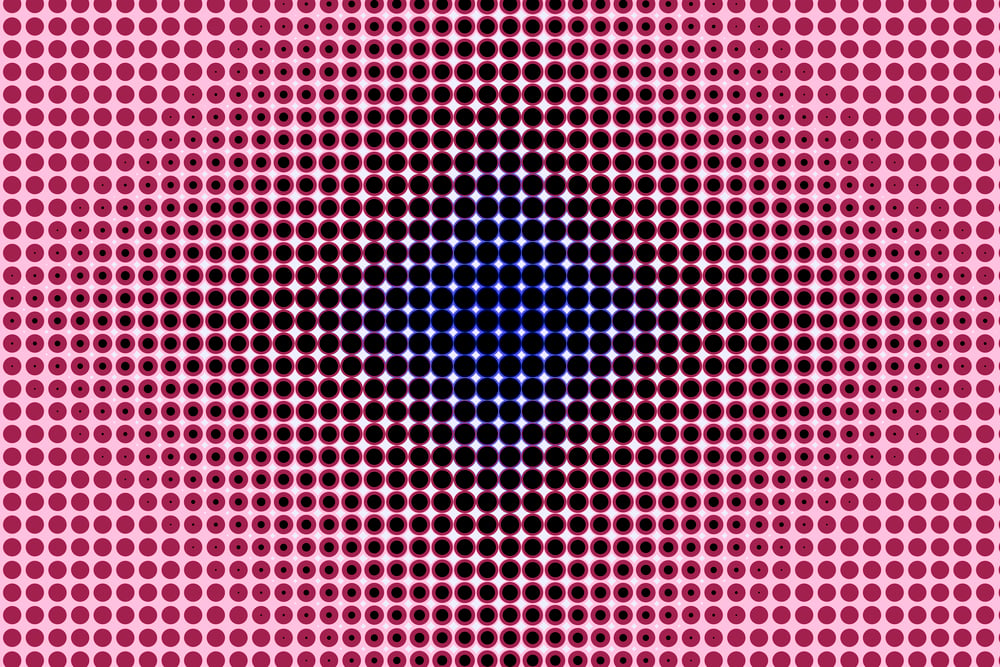
A static concentric pattern of black and grey produces the sensation that the central dark area is expanding outward, like a dilating pupil. Neuroscience research found that the illusion triggers a genuine pupil-dilation reflex in observers: the visual system interprets the apparent expansion as increasing darkness and initiates a physical response to compensate.
The effect influences how the brain handles real looming objects — the same mechanism that helps detect an approaching threat is recruited by a static image that mimics the motion pattern of something expanding toward you.
The Poggendorff Illusion
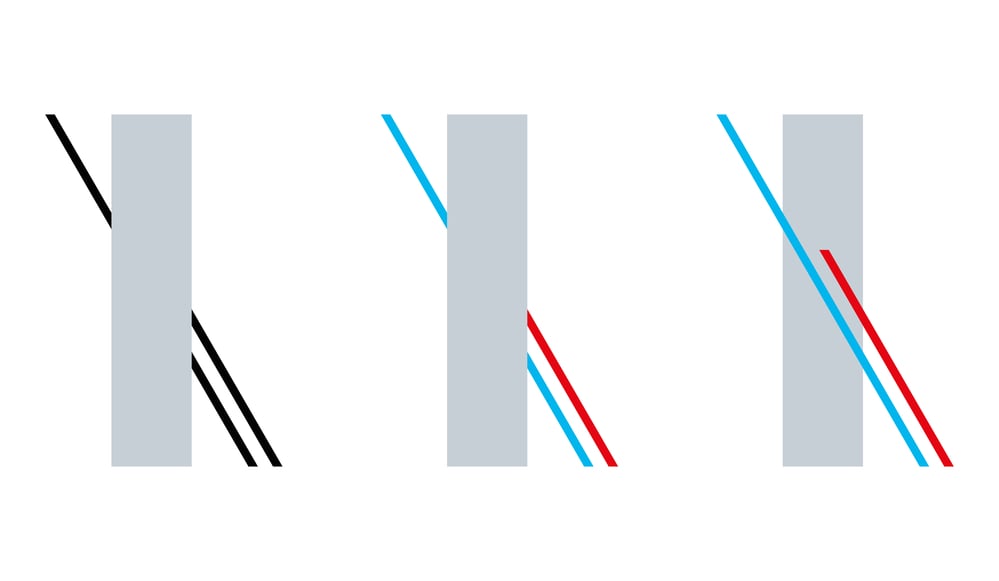
A diagonal line passes behind a rectangular block and continues on the other side — but when the central block hides the middle portion, the two visible ends of the line appear to be offset from each other rather than collinear. They appear to belong to different lines crossing at different angles.
The illusion was first described in 1860 after physicist J.C. Poggendorff pointed it out to Johann Zöllner. Despite nearly 170 years of investigation, researchers have not agreed on a single definitive explanation for why this particular configuration defeats the brain’s ability to track angle consistently.
The Barber Pole Illusion
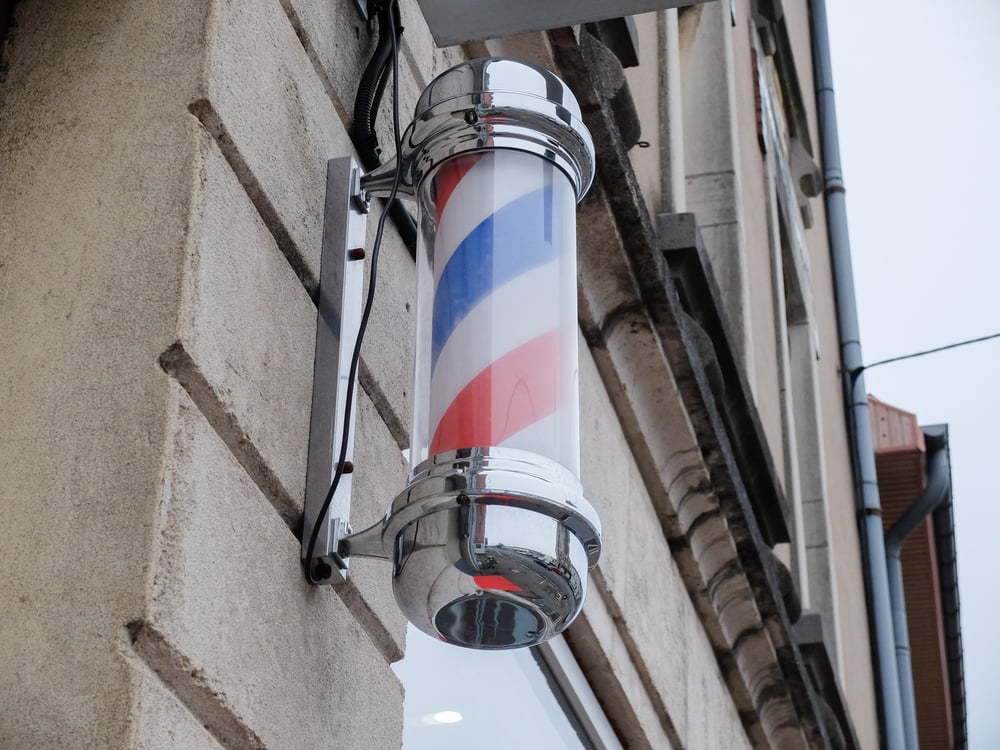
A barber pole rotating around its vertical axis creates the compelling perception that the stripes on it are moving upward rather than rotating. This is because the poles of the stripe motion — the upward direction — are visible through the rectangular aperture of the pole’s surface, while the rotating direction is concealed by the cylinder’s solid form.
The brain determines motion direction from the visible component and reports motion in that direction even though the actual movement is rotational. The illusion has been used extensively to study how the visual system resolves ambiguous motion signals.
What the Brain Does When the Eyes Lie

Every one of these illusions reveals the same underlying truth: perception is not passive. The brain is not a camera — it is a prediction machine, constantly generating the most plausible model of the world based on incomplete, noisy signals and then presenting that model to consciousness as though it were simply what is there.
The illusions all occur in the places where the prediction turns out to be wrong. The reason knowing about an illusion often doesn’t fix it is that the predictions are generated below the level of conscious access.
The knowledge sits in one part of the brain; the prediction that generates the illusion runs in another, earlier part — and the two don’t negotiate. Optical illusions are not failures of perception.
They are evidence of a system that is, on balance, doing something extraordinary — and occasionally, when the conditions are precisely wrong, getting tripped up by its own sophistication.
More from Go2Tutors!

- The Romanov Crown Jewels and Their Tragic Fate
- 13 Historical Mysteries That Science Still Can’t Solve
- Famous Hoaxes That Fooled the World for Years
- 15 Child Stars with Tragic Adult Lives
- 16 Famous Jewelry Pieces in History
Like Go2Tutors’s content? Follow us on MSN.



