Top Asian Films Ever
Asian cinema has shaped global filmmaking in ways that aren’t always obvious at first glance. When you watch a Hollywood action sequence today, you’re seeing techniques that came from Hong Kong stunt coordinators.
When you notice a slow, meditative scene that lingers on ordinary moments, that aesthetic traveled from Tokyo. The influence runs deep, and the films themselves deserve attention not just for their impact, but for their raw quality.
These aren’t necessarily the most famous titles. Some are, but others remain criminally underseen outside their home countries.
What connects them is craft. They each do something remarkable with the medium, whether that’s storytelling, visual composition, performance, or pure emotional weight.
Seven Samurai (1954)
Akira Kurosawa’s masterpiece about hired warriors defending a village remains the template for countless films that followed. The three-hour runtime never feels long because every scene serves a purpose.
You watch these characters develop from archetypes into people you care about. The action sequences still hold up.
Kurosawa filmed rain-soaked sword fights with a clarity that modern directors, with all their technology, struggle to match. The choreography makes sense.
You understand geography and stakes during every confrontation. But the film works because of its humanity.
The samurai know they’re dying for people who will forget them. The villagers know they’re using these warriors as tools.
That tension drives everything forward.
In the Mood for Love (2000)
Wong Kar-wai creates longing on screen better than almost anyone. This film about two neighbors who suspect their spouses are having an affair captures desire through glances, near-touches, and moments that don’t quite happen.
The visual style became iconic for a reason. Those narrow hallways, the repeated shots of them walking to the noodle shop, the way fabric and color dominate the frame.
Every element reinforces the feeling of being trapped by circumstance and propriety. The film moves slowly, but that’s the point.
You feel time passing the way the characters do. Days blur together.
Small gestures become enormous. And by the end, you understand exactly what they’ve lost by not acting.
Rashomon (1950)
Kurosawa appears twice on this list because he earned it. This film pioneered the unreliable narrator technique that storytellers now take for granted.
Four people describe the same incident, and each version contradicts the others. The forest setting creates an otherworldly space where truth becomes slippery.
Sunlight filters through trees in ways that make everything feel unstable. You can’t trust what you’re seeing because the characters themselves can’t agree on what happened.
This isn’t just a clever structure. The film asks whether objective truth exists at all when human perception and self-interest color everything.
That question remains relevant.
Spirited Away (2001)
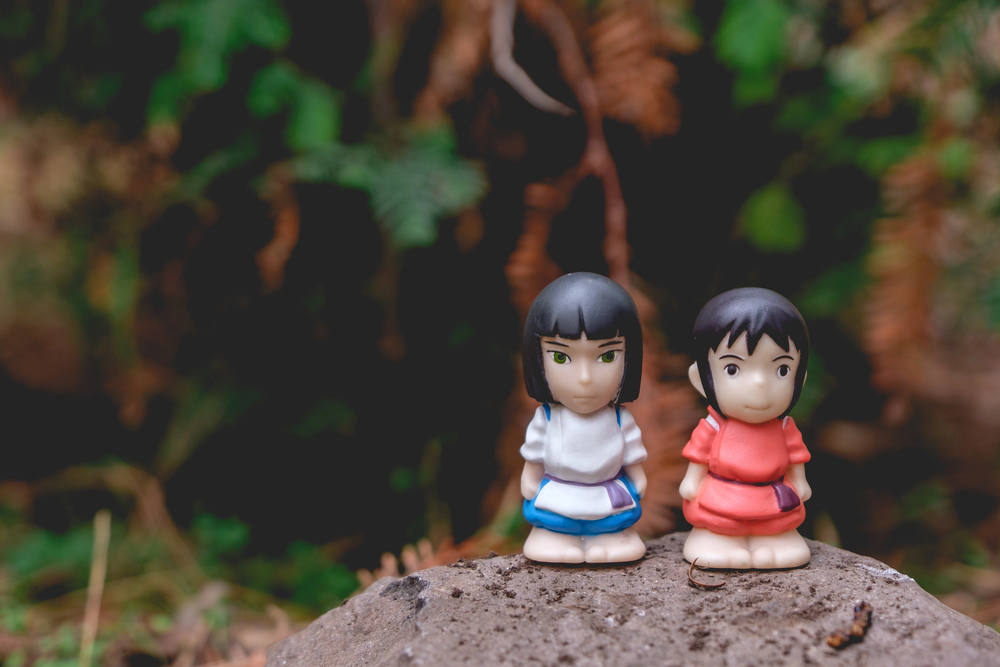
Hayao Miyazaki’s fantasy about a girl trapped in a bathhouse for spirits works on multiple levels. Children respond to imagination and adventure.
Adults see the commentary on greed, identity, and growing up. The animation speaks for itself.
Every frame bursts with detail and creativity. The spirit designs range from whimsical to genuinely unsettling.
The bathhouse feels like a real place with its own logic and hierarchy. At its core, the film tells a simple story about a child finding courage.
But Miyazaki layers in so much texture and meaning that you can watch it repeatedly and find new elements each time.
Oldboy (2003)
Park Chan-wook’s revenge thriller gut-punches you multiple times. A man gets imprisoned in a private cell for 15 years with no explanation.
When he’s released, he has five days to figure out why. The film goes to dark places.
Really dark. But it never feels gratuitous because everything connects to the larger story about vengeance and its costs.
The famous hallway fight scene, shot in one continuous take, showcases brutal, exhausted violence that looks nothing like Hollywood action. That ending stays with you.
Without spoiling anything, it forces you to reconsider everything that came before. Some revenge stories have simple morals.
This one doesn’t offer that comfort.
Tokyo Story (1953)
Yasujirō Ozu made films about ordinary life that cut deeper than most melodramas. An elderly couple visits their adult children in Tokyo and realizes their kids have moved on.
They’re busy. They’re polite but distant.
The parents return home with their expectations quietly shattered. Nothing dramatic happens.
That’s what makes it powerful. Ozu finds tragedy in small disappointments and unspoken disappointment.
The way characters sit in rooms and talk, the way the camera stays still at floor level, creates an intimacy that draws you in. This is a film about time passing and relationships changing.
If you’ve ever felt disconnected from family, it hits hard.
Crouching Tiger, Hidden Dragon (2000)
Ang Lee brought wuxia cinema to Western audiences with this martial arts epic. The wire-work combat scenes where fighters glide across rooftops and treetops dazzled viewers who’d never seen anything like it.
But the film succeeds because the story matches the spectacle. Two warriors suppress their feelings for each other due to duty and circumstance.
A young aristocrat rebels against her arranged future. These emotional threads drive the plot as much as any sword fight.
The action sequences blend dance and combat. Characters fight on bamboo forests that sway beneath them.
Gravity becomes optional. Yet the choreography maintains weight and consequence.
When someone gets hurt, you feel it.
Parasite (2019)

Bong Joon-ho’s class satire masquerades as multiple genres. It starts as a comedy about a poor family conning their way into a wealthy household.
Then it shifts. And shifts again.
By the end, you’ve watched a thriller, a horror film, and a tragedy. The two houses in the film tell the entire story through production design.
The wealthy family lives in clean, modern spaces with expansive windows. The poor family lives in a semi-basement where they watch drunks piss against their window.
That visual contrast needs no explanation. The film works because it refuses to make anyone simply good or evil.
Everyone acts from understandable motivations. Everyone makes choices that feel logical in the moment.
The resulting collision feels inevitable.
Chungking Express (1994)
Wong Kar-wai’s romantic drama splits into two loosely connected stories about lonely people in Hong Kong. A cop pines for his ex-girlfriend.
Another cop doesn’t notice that the woman working at the food stand has fallen for him. Both stories capture the chaos and isolation of city life.
The film has a dreamlike quality. Scenes blend together through color and music.
The handheld camera work puts you right in the crowded spaces where these characters move past each other. You feel the energy and the loneliness simultaneously.
This is a film about missed connections and small moments. A woman breaking into someone’s apartment to secretly improve his life.
A man talking to his household objects. These details create character better than exposition ever could.
The Battle of Algiers (1966)
Gillo Pontecorvo’s docudrama about the Algerian independence movement looks so realistic that viewers often mistake it for actual footage. No narrator explains events.
You witness them as they unfold, following both French paratroopers and Algerian revolutionaries. The film refuses to simplify the conflict.
French soldiers aren’t cartoon villains. Algerian fighters make difficult choices that cost innocent lives.
Everyone operates within their own logic, which makes the violence even more disturbing. Modern war films still copy this aesthetic.
The handheld cameras, the natural lighting, the way it captures street-level combat. Few films have matched its raw immediacy.
Yi Yi (2000)
Edward Yang’s family drama follows three generations dealing with life’s complications. A teenage girl navigates first love.
A middle-aged man reconnects with an old flame. A young boy tries to understand the world through his camera.
Their stories interweave naturally. The film runs three hours but never drags.
Yang gives scenes room to breathe. Characters sit and think.
Time passes. This patience allows genuine complexity to develop rather than forcing dramatic moments.
Taiwan itself becomes a character. The mix of traditional and modern life, the crowded apartments, the way families stay interconnected despite friction.
The film captures a specific time and place while exploring universal experiences.
Memories of Murder (2003)
Bong Joon-ho’s crime thriller follows detectives hunting a serial killer in 1980s South Korea. The case remains unsolved.
The film doesn’t build toward a satisfying resolution because real life doesn’t work that way. The detectives employ torture and plant evidence.
They’re desperate and out of their depth. The more capable detective who arrives from Seoul brings methodology but hits the same walls.
The film shows how systems fail and how that failure affects everyone involved. The final scene brings the story into the present.
Without giving it away, Bong creates a moment that bridges decades and forces you to think about how we live with unresolved trauma.
The Apu Trilogy (1955-1959)

Satyajit Ray’s three films follow a boy named Apu from childhood through adulthood. The trilogy captures poverty, death, education, marriage, and loss with a gentle realism that never sentimentalizes hardship.
Ray worked with non-professional actors and shot on location in rural Bengal. The authenticity shows in every frame.
You’re watching real places and real struggles, filtered through Ray’s humane perspective. The films move slowly by modern standards.
But that deliberate pace allows you to fully inhabit these lives. Apu’s journey feels earned because you’ve spent hours with him.
Few films achieve that depth of character.
Tampopo (1985)
A trucker lends a hand to a widow fine-tuning her ramen, setting off Juzo Itami’s playful take on food and life. Still, the story keeps veering toward odd little moments – some silly, others quiet and deep.
Through meals shared or missed, hunger shows up in ways beyond eating. Scenes linger not on answers but fleeting feelings around bowls of soup.
Each detour feels unplanned, yet somehow necessary. What makes it funny is the intense focus on meals.
Not until the very end does the wounded mob boss share egg tips with his apprentice. Over at the boardroom, knowledge of fork rules becomes a quiet battle among executives.
Only after watching closely does the street sleeper reveal the right way to eat noodles. This is more than laughs on screen.
Food becomes a thread linking people, creativity, and emotion. When it ends, that one bowl of noodles shows what care looks like, passed through time, shared without words.
Where Stories Keep Going

One country, one era, one kind of story – each movie walks its own path. A few shook how movies are made.
Some simply shaped a style without noise. Still, everyone knows film isn’t just for fun.
It pushes back, holds close, breaks hearts, shows truth. Not every one will win your heart.
Patience becomes necessary with a few. Tough themes show up in others, waiting without apology.
Yet each holds a piece missing from the rest. What feels possible in film grows wider because of them.
What stands out most? Just a glimpse here, really.
Films from Asia hold countless layers beneath. Each movie opens a door, never claiming to be the full story.
Begin at any point. Let them carry you forward.
More from Go2Tutors!

- The Romanov Crown Jewels and Their Tragic Fate
- 13 Historical Mysteries That Science Still Can’t Solve
- Famous Hoaxes That Fooled the World for Years
- 15 Child Stars with Tragic Adult Lives
- 16 Famous Jewelry Pieces in History
Like Go2Tutors’s content? Follow us on MSN.